

Overview
The Second Polish Republic emerged in 1918 after more than a century of partition by Russia, Germany, and Austria‑Hungary. Its leaders faced the immediate task of consolidating territory, establishing borders, and creating institutions for a state that had not existed on the map since the late eighteenth century. Between 1918 and 1921, Poland fought a series of conflicts — most notably the Polish–Soviet War — that defined its frontiers and secured its independence against external threats.
Politically, the republic adopted a parliamentary system under the 1921 March Constitution, which aimed to limit executive power and prevent authoritarianism. In practice, the system produced fragmented party politics and unstable coalition governments. Economic reconstruction proved equally difficult. The new state inherited three different administrative systems, currencies, and legal codes from the partitioning powers. Efforts to unify these structures, stabilise the currency, and modernise industry were slow and often disrupted by global economic pressures, including the Great Depression.
A major turning point came in 1926, when Józef Piłsudski led the May Coup and established the sanacja regime. Although not formally abolishing democratic institutions, sanacja strengthened executive authority, curtailed parliamentary influence, and promoted a programme of political “cleansing” aimed at stabilisation. The 1935 Constitution further concentrated power in the presidency, reflecting Piłsudski’s vision of a strong state capable of resisting external pressure.
Socially, the republic was diverse. Ethnic Poles formed a majority, but significant Ukrainian, Jewish, Belarusian, and German minorities shaped cultural and political life. Tensions over language, land, and autonomy were persistent, particularly in the eastern provinces. Despite these challenges, the interwar period saw notable achievements in education, infrastructure, and cultural production, with Warsaw, Kraków, and Lwów becoming centres of intellectual activity.
The Second Republic ended abruptly in 1939 with the German invasion on 1 September, followed by the Soviet invasion on 17 September. Its twenty‑one‑year existence left a complex legacy of state‑building under pressure, political experimentation, and national resilience.
A Country Divided
Poland’s disappearance from the map at the end of the eighteenth century marked the collapse of one of Europe’s most enduring political entities: the Polish–Lithuanian Commonwealth.
For centuries the Commonwealth had operated as a major state in central and eastern Europe, but internal weaknesses, combined with the ambitions of its neighbours, left it increasingly vulnerable.
Across three partitions, carried out between 1772 and 1795, Austria, Prussia, and Russia absorbed its territory and dismantled its institutions.
By 1795, Poland no longer existed as a sovereign state, and its population found itself governed by foreign administrations with differing laws, languages, and political expectations.
From 1795 to 1918, Poland survived primarily as a national idea rather than a political reality. This idea was sustained through cultural activity, clandestine political organisation, and periodic armed resistance.
Several major uprisings reflected the determination to restore independence. The November Uprising of 1830 saw Polish forces attempt to break Russian control, while the Greater Poland Uprising of 1848 formed part of the wider revolutionary movements across Europe.
The January Uprising of 1863, although ultimately suppressed, demonstrated continued resolve among Poles to challenge imperial rule.
Each revolt failed militarily, yet each contributed to a growing sense of national identity and continuity, reinforcing the belief that Poland’s political revival remained possible.
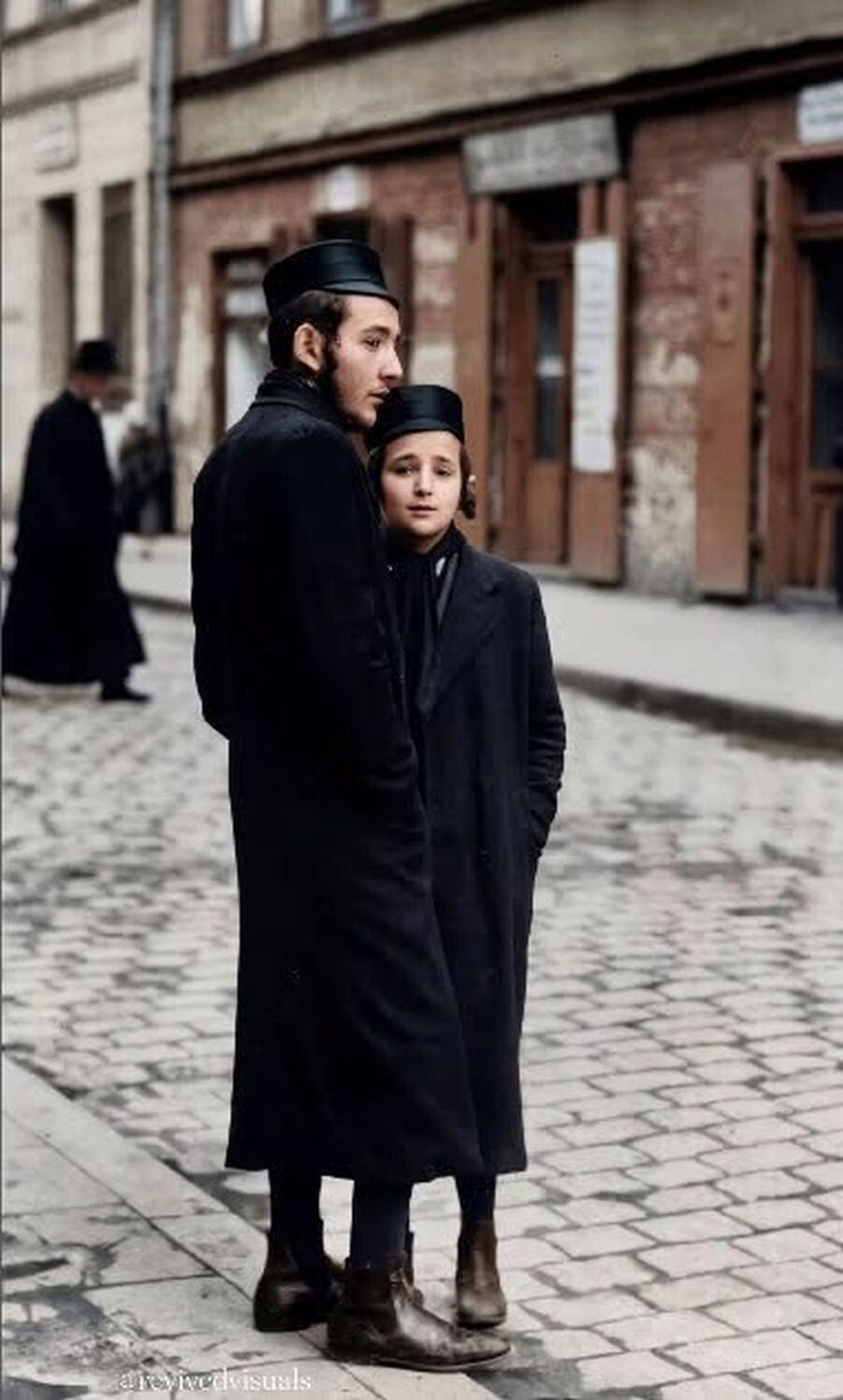
Two young Hasidic boys stand on the cobblestone streets of Warsaw, Poland, circa 1937. This candid moment was captured by photographer Roman Vishniac, who spent four years documenting Jewish communities across Eastern Europe just before the outbreak of World War II.
At the time, Warsaw was home to the second-largest Jewish community in the world (after New York), a vibrant hub of culture, religion, and diversity. Vishniac’s assignment for the JDC was intended to raise awareness of the poverty facing these communities, but his work ultimately became one of the last visual records of a culture that would soon be forever altered by history.


A map of partitioned Poland.
...forced cultural assimilation...
The nineteenth century brought further pressures. Under partition, Poles experienced forced cultural assimilation, economic exploitation, and political repression.
Policies varied across the occupying powers, but all sought to limit Polish autonomy.
Despite this, Polish society maintained its language, traditions, and educational networks. Intellectuals, writers, and political activists played a central role in preserving national consciousness, ensuring that the idea of Poland remained active even without territorial sovereignty.
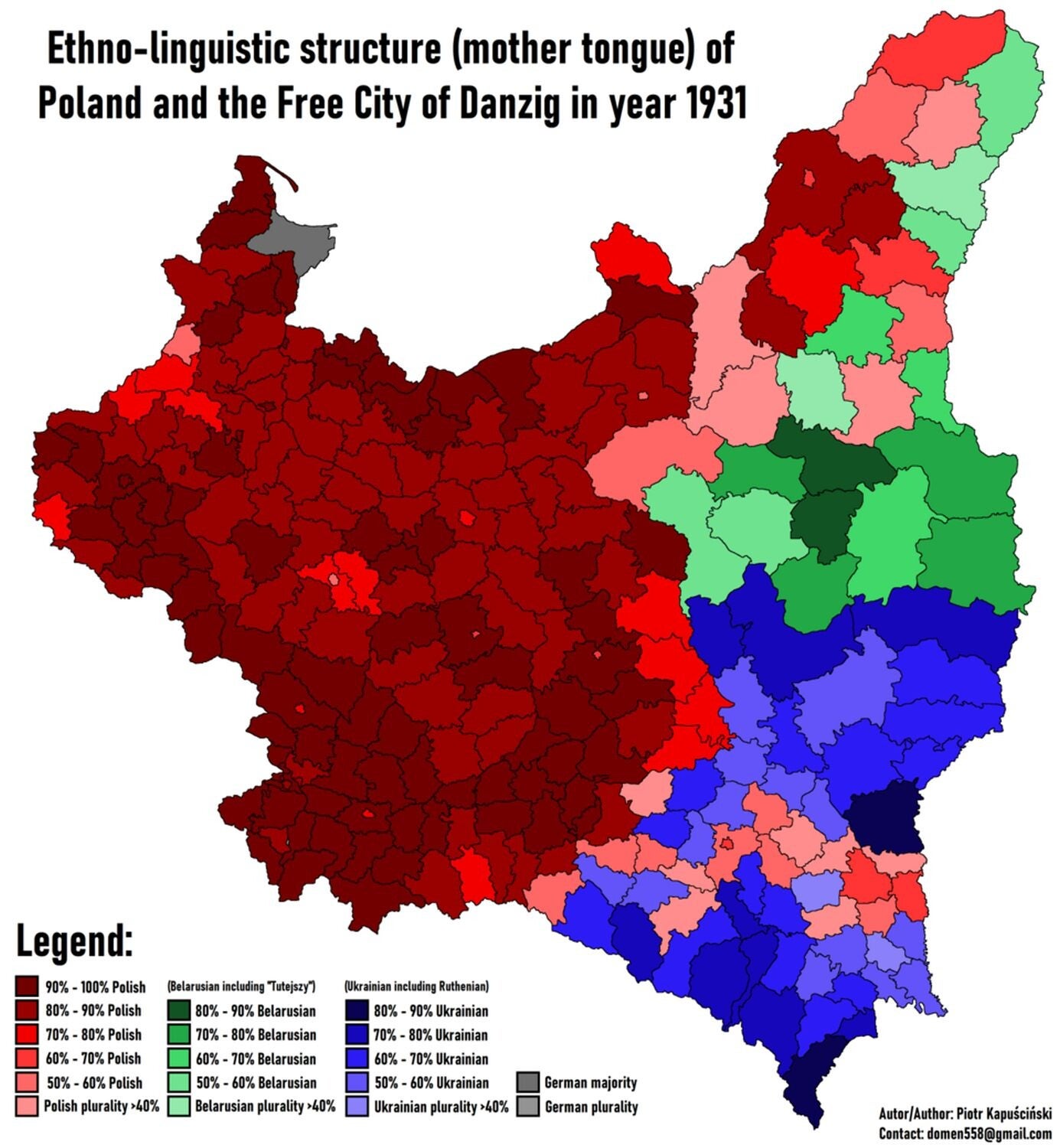
The 1931 census mapped majority mother‑tongue patterns that reflected how the Second Polish Republic had been assembled from three former partition zones. Counties in the west and centre—Poznań, Pomerania, Warsaw, Łódź—showed clear Polish linguistic dominance. Eastern counties were markedly diverse: Ukrainian prevailed across Volhynia and parts of Lwów; Belarusian dominated Polesie; Yiddish was major in many towns; Lithuanian appeared in the northeast. These distributions illustrated the Republic’s complex demographic inheritance and the challenges of integrating multilingual borderlands into a single state.
https://en.wikipedia.org/wiki/Second_Polish_Republic#/media/File:PL_languages_1931.png
...destabilised the imperial powers...
The outbreak of the First World War placed Poles in a complex and often destructive position.
As subjects of the partitioning empires, they were mobilised into opposing armies, fighting on fronts where Polish communities suffered devastation.
Villages and towns were destroyed, populations displaced, and property seized.
et the war also destabilised the imperial powers that had dominated Poland for more than a century.
As the conflict progressed, the prospect of political change grew increasingly tangible.
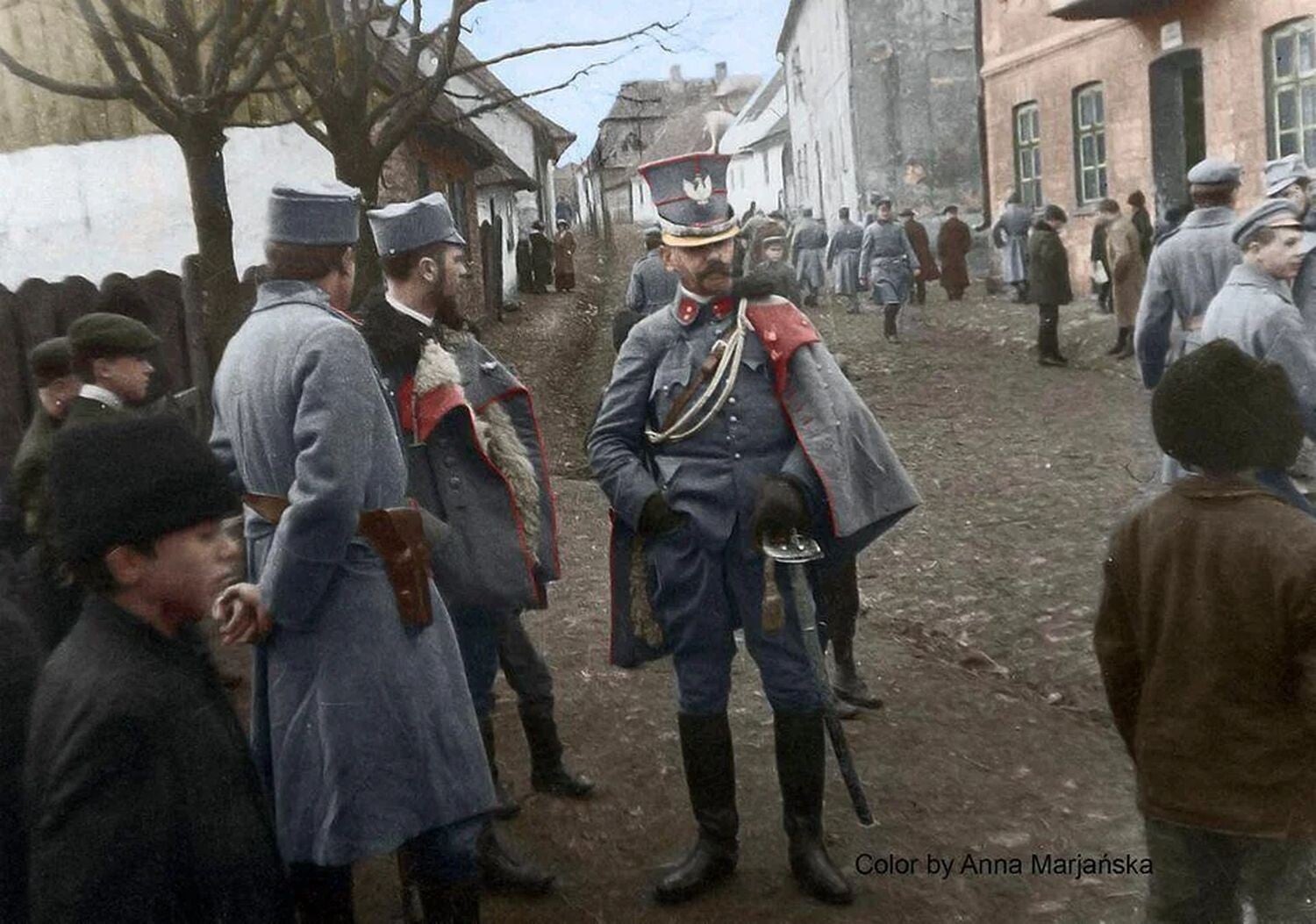
Members of the Austro-Hungarian Polish Legion during the First World War. The Austro‑Hungarian Polish Legion, formed in 1914 under Józef Piłsudski, fought alongside the Habsburg army while pursuing Polish independence. Initially organised as separate brigades, the Legion operated on the Eastern Front against Russian forces, gaining combat experience and political visibility. Its ambiguous status—serving an imperial power yet seeking national liberation—created tensions that culminated in the 1917 Oath Crisis. Despite this, the Legion became a foundational element of Poland’s later national army.
...the turmoil within Russia...
By 1918, the collapse of Austria‑Hungary, the weakening of Germany, and the turmoil within Russia created conditions favourable for Polish statehood.
Polish leaders, long active in exile and underground movements, seized the opportunity to re-establish national institutions.
The Paris Peace Conference recognised the legitimacy of an independent Poland, marking the formal creation of the Second Polish Republic.
This restoration was widely regarded as one of the notable successes of the post-war settlement, symbolising both the endurance of Polish national identity and the broader reshaping of Europe after the First World War.
The rebirth of Poland in 1918 closed a 123‑year chapter of foreign domination and opened a new, complex period of state-building, political experimentation, and national consolidation.
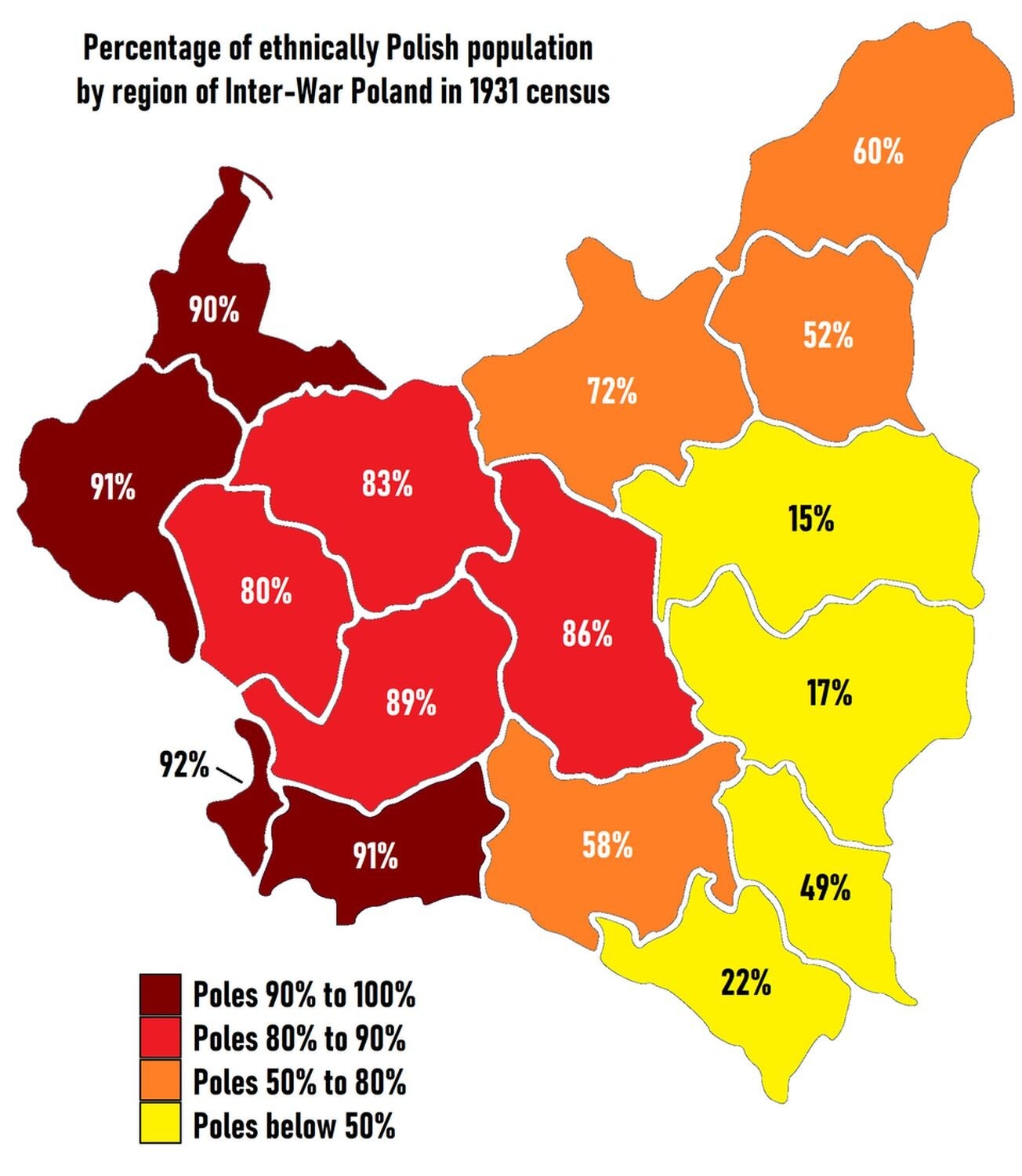
Percent of ethnic Poles by voivodeship according to the 1931 census. The Second Polish Republic’s formation after 1918 produced a state with sharply uneven ethnic geography. Territories regained from Germany contained Polish majorities above 85–95 percent, while former Austrian and Russian zones were far more mixed. In the 1931 census, Poles made up roughly 60 percent in Lwów, about half in Wilno, and under 30 percent in Polesie and Volhynia. These contrasts reflected the Republic’s assembly from three partition legacies, each with distinct demographic, administrative, and cultural structures that shaped early state-building.
https://en.wikipedia.org/wiki/Second_Polish_Republic#/media/File:Percent_Polish_1931_census.png
Birth of the Second Republic
The final months of 1918 brought a rapid and often chaotic re‑emergence of Polish political life after more than a century of partition.
As the empires that had dominated Polish territories collapsed, new centres of authority appeared almost simultaneously.
Between 1918 and 1919, over one hundred workers’ councils were established across former partitioned lands, reflecting both social unrest and a desire for political participation.
On 5 November 1918, the first Soviet of Delegates was formed in Lublin, signalling the speed with which local groups sought to shape the future of the country.

...the political diversity...
The following day, socialists in Tarnobrzeg proclaimed the Republic of Tarnobrzeg in Austrian Galicia, while Ignacy Daszyński announced a Provisional People’s Government in Lublin.
These initiatives demonstrated the political diversity of the emerging Polish state, with competing visions of socialism, parliamentary democracy, and national independence all vying for influence.
...after sixteen months of imprisonment...
A decisive moment came on 10 November, when Józef Piłsudski returned to Warsaw after sixteen months of imprisonment in Magdeburg.
Greeted by Regent Zdzisław Lubomirski and senior military figures, Piłsudski immediately became the central figure in the restoration of Polish sovereignty.
His broad popularity and cross‑party support led the Regency Council to appoint him Commander‑in‑Chief of the Polish Armed Forces on 11 November.
Three days later, the Council dissolved itself, transferring full authority to Piłsudski as Chief of State.
After consultation with him, Daszyński’s government stepped aside, allowing Jędrzej Moraczewski to form a new administration. International recognition followed quickly: in 1918, Italy became the first European state to acknowledge Poland’s renewed independence.

Józef Piłsudski shaped the Second Polish Republic by restoring independence, consolidating authority, and guiding the state through its early military, political, and institutional challenges.
...imperial structures disintegrated...
Logo of the Polish Liquidation Committee. Formed in Kraków in October 1918, it acted as a provisional authority dismantling Austro‑Hungarian rule in Galicia, transferring administration, security, and assets to emerging Polish state institutions.
In Galicia, additional bodies emerged, including the National Council of the Principality of Cieszyn, the Republic of Zakopane, and the Polish Liquidation Committee.
These reflected regional efforts to secure Polish control as imperial structures disintegrated. At the same time, armed conflict erupted.
On 1 November 1918, the Polish–Ukrainian War began in Lwów, where Polish student volunteers - the Lwów Eaglets - fought Ukrainian forces until reinforced by the Polish Army.
Further clashes followed at Przemyśl.
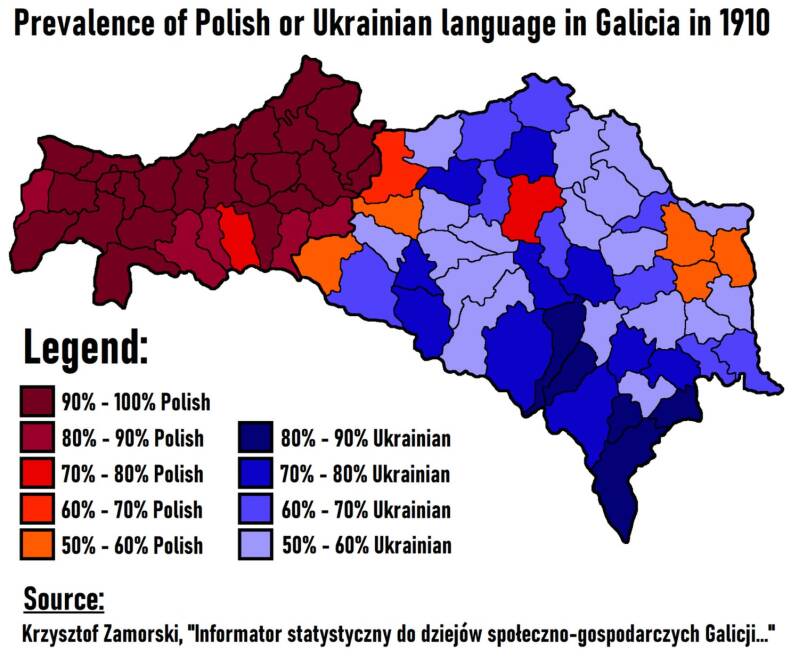
Language map of Galicia according to the 1910 census. Eastern Galicia was predominantly Ukrainian-speaking.. The Polish–Ukrainian War (1918–1919) stemmed from competing national claims in Galicia after Austria‑Hungary’s collapse. Polish forces sought control of Lwów and Eastern Galicia, while the West Ukrainian People’s Republic attempted to establish authority over the same territory. Fighting centred on cities, rail hubs, and rural districts, with shifting front lines through winter and spring. Polish reinforcements gradually secured the region, culminating in full Polish control by mid‑1919, though tensions persisted into the wider Polish–Soviet conflict.
...tensions with Lithuania escalated...
In western Poland, the Greater Poland Uprising of 1918–1919 sought to liberate territories under German rule.
In January 1919, Polish and Czechoslovak forces fought over Trans‑Olza, while tensions with Lithuania escalated into the Polish–Lithuanian War.
Polish‑speaking communities in Upper Silesia launched three uprisings beginning in August 1919, aiming to secure union with Poland.
The most consequential struggle of the period, the Polish–Soviet War of 1919–1921, ultimately ended in a Polish victory.
These conflicts, though diverse in origin and character, collectively shaped the borders and political foundations of the Second Polish Republic, marking the turbulent but determined rebirth of an independent Polish state.
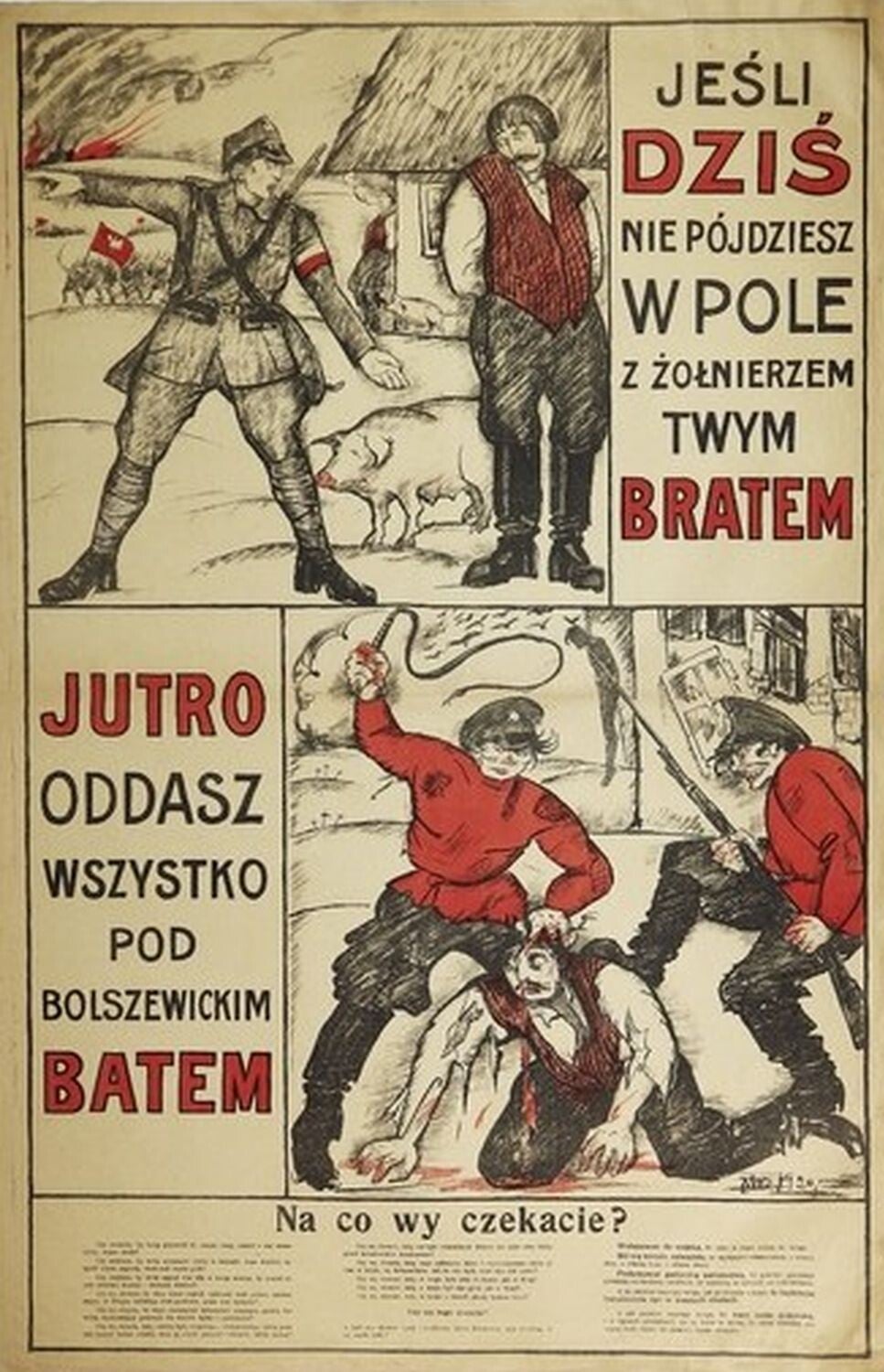
Polish–Soviet War poster urging civilians to support soldiers or face brutal Bolshevik repression and loss.
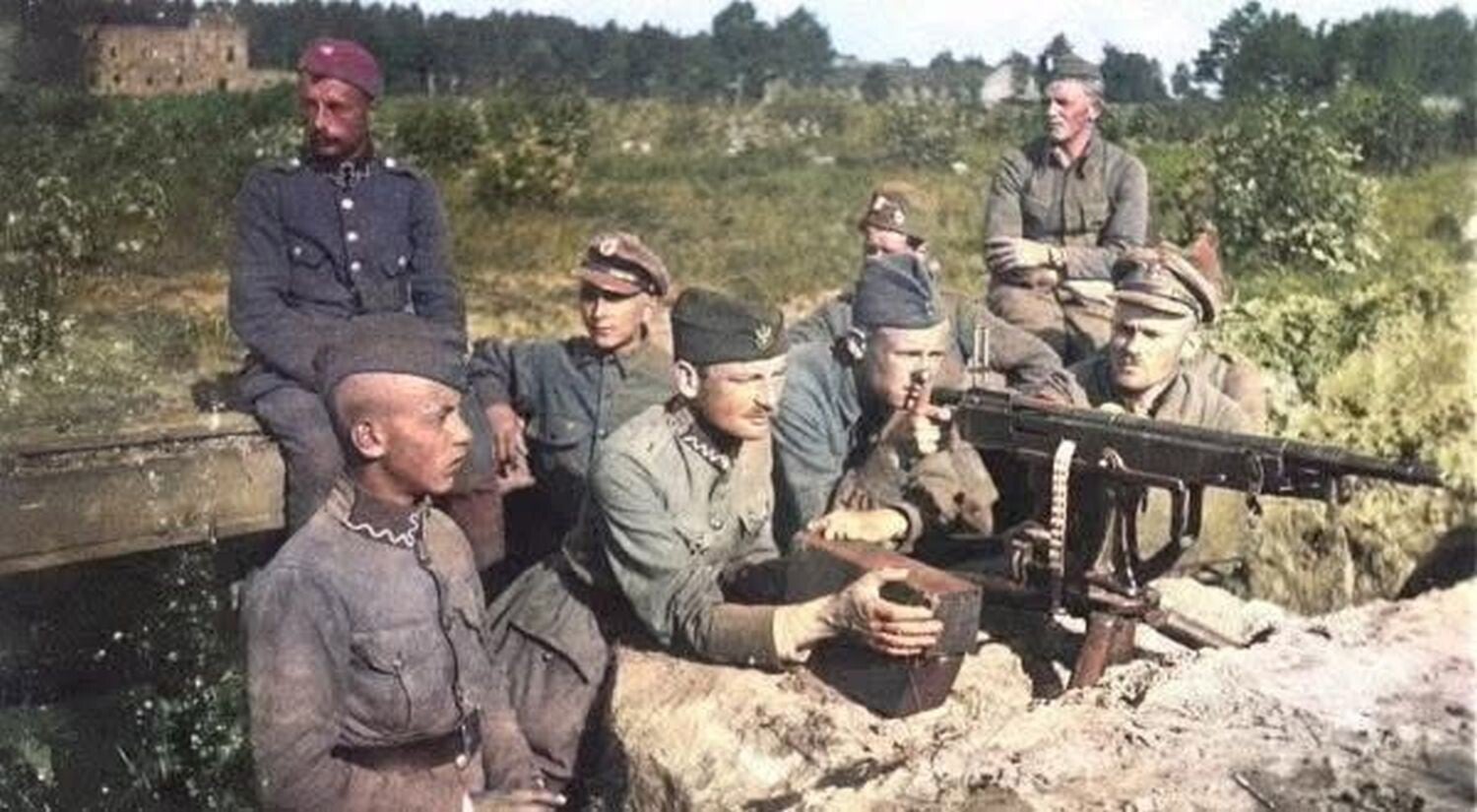
Polish defences at Miłosna, during the decisive Battle of Warsaw, August 1920, during the Polish-Soviet war of 1919-1921. Polish units held the Miłosna approaches east of Warsaw as the Red Army advanced on 13–16 August 1920. Elements of the 10th Infantry Division, supported by railway troops and local militia, constructed hasty fieldworks along the Wołomin–Miłosna line. Their defence delayed Soviet cavalry thrusts toward the capital, buying time for Piłsudski’s counter‑offensive from the Wieprz River. Though repeatedly pressured, the Miłosna positions remained intact long enough to help stabilise Warsaw’s eastern perimeter.
Shifting Politics
The political system of the Second Polish Republic evolved rapidly during its early years, shaped by competing parties, constitutional experimentation, and the dominant influence of Józef Piłsudski.
Between 1919 and 1926, Poland functioned as a parliamentary democracy under the Small Constitution of 1919.
This framework deliberately limited presidential authority: the head of state was elected by the Parliament, could appoint the prime minister and cabinet only with the Sejm’s approval, and could dissolve the Sejm solely with the consent of the Senate.
Presidential decrees required countersignature from the prime minister and the relevant minister, ensuring that executive power remained tightly constrained.
The new republic also distinguished itself by recognising women’s suffrage early.
On 28 November 1918, Piłsudski issued the decree granting women full voting rights, making Poland one of the first countries in Europe to do so.
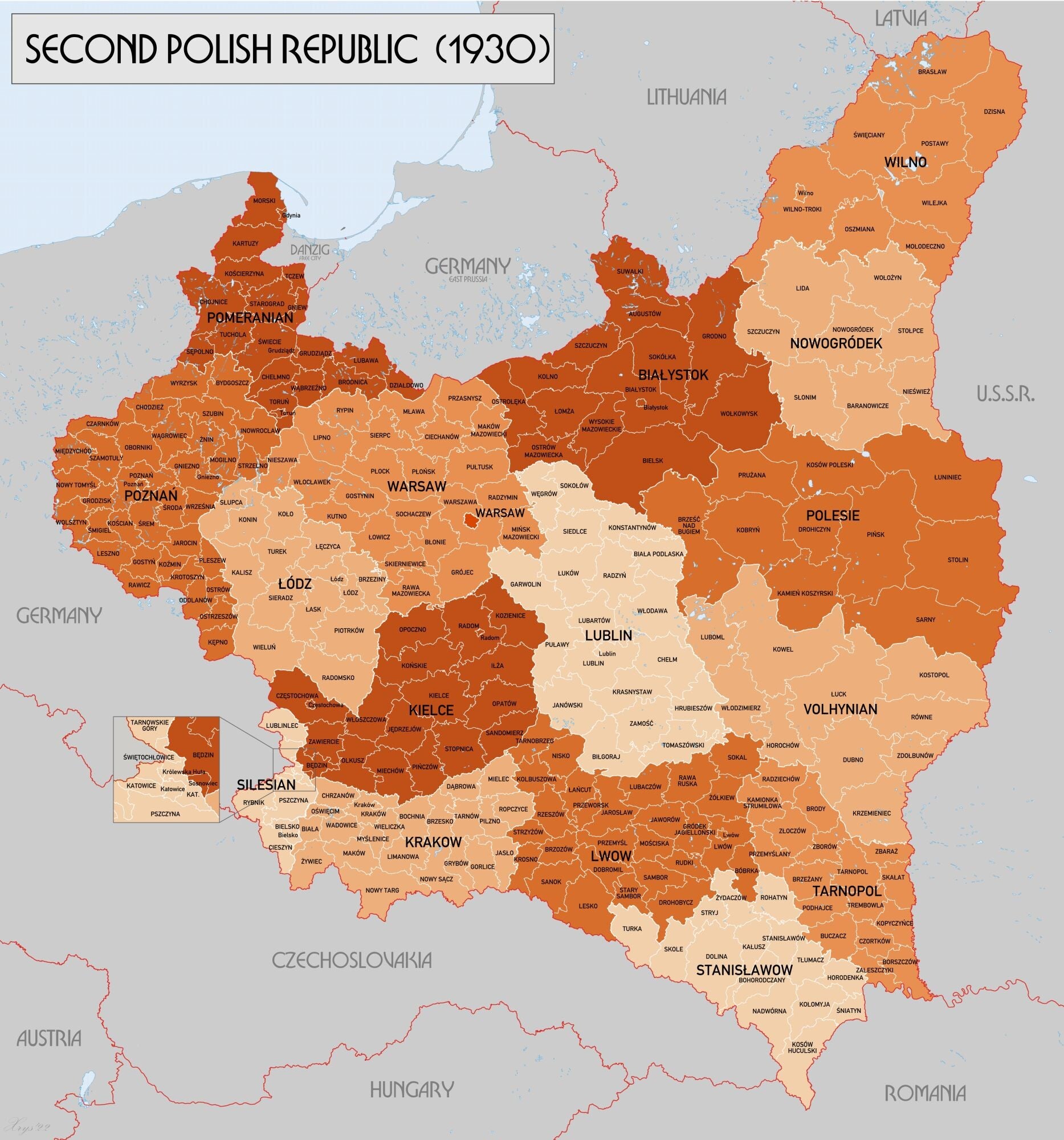
Administrative divisions of the Second Polish Republic in 1930. The Second Polish Republic organised its territory into voivodeships, largely inherited from former partitioning powers but gradually standardised after 1918. Fifteen voivodeships formed the core structure, with Warsaw as a separate district. Administration balanced central authority with limited local autonomy, though disparities between industrial western regions and agrarian eastern areas persisted. Frequent boundary adjustments aimed to improve governance, integrate diverse populations, and stabilise a state still consolidating institutions after decades of foreign rule.
https://en.wikipedia.org/wiki/Second_Polish_Republic#/media/File:PolishRepublicAdminMap1930.png
...growing public frustration...
Political life in the early republic was diverse and often fractious. Major parties included the Polish Socialist Party, National Democrats, several Peasant Parties, Christian Democrats, and organised minority groups representing Germans, Jews, and Ukrainians.
Elections in 1919 and 1922 produced unstable coalitions, frequent cabinet changes, and growing public frustration.
Accusations of corruption, political infighting, and incidents such as the 1919 coup attempt eroded confidence in parliamentary governance.
Prominent figures included Wincenty Witos, who served three times as prime minister, and Roman Dmowski, the leading voice of the nationalist right.
Ethnic minorities also held seats in the Sejm; between 1928 and 1930, the Ukrainian‑Belarusian Club included thirty representatives.
...excessive partisanship...
After the Polish–Soviet War, Piłsudski withdrew from formal politics and lived modestly, writing historical studies.
His return to power came through the May Coup of 1926, justified by his claim that the political system required “healing” from excessive partisanship.
This idea became known as Sanacja, a programme aimed at stabilising public life and strengthening executive authority.
The 1928 elections remained broadly free, though Piłsudski’s Nonpartisan Bloc for Cooperation with the Government won the largest share of seats.
...the consolidation of authoritarian rule...
The political climate changed markedly thereafter. Elections in 1930, 1935, and 1938 were manipulated, with opposition leaders arrested, tried in Brest, or interned in Bereza Kartuska.
The government‑aligned Camp of National Unity secured overwhelming majorities, reflecting the consolidation of authoritarian rule.
Piłsudski died shortly after the adoption of the 1935 Constitution, which further concentrated power in the presidency and marked the definitive end of parliamentary democracy.
...shaping the state...
In the republic’s final years, key figures included President Ignacy Mościcki, Foreign Minister Józef Beck, and Marshal Edward Rydz‑Śmigły, Commander‑in‑Chief of the Polish Army.
The political system operated through 104 electoral districts, while exiled opposition leaders formed the Front Morges in 1936.
This period is often described as the era of “Piłsudski’s colonels,” reflecting the dominance of his loyal military and political circle in shaping the state until its destruction in 1939.
Economic Recovery
After 1918, the Second Polish Republic confronted an exceptionally difficult economic landscape shaped by war damage, partition‑era exploitation, and the challenge of integrating territories that had belonged to three different empires.
The First World War and the Polish–Soviet War left factories ruined, farmland devastated, and transport networks disrupted.
Retreating armies had sabotaged infrastructure, and the occupying powers had long extracted resources for their own benefit.
Poland inherited five currencies - the German mark, Russian rouble, Austrian krone, Polish marka, and the Ostrubel - and three incompatible administrative and economic systems.
Even major cities lacked direct rail connections; Warsaw and Kraków, formerly in different empires, were not linked by a continuous railway until 1934.
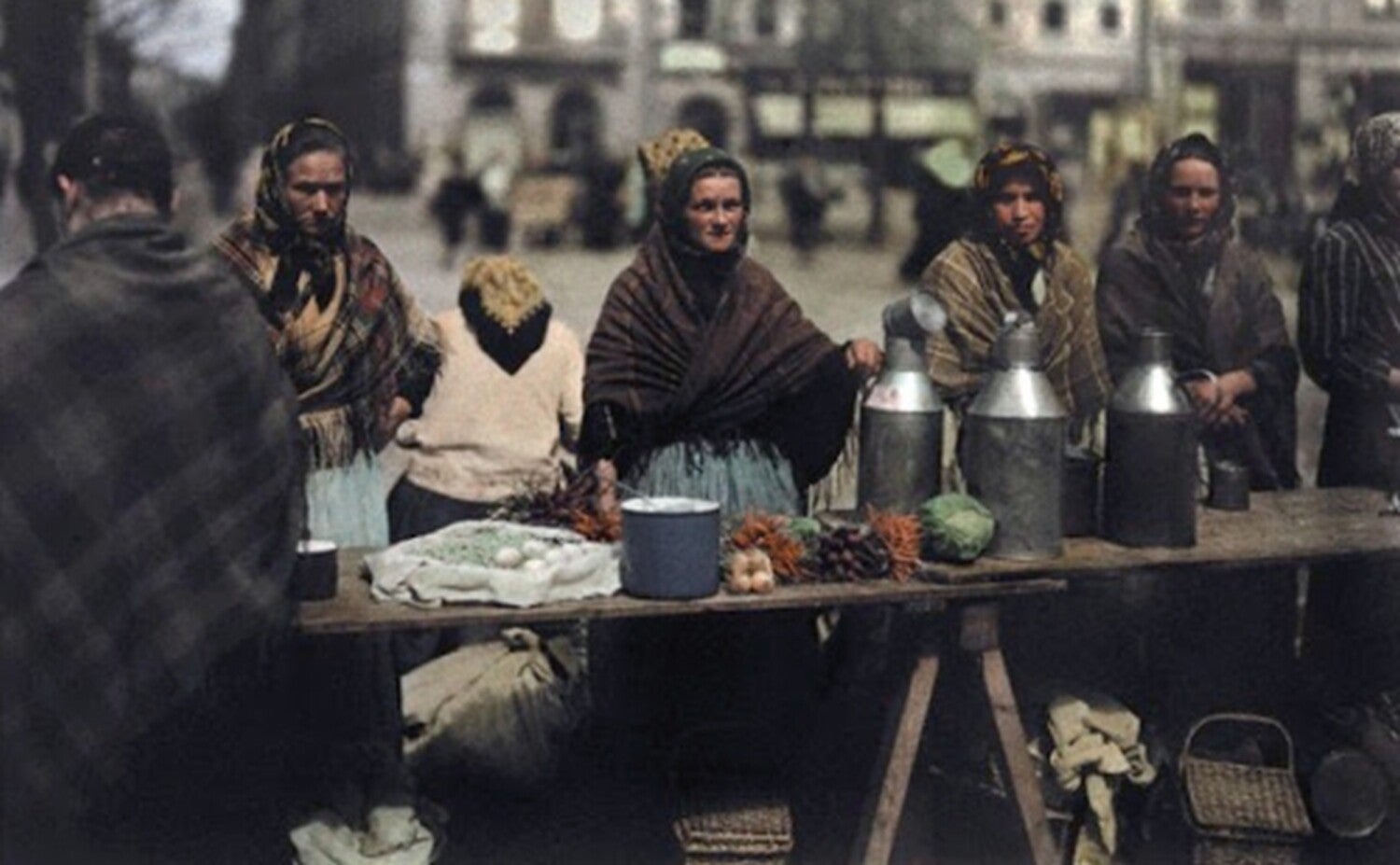
A Polish market during the 1930's. The Second Polish Republic’s economy was a mixed, uneven system shaped by post‑partition reconstruction and limited industrial capacity. Agriculture dominated, with smallholder farms supplying local markets and modest exports. Urban centres such as Warsaw, Łódź, and Kraków developed light industry, textiles, and mining. Shops ranged from traditional bazaars and family-owned stores to modern department shops in major cities. Market activity was lively but constrained by low wages, regional disparities, and periodic inflation, reflecting a state still consolidating its economic foundations.
...further strained trade...
Economic disparities were stark.
The western regions, once part of Prussia and the German Empire, were far more industrialised and prosperous than the agrarian eastern territories, often referred to as Poland A and Poland B.
Border tensions and a customs war with Germany further strained trade.
In 1924, Prime Minister Władysław Grabski introduced the złoty as a unified national currency, stabilising finances and ending hyperinflation -remarkably, without foreign loans.
...slower progress during the global depression...
Growth varied across the interwar period.
Estimates suggest strong expansion in the 1920s, followed by slower progress during the global depression.
Hostile relations with neighbours limited foreign trade; in 1937, only 21% of Poland’s trade involved bordering states, with Germany accounting for most of that.
Trade with the Soviet Union was negligible.
...exposed structural weaknesses...
Piłsudski’s government initially favoured conservative, low‑tax, free‑market policies, but the Great Depression exposed structural weaknesses.
Foreign corporations controlled nearly half of Poland’s equity capital, and unemployment and rural poverty were widespread.
After Piłsudski’s death, President Ignacy Mościcki’s government adopted more interventionist policies, increasing public spending and taxation to stimulate recovery.
...major turning point...
A major turning point came with the Four Year Plan under economist Eugeniusz Kwiatkowski.
This ambitious programme focused on three strategic projects: the development of the Gdynia seaport, enabling Poland to bypass German pressure in Gdańsk; the construction of the Polish Coal Trunk Line, linking Upper Silesia’s coalfields to Gdynia; and the creation of the Central Industrial Region (COP), a vast industrial zone intended to modernise the economy and strengthen defence.
New towns such as Stalowa Wola and Mościce emerged from these initiatives, alongside institutions like Bank Polski SA.
Interwar Poland also saw cultural and technological advances, including expanding radio networks and early television experiments.
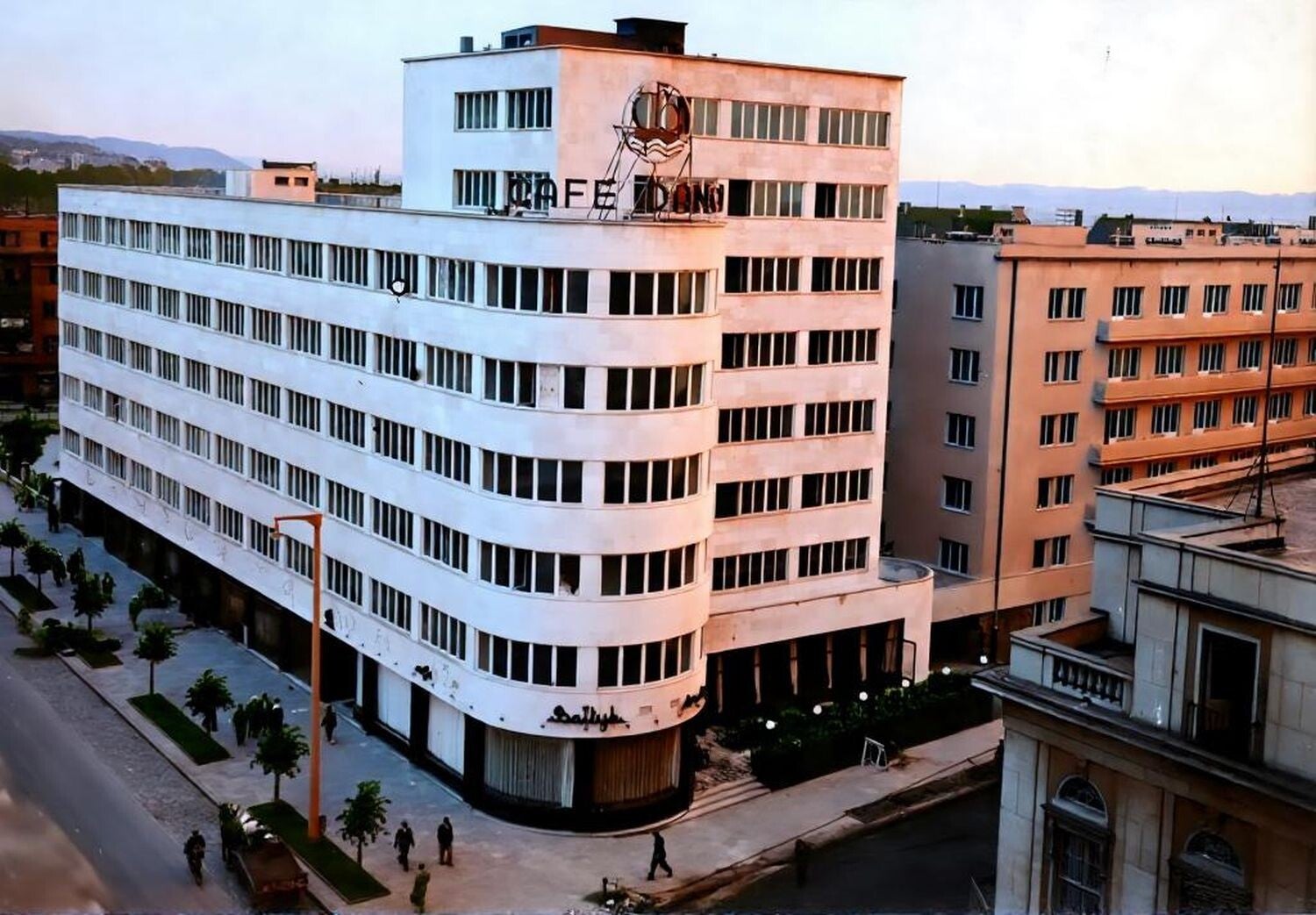
Gdynia, founded in 1926, developed into Poland’s primary modern Baltic seaport, built to secure independent maritime access after the loss of nearby ports. Its deep-water facilities, shipyards, and commercial docks supported rapid economic expansion, attracting workers, merchants, and new industries. By the late 1930s it handled major cargo volumes, hosted a growing merchant fleet, and symbolised national modernisation. Gdynia’s planned districts, rail links, and port infrastructure made it one of interwar Poland’s most dynamic urban centres.
Museum of Gdynia
...social tensions persisted...
Despite these achievements, social tensions persisted.
Rural poverty, unemployment, and labour unrest produced events such as the 1923 Kraków riot and the 1937 peasant strike.
Minority relations were strained, and border conflicts with neighbours added further instability. Natural disasters, including the devastating 1934 flood, compounded difficulties.
By 1939, Poland had made significant progress, but much of its hard‑won development was destroyed by the German and Soviet invasions that ended the Second Republic.
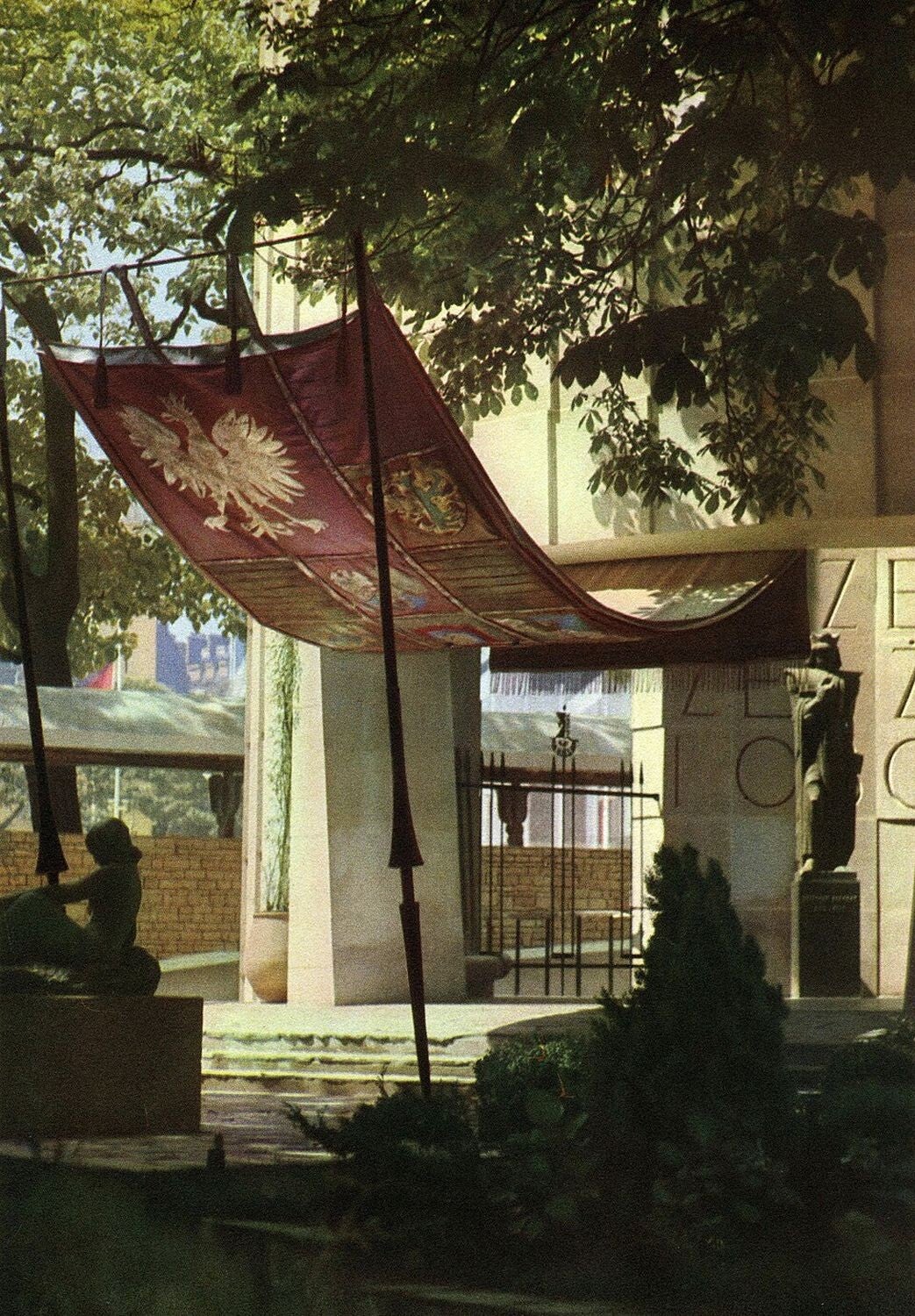
The Polish coat of arms displayed at the Polish pavilion during the 1937 Paris Expo featured the white crowned eagle, a long‑standing national emblem symbolising sovereignty and continuity. Its presentation at the international exhibition underscored Poland’s cultural identity, statehood, and diplomatic presence during the interwar period.
Photos Gorsky Frères - Album Officiel
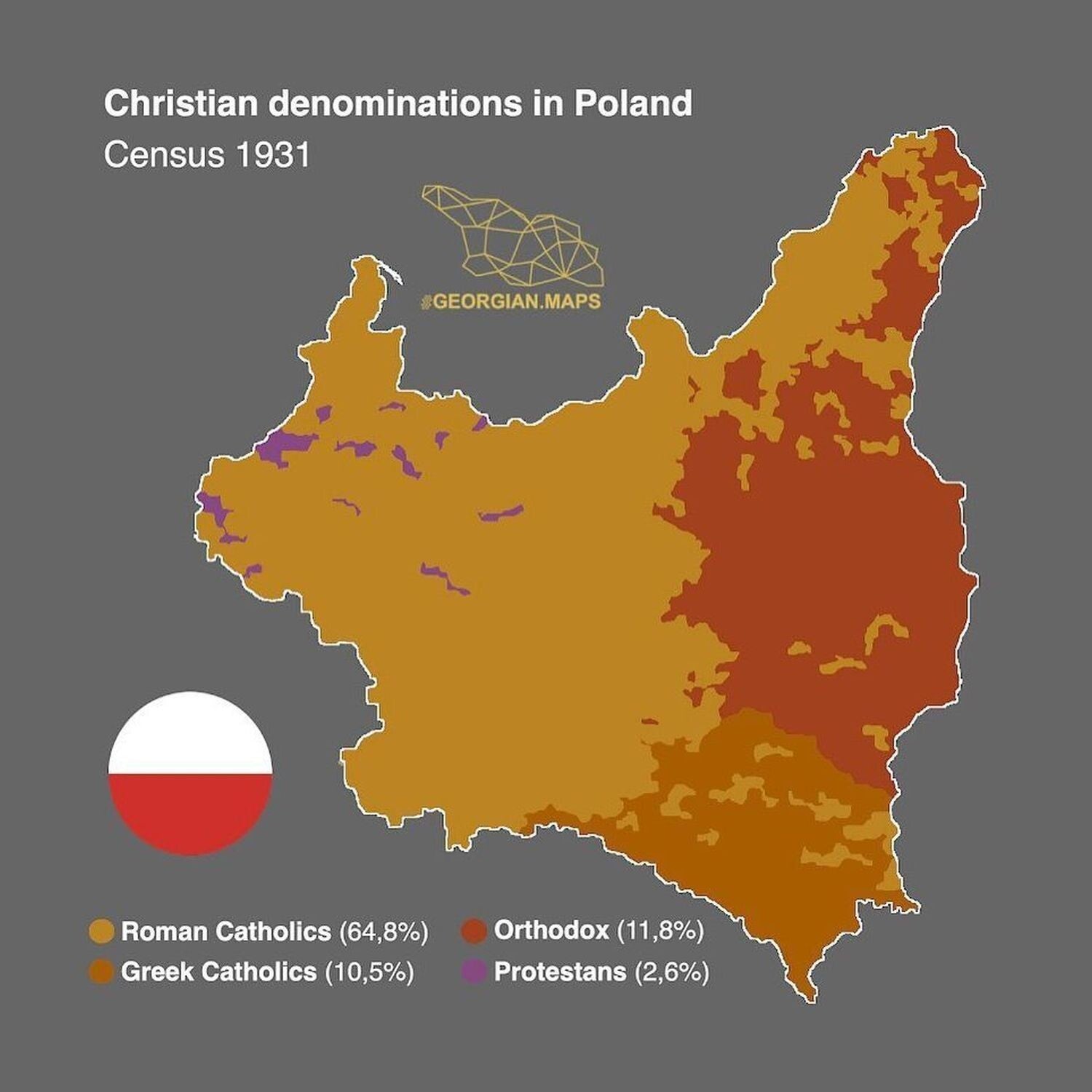
This map of Christian denominations in the Second Polish Republic reflected the state’s complex formation from three former partition zones. The 1931 census showed Roman Catholics forming clear majorities in western and central counties, where Polish settlement was dense. Eastern regions were more varied: Greek Catholics predominated in Ukrainian areas, Orthodox communities were strongest in Belarusian counties, and Protestant minorities—mainly Lutherans—were concentrated in former German territories. This mosaic illustrated how reunifying lands with distinct imperial legacies produced a religious landscape marked by regional diversity rather than uniformity.
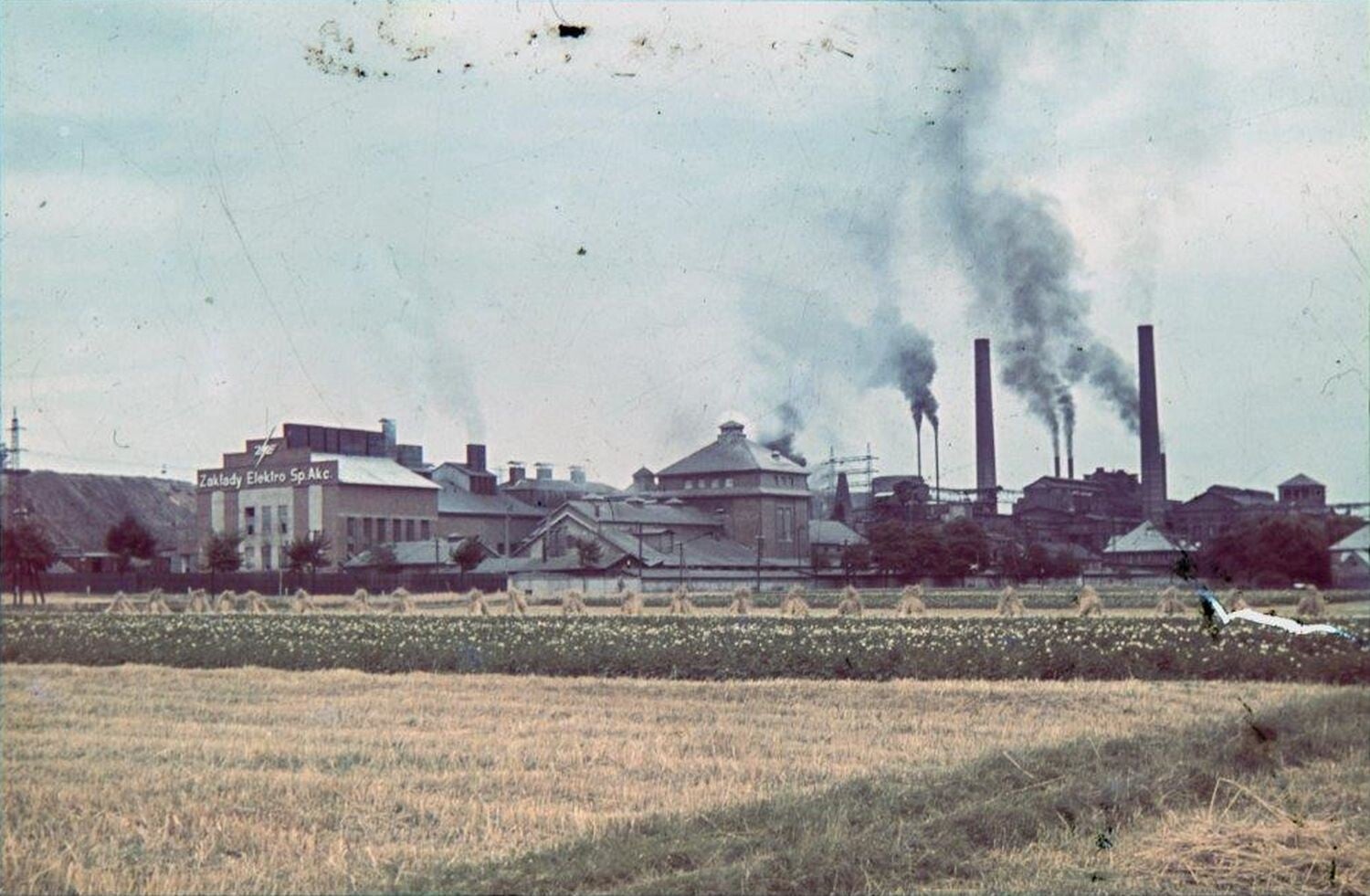
The coal power station at Łaziska Górne in the Silesian Voivodeship, photographed in 1939, represented one of the key pillars of Poland’s interwar industrial infrastructure. Operating from 1927 to 1953 as the country’s largest power plant, it supplied essential electricity to the rapidly developing Silesian region. Its scale, modern equipment, and strategic location made it central to national energy production during a period of significant economic and technological expansion.
Henryk Poddębski - National Archives
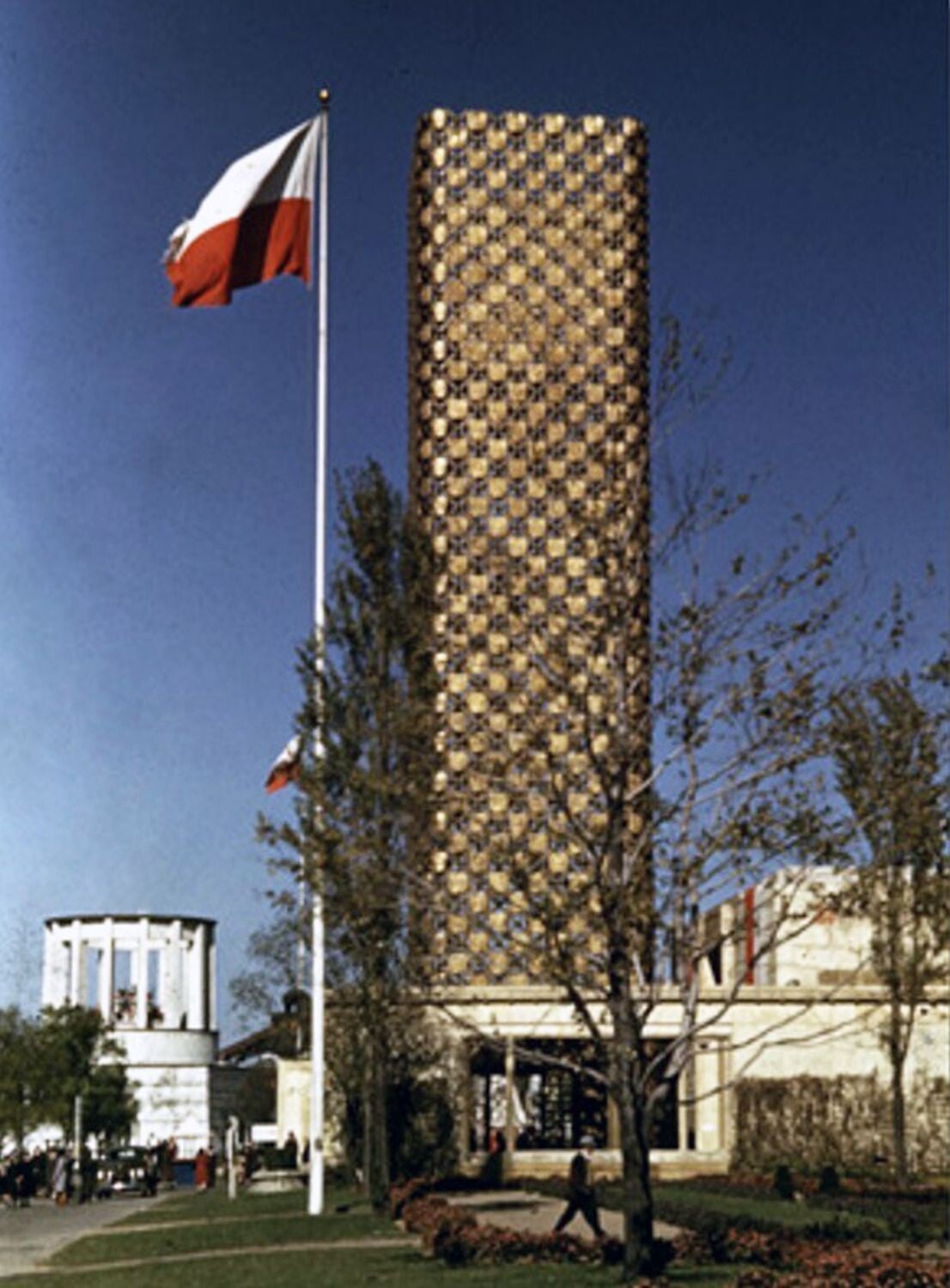
The Polish pavilion at the 1939 New York World’s Fair, designed by architects Jan Cybulski and Jan Galinowski, featured a striking 56‑metre steel tower clad in gold‑plated copper shields, echoing medieval Polish fortifications. Sculptor Stanisław K. Ostrowski created the equestrian statue of King Władysław Jagiełło, whose victory over the Teutonic Order in 1410 was commemorated. The pavilion stood in Flushing Meadows–Corona Park, with Jagiełło’s monument later permanently installed in Central Park in 1945.
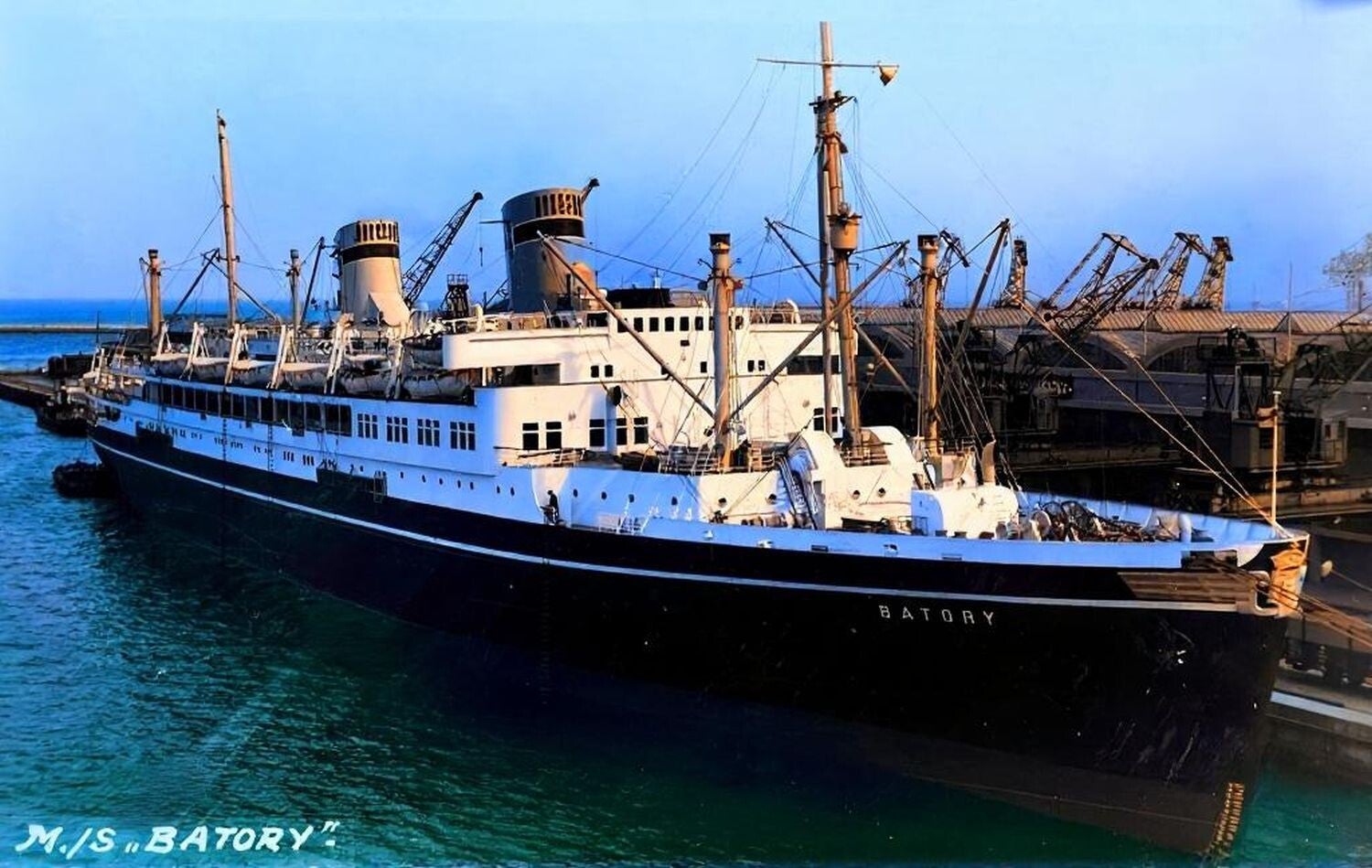
MS Batory at the sea port of Gdynia in the 1930's. Gdynia was one of the Second Polish Republic’s greatest achievements, transformed from a small fishing village into a major modern port after 1921. Built to secure Poland’s independent access to the Baltic, it rapidly became the country’s principal maritime hub, surpassing Gdańsk by the mid‑1930s. Its shipyards, deep‑water quays, and modernist cityscape symbolised national ambition, economic sovereignty, and the dynamic state‑building of interwar Poland.
Internal struggles
Although the Poles had finally got their country back, all was not plain sailing. The new republic faced an economy suffering from four years of war; an extensively damaged infrastructure and a significant amount of minority groups within its borders – all with their own agendas. It needed to reintegrate the former three zones into one country and deal with external influences on its industries.

Polish farmer workers in the 1930's
A succession of wars
Indeed, the first few years of Poland’s existence seemed to entail one war after another, as the new country battled for its very existence.
- The new country found itself fighting the Ukraine, (itself an independent region after the collapse of the Austro-Hungary empire) in November of 1918.
- The Greater Poland Uprising of 1918 saw them clash with Germany in the disputed region of Poznan.
- The Seven-Day-War (also known as the Polish-Czechoslovakian War) of January 1919 followed that as the Poles squared off with yet another new country, the Czech Republic.
- Tensions with Russia led to the immense Polish-Soviet War (Polish-Russian War) of 1918- 1921 in which Poland eventually emerged victorious after three hard fought years.
- And despite being entangled in a war with Russia, the Poles still found time to get into a war with Lithuania in spring of 1919.

The Polish government was new and constantly changing its personnel and corruption was becoming an increasing problem. The four main political parties disagreed on most issues which hampered progress in certain areas.
It tried to model itself on the French Third Republic but found itself slowly edging towards a dictatorship, which came to a head in the 1926 coup which placed military strongman Józef Piłsudski in charge and removed any vestiges of democracy.
By the late 1930’s Poland was in a tricky position. It’s Foreign Minister Józef Beck was distrusted outside of his country and Poland itself was held in low regard by many Western countries:
Józef Piłsudski

Warsaw in the 1930's


https://www.vintag.es/

Growing pressure
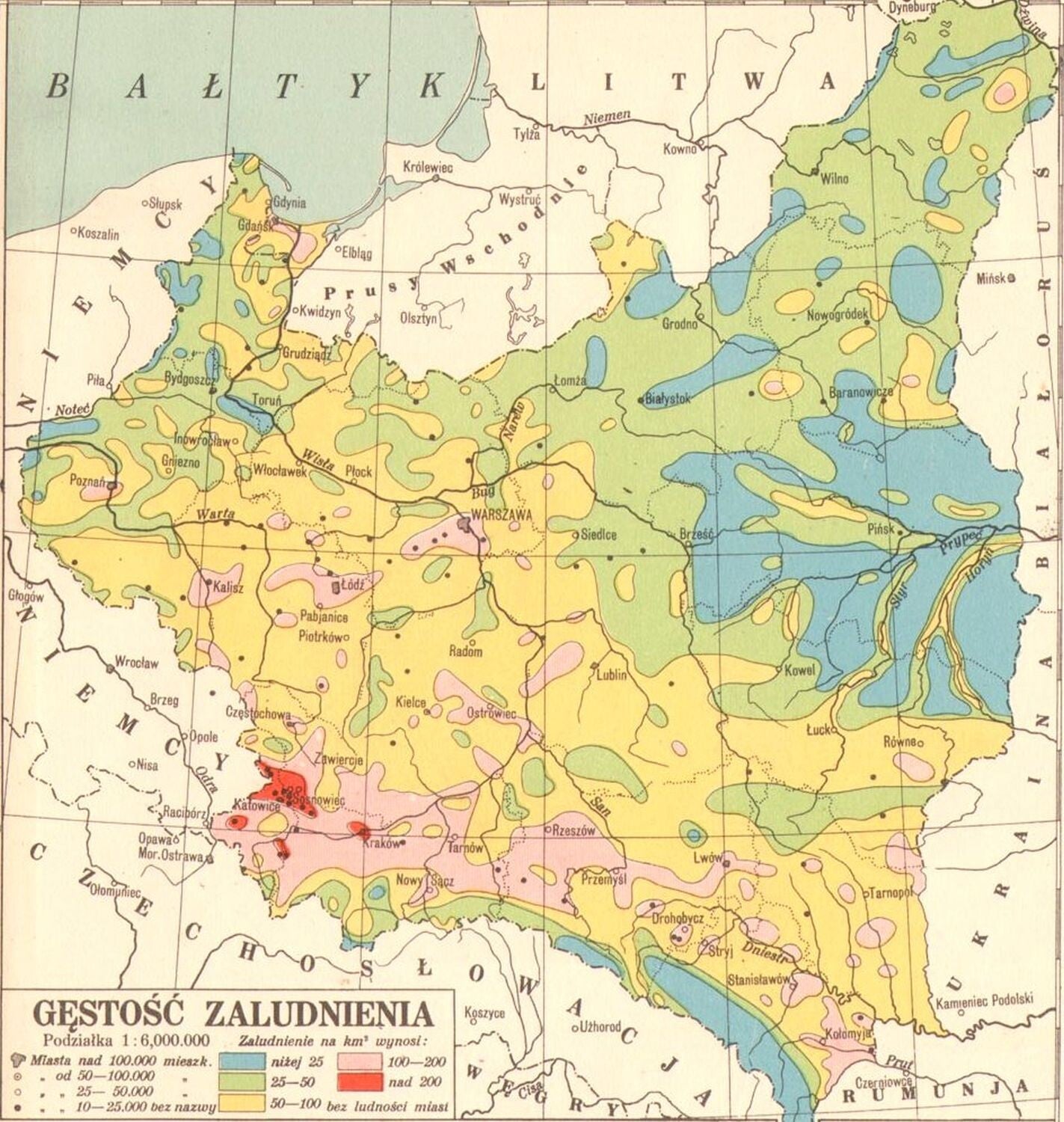
Poland's population density in 1930.
Poland had a substantial population of 35 million but compared to other countries, it was lagging behind in industry – much of its economy was still based around agriculture and it was only slowly upgrading its infrastructure: For example, in the mid-1930’s - Poland had 340,000 kilometres (211,266 miles) of roads, but only 58,000 had a hard surface.
Militarily, it was focussed primarily on the threat from Russia despite the growing Nazi menace. Geographically, it shared long borders with both these countries – both of which had more powerful militaries than Poland.
It would not be long before these issues came to a head.

Map comparing the border of the Polish Second Republic with the later German Occupied Poland (General Government 1939 - 1945) and later post war borders.
Sources:
Overy, Richard (1989). The Road To War: The Origins of World War II. p. 9
Piotr Osęka, Znoje na wybojach. Polityka weekly, 21 July 2011
Second Polish Republic - Wikipedia
(697) Pinterest
Teraz W kolorze
Rare and Stunning Color Photographs Capture Daily Life in Poland in the 1930s ~ Vintage Everyday (© Hans Hildenbrand/National Geographic Society/Corbis)
Austrian Department - Wikipedia
WWI - 6th Grade History MRS. BROWN (weebly.com)
https://militaryhistorynow.com/2012/11/29/military-multi-tasking-poland-fights-five-wars-at-once/
www.diverse-travel.com