
Overview
The Philippines Campaign of 1944 was the opening phase of the Allied effort to liberate the archipelago after nearly three years of Japanese occupation. Following the Central Pacific advances through the Marshalls and Marianas, American planners identified the Philippines as a strategic objective: its location astride Japan’s southern supply routes, its airfields suitable for operations against the home islands, and its political significance under General Douglas MacArthur’s pledge to return. The campaign began on 20 October 1944 with landings on Leyte, supported by extensive naval and air preparation designed to secure beachheads and disrupt Japanese reinforcement routes.
Japanese commanders attempted to counter the landings with a major fleet operation that resulted in the Battle of Leyte Gulf, fought between 23 and 26 October. This engagement, involving multiple surface and carrier groups, ended in a decisive American victory and eliminated Japan’s remaining ability to conduct large‑scale naval operations. Despite the naval defeat, Japanese ground forces continued to resist on Leyte, reinforcing the island through night convoys and mountain routes. Fighting extended into December as American and Filipino units advanced through difficult terrain and adverse weather.
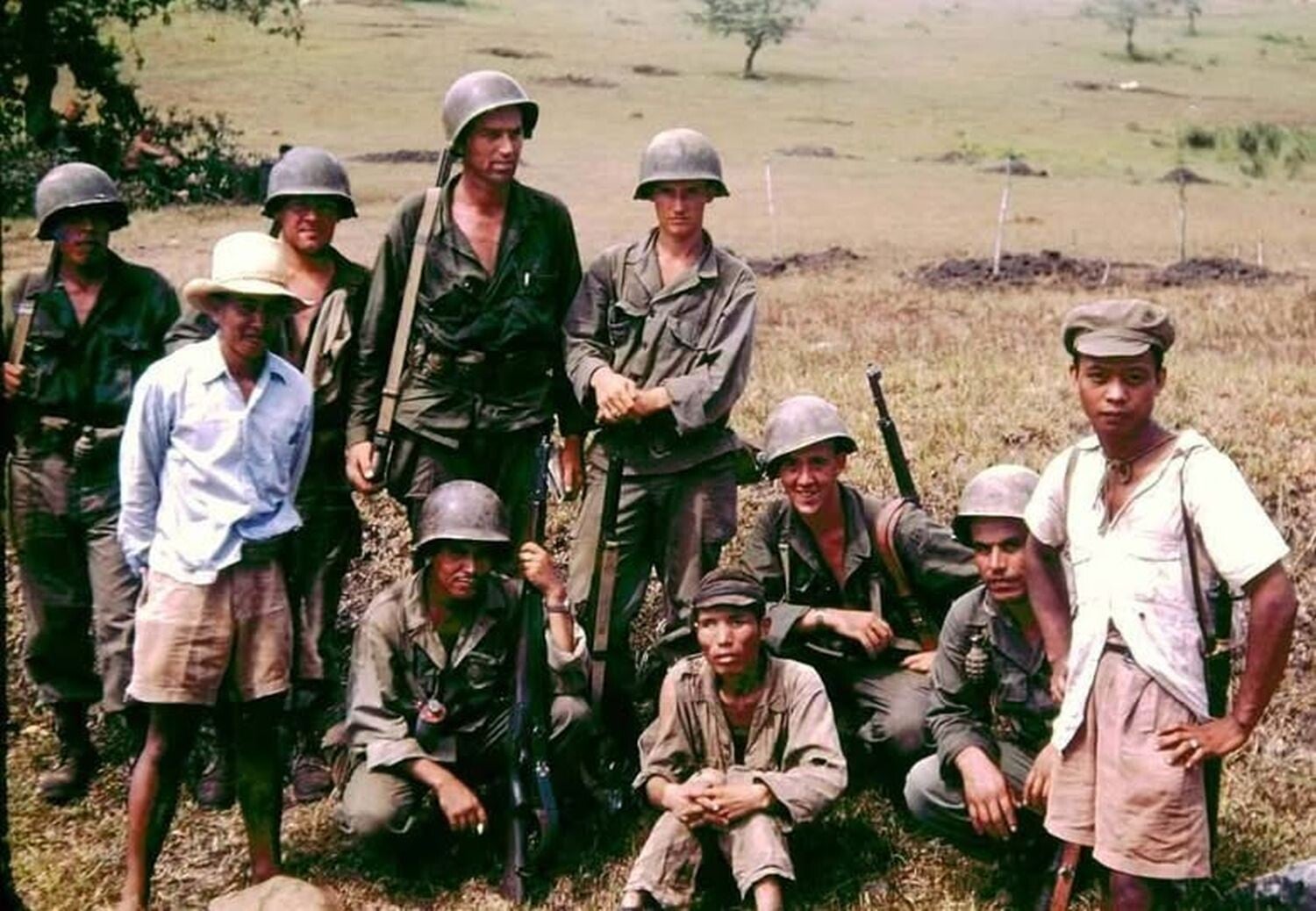
United States Army soldiers alongside local Filipino guerrillas and a captured Japanese soldier in the Philippines during the Second World War. Filipino resistance during the Pacific campaign combined organised guerrilla units, village militias, and clandestine intelligence networks operating under Japanese occupation. Fighters supported U.S. landings with reconnaissance, sabotage, and guiding troops through difficult terrain. Their sustained local pressure weakened Japanese control, preserved civilian morale, and significantly aided the liberation of the Philippines.
The 1944 phase of the campaign focused primarily on Leyte and its surrounding waters. Securing the island provided a base for subsequent operations on Luzon and the Visayas, enabling the Allies to establish airfields for long‑range strikes and logistical support. By the end of the year, Japanese forces on Leyte were isolated, their supply lines severed, and their capacity for coordinated defence diminished. The campaign’s opening phase demonstrated the scale of joint operations required in the Pacific War, combining amphibious assaults, carrier aviation, and surface fleet actions.
The successes of 1944 set the conditions for the broader liberation of the Philippines in early 1945, marking a decisive shift in the strategic balance of the Pacific conflict.