
Overview
The Nanking Massacre was one of the most notorious atrocities of the Second Sino-Japanese War. In December 1937, Japanese forces captured Nanking, then the capital of Nationalist China, following their advance from Shanghai. The Chinese government had already moved inland, while many soldiers and civilians remained behind as Japanese troops entered the city.
During the following weeks, Japanese forces carried out widespread killings, looting and other atrocities against Chinese civilians and prisoners of war. Large numbers of surrendered or captured Chinese soldiers were executed rather than treated as prisoners. Civilians were also murdered throughout the city and surrounding districts. The scale and brutality of the violence made Nanking an enduring symbol of Chinese suffering under Japanese occupation.
Foreign residents who remained in Nanking attempted to protect civilians by establishing the Nanking Safety Zone. Thousands sought refuge there, while foreigners documented conditions within the city and recorded evidence of Japanese atrocities. Their accounts later provided important testimony concerning what had occurred.
The massacre reflected the extreme brutality that characterised much of Japan’s war in China. Japanese military culture emphasised obedience, sacrifice and contempt for surrender, while attitudes towards the Chinese frequently encouraged harsh treatment of both soldiers and civilians. Nevertheless, responsibility rested with those who committed, permitted or failed to prevent the atrocities.
Nanking also had wider international consequences. Reports of Japanese actions contributed to growing hostility towards Japan abroad and damaged its international reputation. Yet the war in China continued, consuming Japanese troops and resources without producing the decisive victory Tokyo had expected.
Japan consequently sought to strengthen its strategic and economic position through further expansion. Increasing confrontation with the United States and European colonial powers eventually contributed to the outbreak of the wider Pacific War in December 1941. Nanking therefore became both a defining tragedy of the Sino-Japanese War and a powerful symbol of the destructive consequences of Japanese imperial expansion.
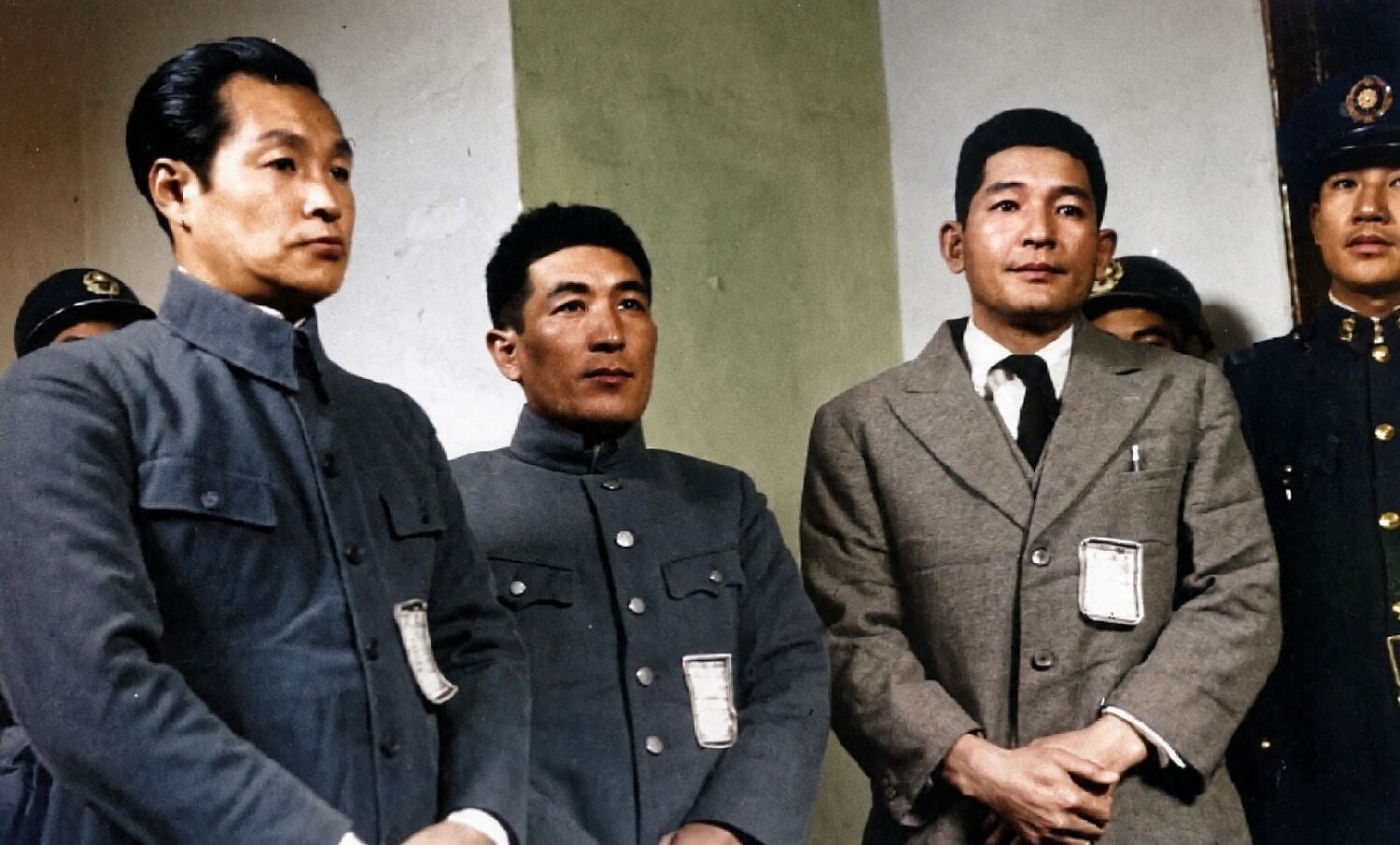
Noda, center, and Mukai, right, during their trial for war crimes in China. Gunkichi Tanaka is on the left. Toshiaki Mukai, Tsuyoshi Noda and Gunkichi Tanaka became notorious for atrocities committed during Japan’s invasion of China. Mukai and Noda were associated with the infamous “Hundred-Man Killing Contest,” reported by Japanese newspapers during the advance towards Nanjing in 1937, although the accuracy of the competition remains disputed. Tanaka was accused of personally killing numerous Chinese prisoners and civilians with his sword. After Japan’s defeat, all three were prosecuted by the Nanjing War Crimes Tribunal for atrocities connected with the capture and occupation of Nanjing. They were convicted, sentenced to death and executed by firing squad in January 1948.