After several days of unsettled skies, Saturday 27 July dawned with a measure of clarity. Over southern England and the Channel, the weather lightened, the stratus layers thinning into shifting banks of cloud.
The Straits themselves were relatively fair, though the Channel beyond remained patchy with overcast.
For the Luftwaffe, which had chafed under weather delays, the improvement meant one thing: a renewed opportunity to hammer Britain’s lifelines at sea.
...would prove costly on both sides...
The day would prove costly on both sides. For the Royal Navy, it would bring a grievous blow in the loss of three destroyers.
For Fighter Command, it would mean exhausting hours of combat over the Straits.
For the Luftwaffe, though several raids failed to achieve decisive results, there was the satisfaction of probing Britain’s defences, testing new tactics, and reminding the Admiralty that the Channel was now a battlefield.
Kanalkampf
Kanalkampf marked the opening phase of the Battle of Britain, a grinding, attritional struggle fought over the English Channel during July and early August 1940.
Although later overshadowed by the dramatic daylight battles over southern England, this earlier period shaped everything that followed.
The Luftwaffe sought to probe British defences, weaken RAF Fighter Command, and disrupt the vital coastal convoys that kept Britain supplied.
What emerged was a series of sharp, often chaotic engagements in which both sides tested tactics, endurance, and resolve.
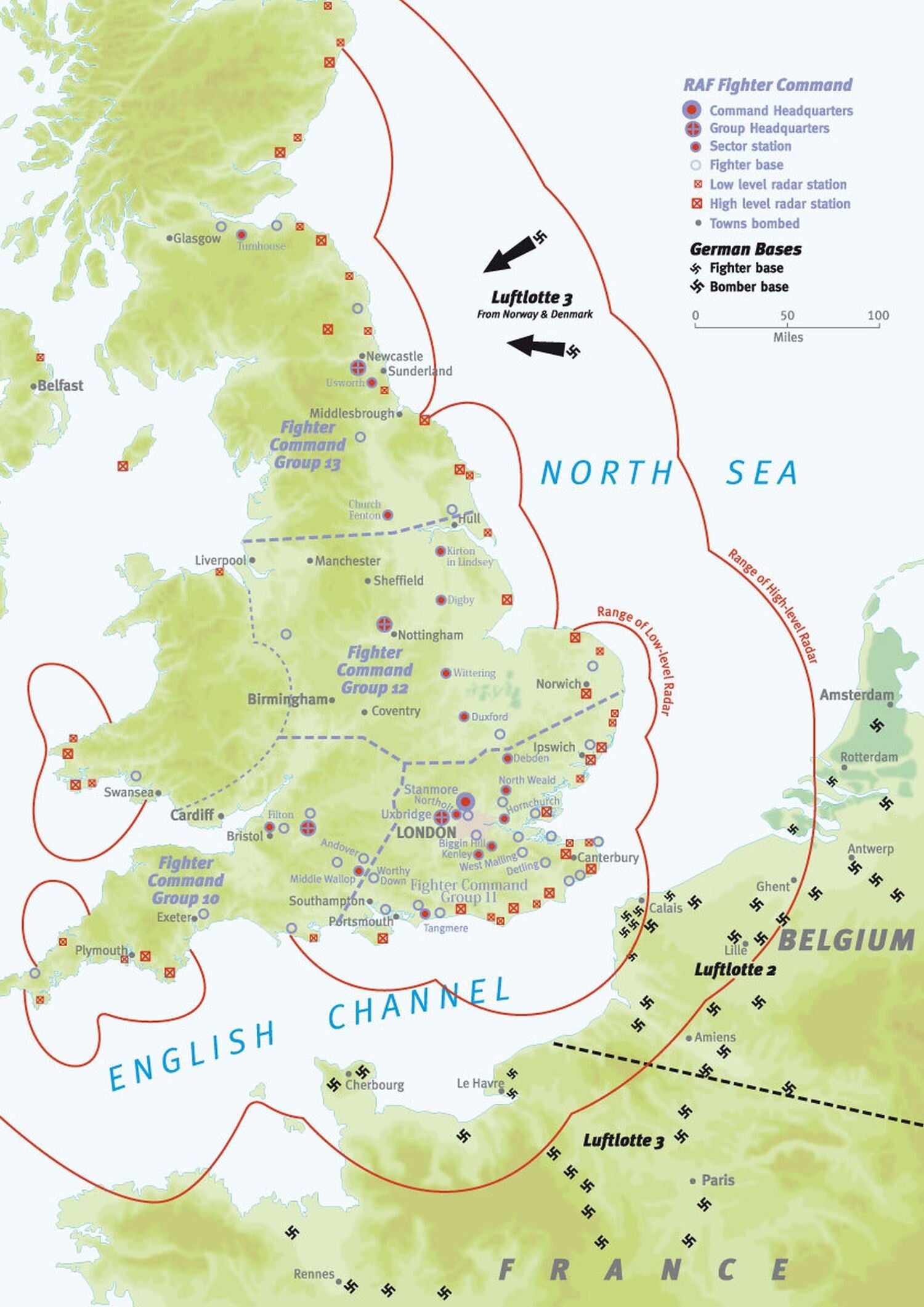
Kanalkampf was the opening phase of the Battle of Britain in July–early August 1940, fought over the English Channel as the Luftwaffe—primarily Luftflotte 2 and Luftflotte 3—attacked coastal convoys to draw the RAF into attrition. Fighter Command’s No. 11 Group carried the brunt of the defence, supported at times by No. 10 and No. 12 Groups. The Channel’s narrow shipping lanes became a daily battleground of Stukas, bombers, and Bf 109 escorts versus Hurricanes and Spitfires. Though losses were heavy on both sides, the Luftwaffe failed to break the RAF, and the campaign hardened British readiness for the battles that followed.
...slow, vulnerable targets...
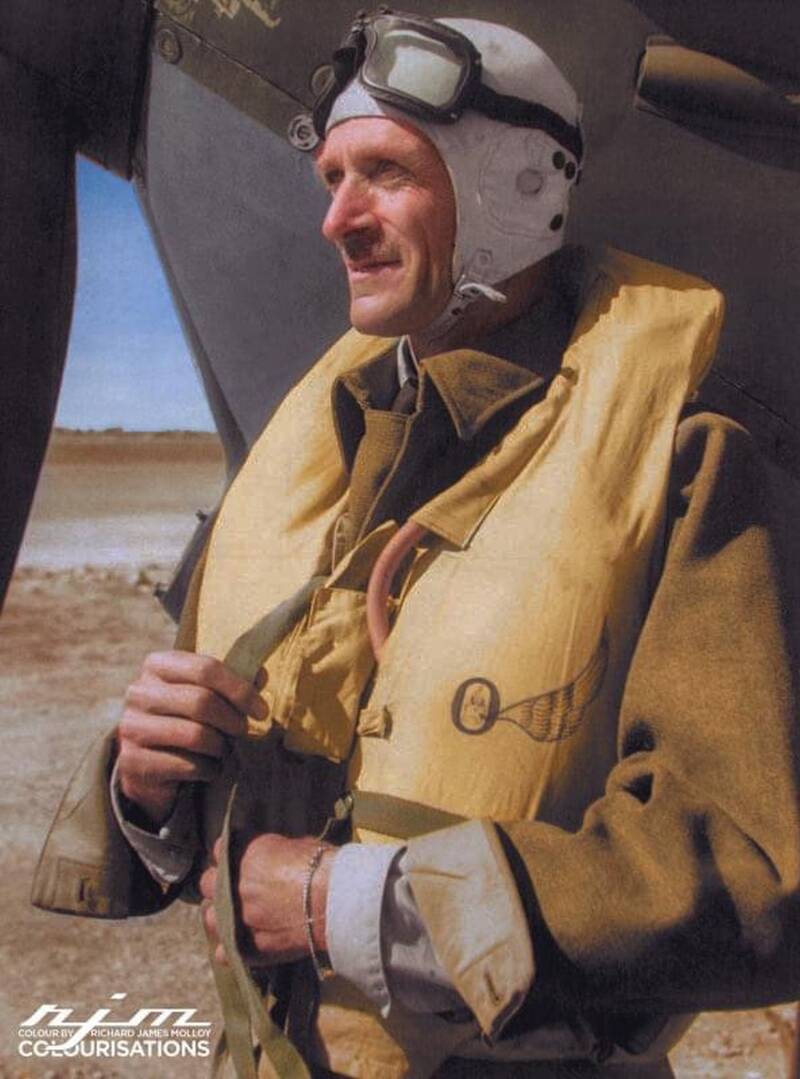
Air Vice-Marshal Keith Park, commander of RAF 11 Group, Fighter Command.
The Channel itself dictated the character of the fighting. Convoys were slow, vulnerable targets, and the Luftwaffe believed that repeated attacks would force the RAF to commit its fighters piecemeal. German commanders hoped to draw
No. 11 Group into a war of attrition, wearing down pilots and machines before the main assault on airfields began.
For Fighter Command, the dilemma was constant: defend the convoys and risk unnecessary losses, or hold back and allow shipping to be hammered.
Air Vice-Marshal Keith Park chose a middle path, committing squadrons carefully and avoiding the large, wasteful dogfights the Germans wanted.
The engagements themselves were varied. Stuka dive-bombers struck at ships and ports, often escorted by Bf 109s operating at the edge of their range.
...squadrons scrambled repeatedly...
RAF squadrons scrambled repeatedly, sometimes several times a day, intercepting raids that were small enough to be manageable yet frequent enough to be exhausting.
Losses mounted on both sides, but the Luftwaffe failed to achieve a decisive advantage.
British radar, observer reports, and Park’s disciplined control system ensured that fighters were rarely caught unprepared.
By early August, the Germans shifted their focus inland, convinced that the Channel battles had sufficiently weakened Fighter Command.
In reality, the RAF remained bruised but unbroken. Kanalkampf had not delivered the collapse the Luftwaffe expected; instead, it hardened British defences and set the stage for the far more intense battles to come.
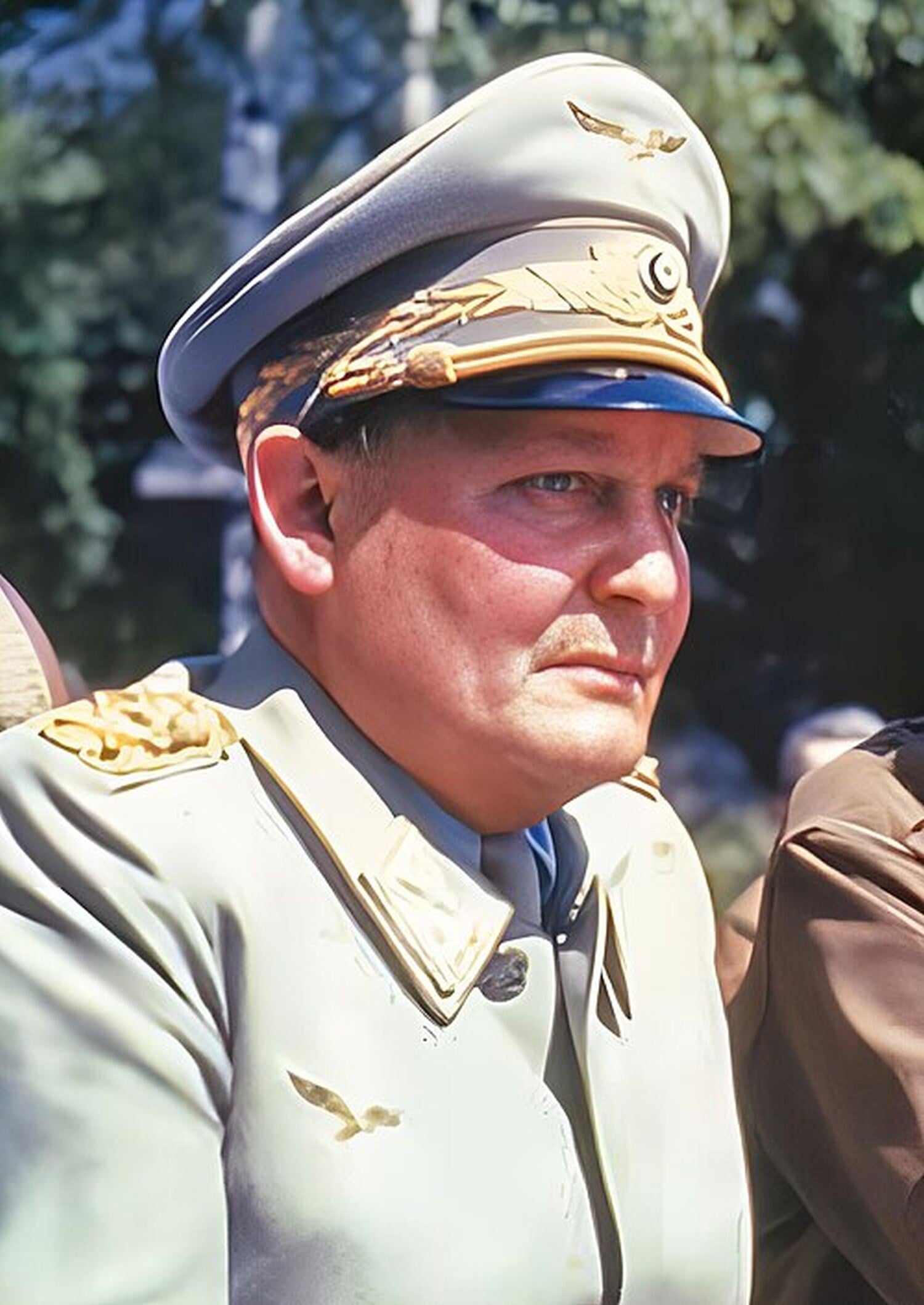
Reichsmarschall of the Luftwaffe, Hermann Göring.
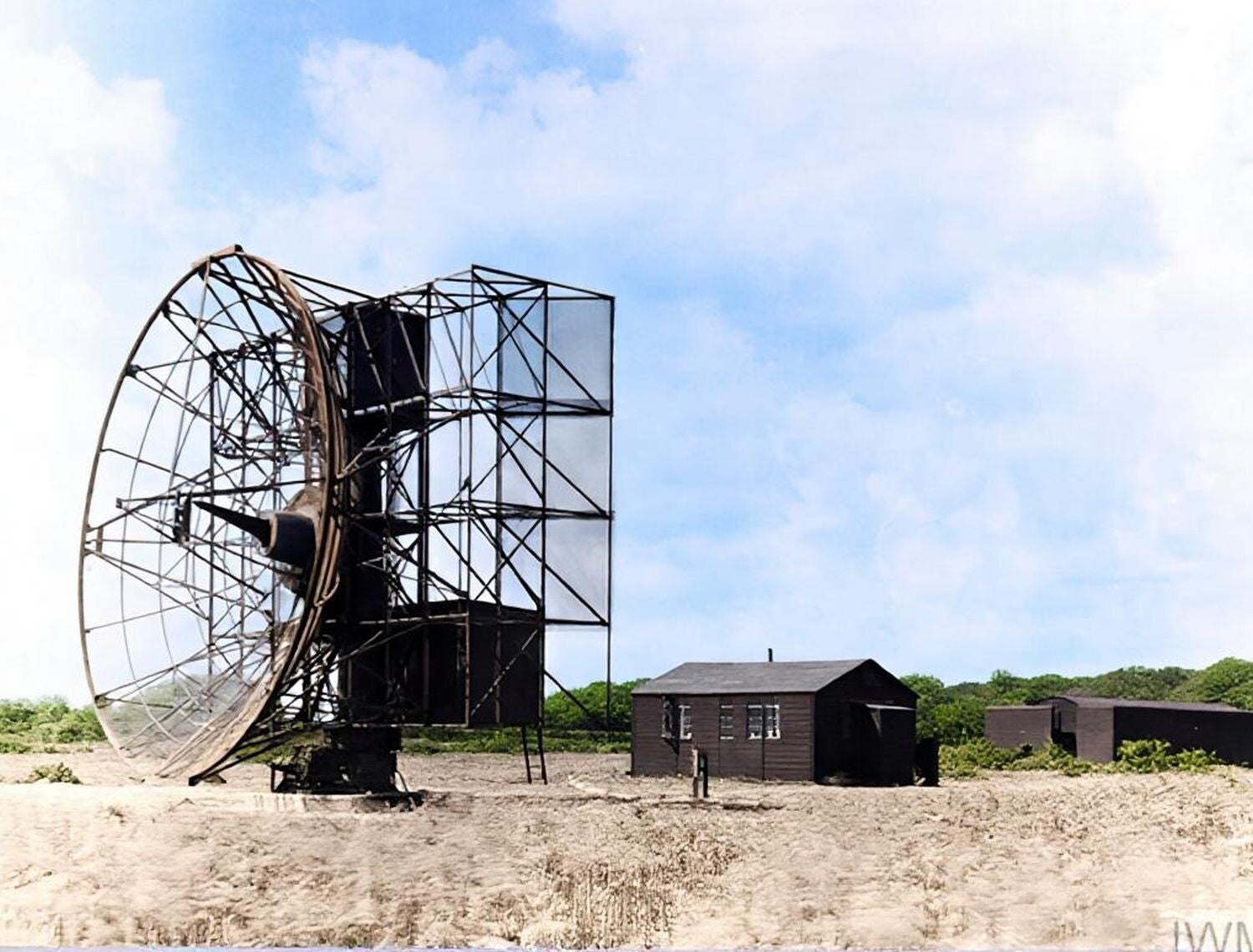
Radar played a decisive but often understated role during Kanalkampf, the opening phase of the Battle of Britain in July–early August 1940. While Luftflotte 2 and Luftflotte 3 targeted Channel convoys to draw Fighter Command into attrition, Britain’s Chain Home radar network ensured the RAF was rarely surprised. Early warning allowed No. 11 Group to scramble Hurricanes and Spitfires efficiently, avoiding wasteful standing patrols and preventing the Luftwaffe from achieving tactical surprise. Even when raids were small and frequent, radar reporting and sector control kept British responses measured. Kanalkampf proved that radar was not merely a tool but the backbone of Britain’s defensive system.
Imperial War Museum
Morning Convoy Raids and the Sinking of HMS Wren
The first major clash came in mid-morning.
At 09:45, a Luftwaffe formation assembled over the French coast: Ju 87 Stukas of III./StG 77, escorted by Messerschmitt Bf 109s from III./JG 27.
Their target was a coastal convoy codenamed Bacon, moving off Swanage.
Radar stations on the south coast picked up the raid, and controllers scrambled a mixed force to meet it: Hurricanes from Nos. 145 and 238 Squadrons, and Spitfires of No. 609 Squadron.
The battle unfolded swiftly over the Channel waters.
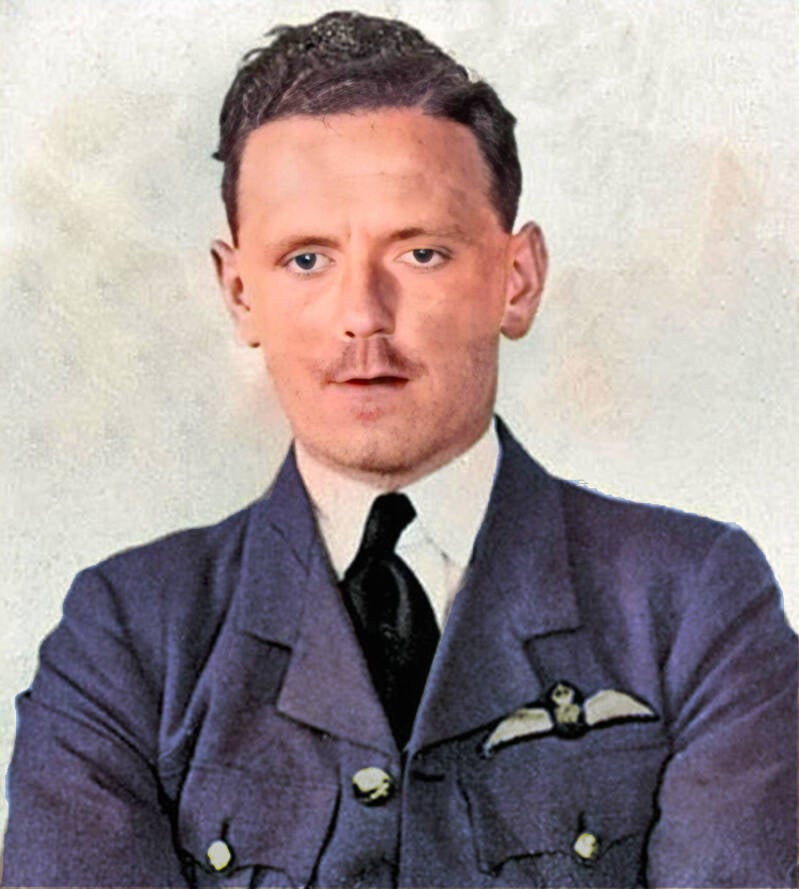
Flight Lieutenant John Webster. On the 27th July, he destroyed a Me109.
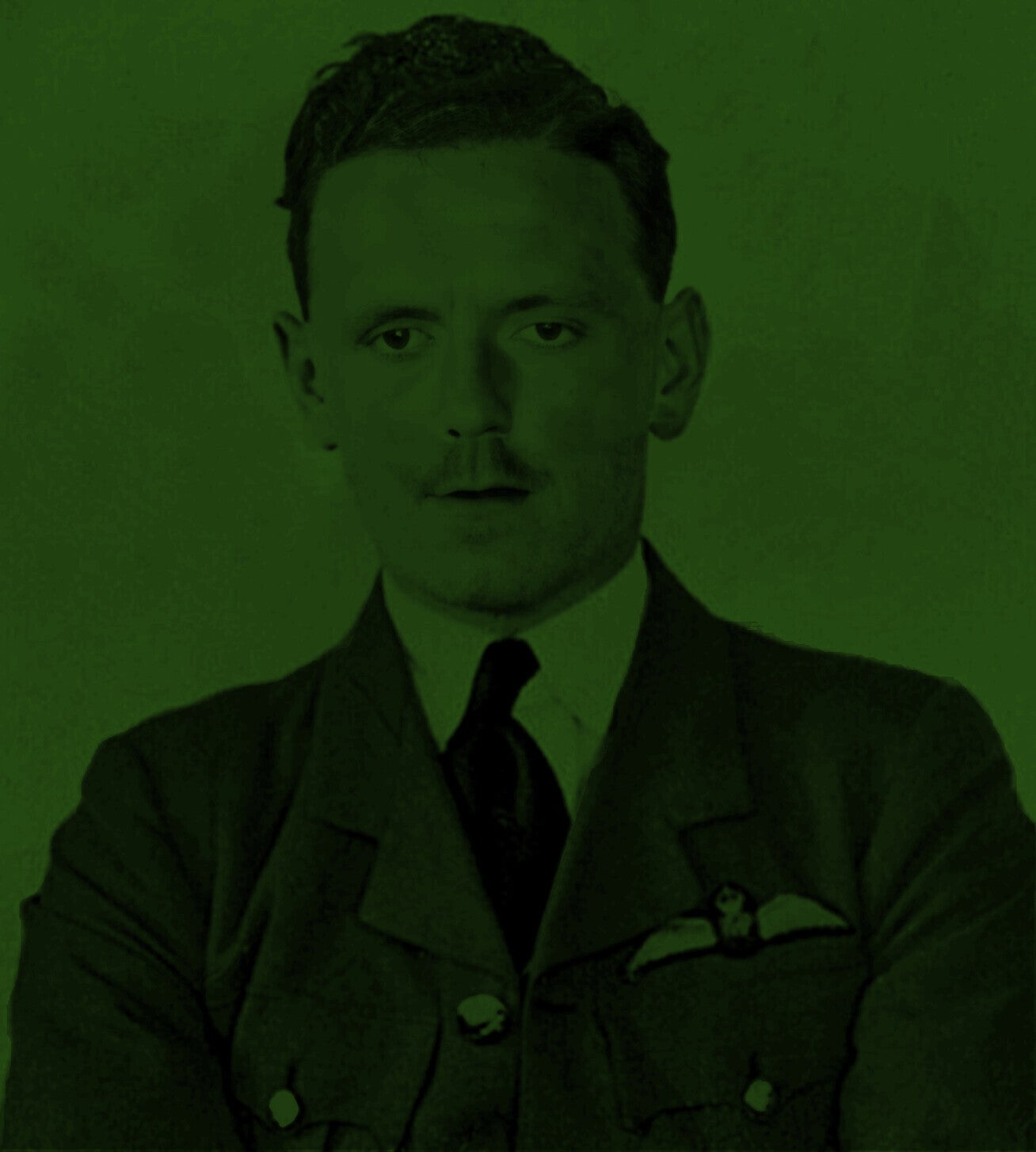
leading Green Section … on patrol over Dover, I saw bursts of AA fire from the shore batteries, and aircraft diving down on the harbour.
I called Green and Blue Sections to follow me down.
I then followed the aircraft in a steep dive but did not get in range until the enemy aircraft flattened out about 50ft above sea-level.
I then fired two short bursts at about 150 yards. The E/A flew straight into the sea.
I then saw a further He 113 being attacked by a Hurricane. This aircraft, He 113, came down in the sea.
I was then about eight miles from the French coast. On way home at about 20ft I was attacked by a further He 113.
The combat consisted of a series of very tight turns at 50ft.
I fired three short bursts with no apparent effect, then broke off the combat as I was approaching the French coast.
Flight Lieutenant John Webster,, 41 Squadron, combat report for the 27th July 1940.
...a brief, twisting dogfight...
No. 145 Squadron struck first, one Hurricane pilot downing a Messerschmitt in a brief, twisting dogfight.
No. 238 Squadron attacked the Stukas as they dived, one Ju 87 falling in flames, another limping home trailing smoke.
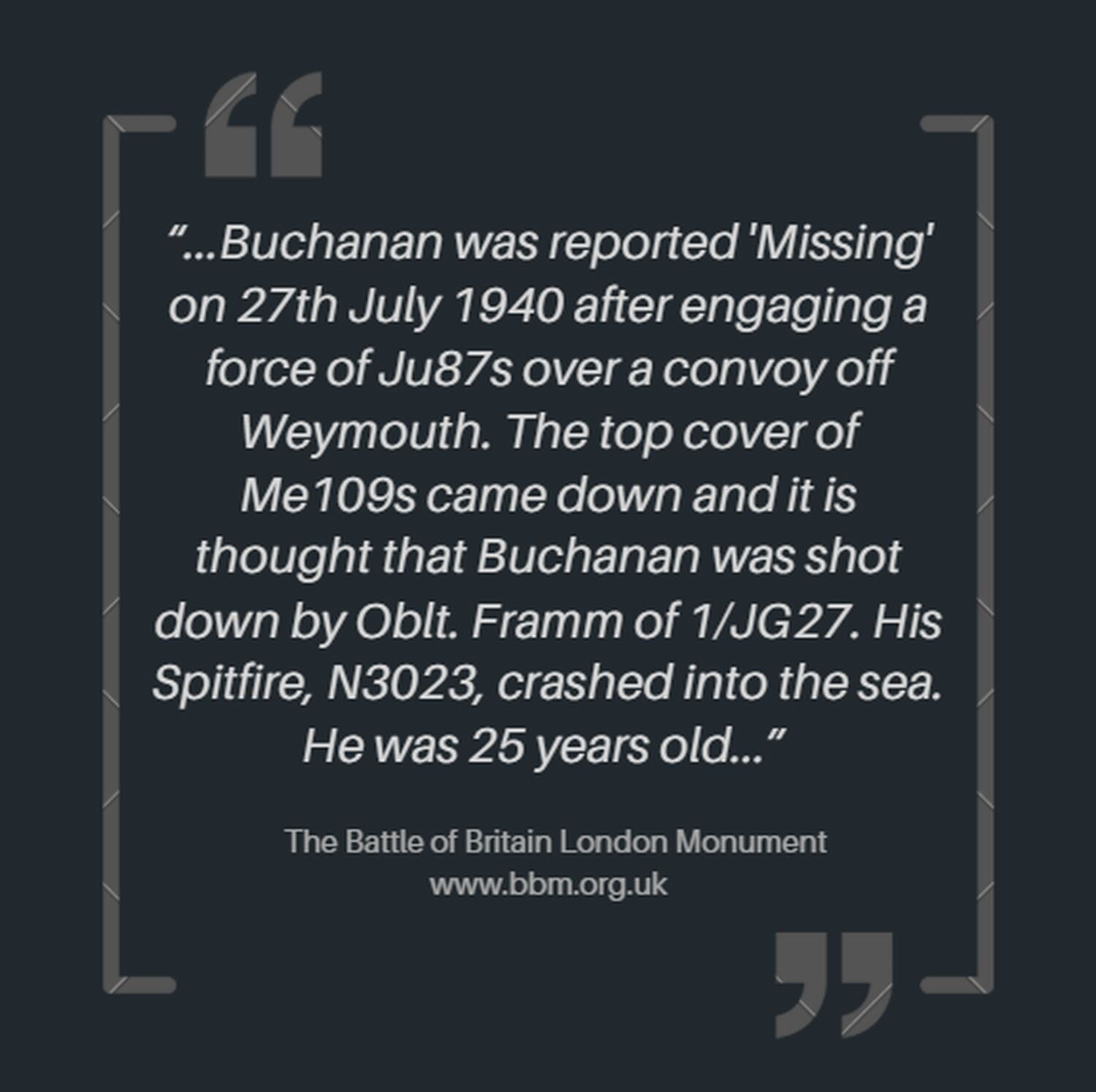
But not all went Britain’s way. In the confusion, a 609 Squadron Spitfire was shot down; Pilot Officer J.R. Buchanan failed to return, the kill later credited to Oberleutnant Gerhart Framm of 2./JG 27.

The British destroyer HMS Wren was sunk by He 111 bombers from KG 53 on 27 July 1940 while escorting minesweepers off Aldburgh, Suffolk.
Saturday 27 July 1940 | The Battle of Britain Historical Timeline
...exploiting a lapse in RDF tracking...
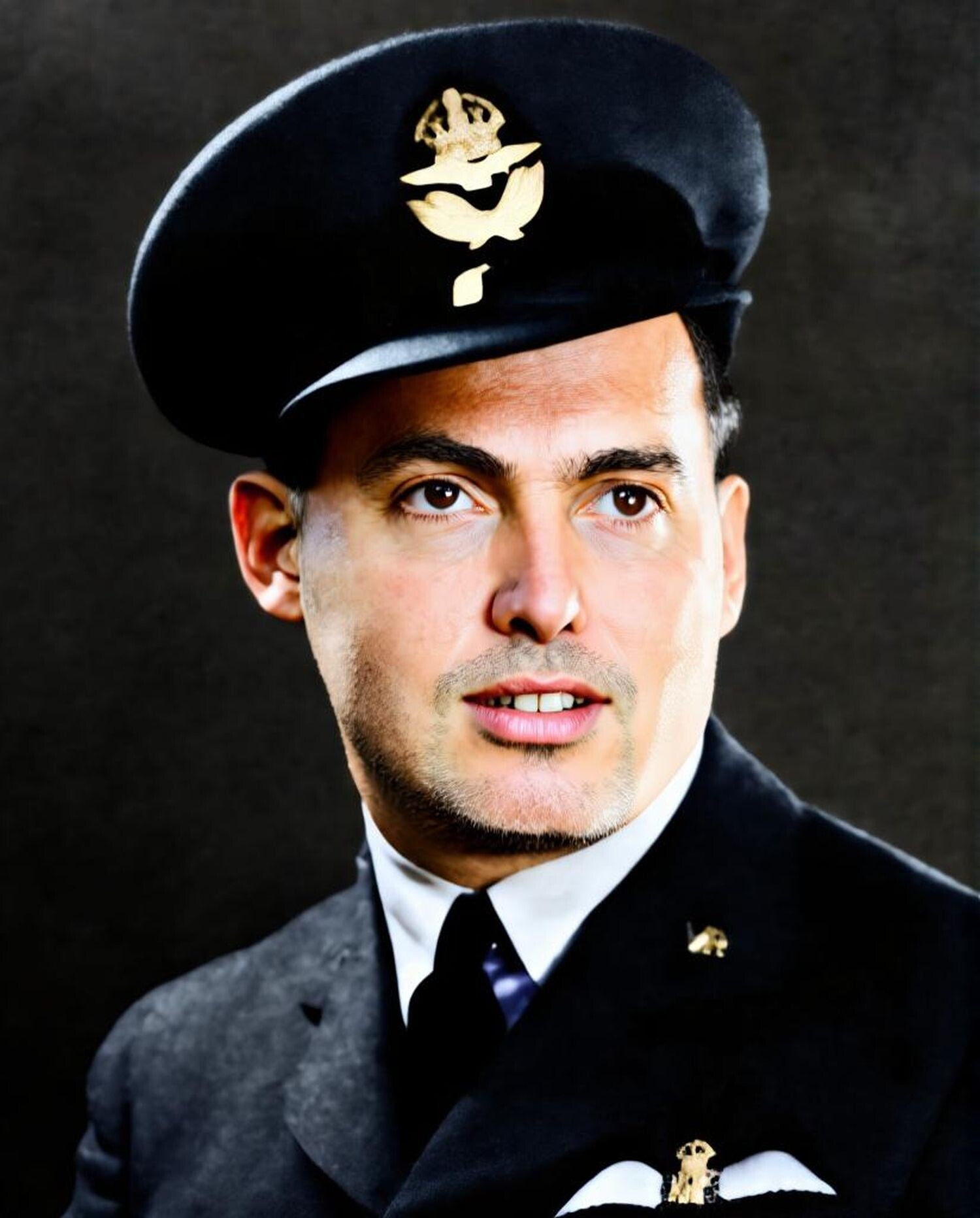
Pilot Officer J.R. Buchanan was shot down and killed on 27th July 1940 over Weymouth.
While fighters clashed in the skies south of Swanage, another drama unfolded far to the northeast. Off Aldeburgh, the 18th Destroyer Flotilla—HMS Wren and HMS Montrose, escorting six minesweeping trawlers—came under sudden attack.
A formation of Heinkel He 111s from II./KG 53 swept in, exploiting a lapse in RDF tracking that left the destroyers exposed. Bombs found their mark.
HMS Wren was struck and went down quickly, taking many of her crew with her. Montrose was damaged but survived.
The loss was a bitter reminder of the Navy’s vulnerability without air cover, and of Fighter Command’s own limitations in tracking and intercepting every raid.
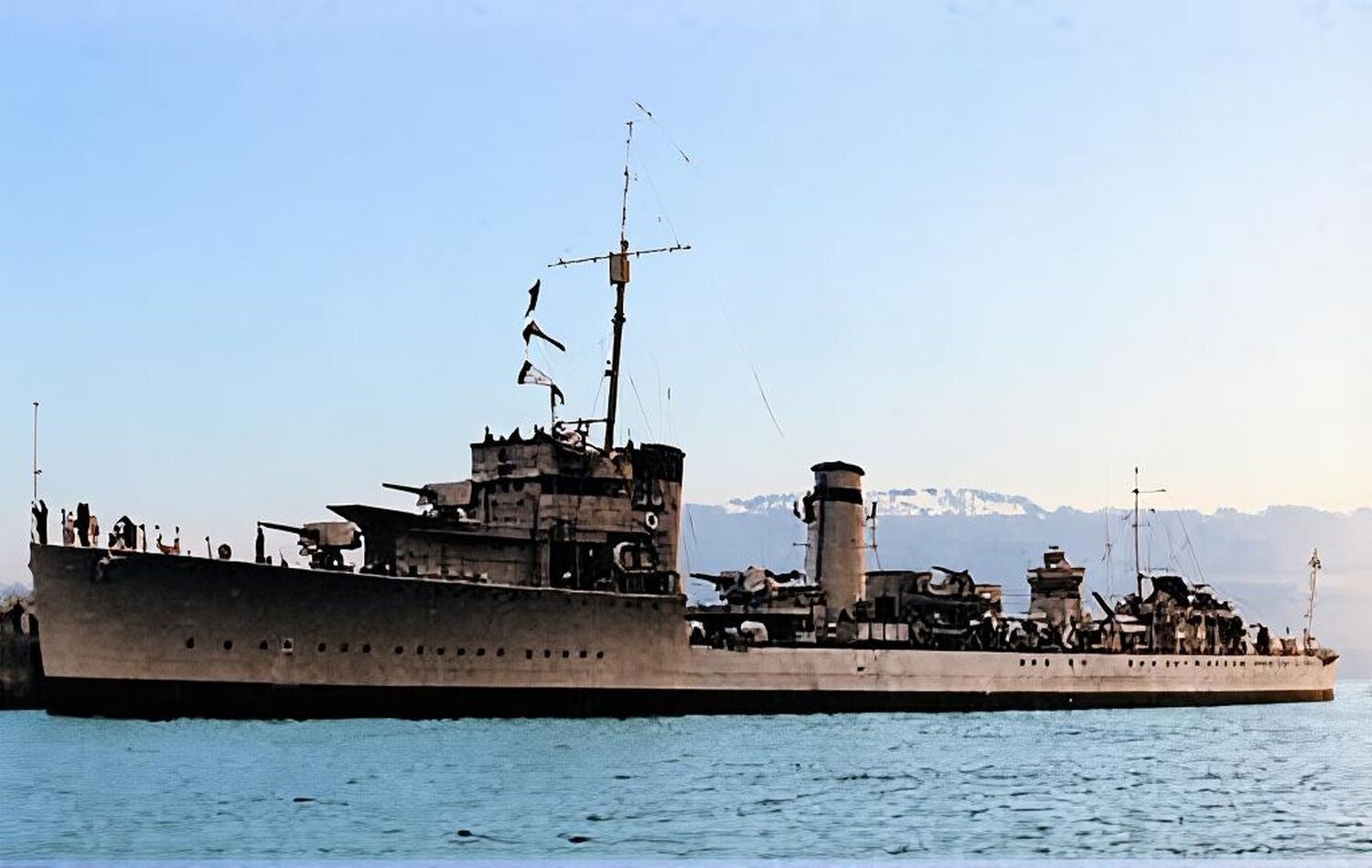
HMS Montrose was heavily engaged on 27 July 1940, when she and HMS Wren were escorting six minesweeping trawlers off Aldeburgh. Shortly before midday, the flotilla was attacked by Heinkel He 111s of II./KG 53. Wren was sunk with heavy loss of life, while Montrose suffered severe bow damage but remained afloat and was later towed to Harwich. The attack occurred during intensified Luftwaffe strikes on coastal shipping as the Battle of Britain entered its Channel phase. A lapse in RDF tracking meant RAF fighters were not vectored in time to protect the ships.
Dover under fire
By early afternoon, attention shifted once more to Dover, already battered in earlier raids.
At 14:30, six Messerschmitt Me 109s crossed the Straits from Calais—not in their usual fighter role, but each carrying a single bomb beneath the fuselage.
It was the first confirmed operational use of the 109 as a fighter-bomber, or Jabo. Their target was Dover Harbour.
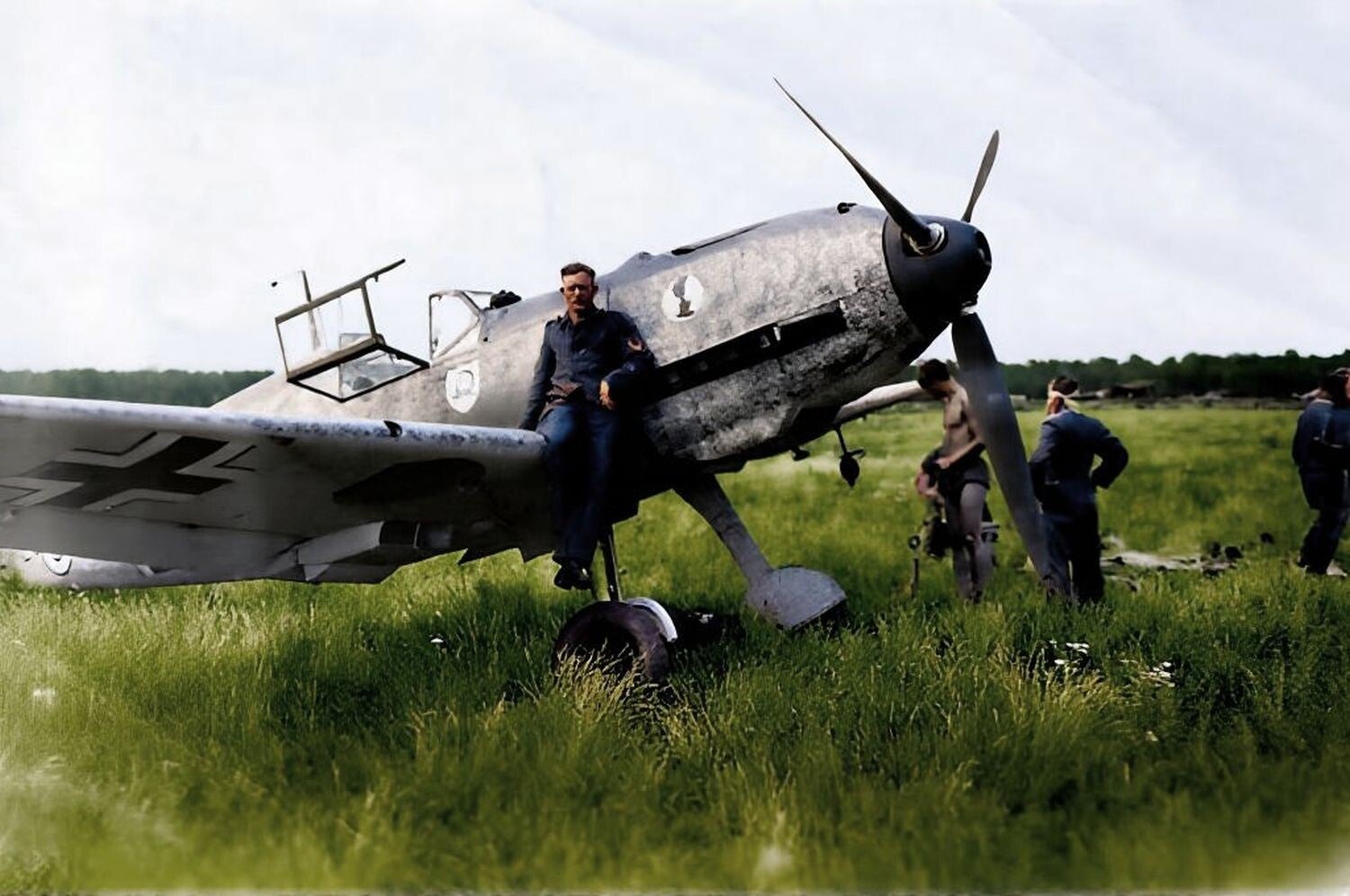
Me109 E of the 7/JG 2 France 1940. The first use of Bf 109s as Jabos (fighter‑bombers) came on the 27th July 1940, when Erprobungsgruppe 210 began operational trials during the early Channel battles. These modified 109s carried small bomb loads on centreline racks and attacked British coastal convoys, exploiting their speed to replace increasingly vulnerable Stukas. Although effective in surprise low‑level strikes, their limited range and small payload restricted their impact, marking the beginning of a short but intense Jabo phase in the Battle of Britain.

Sighted E/A diving onto Dover docks and immediately led the squadron towards them when the Dover Defence Barrage opened up.
I engaged one Me 109 pulling up from machine-gunning or bombing the docks, attacked with full deflection and then followed it round to take a further shot from full astern.
My tracer ammunition passed through the E/A, which dived steeply towards the sea, followed by Blue 3, who himself could not get within effective range and quickly lost sight of it.
There were our Spitfires and other Me 109s engaged in the vicinity.
P/O Kenneth Lee, Blue 1, of 501 Sqn's combat report for the 27th July 1940.
...disaster struck the Royal Navy...
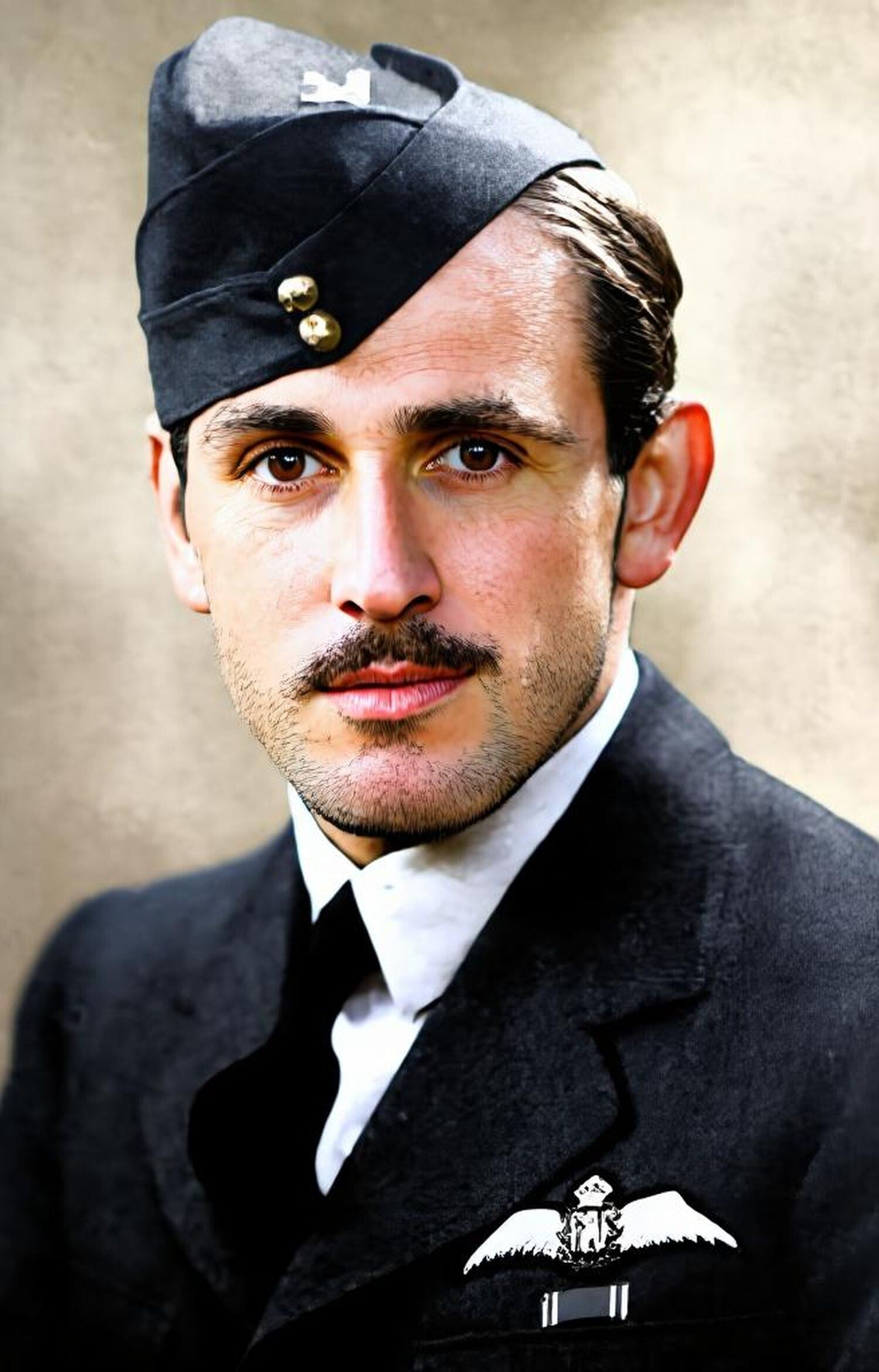
In combat over Dover Harbour on the 27th July, Flight Lieutenant P.A.N Cox was shot down in Hurricane P3808 by Lt. Horst Marx of 3./Erpr. Gr. 210 and reported 'Missing'.
The bombs fell among the dock installations, wrecking equipment and damaging the harbour area.
RAF fighters scrambled, but the fast Messerschmitts released their loads and sped back across the Channel before interception.
The raid marked a dangerous new development: henceforth, even small formations of enemy fighters could strike with bombs at will.
A heavier blow came three hours later. At 17:30, another wave crossed the Straits, dropping ordnance on the harbour and nearby barracks.
This time, disaster struck the Royal Navy. The destroyer HMS Codrington, berthed at her moorings, was sunk outright. HMS Walpole, alongside the depot ship HMS Sandhurst, was badly damaged.
Fighter Command responded furiously. Three squadrons were scrambled. No. 41 Squadron reported engaging what they identified as a Heinkel He 113—almost certainly a misidentified Bf 109, as the supposed He 113 never entered real operational service.
Varndean Holt
Surrenden Road
Brighton
August 1st 1940
Dear Mrs. Pennell,
I have bad news.
Philip lost his life last Saturday July 27th while leading the squadron into an engagement off the SE coast during the Squadron Leader's absence.
The squadron had moved to Gravesend 2 days previously.
Phil phoned for me to meet him at Shoreham on Sunday the 21st, his birthday, after tea which I did, and took him back on Tuesday midday and saw him take off for the Wallops.
Bob also turned up unexpectedly on Monday - so for the last time here we had "the children" all together here.
I had a very nice letter from his Squadron Leader this morning. There will be a memorial service at the Church of the Good Shepherd, Dyke Rd on Saturday next 3rd August at 1130AM.
"Dulce et decorum est pro patria mori" [It is sweet and fitting to die for one’s country (Horace)].
I feel he is with my husband who was very devoted to him.
Phil always enjoyed himself so much at your house. Thank you for being so nice to him.
Yours very sincerely,
Winifred Neville Cox
Letter from Cox's friend, Naomi Pennell, to her mother, informing her of Cox's death on the 27th July 1940.
...the day still carried a price...
No. 615 Squadron brought down a lumbering Heinkel He 59, one of the Luftwaffe’s ungainly biplane seaplanes used for reconnaissance and rescue.
Yet the day still carried a price:
No. 501 Squadron lost a Hurricane in the melee, Flying Officer P.A.N. Cox listed missing.
By dusk, Dover’s waterfront smouldered. Three destroyers had been lost in a single day: Wren off Aldeburgh, Codrington in the harbour, and with Walpole grievously hurt, the Admiralty had had enough.
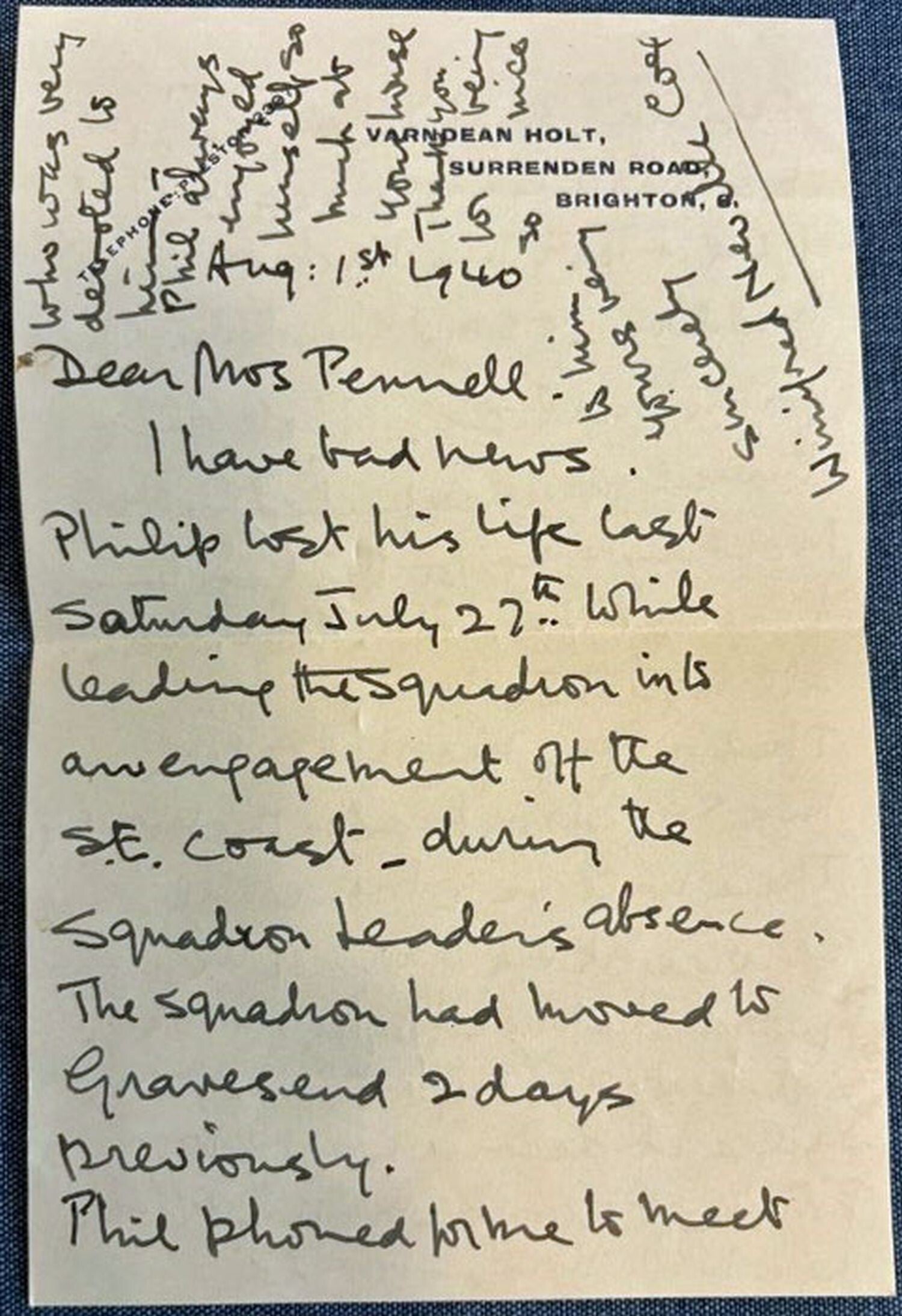
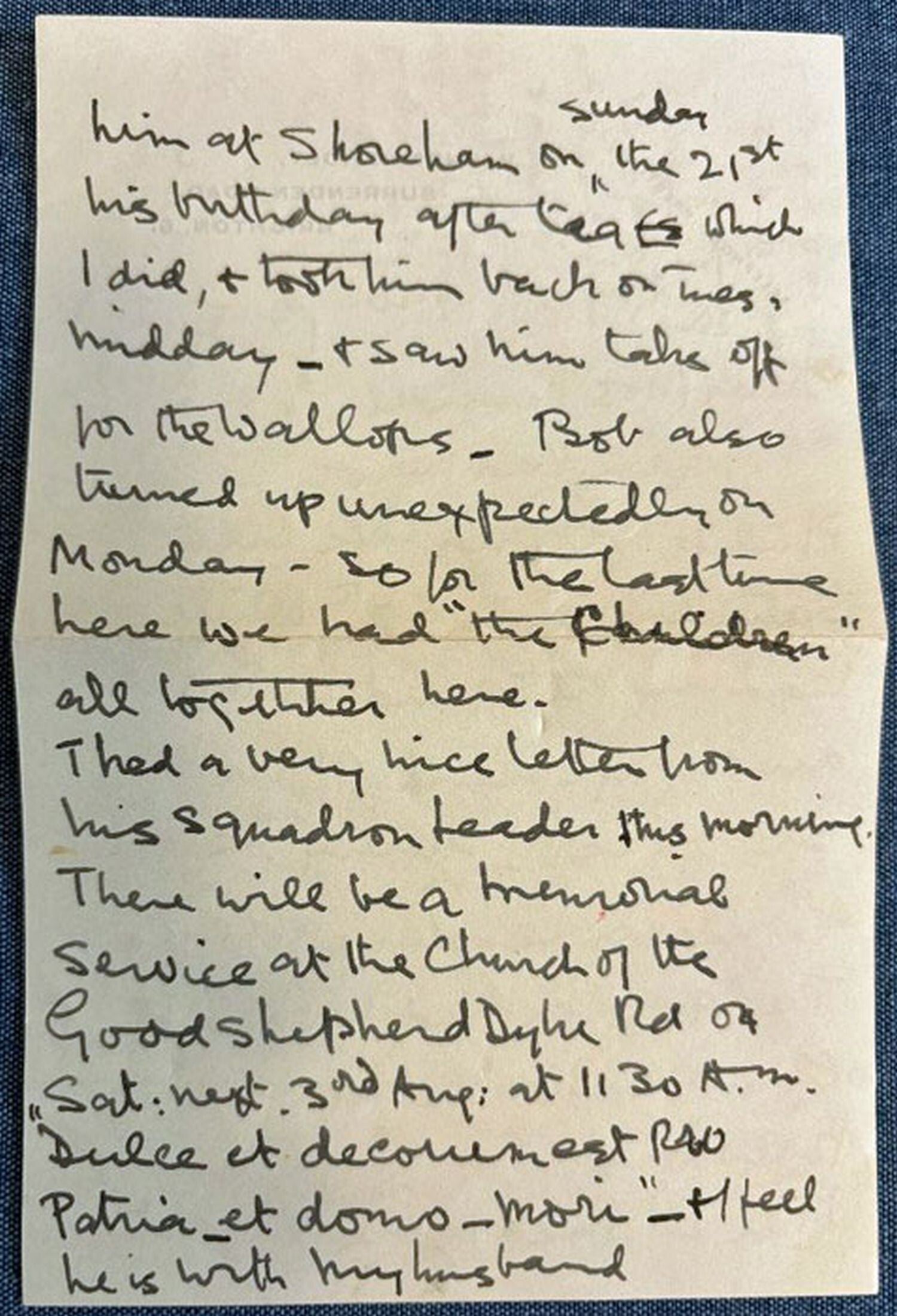
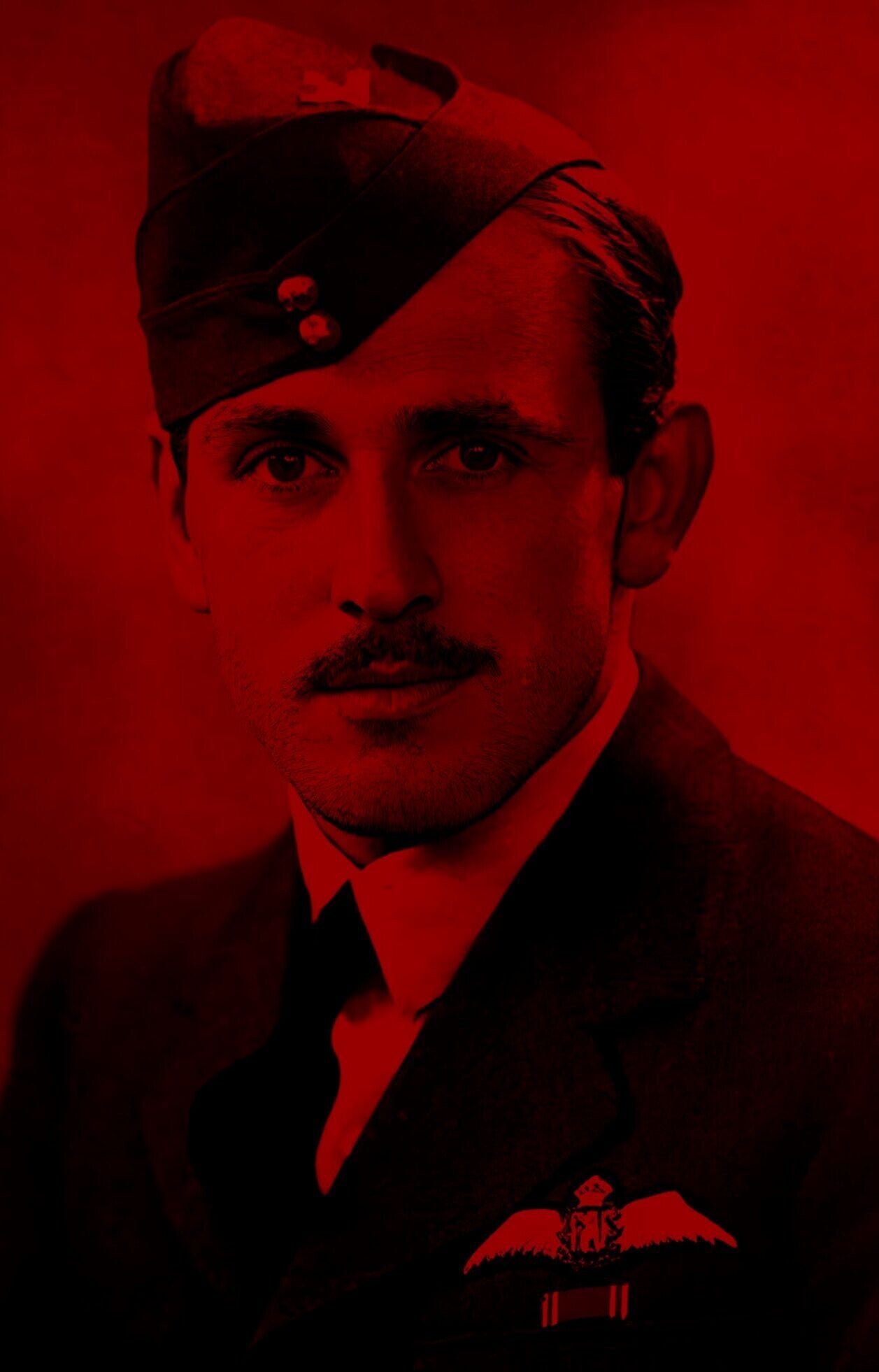
Flight Lieutenant Cox was friendly with a Naomi Pennell in Brighton, whose parents were noted for organising social occasions for their daughter's circle of friends. The letter to Naomi's mother from Cox's mother, who was 'Commandant' of the Sussex branch of the British Red Cross, details his tragic loss.
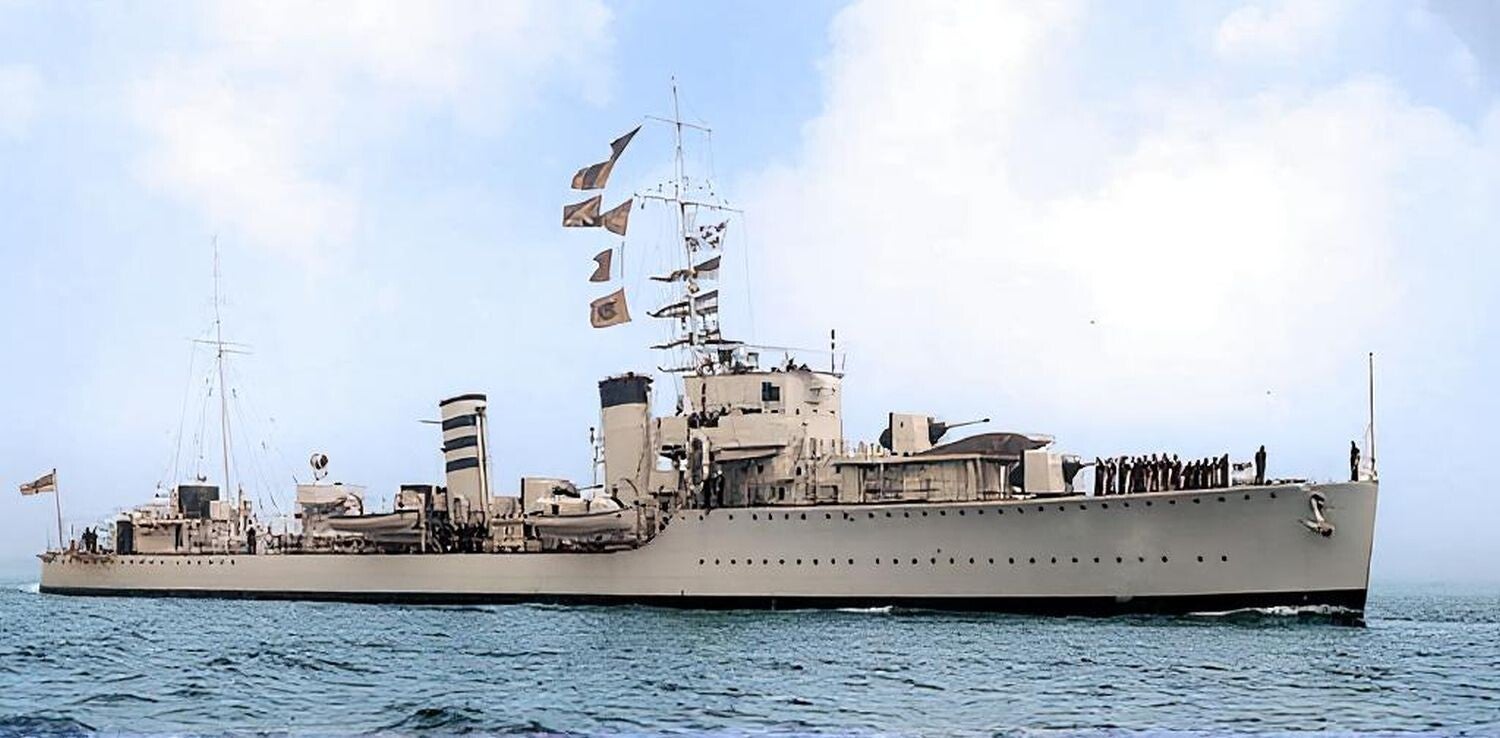
HMS Codrington, who fell victim to the Luftwaffe on the 27th July 1940. Dover came under attack on that day when Messerschmitt Bf 109E‑4/B fighter‑bombers of 3./Erprobungsgruppe 210 struck the harbour. A bomb fell close aboard the destroyer; its underwater blast broke her back and tore open her hull, though only three crewmen were injured. She sank soon after. Codrington’s loss underscored the Kanalkampf pattern: the Luftwaffe using fast, low‑level fighter‑bombers to harass Channel traffic and erode British naval presence. Her destruction showed how vulnerable even modern destroyers were to sudden precision attacks, reinforcing the Admiralty’s reluctance to keep valuable ships exposed in the Dover narrows.
12 Hurricanes of No. 501 Sqdn took off from Hawkinge at 17.36 hours and returned there by 19.13 hours, returning to Gravesend at 20.25 hours.
The orders were to patrol Deal and Dover at 5,000 feet. At approximately 17.50 hours, Red Section led the squadron round to west-south-west from the northerly course, on which they had been flying over the harbour at Dover.
Red 3 saw about 3 Spitfires over the harbour and reported it over the R/T. After turning. Blue 1 on the left with Flight Lieutenant Cox (Red 1) and 'A' Flight above him on the right saw an Me 109 which was pulling away from machine-gunning or dive-bombing the docks.
Other pilots saw bombs burst as the Me109 was pulling out of the dive. Blue 1 attacked the enemy aircraft with a full deflection at 175 yards and with a five-second burst and then full astern for six seconds.
He saw his tracer ammunition passing right through the enemy plane. He was followed in by Blue 3, who, however, could not get within effective range and quickly lost sight of it.
As Blue 1 at 4,000 feet on the inside of the formation began his dive, the Dover A.A. barrage opened up and caused the squadron to break up. Red 1 (Flight Lieutenant P A N Cox) disappeared at this moment and was not seen again by other pilots.
It was subsequently reported that a plane had come down in the sea but it was not known whether this was Red 1.
Red 3 attacked a Ju87 which was flying cast at long range and therefore ineffectively.
Green 3 who saw about 5 of our Spitfires following Me 10% from the up-sun side, was himself fired at by one of the Spitfires.
Enemy casualties were 1 Me109 damaged and our own casualty was Flight Lieutenant P A N Cox.
501 Squadron Intelligence Report for the 27th July 1940
...a symbol of vulnerability...
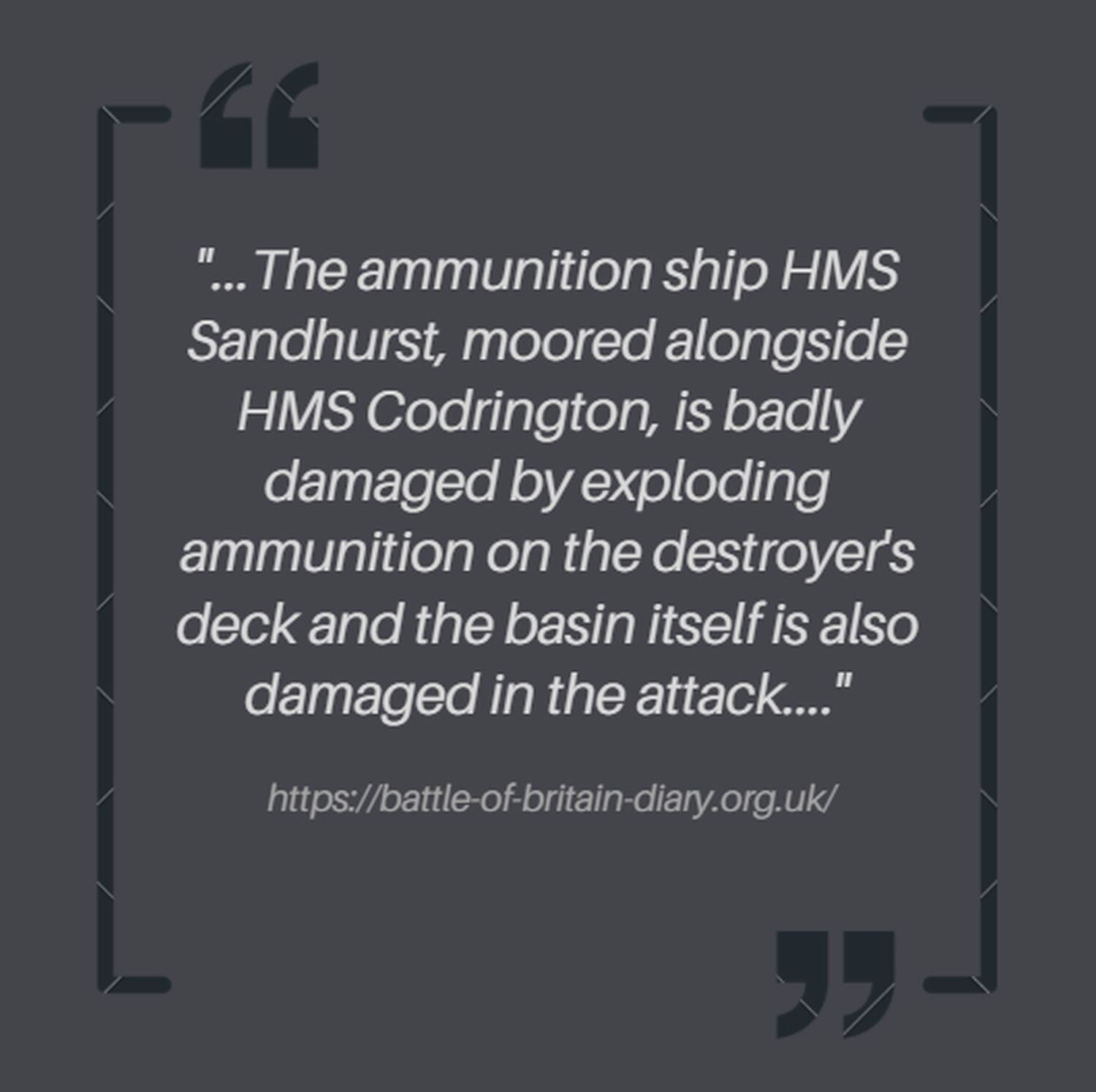
Orders went out: all remaining destroyers were to be withdrawn, Dover abandoned as an advanced base.
The responsibility for defending Channel convoys would henceforth rest more squarely on Fighter Command’s shoulders.
Determined not to let Dover become a symbol of vulnerability, the Air Ministry decreed that any raid approaching the port must be met with overwhelming force.
Squadrons in the southeast were reinforced to 28 aircraft, with RAF Hawkinge and Manston pushed into still greater use.

A translation of Marx's combat report. on the 27th July 1940 in which he shot down Flight Lieutenant P.A.N Cox.
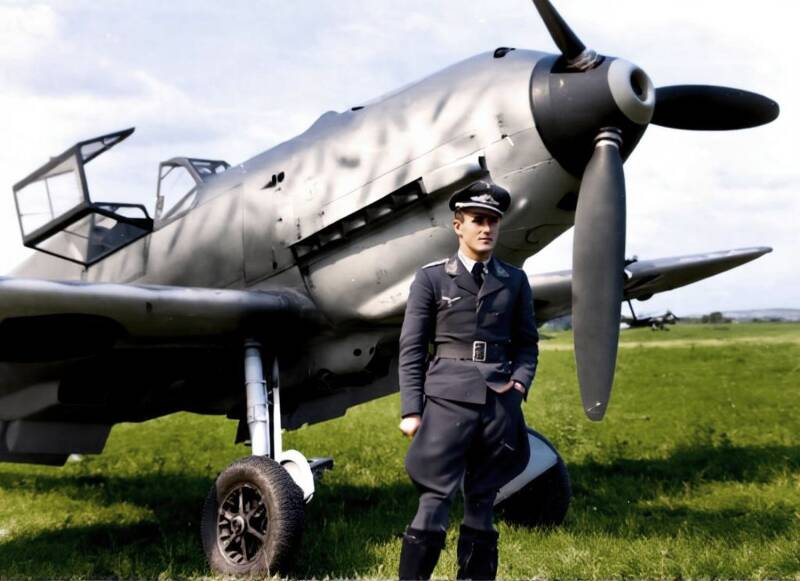
Lt. H Marx in front of his Me109E-4 fighter-bomber, Yellow 3. On the 27th July, Marx shot down a Hurricane fighter being flown by Flight Lieutenant P.A.N Cox. Cox did not survive.
Evening Raids, Reconnaissance and Night Actions
Elsewhere along the coast, the Luftwaffe probed in smaller actions.
At 16:02, a group of six or more enemy aircraft approached Dungeness, turning west to bomb a steamer off Sandgate.
The ship was damaged but not sunk.
This was part of a wider attempt to harry Convoy Agent as it worked its way along the southern coast.
Soon after, worsening weather forced British patrols to stand down.
17.19 hours. "B" Flight 41 Sqdn took off to patrol Dover Manston for raid at Dover, which was reported to be bombed at 17.55 hours by three Me110s.
18.00 hours. Having left Green Section on patrol over Dover, where A.A. fire indicated where enemy aircraft were, Blue 1 called to Green and Blue Sections to follow him down, but this was apparently not heard, and Blue 1 went down in a steep dive, alone, alter enemy aircraft which flattened out about 50 feet above sea level.
He then fired two short bursts at about 150 yards. The enemy aircraft flew straight into the sea.
He then saw a further He 113, being attacked by a Hurricane.
Blue I was now 5 miles from the French coast and attacked by a further He 113 on way home which he evaded by tight turns getting in three short bursts with no apparent result.
As he was approaching French coast he broke off and returned Manston 18.30 hours.
41 Squadron Intelligence Report for the 27th July 1940
...the Luftwaffe’s gaze was widening...
German reconnaissance, meanwhile, ranged further afield. High-level flights were reported over Belfast, the Isle of Man, and across a swathe from southwest Anglesey to Cardiff.
Though no bombs were dropped, the reconnaissance made plain that the Luftwaffe’s gaze was widening beyond the Channel approaches.
Six more raids approached the east and southeast coasts through the late afternoon, but none pressed inland.
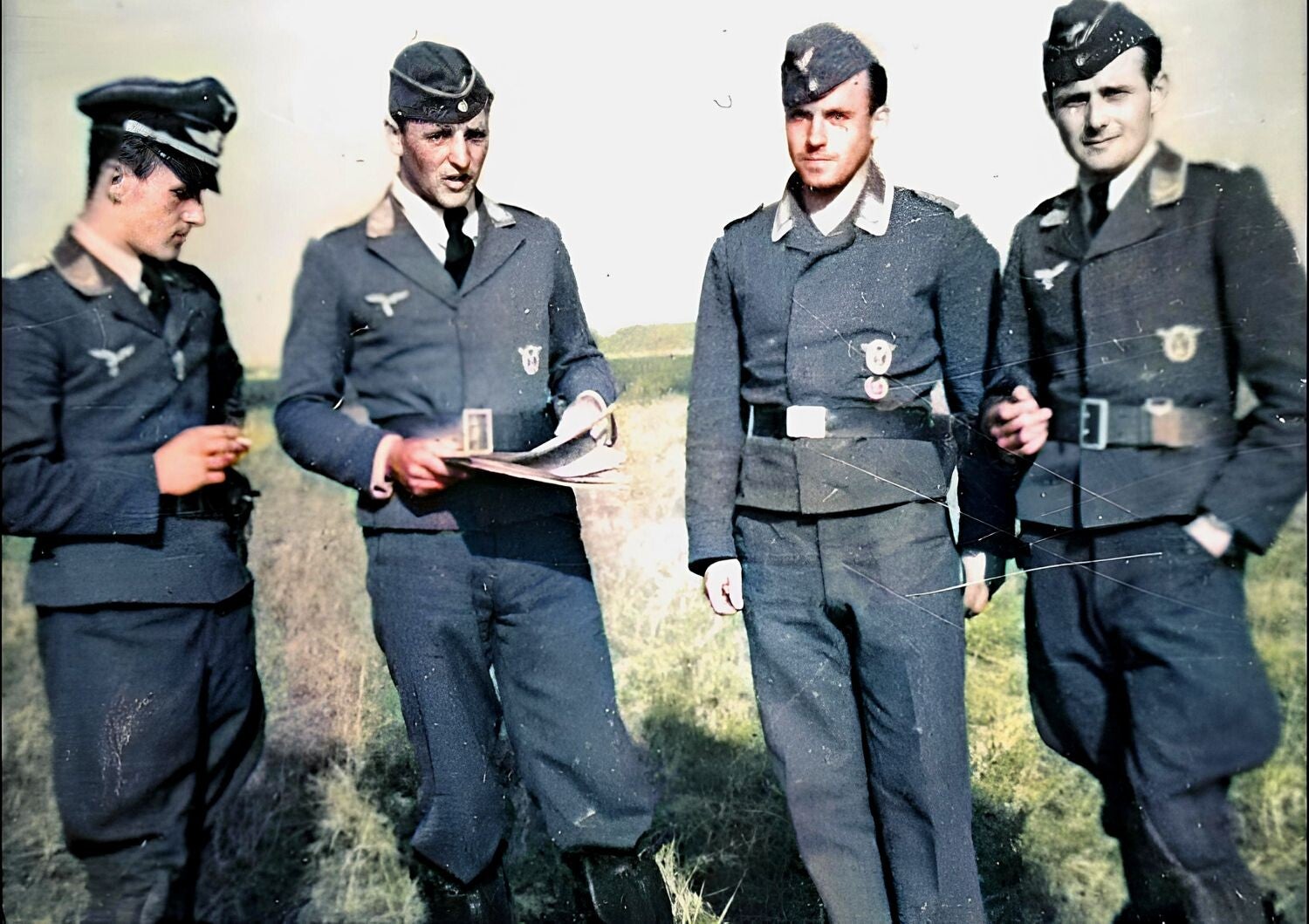
German pilots who featured in the events of 27th July 1940. L to R: Lt. H Marx, Staffelkapitän Otto Hintze. Fw. Büttner, Oblt. P Emmerich. Marx was shot down and made a priosner of war following the Croydon raid on 15th August 1940, Hintze was shot down and taken prisoner on 29th October 1940. Emmerich became Staffelkapitän of 3./210 after Hintze was shot down.
Information
As darkness fell, activity only increased. Around 22:30, radar plots picked up twenty enemy aircraft lifting from Cherbourg and the Channel Islands, steering for southwest England and Wales.
Swansea Docks were struck, bombs also falling at Upton-upon-Severn and Kidwelly in Carmarthenshire. Swansea’s railway line was displaced, though damage was limited.
Other reports spoke of bombs over Bala, Cardiff, Bristol, and west of Gloucester. RAF night fighters were dispatched but failed to make contact.
Information
Further north, between 23:48 and 01:30, four raids crossed the east coast near St Abb’s Head.
The aircraft dropped mines as far north as the Firth of Tay, explosions sounding offshore.
Additional formations sowed mines between the Tay and Kinnaird’s Head.
Not all aircraft were tracked returning to Cherbourg, suggesting the Luftwaffe was now using a variety of occupied French airfields to stage such missions.
Crashlanding
After the occupation of northern France, 3/KG 51 “Edelweiss,” the 3rd Squadron of Bomber Wing 51, shifted its base from Paris-Orly to Melun-Villaroche aerodrome, southeast of Paris.
From here, night bombing raids on Britain were launched, part of the escalating struggle for air superiority.
On Saturday 27 July 1940, at about 22:30 hours, one Junkers Ju 88 lifted from the runway. Its target was Crewe in Cheshire, a railway town vital to Britain’s industrial war effort.
The flight would prove disastrous. As the bomber pressed northward across the Channel and into the blacked-out lands of wartime Britain, the crew soon lost all sense of their position.
Below them the countryside lay in darkness, offering no points of reference.
Then, to their surprise, they came upon a brightly lit city.
Here was no blackout, no warning of war. Convinced at first that they had reached England, the crew soon realised they had in fact stumbled across Dublin, in neutral Eire.
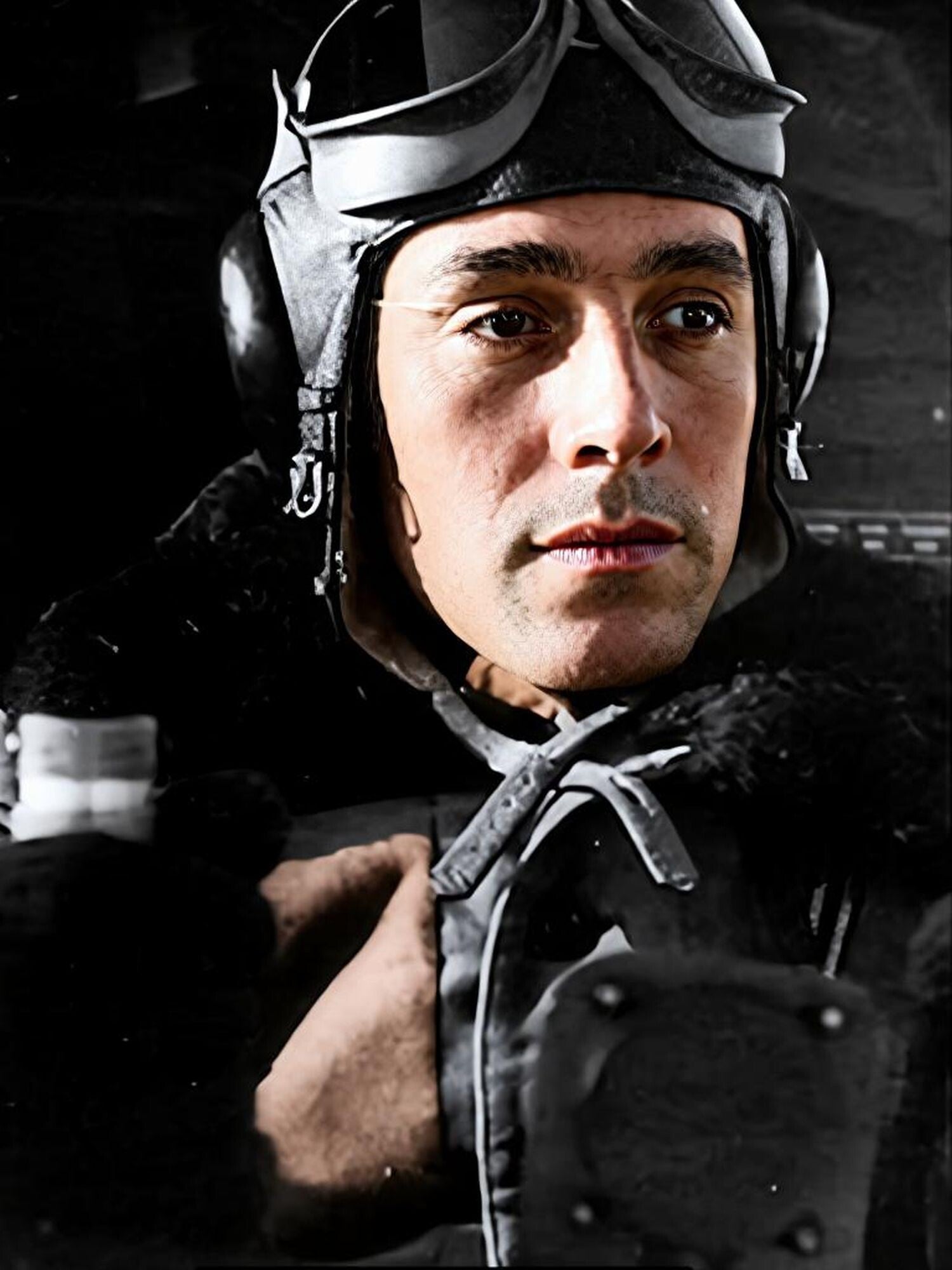
Oberfeldwebel Josef Bier. Oberfeldwebel Josef Bier was the pilot of Ju 88A-1 bomber 'Edelweiss', code 9K+H, of 3./Kampfgeschwader 51, lost on a confused night raid on 27 July 1940 after navigating over Dublin and London by mistake. Forced to crash‑land near Bexhill, he was captured and spent the war in Canadian POW camps, returning to Germany in 1947 after 25 missions.
...told them the bitter truth...
Turning east and south, still uncertain of their course, they eventually flew directly over London.
Yet, no searchlights probed the skies, no anti-aircraft guns opened fire. This strange silence convinced them they were over Paris. Believing themselves almost home, they searched in vain for their airfield.
Unable to find it, they turned north, only to cross London again. With dawn breaking, they at last sighted the English Channel.
The sun rising on their left told them the bitter truth: they were still deep in enemy territory. Fuel was almost gone, the chance of reaching France impossible
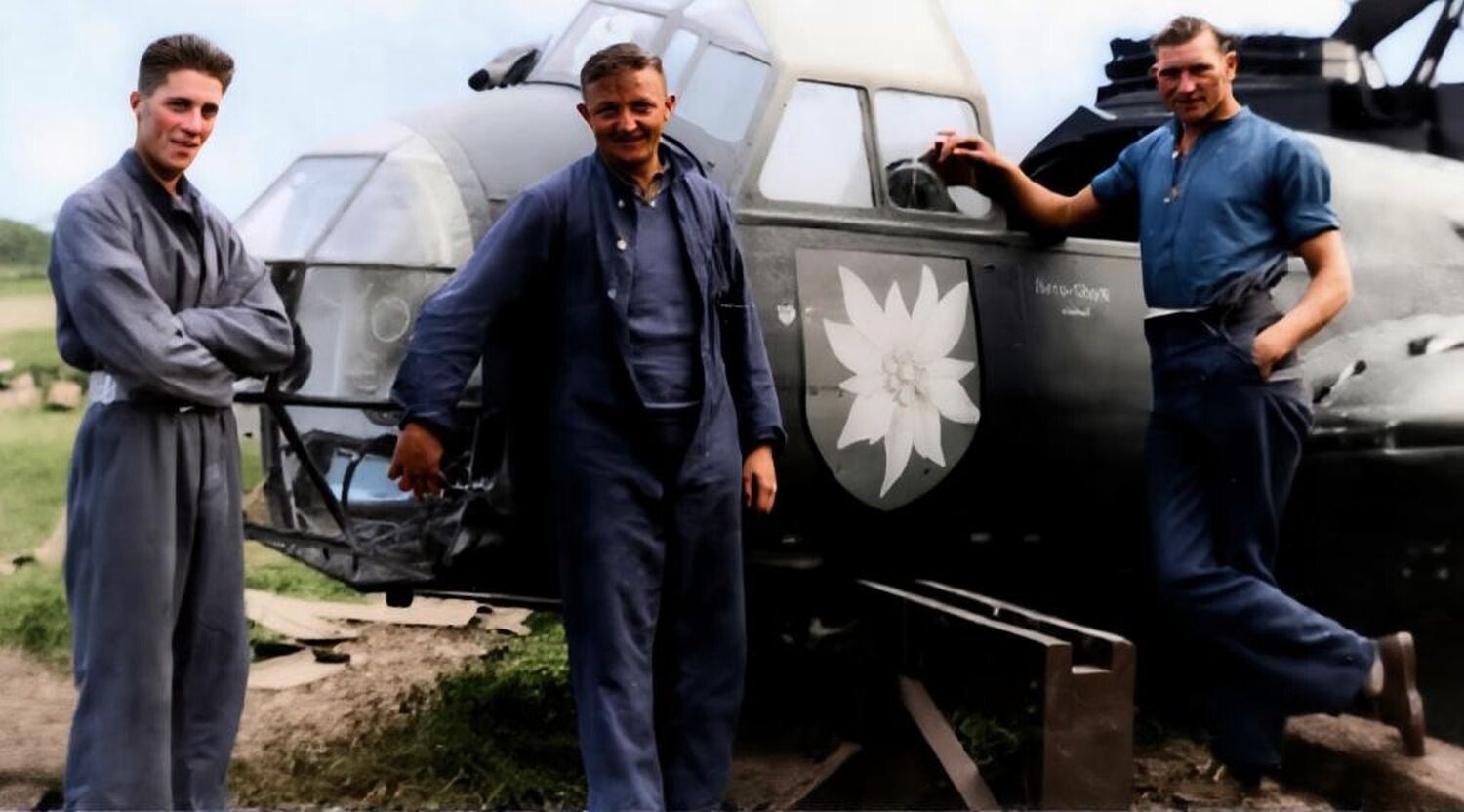
Ground crew pose in front of Ju 88A-1 bomber 'Edelweiss', of 3./Kampfgeschwader 51.
...gliding low under fire...
The pilot, Oberfeldwebel Josef Bier, jettisoned the four bombs and steered towards the Sussex coast.
Over Bexhill he aimed for open countryside, the Ju 88 gliding low under fire from a nearby searchlight battery.
The bomber came down in a wheels-up landing near Mile Lane, close to Buckholt Farm.
The crew—Pilot Oberfeldwebel Josef Bier, Navigator Leutnant Willi Ruckdreschel, Radio Operator Unteroffizier Heinz Ohls, and Gunner Unteroffizier Martin Multhammer—were taken prisoner by the soldiers who had fired upon them.
Bier himself would spend the bulk of his captivity in Canada, at a prisoner of war camp in Calgary.
He would not return to Germany until 1947, after 19 operational flights over France and six missions to the United Kingdom, his final being the abortive raid on Crewe.
The downed Ju 88, serial number 7036, did not go to waste. Dismantled and transported to the Royal Aircraft Establishment at Farnborough, it was examined by RAF intelligence.
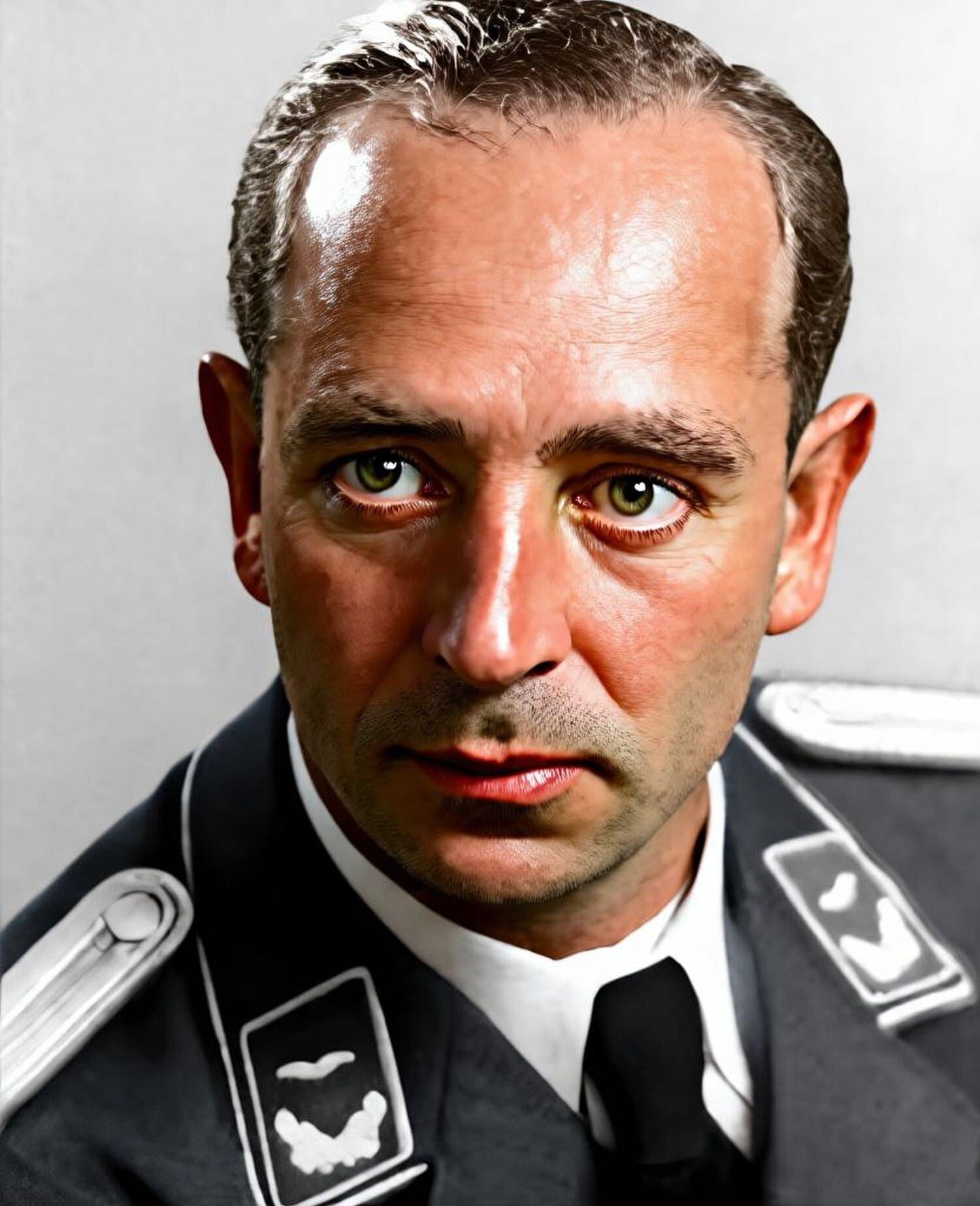
The navigator on the flight was Leutnant Willi Ruckdreschel. Ruckdreschel spent 27 July 1940 fighting a losing battle with the night itself. As navigator of the Ju 88, he struggled to fix their position while the crew drifted from Dublin to London in total confusion. His calculations ended with a forced landing in Sussex and immediate capture.
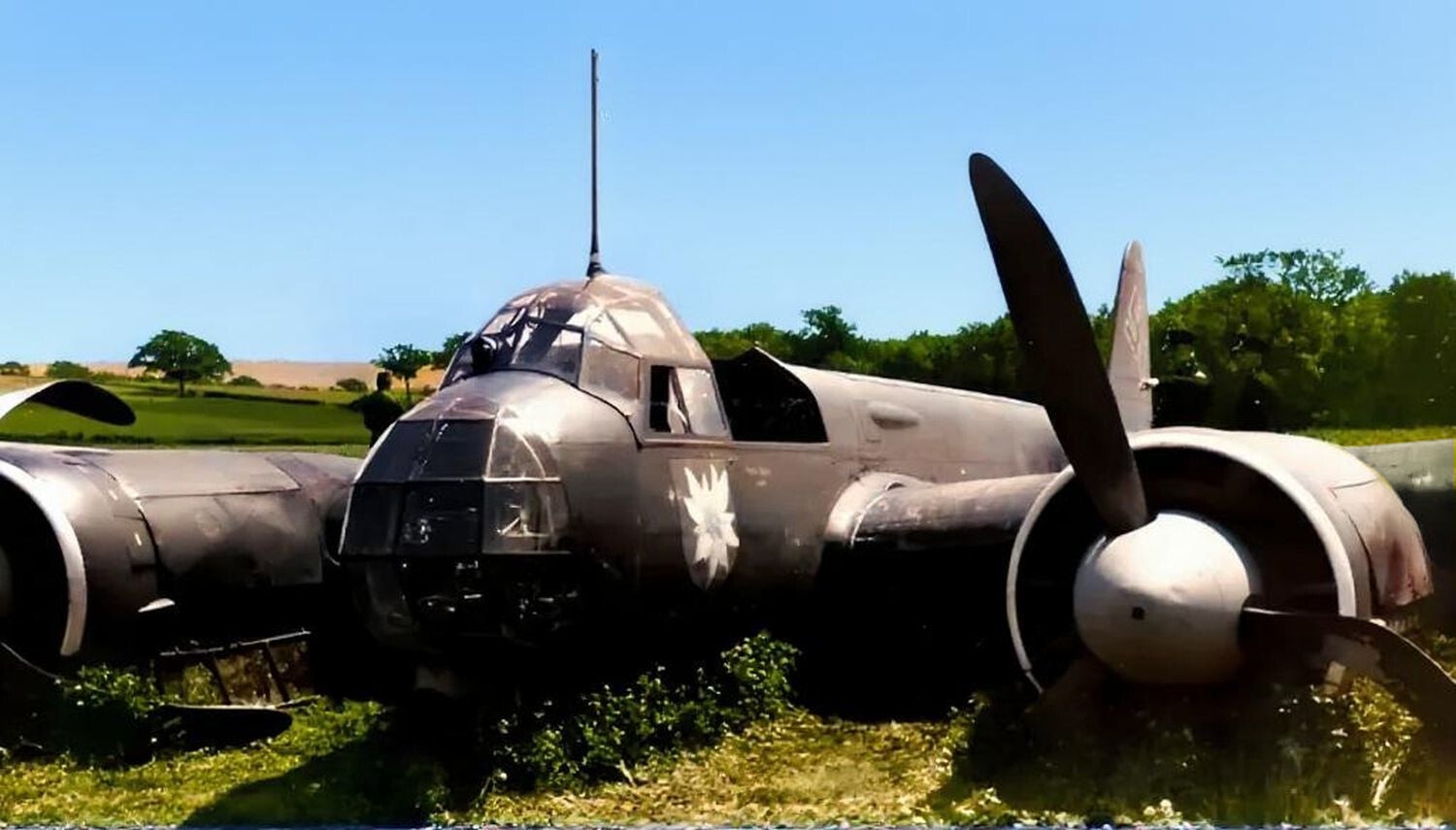
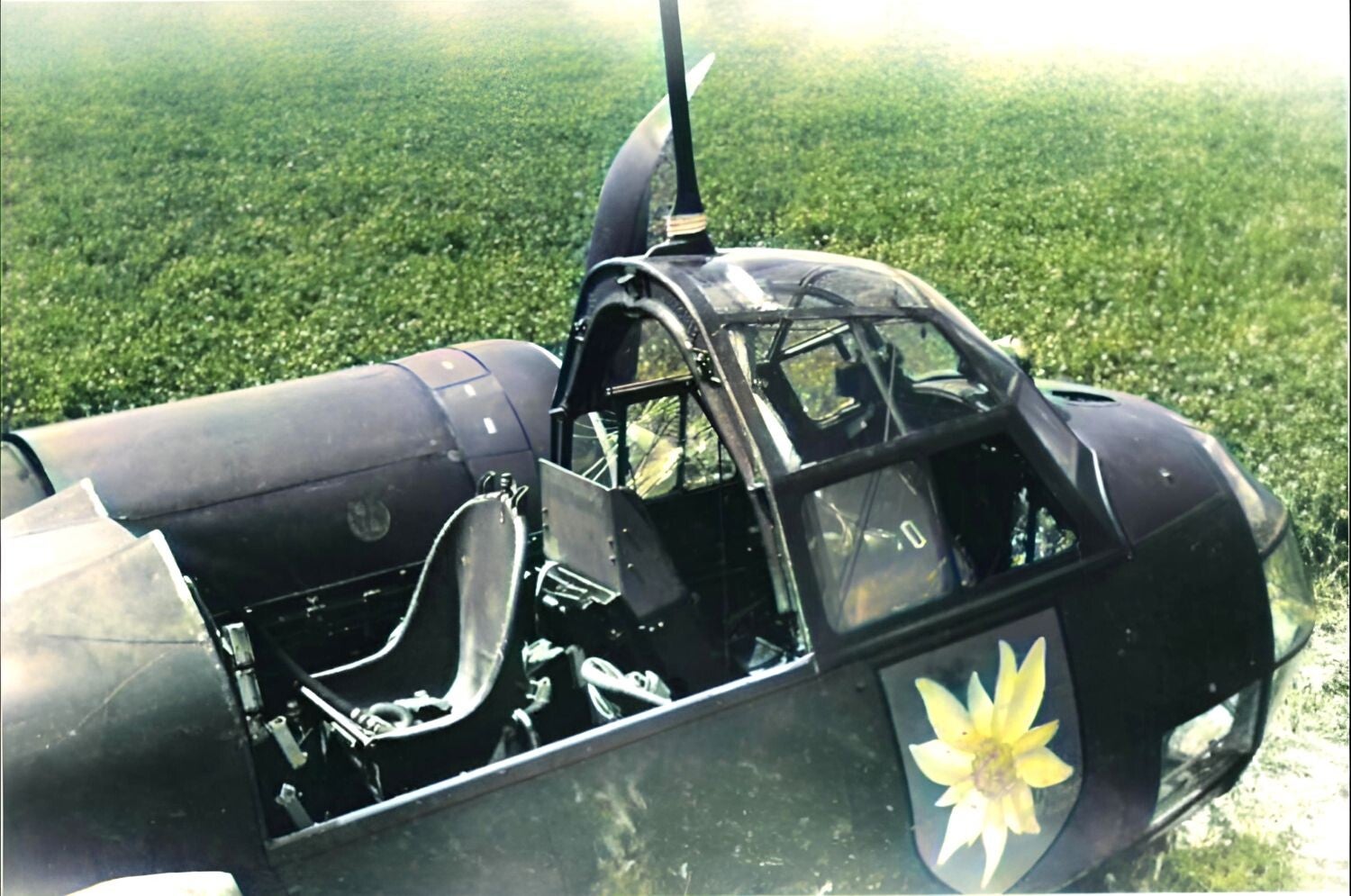
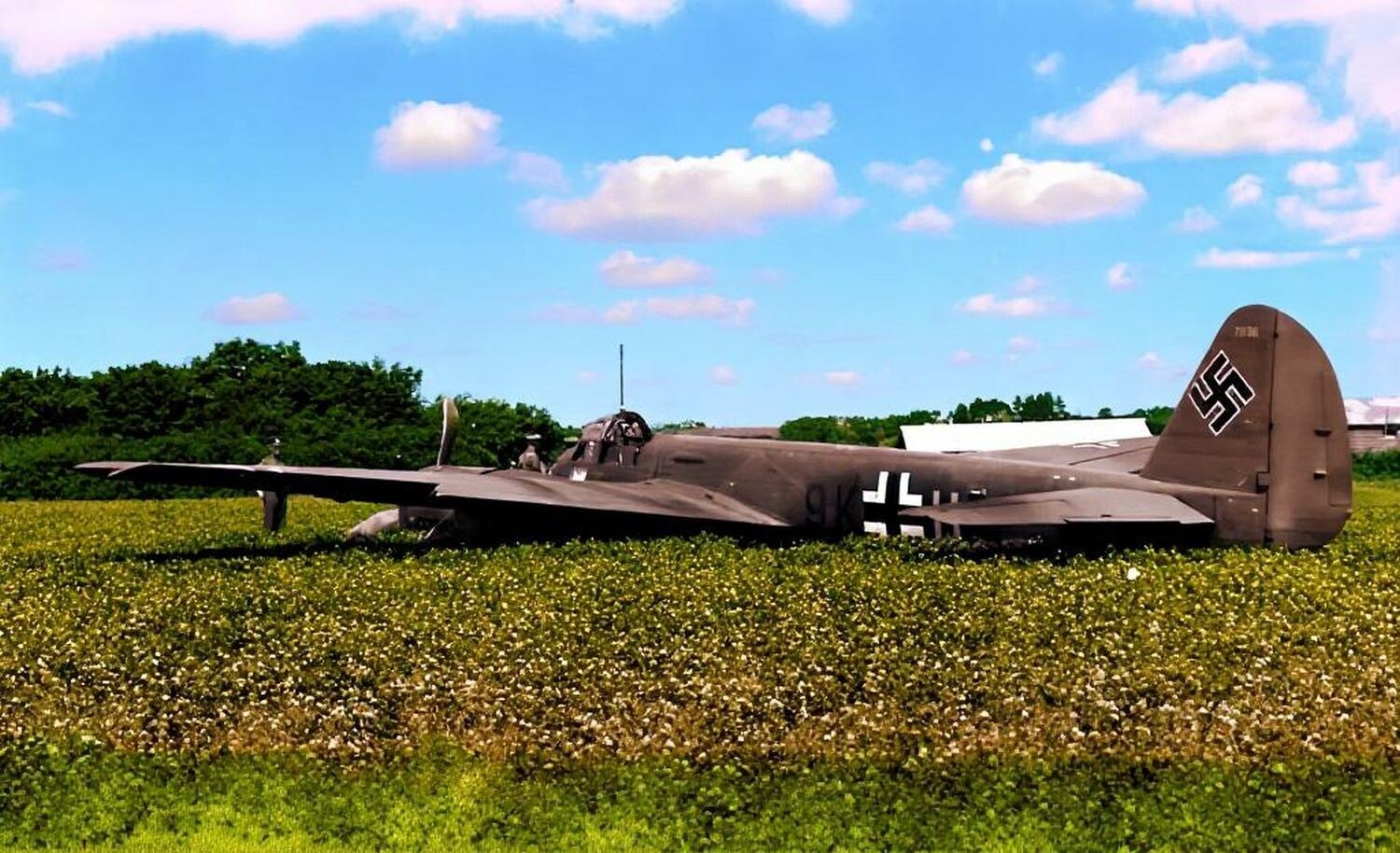
A Junkers Ju 88A-1 bomber 'Edelweiss', code 9K+H, of 3./Kampfgeschwader 51, after crash-landing at Buckholt Farm in Hampshire on the night of 27 July 1940. The crew had been tasked with bombing Crewe but became disorientated and flew over Dublin before realising their mistake. With fuel critically low, the pilot was forced to make an emergency landing, and the four crew members were captured following a brief exchange of fire with British troops.
Saturday 27 July 1940 | The Battle of Britain Historical Timeline
...it proved difficult to keep serviceable...
Declared repairable, it was repainted in RAF camouflage of brown and green upper surfaces with yellow undersides, marked with British roundels, and given the serial number AX919.
Yet it proved difficult to keep serviceable. Only four flights were made, totalling just two hours and ten minutes.
By June 1942, the bomber was moved to 1426 Enemy Aircraft Flight at Duxford, a unit that demonstrated captured Luftwaffe planes.
Here, its fate was sealed: stripped for spares to keep another Ju 88 flying, it ended its days cannibalised, a wreck from one misjudged night in 1940.

Dismantled and transported to the Royal Aircraft Establishment at Farnborough, the Ju 88A‑1 underwent a thorough technical and intelligence examination. RAF specialists assessed its structure, engines, and onboard equipment, eager to understand the capabilities of one of the Luftwaffe’s most versatile bombers. Every component—from instruments to armament—was catalogued and tested, providing valuable insight into German design philosophy. The aircraft’s capture offered Britain a rare opportunity to study an intact enemy machine and refine both tactics and countermeasures accordingly.
This is where our journey begins. Get to know our business and what we do, and how we're committed to quality and great service. Join us as we grow and succeed together. We're glad you're here to be a part of our story.
Further reading

