Overview
The SS Richard Montgomery was a Liberty ship built in 1943 as part of the vast American wartime shipbuilding programme designed to sustain Allied logistics across the Atlantic. Named after the Revolutionary War general Richard Montgomery, the vessel was typical of its class: a mass‑produced cargo ship intended to carry munitions, vehicles, and supplies to support operations in Europe. In August 1944, during the height of preparations for the final Allied offensives on the continent, the ship sailed from the United States loaded with thousands of tons of explosive ordnance.
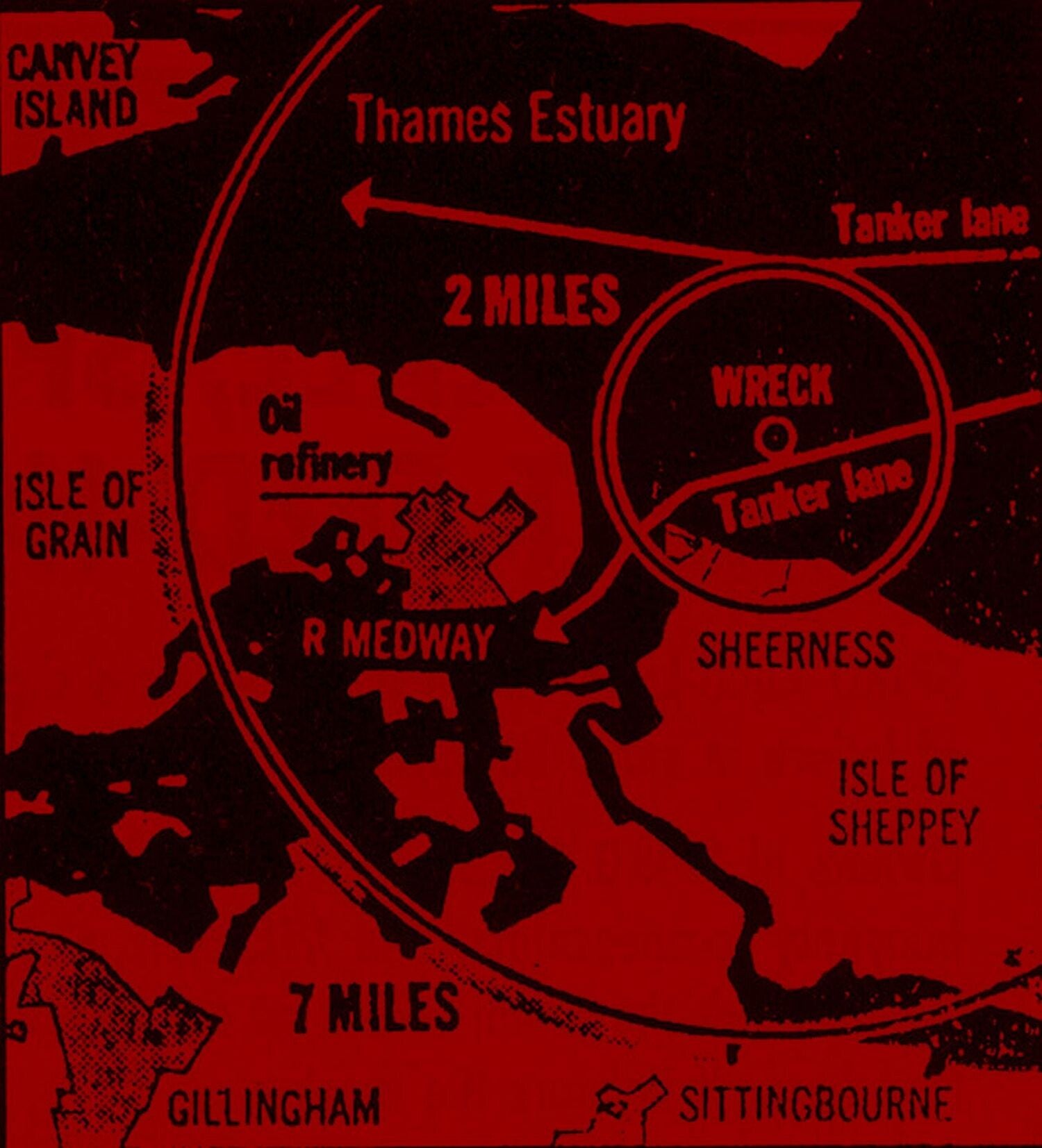
On 20 August 1944, while entering the Thames Estuary en route to the port of Sheerness, the Richard Montgomery anchored in a designated holding area. Strong tides and a shifting seabed caused the ship to drag her anchor, grounding on a sandbank known as Sheerness Middle Sand. As the hull settled unevenly, structural stresses caused cracks to form, and the forward holds began to flood. Salvage crews attempted to remove the cargo, but worsening weather and increasing instability forced operations to halt. Within days, the ship broke in two, leaving the forward section submerged and the aft section partially above water.
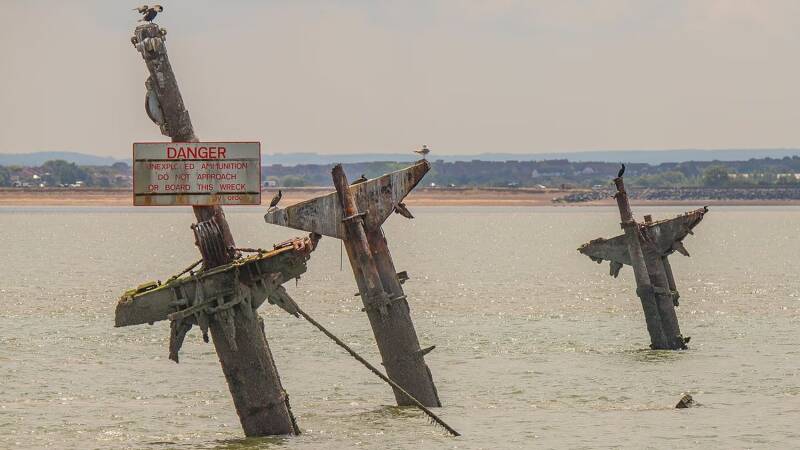
The wreck remains broken in two on a sandbank near Sheerness Kent, with masts visible above water and over a thousand tons of unstable wartime munitions still inside.
The wreck contained an estimated 1,400 tons of munitions, including fragmentation bombs, depth charges, and high‑explosive ordnance. Because many of these were fused or otherwise unstable, the wreck was declared too dangerous to fully clear. Over the decades, the remains of the ship have remained in place, marked by exclusion zones and monitored regularly. Concerns persist that deterioration of the hull could eventually expose or destabilise the remaining explosives, though assessments vary regarding the scale of any potential hazard.
Today, the skeletal masts of the Richard Montgomery still rise above the waterline near Sheerness, a stark reminder of wartime logistics, maritime risk, and the long‑lasting legacy of the Second World War.