Overview
The German occupation of Ukraine during the Second World War began with Operation Barbarossa in June 1941 and rapidly transformed the region into one of the most violently contested territories of the Eastern Front. By September 1941, the Germans divided occupied Ukraine into two administrative units: the District of Galicia, incorporated into the General Government, and the Reichskommissariat Ukraine, which stretched eastward toward the Donbas . This division reflected German strategic priorities—extraction of resources, exploitation of labour, and the implementation of racial policies central to the Nazi vision of Lebensraum.
Initial reactions to the invasion varied. In western Ukraine, where Soviet rule since 1939 had been harsh, some Ukrainians greeted German forces as potential liberators. Nationalist groups such as the OUN hoped that cooperation might lead to the establishment of an independent Ukrainian state. On 30 June 1941, OUN‑B leaders proclaimed such a state in Lviv, attempting to align themselves with German authority . The Germans, however, had no intention of supporting Ukrainian sovereignty. Their occupation policy aimed at total control, racial hierarchy, and the subordination of the local population.
The occupation unleashed catastrophic violence. The Holocaust in Ukraine began within days of German arrival, with Einsatzgruppen, German police battalions, and Ukrainian auxiliary police participating in mass shootings in Kyiv, Lviv, Lutsk, Zhytomyr, and hundreds of smaller towns . The massacre at Babi Yar, carried out with the assistance of local auxiliaries, became emblematic of this phase of extermination. Anti‑Polish violence also escalated, particularly in Volhynia and Eastern Galicia, where nationalist units targeted Polish civilians.
German rule relied heavily on local collaboration—administrators, auxiliary police, and military volunteers—yet resistance also emerged. Some Ukrainians joined Soviet partisans or the Red Army, while others formed nationalist insurgent groups that later turned against German authority. The occupation left Ukraine devastated, its population traumatised by overlapping regimes of terror, mass murder, and forced labour.
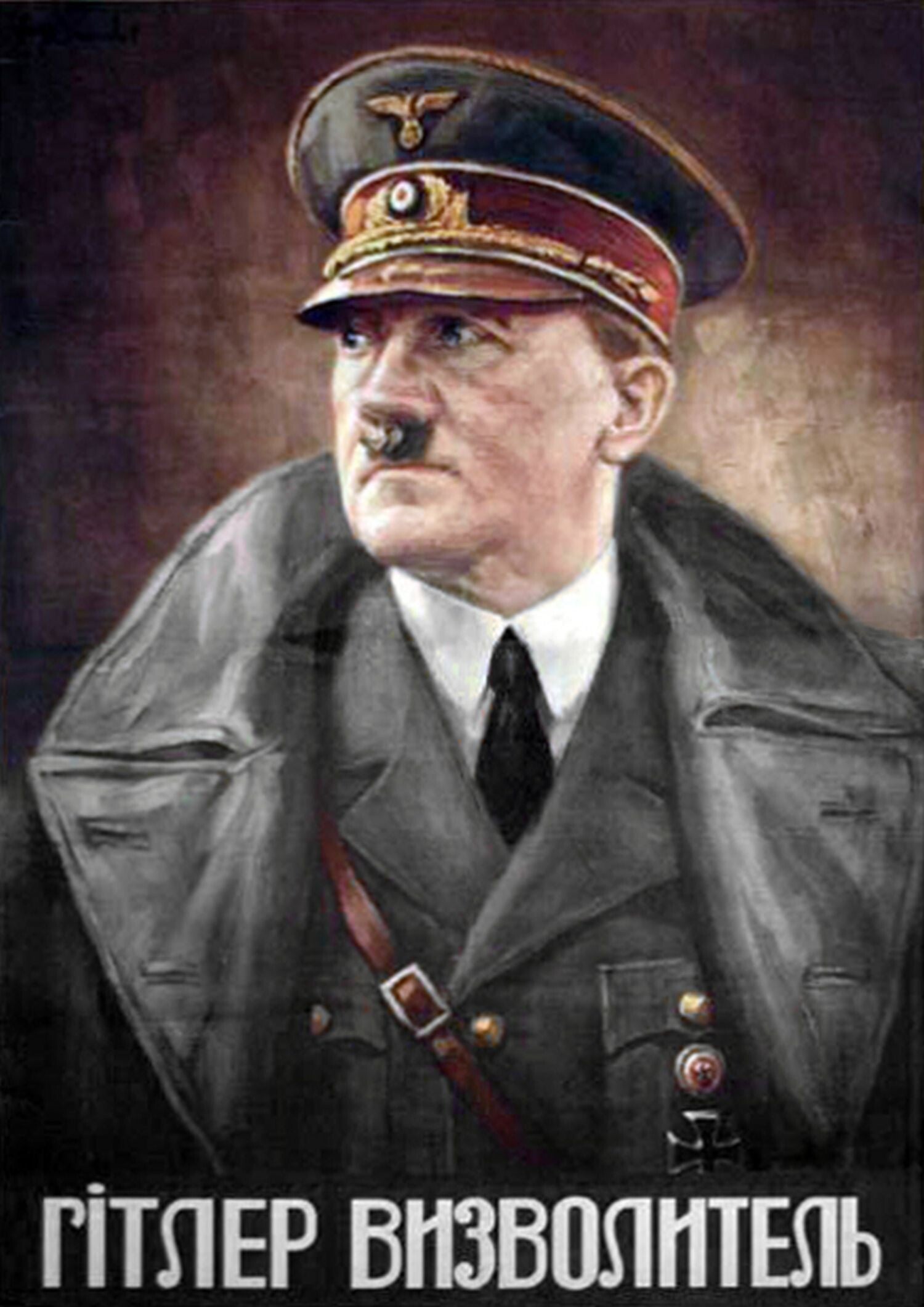
Nazi propaganda poster made for the Reichskommissariat Ukraine with the portrait of Hitler and the inscription reading in Ukrainian language "Hitler The Liberator'.
https://en.wikipedia.org/wiki/Ukrainian_collaboration_with_Nazi_Germany
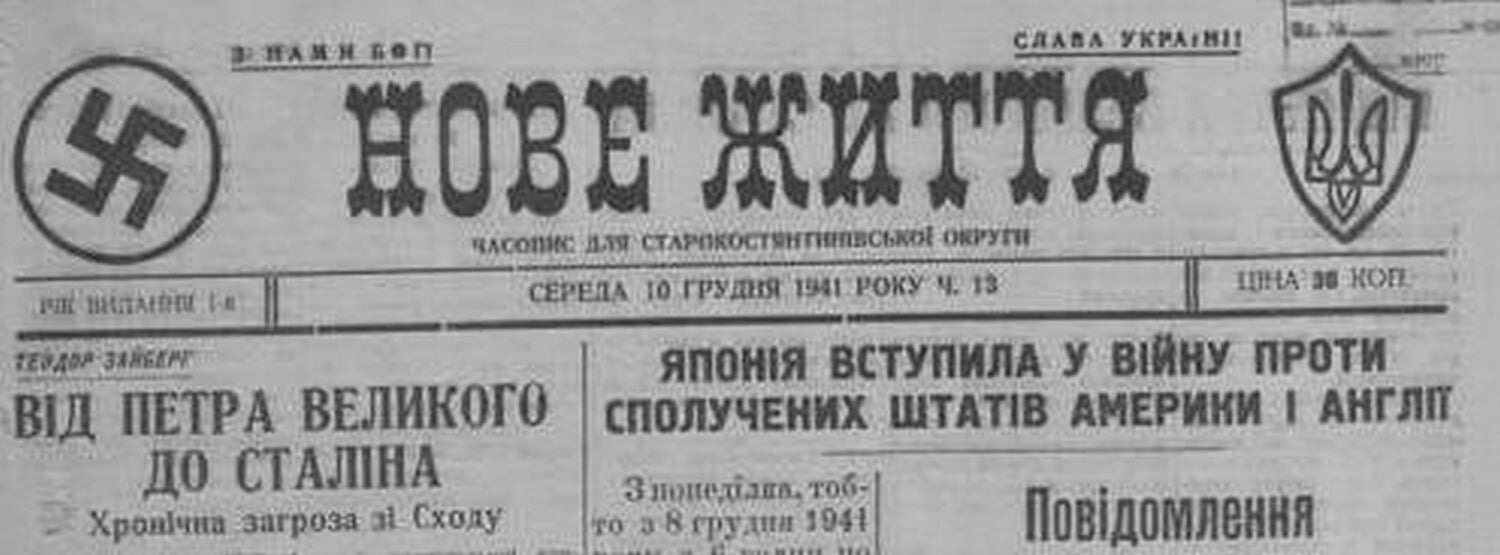
Contemporary Ukrainian newspaper with slogans such as "God with Us!" and "Glory to Ukraine!". The headlines read: "From Peter the Great to Stalin – the Eastern Menace" and "Japan declares war on the United States of America and England".
https://en.wikipedia.org/wiki/Ukrainian_collaboration_with_Nazi_Germany
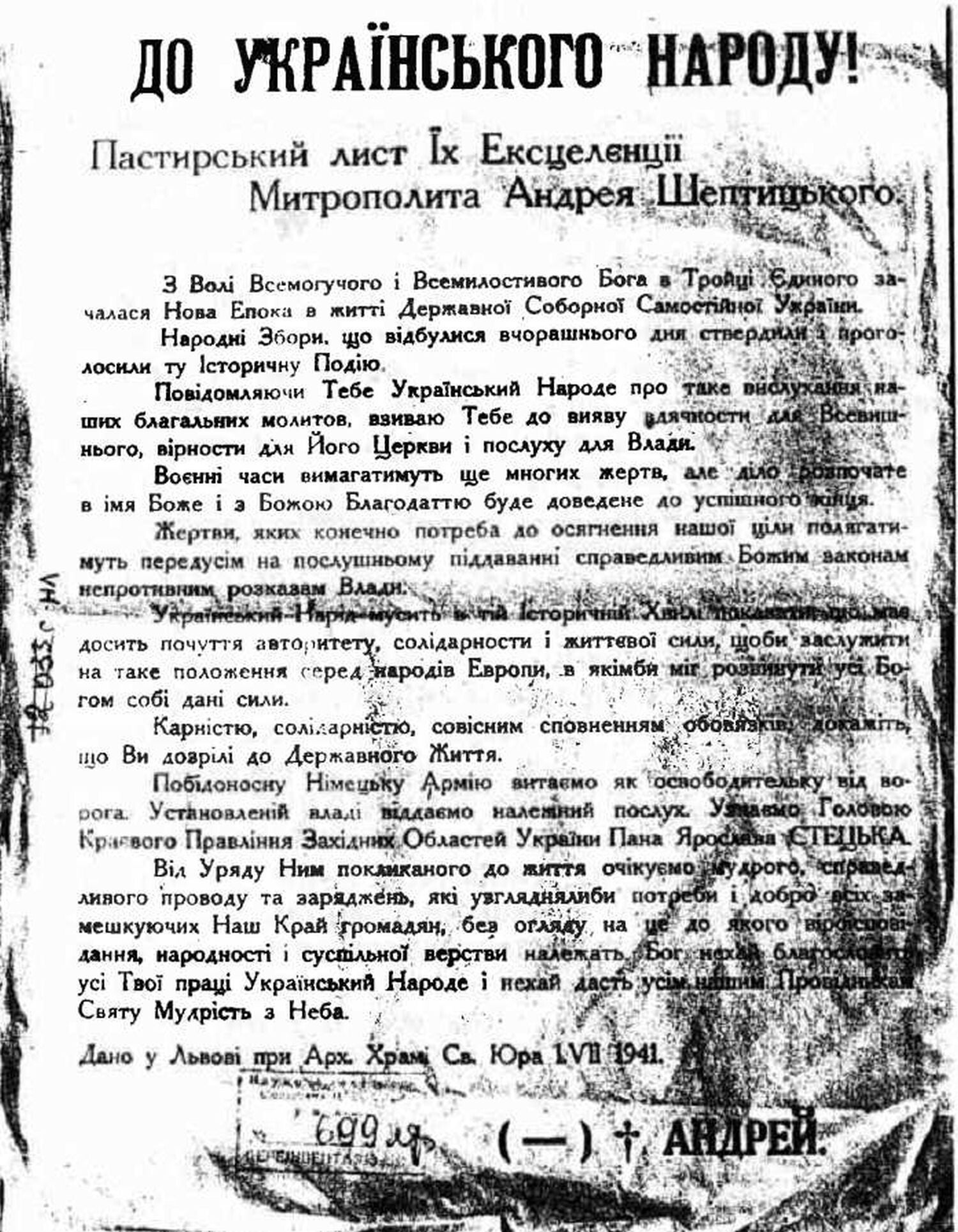
The Ukrainian clergy's address to the Ukrainians, calling them to pledge allegiance to Germany.
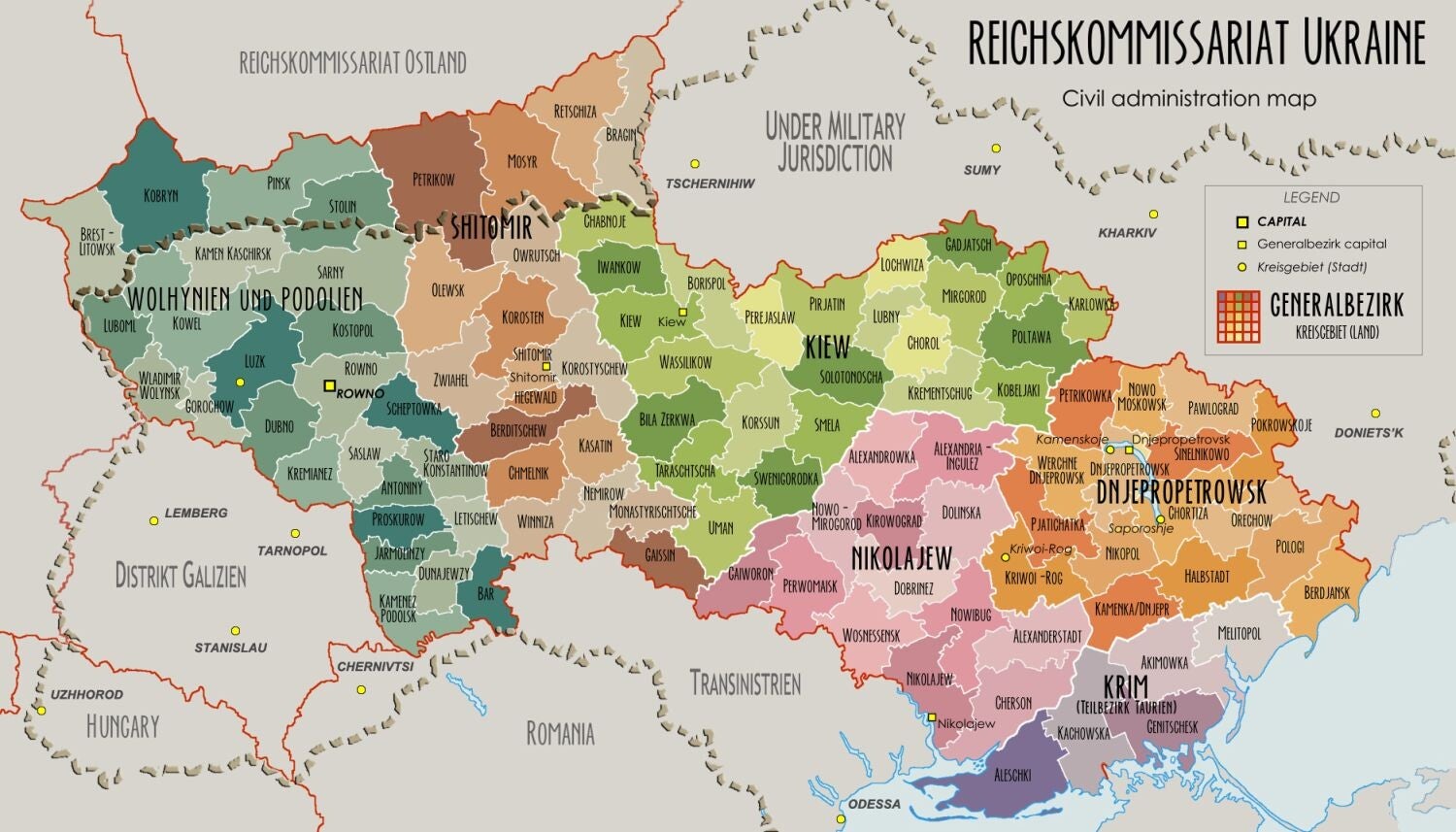
An administrative map of the Reichskommissariat Ukraine. Shows the boundaries of the Generalbezirke and Kreisgebiete as of September 1943. Distrikt Galizien added with major cities, plus outline of modern-day borders of sovereign Ukraine in order to see what part of the country constituted the actual Reichskommissariat during the Second World War.
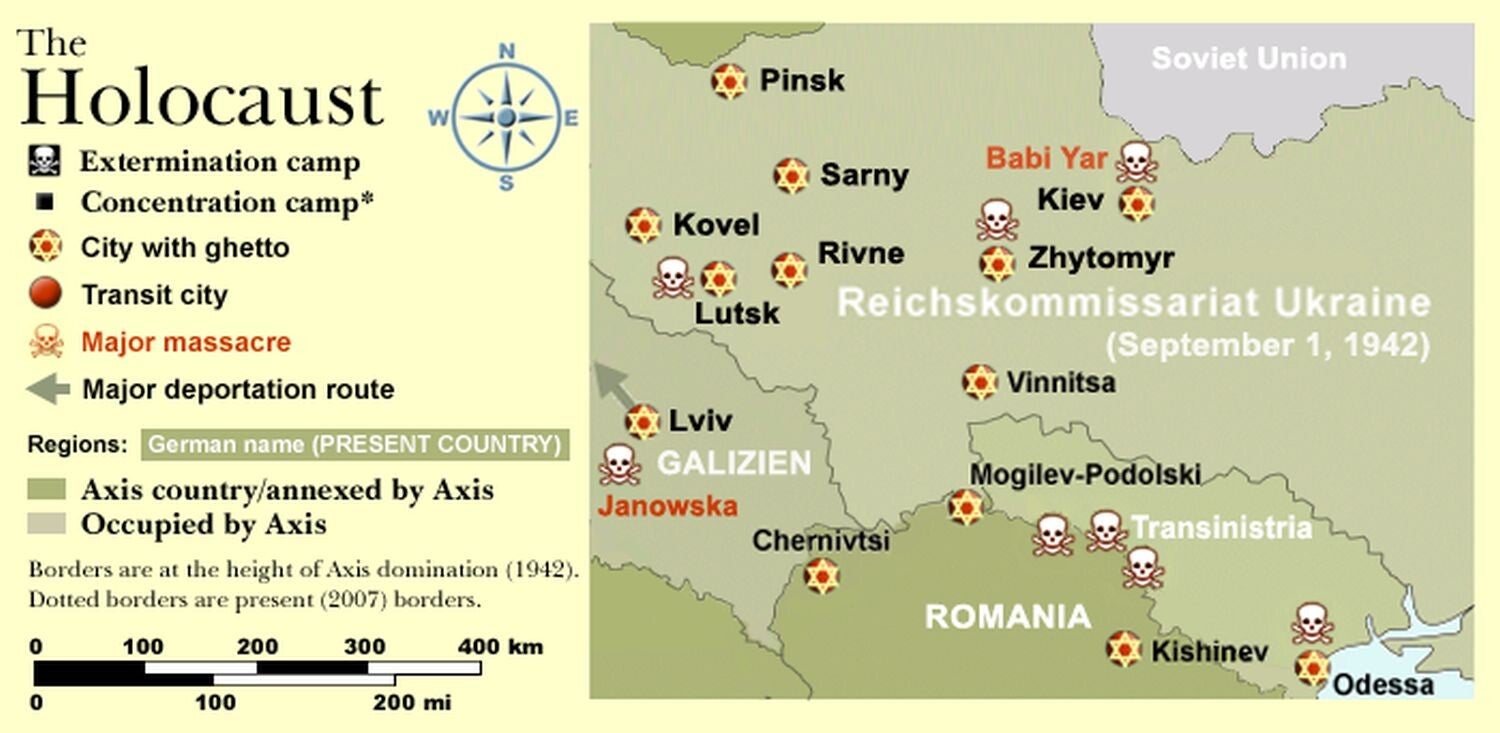
Map of the Holocaust in Europe during World War II, 1939-1945. This map shows all extermination camps (or death camps), most major concentration camps, labor camps, prison camps, ghettos, major deportation routes and major massacre sites.

Felix Landau was an SS officer whose diary offers a stark window into perpetrator behaviour during the Holocaust. Serving with an Einsatzkommando in Lwów (Lviv) in 1941, he documented mass shootings, forced labour round‑ups, and daily brutality with unsettling detachment. His writings reveal how ideological conviction, routine violence, and personal ambition normalised genocide. After the war he received a life sentence but was released in the 1950s, living quietly until his death in 1983.