
A man in a long coat, with thick hair and deep cheeks, kneels at the edge of a common pit, resigned to his fate.
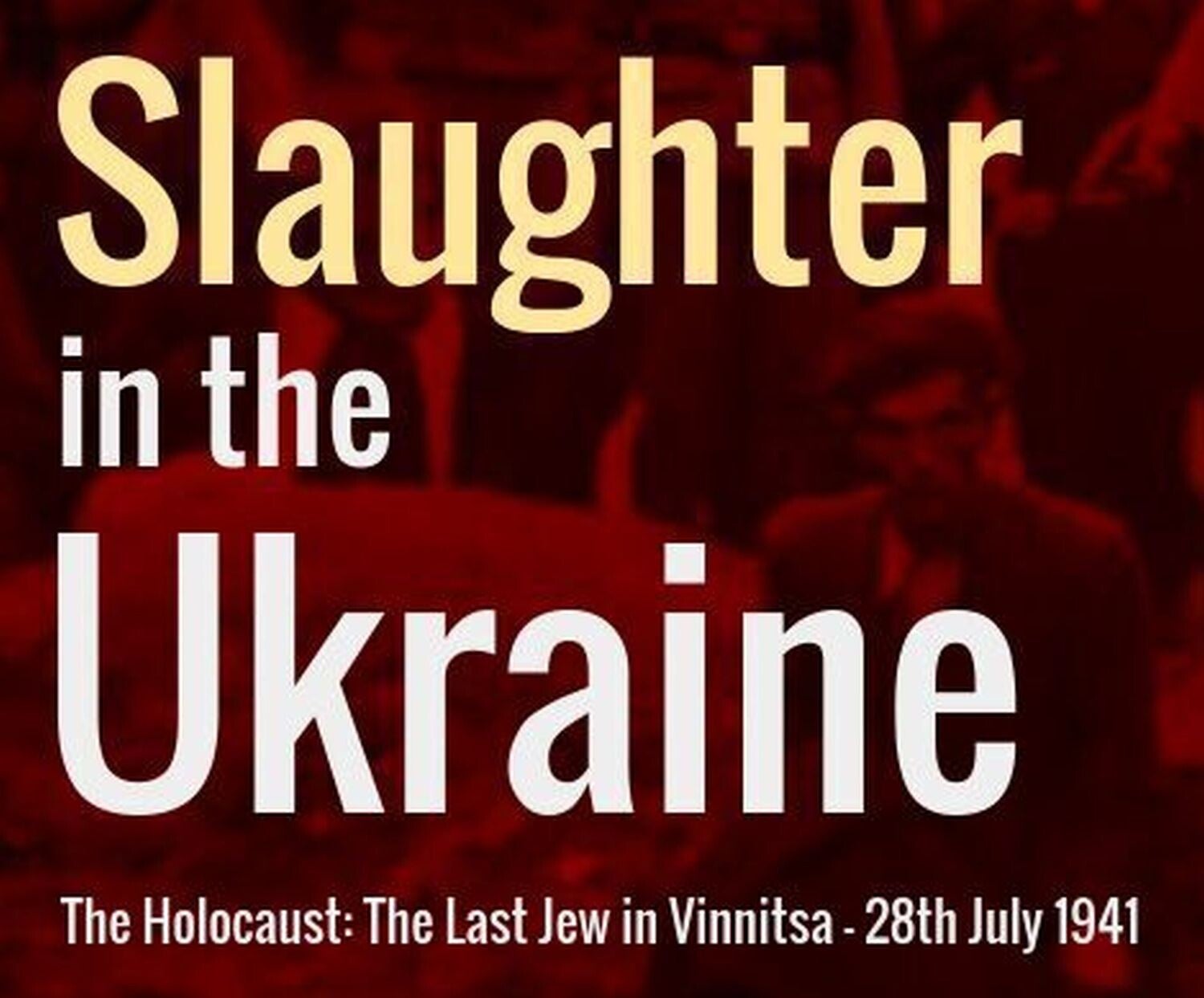
The dozens of bodies underneath him and the gunman pointing his gun at his neck leave no room for doubt - he knows his life is about to end. The identity of the victim remains a mystery, but a match has been found for the perpetrator with a 99% certainty. This photo became one of the most famous images of the Holocaust, entitled "The last Jew of Vinnitsa”. It first attracted attention in 1961 during the trial of Nazi war criminal Adolf Eichmann
. The image had long been mislabeled. It was not until 2023 that Matthaeus discovered that the photograph had not been taken in the Ukrainian city of Vinitsa between 1941 and 1943, as was originally thought, but rather in Berdichiv, about 150 kilometers from Kiev.

The Last Jew in Vinnitsa is a photograph taken during the Holocaust in Ukraine showing an unknown Jewish man - probably on 28 July 1941 in Berdychiv and not Vinnitsa - about to be shot dead by Jakobus Onnen, a member of Einsatzgruppe C, a mobile death squad of the German SS. The victim is kneeling beside a mass grave already containing bodies; behind, a group of SS and Reich Labor Service men watch indifferently.
The error was discovered by chance. A few years ago, the United States Holocaust Memorial Museum in Washington received the war diaries of Austrian Wehrmacht soldier Walter Materna, who was stationed in Berdychiv in 1941.
They included a printed copy of this photo, but of significantly better quality than the previously known copy. On the back it was written: „The end of July 1941. Execution of the Jews by the SS in the fortress Berdychiv. July 28, 1941”. A reader intervened and said that, based on correspondence from that period in his family's possession, he believed the attacker could be his wife's uncle, Jakobus Onnen, a French, English and sports teacher, born in 1906 in the German village of Tichelwarf, near the Dutch border.
Relatives had destroyed letters from the eastern front of Onnen in the 1990s . Onnen was never promoted above a relatively lower degree and was killed in battle in August 1943. The victim remains unknown - as in so many cases - even if his face is clearly visible in the photo.
Hell in Ukraine
The Holocaust Spreads East
The Holocaust in Ukraine formed one of the central theatres of Nazi Germany’s campaign of mass murder during the Second World War.
Across territories including the Reichskommissariat Ukraine, the General Government, the Crimean General Government, Transnistria, Bessarabia, Northern Bukovina, the Hertsa region, and Carpathian Ruthenia, German occupation authorities and their collaborators carried out systematic killings of Jewish civilians.
One source states, “between 1941 and 1945, between 850,000 and 1,600,000 Jews were killed in Ukraine,” a figure that reflects both direct German actions and the involvement of local auxiliaries.


Map of the Holocaust in Europe during World War II, 1939-1945. This map shows all extermination camps (or death camps), most major concentration camps, labor camps, prison camps, ghettos, major deportation routes and major massacre sites.
...visible instruments of mass murder...
Historians have emphasised the strategic and ideological context behind these crimes.
Timothy Snyder argues that the Holocaust was inseparable from Germany’s war of conquest in the East, stating that “...had Hitler not had the colonial idea to fight a war in Eastern Europe to control Ukraine… there could not have been a Holocaust.”
Wendy Lower similarly links the genocide of Ukrainian Jews to German plans for exploitation and colonisation.
The most visible instruments of mass murder were the Einsatzgruppen, mobile SS killing units that followed the Wehrmacht into occupied territory.
Einsatzgruppe C operated in northern and central Ukraine, while Einsatzgruppe D covered southern Ukraine, Moldavia, the Crimea, and later the Caucasus.
Their stated mission, according to Otto Ohlendorf’s testimony, was to “protect the rear of the troops by killing the Jews, Romani, Communist functionaries… and all persons who would endanger the security.”
In practice, their victims were overwhelmingly Jewish civilians.

SS-Gruppenführer Otto Ohlendorf, commander of Einsatzgruppe D, picture during the Einsatzgruppen trial. His unit carried out systematic mass shootings of Jewish civilians, Roma, and others deemed “security threats.” Ohlendorf later admitted responsibility for tens of thousands of murders at the Einsatzgruppen Trial.
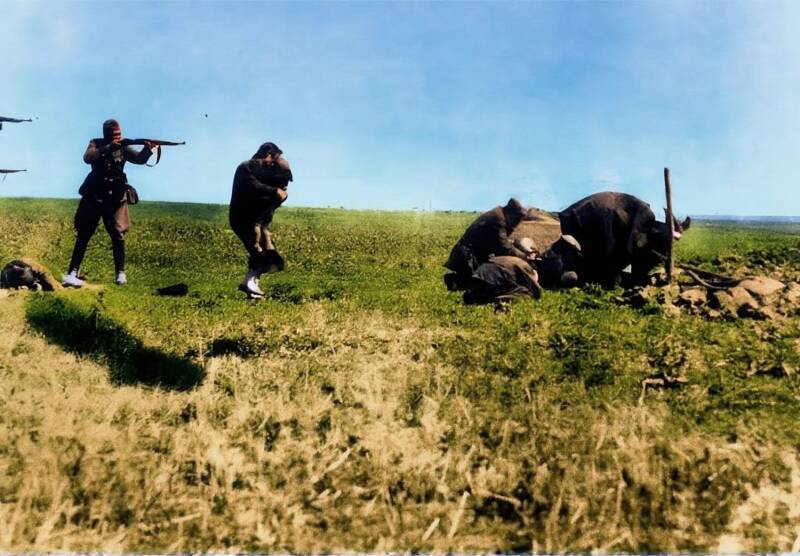
One of the most notorious photographs of the Holocaust. Executions of Jews by German army mobile killing units (Einsatzgruppen) near Ivangorod Ukraine. The photo was mailed from the Eastern Front to Germany and intercepted at a Warsaw post office by a member of the Polish resistance collecting documentation on Nazi war crimes. The original print was owned by Tadeusz Mazur and Jerzy Tomaszewski and now resides in Historical Archives in Warsaw. The original German inscription on the back of the photograph reads, "Ukraine 1942, Jewish Action [operation], Ivangorod."

Eyewitness accounts illustrate the brutality of these operations.
A survivor from Piryatin recalled seeing the pits filled with living and dead victims:
“Screams and groans were coming from the pits… A boy of five years crawled out from under her body and began to scream desperately.”
Such scenes were repeated across occupied Ukraine.
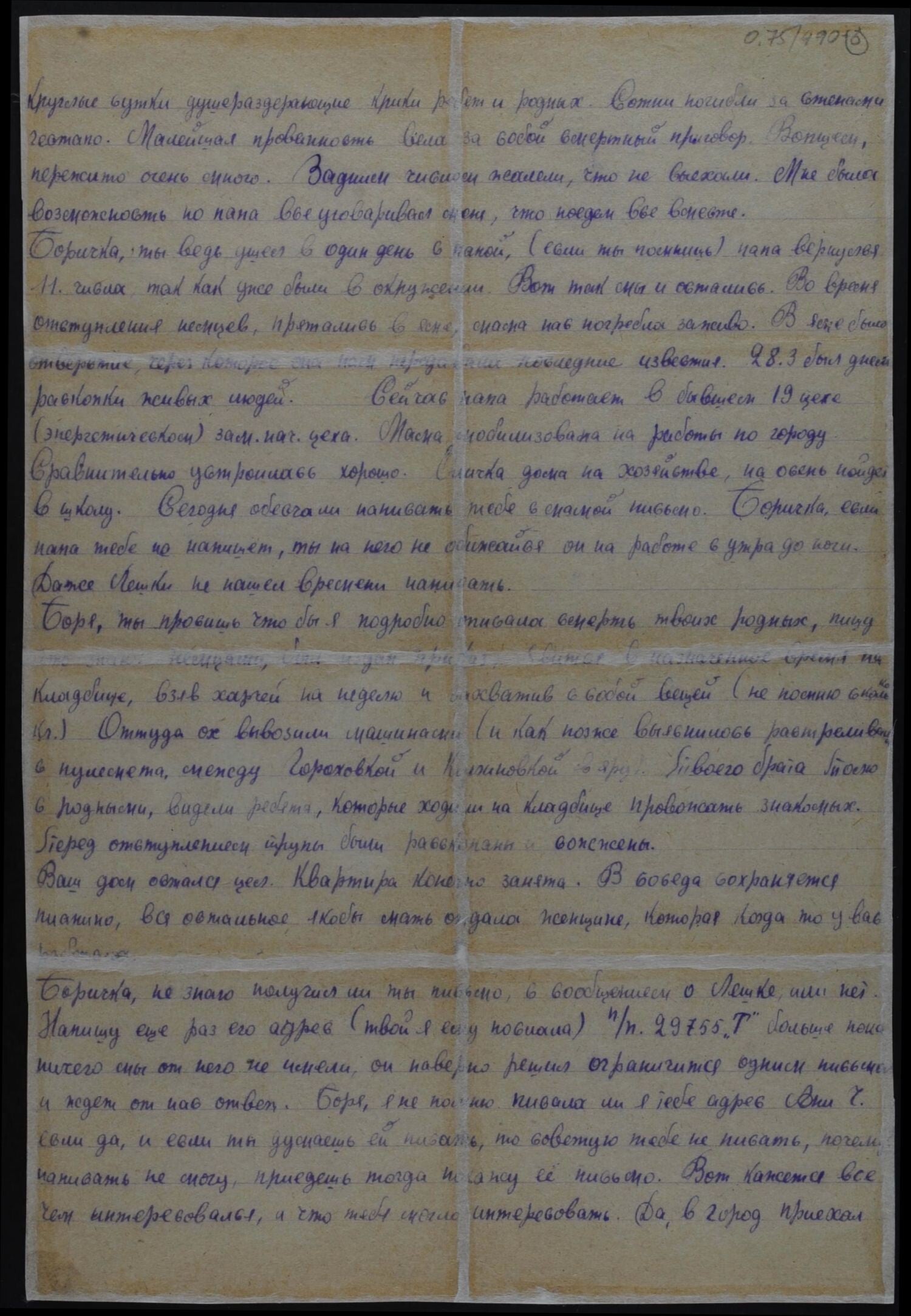
Excerpt from a Letter to Boris Malkus from a friend named Taya (Taisiya), June 8, 1944 after the Nikolaev massacre:
… Borya, you are asking me to describe in detail the death of your family. I am writing you what I know.
The Germans issued an order [for the Jews] to come at a specified time to the cemetery, taking with them foodstuffs for a week and also their belongings (I do not remember how many kilos).
From there they were taken away by truck (and, as later turned out, shot by machine-gun fire in a ravine between Gorokhovka and Kalinovka).
Some fellows who went to the cemetery to say farewell to their friends saw your brother Tolya with [other members of] your family….
Major massacres occurred throughout 1941–1943.
The Nikolaev massacre resulted in 35,782 deaths.
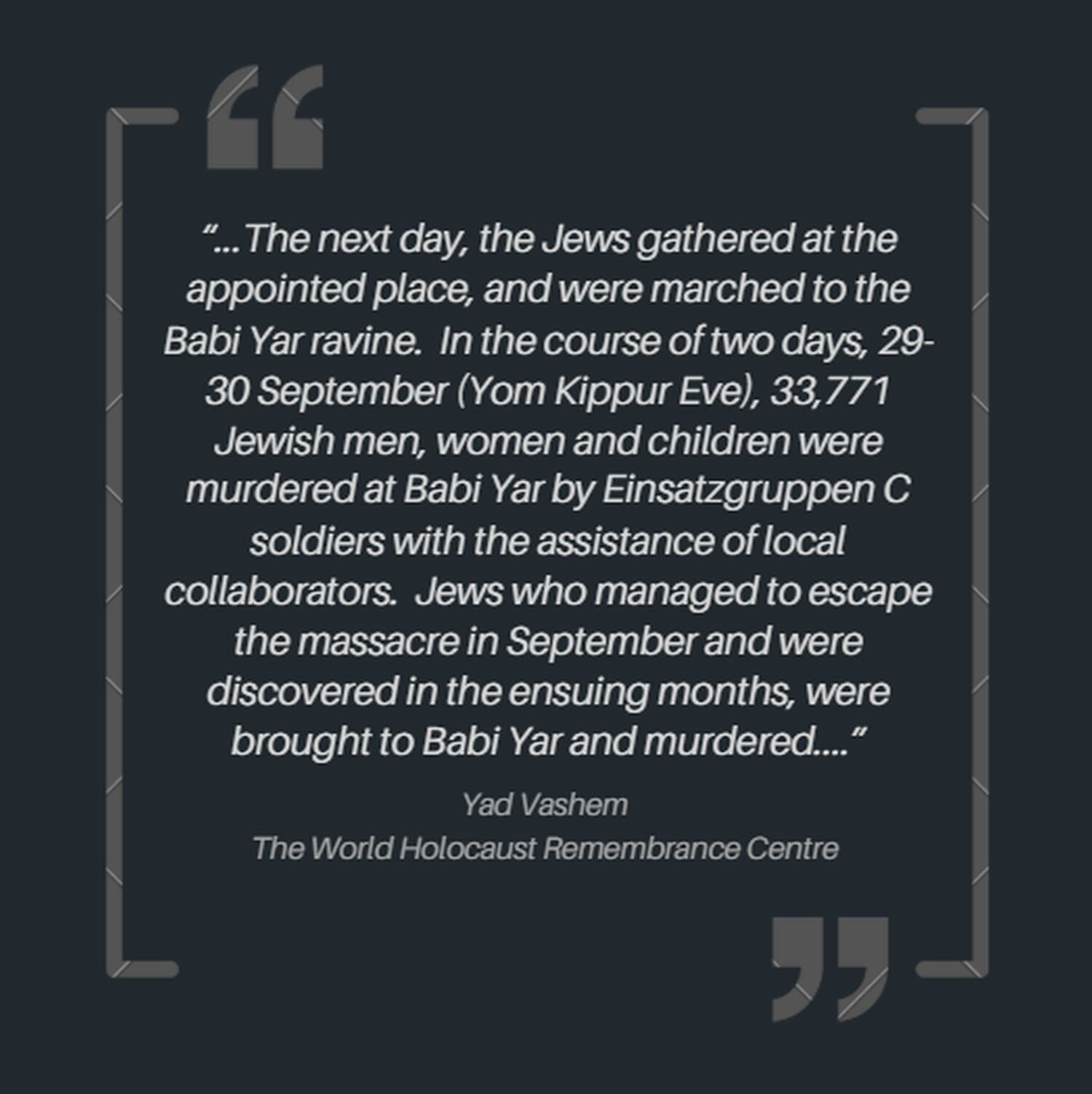
The most infamous atrocity was the Babi Yar massacre outside Kiev, where 33,771 Jews were murdered on 29–30 September 1941.
Reports describes how victims were forced to undress, driven into the ravine, and shot in layers: “The corpses were literally in layers… The marksman would walk across the bodies of the executed Jews to the next Jew… and shoot him.”
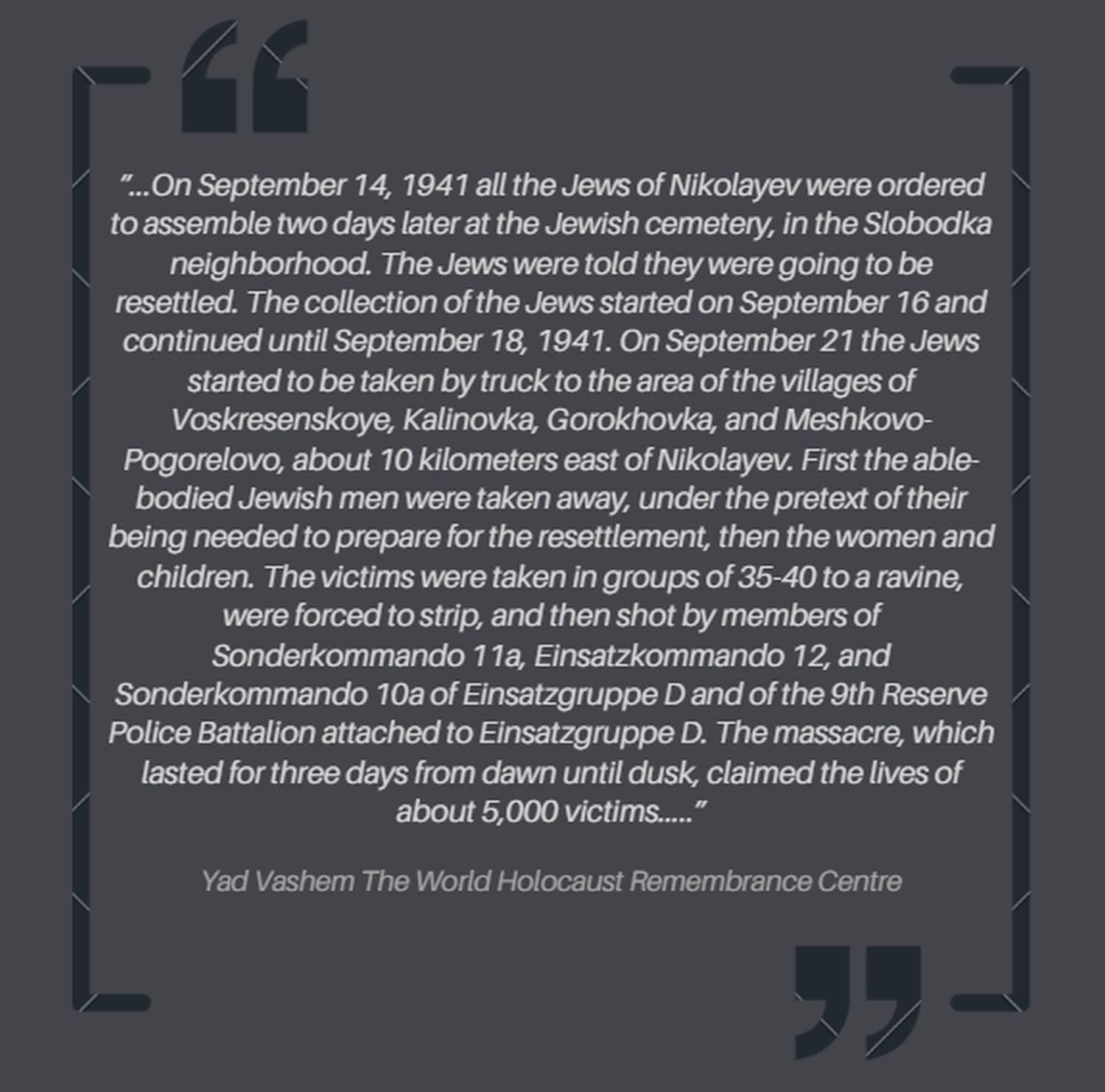

Soviet POWs covering a mass grave after the Babi Yar massacre. The massacre, carried out on 29–30 September 1941, was one of the largest single mass shootings of the Holocaust. Following the German occupation of Kiev in Ukraine, the city’s Jews were ordered to assemble near the cemetery, ostensibly for resettlement. Instead, they were taken to the Babi Yar ravine, forced to undress, and shot in successive groups by units of Einsatzgruppe C, assisted by police battalions and local auxiliaries. 33,771 Jews were murdered in two days, with further killings of Roma, Soviet prisoners, and civilians continuing at the site throughout the occupation.
...a significant role in the scale of the killings...
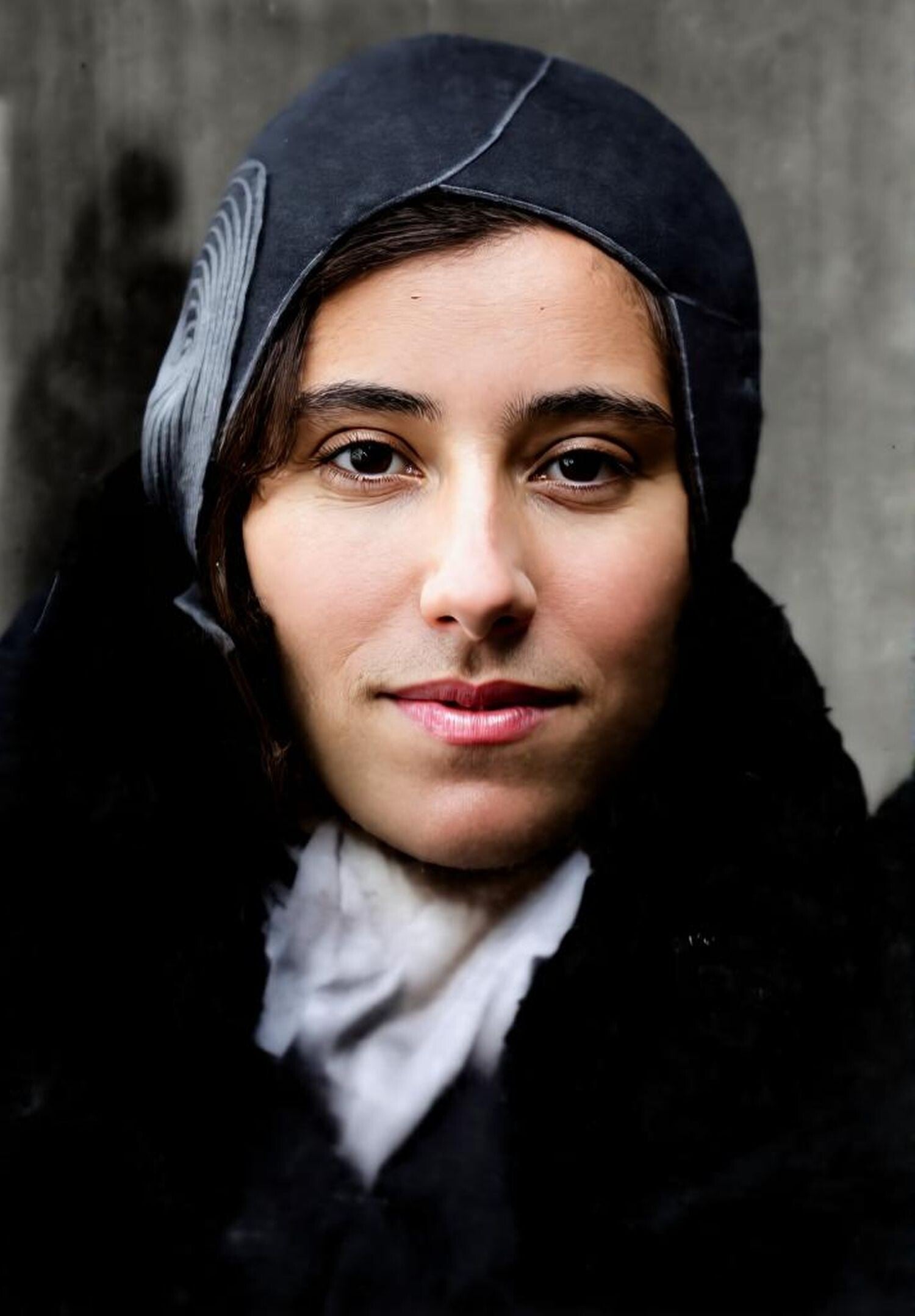
Beba Gomelskaya was born in Oster, Ukraine. She was murdered in September 1941 at Babi Yar.
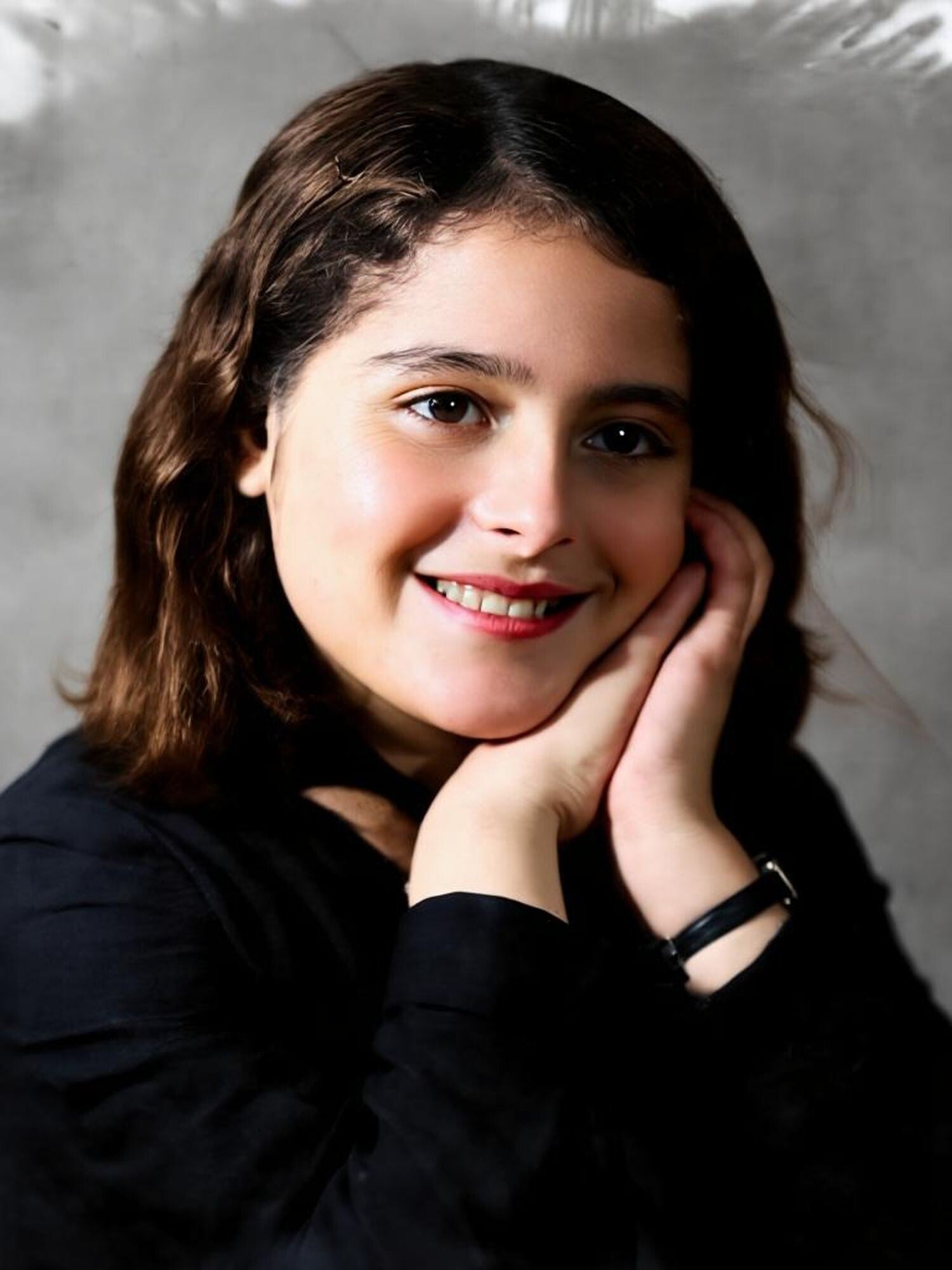
Collaboration played a significant role in the scale of the killings. Ukrainians served in local administrations, auxiliary police, Schutzmannschaft battalions, and as guards in concentration camps.
National Geographic is quoted as noting that “around 100,000 joined police units that provided key assistance to the Nazis.”
Most collaborators were not ideologically driven but acted under occupation conditions, which increasingly frames the massacres as a German responsibility.

Members of the Ukrainian Auxiliary Police, June 1943.
...encouraged violence...
The Organization of Ukrainian Nationalists (OUN), divided into factions, coordinated with German authorities before and during the invasion.
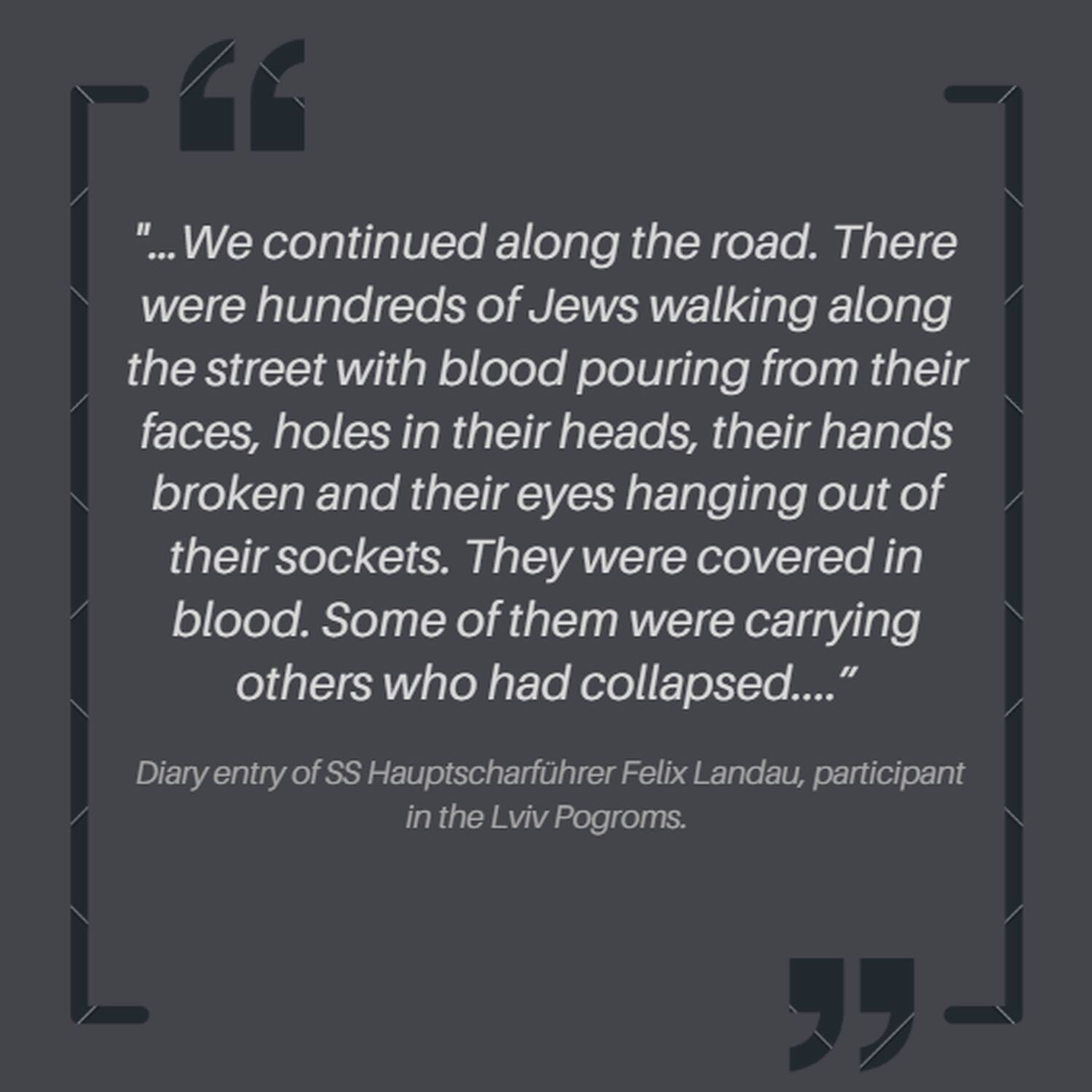
OUN militias participated in pogroms, including the massacre of 6,000 Jews in Lviv.
Propaganda encouraged violence, with slogans such as “Long live Ukraine without Jews, Poles and Germans… and Jews to the gallows.” Internal OUN instructions permitted the “liquidation” of Jews, Poles, and Russians during periods of chaos.
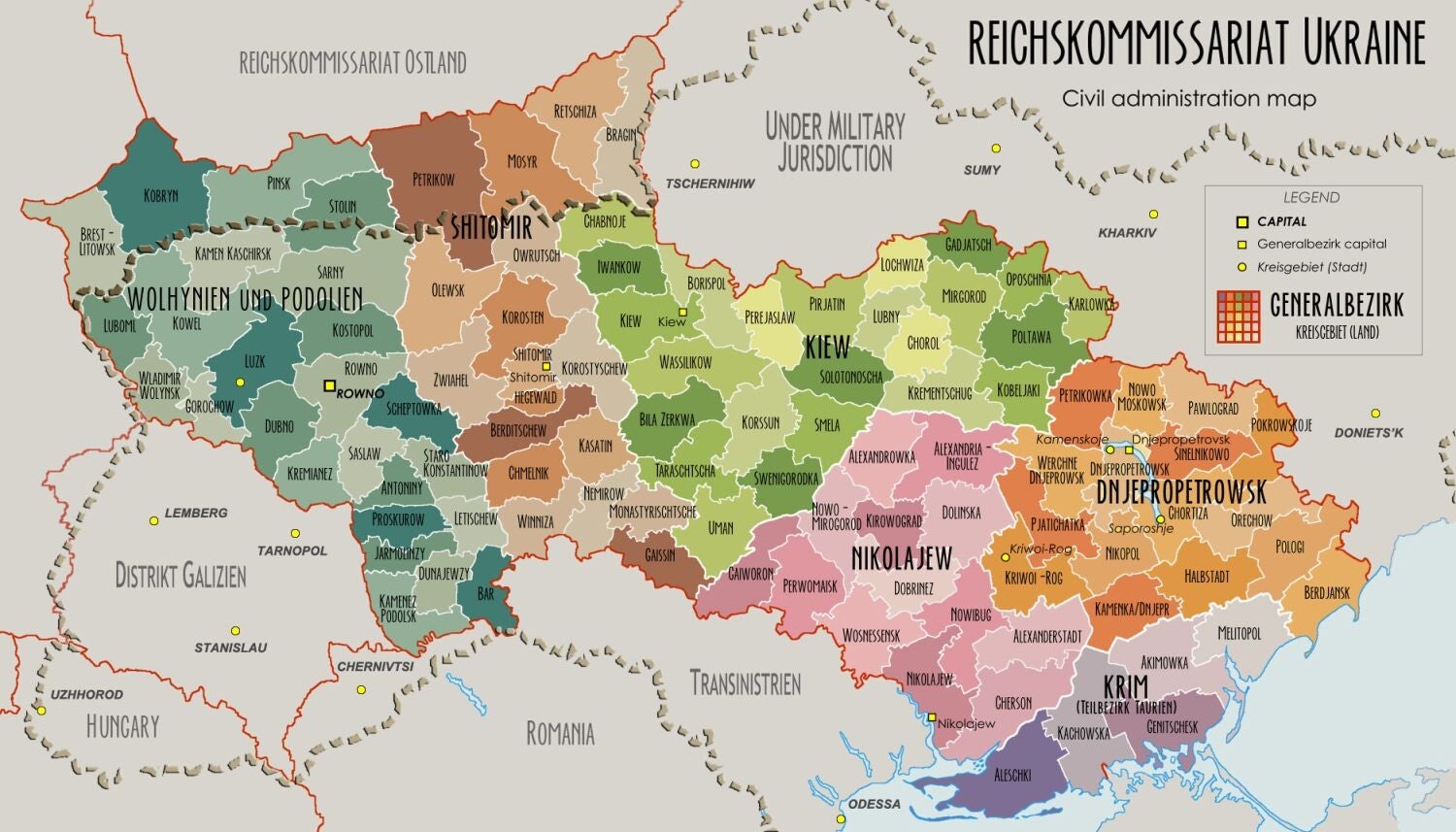
An administrative map of the Reichskommissariat Ukraine. Shows the boundaries of the Generalbezirke and Kreisgebiete as of September 1943. Distrikt Galizien added with major cities, plus outline of modern-day borders of sovereign Ukraine in order to see what part of the country constituted the actual Reichskommissariat during the Second World War. Under the Reichskommissariat Ukraine, German occupation authorities oversaw systematic persecution and mass murder of Jews, Roma, and other targeted groups. The Holocaust in Ukraine unfolded through shootings, ghettos, forced labour, and the destruction of entire communities. Einsatzgruppen, police battalions, and local auxiliaries carried out large‑scale executions in ravines, fields, and town outskirts. By 1944, more than a million Jews in Ukraine had been murdered, leaving vast regions emptied of their pre‑war Jewish life.
Information
Collaboration extended beyond ideology. By early 1944, 63% of Ukrainian Insurgent Army commanders had previously served in German‑created police formations.
These units assisted not only in the genocide of Jews but also in killings of Soviet prisoners and Ukrainian civilians, including the destruction of Kortelitsa and the murder of 3,000 inhabitants.
Ukrainian police auxiliaries were involved in preparations for Babi Yar, and other groups, including Tatar volunteers in Simferopol, participated in anti‑Jewish actions.
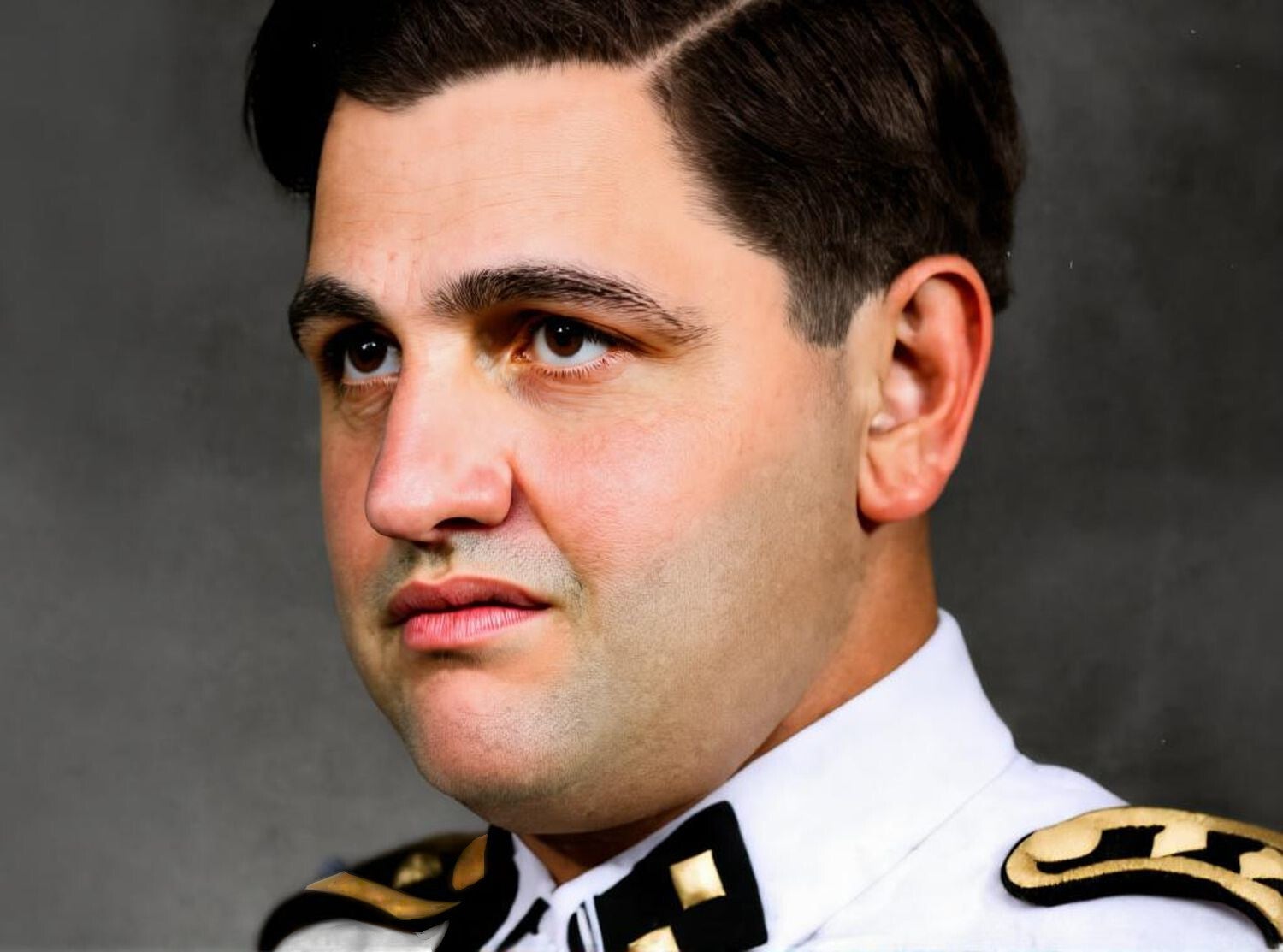
Felix Landau was an SS officer whose diary offers a stark window into perpetrator behaviour during the Holocaust. Serving with an Einsatzkommando in Lwów (Lviv) in 1941, he documented mass shootings, forced labour round‑ups, and daily brutality with unsettling detachment. His writings reveal how ideological conviction, routine violence, and personal ambition normalised genocide. After the war he received a life sentence but was released in the 1950s, living quietly until his death in 1983.
Information
Post‑war accountability in Ukraine has been limited.
The Simon Wiesenthal Center observed that independent Ukraine “has… never conducted a single investigation of a local Nazi war criminal,” with all previous prosecutions occurring under Soviet authority.
Estimates of Jewish victims in Ukraine have risen over time. Earlier figures suggested around 900,000 deaths, but access to Soviet archives in the 1990s increased the estimated pre‑war Jewish population, leading to revised totals.
Dieter Pohl estimated 1.2 million murdered; later assessments reach 1.6 million. Some Jews who initially escaped into forests were later killed by nationalist units, the Ukrainian Insurgent Army, or other partisans during the German retreat.
Wendy Lower summarises the complexity of perpetration: “there were many perpetrators, albeit with different political agendas, who killed Jews and suppressed this history.”
Further reading