
Overview
The Doolittle Raid, carried out on 18 April 1942, was the first American air operation to strike the Japanese home islands during the Second World War. Planned in the aftermath of the attack on Pearl Harbor, the raid aimed to deliver a psychological blow, demonstrate American reach, and force Japan to divert resources to homeland defence. The operation was led by Lieutenant Colonel James H. Doolittle, a respected aviator and test pilot whose leadership gave the mission its name.
Sixteen B‑25B Mitchell medium bombers were selected for the attack. These aircraft were modified for extended range and loaded aboard the aircraft carrier USS Hornet. The plan required the bombers to launch from the carrier, strike military and industrial targets in Japan, and then continue westward to land in China, as they could not return to the carrier. On 18 April, the task force was detected prematurely by Japanese picket boats, forcing an early launch approximately 650 nautical miles from Japan—far beyond the intended distance.
Despite the increased range, all sixteen aircraft reached Japan and bombed targets in Tokyo, Yokohama, Nagoya, Kobe, and Osaka. Material damage was limited, but the raid achieved its primary strategic effect: it shocked Japanese leadership, undermined the perception of homeland invulnerability, and boosted American morale at a critical moment in the Pacific War.
Most crews reached China, though many aircraft crash‑landed or were abandoned due to fuel exhaustion. Several airmen were killed, captured, or executed by Japanese forces. Doolittle himself expected to be court‑martialled for the loss of all aircraft, but instead received the Medal of Honor for leading the operation. The raid’s psychological impact contributed to Japan’s decision to pursue a decisive naval engagement, culminating in the Battle of Midway.
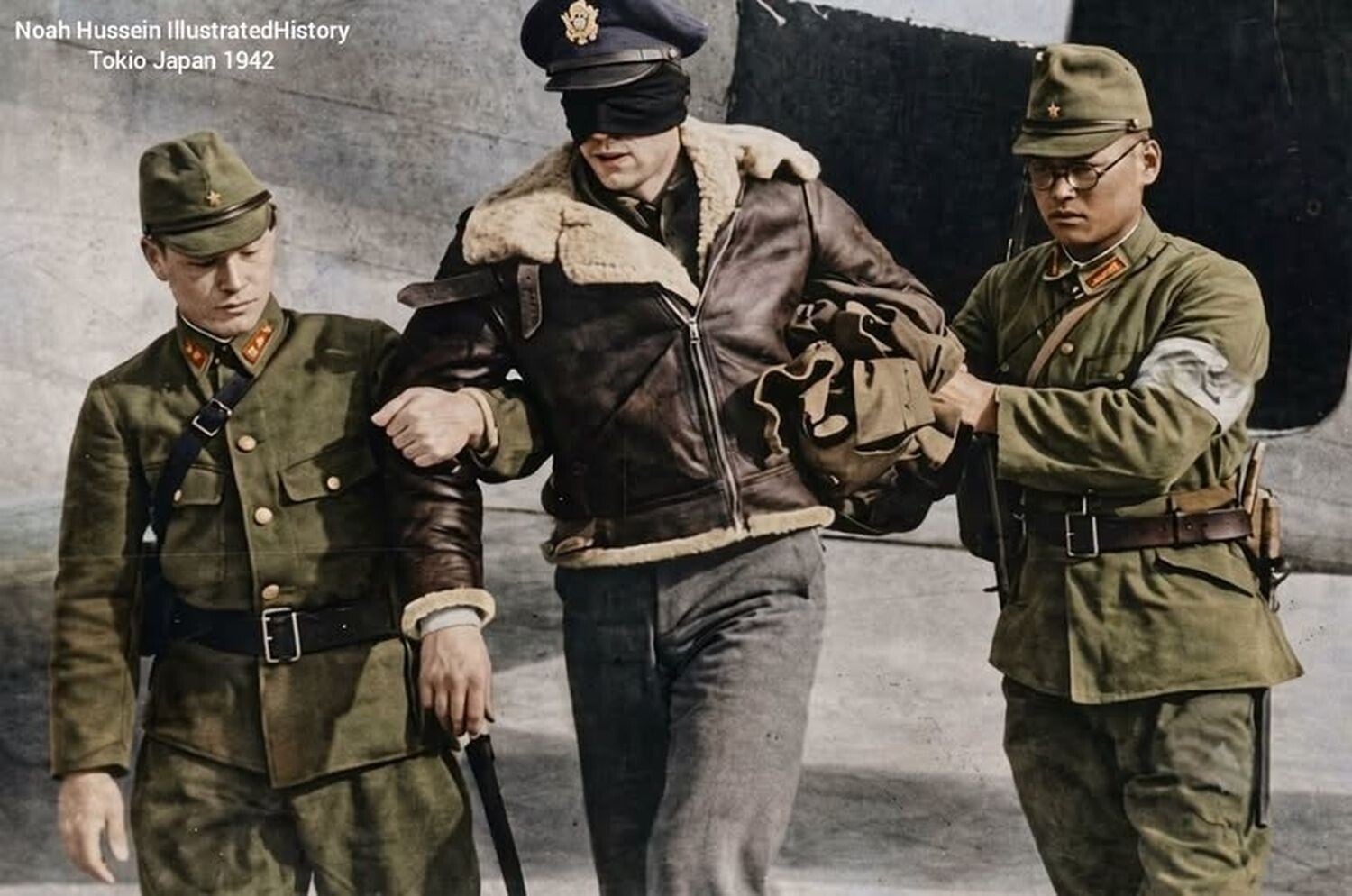
First Lieutenant Robert L. Hite, an American bomber co-pilot, blindfolded and detained by Imperial Japanese Army soldiers in 1942. Hite was one of the Doolittle Raiders who took part in the 18 April 1942 bombing raid on Tokyo, the first U.S. strike against Japan after Pearl Harbor. Captured in China, he endured harsh imprisonment, interrogation, and malnutrition under Japanese custody. Hite survived the war, returning home in 1945 after years of confinement, and remained a symbol of the raid’s courage and the heavy cost borne by its aircrews.
Noah Hussein IllustratedHistory https://www.facebook.com/groups/1599549446950675/user/100080908814723/