Overview
Collaboration during the Second World War took many forms, ranging from ideological alignment to pragmatic survival. In occupied Europe, individuals and institutions cooperated with Nazi Germany for political, economic, or personal advantage. In France, Marshal Philippe Pétain’s Vichy regime openly collaborated, enforcing German directives and assisting in the deportation of Jews. Industrialists such as Renault continued production under German supervision, while cultural figures like Coco Chanel exploited occupation networks to pursue business and personal interests through her association with Abwehr agent Hans Günther von Dincklage.
In Norway, Vidkun Quisling’s government became synonymous with treachery, administering the country under German control and providing troops for the Eastern Front. In the Netherlands, collaboration extended to administrative cooperation and the identification of Jewish citizens, while in Belgium, the Rexist movement under Léon Degrelle supported Nazi ideology and contributed volunteers to the Waffen‑SS. Eastern Europe saw even deeper complicity: Ukrainian and Baltic auxiliaries assisted German forces in anti‑partisan operations and the Holocaust, often motivated by anti‑Soviet sentiment or nationalist aspirations.
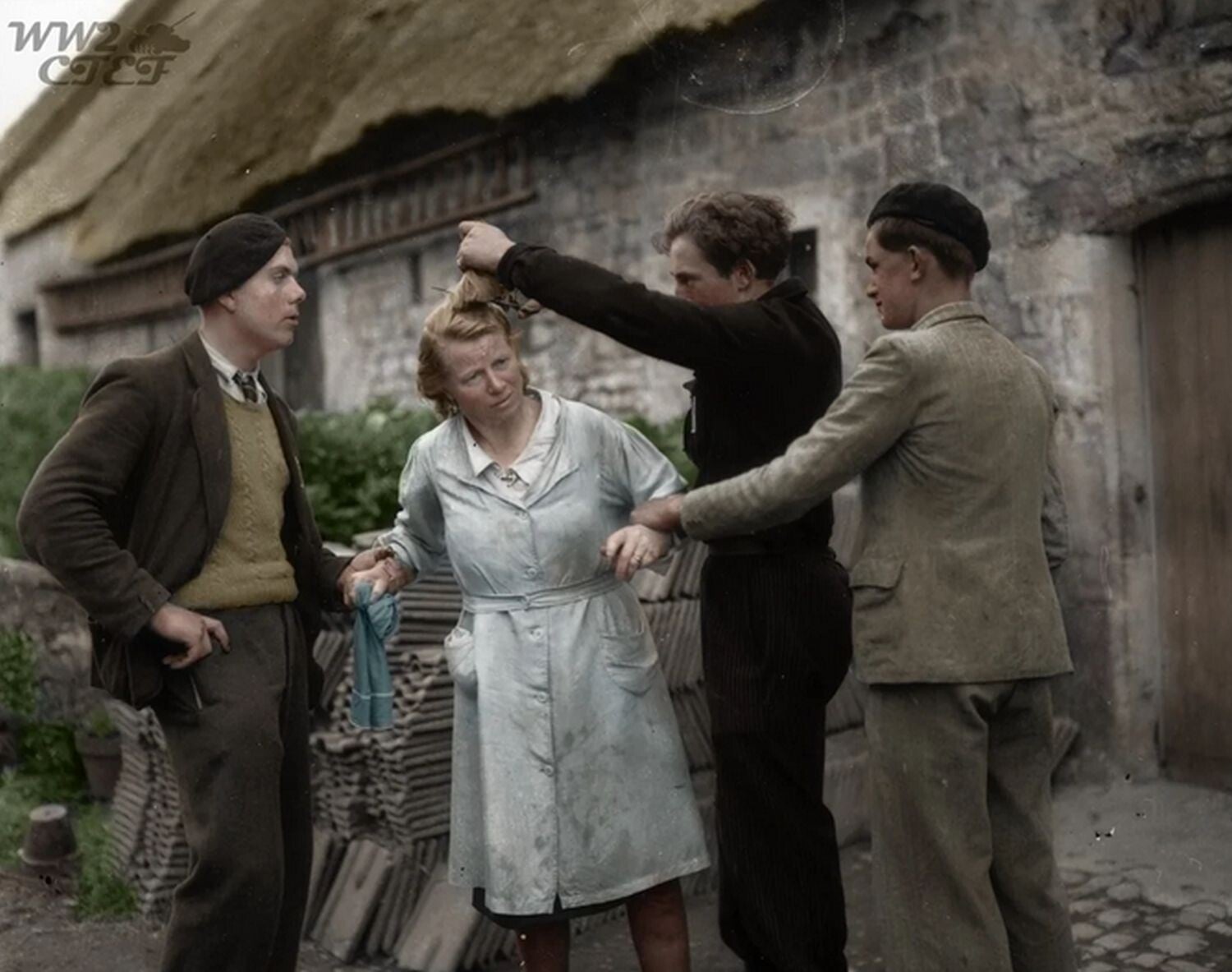
Two French men restrain a woman while another cuts her hair after she has been accused of collaborating with the Germans during the occupation, 1945.
https://www.reddit.com/r/HistoryPorn/comments/one3wa/two_french_men_restrain_a_woman_while_another/
Collaboration was not confined to Europe. In Asia, the Japanese occupation of territories such as Manchukuo and the Philippines relied on local elites who cooperated for power or protection. Each case reflected the complex intersection of coercion, opportunism, and ideology.
After 1945, collaborators faced varying degrees of retribution—public trials, executions, or social ostracism—yet many escaped punishment through political realignment or Cold War pragmatism. The phenomenon remains a moral and historical dilemma: collaboration blurred the boundaries between survival and betrayal, revealing how occupation could corrupt civic duty and personal conscience.
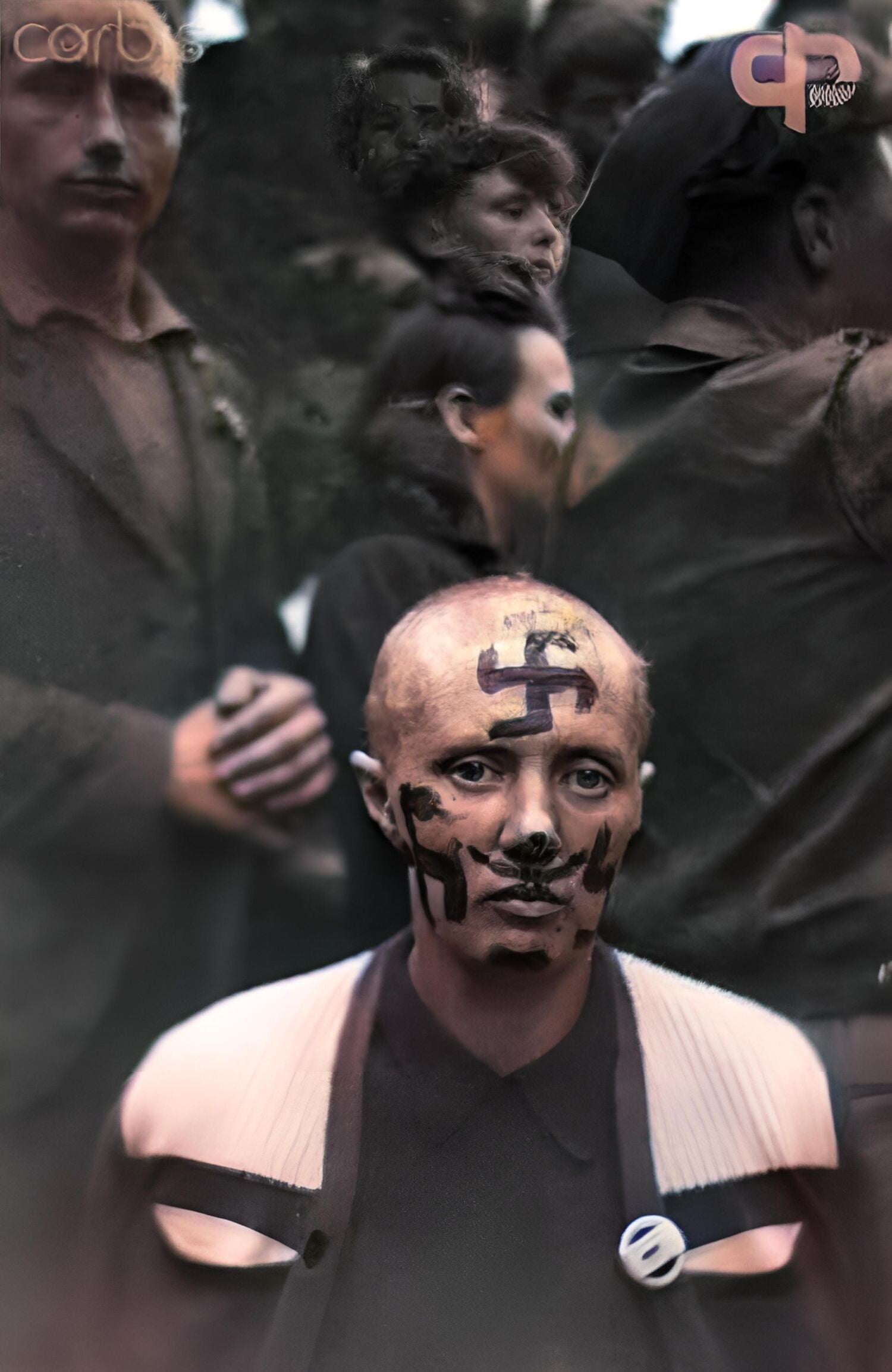
Shaven-headed French woman punished for associating with German soldiers, France, 1944.
https://www.reddit.com/r/HistoricalCapsule/comments/1en3ecw/shavenheaded_french_woman_punished_for/