
Overview
The Battle of Okinawa, fought from 1 April to 22 June 1945, was the final major campaign of the Pacific War and the largest amphibious assault mounted by U.S. forces in the theatre. The island’s strategic value lay in its proximity to Japan—roughly 340 miles from Kyushu—making it a critical staging area for the planned invasion of the Japanese home islands. American forces, primarily the U.S. Tenth Army under General Simon Bolivar Buckner Jr., faced entrenched Japanese defenders commanded by General Mitsuru Ushijima, who adopted a defence‑in‑depth strategy rather than attempting to repel the initial landings.
The early phases saw limited resistance on the beaches, but once U.S. troops advanced inland they encountered a network of fortified ridges, caves, and bunkers forming the Shuri defensive line. Fighting became attritional, characterised by close‑quarters assaults, flamethrowers, demolition charges, and persistent artillery duels. The Japanese employed extensive kamikaze operations against the U.S. fleet offshore, inflicting significant losses, including the sinking of the battleship USS Arizona’s sister ship USS Pennsylvania and severe damage to numerous destroyers and support vessels.
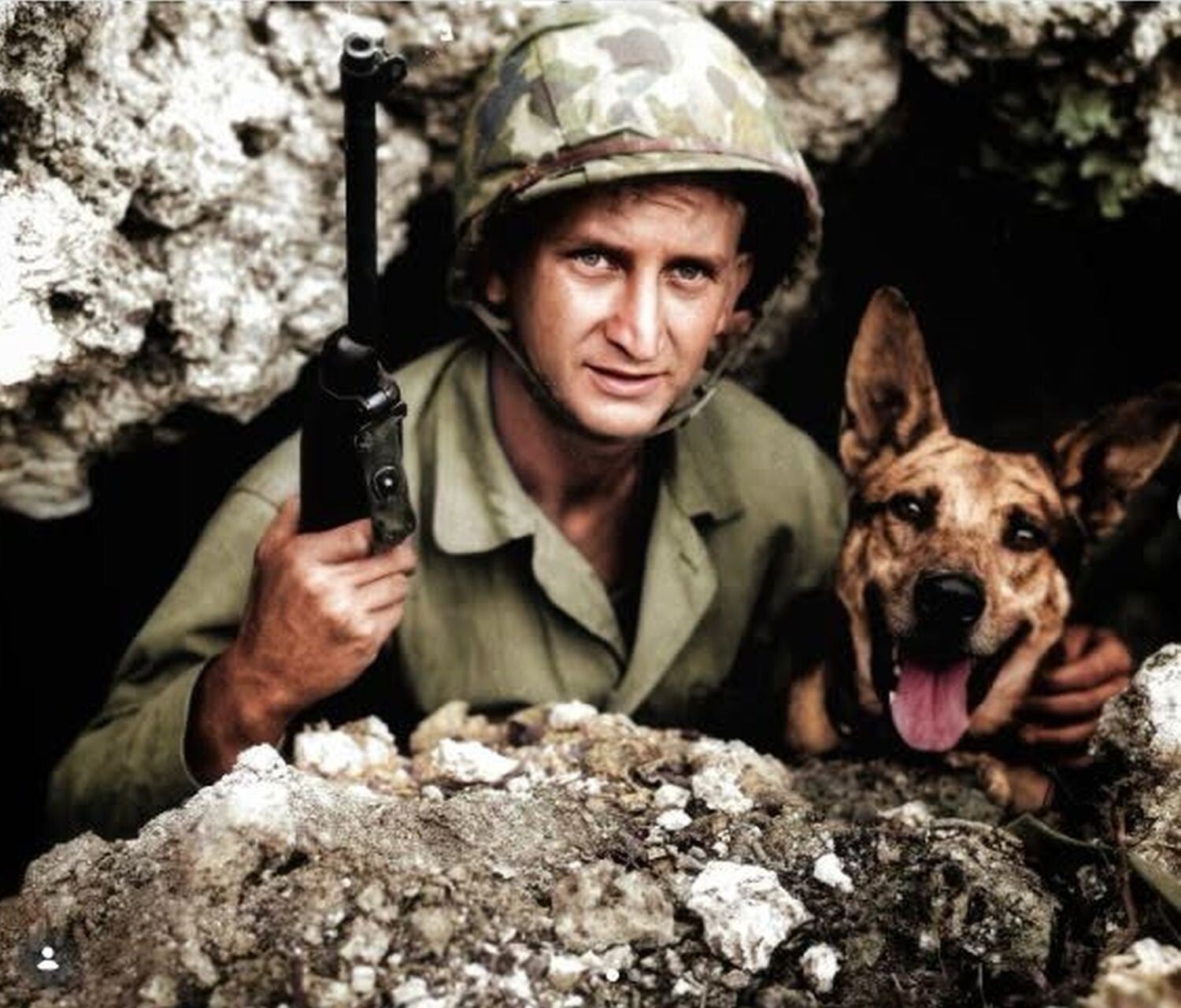
Private John L. Drugan and his dog Pal on Okinawa, May 1945. Pal saved a platoon of Marines from an ambush by alerting his handler of a hidden Japanese machine gun nest. Okinawa, May 1945.
Civilian suffering was extensive. Okinawan non‑combatants were caught between advancing American forces and Japanese directives that discouraged surrender. Many civilians were displaced, forced into caves, or killed during bombardments. The battle resulted in more than 100,000 civilian deaths, alongside approximately 12,500 American combat fatalities and over 90,000 Japanese military dead.
By late June, organised Japanese resistance collapsed with the fall of the Shuri line and the deaths of Ushijima and his chief of staff, General Isamu Cho. Okinawa’s capture provided the United States with airfields and logistical bases for intensified bombing of Japan. The scale of casualties and ferocity of the fighting influenced American strategic thinking, contributing to the decision to employ atomic weapons rather than undertake a direct invasion of the Japanese mainland.
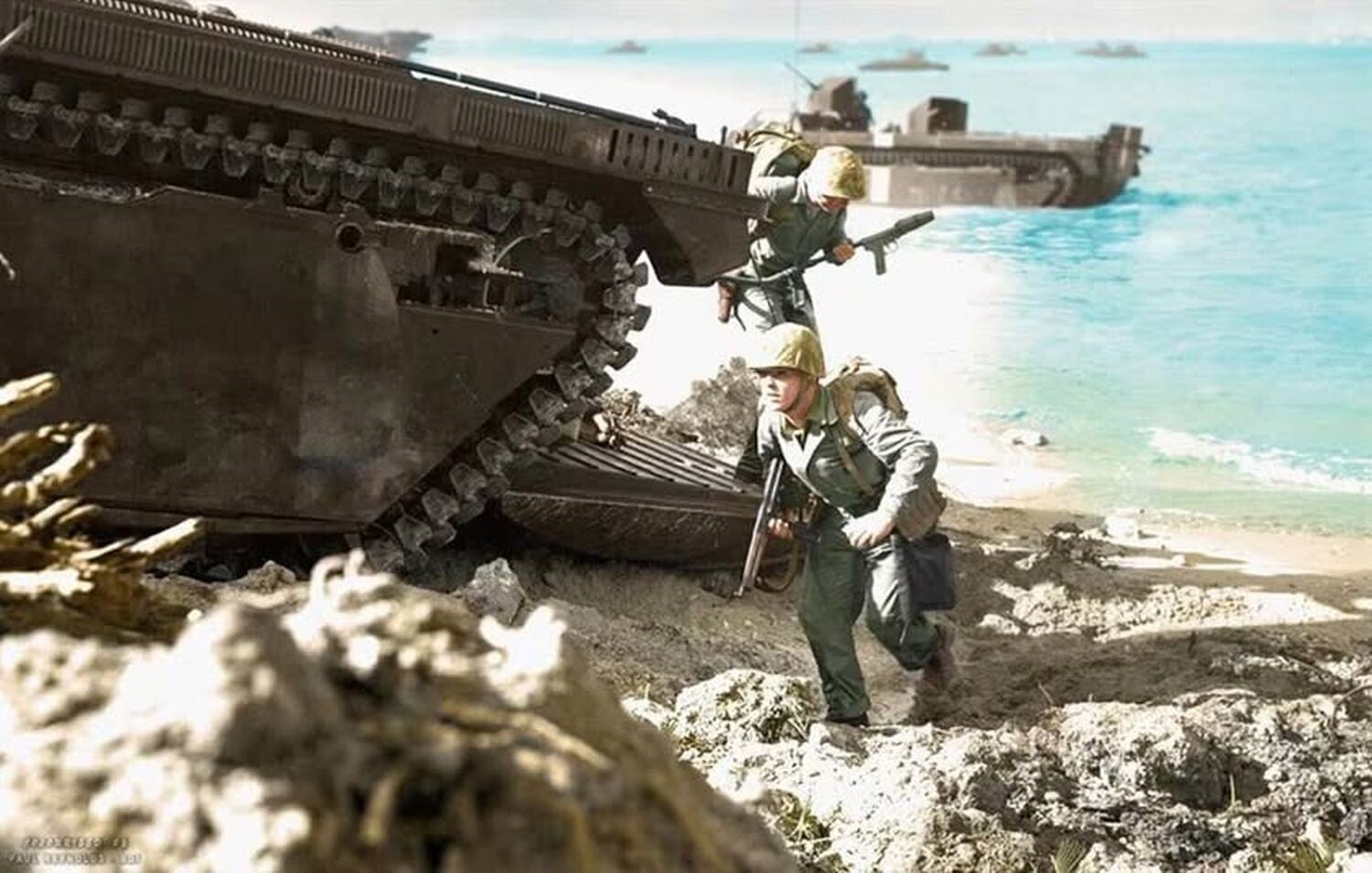
US Marines of the 2nd Battalion, 22nd Regiment, land at Green Beach One, Okinawa.
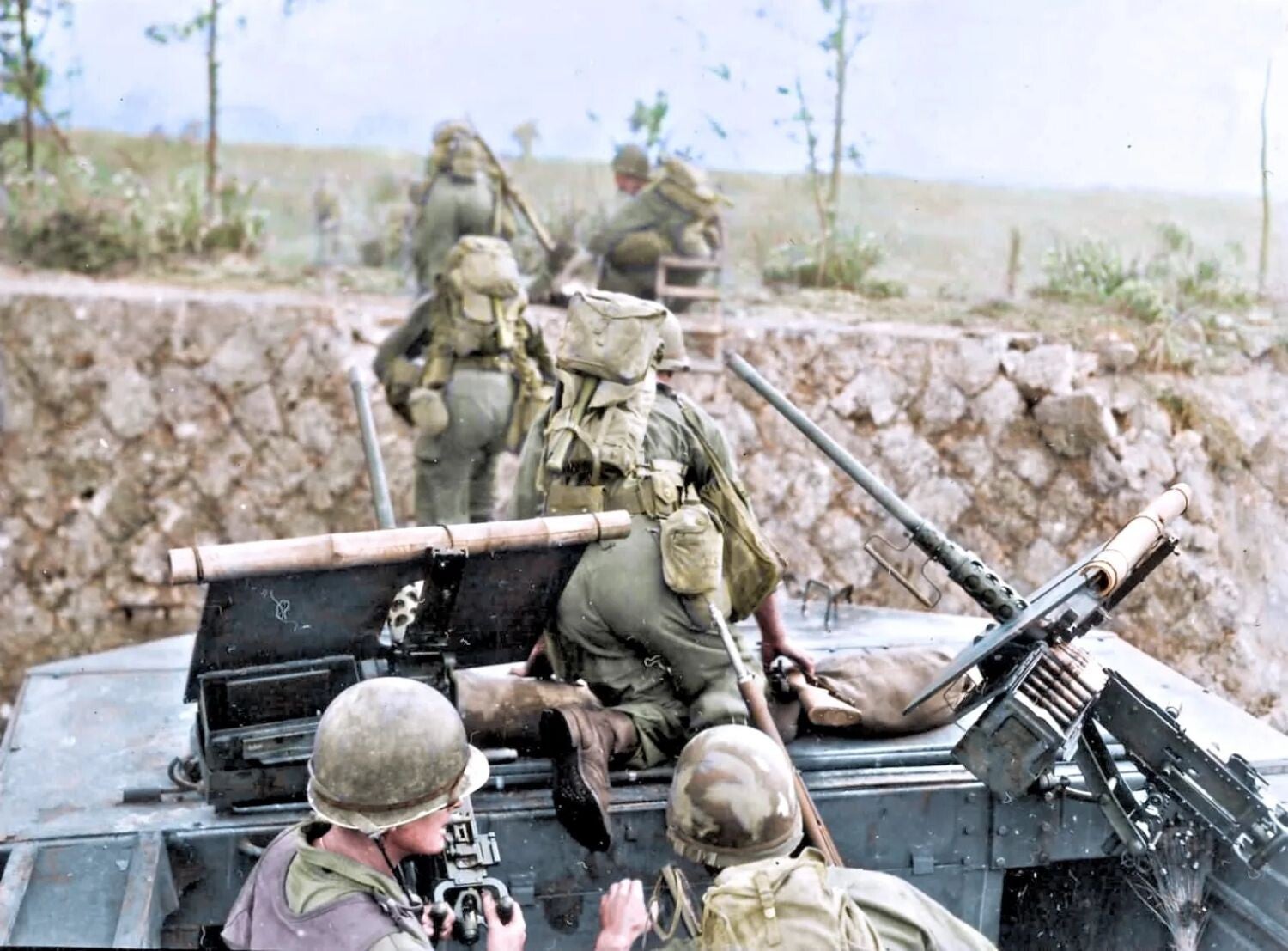
An assault group from the 96th division launch themselves over the sea wall during the assault on Okinawa.
Colourised by Royston Leonard
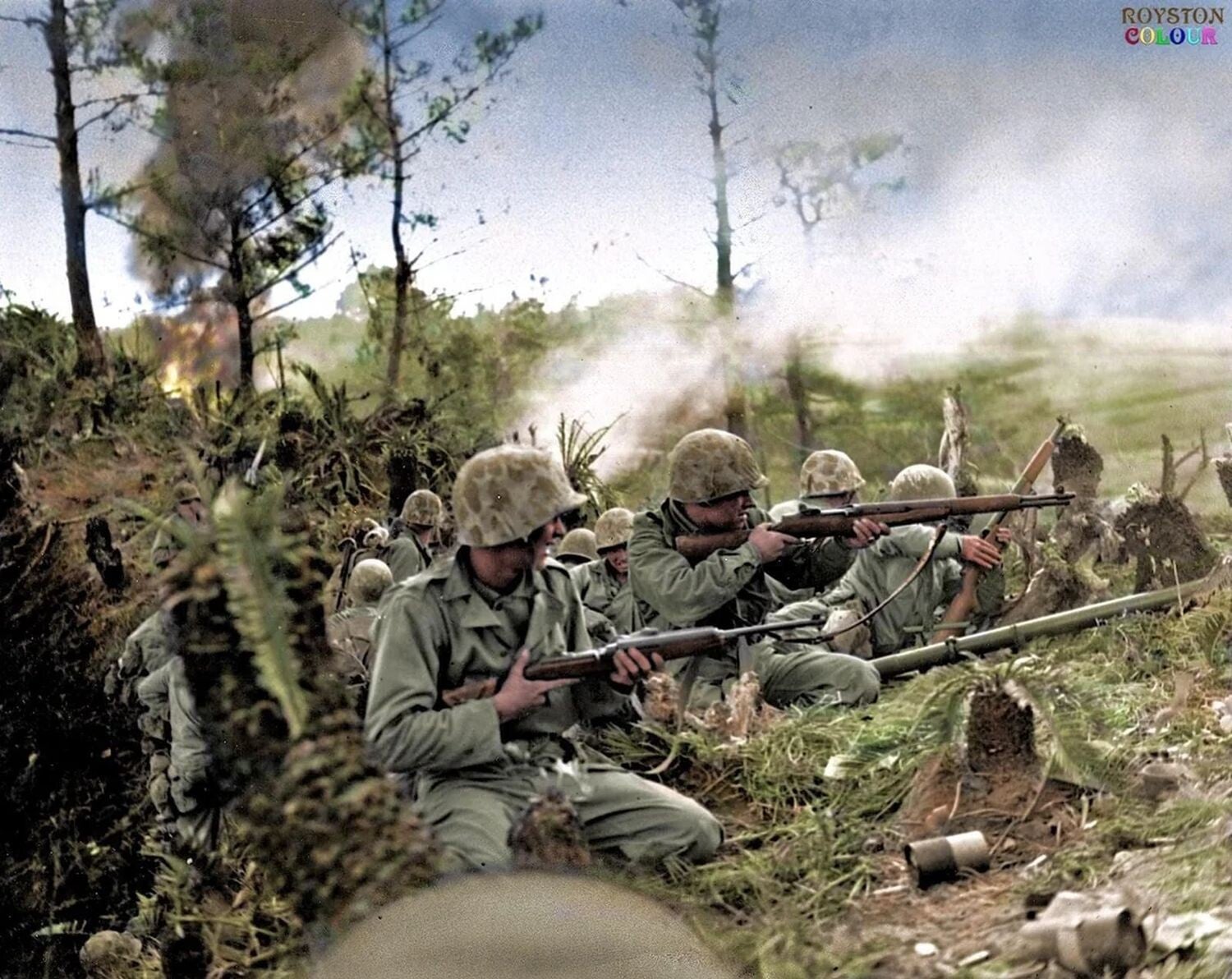
U.S. Marines battling for control of a ridge near Naha, Okinawa, May 1945.
Colourised by Royston Leonard
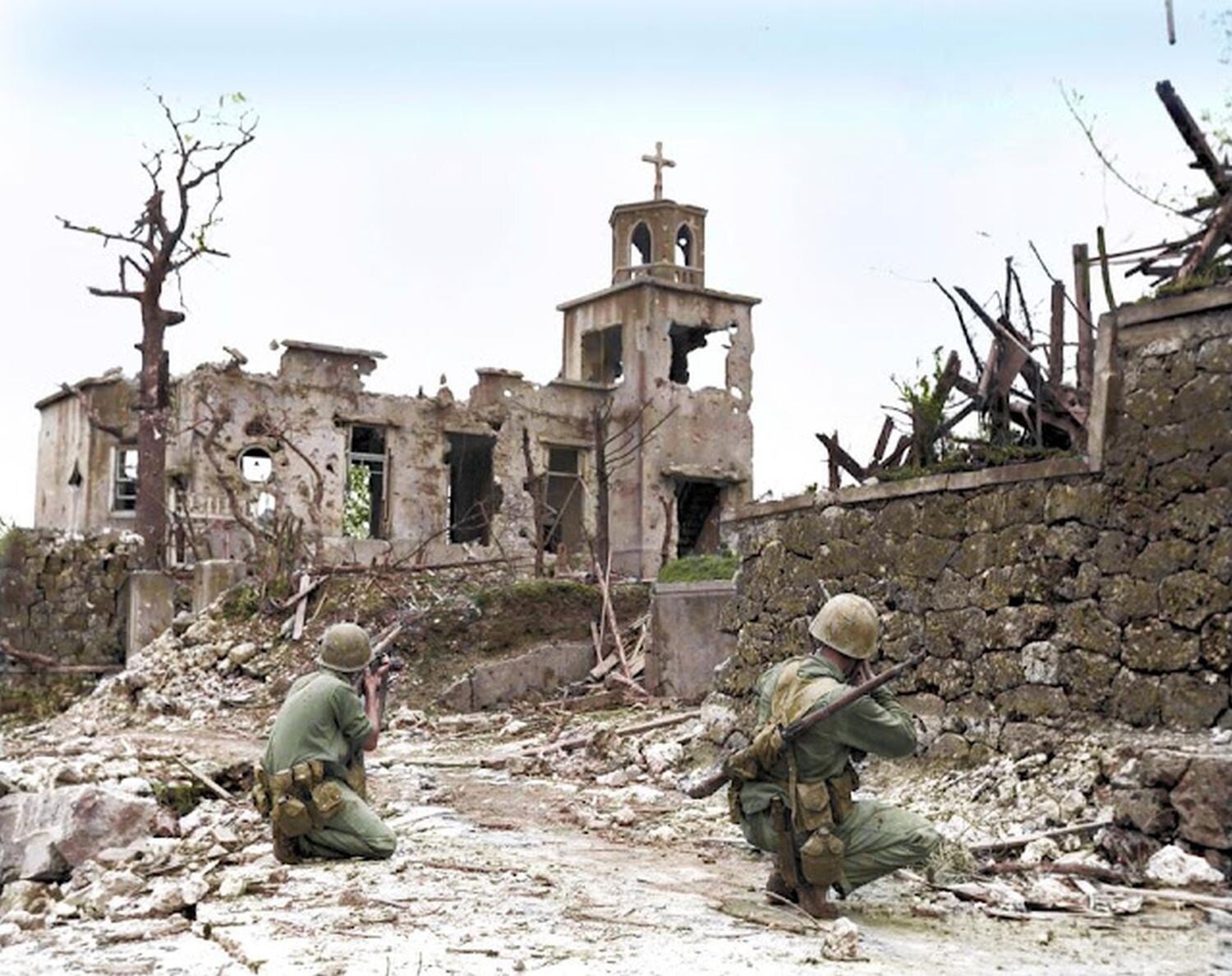
While a patrol moves in from the rear, two United States Marines cover a Japanese sniper hiding in a church, below Shuri Castle on Okinawa, 1945.
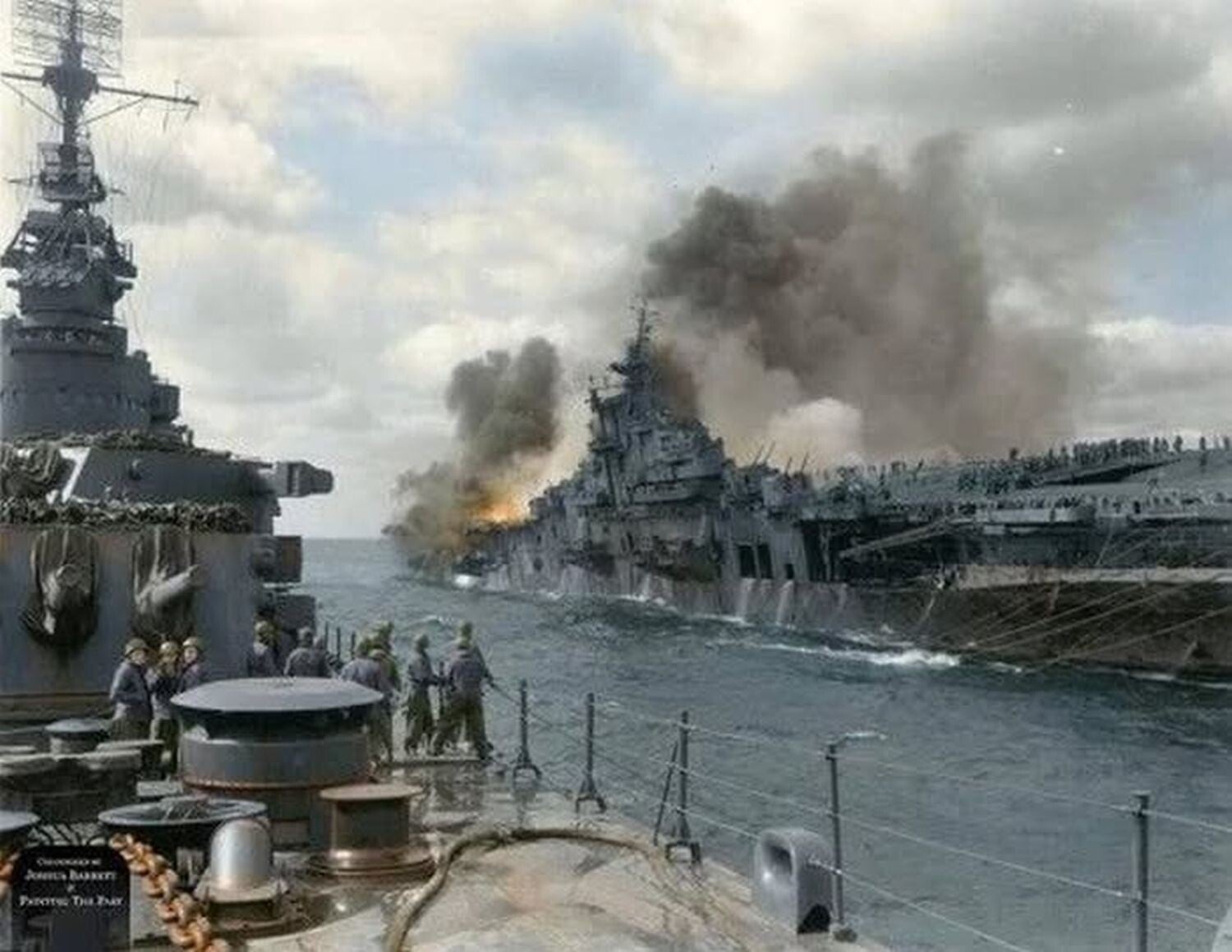

The light cruiser USS Santa Fe (CL‑60) distinguished itself on 19 March 1945 after the carrier Franklin (CV‑13) was devastated by two armour‑piercing bombs near Okinawa. With the carrier ablaze and repeatedly rocked by exploding ordnance, Santa Fe closed in at once, holding position alongside despite smoke, debris, and the threat of further attack. Her crew evacuated casualties, recovered men swept overboard, and provided critical firefighting and damage‑control support. More than 800 survivors were taken aboard. Santa Fe’s actions enabled Franklin to regain propulsion and ultimately survive, earning widespread praise for exemplary seamanship and discipline.
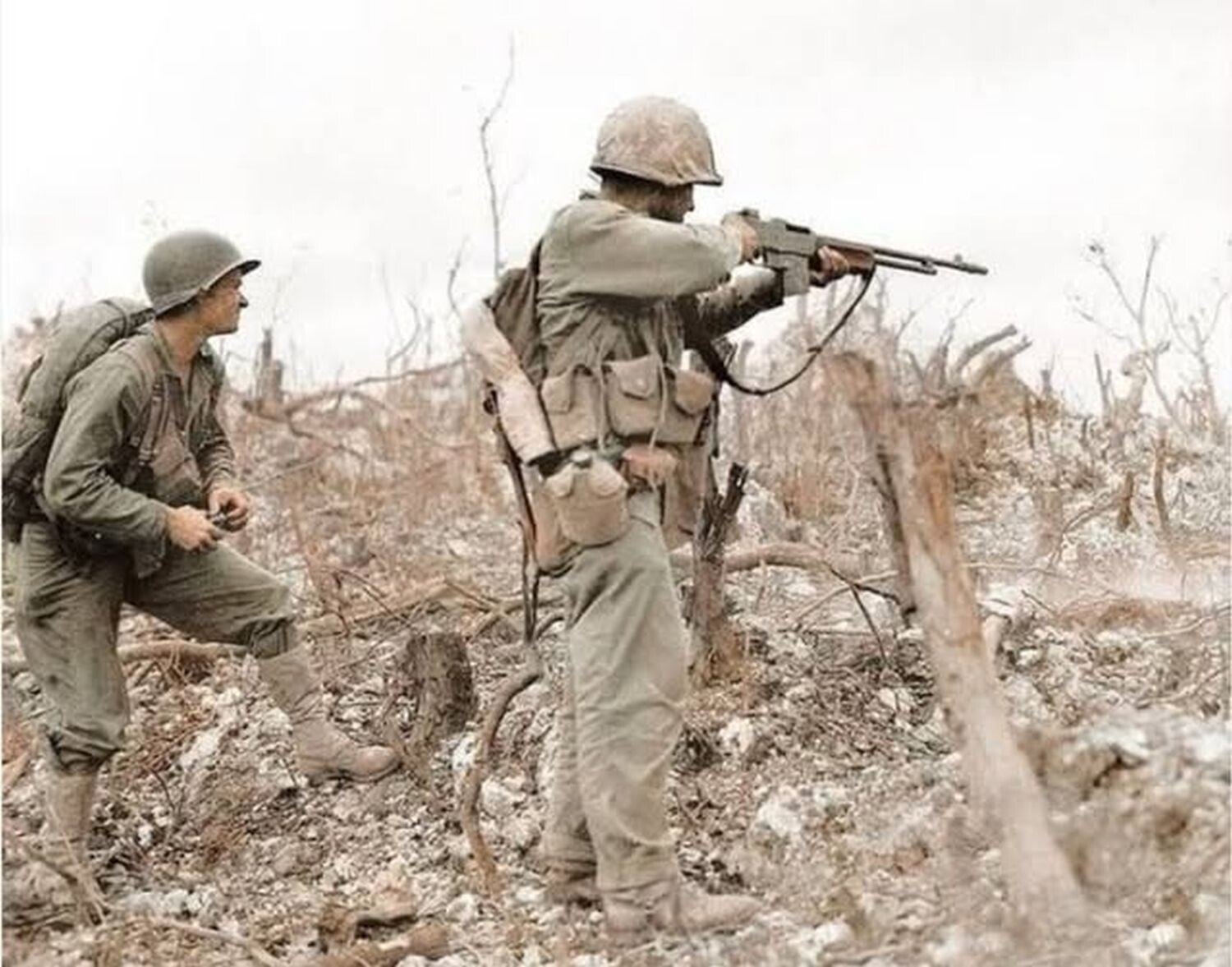
A U.S. Marine from the 1st Marine Division aims a Browning Automatic Rifle (BAR) while a fellow Marine prepares a grenade on Wana Ridge during the Battle of Okinawa in 1945.Key DetailsLocation: Wana Ridge, Okinawa, JapanDate: 1945 (during the Battle of Okinawa)Personnel: U.S. Marines of the 1st Marine DivisionAction: One soldier aims an M1918 Browning Automatic Rifle (BAR) while the second soldier prepares to pull the pin on a hand grenade.
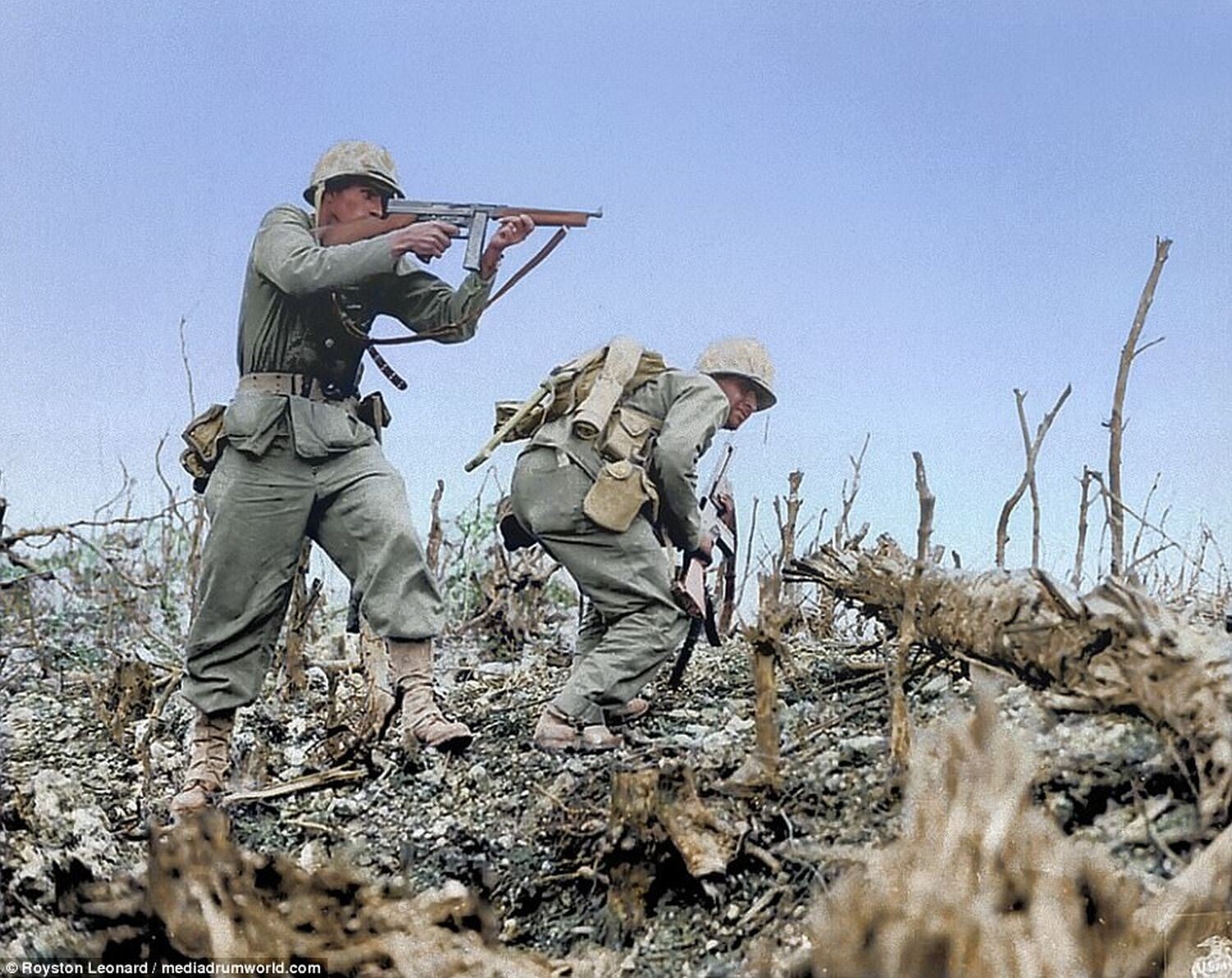
Marines from the 2nd Battalion, 1st Marine Regiment during fighting at Wana Ridge during the Battle of Okinawa, May 1945.
Colourised by Royston Leonard
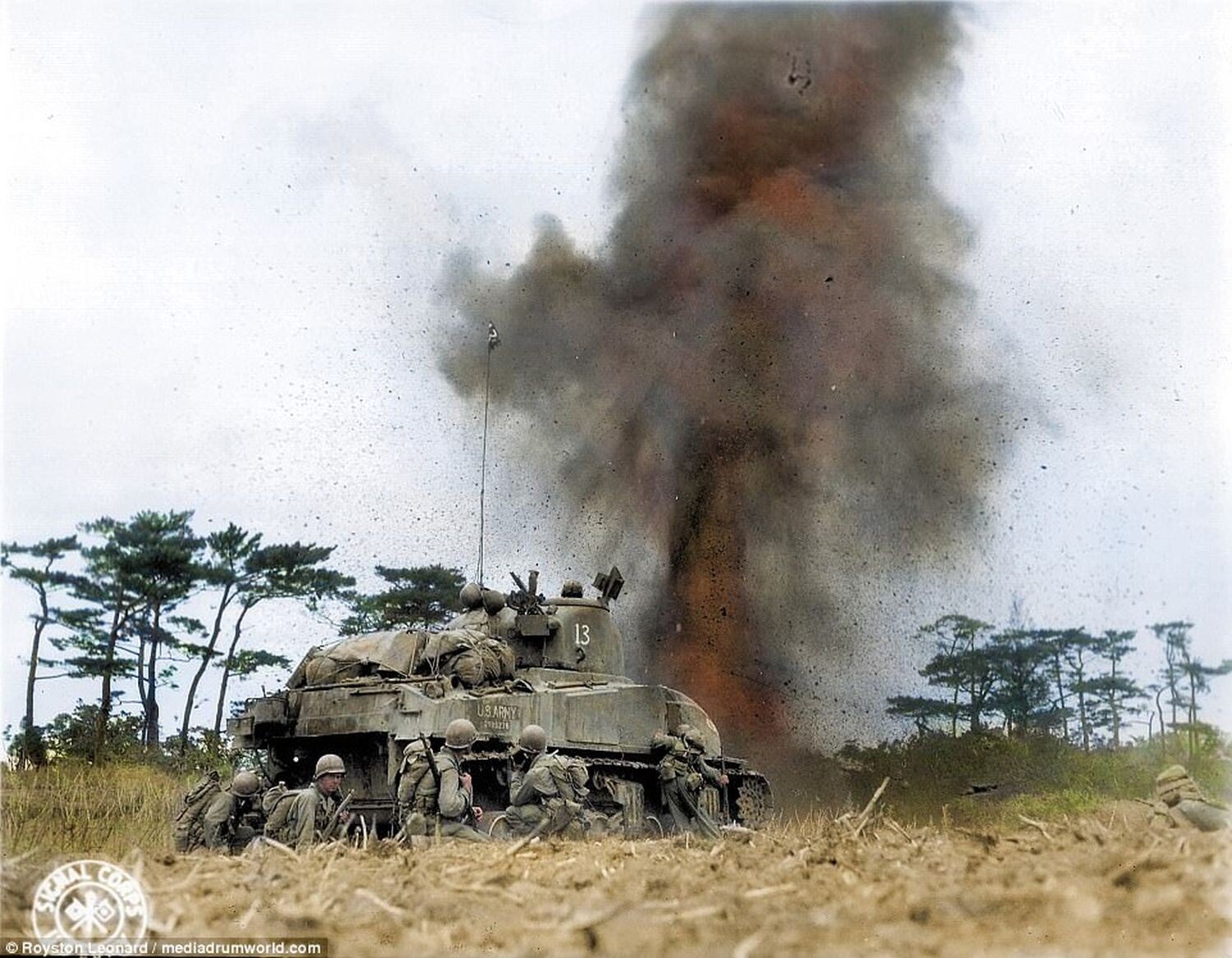
M4 Sherman of 'A' Company 763rd Tank Battalion and troops from the 96th Infantry Division in battle at Okinawa, April 1945.
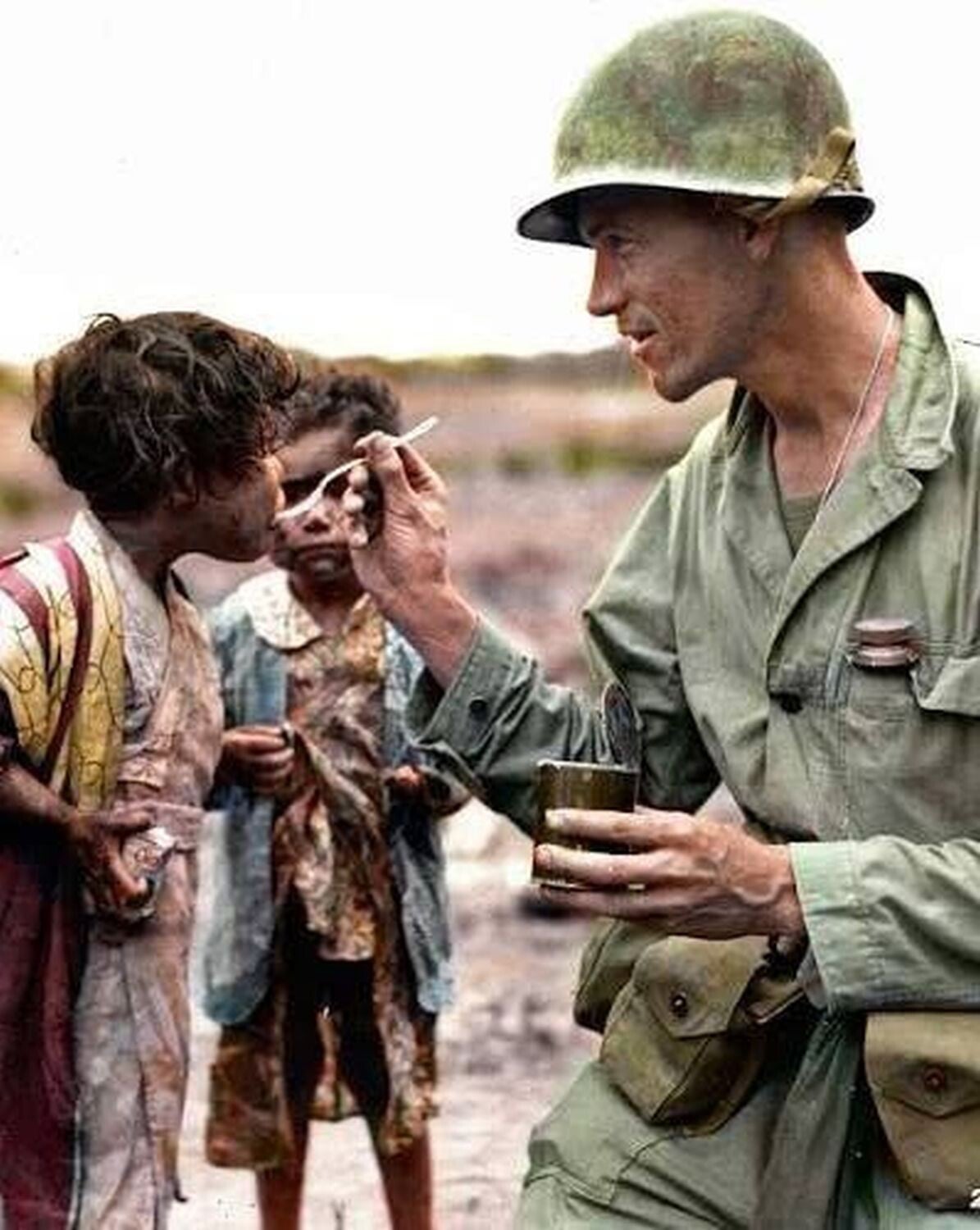
Lt. Richard K. Jones of the 3235th Signal Service Detachment sharing his food rations with local Okinawan children who were hiding in an abandoned tomb near the front lines during the Battle of Okinawa, 31st May 1945.