The 40 mm Bofors anti‑aircraft gun became one of the most recognisable and effective light air‑defence weapons of the twentieth century. Designed in Sweden during the early 1930s by AB Bofors, it emerged from a period of rapid aviation development, when nations urgently needed a weapon capable of engaging fast, low‑flying aircraft. The result was a gun that combined mechanical simplicity with exceptional reliability, earning a reputation that carried it through the Second World War and well beyond.
The Bofors fired a 40 mm shell at roughly 120 rounds per minute, using a four‑round clip system that allowed sustained fire without the overheating or feed problems common in other designs. Its effective ceiling of around 12,500 feet made it ideal for countering dive‑bombers, torpedo aircraft, and strafing fighters. Crews valued its predictable rhythm and ease of maintenance; commanders valued its adaptability. It could be towed, emplaced, mounted on ships, or fitted to self‑propelled chassis, making it suitable for every major theatre of war.
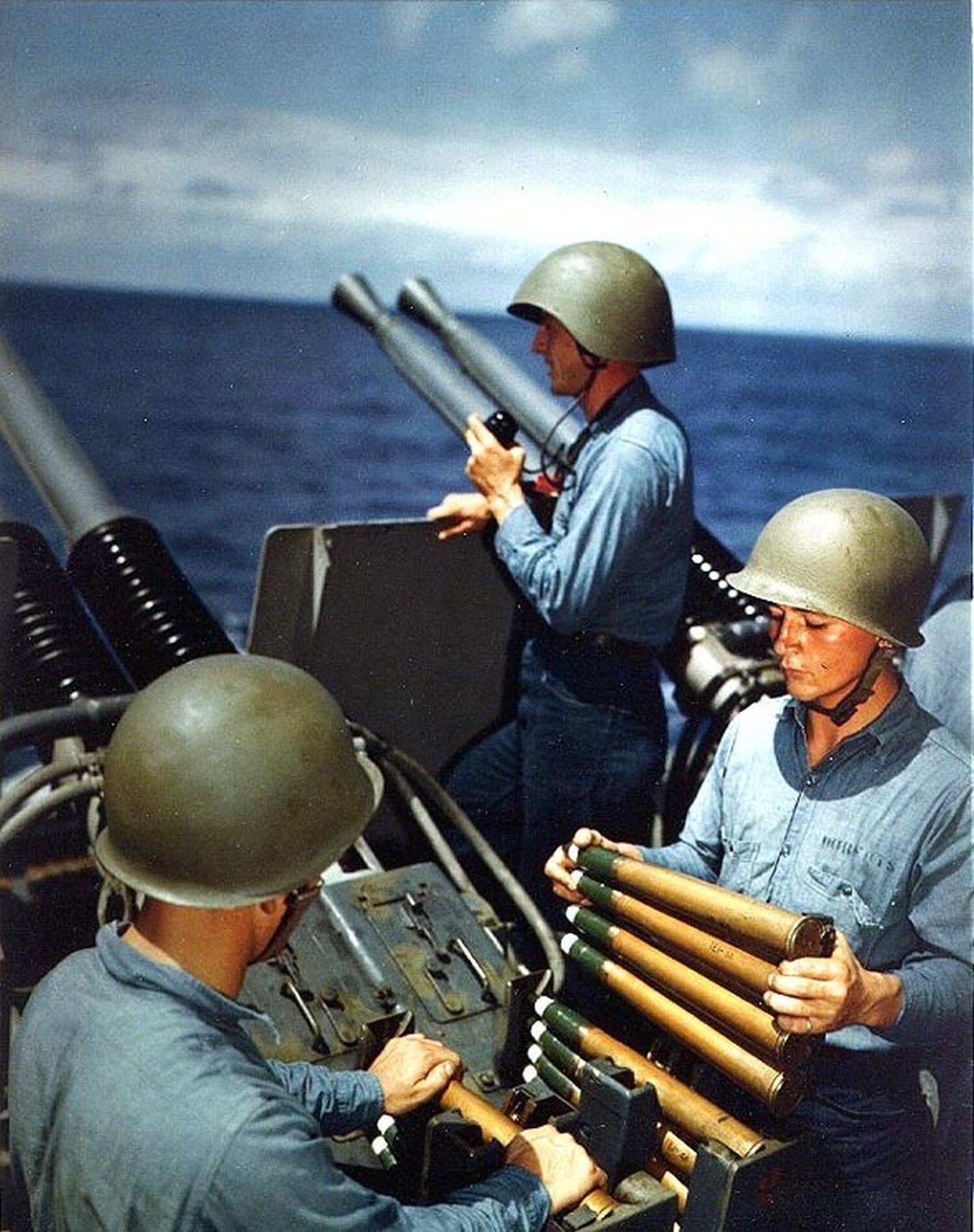
Crew of a 40 mm Bofors gun on Alaska mount ammunition clips into the loaders of a pair of guns on 6 March 1945 during the Battle of Iwo Jima.
Naval service became one of its defining roles. Allied warships—from destroyers to fleet carriers—relied heavily on Bofors mounts to create dense curtains of fire against incoming aircraft. The gun’s rapid traverse and high rate of fire made it particularly effective during massed attacks, where reaction time was measured in seconds. On land, it protected airfields, supply depots, bridges, and troop concentrations, forming a crucial layer of medium‑range defence.
Its longevity is a testament to the clarity of its original engineering. Post‑war, the Bofors was adopted by more than fifty nations, upgraded repeatedly, and integrated into modern fire‑control systems. Even as jet aircraft transformed aerial warfare, the 40 mm Bofors remained in service—an enduring symbol of functional, dependable design in an era defined by rapid technological change.