Overview
The Battle of Iwo Jima, fought between 19 February and 26 March 1945, was one of the most intense and costly engagements of the Pacific War. The island, a small volcanic outcrop roughly halfway between the Marianas and Japan, held strategic value because its airfields could support Japanese interceptors and provide emergency landing grounds for American B‑29 bombers. Capturing it became a priority for U.S. planners preparing for the final stages of the war.
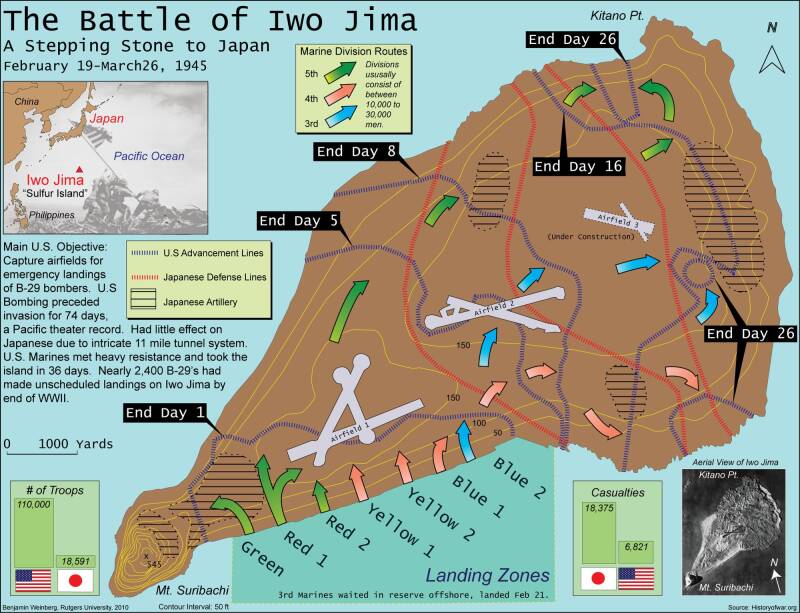
The assault began on 19 February when the 4th and 5th Marine Divisions, later reinforced by the 3rd Marine Division, landed on the island’s southeastern beaches. The terrain immediately hindered movement: loose volcanic ash slowed vehicles and men, while Japanese forces under General Tadamichi Kuribayashi fought from a vast network of tunnels, bunkers, and concealed firing positions. Kuribayashi’s defensive strategy avoided wasteful banzai charges and instead relied on coordinated, lethal fire designed to inflict maximum casualties.
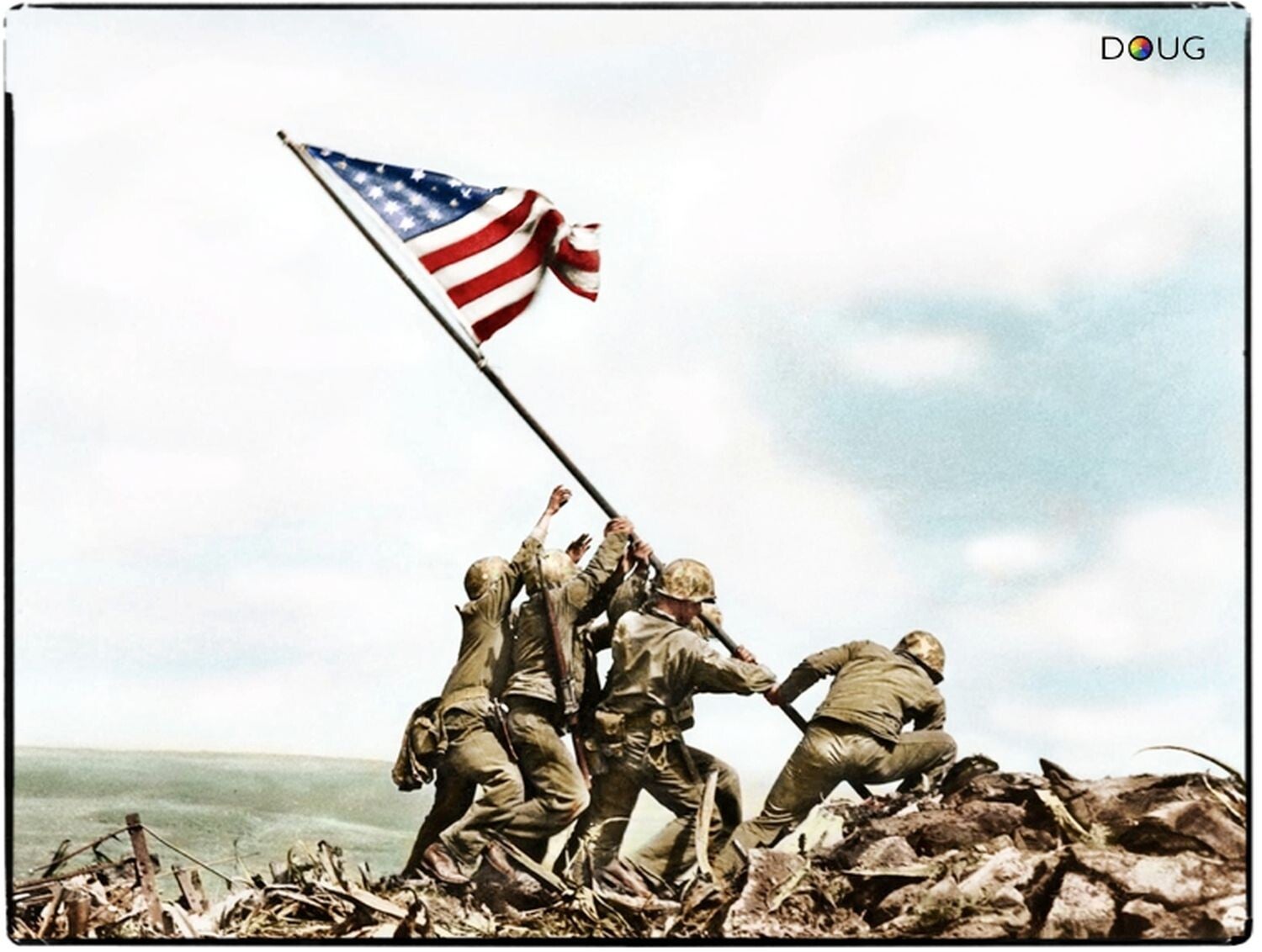
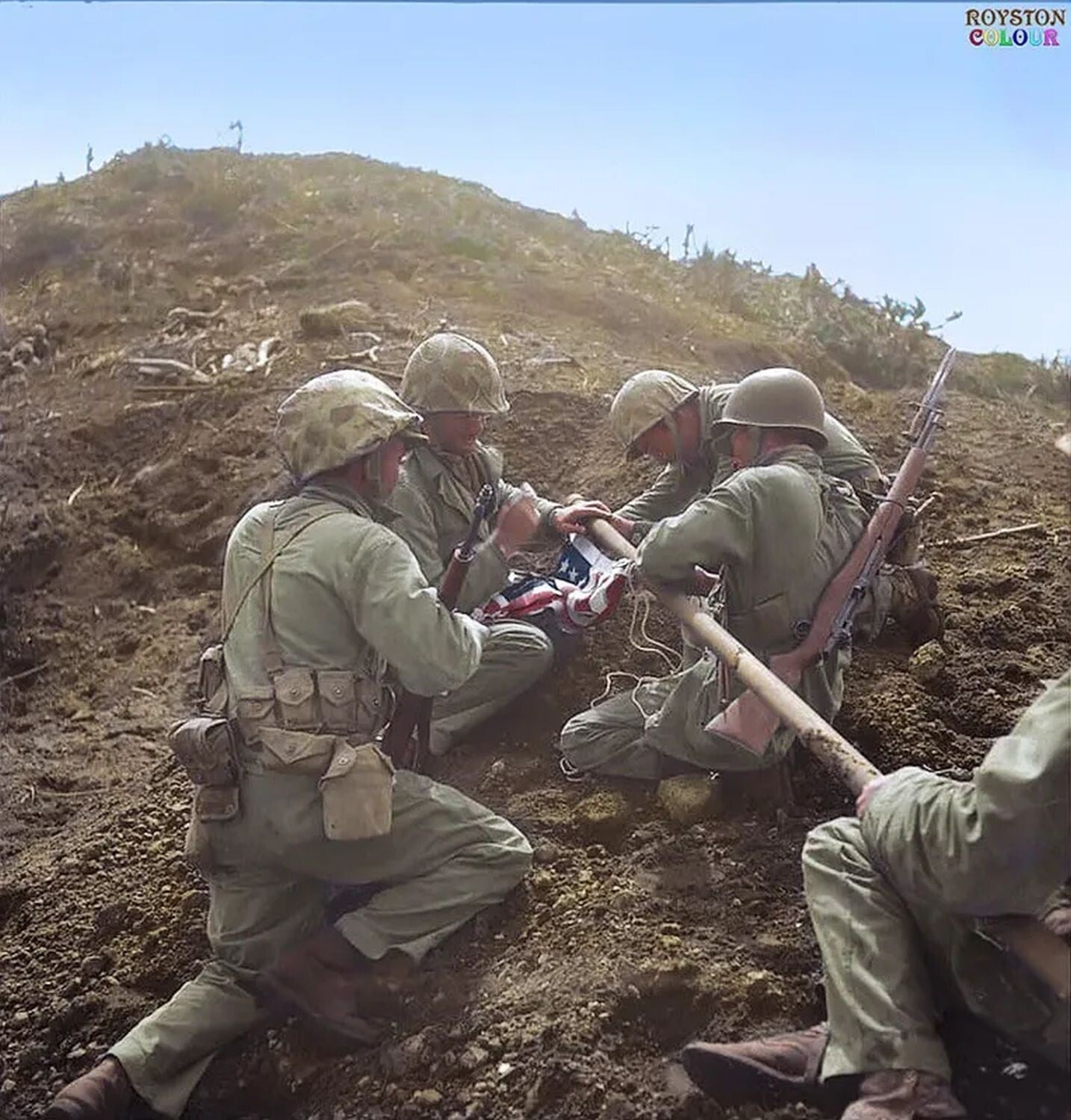
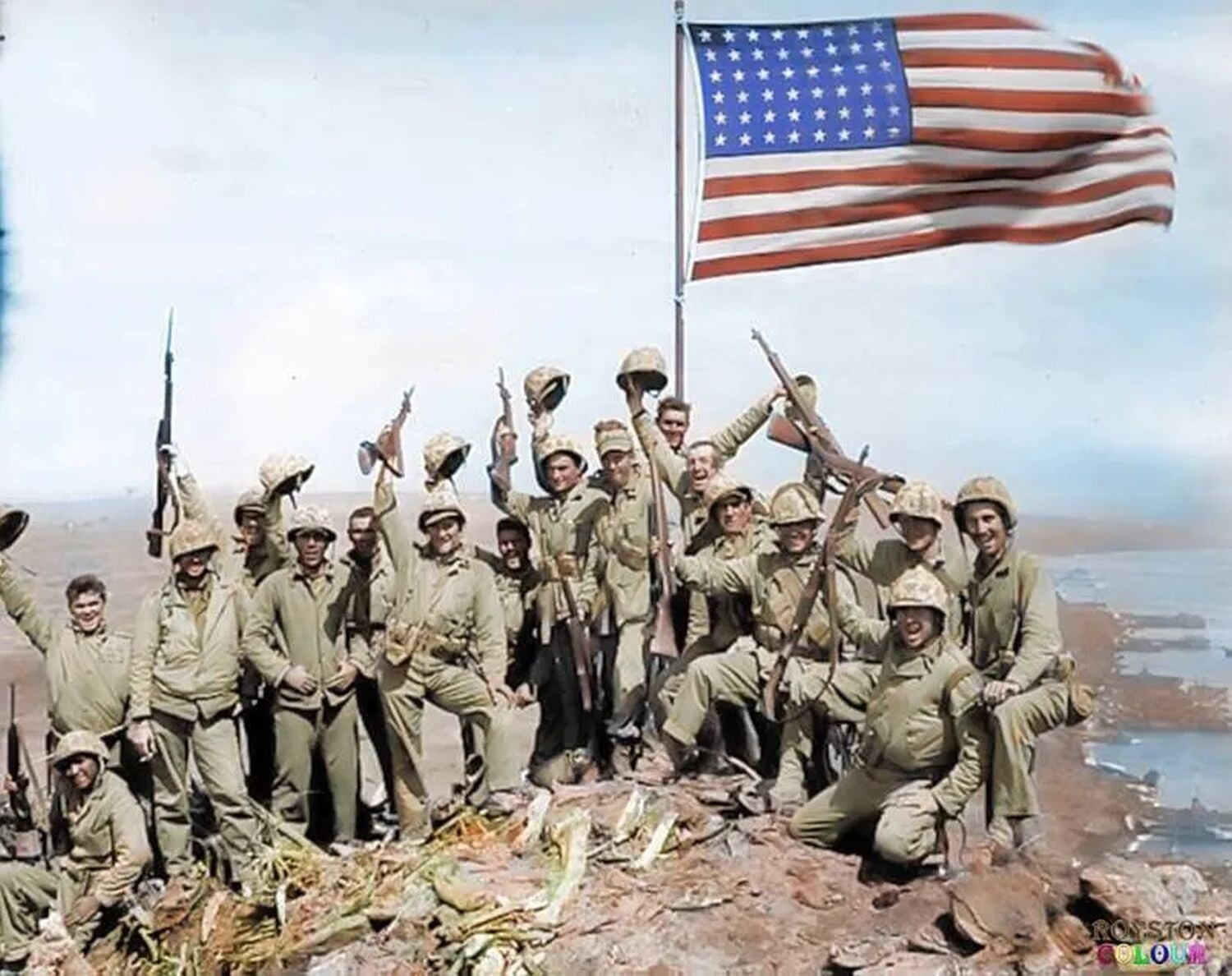
The iconic raising of the flag on Iwo Jima on 23 February 1945 symbolised the hard‑fought Marine advance on Mount Suribachi. Captured during brutal close‑quarters fighting, the moment reflected determination, sacrifice, and the turning of the battle’s southern front, becoming one of the most enduring images of the Pacific War.
Colourised by DOUG
The struggle for Mount Suribachi, dominating the southern end of the island, became one of the battle’s defining episodes. After days of brutal fighting, Marines secured the summit on 23 February, raising the U.S. flag in an image that became iconic. Yet Suribachi represented only a fraction of the island; the main Japanese defensive zone lay further north, where resistance intensified.
Combat across the central and northern sectors—such as the Meat Grinder, Hill 362, and the Amphitheatre—was characterised by close‑quarters fighting, flamethrowers, grenades, and relentless artillery. Japanese defenders fought to the last, and only a few hundred were taken alive out of an estimated 21,000.
The United States suffered nearly 7,000 killed and over 19,000 wounded. Despite the cost, Iwo Jima proved vital: thousands of damaged B‑29s later used its airfields for emergency landings, saving many aircrews during the final months of the war.
Battle for the Black Sands
By early 1944, Japan’s strategic situation in the Central Pacific had deteriorated sharply. The American capture of the Marshall Islands and the heavy air attacks on Truk Atoll demonstrated that the outer defensive perimeter was collapsing.
Japanese planners recognised that the next American thrust would almost certainly target the Marianas and the Carolines, the core of their remaining central defensive network.
In response, the Imperial Japanese Army and Navy reorganised their positions into an “inner line” of defence stretching from the Carolines north to the Marianas, then onward to Japan through the Volcano Islands, and westward again through Palau toward the Philippines.
This line was intended to slow the American advance long enough for Japan to prepare the defence of the home islands.
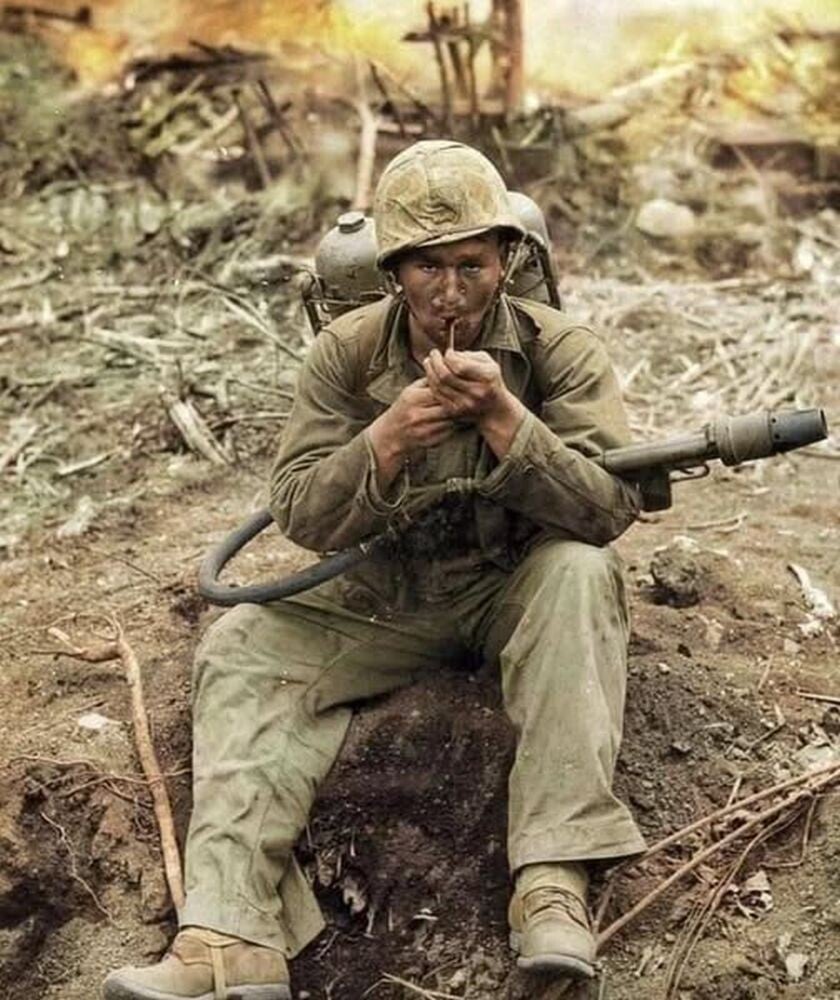
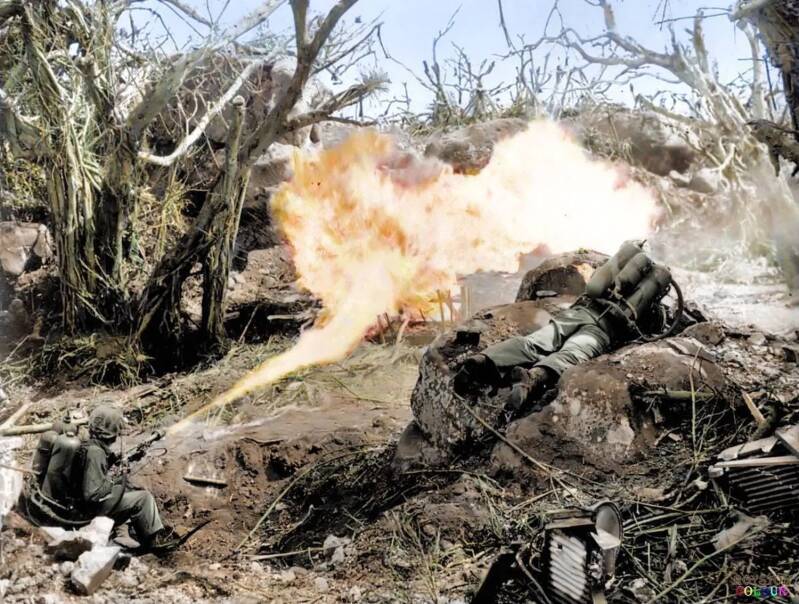
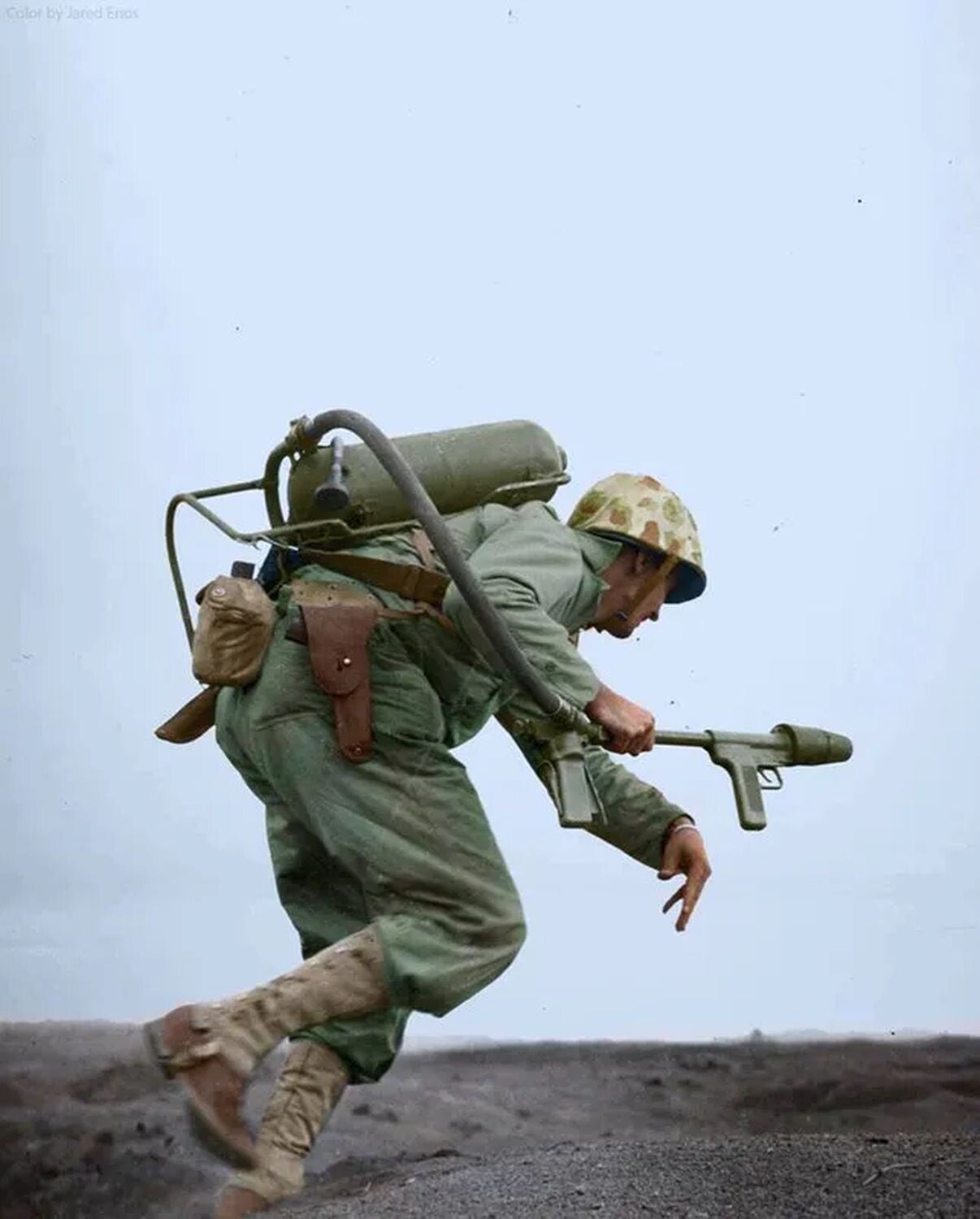
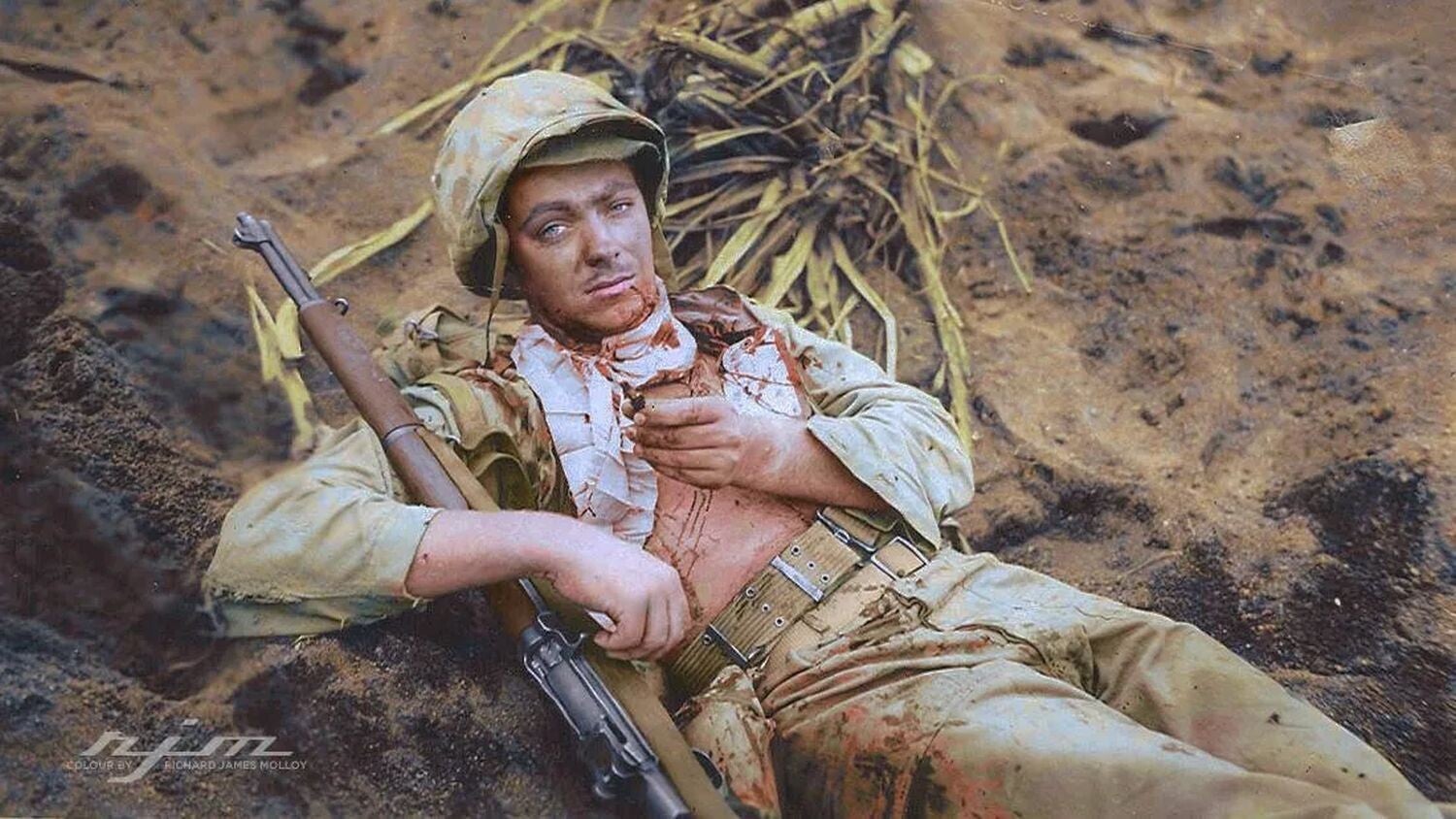
A U.S. Marine with an M2-2 flamethrower on Iwo Jima. He is lighting a pipe while gallons of propane and napalm are strapped to his back.
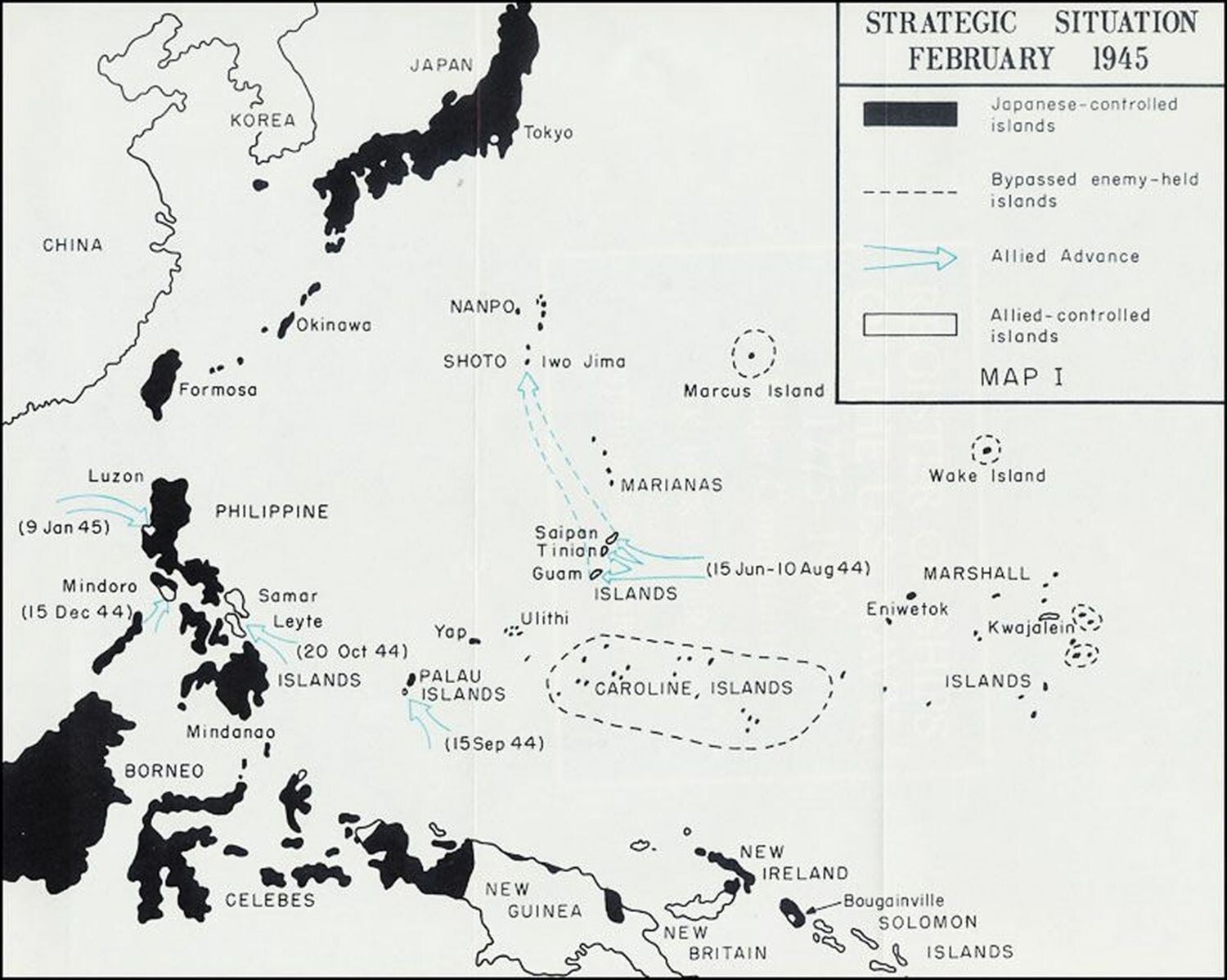
The strategic situation in the Pacific, February 1945. In February 1945, the Pacific war had reached a decisive phase. Japan’s outer defensive perimeter had collapsed, its navy was crippled, and American forces were advancing steadily toward the home islands. B‑29s from the Marianas struck Japan daily, while U.S. amphibious operations moved closer to Tokyo. Iwo Jima, positioned between the Marianas and Japan, became strategically vital as both an early‑warning outpost for Japan and a potential emergency airfield for American bombers.
https://www.breachbangclear.com/battle-of-iwo-jima-operation-detachment/
Information
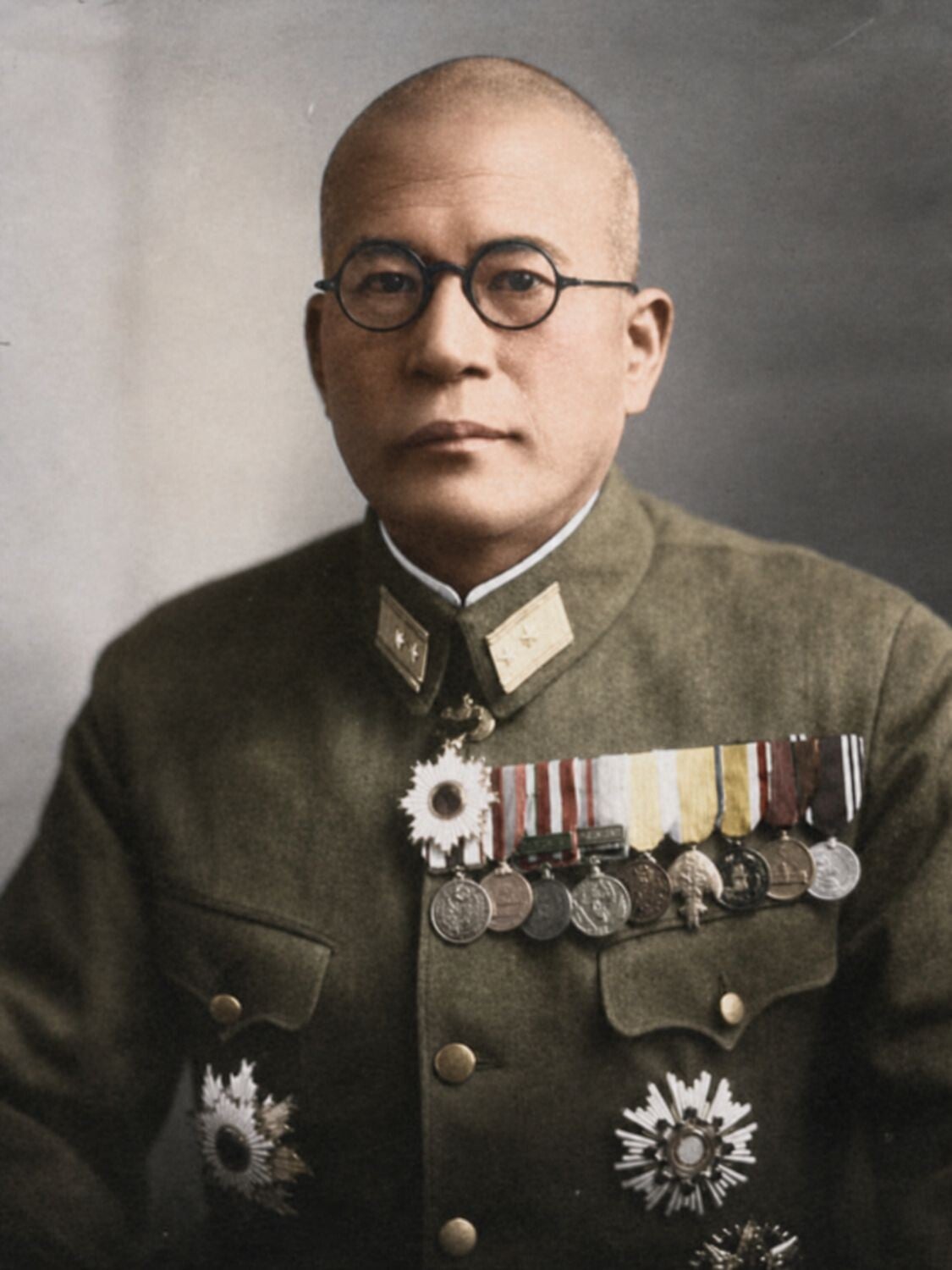
Commander of the 31st Japanese Army, General Hideyoshi Obata
In March 1944, the Japanese 31st Army under General Hideyoshi Obata was activated to garrison this inner line.
Although termed an “army,” the formation was closer in size to a Western corps. Within this structure, the commander on Chichi Jima was given nominal authority over both Army and Navy units in the Volcano Islands, including Iwo Jima.
The island’s importance increased dramatically after the American conquest of the Marianas. From newly captured airfields on Saipan, Tinian, and Guam, U.S. B‑29 bombers began daily raids against mainland Japan.
Iwo Jima became a crucial early‑warning outpost, transmitting radio reports of incoming bomber formations so that Japanese air defences could prepare.
Information
Japan moved quickly to reinforce the island. After the American victories at Kwajalein and Eniwetok in February 1944, 500 naval personnel from Yokosuka and another 500 from Chichi Jima were sent to Iwo Jima.
Additional Army reinforcements followed, raising the garrison to more than 5,000 men by spring.
The loss of the Marianas later that summer made the Volcano Islands even more vital. Japanese leaders feared that losing Iwo Jima would further ease American bombing operations, disrupt industrial production, and damage civilian morale.
Information
Yet Japan’s ability to defend the island was constrained by severe strategic weaknesses. The Combined Fleet had been shattered in the naval battles of 1944 and could no longer challenge American amphibious operations.
Aircraft losses were catastrophic; even under ideal conditions, Japanese planners did not expect to rebuild their air strength to 3,000 operational aircraft until spring 1945.
Those aircraft, moreover, lacked the range to operate effectively from the home islands to Iwo Jima. What planes remained had to be conserved for the defence of Taiwan and Japan itself.
Compounding the problem was a shortage of trained pilots, many of whom had been lost in the Solomon Islands campaign and the Battle of the Philippine Sea.
Information
Japanese staff officers later described their defensive strategy as a grim necessity.
With no realistic prospect of victory in air, sea, or ground operations, the defenders resolved to rely entirely on the fortifications already built on the island.
Their objective was not to repel the invasion but to delay it, buying time for Japan to strengthen its homeland defences.
Limited submarine attacks, small‑scale air raids, and parachute operations were acknowledged as little more than tactical diversions.
The defenders understood that they lacked the means to exploit any fleeting opportunities that might arise during the battle.
Information
After the Battle of Leyte, the Allies paused for two months before the planned invasion of Okinawa. During this interval, Iwo Jima’s strategic value came under close scrutiny.
The island’s airfields allowed Japanese fighters to intercept B‑29s en route to Japan and provided a staging point for intermittent raids against the Marianas between November 1944 and January 1945.
Capturing Iwo Jima would eliminate these threats. More importantly, the island offered a location for American P‑51 Mustangs to escort B‑29s on long‑range missions, improving bomber survivability and accuracy.
Information
American intelligence assessed the island’s defences with unwarranted optimism. Analysts believed Iwo Jima could be taken within a week, underestimating both the scale of Japanese fortifications and the determination of the garrison.
Nevertheless, the strategic logic was clear. Securing Iwo Jima would protect the Marianas, support the bomber offensive, and remove a forward Japanese outpost capable of disrupting American operations.
With these considerations in mind, the United States approved the invasion plan, designated Operation Detachment.
The stage was set for one of the most brutal battles of the Pacific War, shaped by Japan’s desperate defensive posture and America’s determination to secure an island whose value lay not in its size, but in its position along the final approach to Japan.
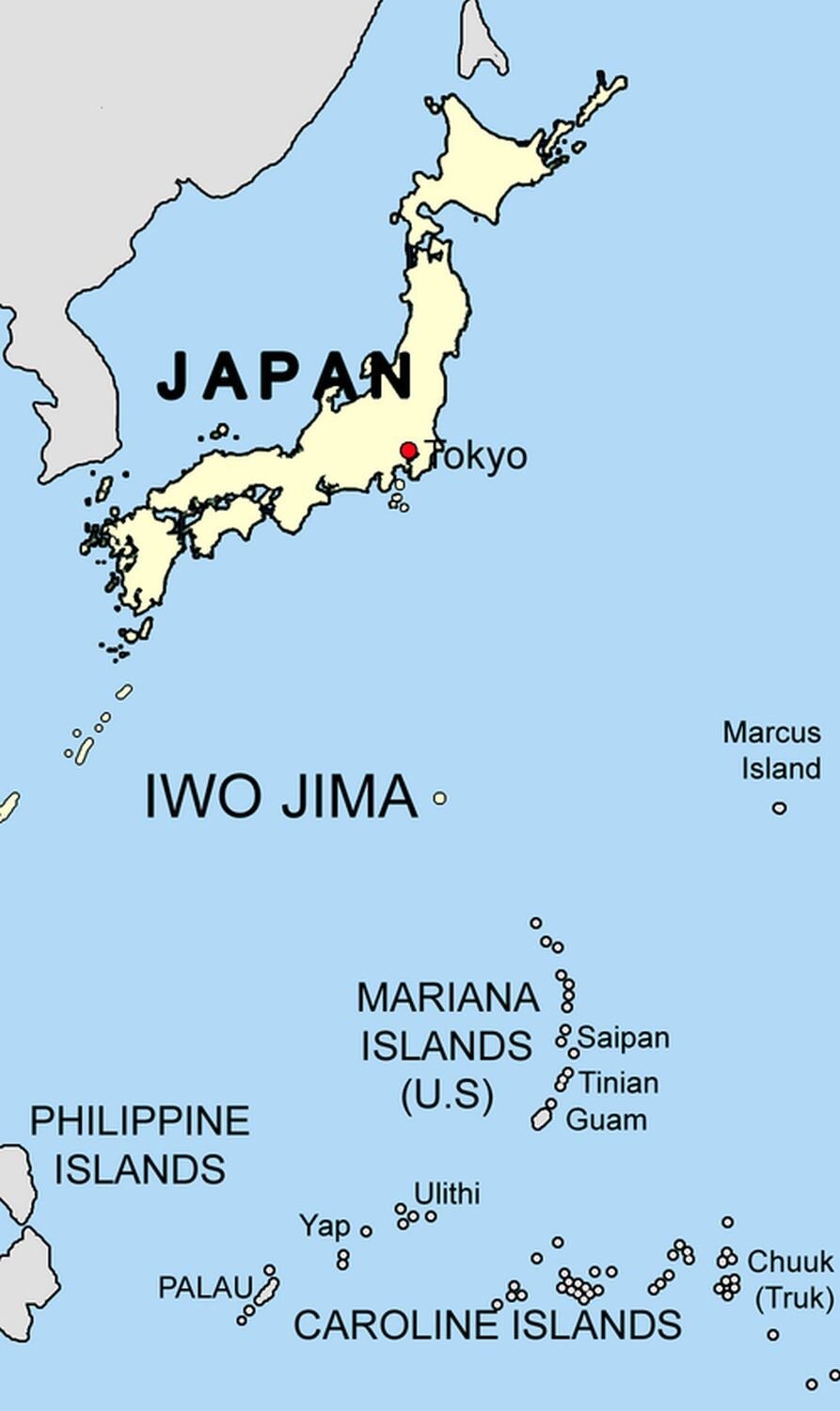
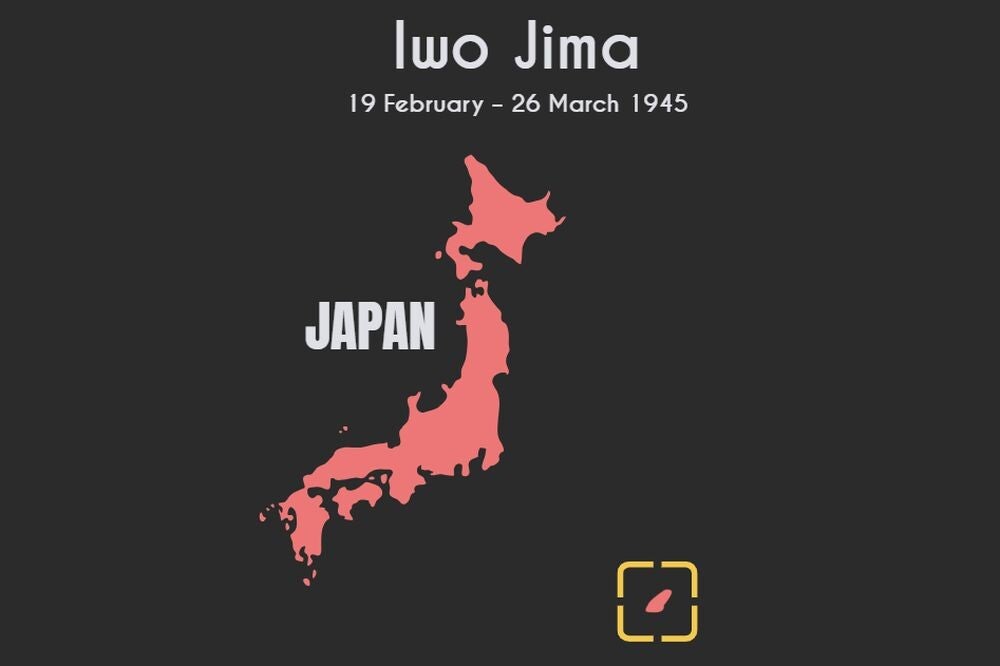
Location of Iwo Jima
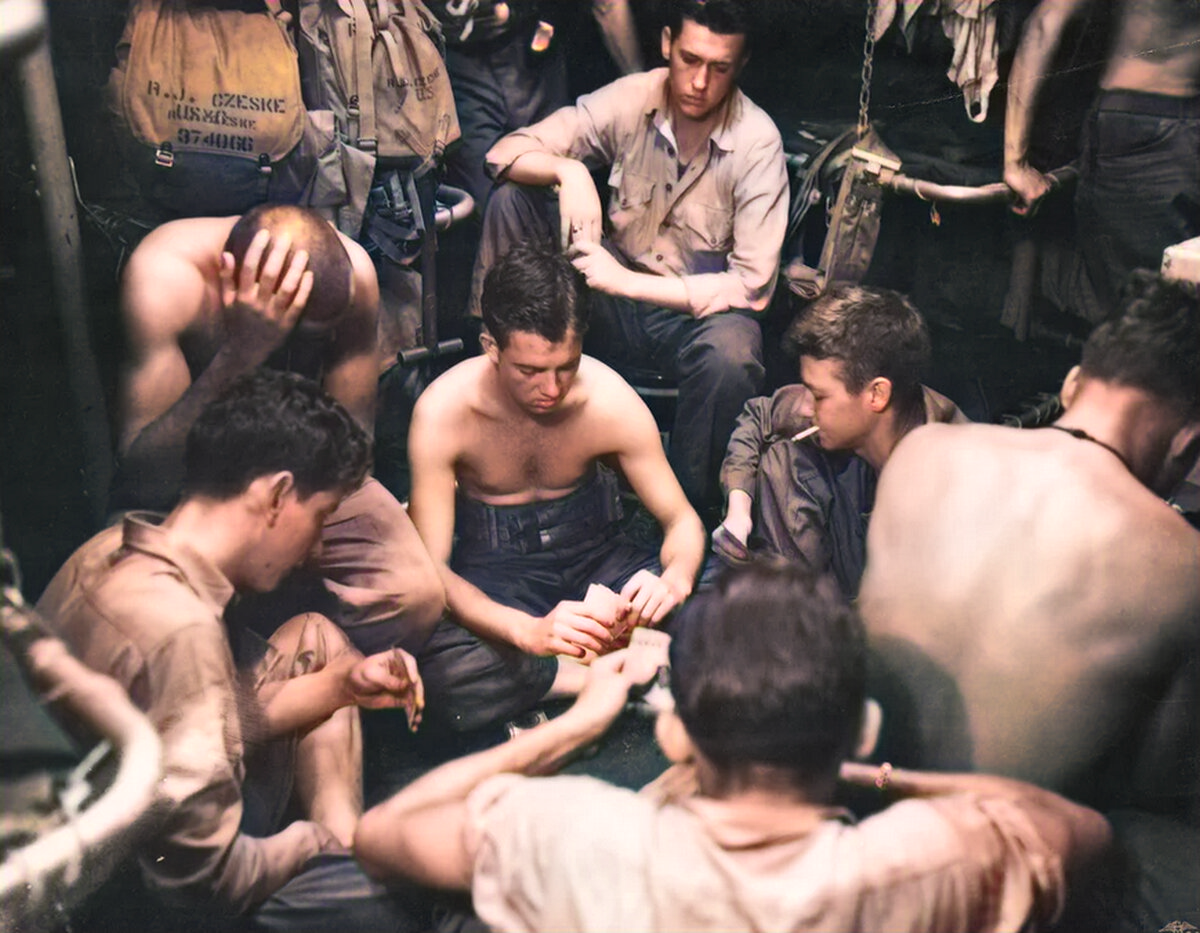
Men of the 28th Marine Regiment, 5th Marine Division, play cards below deck of their transport bound for Iwo Jima. February 1945.
US Invasion Force
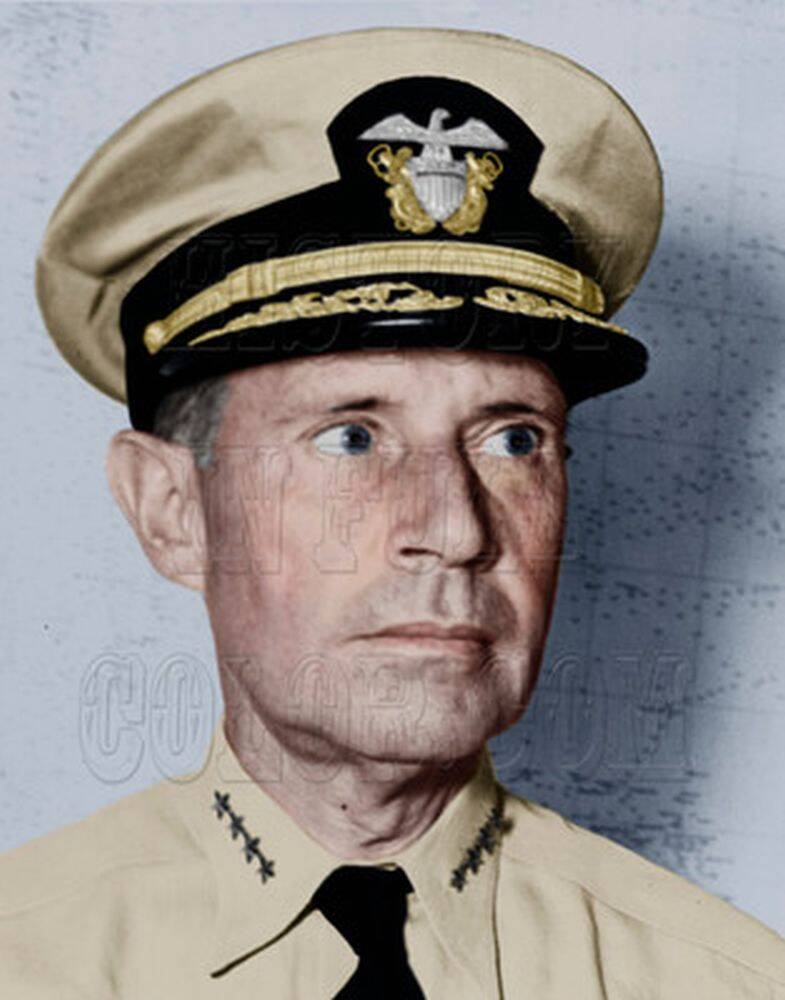
Admiral Raymond A. Spruance, Commander of the Fifth Fleet during the Battle of Iwo Jima.
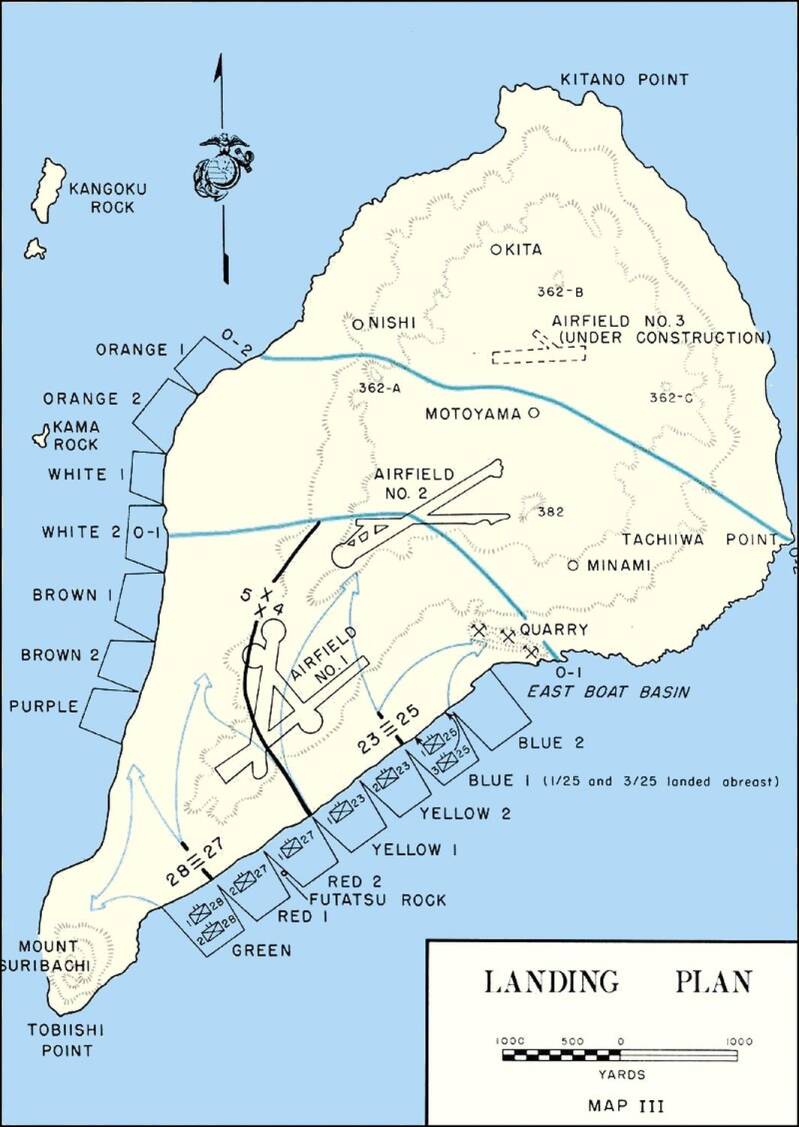
The American landing plan
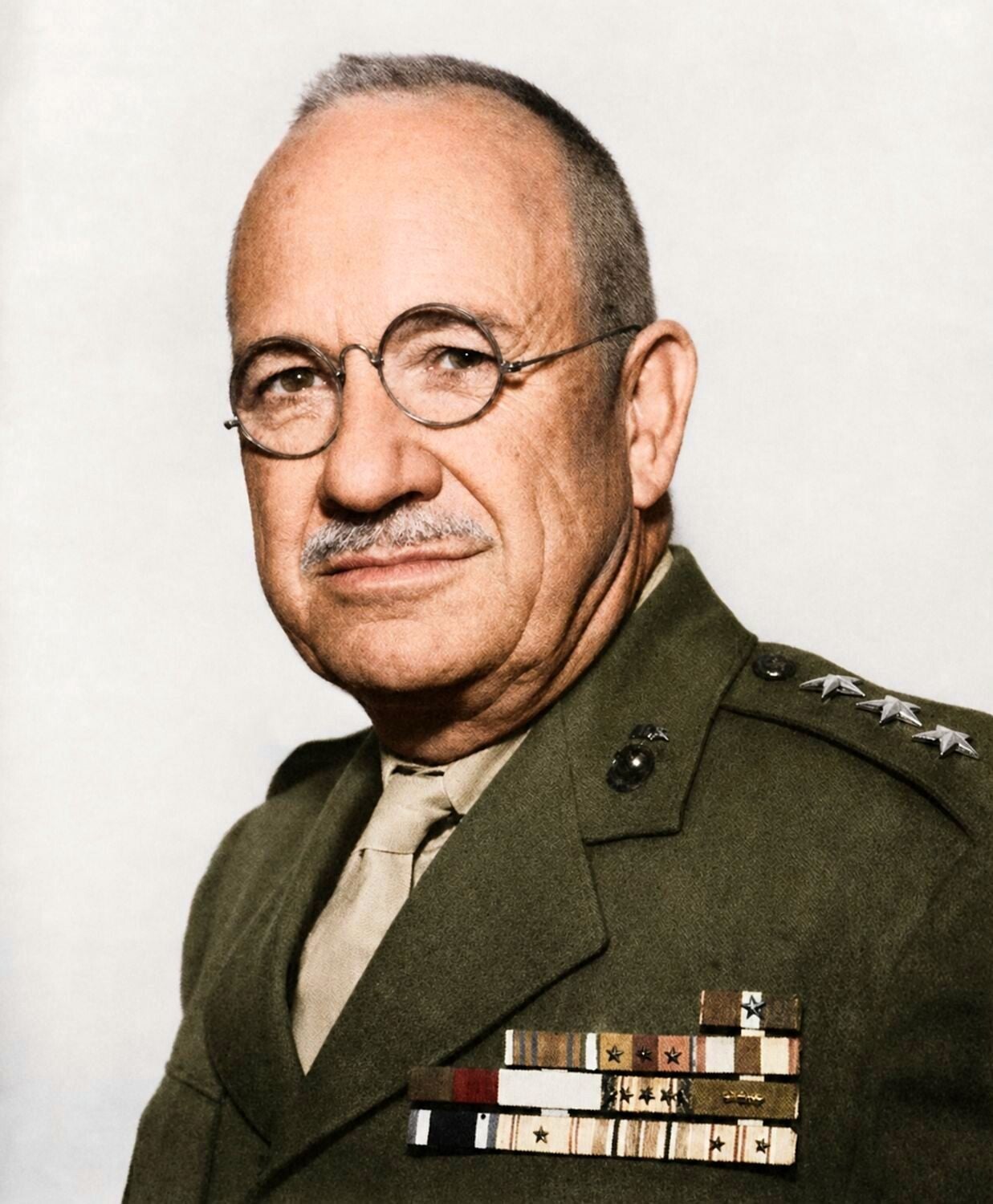
Holland Smith, commander of the assaulting U.S. forces
The Island Fortress
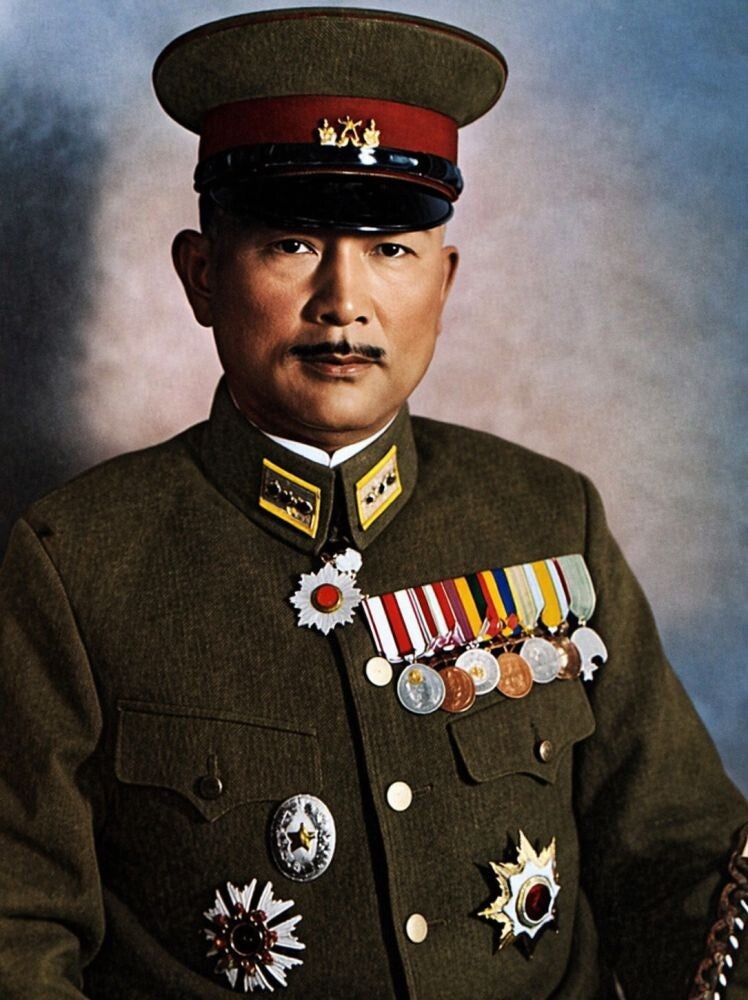
Tadamichi Kuribayashi, Commander of the Japanese garrison on Iwo Jima.
The Landings
The landings at Iwo Jima on 19 February 1945 constituted one of the most concentrated amphibious assaults executed by the United States Marine Corps during the Pacific campaign.
The operation, designated D‑Day, began at 08:59 after three days of naval bombardment that had failed to neutralise the island’s deeply entrenched Japanese defences.
The 4th and 5th Marine Divisions advanced toward the southeastern beaches in dense formations of LCVPs, LCMs, LCTs, and amphibious tractors.
The LVT‑2 and LVT‑4, with their tracked propulsion and ability to traverse volcanic terrain, formed the essential spearhead of the initial assault waves.
These vehicles carried infantry, engineers, demolition teams, and flamethrower units, providing the only reliable means of crossing the unstable ash that would later immobilise tanks and wheeled vehicles.
The beaches—Green, Red, Yellow, and Blue—offered no natural cover and were composed of fine, powdery volcanic sand that swallowed vehicles and slowed troop movement.
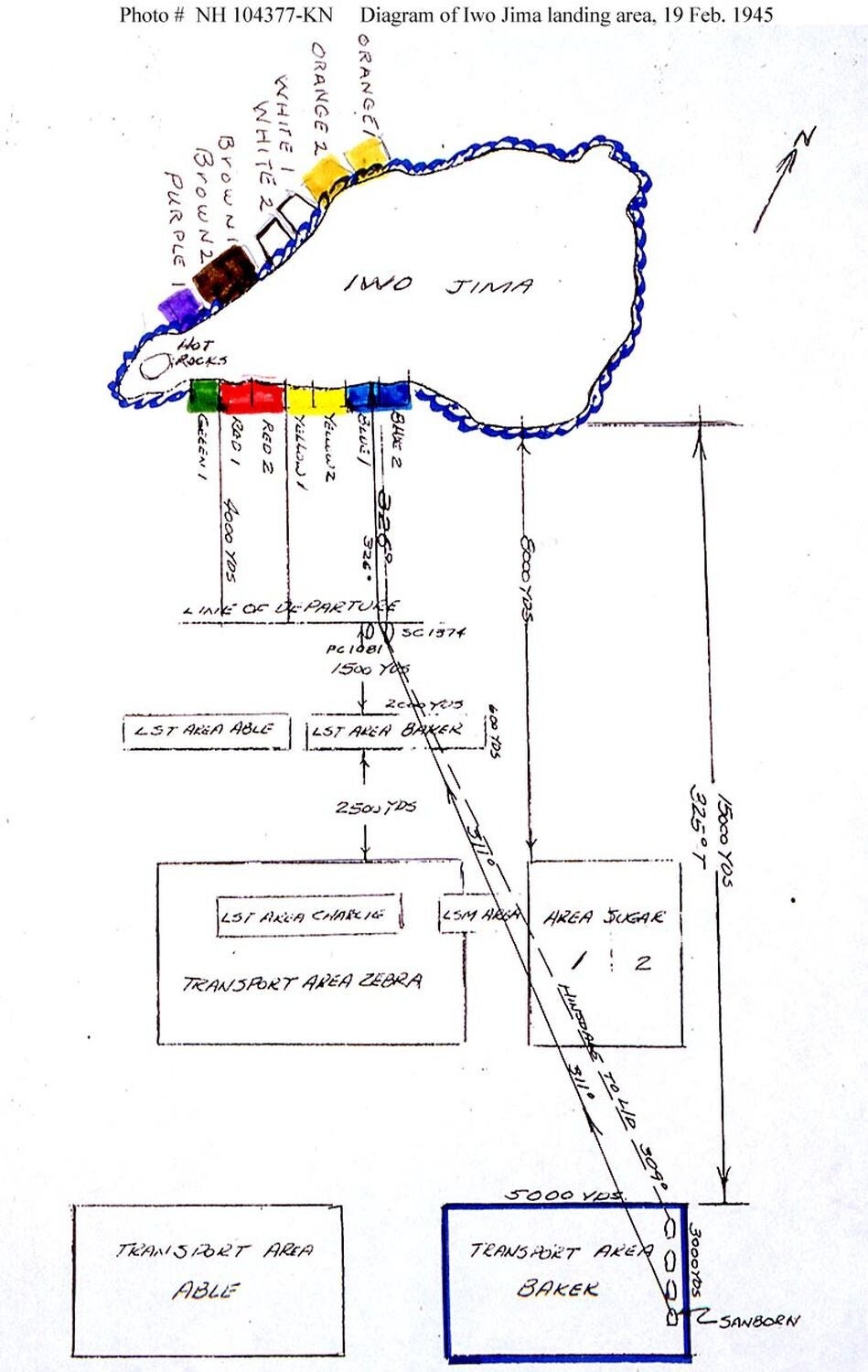
Diagram of the island's invasion beaches, identified by colors green, red, yellow and blue; the alternate beaches on the other side of Iwo Jima, identified by colors purple, brown, white and orange; the landing ship and transport areas offshore; and the lines of approach used by boats from USS Sanborn (APA-93) to Beaches Blue One and Two. Original 35mm color transparency of a dragram probably prepared by Howard W. Whalen after World War II. Note that the arrow pointing "North" actually points about fifteen degrees west of north.
https://www.ibiblio.org/hyperwar/OnlineLibrary/photos/events/wwii-pac/iwojima/iwo-0.htm
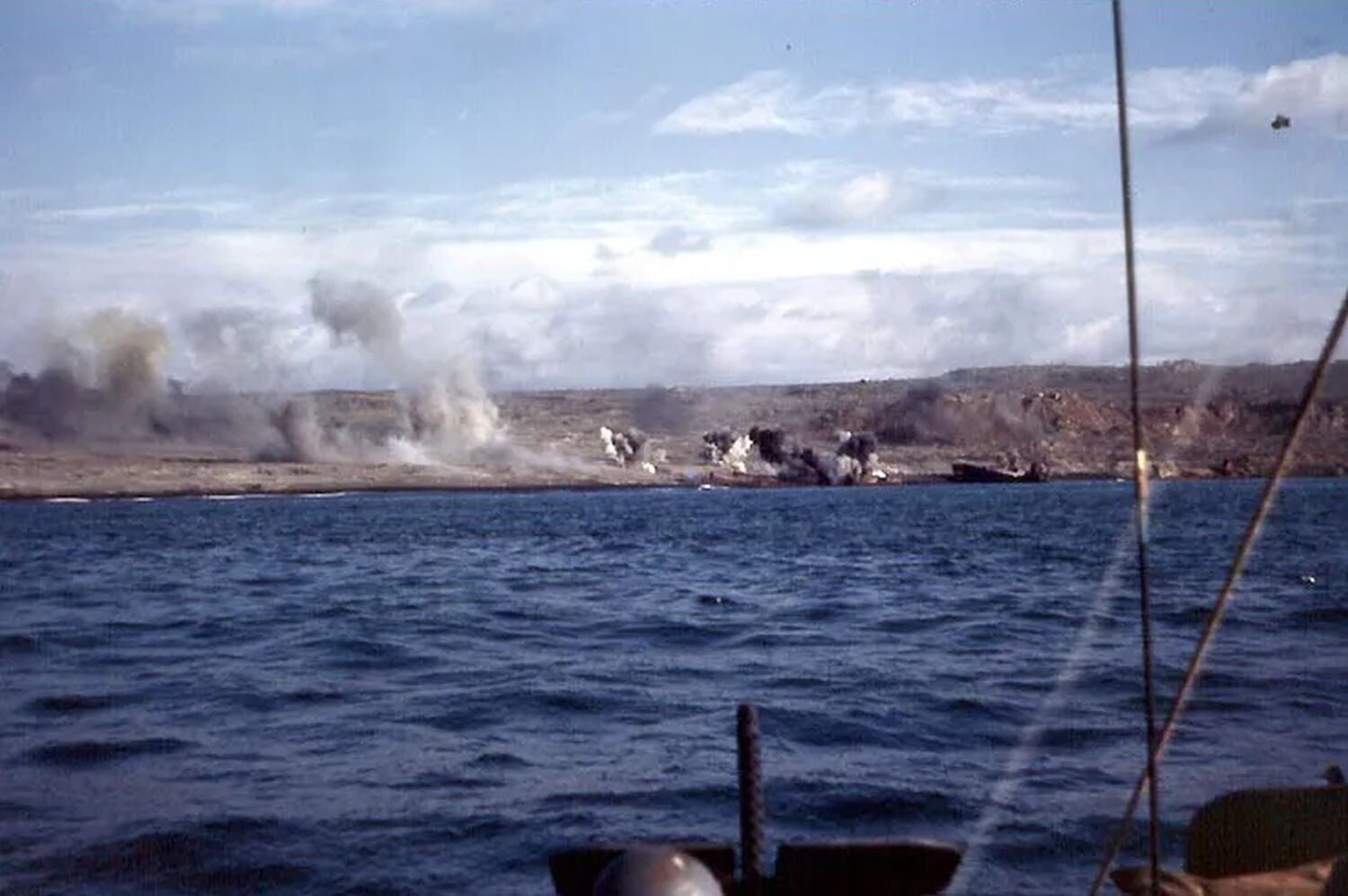
Explosions rock the Iwo Jima shore during the pre-landing bombardment, February 19, 1945. Iwo Jima’s pre‑landing bombardment on 19 February 1945 was one of the most concentrated naval and aerial assaults of the Pacific War. For days, battleships, cruisers, and destroyers fired thousands of shells into the island’s volcanic terrain, while carrier aircraft struck suspected gun positions, bunkers, and communication sites. Despite the intensity of the bombardment, Japanese defences—deep tunnels, reinforced caves, and concealed artillery—remained largely intact. When the Marines landed, they faced a fortified enemy that had endured the bombardment underground.
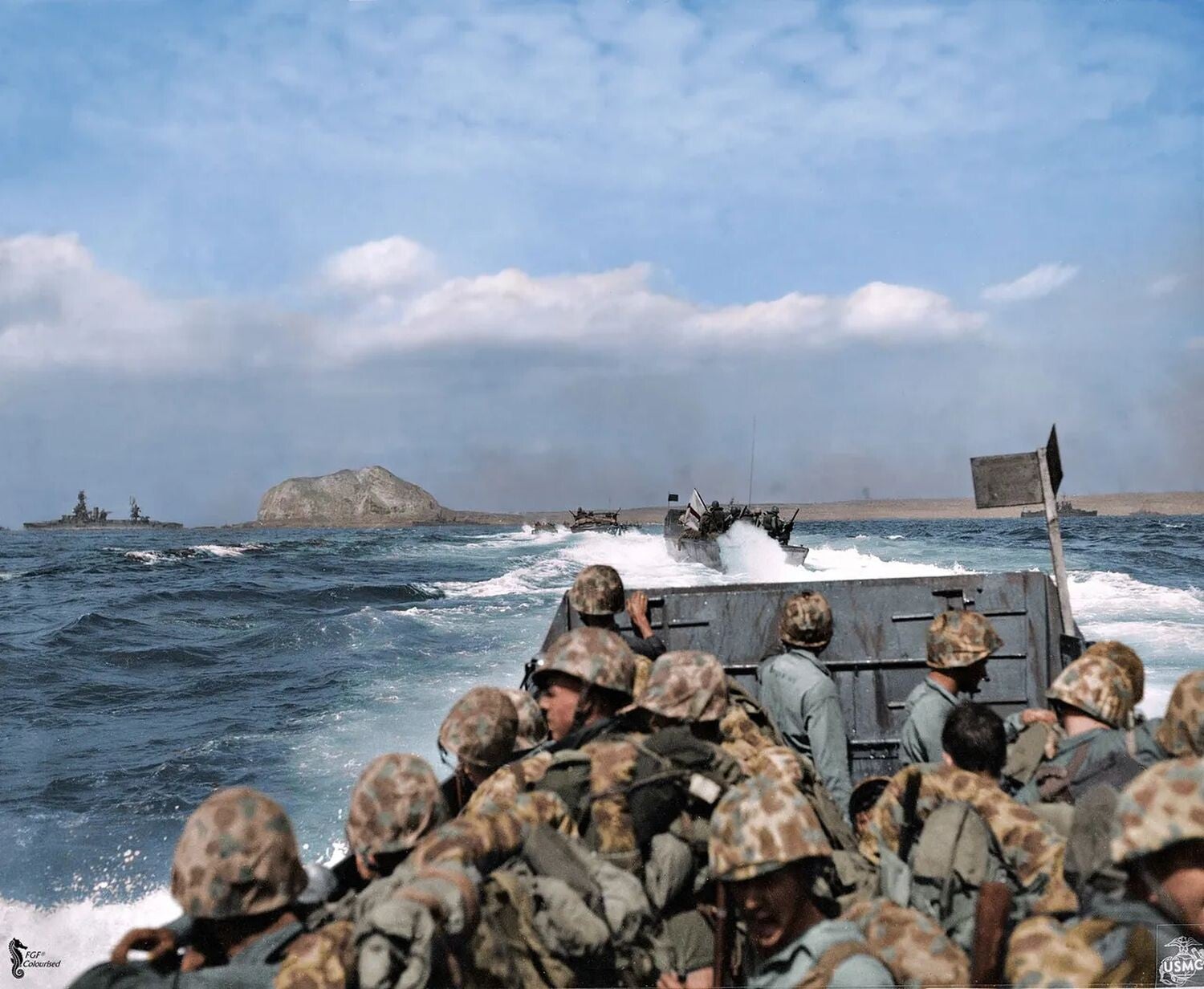
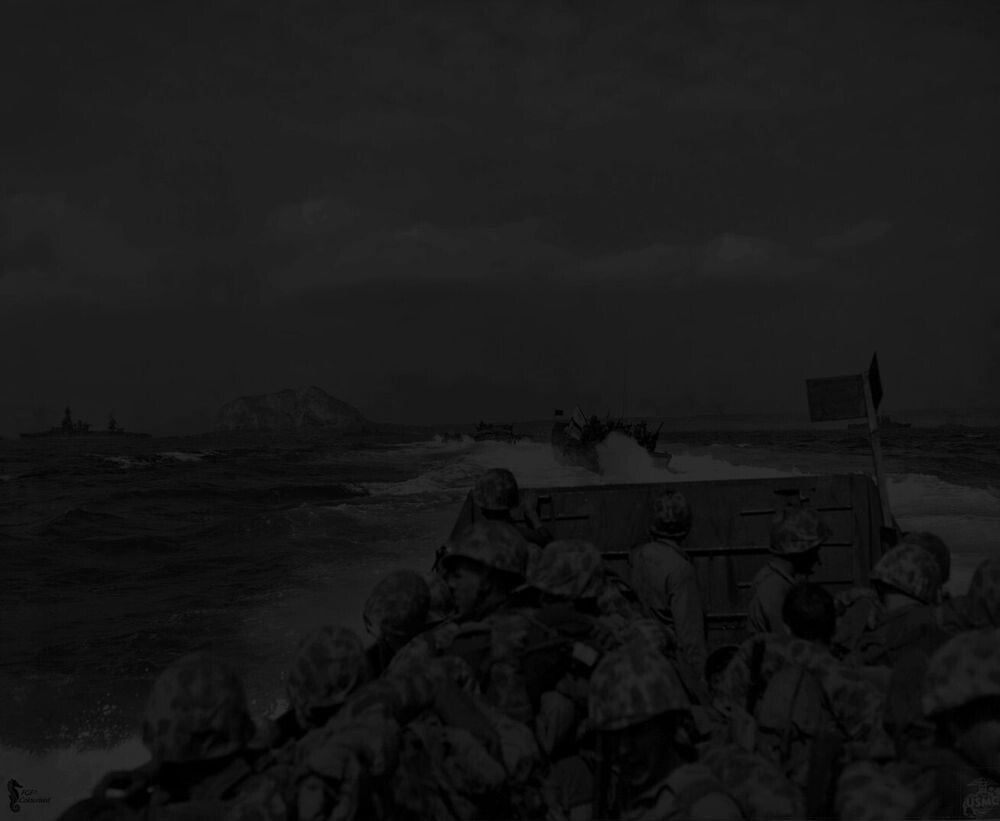
Landing craft carrying US Marines to Iwo Jima, February 19th, 1945
Information
Japanese forces, commanded by Lieutenant General Tadamichi Kuribayashi, withheld fire until the beaches were crowded.
When they opened up, machine guns, mortars, and artillery swept the landing lanes with devastating accuracy.
Many landing craft were struck while still unloading, and Marines found themselves pinned along the waterline under intersecting fields of fire from positions concealed within a vast tunnel network beneath Mount Suribachi and the Motoyama Plateau.
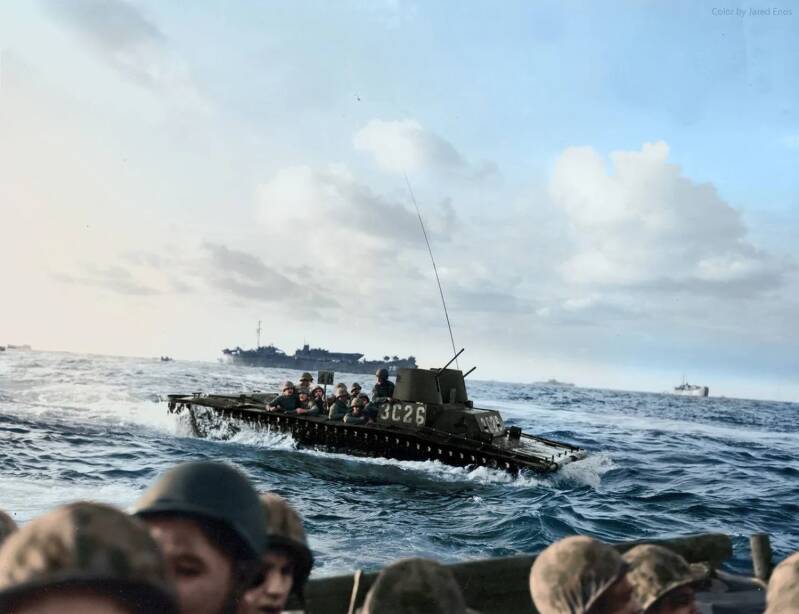
Amphibious armor and landing craft push through heavy surf off Iwo Jima as Marines crowd the gunwales, heading toward the volcanic shore. The tracked vehicle—an LVT—carries troops and equipment toward the beach while additional landing craft approach in formation, part of the sustained assault supporting operations around Mount Suribachi in February 1945.
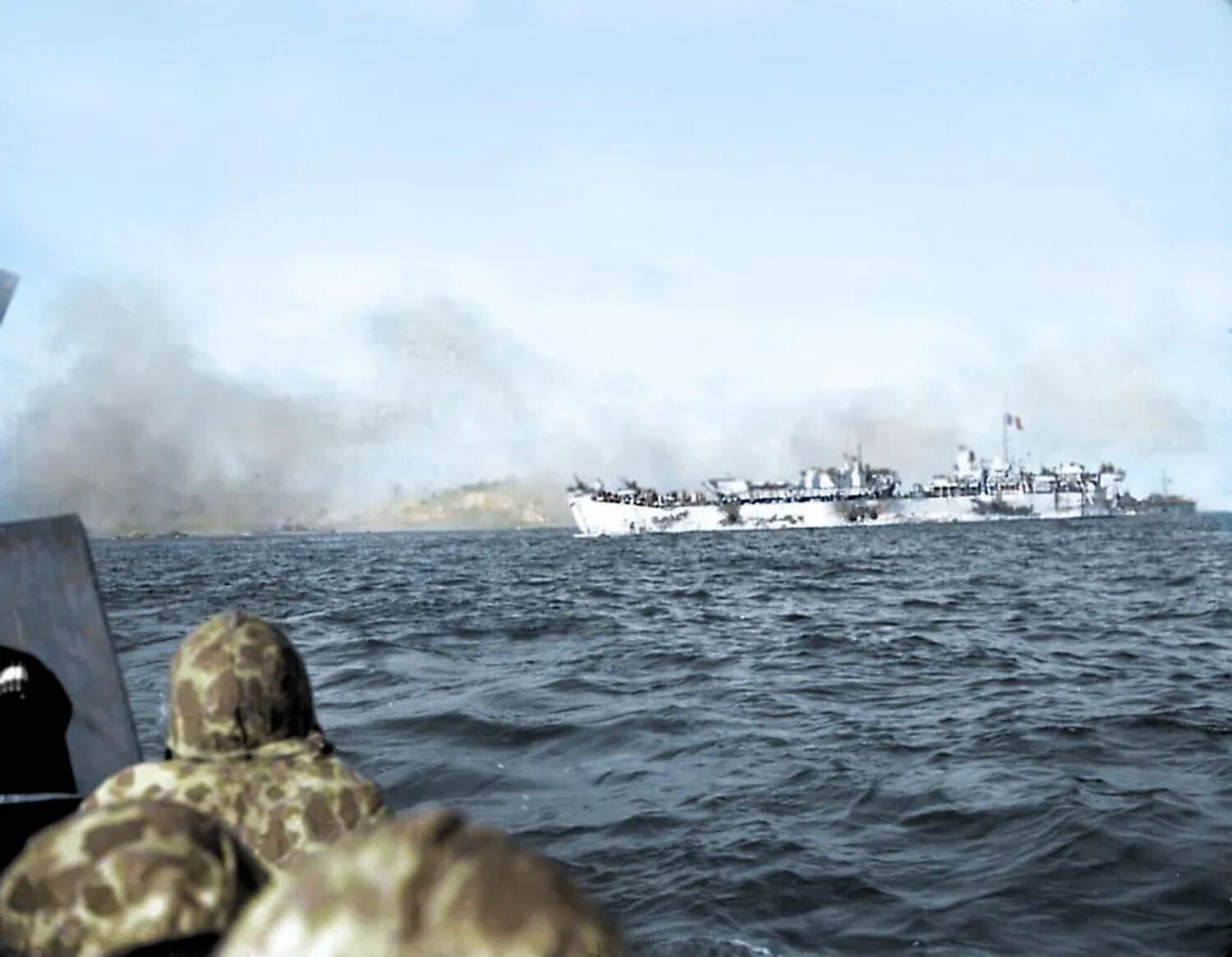
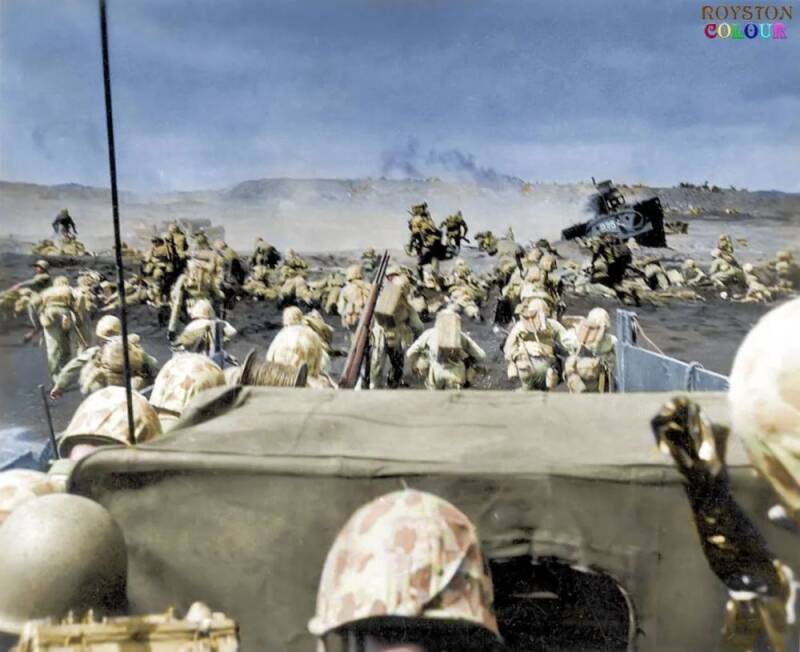
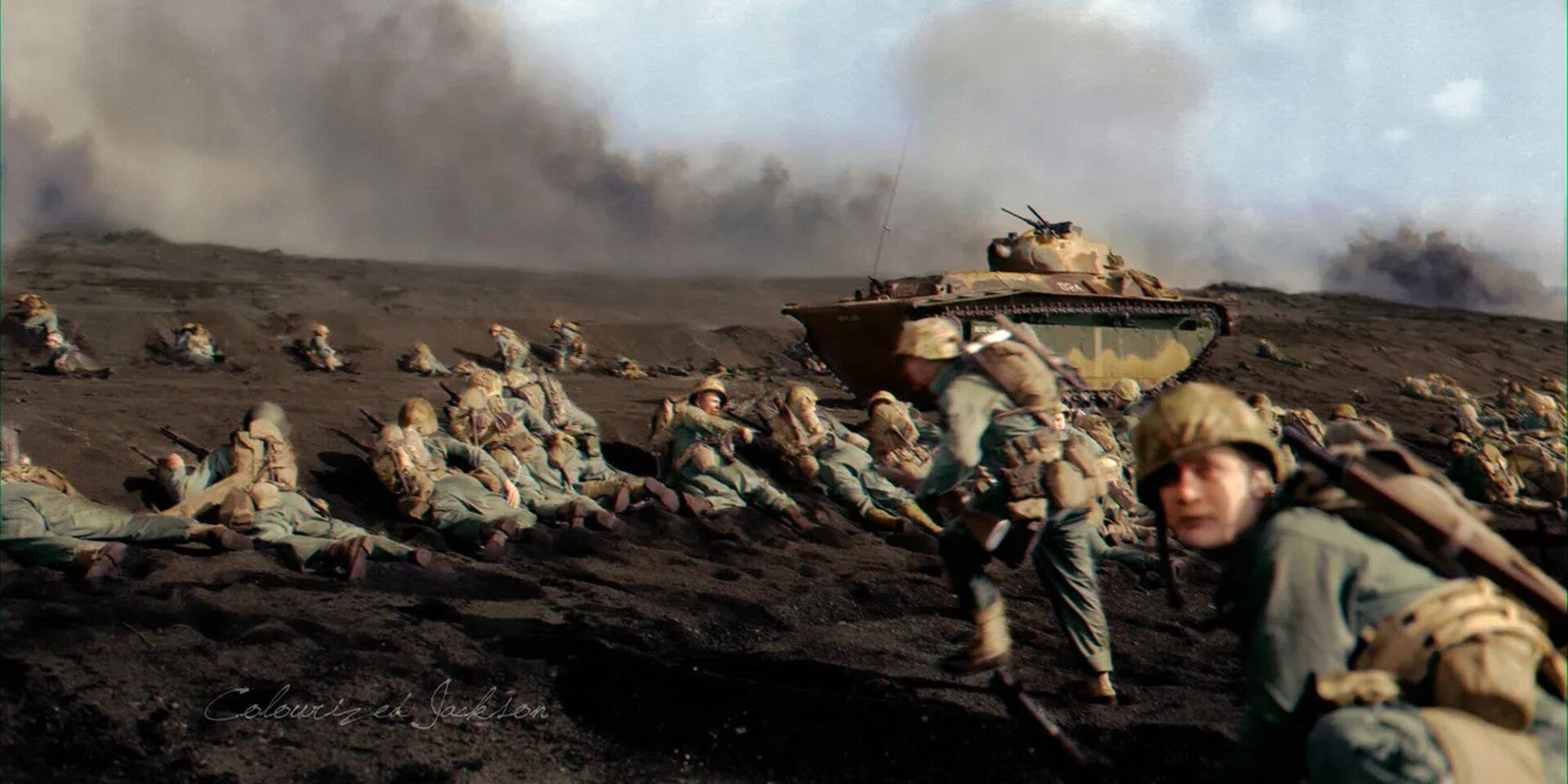
U.S. Marines storming the beaches of Iwo Jima. Beach landings at Iwo Jima on 19 February 1945 were chaotic and deadly. Marines came ashore through surf, smoke, and concentrated Japanese fire from Suribachi and the plateau above. Volcanic ash trapped vehicles, slowed movement, and left troops exposed. Despite severe resistance and disordered conditions, successive waves secured a foothold that enabled the wider assault to push inland.
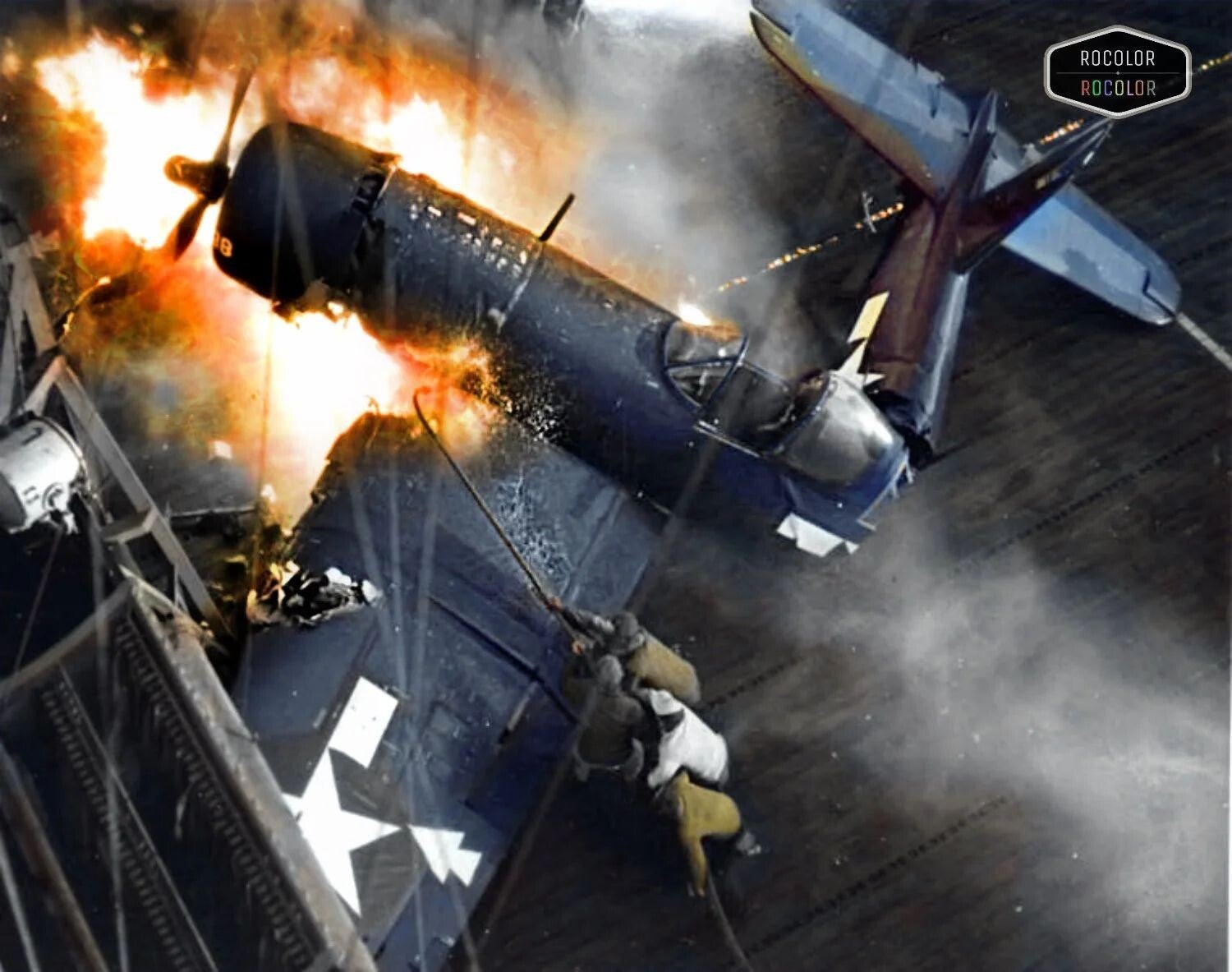
Marine F4U Corsair of VMF-123 aboard USS Bennington after crashing against 'the tower', breaking in half, and catching fire, 14 February 1945 off Iwo Jima. Note burning fuel in the flight deck tie-down track. USS Bennington supported the Iwo Jima campaign as part of the fast‑carrier forces striking Japanese positions in early 1945. Its air groups conducted bombing, strafing, and reconnaissance missions to weaken fortifications, disrupt supply routes, and assist Marine ground operations. Bennington’s aircraft targeted caves, gun positions, and troop concentrations, contributing to the sustained pressure required to secure the island. Though not present for the initial landings, its air support played a significant role in the wider campaign.
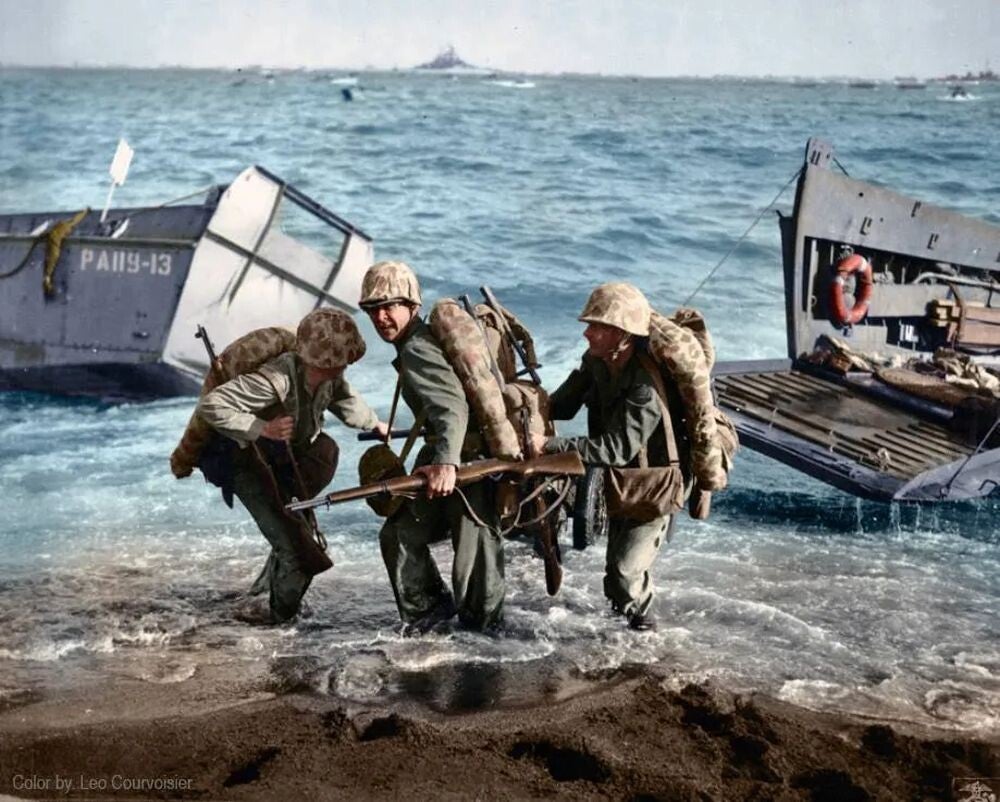
U.S. Marines wading ashore during the Battle of Iwo Jima in 1945, with landing craft visible in the choppy waters behind them. Landing craft at Iwo Jima operated under extreme pressure as Marines stormed the volcanic beaches in February 1945. Higgins boats, LVTs, and larger LCMs delivered assault waves through surf, smoke, and Japanese fire from concealed positions on Mount Suribachi and the plateau above. Volcanic ash bogged vehicles, slowed unloading, and exposed troops to concentrated fire. Despite chaos, landing craft crews kept waves moving, enabling the beachhead to expand and the assault to push inland against entrenched resistance.
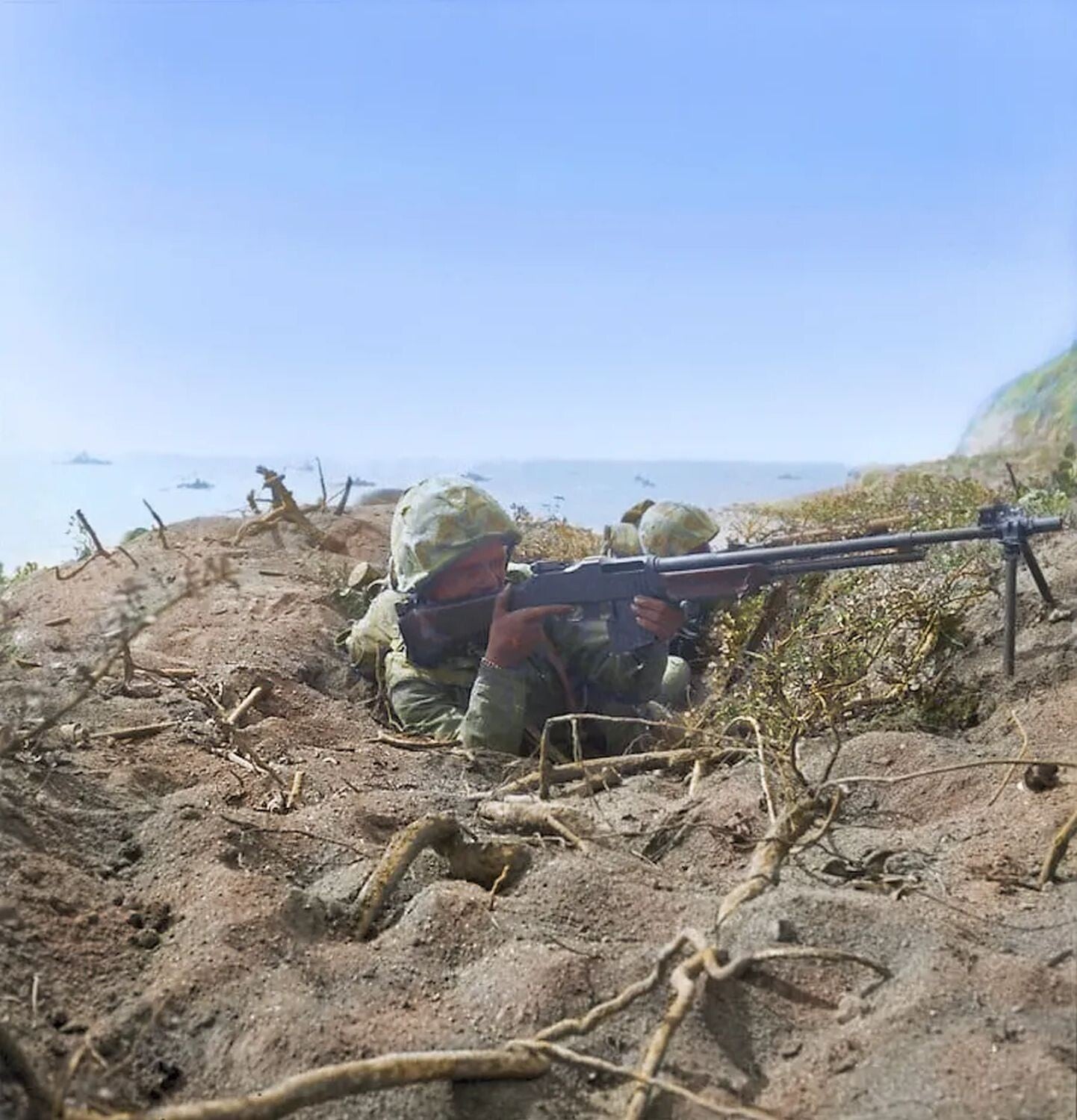
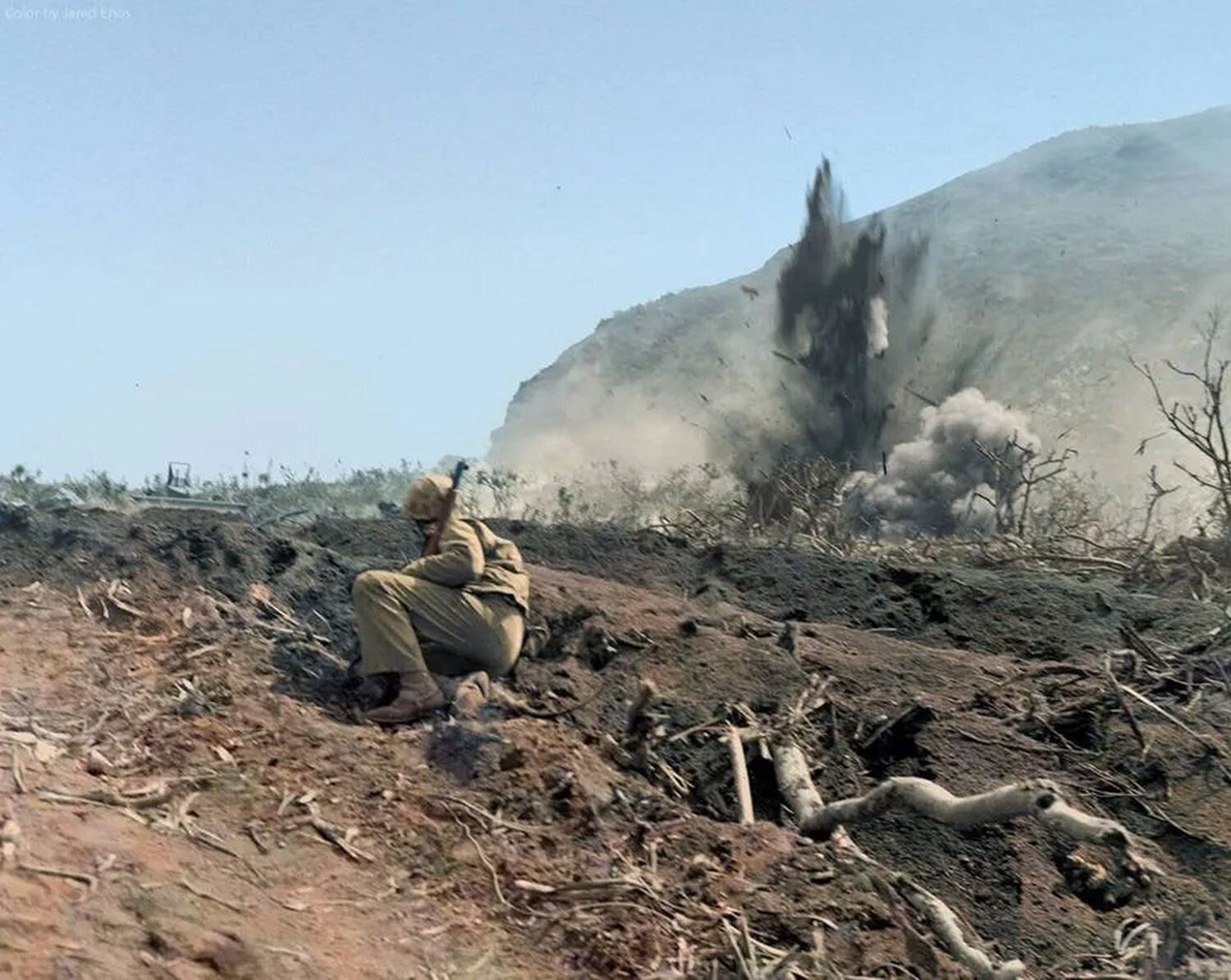
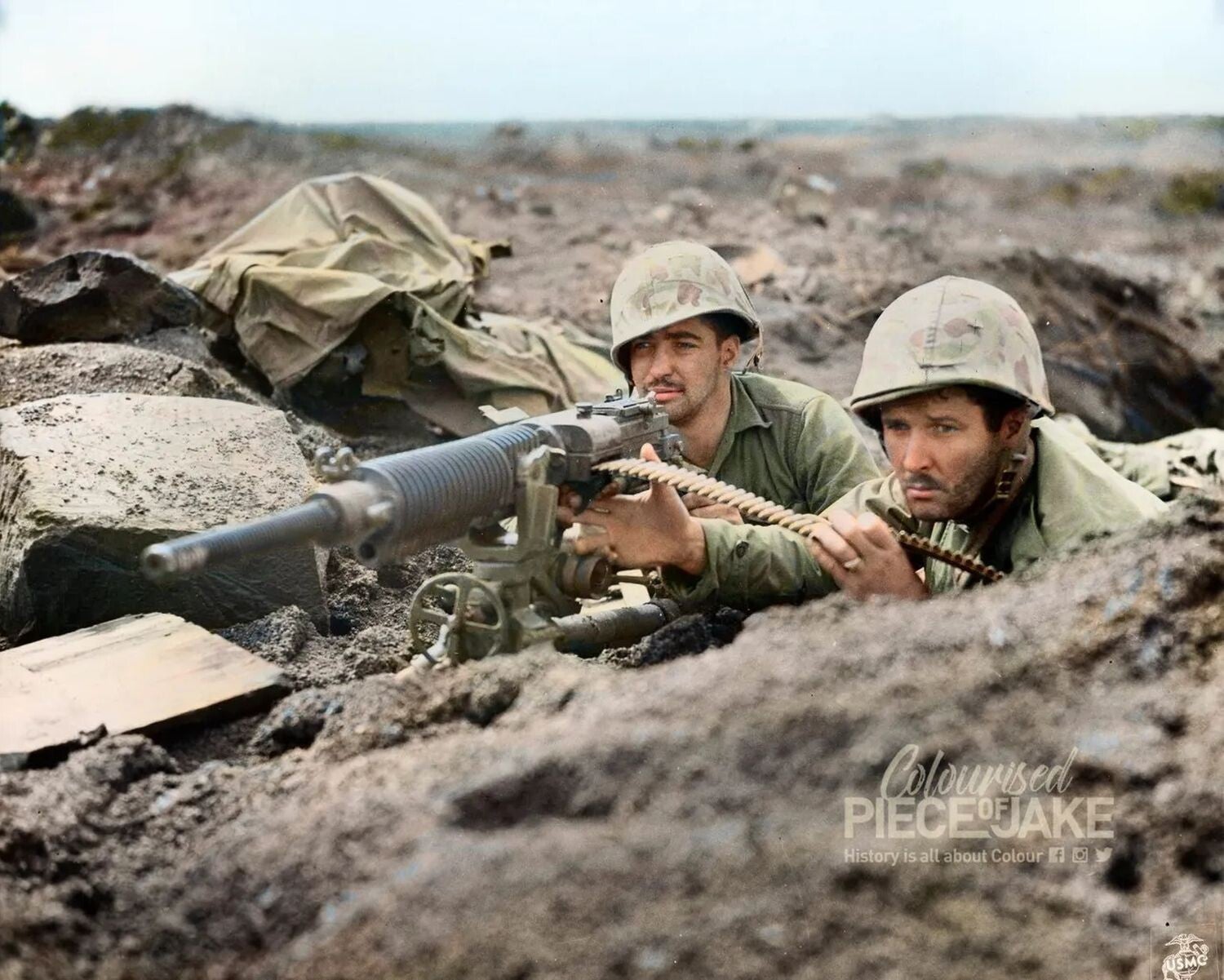
U.S. troops on Iwo Jima were able to dig in only with difficulty. The island’s surface consisted of loose volcanic ash over dense basalt, making foxholes prone to collapse and offering little natural cover. Marines used entrenching tools, sandbags, and whatever debris they could find to reinforce positions under fire. Despite the terrain’s instability, they established shallow fighting pits and improvised shelters that provided minimal protection during the brutal, close‑quarters battle.
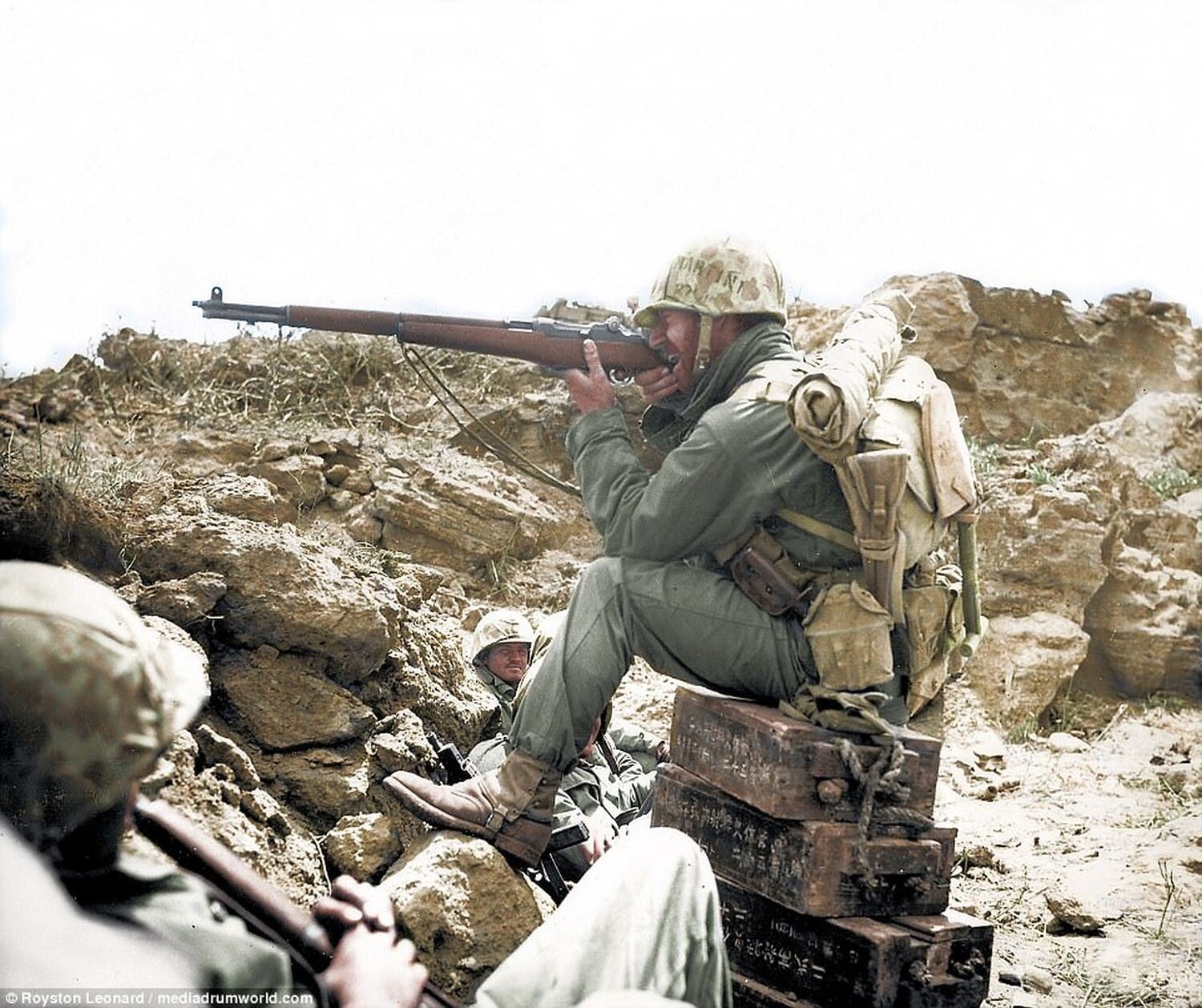
A US marine sitting on Japanese ammunition boxes takes aim using his M1 Garand at Iwo Jima in 1945.
Colourised by Royston Leonard
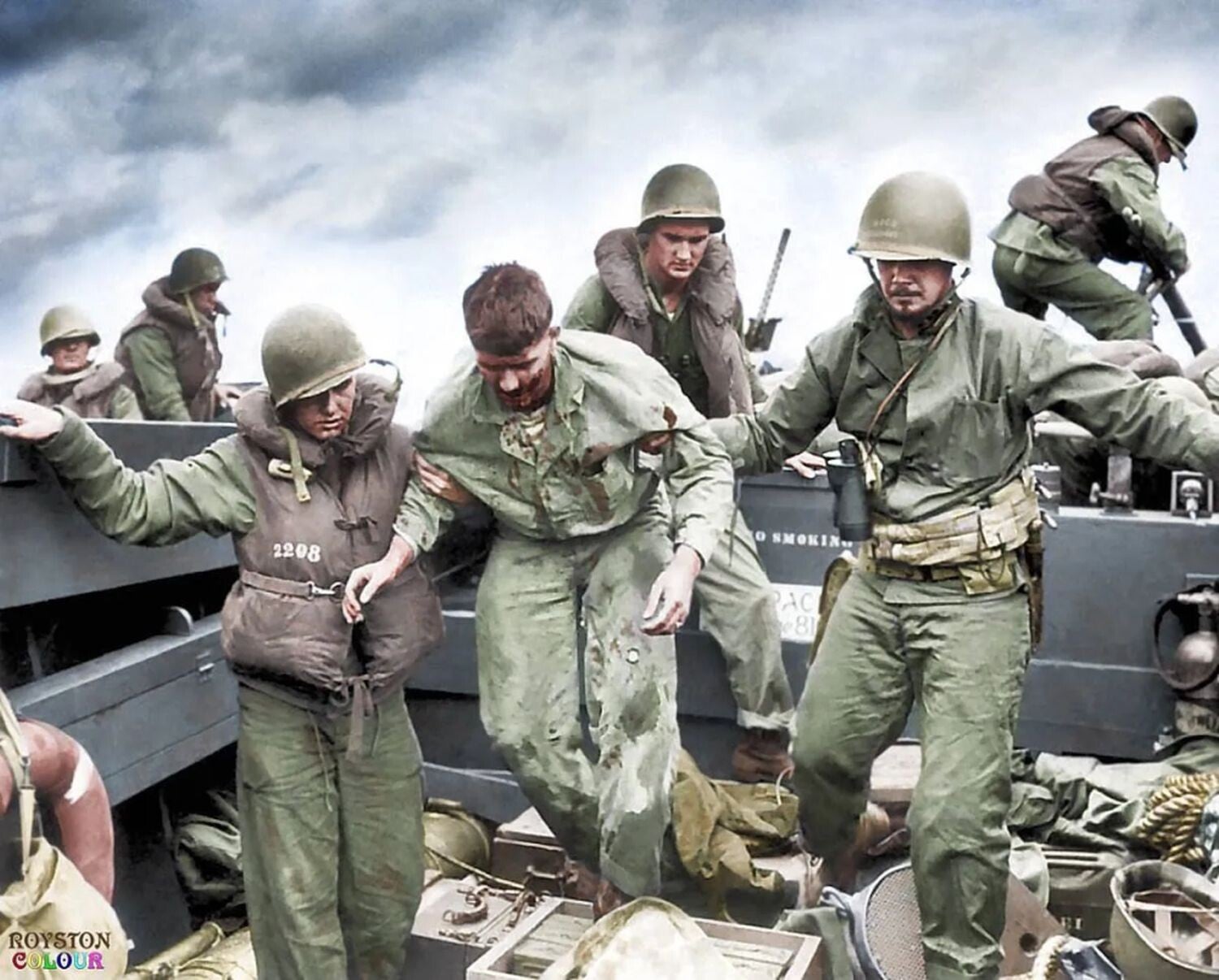
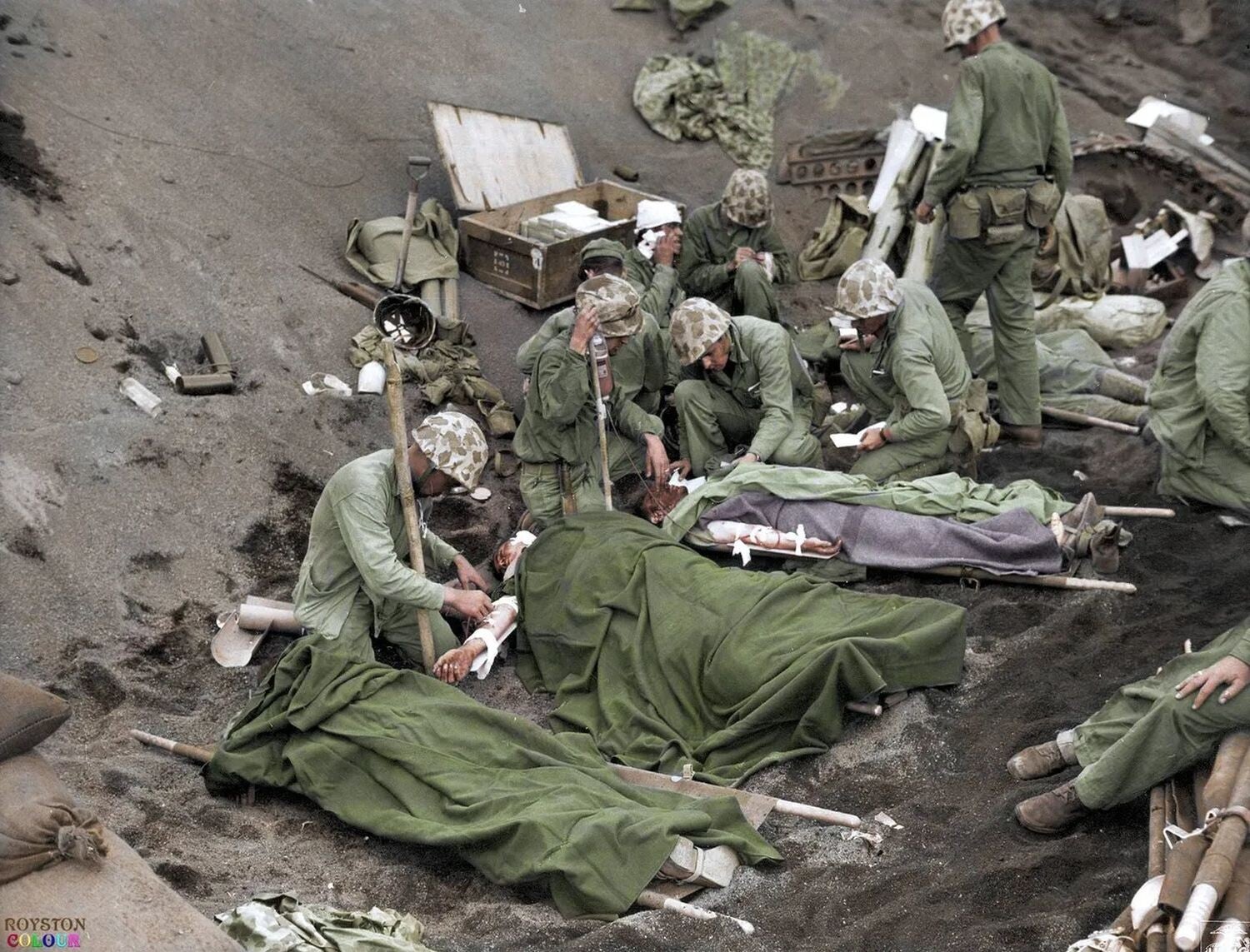
US Coast Guardsmen assisting a wounded Marine returning from the fight on Iwo Jima. U.S. Coast Guardsmen played a quiet but essential role at Iwo Jima, operating small craft, guiding landing waves, and managing the hazardous flow of men and supplies onto the volcanic beaches. They braved surf, smoke, and Japanese fire while keeping landing lanes open and rescuing Marines thrown from swamped craft. Their seamanship and persistence under fire ensured the assault waves reached shore and maintained momentum during one of the Pacific War’s most punishing amphibious operations.
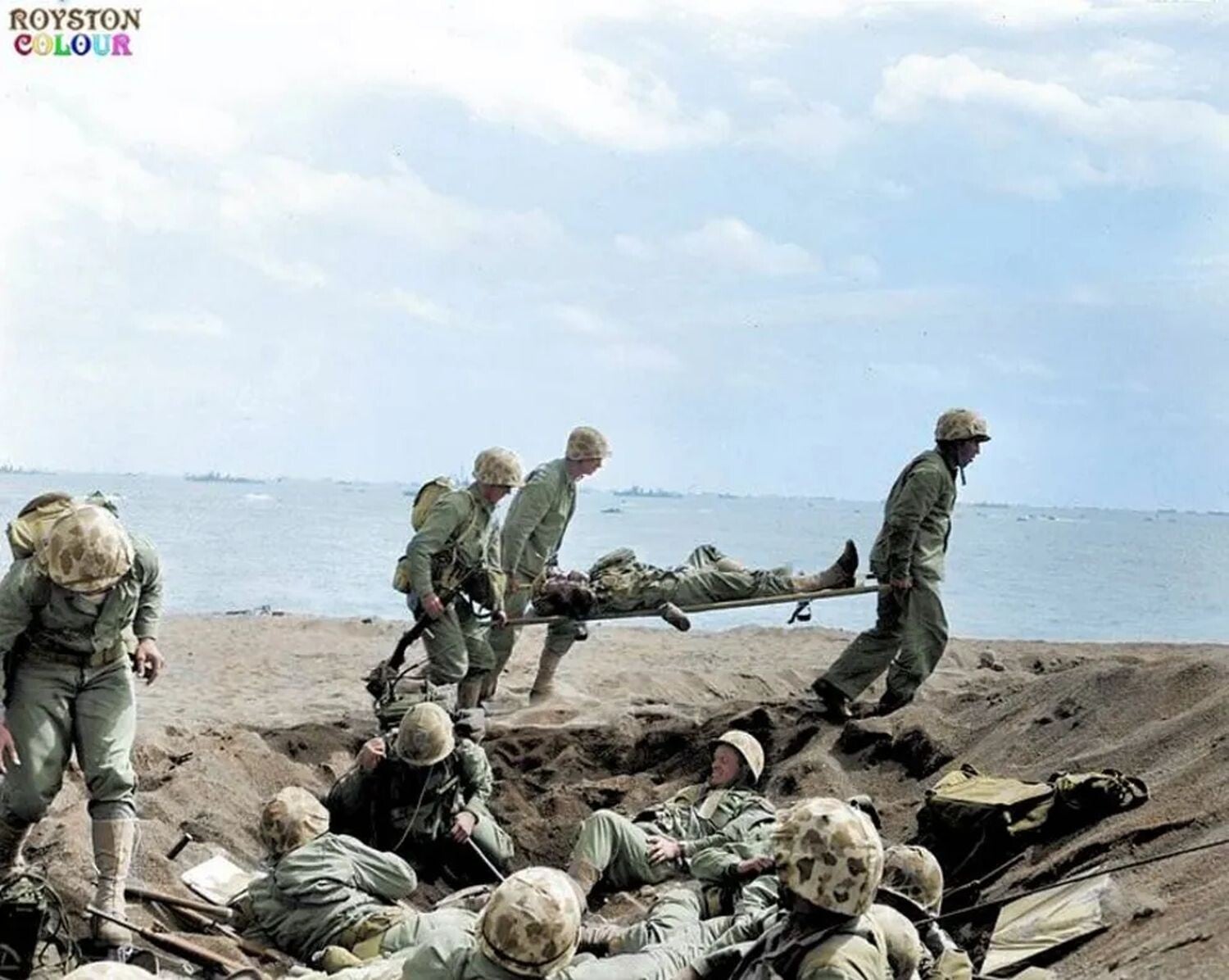
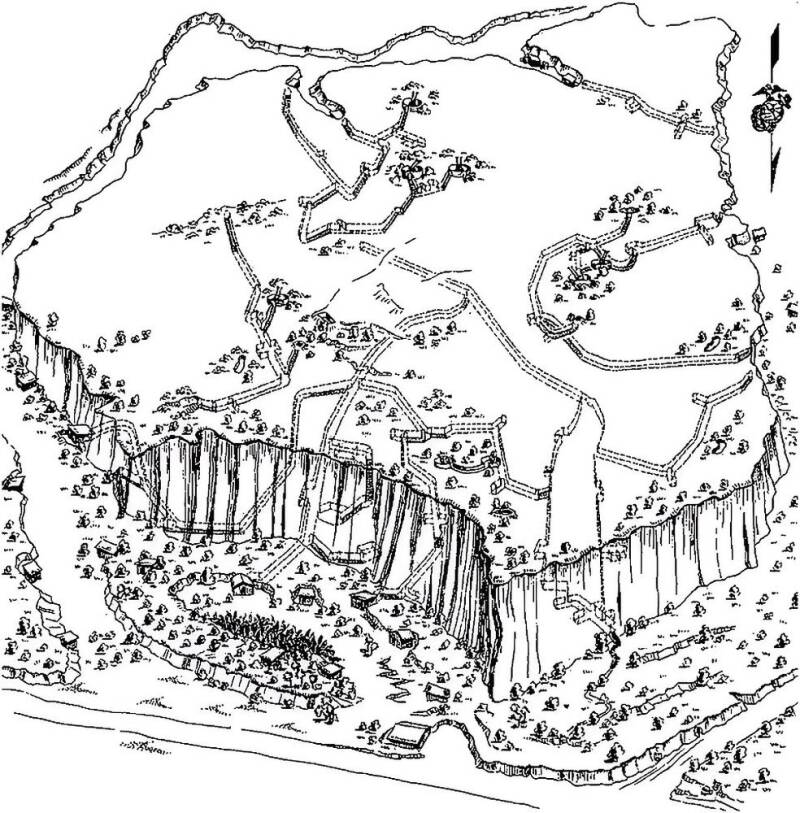
Sketch of Hill 362A, made by the 31st U.S. Naval Construction Battalion. Dotted lines show the Japanese tunnel system.
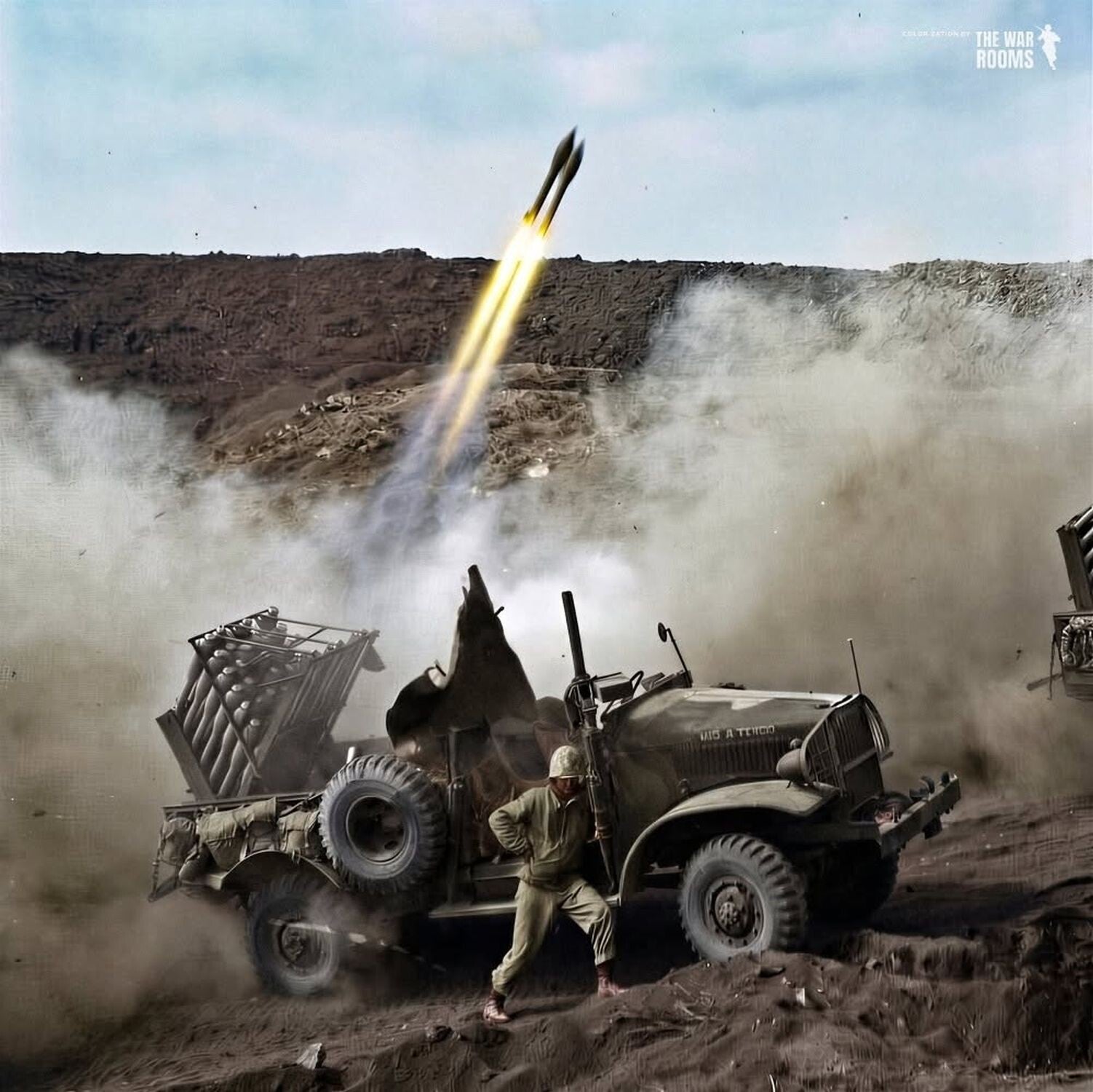
By late February 1945, rocket detachments on Iwo Jima provided essential close‑support firepower for Marine infantry. Mounted on modified International one‑ton 4×4 trucks, each system carried thirty‑six 4.5‑inch rockets capable of saturating Japanese cave positions and fortified points in seconds. The blasts collapsed entrances, suppressed fire, and enabled advances across the volcanic terrain. Every launch produced a dense cloud of smoke and dust, immediately exposing the truck to Japanese counter‑fire, forcing crews to fire rapidly and relocate at once. Despite the danger, these provisional rocket units proved highly effective in breaking stubborn resistance during the battle’s most punishing phase.
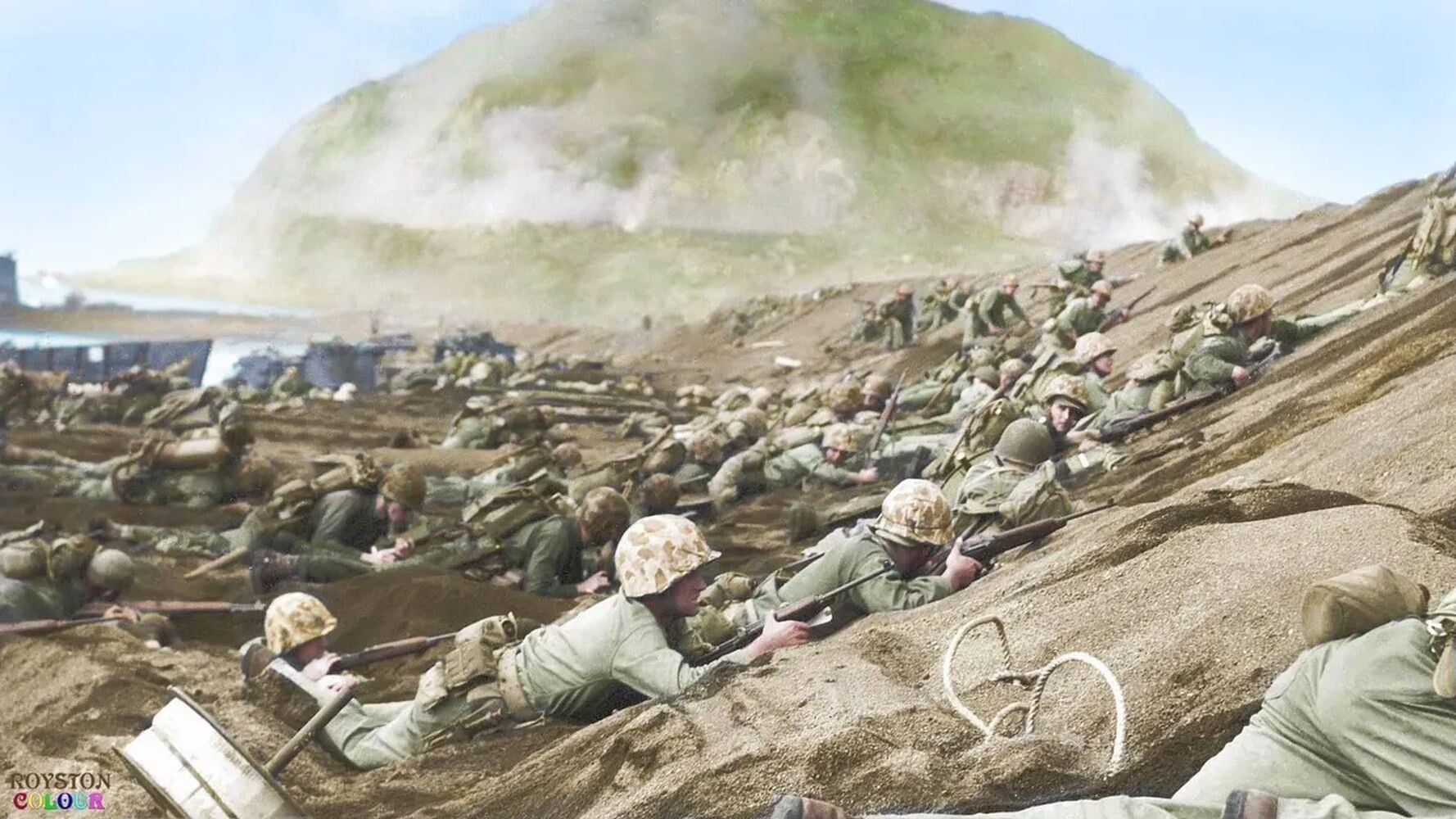
US Marines crawl their way up the coastline of Iwo Jima, while under heavy fire from the surprisingly intact Japanese defences.
Colourised by Royston Leonard
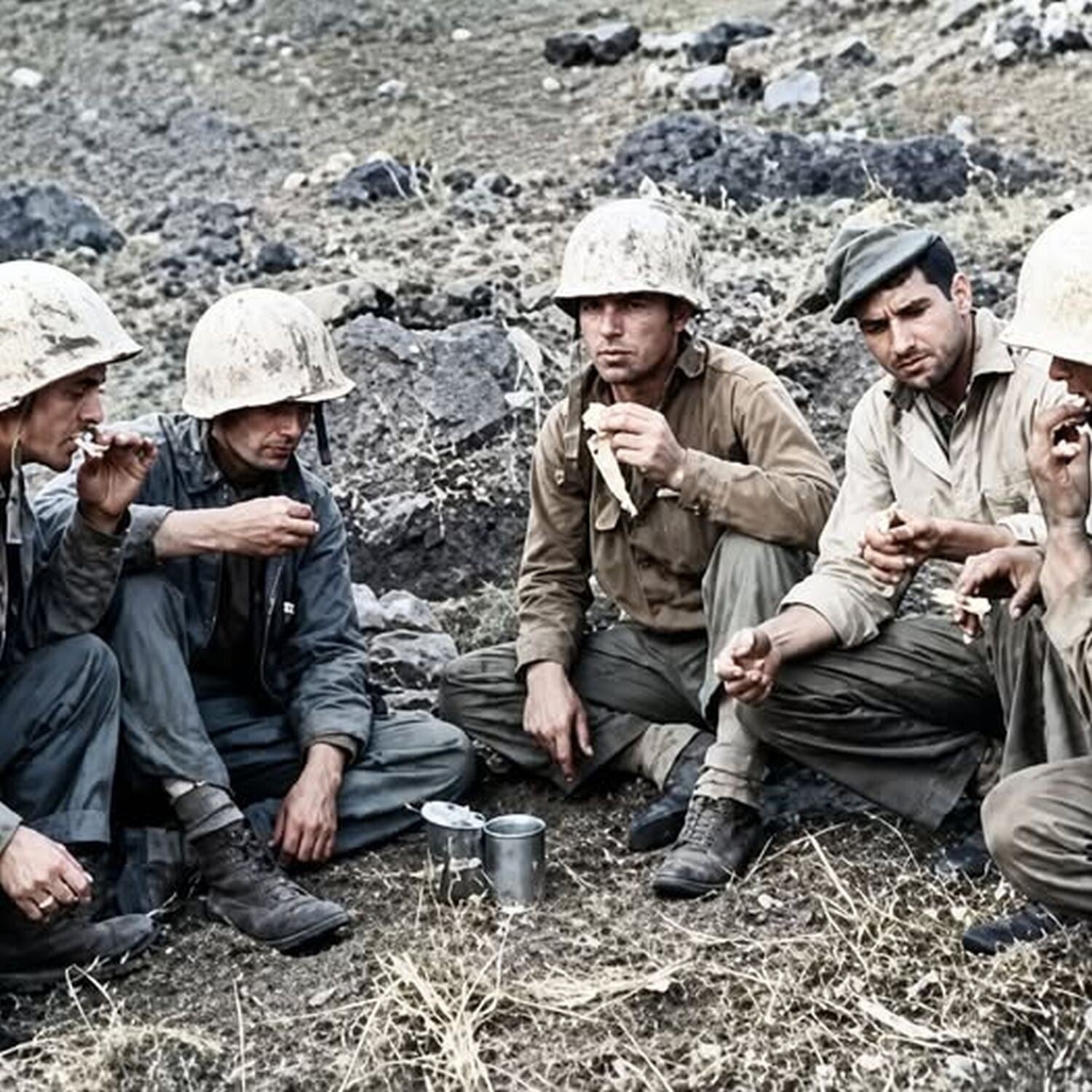
U.S. Marines taking a short meal break during the Battle of Iwo Jima, February 1945.
By late February 1945, rocket detachments on Iwo Jima provided essential close‑support firepower for Marine infantry. Mounted on modified International one‑ton 4×4 trucks, each system carried thirty‑six 4.5‑inch rockets capable of saturating Japanese cave positions and fortified points in seconds. The blasts collapsed entrances, suppressed fire, and enabled advances across the volcanic terrain. Every launch produced a dense cloud of smoke and dust, immediately exposing the truck to Japanese counter‑fire, forcing crews to fire rapidly and relocate at once. Despite the danger, these provisional rocket units proved highly effective in breaking stubborn resistance during the battle’s most punishing phase.
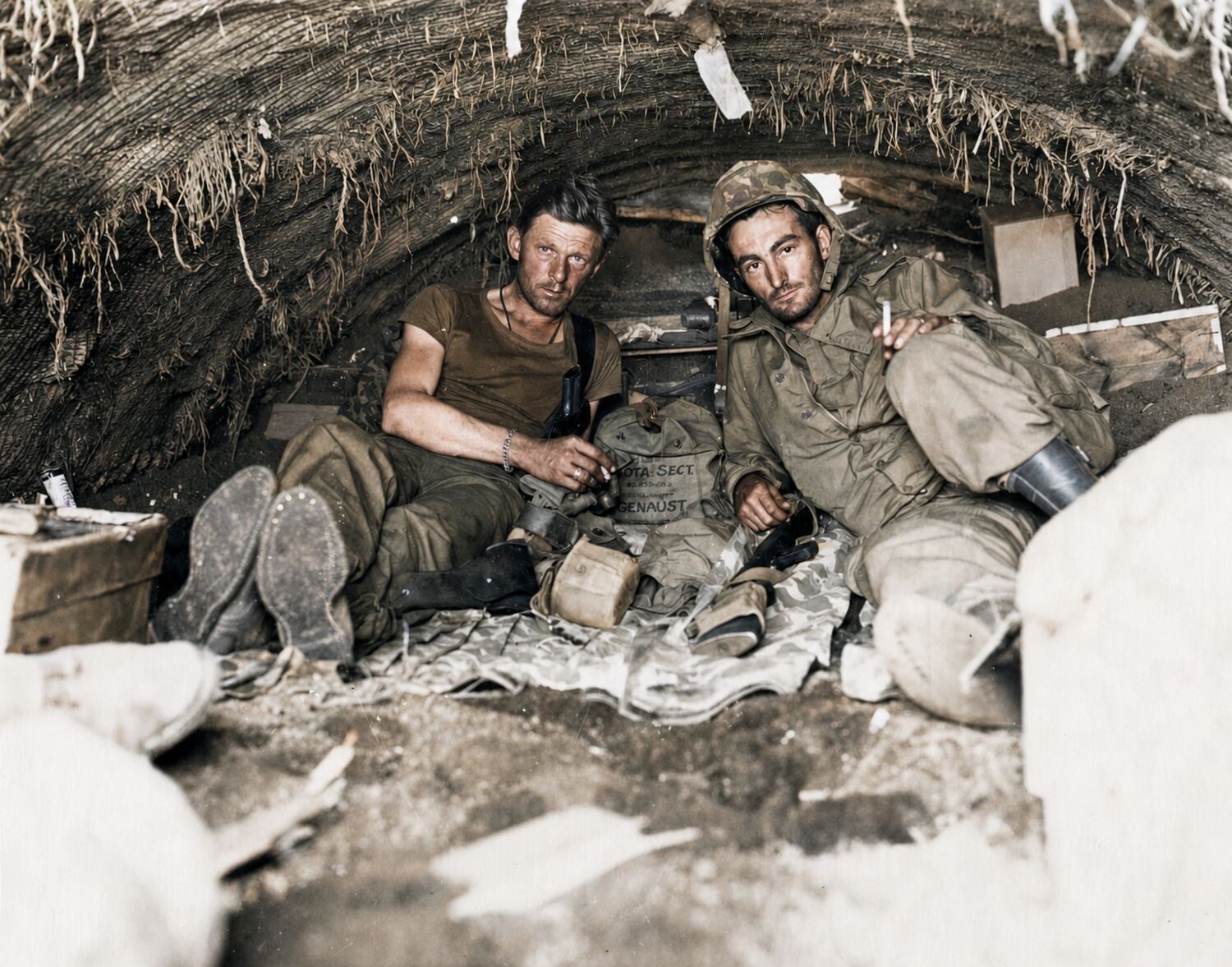
US Marine Corps motion picture cameramen Sgt WA (Bill) Genaust (left) and Corporal Atlee S Tracy, Iwo Jima, February 24, 1945. Genaust was the cameraman who filmed in color the famous Iwo Jima flag-raising on the day before this photo was taken.
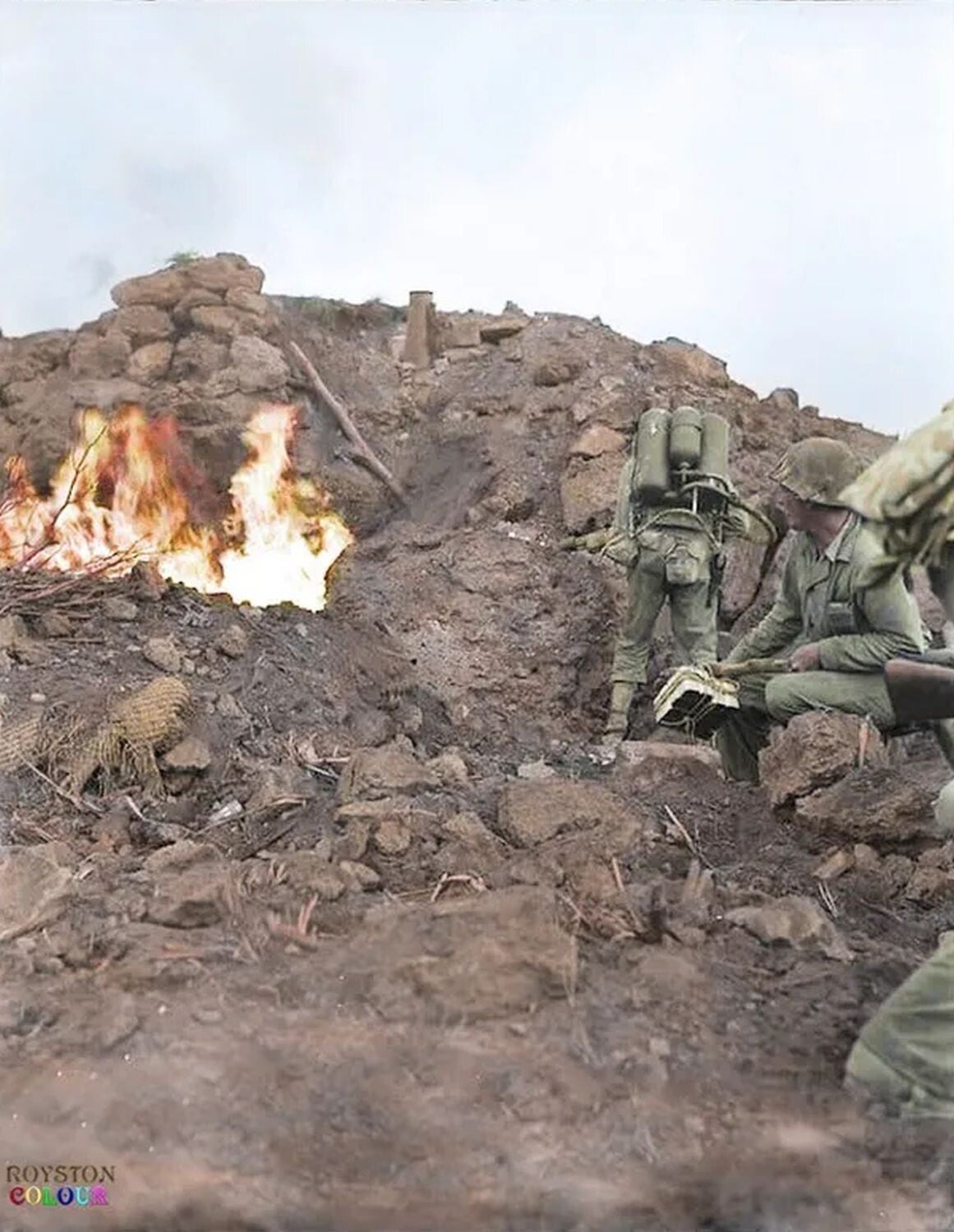
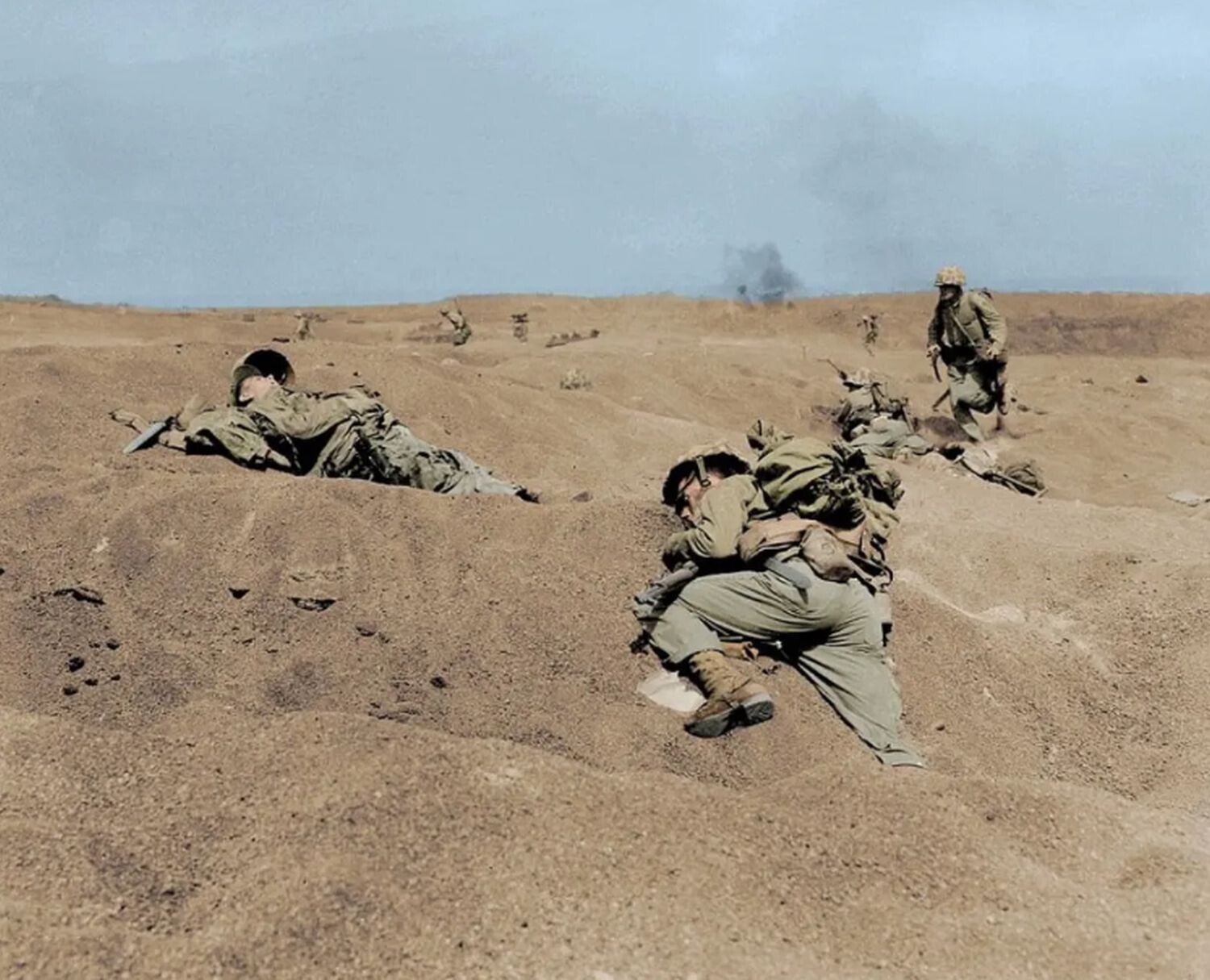
Two Marines lay dead in the sand amidst the fighting during the battle of Iwo Jima.

Marines T/5 L. C. Carter, Jr., Private John Bonner, Jr., Staff Sergeant Charles R. Johnson, T/5 A. B. Randle, T/5 Homer H. Gaines, and Private Willie Tellie pose for a photo on Iwo Jima. They are credited with saving a fellow Marine who was drowning. 11 March 1945.
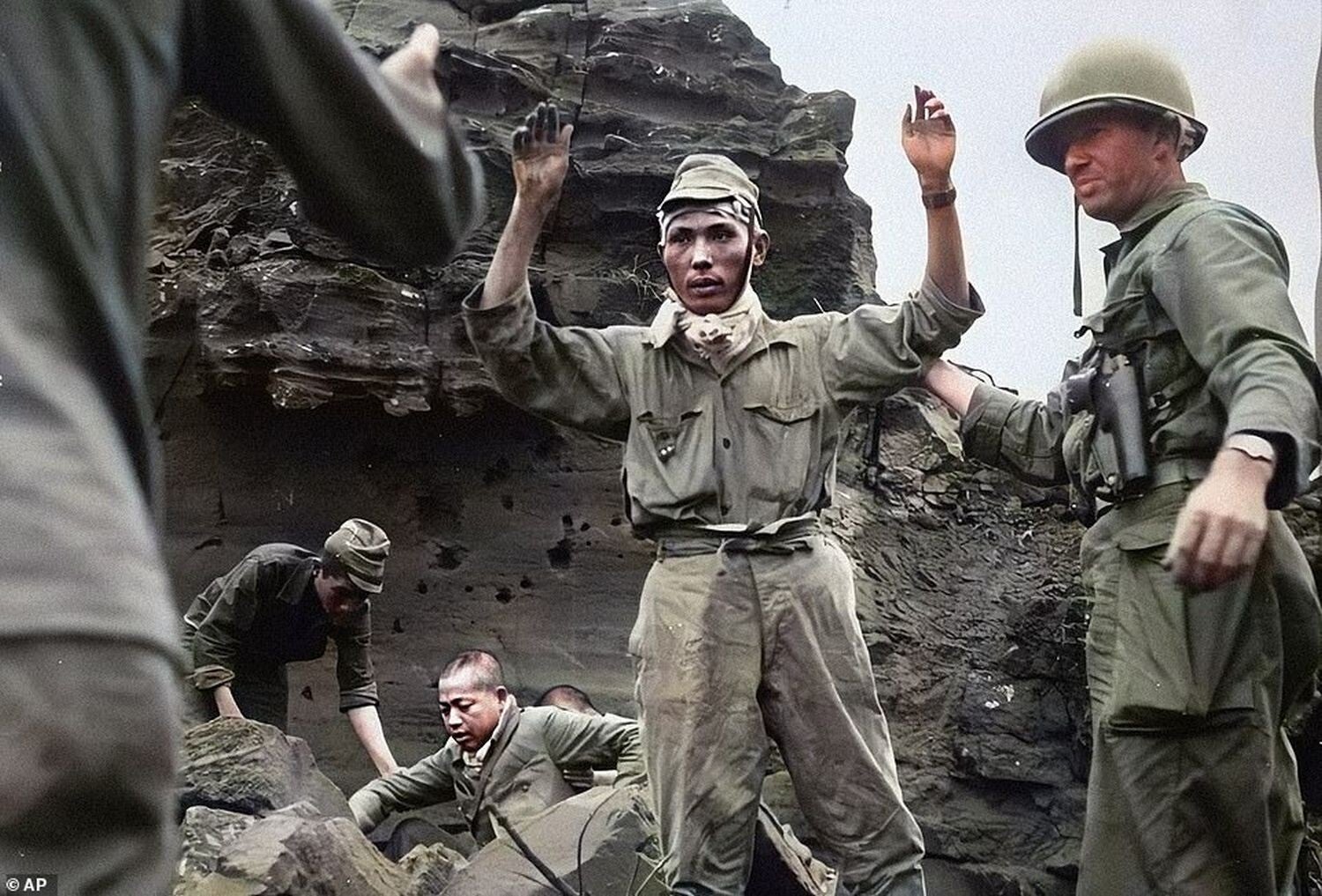
The first of 20 Japanese soldiers emerge from an Iwo Jima cave with their hands in the air on April 5, 1945. The group had been hiding for several days.
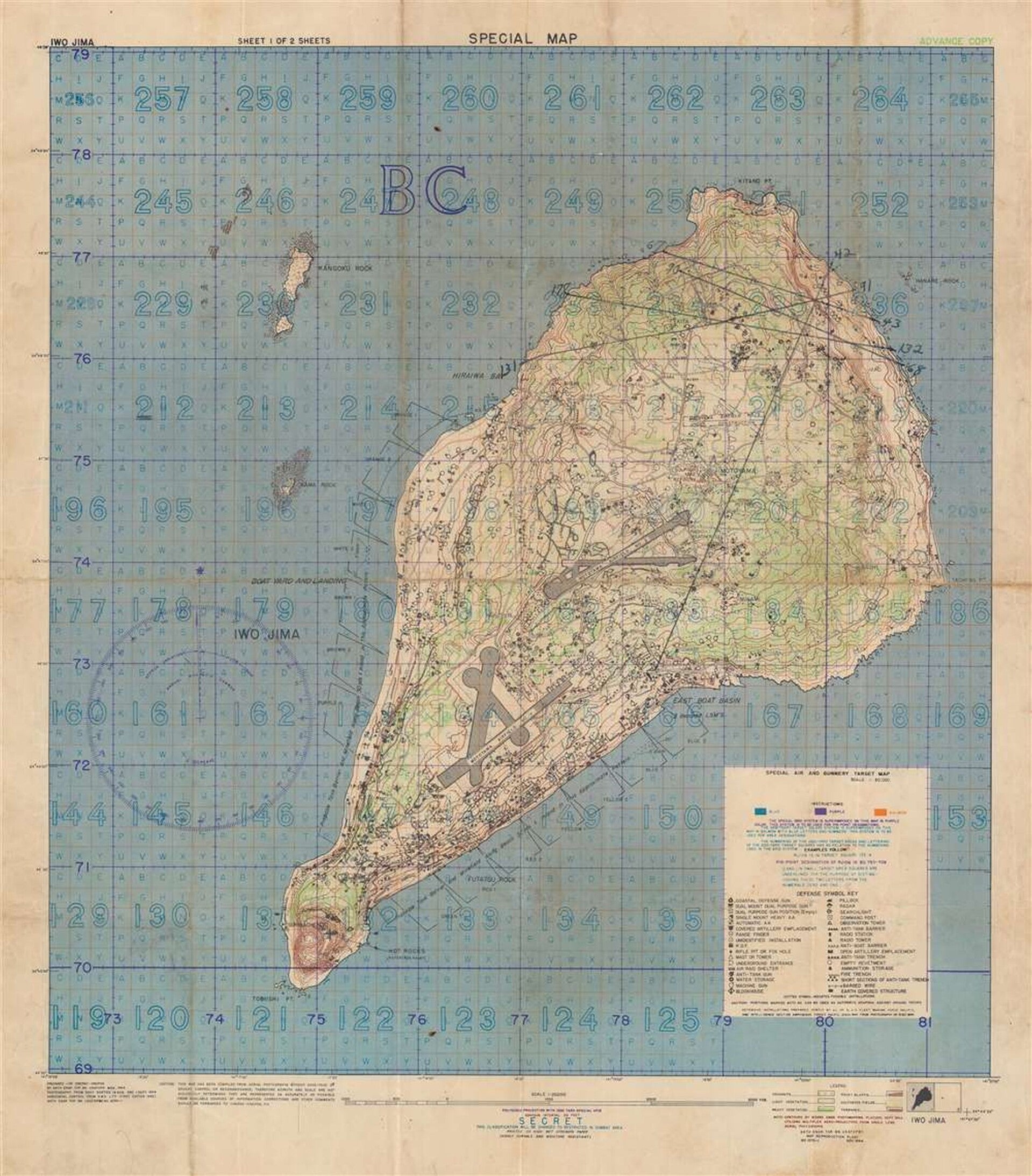
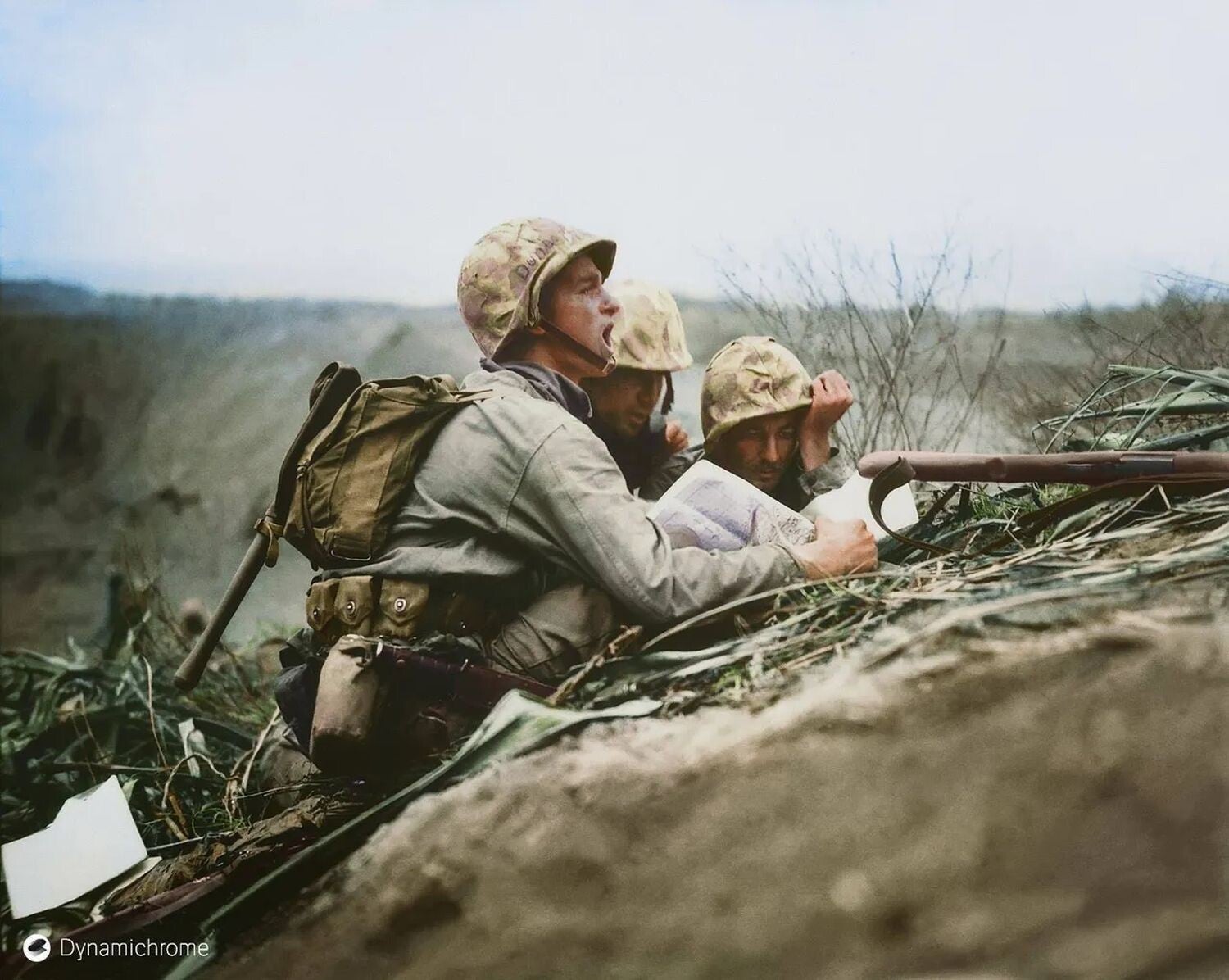
Late-1944 map created for the bombardment of Iwo Jima. It detailed every feature needed for pre‑invasion targeting. Contours, ravines, and the slopes of Suribachi were plotted alongside airfields, radar sites, gun positions, and command posts. Prepared by the Army Map Service, it provided naval and air units with precise aiming data, ensuring coordinated strikes against fortified underground networks before the February 1945 landings.
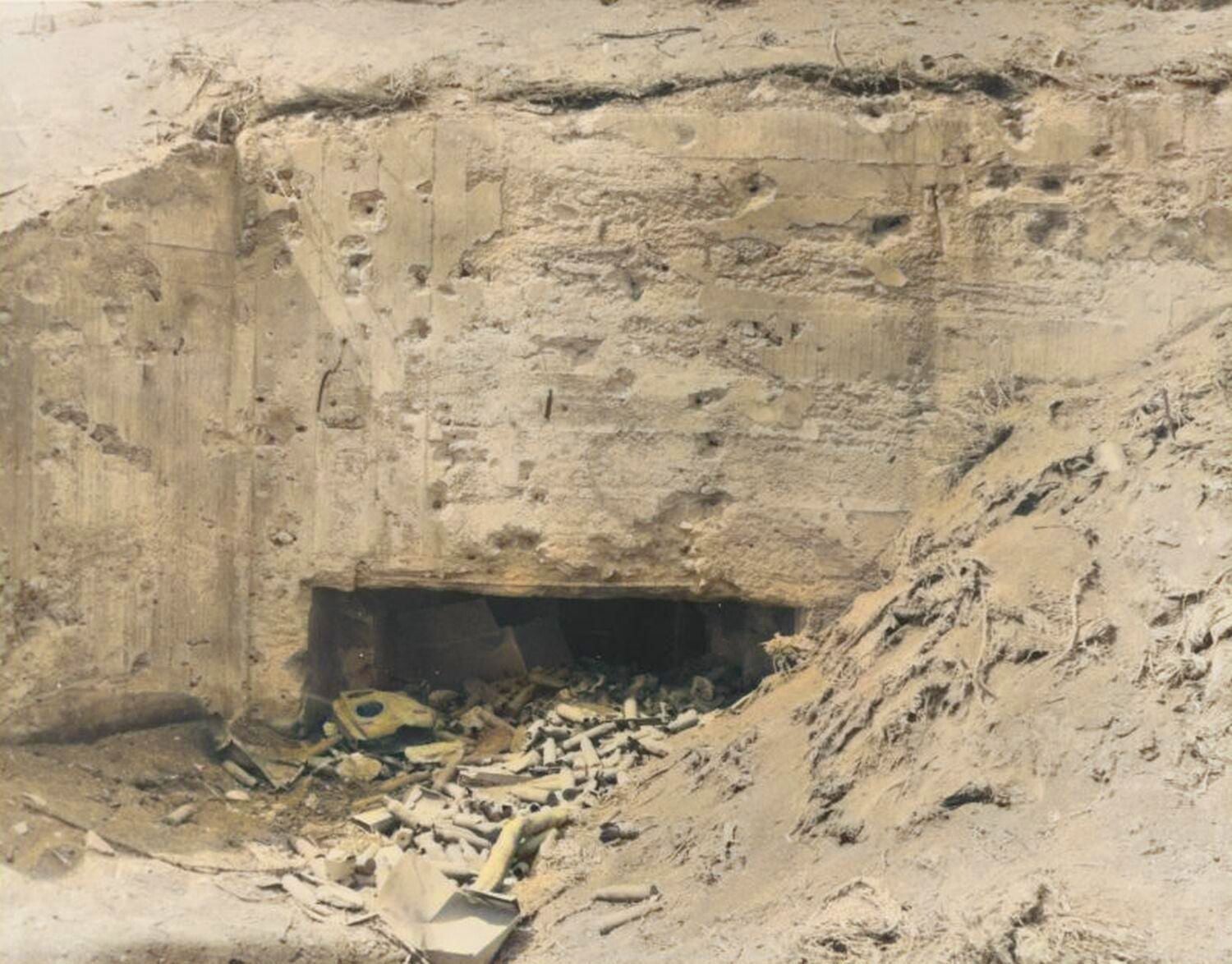
A knocked-out Japanese artillery bunker. Note the thick, improved concrete protection and spent shell casings on the ground.
https://www.breachbangclear.com/battle-of-iwo-jima-operation-detachment/
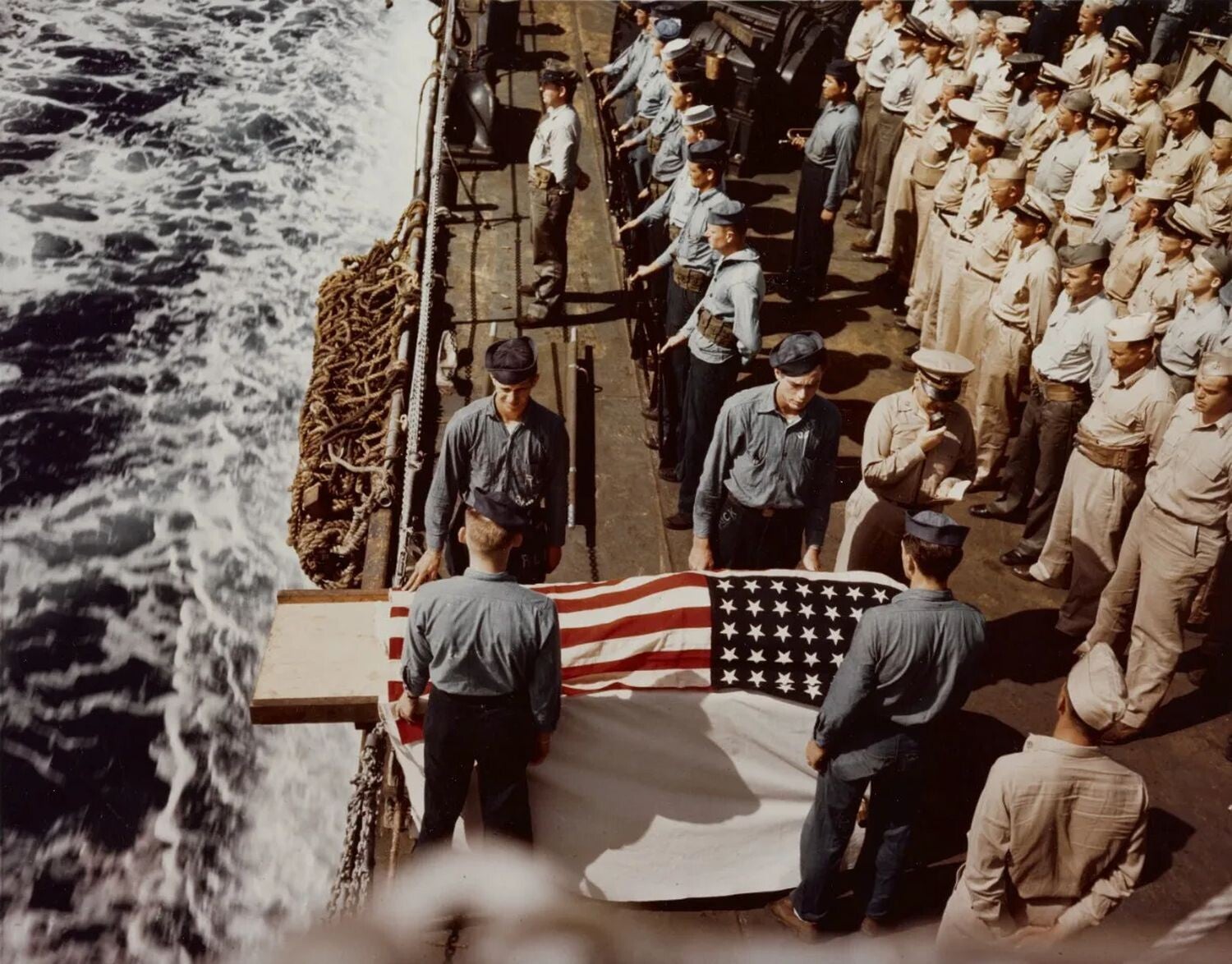
Burial at sea for a casualty of the battle for Iwo Jima onboard the USS Hansford, circa February 25-28, 1945
Raising the Flag
Aftermath
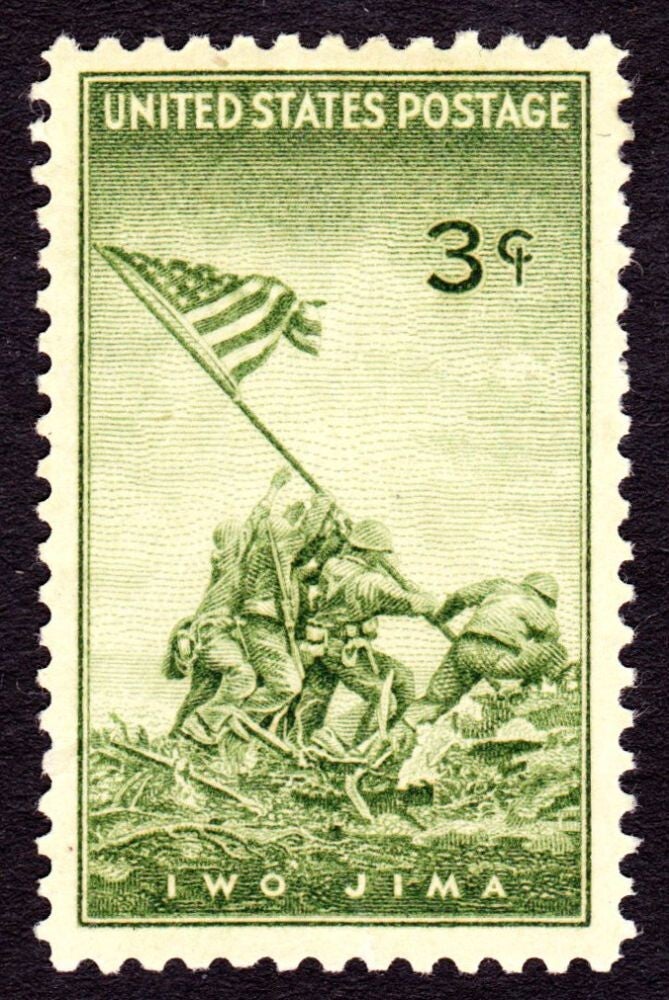
U.S. postage stamp, 1945 issue, commemorating the Battle of Iwo Jima
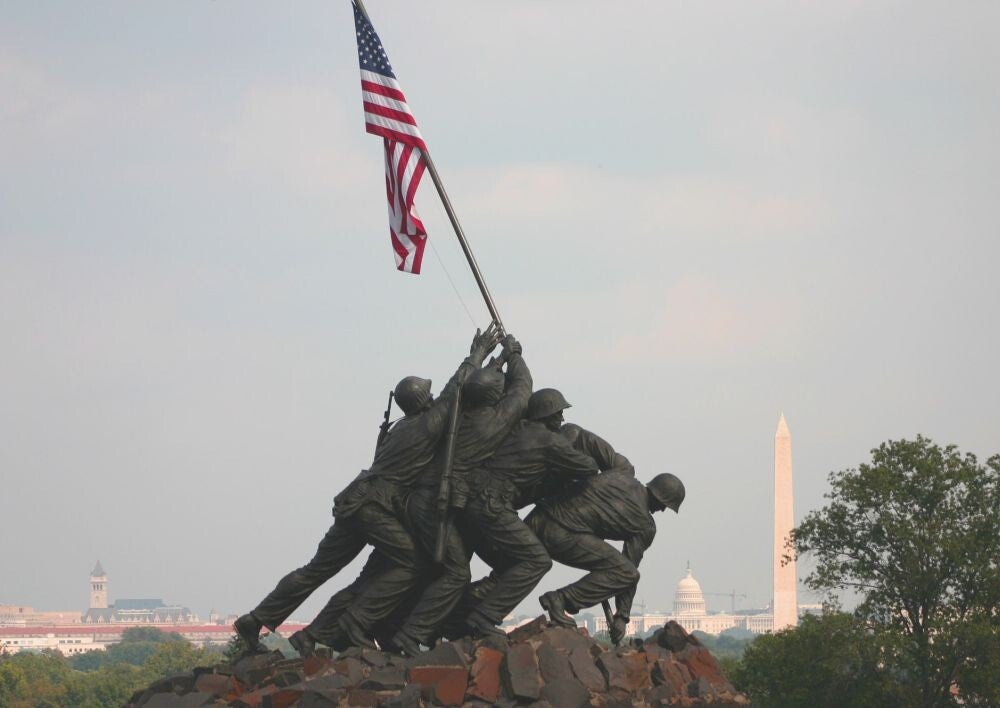
The U.S. Marine Corps War Memorial in Arlington with the Washington Monument and the United States Capitol in the distance.