
Overview
The bombing of Nagasaki on 9 August 1945 was the second use of an atomic weapon in warfare and occurred only three days after the destruction of Hiroshima. The device, a plutonium implosion bomb nicknamed Fat Man, detonated over the Urakami Valley at approximately 11:02 a.m. The terrain surrounding Nagasaki—hills, ridges, and uneven industrial districts—limited the blast’s reach compared to Hiroshima, yet the destruction within the immediate radius was catastrophic. Entire sections of the city’s industrial zone, including factories, workshops, and transport facilities, were obliterated. Residential districts in the valley were flattened, and fires spread rapidly through the ruins.
Casualties were severe. Tens of thousands were killed instantly, and many more suffered fatal injuries in the days and weeks that followed. Survivors faced burns, trauma, and radiation sickness, with long‑term health effects persisting for decades. The bombing struck a population already strained by conventional air raids and wartime shortages, compounding the city’s vulnerability. Medical facilities were overwhelmed, and rescue efforts were hindered by debris, fires, and damaged infrastructure.
Nagasaki’s selection resulted from a combination of strategic and operational factors. It was a major industrial centre supporting Japan’s war effort, and weather conditions on the morning of 9 August forced the bomber to divert from its primary target. Despite the terrain reducing the bomb’s overall destructive footprint, the attack demonstrated the United States’ capacity to deploy multiple atomic weapons and reinforced the message delivered at Hiroshima.
The bombing, combined with the Soviet Union’s entry into the war on 8 August, intensified pressure on Japan’s leadership. On 15 August, Emperor Hirohito announced acceptance of the Allied terms, and the formal surrender followed on 2 September. Nagasaki remains central to global discussions of nuclear warfare, ethics, and memory, symbolising both immense human suffering and the enduring consequences of atomic conflict.
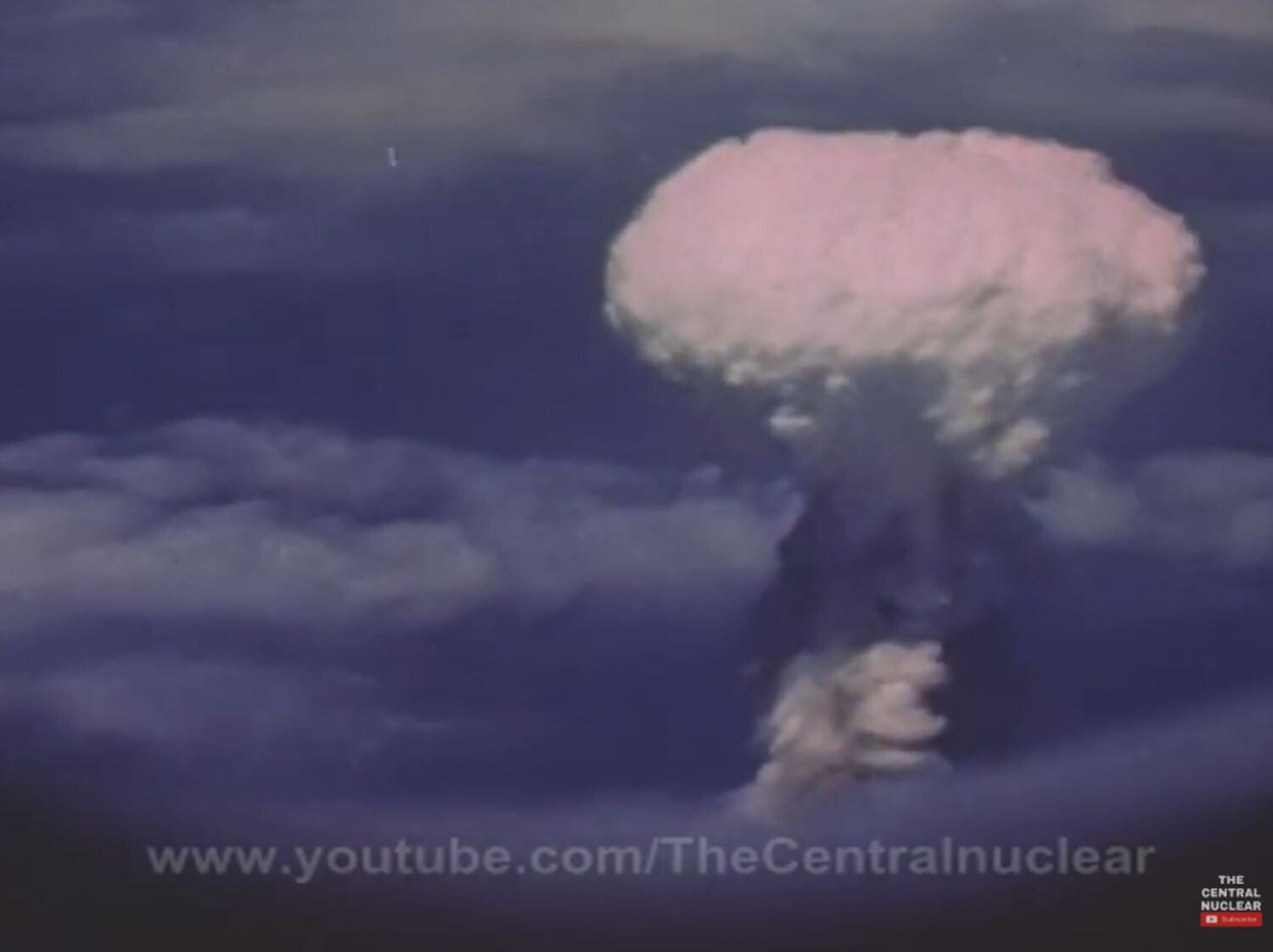
Colourised film footage showing the immediate aftermath of the atomic bombing of Nagasaki.
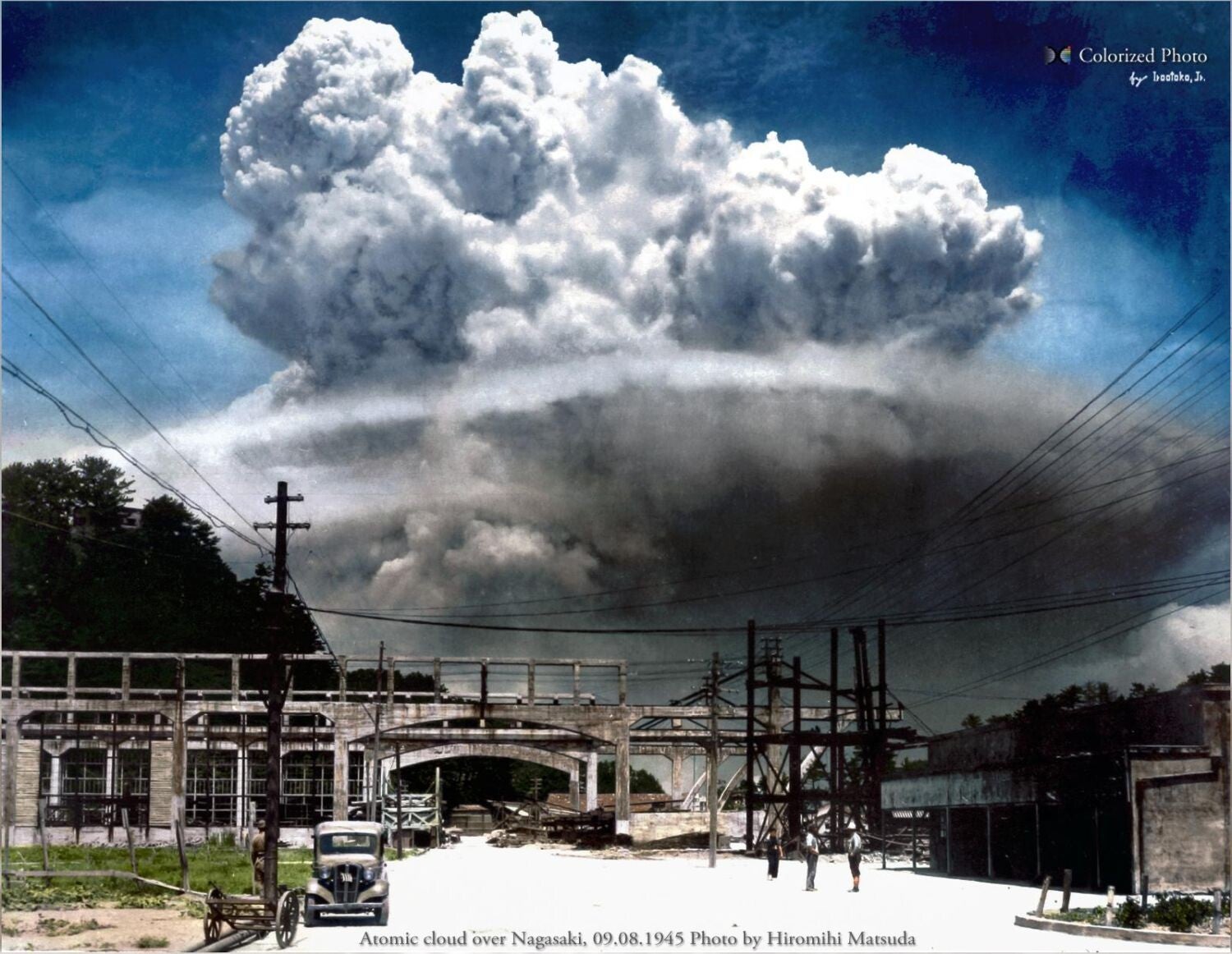
Atomic cloud over Nagasaki, Sept 8,1945, taken around 15 minutes after the explosion, seen from a distance of 15 km.
Photo by Hiromihi Matsuda. colorized by irootoko_jr.
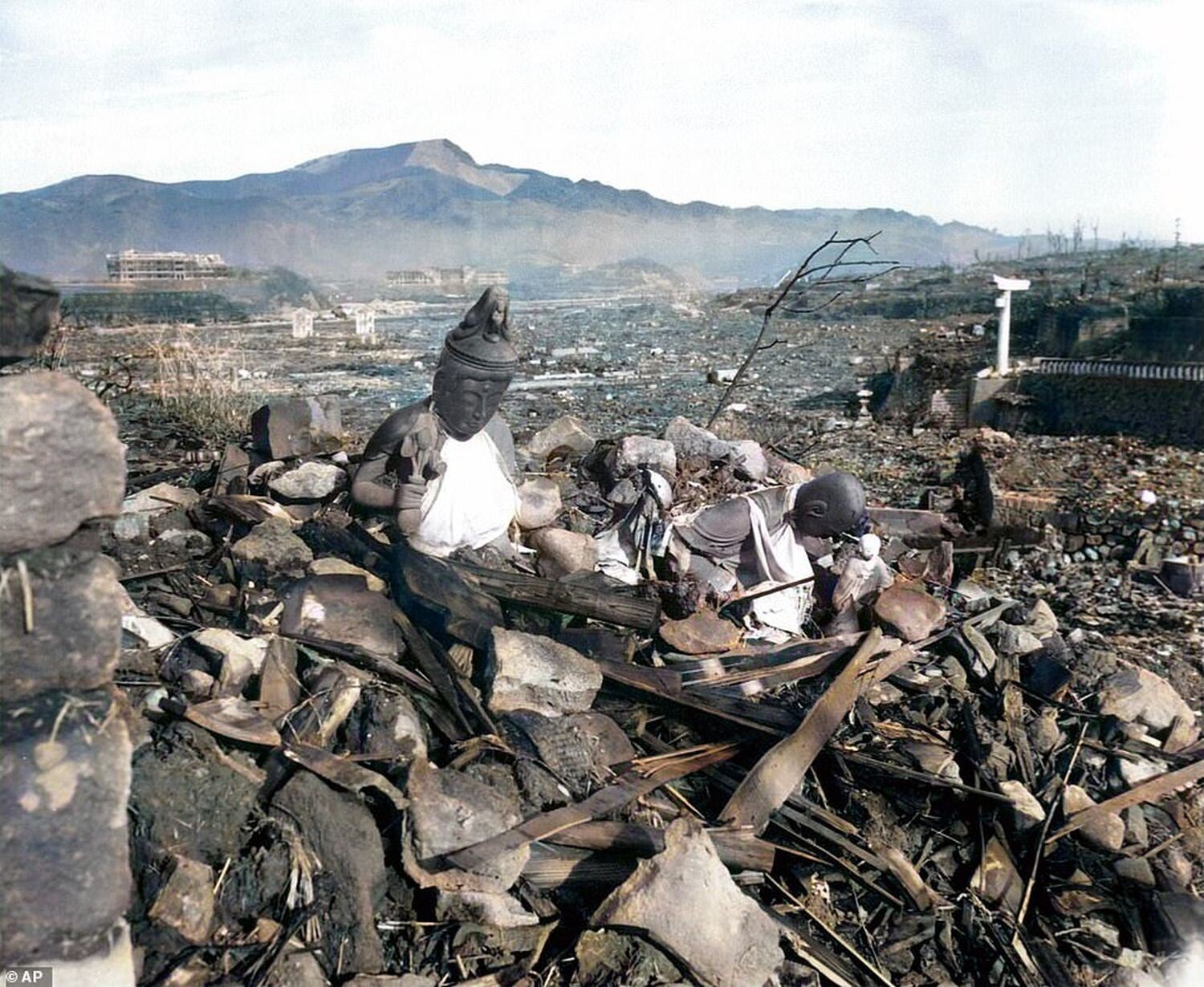
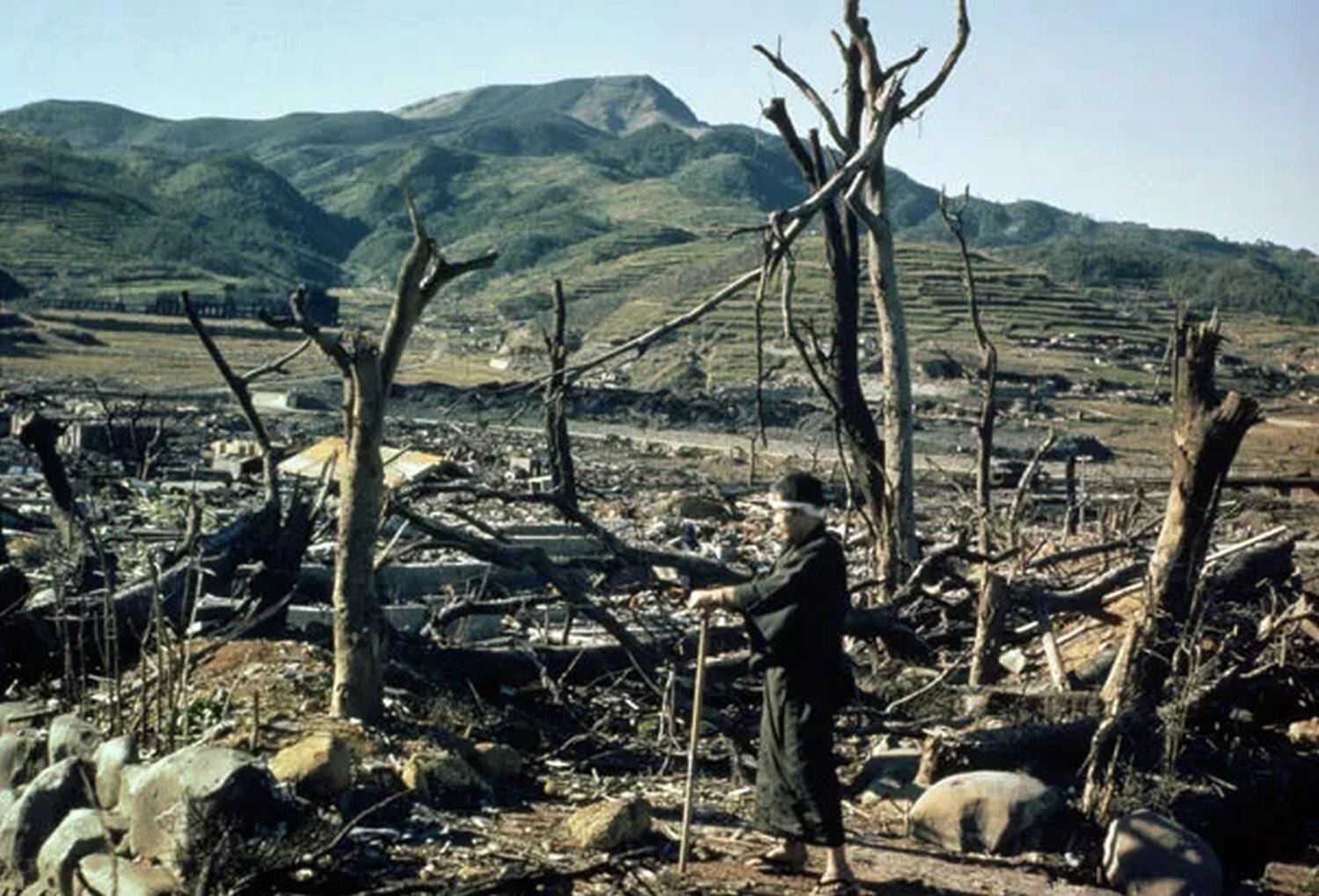
A battered religious figure stands witness on a hill above a burn-razed valley at Nagasaki. A second bomb, 'Fat Man,' dropped over Nagasaki three days later exploded with the force of 21 kilotons of TNT, killing another 70,000 people and finally prompting Japan's surrender. The bomb flattened buildings within a one mile radius of the blast, more destruction being prevented by the walls of a valley.
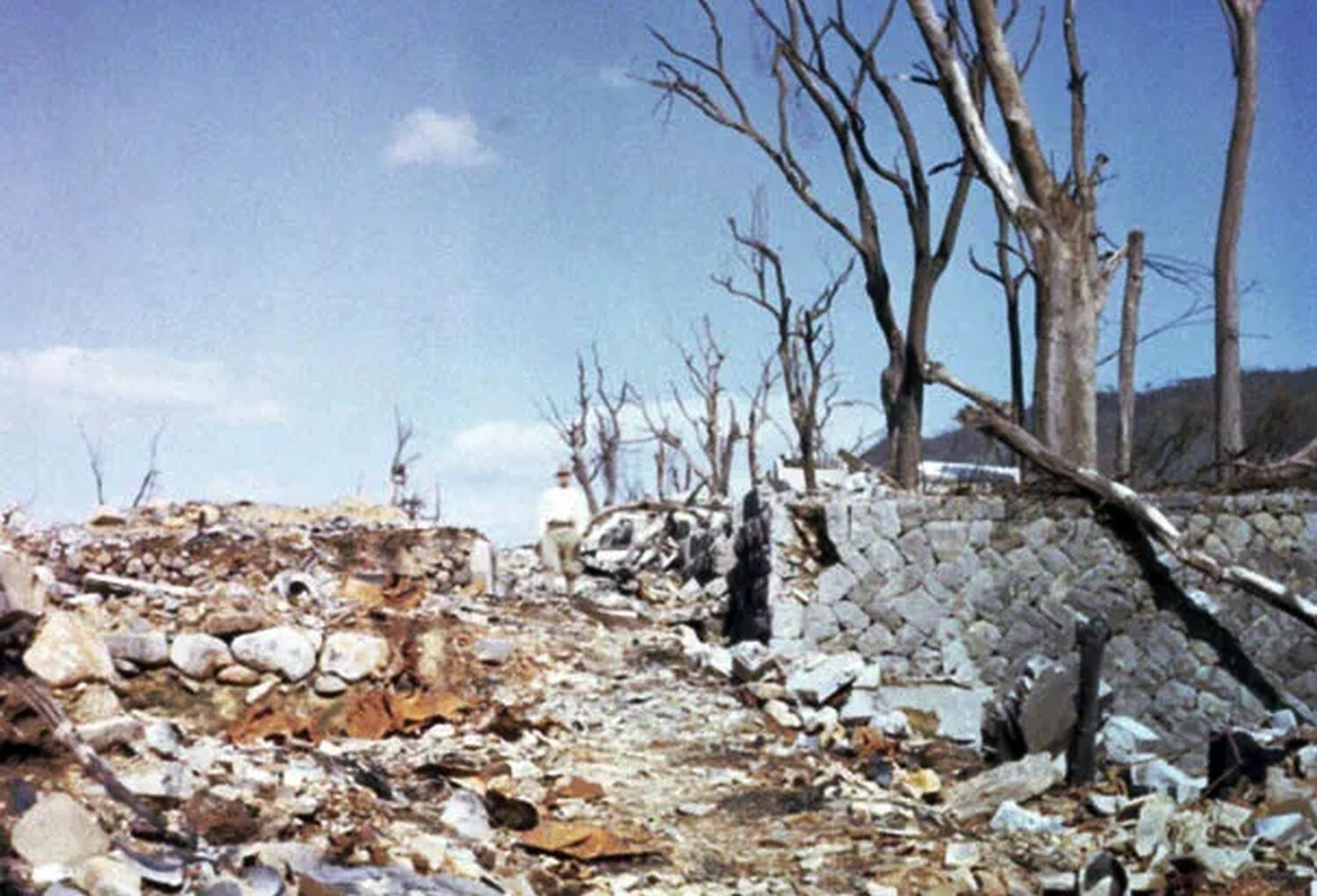
Nagasaki in October 1945 shows a city still marked by the atomic blast’s devastation but already undergoing early recovery. Large areas remain flattened, with shattered industrial structures and ruined homes scattered across the landscape. Surviving concrete frames rise above the debris, offering the few recognisable landmarks left. Cleanup efforts have cleared some streets and open spaces, yet the scene remains dominated by ruin, reflecting both the scale of destruction and the slow beginnings of reconstruction.
https://blog.nuclearsecrecy.com/2013/03/22/hiroshima-and-nagasaki-in-color/