
Overview
The Bavarian Soviet Republic was a short‑lived revolutionary state established in the chaotic aftermath of Germany’s defeat in the First World War. It emerged in April 1919, during a period of political fragmentation, economic hardship, and widespread disillusionment with the old imperial order. Bavaria, already marked by strong socialist and anarchist currents, became a focal point for radical experimentation when the moderate government of Kurt Eisner collapsed following his assassination in February 1919.
The first phase of the republic was led by a coalition of Independent Social Democrats and anarchists, including figures such as Ernst Toller and Gustav Landauer. Their administration was idealistic but lacked cohesion, clear policy direction, and effective control over Munich. Attempts to reorganise society along socialist lines were hampered by internal disagreements, administrative inexperience, and the hostility of more conservative elements within Bavaria.
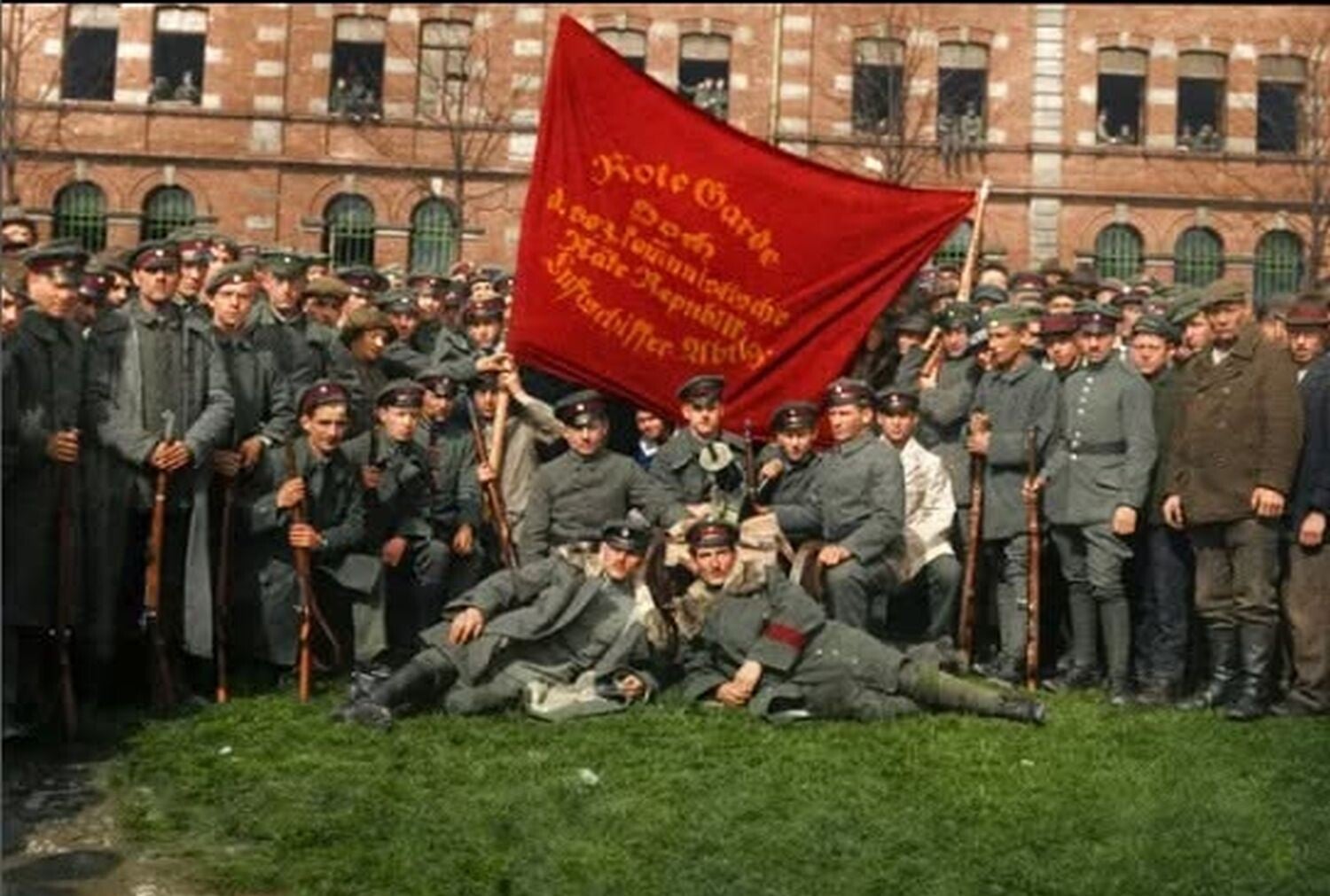
Bavarian revolutionaries in front of the Marsfeld barracks in Munich, Germany 1919. The banner reads: Red Guard, Up The Socialist Communist Council Republic Airship Department/section/unit. The Bavarian Soviet Republic, or Munich Soviet Republic (German: Räterepublik Baiern, Münchner Räterepublik), was a short-lived unrecognized socialist state in Bavaria during the German Revolution of 1918–1919. It took the form of a workers' council republic.
Sorin Alexandru Milea
A second, more hard‑line phase followed when communists, including Eugen Leviné, took control. Leviné attempted to impose stricter revolutionary discipline, establish workers’ councils, and nationalise key industries. However, the government faced severe shortages, limited popular support, and growing pressure from the Weimar authorities, who viewed the republic as a dangerous threat to national stability.
The decisive blow came in early May 1919, when Freikorps units and government troops launched a violent offensive to retake Munich. The fighting was brief but brutal, resulting in hundreds of deaths, including civilians. The suppression of the republic was followed by harsh reprisals: executions, mass arrests, and the dismantling of revolutionary organisations. The episode left a lasting imprint on Bavarian politics, contributing to a climate of reaction and strengthening right‑wing movements in the region.
Although it survived for only a few weeks, the Bavarian Soviet Republic remains a significant example of the revolutionary turbulence that shaped Germany’s early Weimar period.
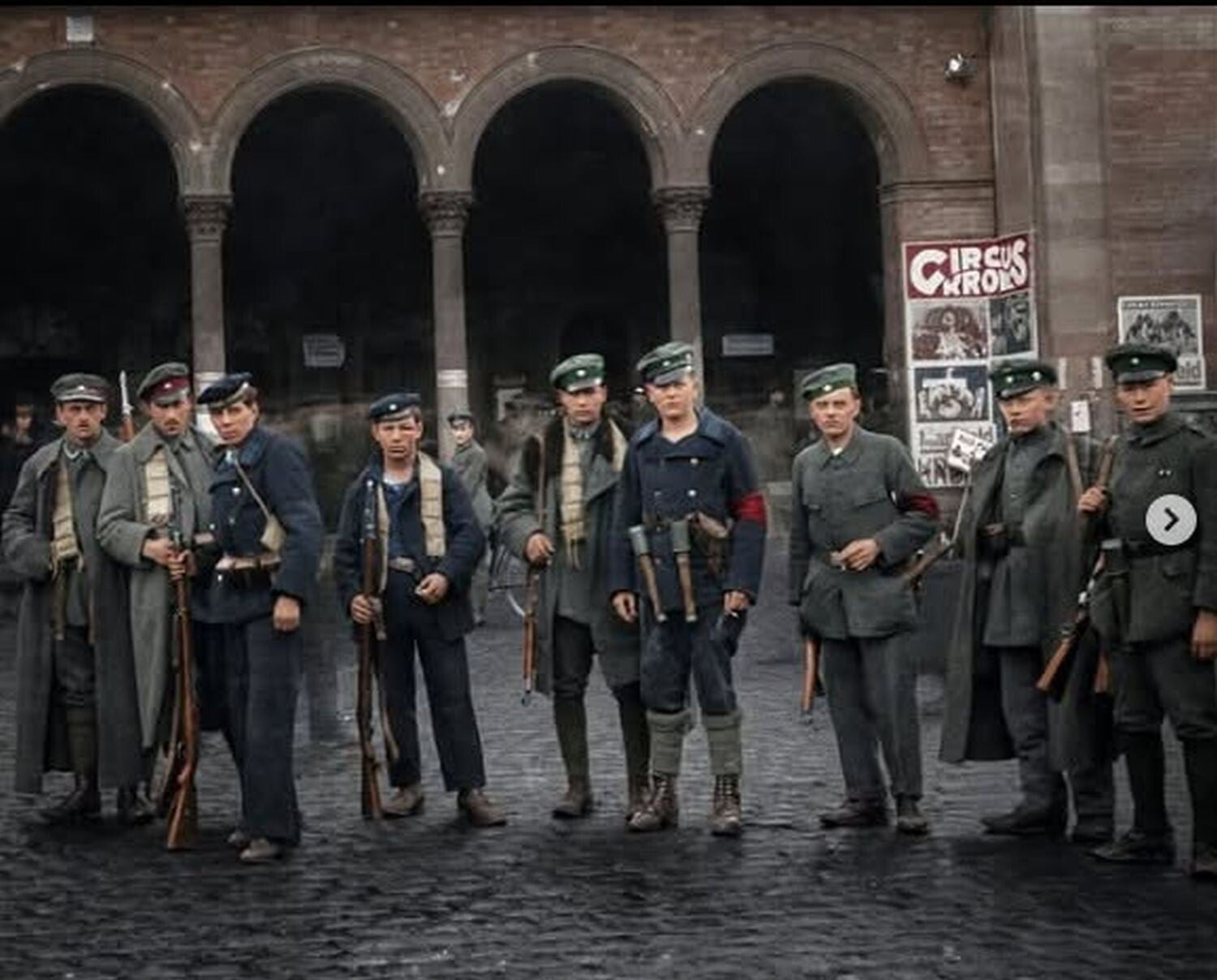
Members of the Bavarian Red Guard in front of Munich Central Station after its storming, 13/14. April 1919.
Sorin Alexandru Milea