
Overview
The Philippines Campaign of 1945 was the concluding phase of the Allied effort to liberate the archipelago and eliminate remaining Japanese forces. By January, major objectives on Luzon had already been secured through the Lingayen Gulf landings and the subsequent advance toward Manila. The new phase of operations in 1945 focused on clearing Japanese strongholds across Luzon, the Visayas, and Mindanao, where General Tomoyuki Yamashita had dispersed his remaining formations into mountainous and jungle terrain to prolong resistance.
The Battle of Manila, fought from 3 February to 3 March, marked the most destructive single engagement of the campaign. Although Yamashita had withdrawn most of his army to the Cordillera region, a separate naval garrison under Rear Admiral Sanji Iwabuchi refused to abandon the capital. The resulting urban battle devastated Manila and caused extensive civilian casualties. Its conclusion allowed Allied forces to consolidate control over central Luzon and secure key administrative and logistical centres.
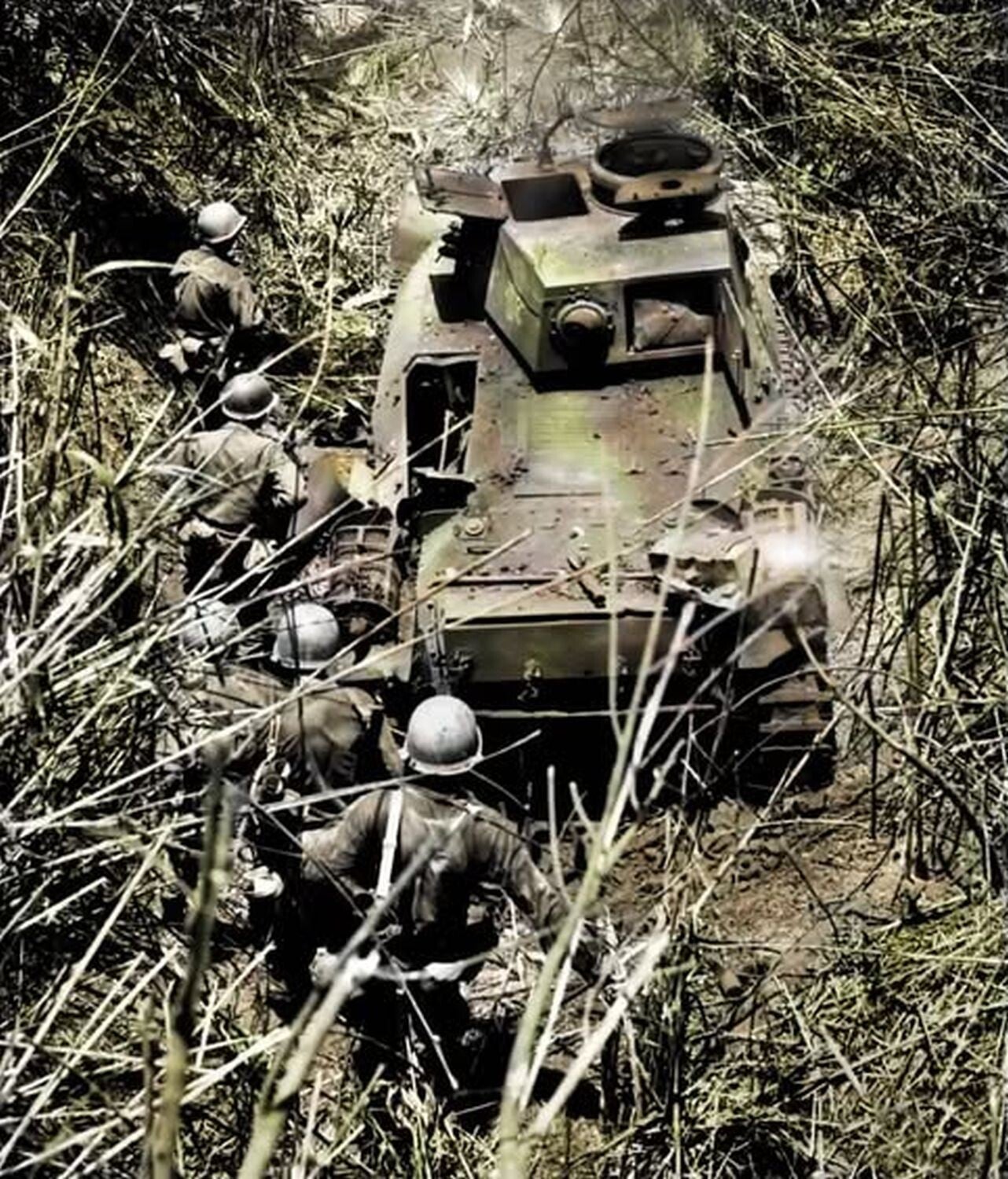
U.S. soldiers of the 37th Infantry Division pass a destroyed Japanese Type 97 Chi-Ha medium tank near Aritao, Luzon, during the Philippine campaign in June 1945.
Throughout early 1945, American divisions and Filipino guerrilla units conducted coordinated operations to isolate Japanese pockets. On Luzon, the Shimbu Group and Kembu Group were gradually pushed back into the Sierra Madre and Baguio regions. Fighting was characterised by difficult terrain, limited mobility, and entrenched defensive positions. In the Visayas, operations on Panay, Negros, and Cebu eliminated scattered garrisons and reopened ports and airfields. Mindanao, with its rugged interior, required a series of amphibious and inland advances beginning in April, ultimately breaking organised resistance by June.
By mid‑1945, Japanese forces in the Philippines had lost the ability to conduct coordinated operations. Many units were reduced to isolated groups surviving in remote areas until Japan’s surrender in August. The 1945 campaign restored full Allied control over the archipelago, secured vital bases for subsequent operations, and marked the final collapse of Japanese military power in Southeast Asia.
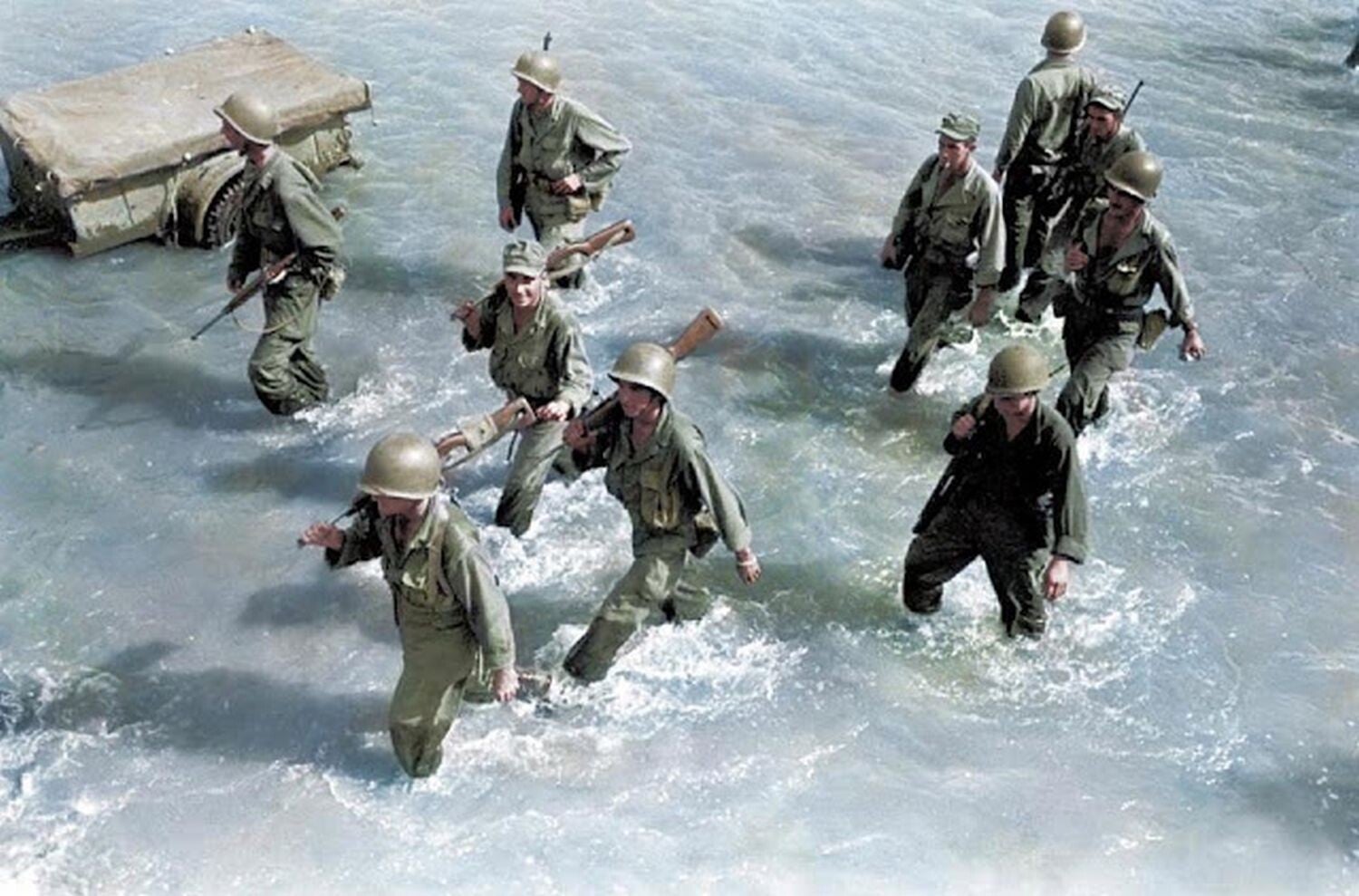
US 1st Cavalry Division crossing the Pasig River, Manilla in February 1945.
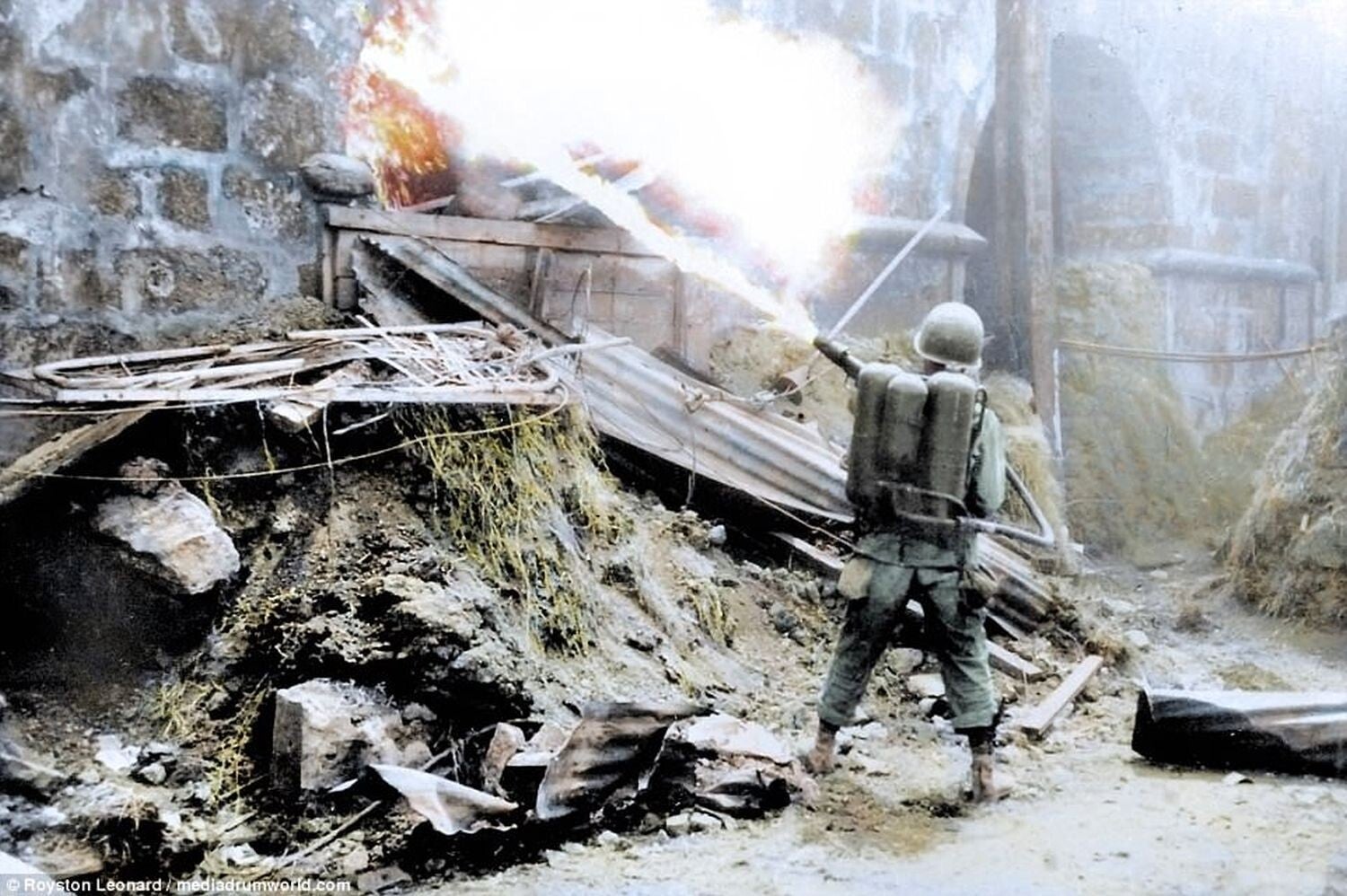
A US soldier uses an M2 flamethrower on a Japanese position in Manila at the close of World War II in 1945.
Colourised by Royston Leonard