
Overview
The Koli Point action, fought between 3 and 12 November 1942, developed from Japanese efforts to reinforce their army on Guadalcanal following the defeat at Henderson Field. Japanese troops under Colonel Toshinari Shōji had moved eastwards after the failed October offensive, while additional forces landed near Koli Point, east of the American perimeter. Their presence created a threat that Major General Alexander Vandegrift could not ignore.
Vandegrift consequently halted the American offensive west of the Matanikau River and redirected troops towards Koli Point. Marines of the 7th Marine Regiment initially confronted the Japanese, with soldiers of the US Army's 164th Infantry Regiment subsequently joining the operation. American forces attempted to surround Shōji's troops and prevent their escape into Guadalcanal's interior.
Fighting took place across difficult terrain dominated by jungle, rivers and coastal areas. American artillery supported the infantry as the encirclement gradually tightened. By early November, Shōji's force found itself under increasing pressure as American units attacked from several directions.
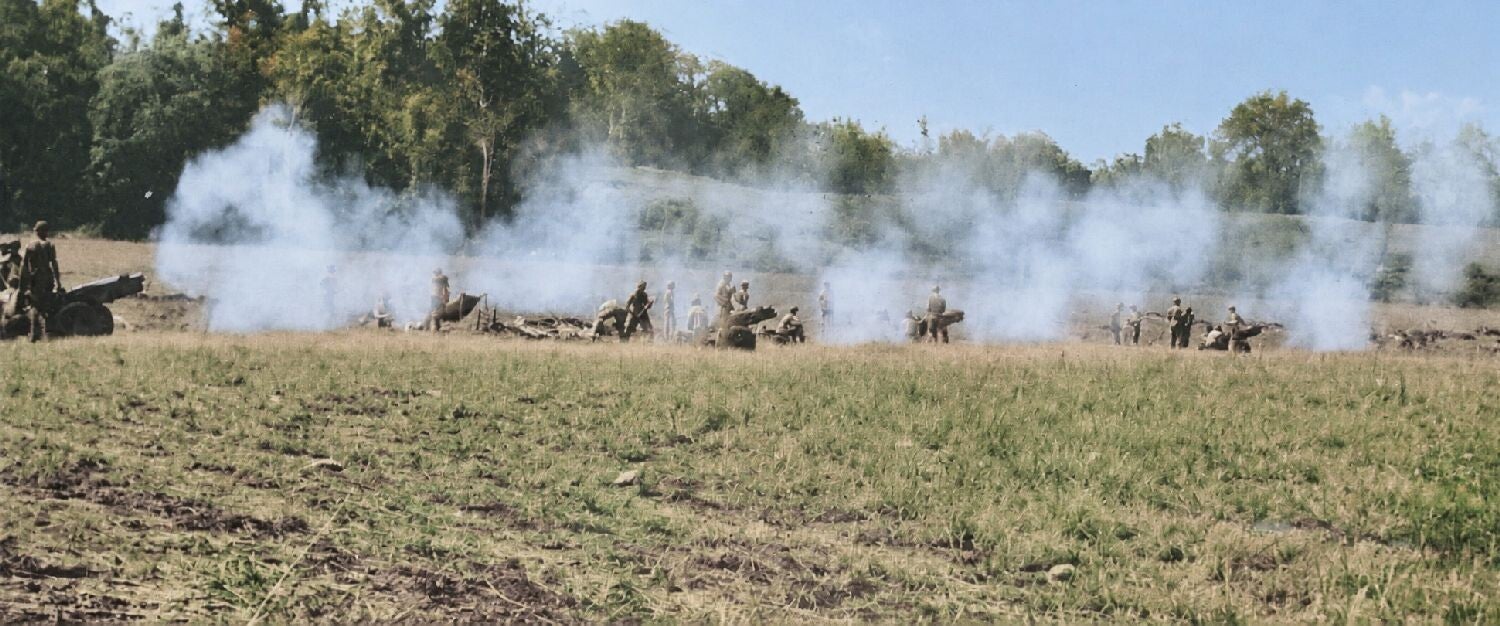
75 mm pack howitzers of the 11th U.S. Marine Regiment fire in support of the operation against Japanese forces around Koli Point.
Despite the developing encirclement, the Americans were unable to trap the entire Japanese force. Shōji recognised the danger and ordered his surviving troops to break away from Koli Point. Exploiting gaps in the American lines, much of his force escaped southwards into the jungle, abandoning equipment and wounded men during the withdrawal.
The Americans secured Koli Point, but Shōji's escape prevented the complete destruction of his command. His exhausted troops subsequently attempted to cross the interior of Guadalcanal and rejoin Japanese forces west of the American perimeter. They suffered further losses from hunger, disease and attacks by American patrols during the journey.
The Koli Point action nevertheless represented another Allied victory on Guadalcanal. Japanese forces suffered more than 450 killed, while American losses were approximately 40 dead. The operation further weakened the Japanese 17th Army and helped secure the eastern approaches to Henderson Field.