
Overview
The New Guinea campaign in 1942 marked the point at which Japan’s southward expansion met sustained, organised resistance and began to lose operational momentum. After capturing Rabaul in January, Japanese forces sought to secure Port Moresby to isolate Australia and strengthen their defensive perimeter in the Southwest Pacific. The seaborne attempt was blocked at the Battle of the Coral Sea in May, forcing Japan to pursue an overland advance across the Owen Stanley Range via the Kokoda Track.
The opening phase of the 1942 campaign consisted of a series of small‑unit engagements fought in extreme terrain. Australian militia units of the 39th Battalion, later reinforced by the 2/14th and 2/16th Battalions of the 7th Division, conducted delaying actions at Kokoda, Deniki, Isurava, Eora Creek, and Templeton’s Crossing. Japanese forces, led by elements of the 144th Regiment, attempted to force a rapid breakthrough, relying on infiltration tactics and aggressive pressure along narrow ridgelines. The terrain, climate, and limited supply capacity imposed severe constraints on both sides, but the Japanese advance gradually slowed as casualties mounted and logistics deteriorated.
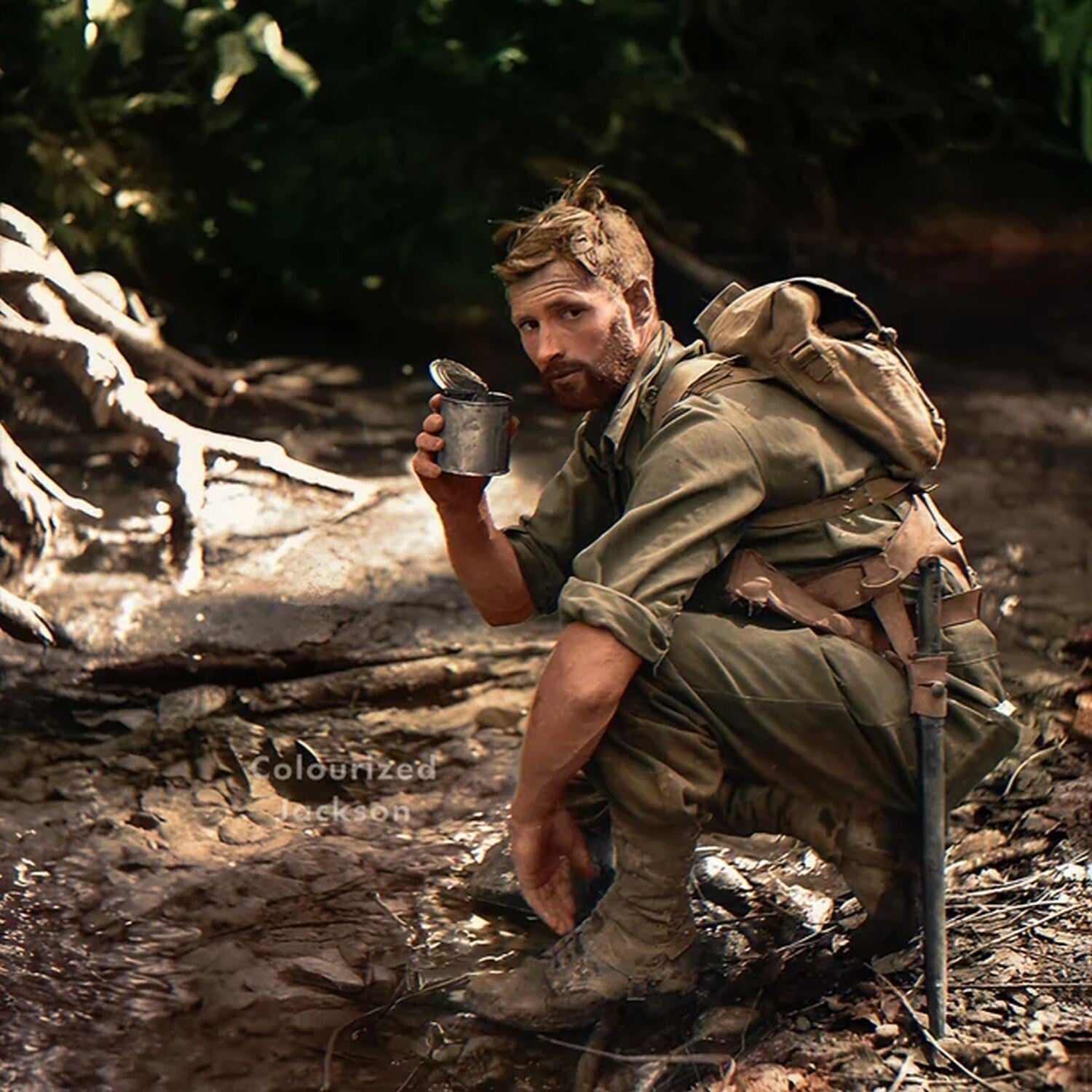
Private Harold Edward Newman, TX1192, of the 2/33rd Australian Infantry Battalion stops for a drink during a patrol between Nauro and Menari, Papua, New Guinea, November 1942.
By late August and early September, the Japanese timetable had collapsed. The concurrent Guadalcanal campaign diverted shipping, air support, and reinforcements, leaving the New Guinea force increasingly isolated. The Japanese advance reached its high‑water mark at Ioribaiwa in mid‑September before withdrawing northwards under growing supply pressure. Australian forces, now reinforced and supported by expanding Allied air power, began a counter‑offensive that culminated in the recapture of Kokoda on 2 November and the destruction of Japanese beachhead positions at Buna, Gona, and Sanananda by early 1943.
The 1942 campaign ensured the security of Port Moresby, prevented Japan from establishing a forward base against Australia, and marked the transition from Japanese initiative to sustained Allied offensive operations across the Southwest Pacific.
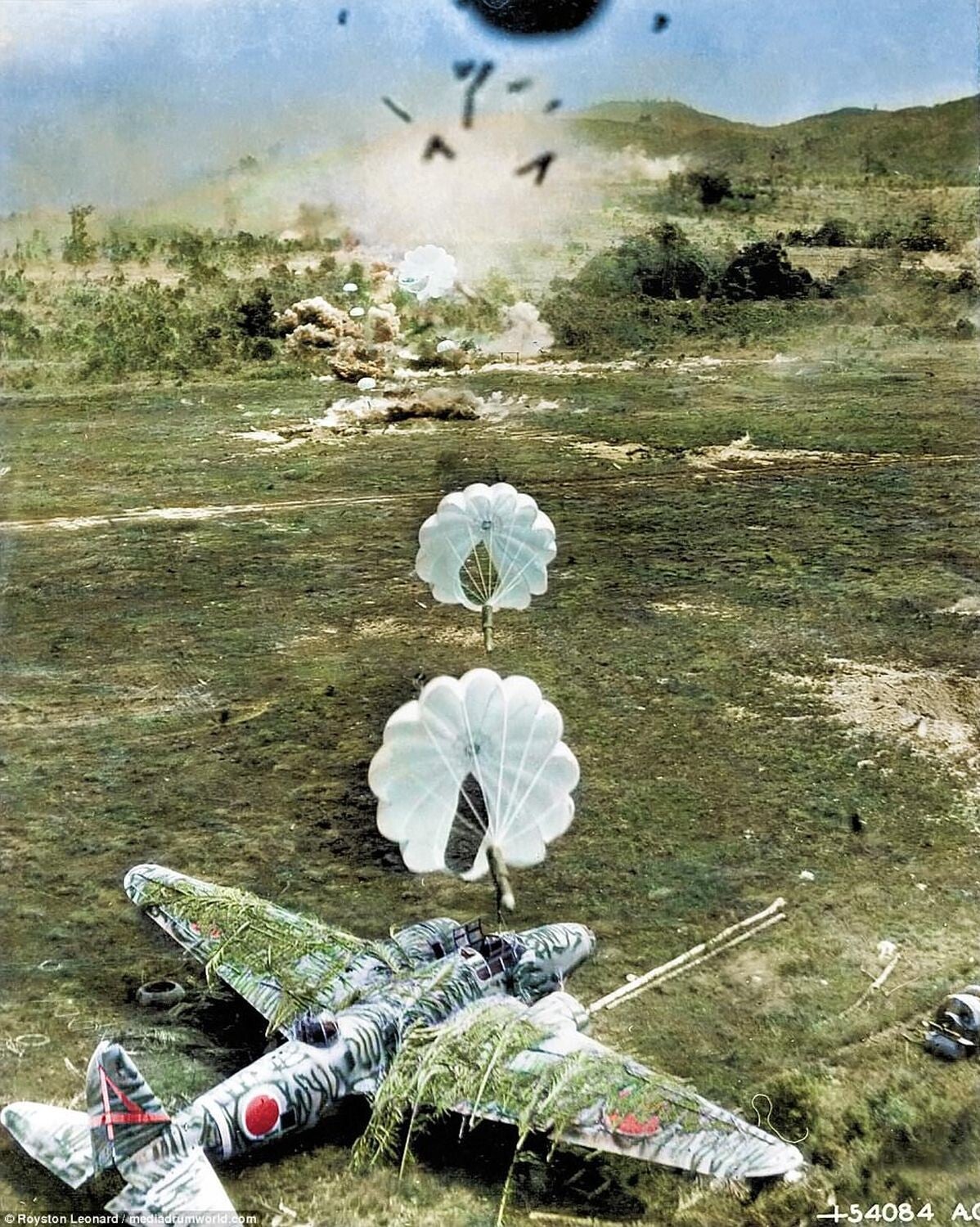
A camouflaged Japanese bomber destroyed during a low-level attack in Papua New Guinea in 1942/43.
Colourised by Royston Leonard
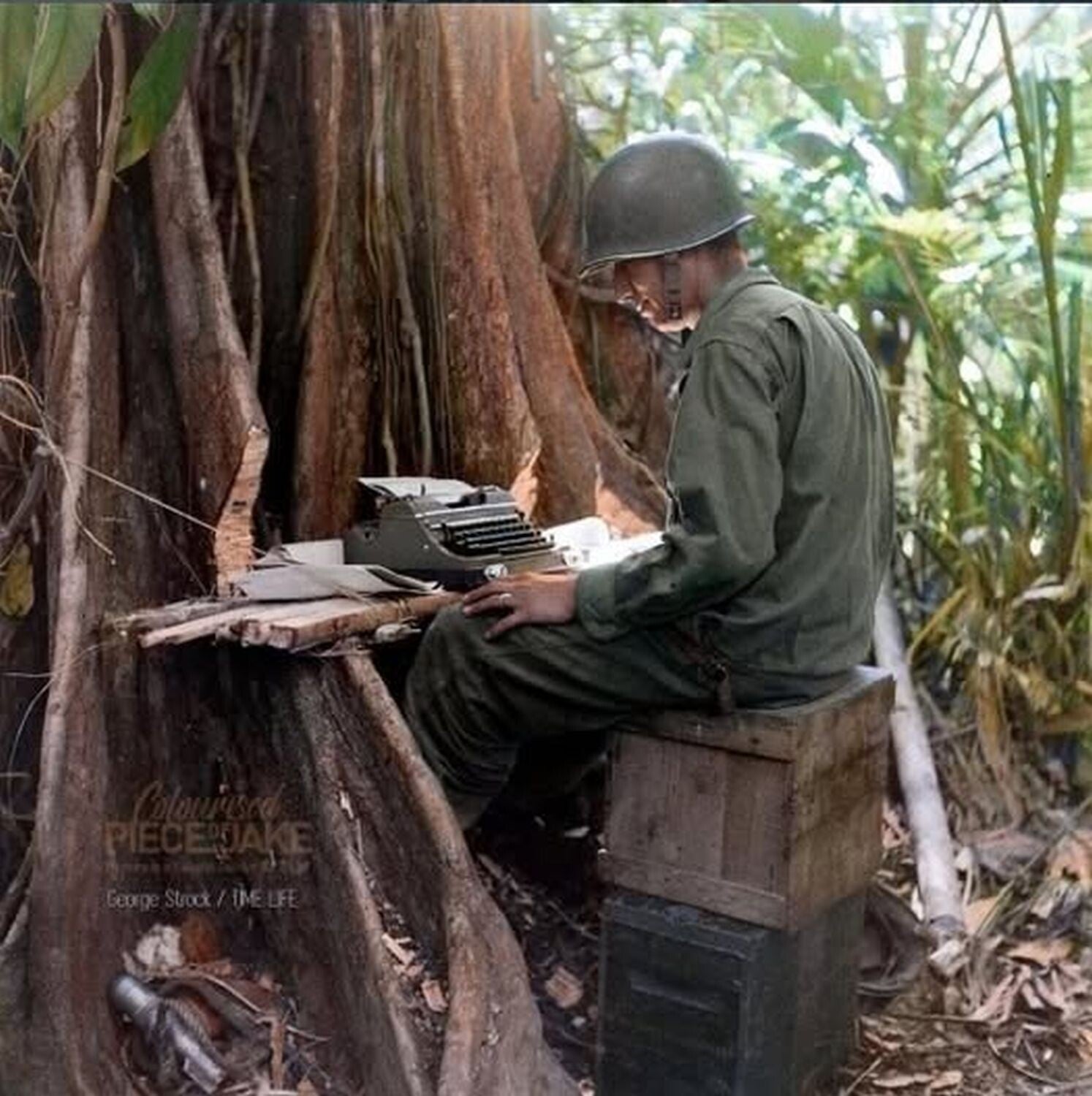
A US Army private working on his Underwood Universal Portable typewriter on an improvised table that has been cut out of a Merbau tree. Photograph taken in Buna, during the New Guinea Campaign in 1942.
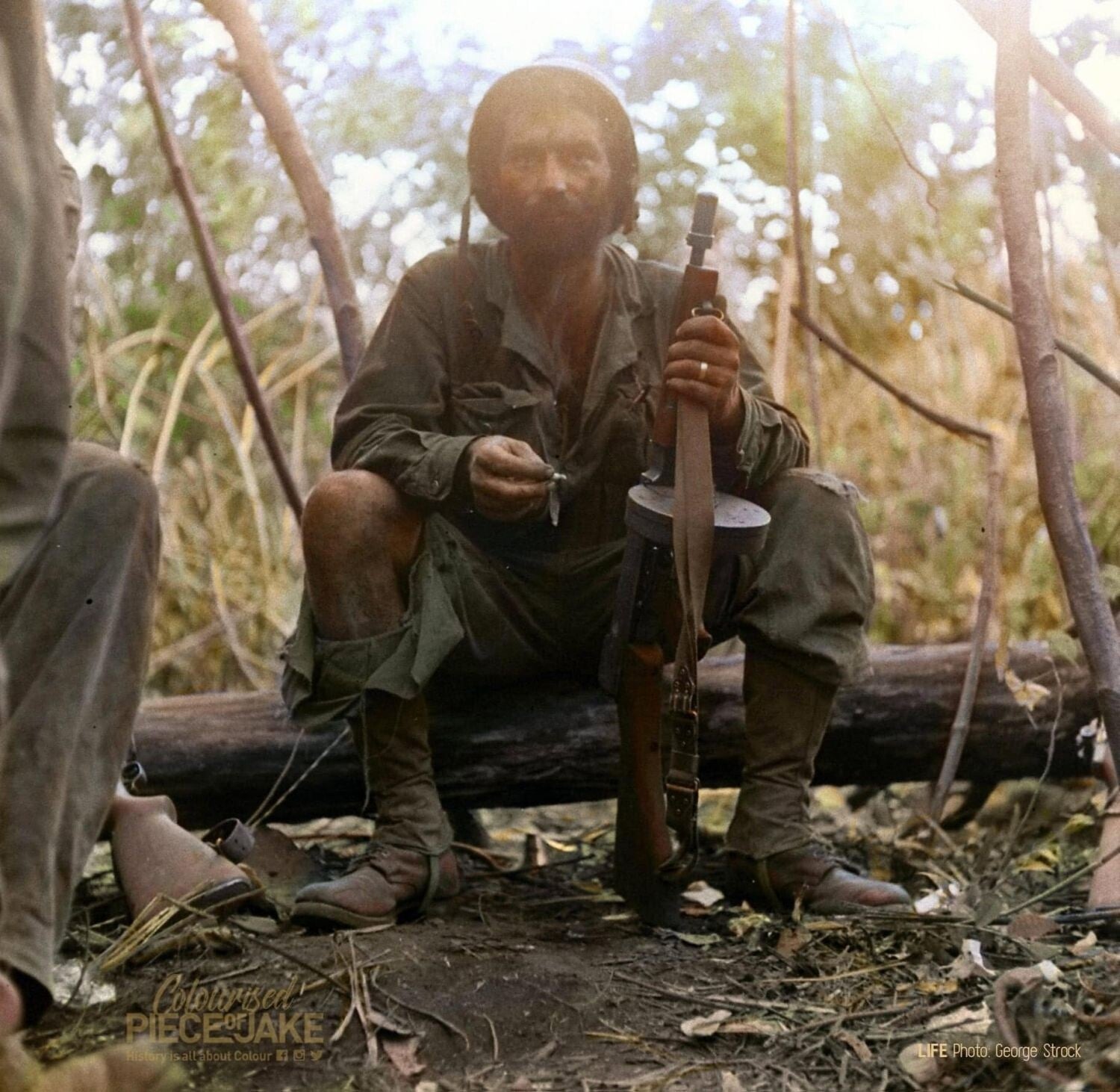
An American soldier resting in the Buna area reflects the strain of the 1942–43 fighting. The Battle of Buna–Gona, fought from 16 November 1942 to 22 January 1943 after the Kokoda Track campaign, unfolded in dense jungle, swamp and oppressive heat. Terrain, disease and minimal infrastructure restricted movement and supply. These conditions burdened both sides but strengthened Japanese defensive positions, making every Allied advance slow, exhausting and costly.