
Overview
The bombing of Hiroshima on 6 August 1945 marked the first use of an atomic weapon in warfare and introduced a new level of destructive capability into modern conflict. At 8:15 a.m., the U.S. Army Air Forces dropped a uranium‑based device, nicknamed Little Boy, which detonated approximately 600 metres above the city. The explosion released an immense burst of energy, producing a fireball, shockwave, and thermal radiation that obliterated much of Hiroshima within seconds. Tens of thousands were killed instantly, with many more dying in the hours and days that followed from burns, trauma, and radiation sickness.
The city’s predominantly wooden construction contributed to the scale of devastation. Entire neighbourhoods were incinerated, and fires swept through the ruins, creating a firestorm that consumed additional areas. Reinforced concrete buildings survived only as skeletal shells, offering stark evidence of the bomb’s power. Infrastructure collapsed, communication systems failed, and medical facilities were overwhelmed or destroyed, leaving survivors with limited means of assistance. The bombing also produced long‑term effects: radiation exposure caused severe illness, chronic health complications, and increased mortality for years afterward.
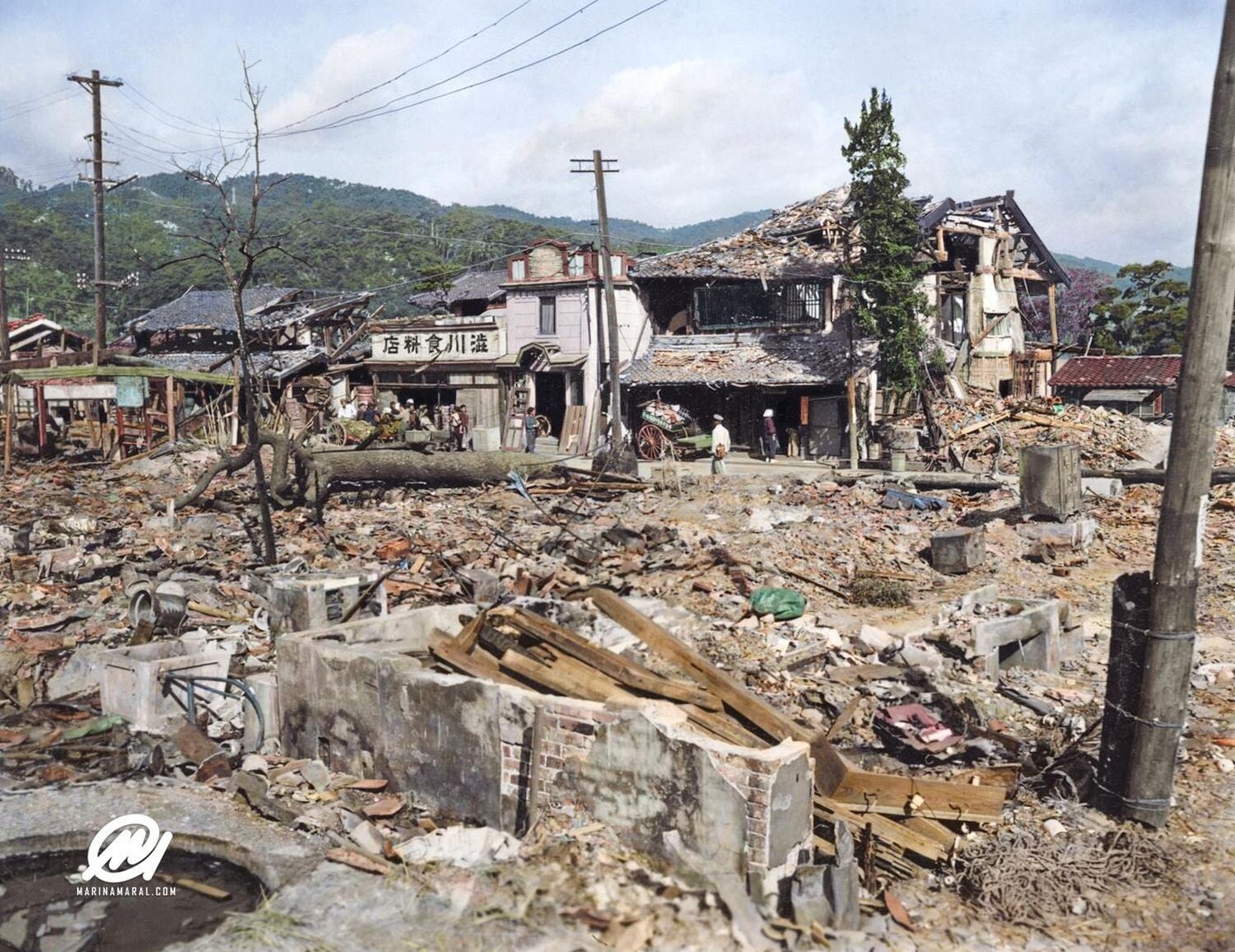
The atomic bombing of Hiroshima left a devastated city marked by extreme loss of life, widespread injury, and the collapse of essential infrastructure. Fires burned for days, radiation sickness spread among survivors, and medical facilities were overwhelmed. Nearly all buildings within the blast zone were destroyed, leaving tens of thousands homeless. In the months that followed, recovery was slow, shaped by severe humanitarian need, long‑term health effects, and the profound social impact of the attack.
Strategically, Hiroshima was selected for its military significance, industrial capacity, and relatively untouched condition, which allowed the bomb’s effects to be clearly assessed. The attack formed part of a broader effort to compel Japan’s surrender without a costly invasion of the home islands. Three days later, Nagasaki was struck by a second atomic bomb, reinforcing the message that the United States possessed both the capability and willingness to employ these weapons.
The Hiroshima bombing remains central to discussions of warfare, ethics, and nuclear policy. It demonstrated the catastrophic potential of atomic weapons and reshaped global security considerations. Hiroshima’s post‑war reconstruction and its role as a centre for peace advocacy continue to underscore the enduring impact of the attack on international memory and diplomacy.
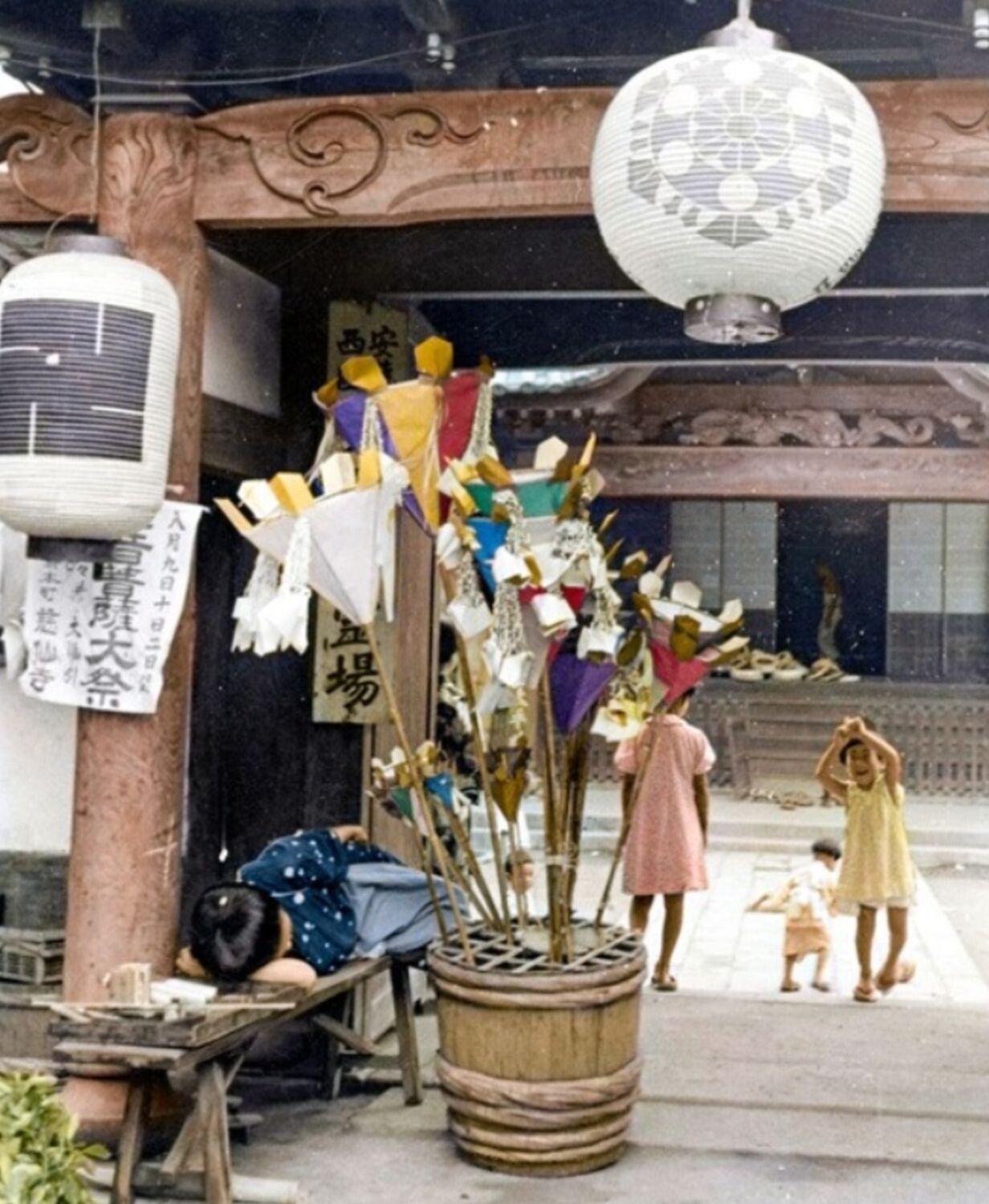
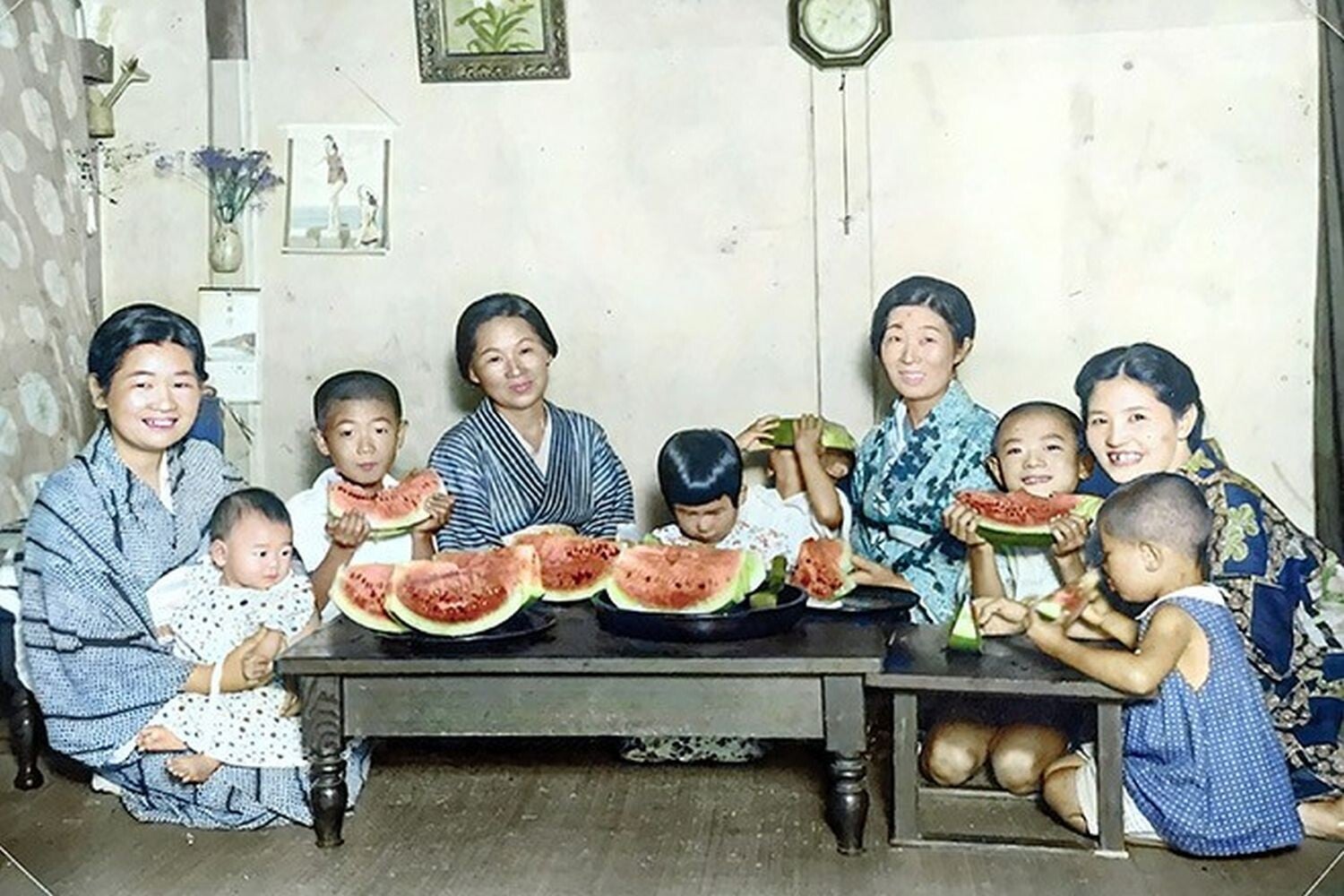
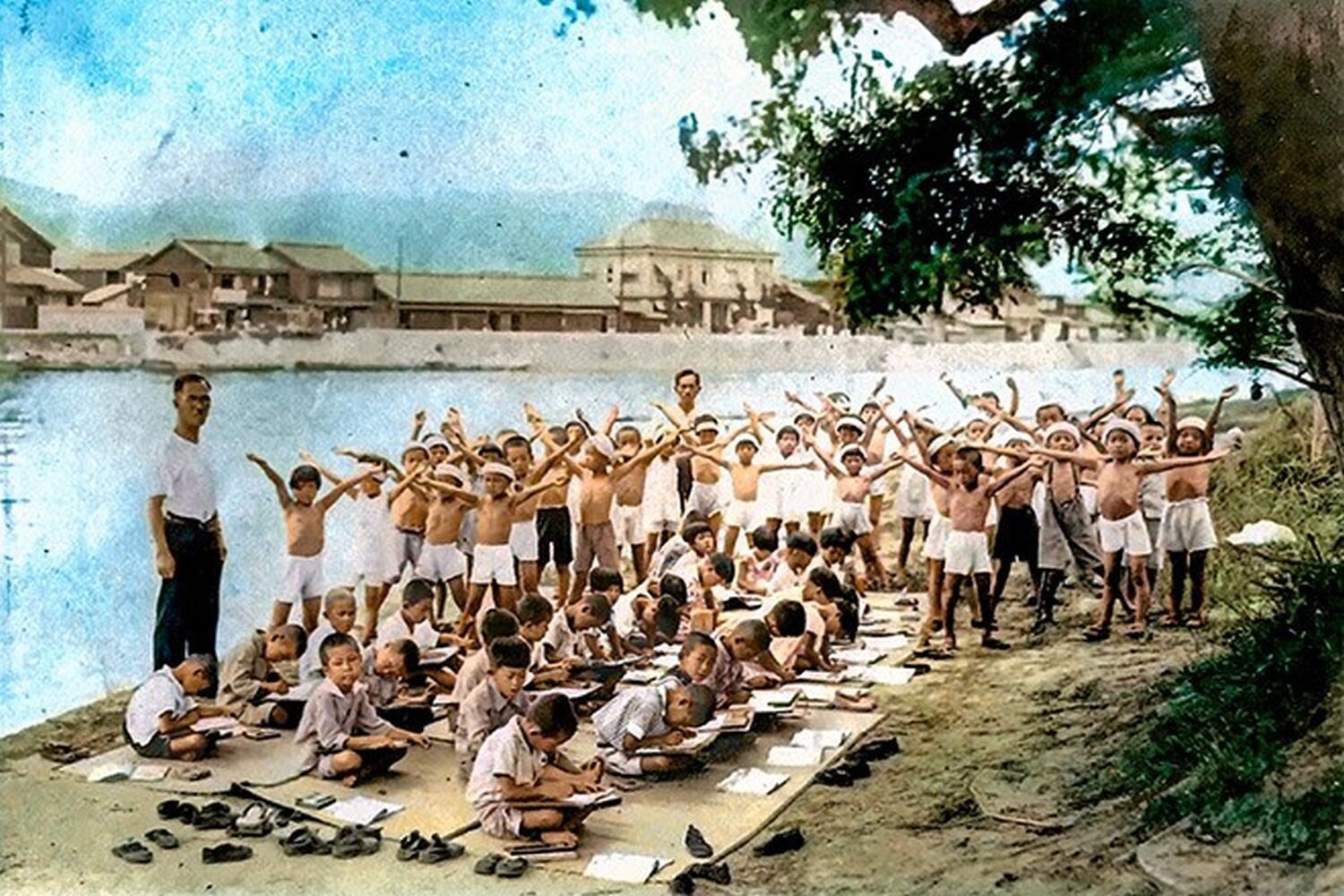
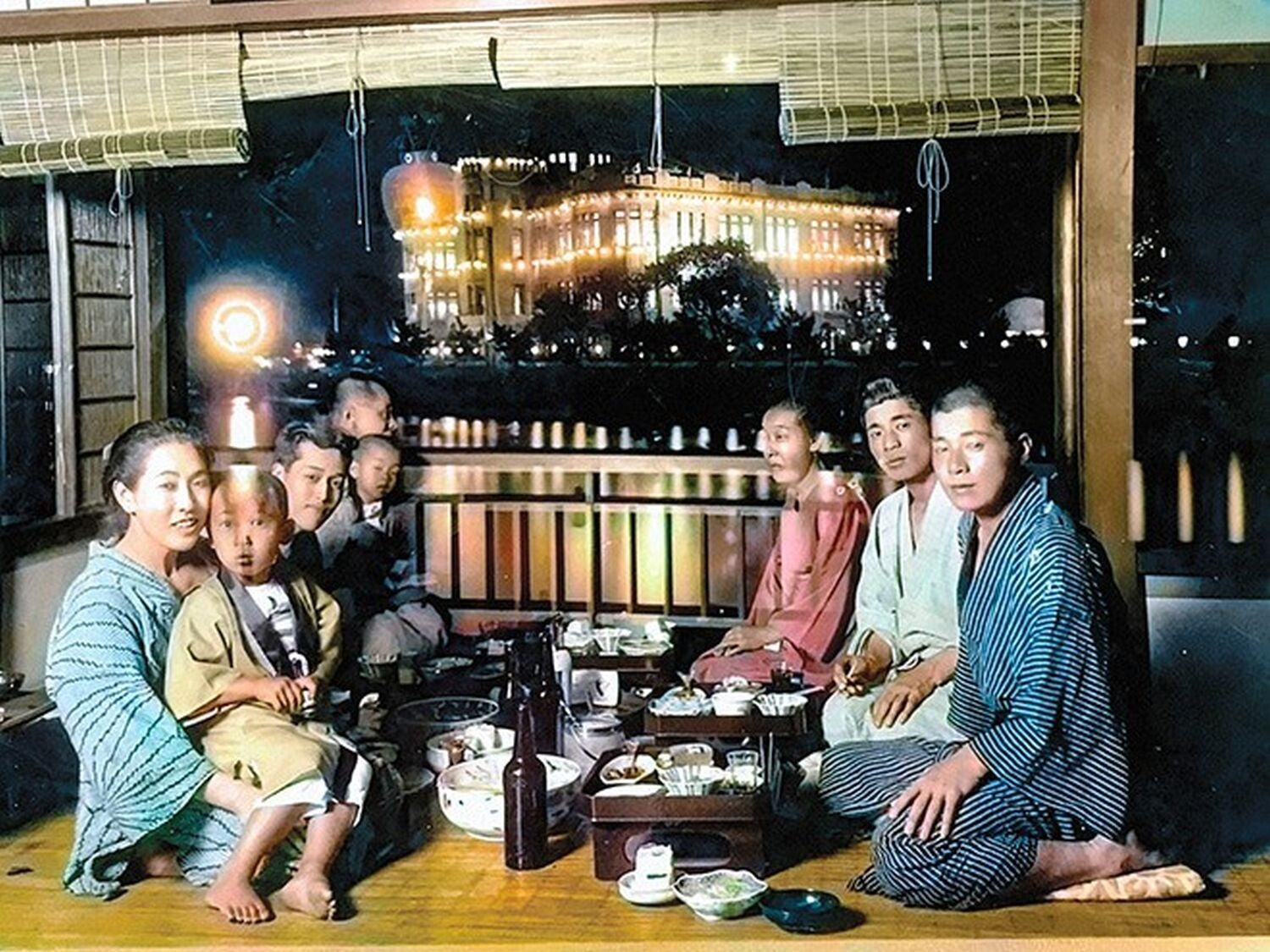
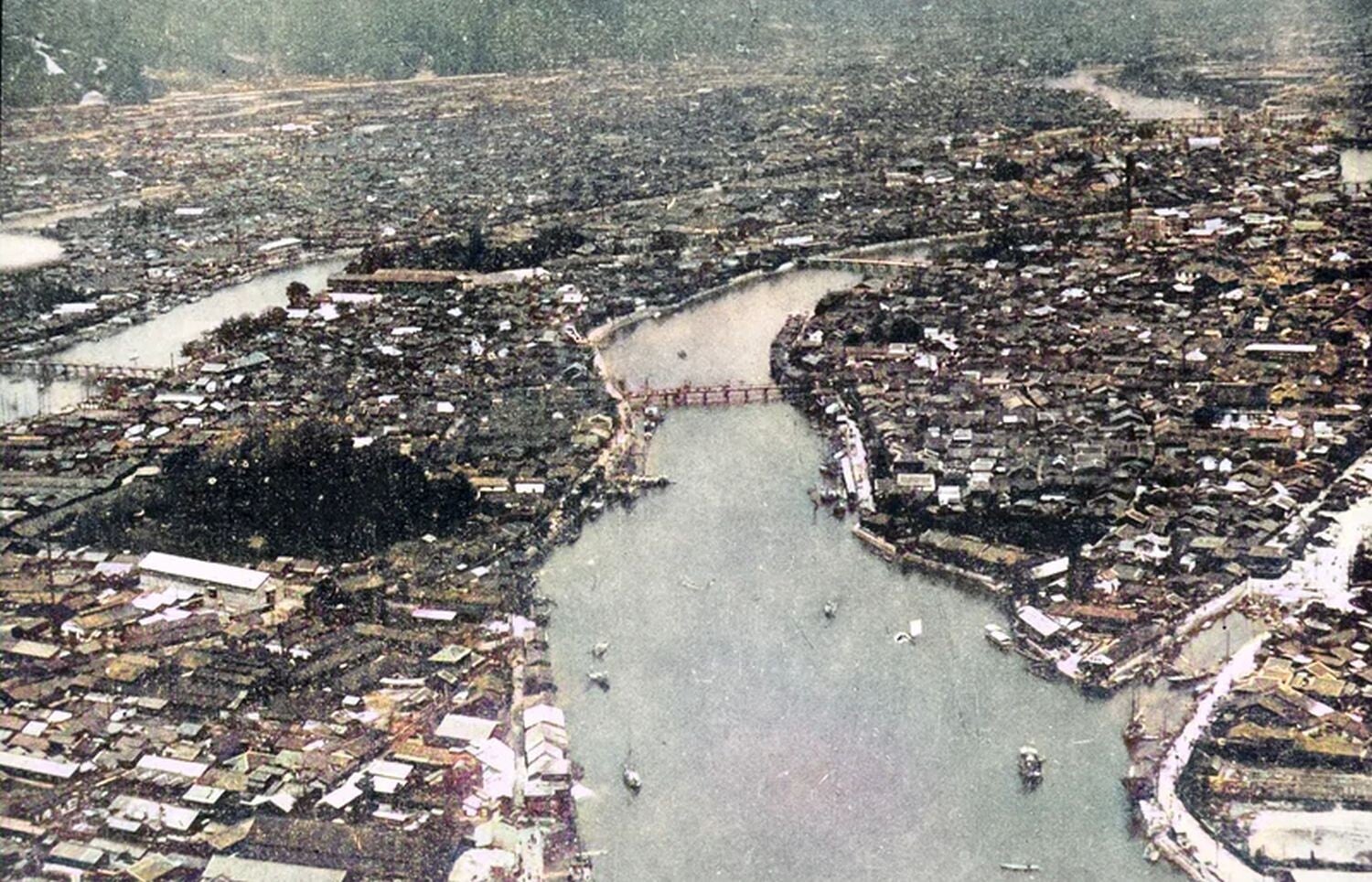
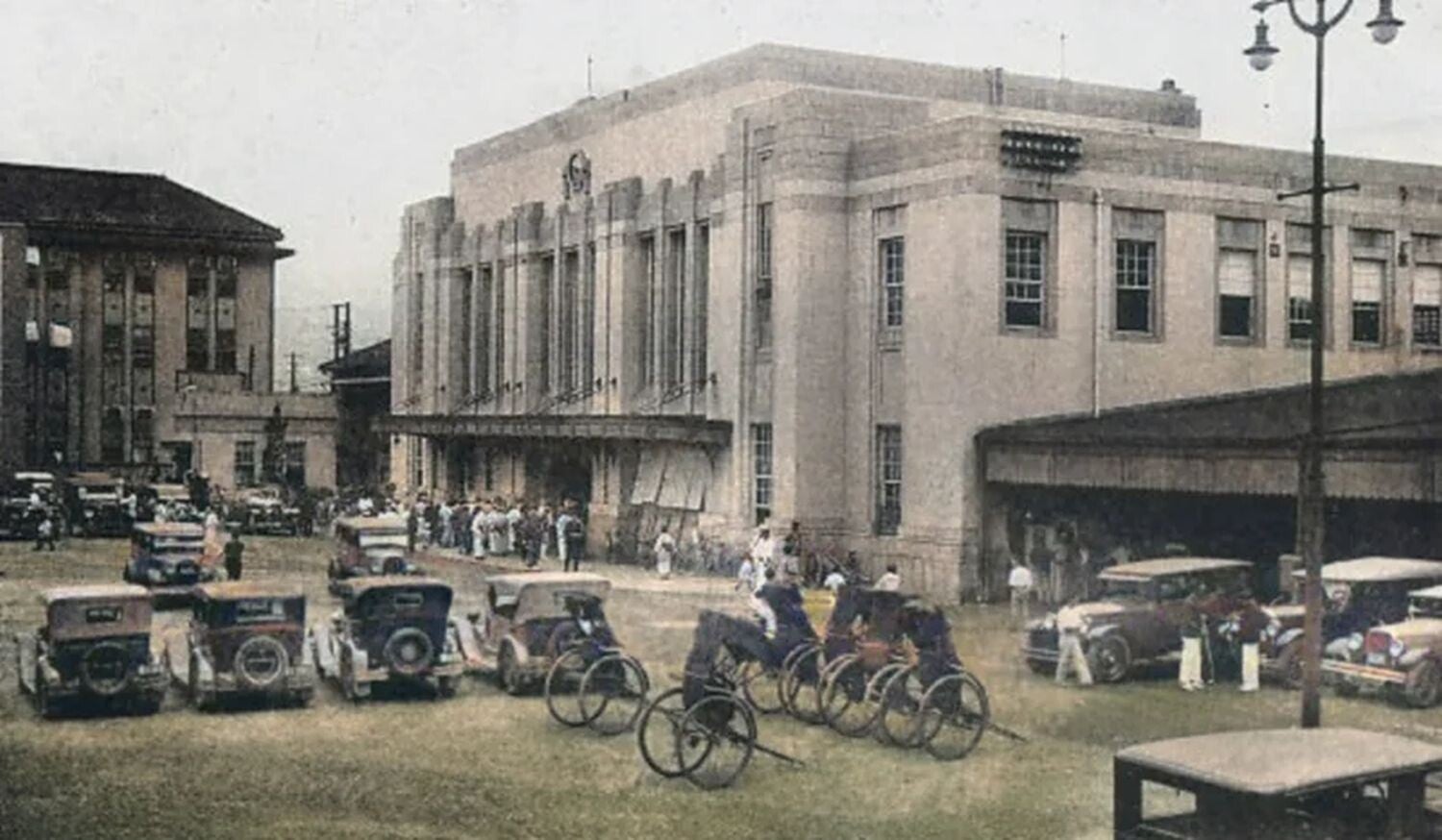
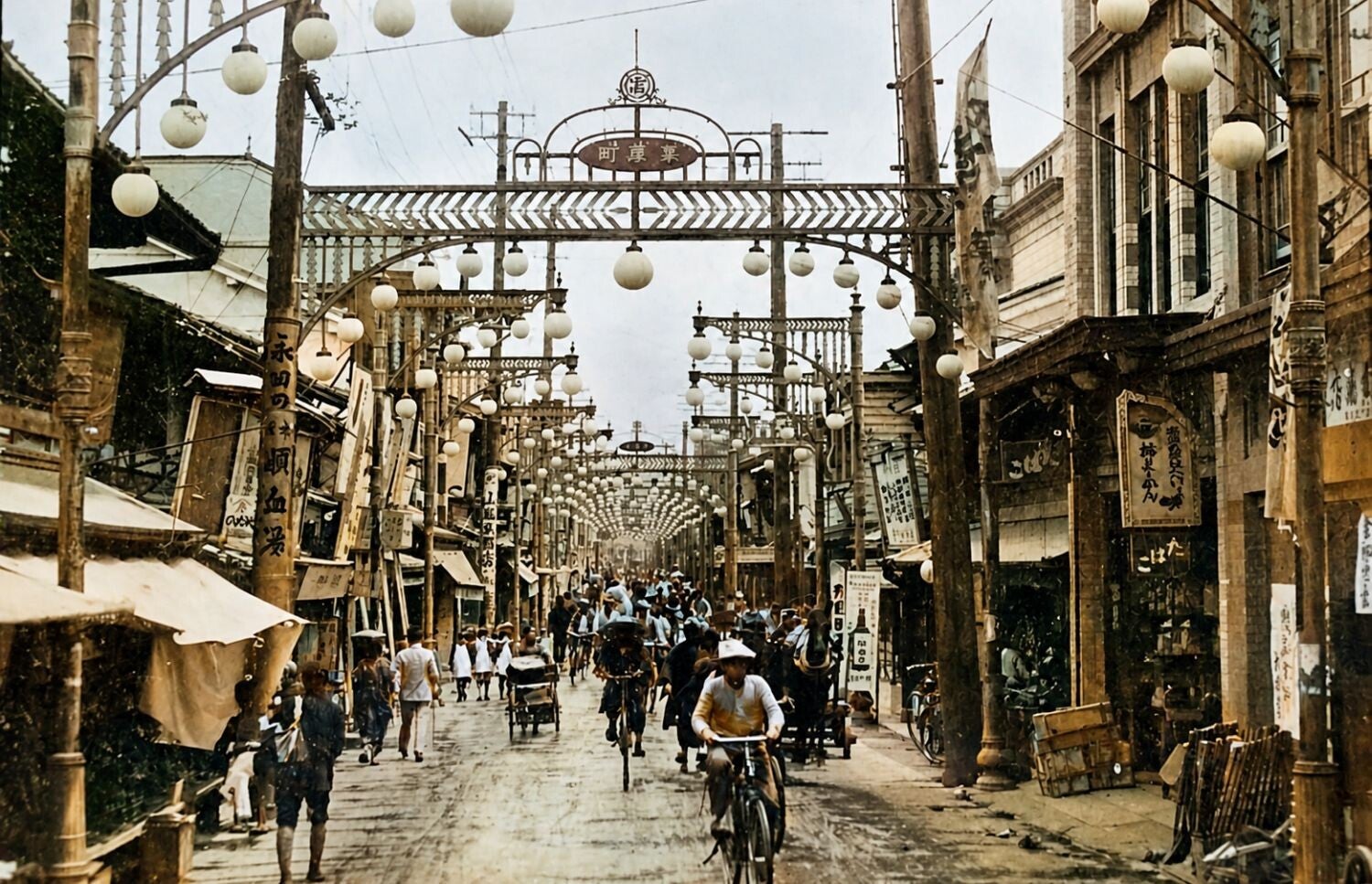
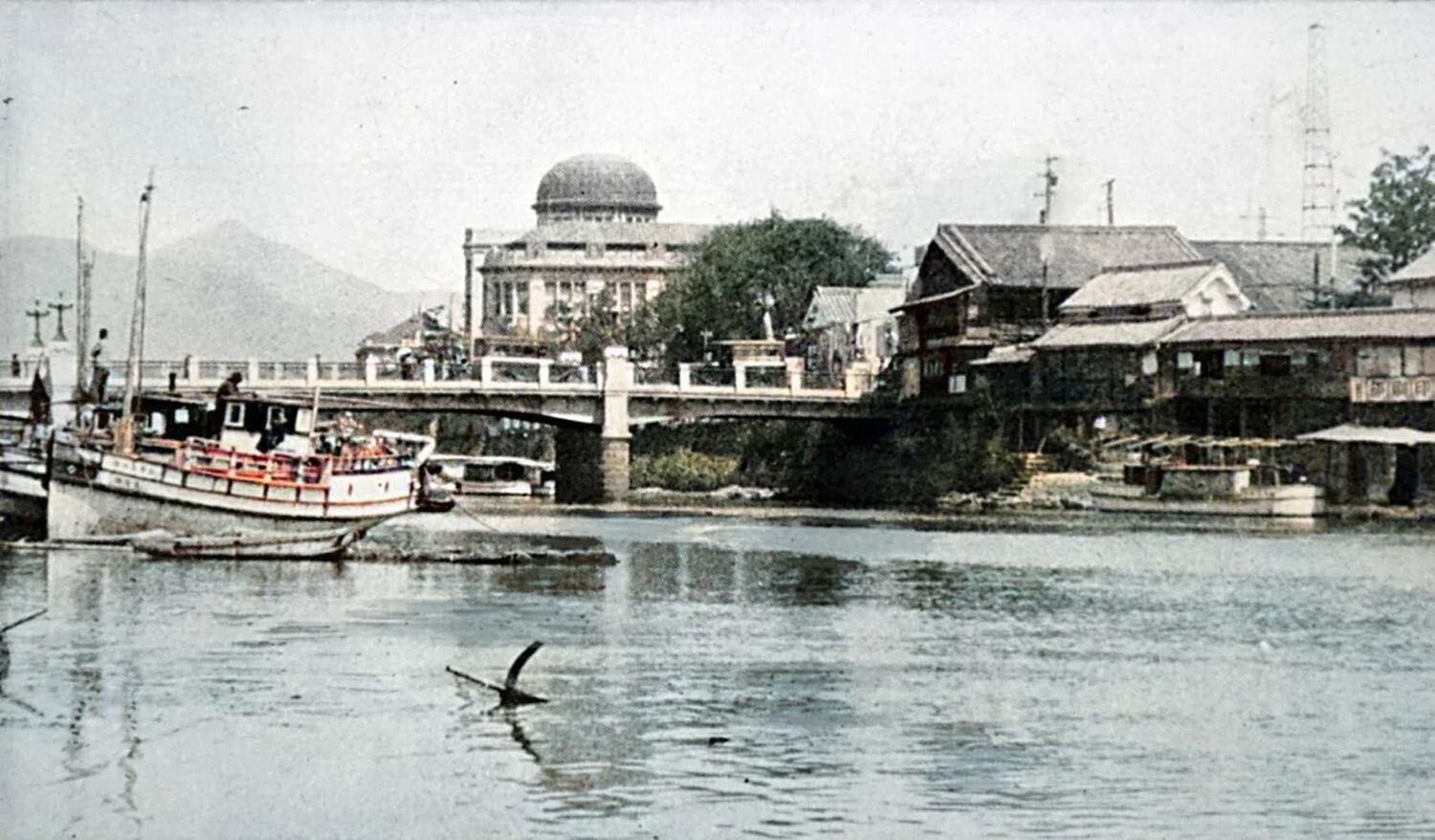
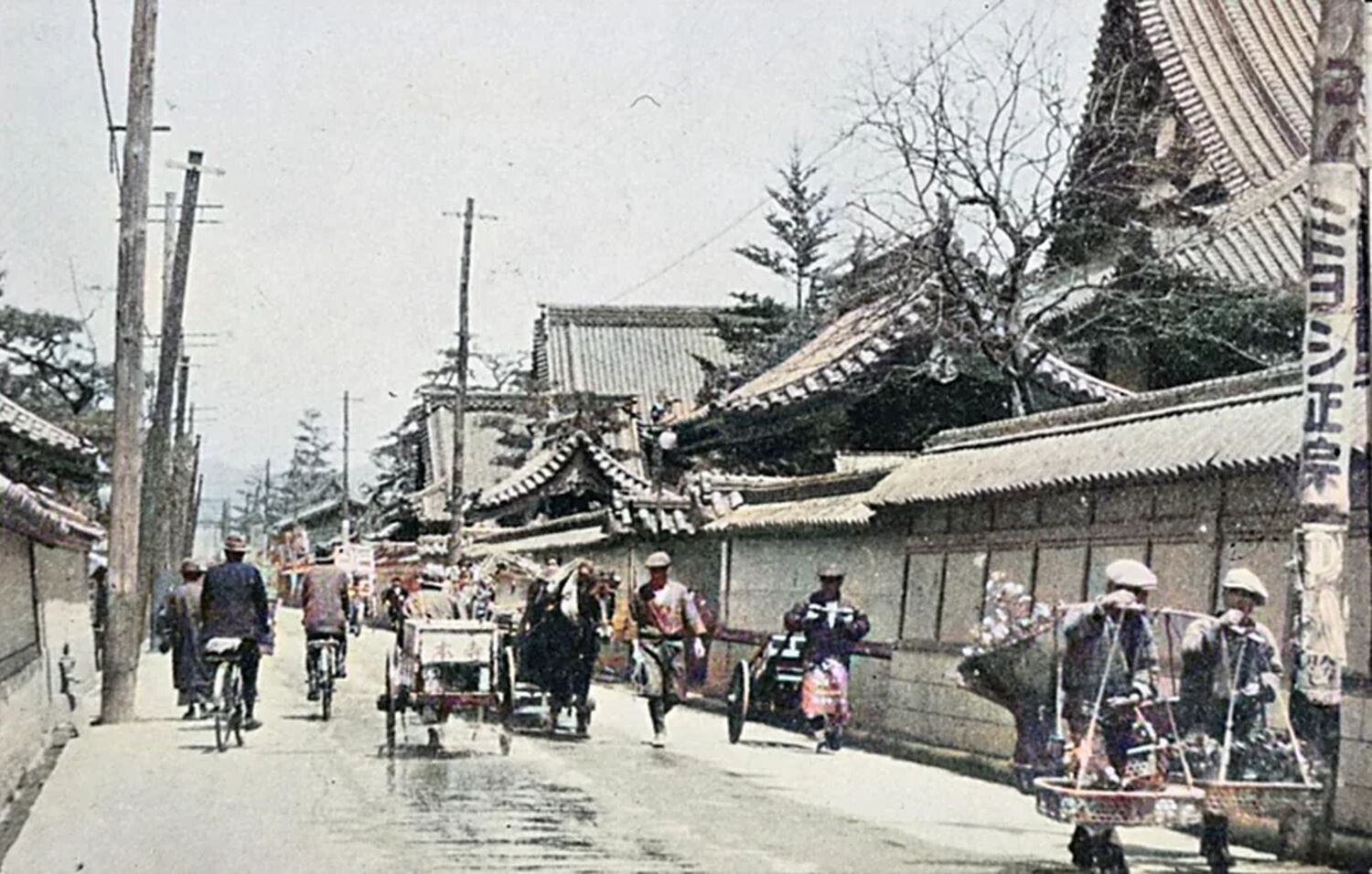
Hiroshima in the 1930s was a modest, orderly provincial city shaped by commerce, education, and military administration. Its tram-lined streets, wooden houses, and riverside districts supported a population of roughly 300,000. Daily life centred on small industries, shops, and schools, with the local army headquarters adding strategic importance. Though modernising gradually, Hiroshima remained quiet and compact, its urban rhythm defined by markets, temples, and neighbourhood communities long before war transformed its fate.
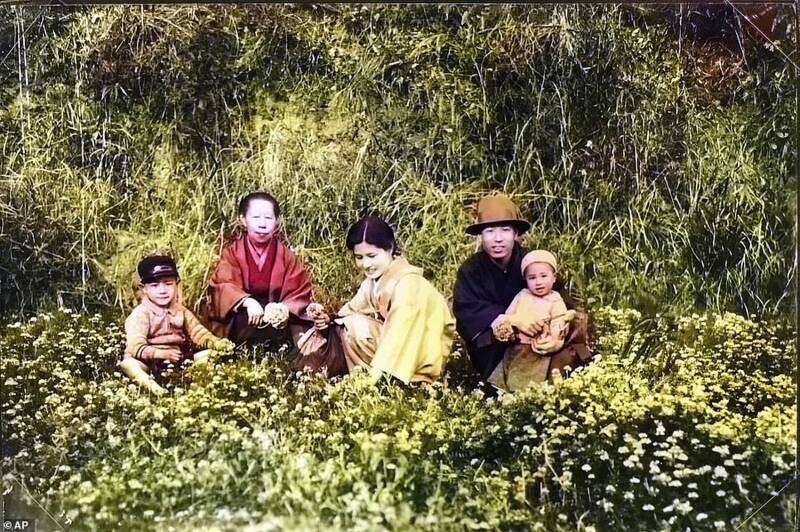
Hiroshima resident Hisashi Takahashi and his parents, grandmother and younger brother pose for a photograph in a flower bed of dandelions in 1935.
Photograph restored and colourised by Anju Niwata and Hidenori Watanave
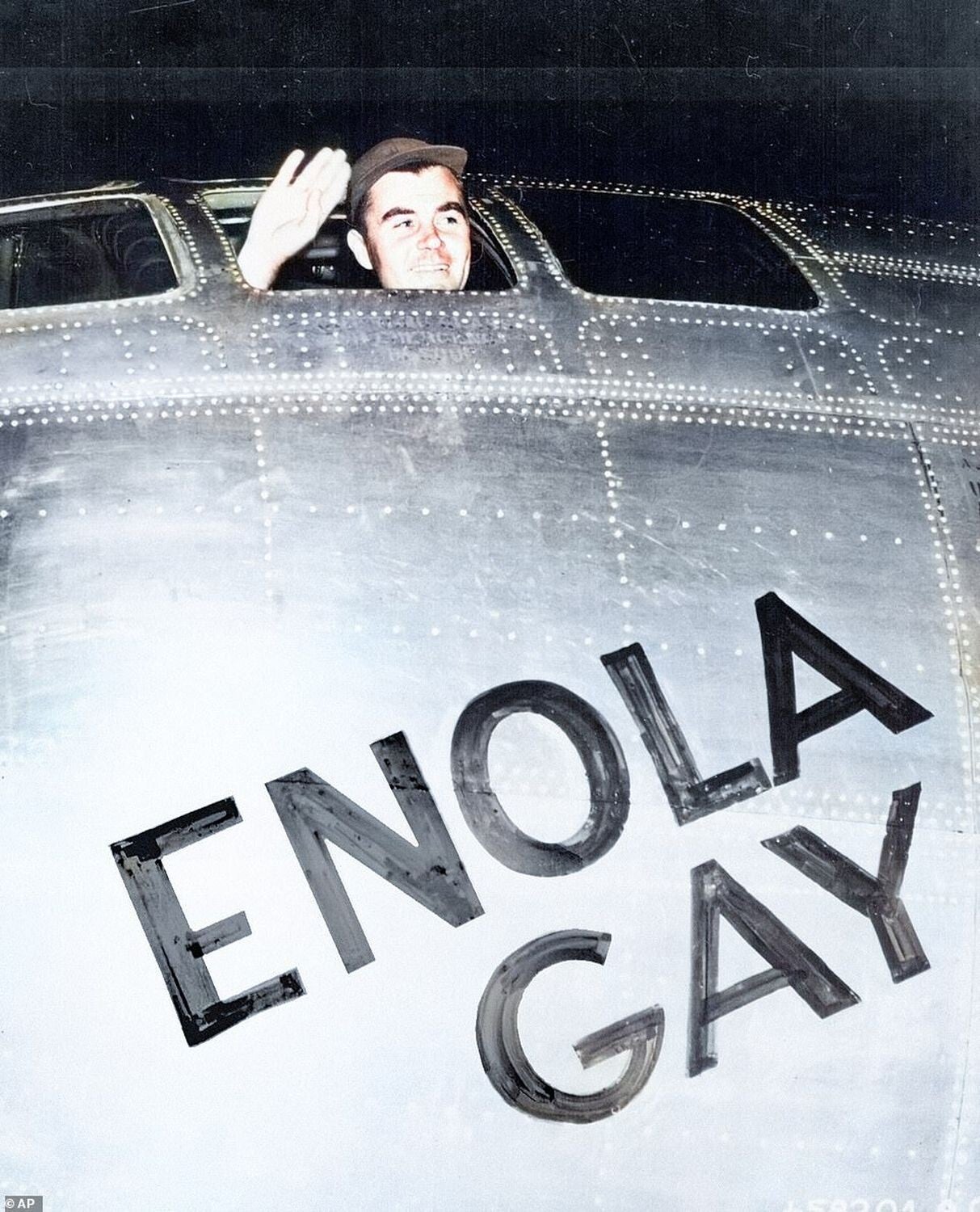
Colonel Paul W Tibbets Jr, pilot of the Enola Gay, the plane that dropped the atomic bomb on Hiroshima, Japan, waves from his cockpit before take-off from Tinian Island in Northern Marianas, August 6, 1945. After serving in Europe and North Africa earlier in the war, Tibbets was assigned to the atomic bomb project in 1944 and was put in charge of flight tests before he dropped the bomb on Hiroshima.
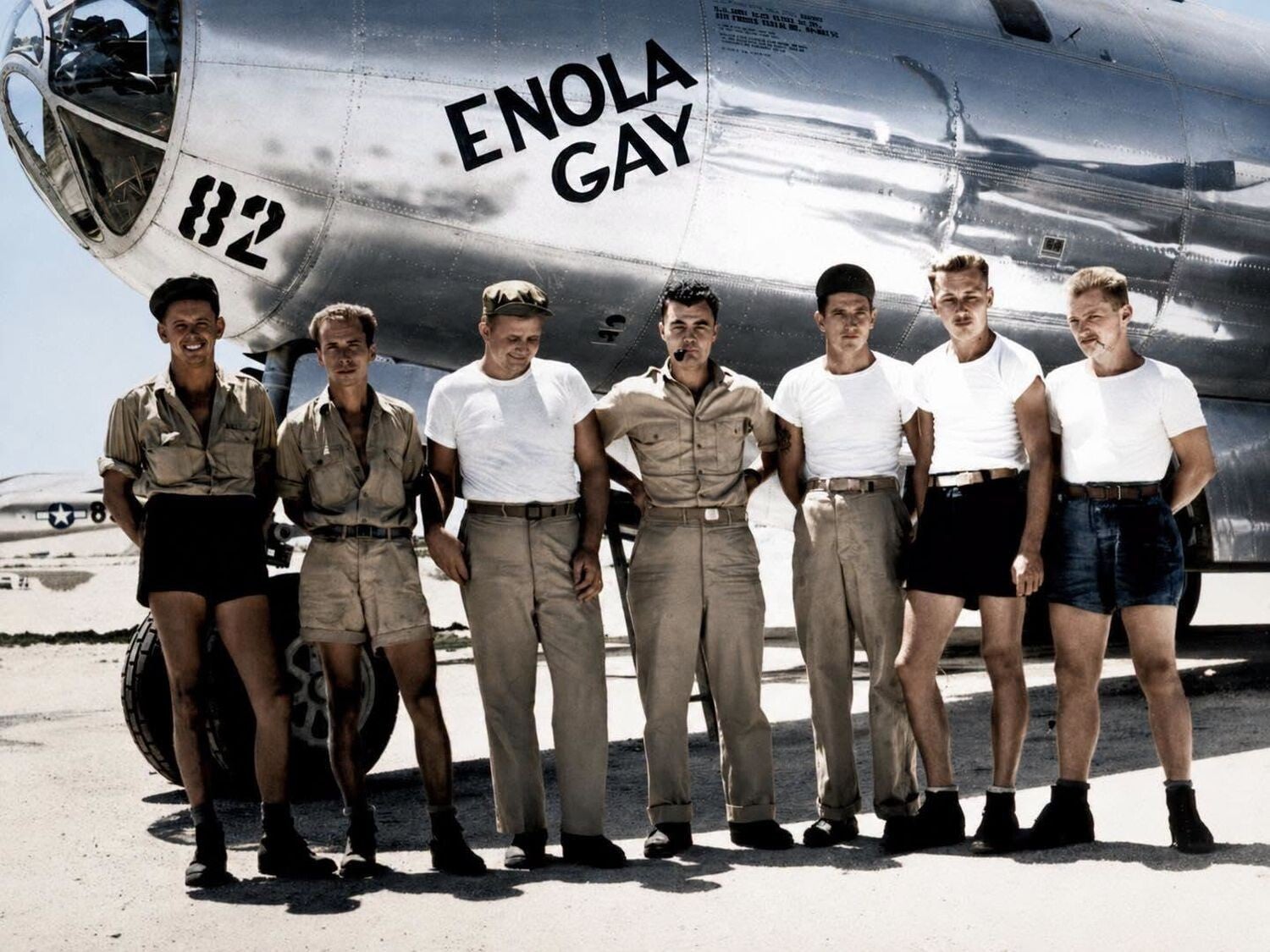
The crew of the Enola Gay. On August 6, 1945, the crew of the B-29 Enola Gay flew a mission that forever changed warfare and the course of human history. Behind them stood aircraft No. 82—the bomber that carried the atomic bomb Little Boy from Tinian to Hiroshima.
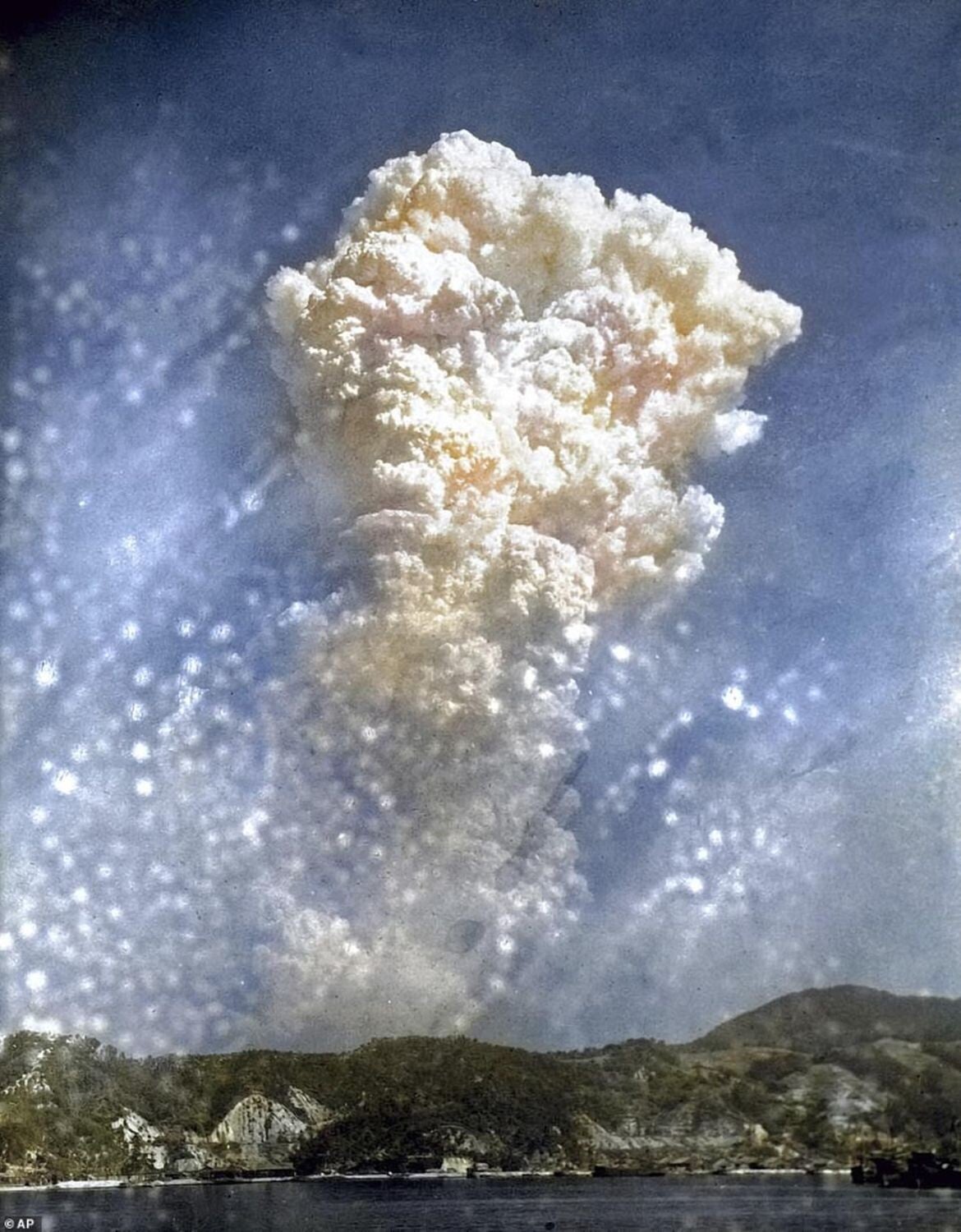
Smoke rises around 20,000 feet above Hiroshima after the first atomic bomb was dropped on the city by the United States on August 6, 1945. 'Little Boy' - the first nuclear weapon used in war - was dropped on the city, killing between between 90,000 and 146,000 people.
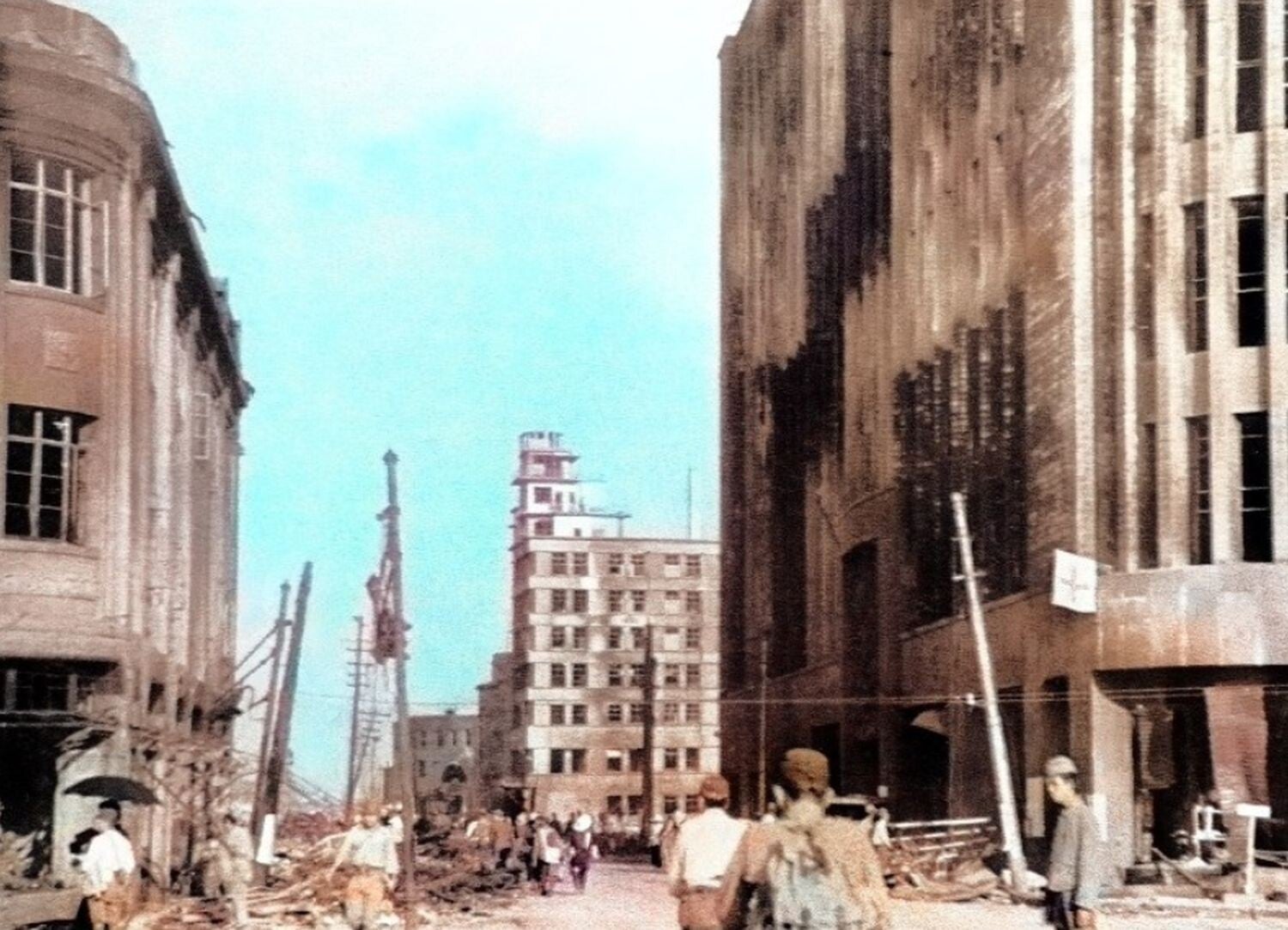
The Fukuya department store, right, is painted black with tar in a bid to avoid air raids, while the building of the Chugoku Shimbun stands in the back in this photo taken on Aug. 9, 1945, colorized with artificial intelligence. This point was about 800 meters from the epicenter of the atomic explosion.
https://mainichi.jp/english/graphs/20181115/hpe/00m/0na/001000g/20181115hpe00m0na001000q
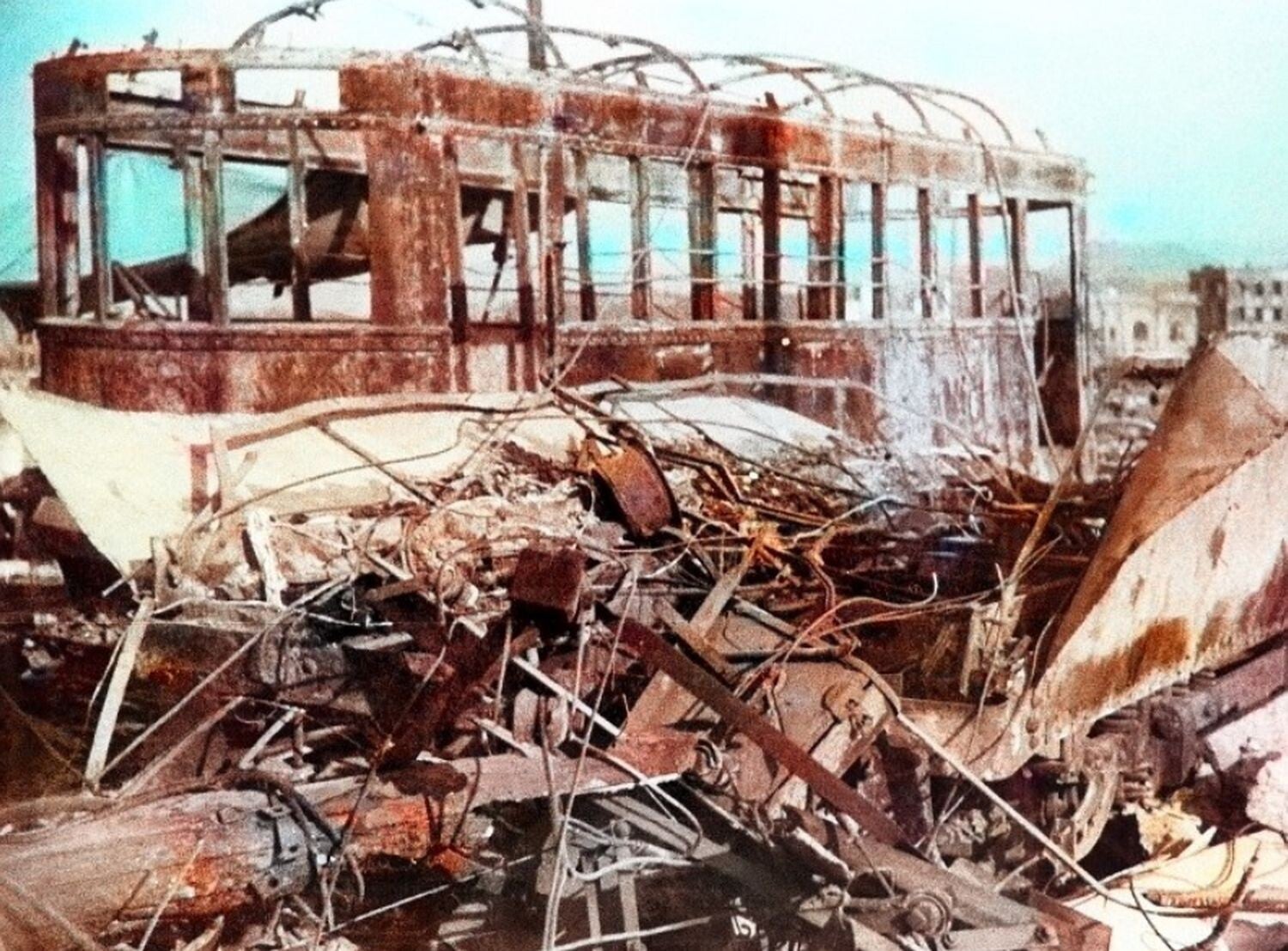
A destroyed streetcar lies in the southeast corner of the Kamiyacho intersection in present-day Naka Ward of the city of Hiroshima, on Aug. 9, 1945, in this photo colorized using artificial intelligence. This area was about 300 meters from the epicenter of the atomic bombing.
https://mainichi.jp/english/graphs/20181115/hpe/00m/0na/001000g/20181115hpe00m0na002000q
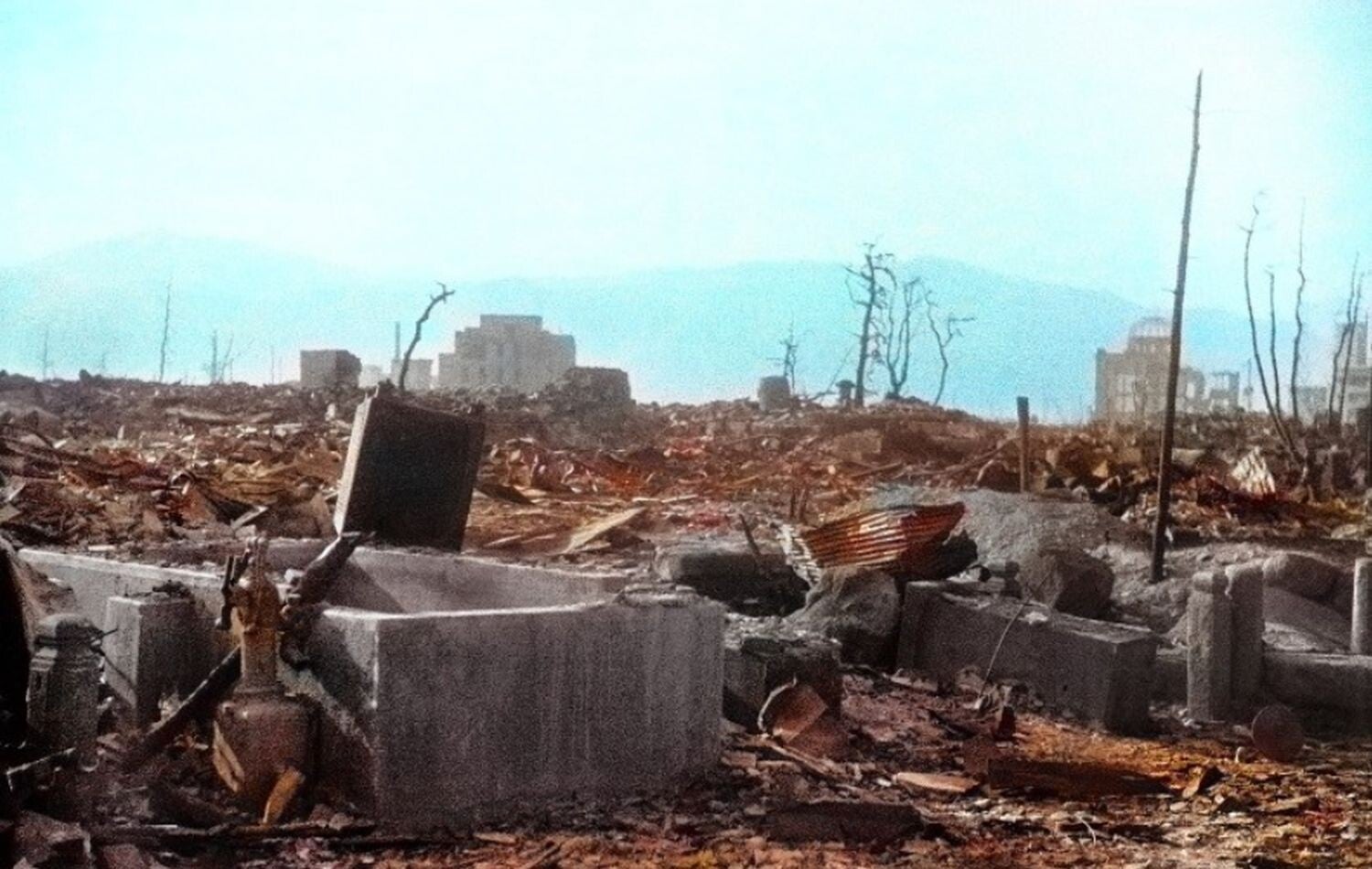
The foundations of the Hiroshima Bureau of the Mainichi Shimbun, front, lie exposed on Aug. 9, 2015, in this photo colorized with artificial intelligence. The Atomic Bomb Dome, over which the Little Boy uranium bomb was detonated three days earlier, is seen in the background on the right. The point this picture was taken was about 290 meters from the center of the atomic blast.
https://mainichi.jp/english/graphs/20181115/hpe/00m/0na/001000g/20181115hpe00m0na003000q
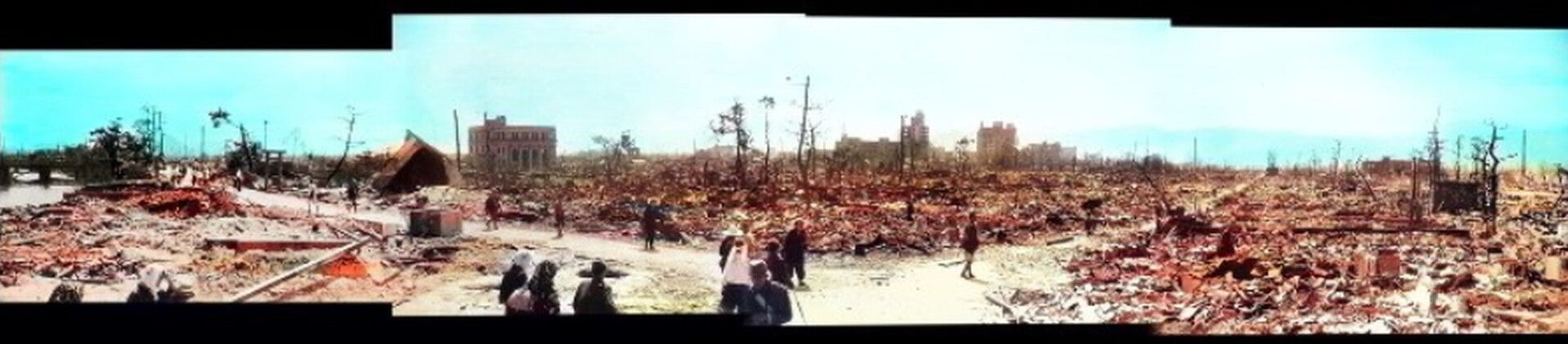
People walk in an area on the western side of Kyobashi bridge over the Kyobashi River near the center of Hiroshima, on Aug. 9, 1945, three days after the atomic bombing of the city. The location was about 1,400 meters from ground zero, and survivors say the rubble appeared reddish.
https://mainichi.jp/english/graphs/20181115/hpe/00m/0na/001000g/20181115hpe00m0na004000q
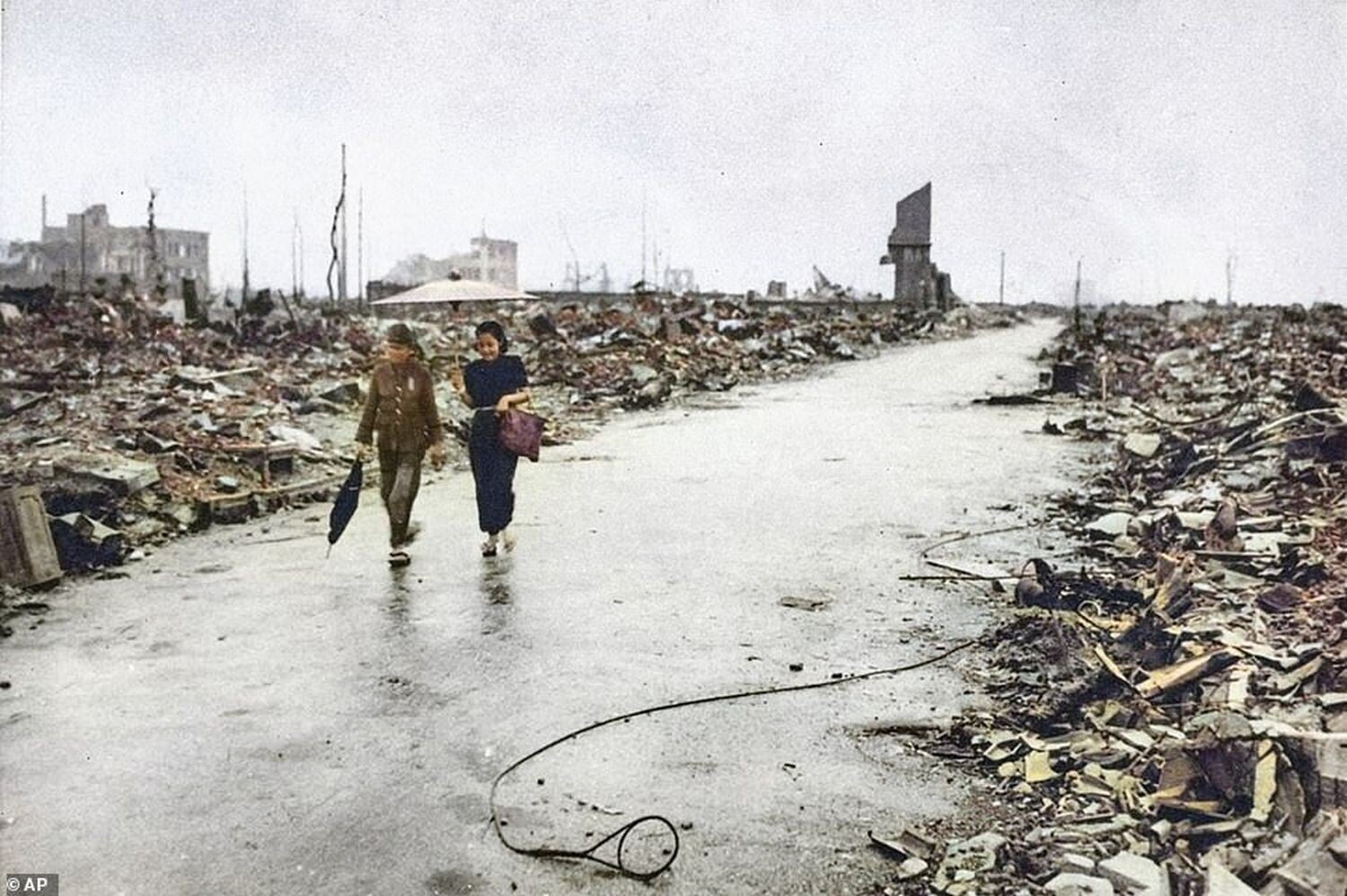
Two people walk on a cleared path through the destruction resulting from the August 6 detonation of the first atomic bomb in Hiroshima, on September 8, 1945. The bomb dropped on Hiroshima wiped out 30 per cent of the city's population and flattened a 4.7 square mile area, leaving another 80,000 residents of the city injured when it exploded with the force of 16 kilotons of TNT.
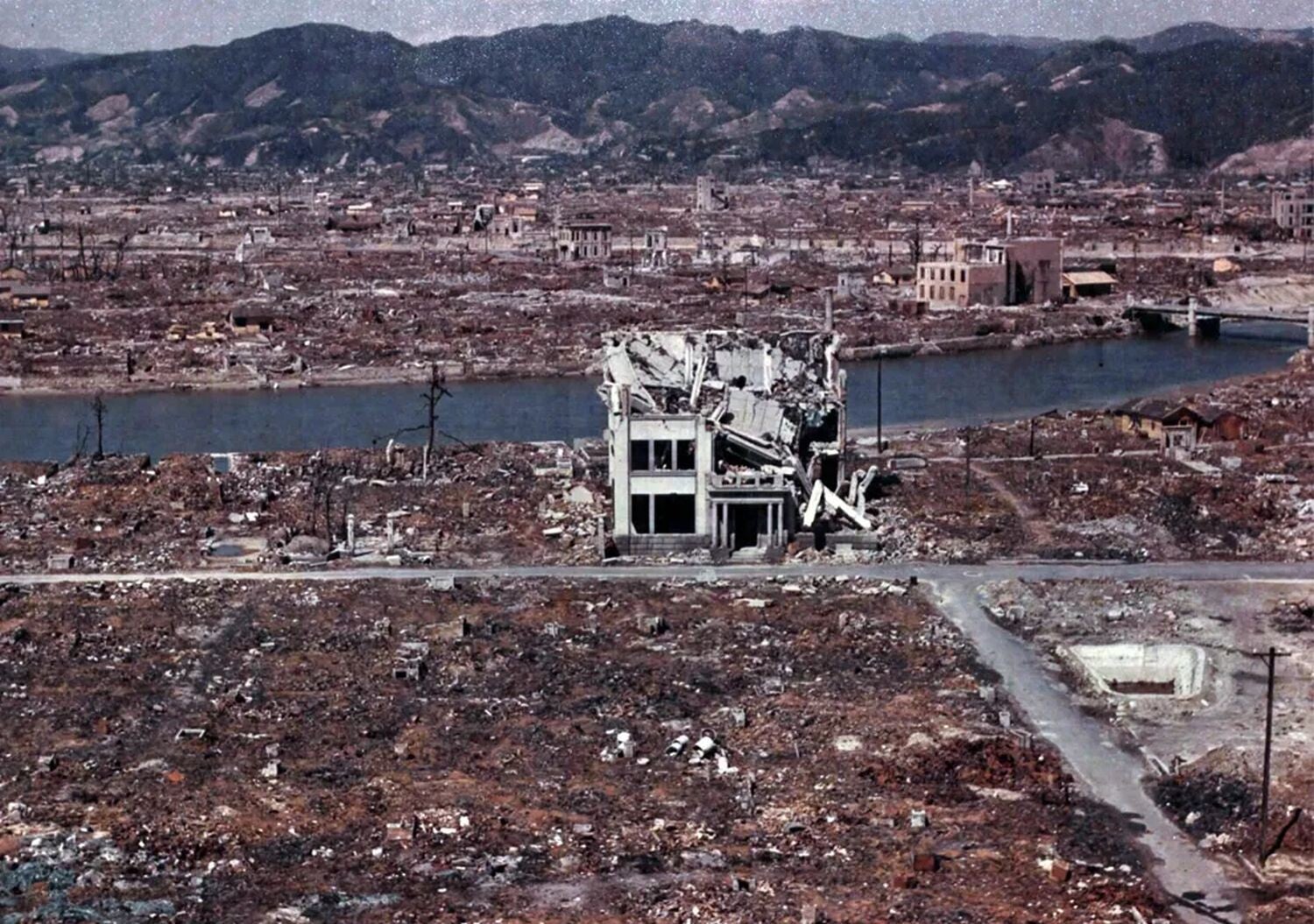
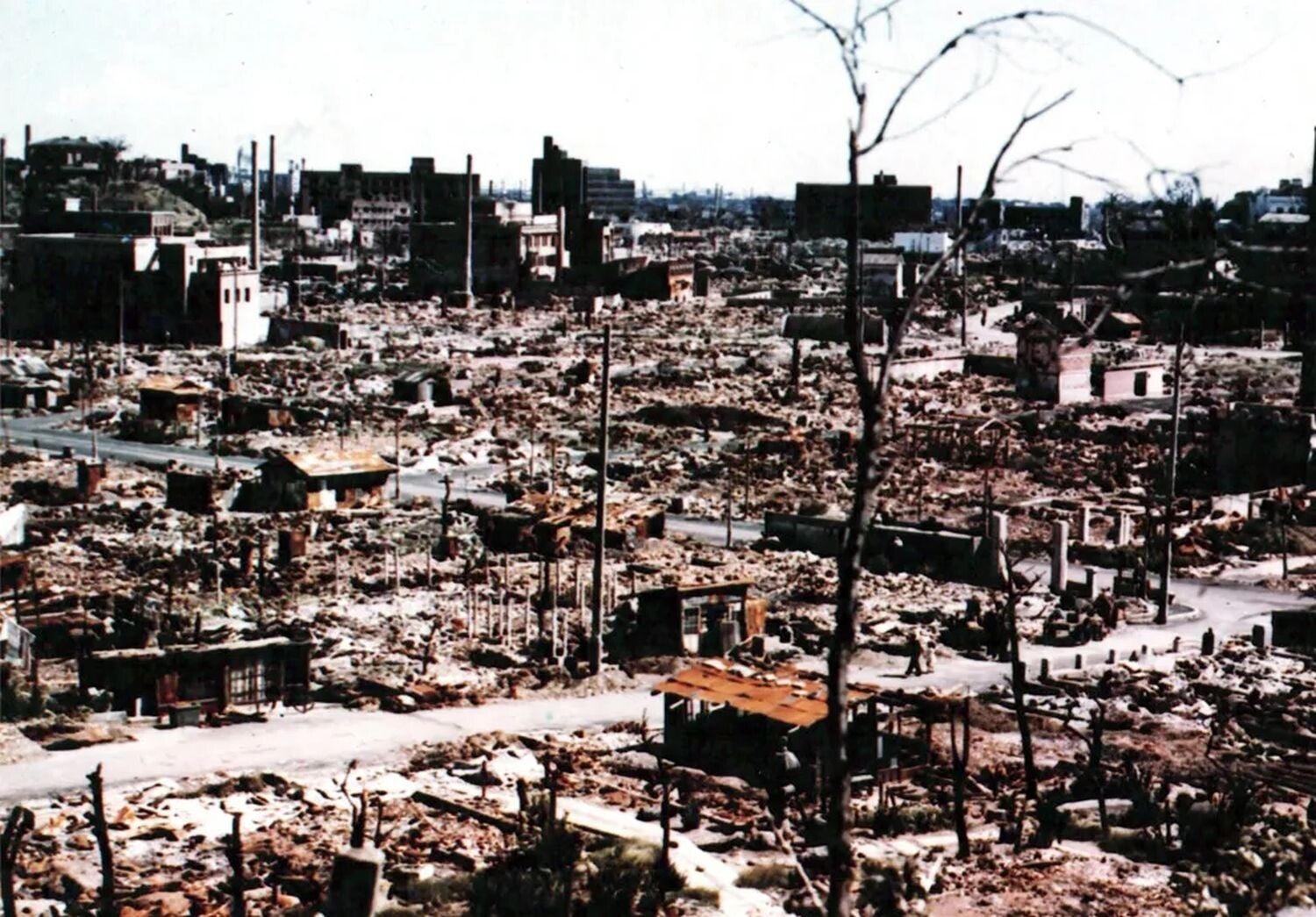
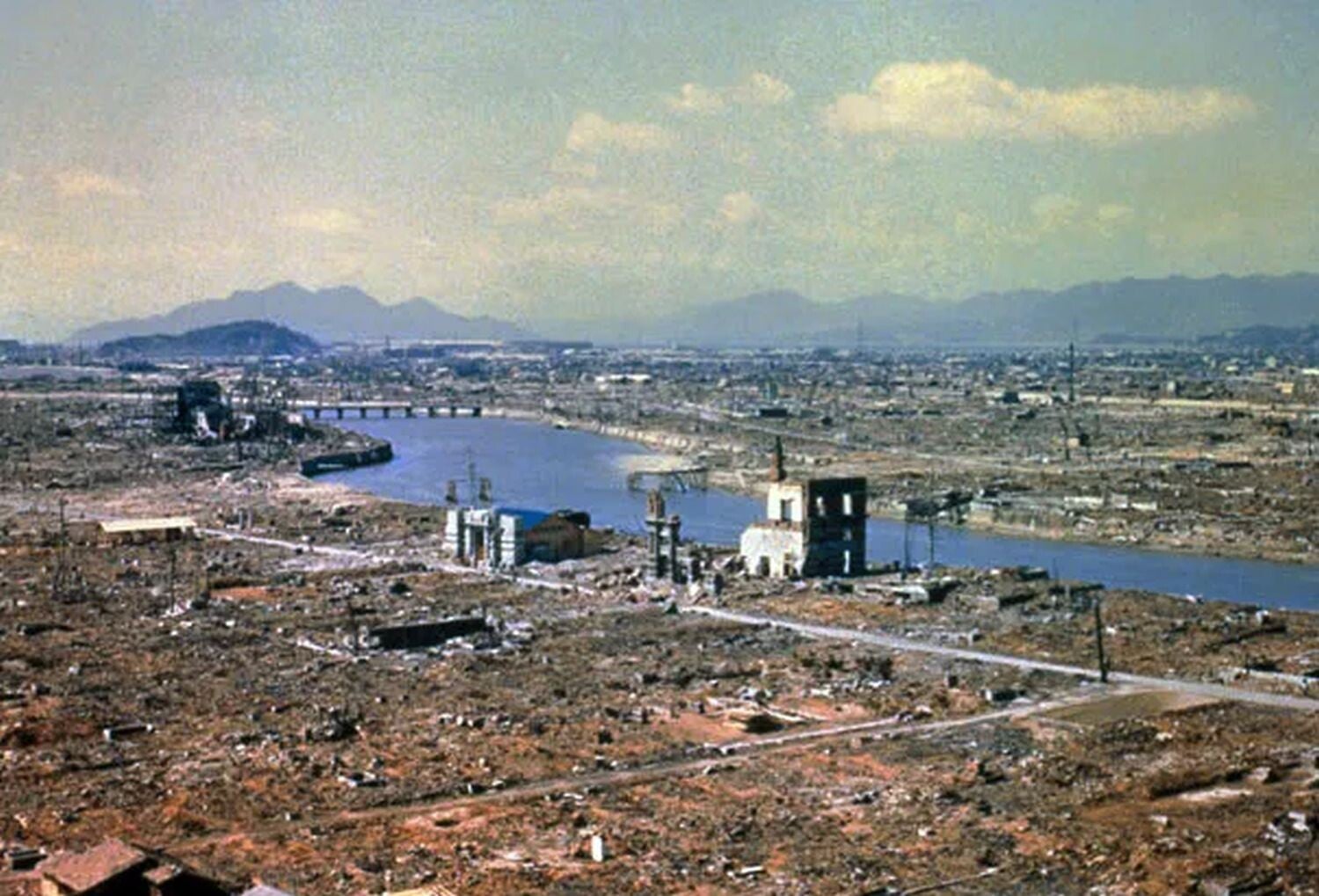
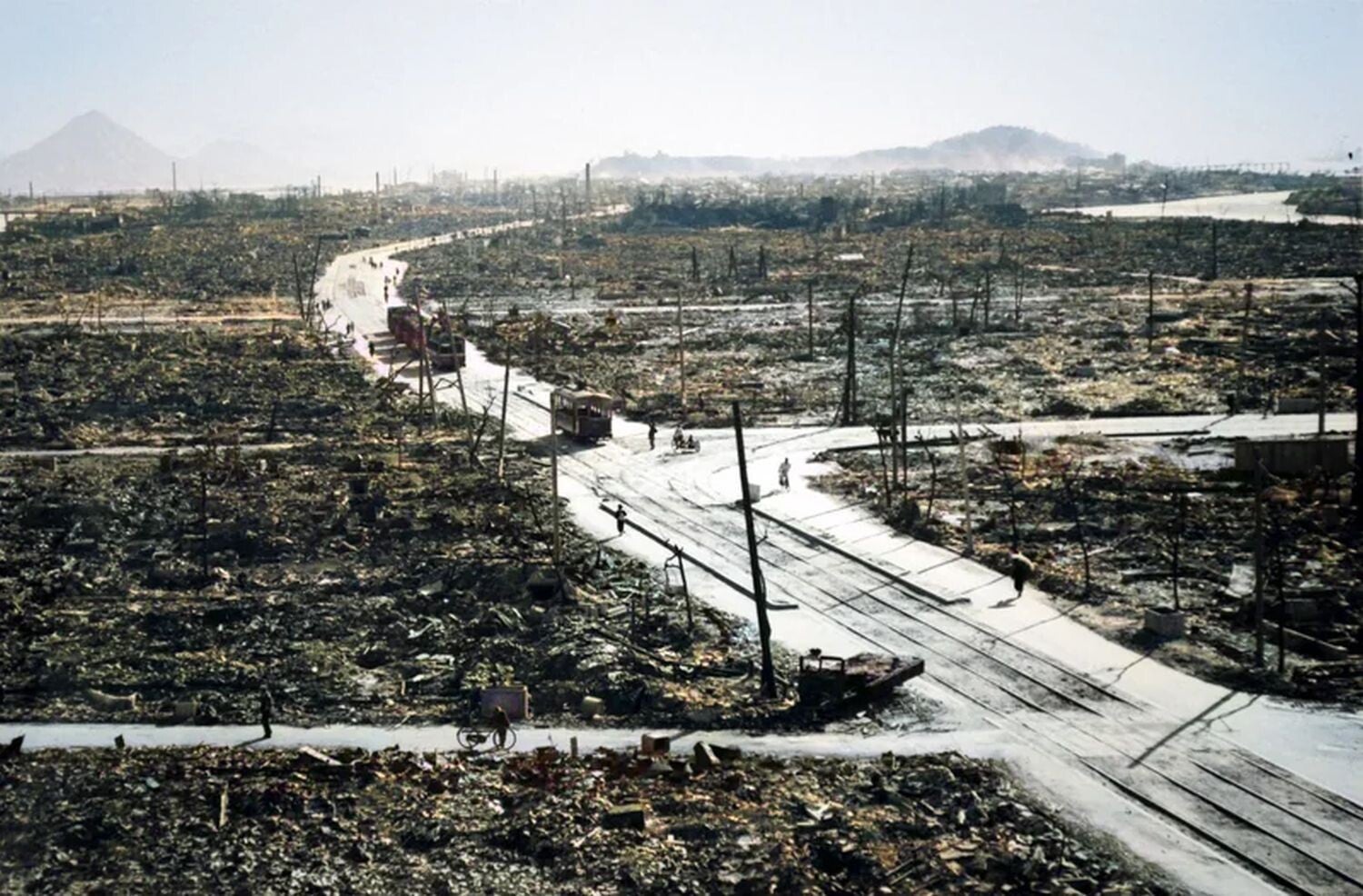
Hiroshima in March 1946 shows a city largely cleared of debris only months after the atomic bombing. Roads are visible and orderly, indicating extensive cleanup, and no bodies remain. A few reinforced concrete structures stand amid vast emptiness, highlighting how little survived the blast. The scene reflects both the scale of destruction and the early efforts to stabilise and rebuild a devastated urban landscape.
https://blog.nuclearsecrecy.com/2013/03/22/hiroshima-and-nagasaki-in-color/
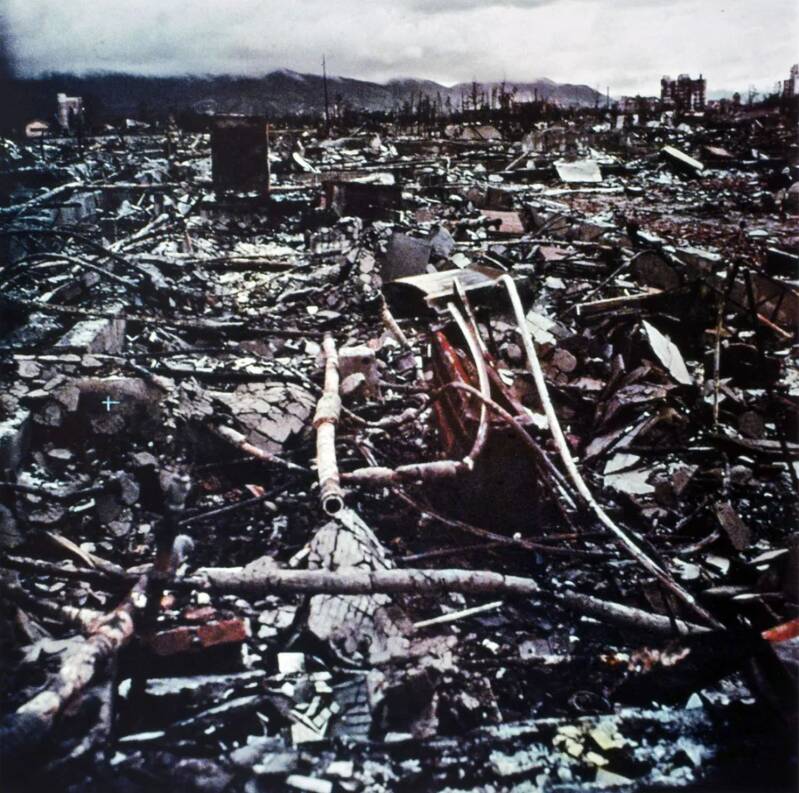
The photograph taken by J.R. Eyerman in late 1945 offers a rare ground‑level colour view of Hiroshima’s devastation. Unlike aerial images, it shows the chaotic tangle of shattered pipes, bricks, concrete, wood, and uprooted trees at human height. The scene captures the city’s physical ruin with stark immediacy, revealing a landscape stripped of structure and order, where only fragments of industrial and urban material remain recognisable amid widespread destruction.
https://blog.nuclearsecrecy.com/2013/03/22/hiroshima-and-nagasaki-in-color/
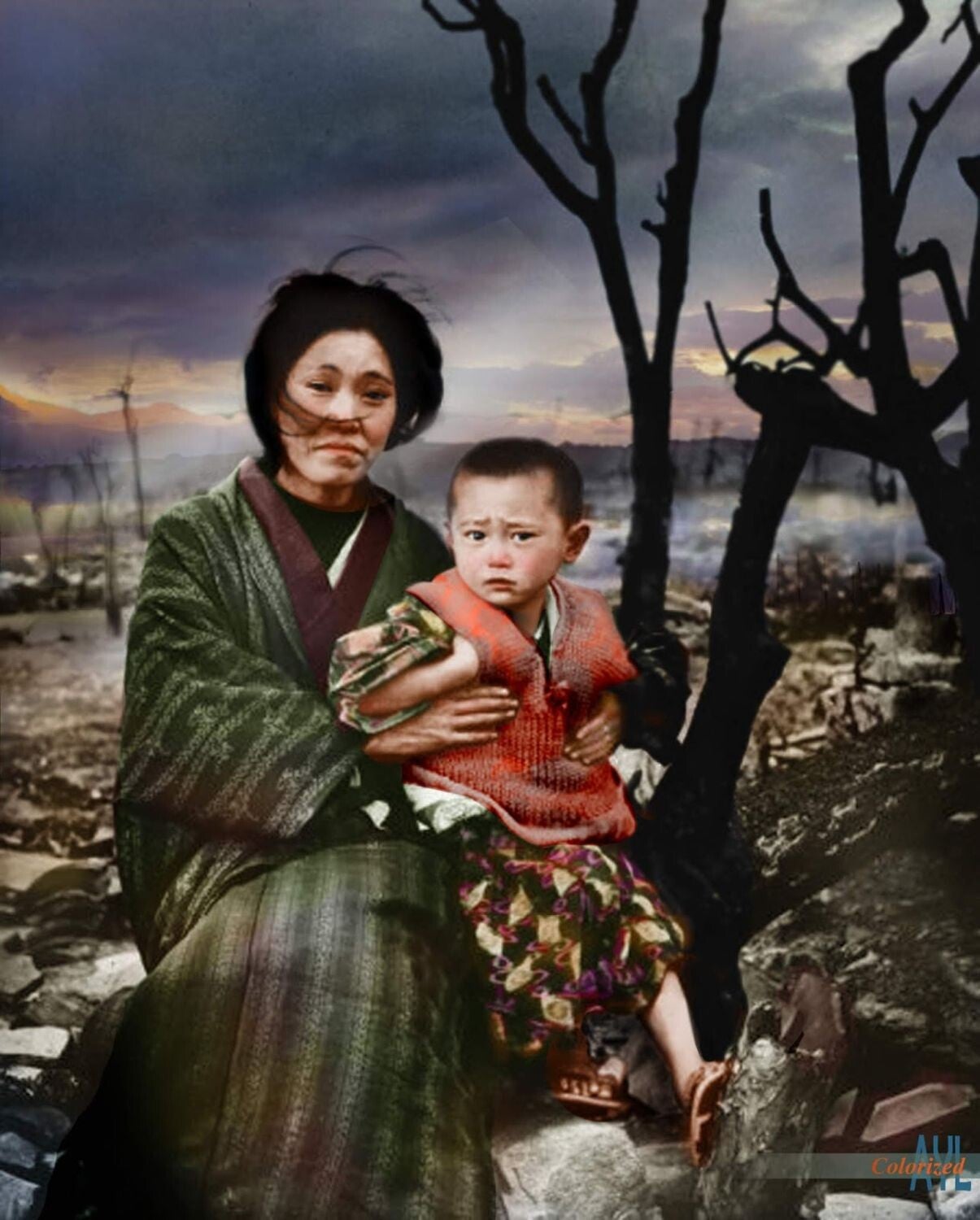
Mother and Son in the ruins of Hiroshima.
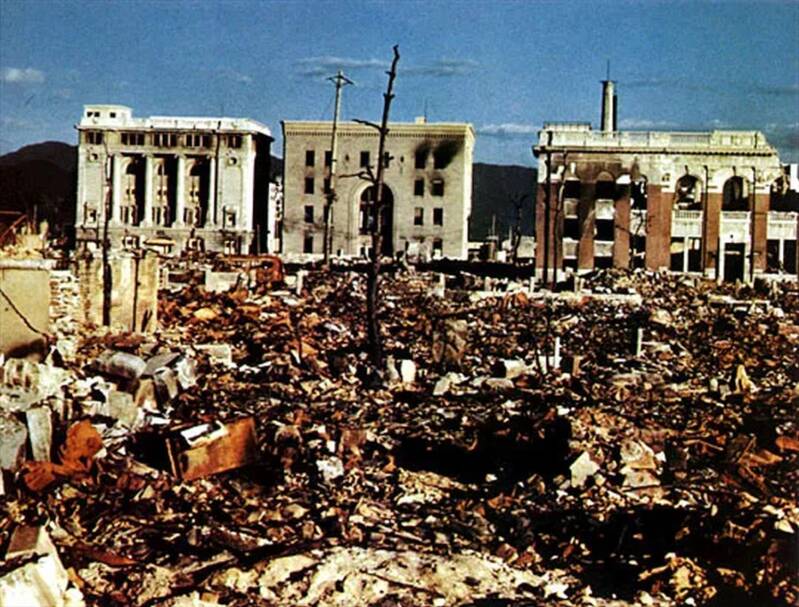
Hiroshima’s financial district. 1946.
https://blog.nuclearsecrecy.com/2013/03/22/hiroshima-and-nagasaki-in-color/
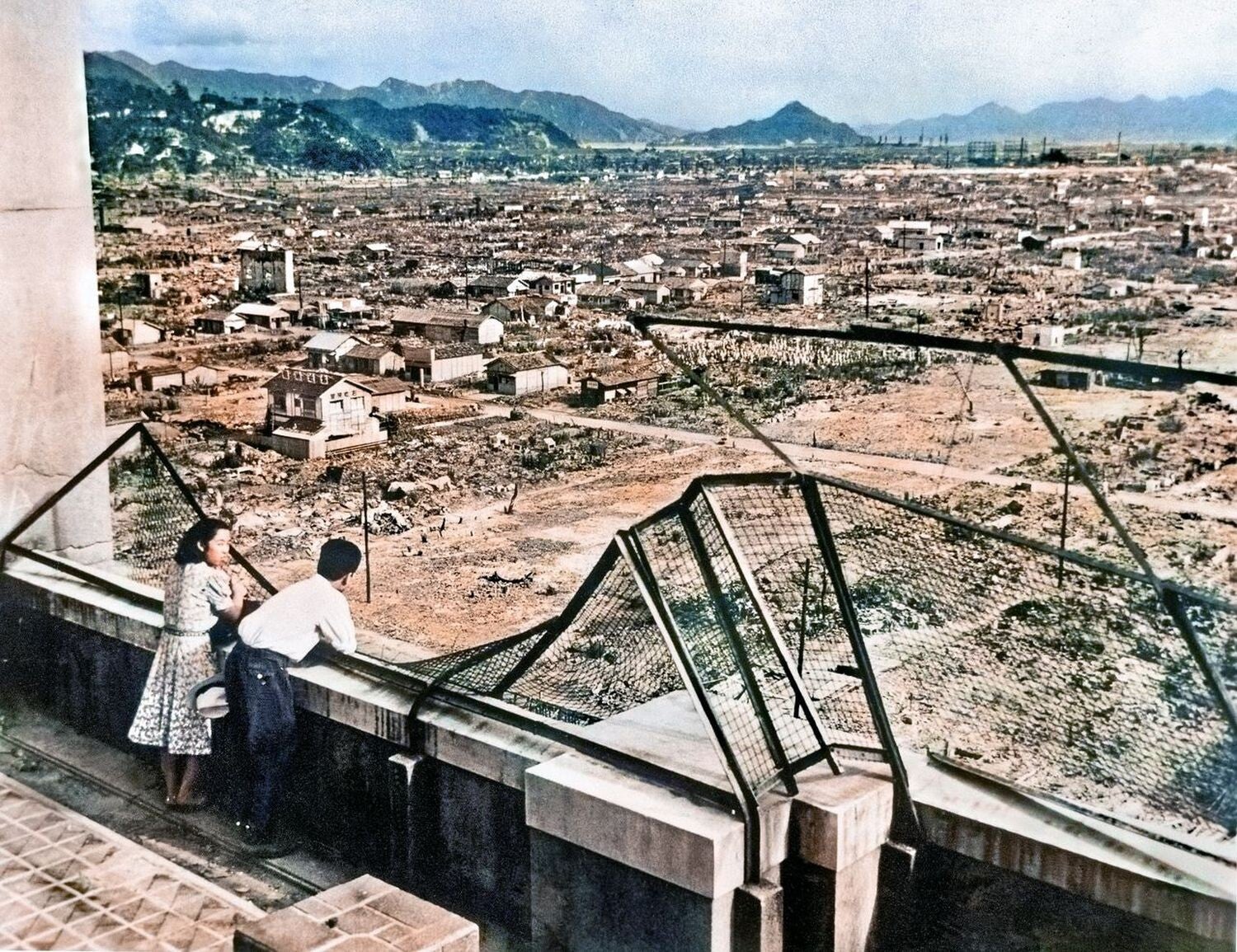
A young couple look over the ruins of Hiroshima.
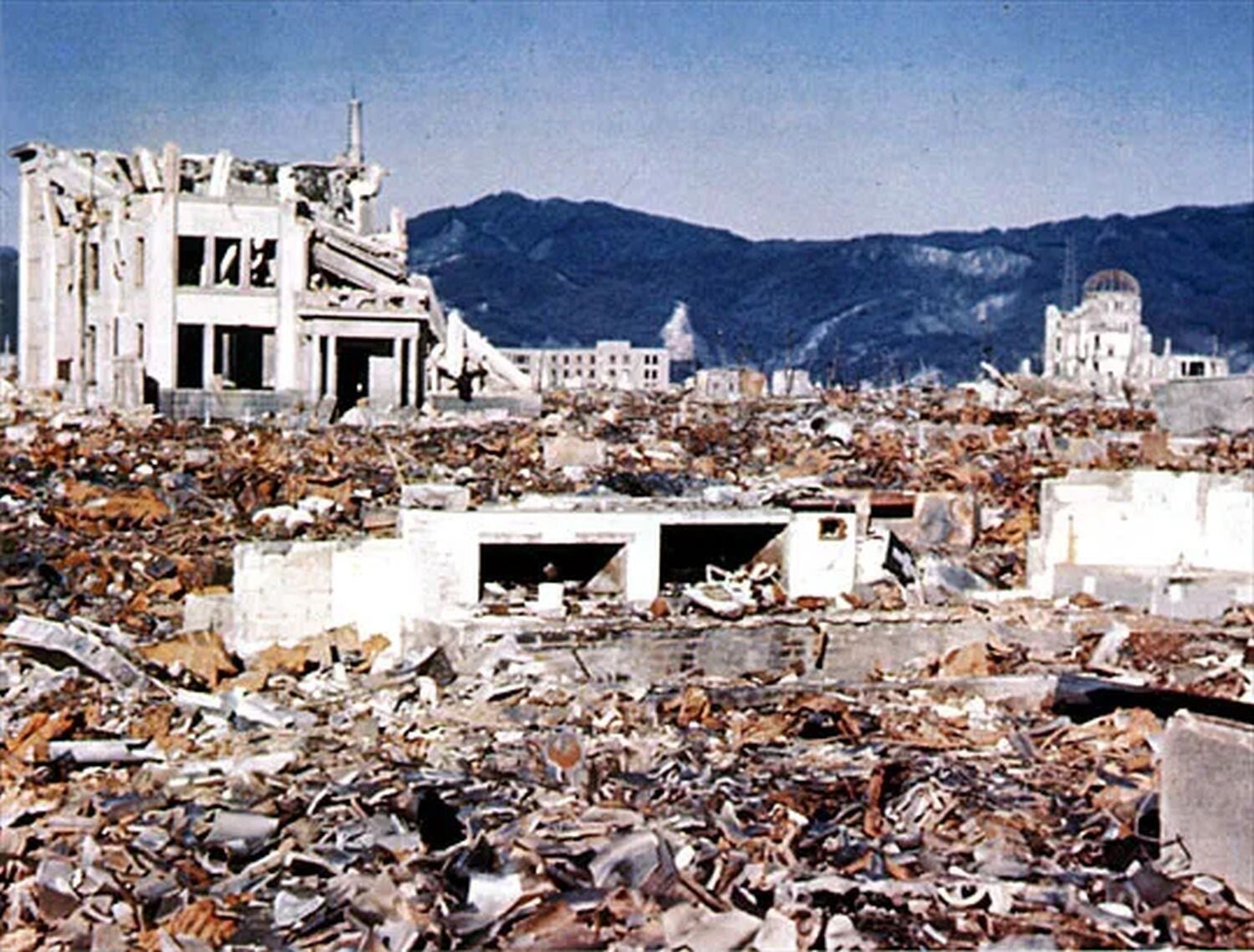
The Hiroshima Gas Company and the Honkawa Elementary School.
https://blog.nuclearsecrecy.com/2013/03/22/hiroshima-and-nagasaki-in-color/
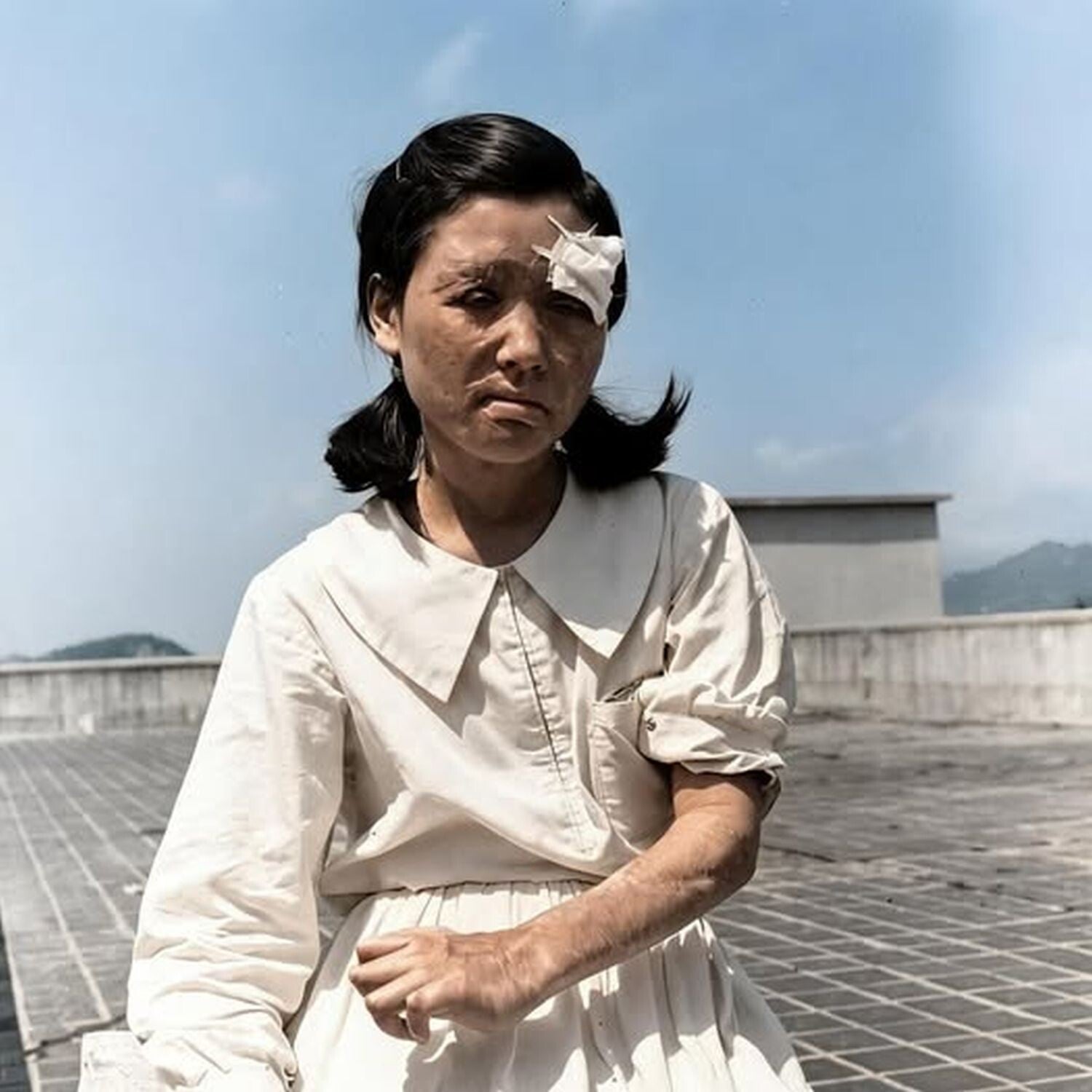
A survivor of the atomic bombing of Hiroshima, poses 2 years after the bombing, Hiroshima, Japan, 1947.
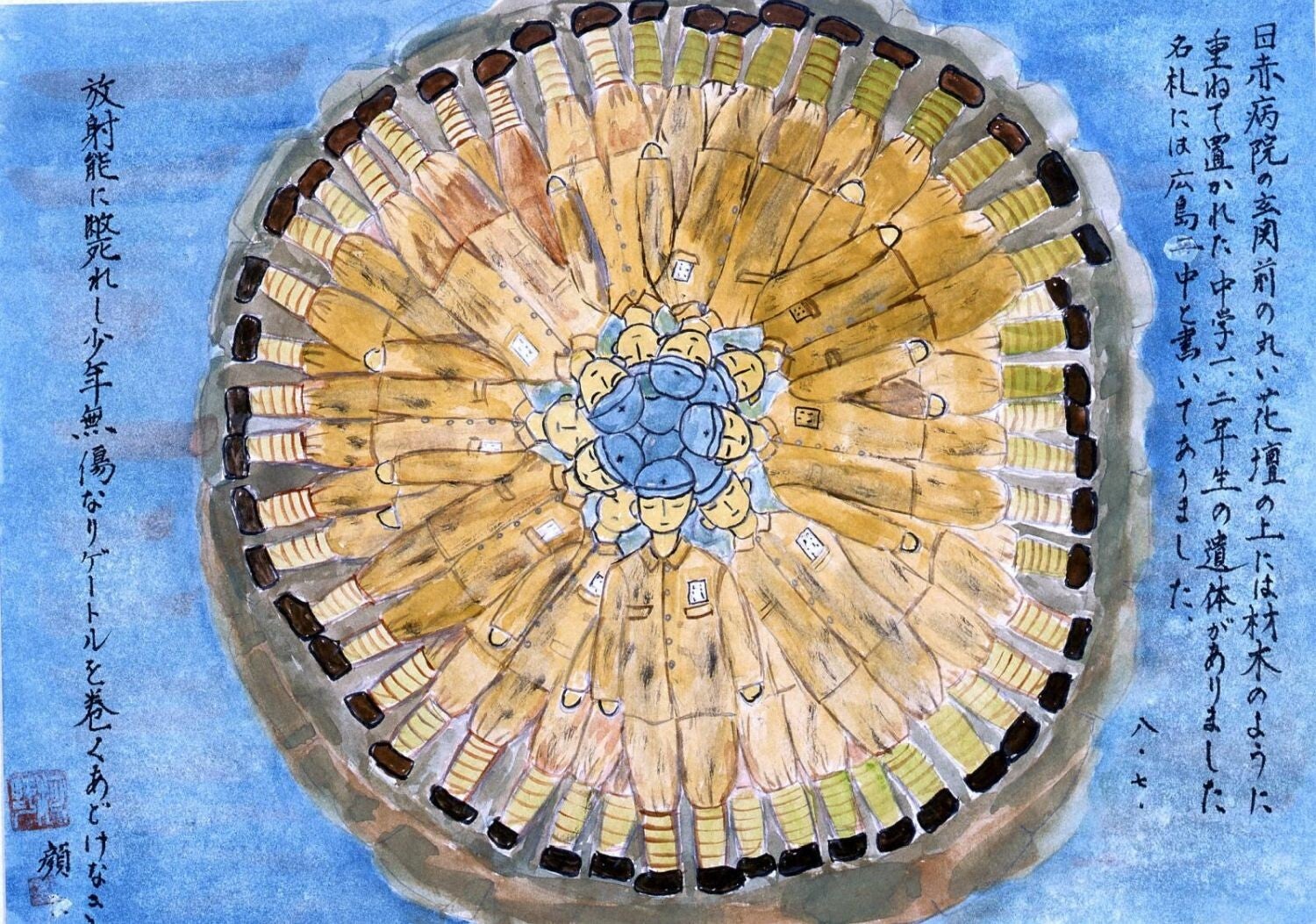
Artwork by Kiyomi Kono, age 14 August 7, 1945 Location Kokutaiji, Senda areas, Hiroshima Corpses piled like lumber On the circular flowerbed in front of the entrance to the Red Cross Hospital, corpses of first and second-year junior high students had been piled on each other like lumber. They had no sign of injury or burn. Their nametags read "Second Hiroshima Junior." August 7 1,500m / Hiroshima Red Cross Hospital Kiyomi Kono.
https://atomicphotographers.com/artists/drawings-by-survivors/
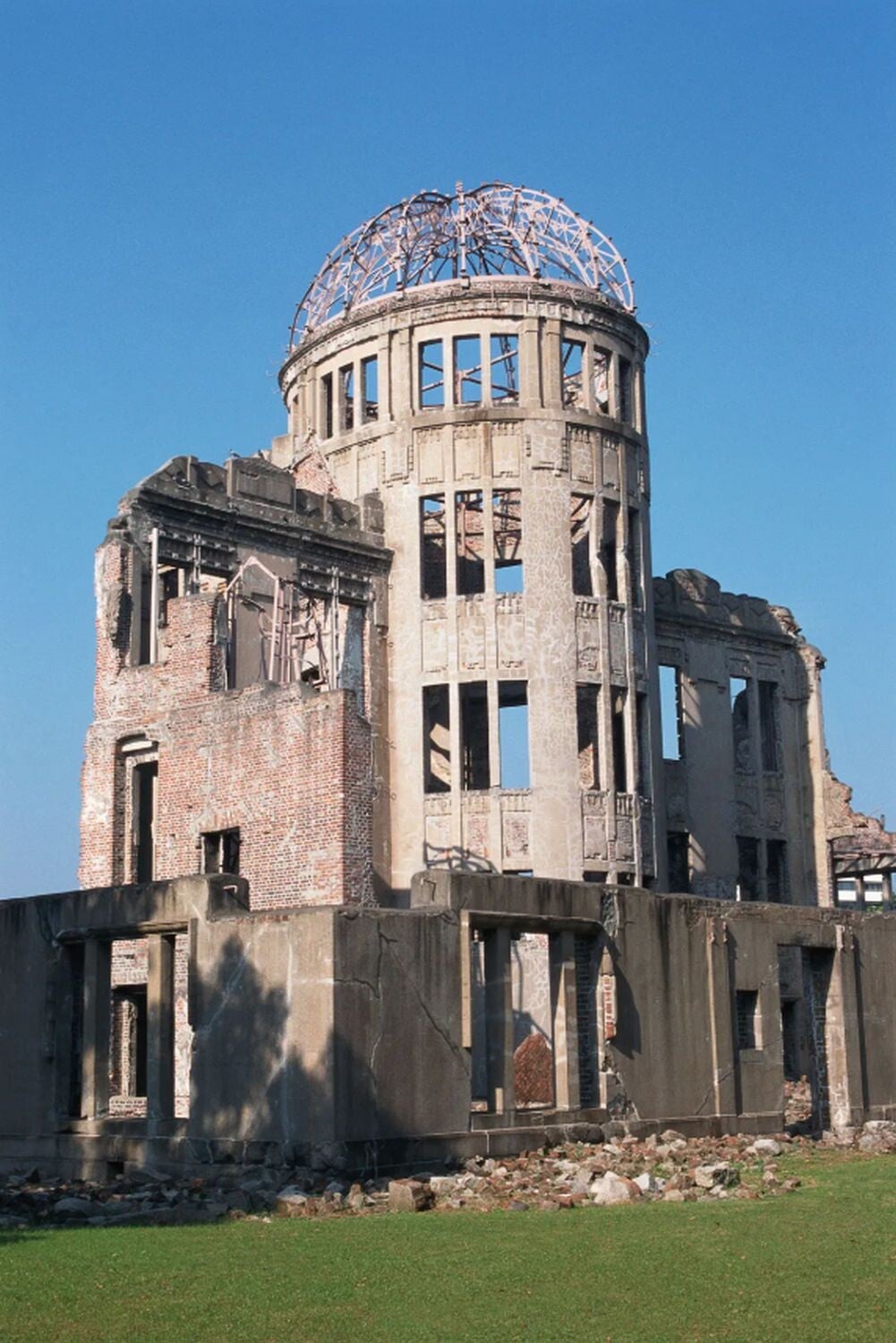
Atomic Bomb Dome, Hiroshima, Japan, designated a UNESCO World Heritage site in 1996.
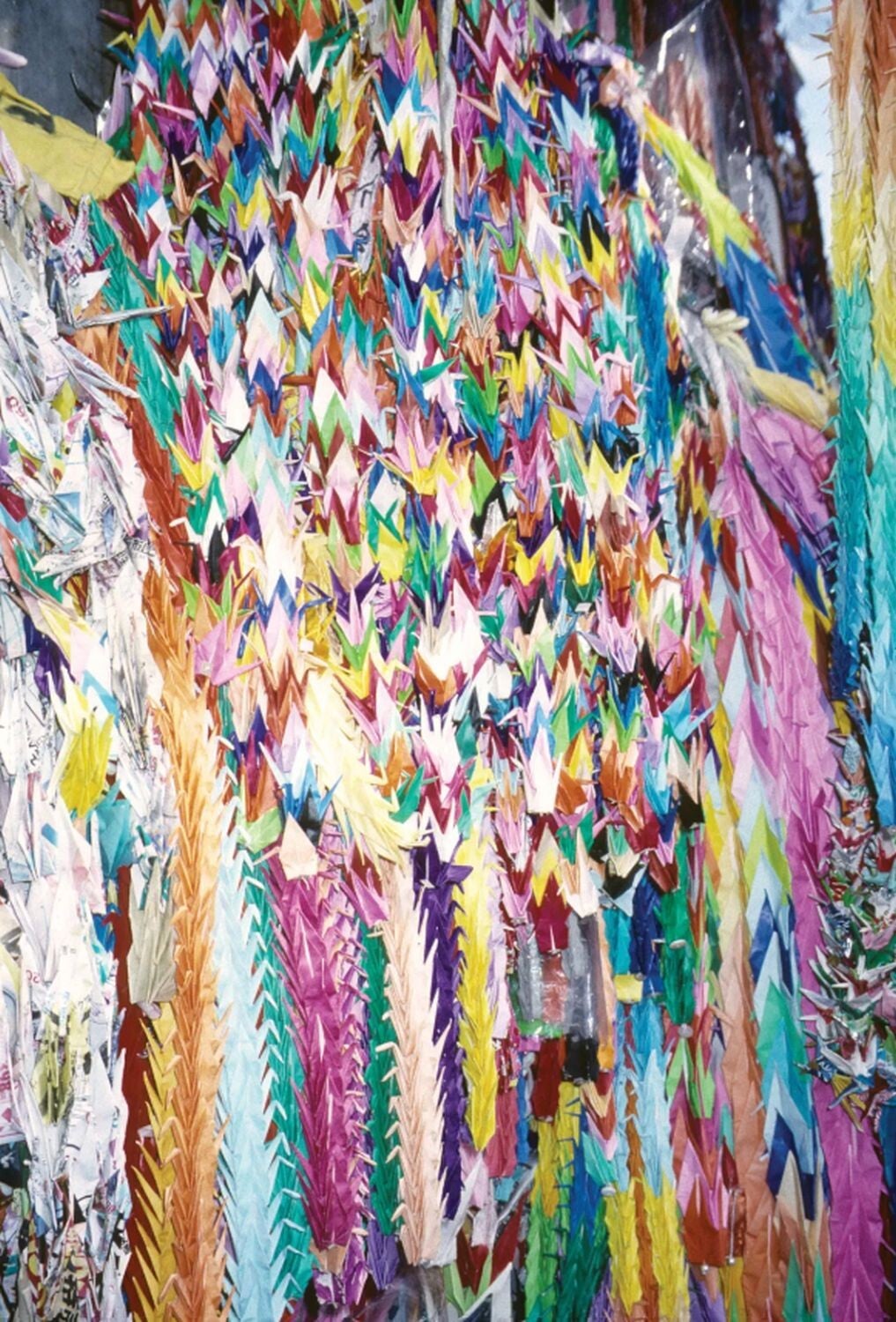
Some of the colorful paper cranes left at the Children's Peace Memorial in Hiroshima, Japan.
Further Reading
