Overview
The dawn of 12 July 1940 broke under a low ceiling of rain and cloud, a fitting backdrop for a day that would become one of the most punishing episodes of the Kanalkampf. This was not a single engagement but a rolling series of clashes across hundreds of miles, as the Luftwaffe intensified its effort to strangle Britain’s convoys and grind down Fighter Command ahead of the coming Battle of Britain.
Convoys Booty and Agent crept along the East Anglian and Kent coasts, their progress shadowed by German reconnaissance aircraft exploiting the murk. At 8:45 a.m., Flying Officer J.H.L. Allen of No. 151 Squadron intercepted a Dornier Do 17 near Orford Ness. His Hurricane was fatally damaged by return fire, and he was lost in the North Sea—a stark reminder of the attritional nature of the campaign.
By 9:00 a.m., the day’s main assault developed as formations from KG 2 and KG 53 struck toward the convoys. Hurricanes from Nos. 17, 85, 151, 242, and Defiants from No. 264 Squadron converged in a chaotic battle over the North Sea. Several He 111s and Do 17s were destroyed, including the aircraft of Hauptmann Machetzki of III./KG 53, though the RAF suffered losses of its own. Despite the ferocity of the attack, the convoys largely survived.
Far to the north, Aberdeen endured devastating civilian raids by KG 26, with dozens killed as bombs tore through shipyards, homes, and an ice rink. Later strikes along the south coast and in the West Country added to the day’s toll, while scattered evening raids carried the fighting deep into the night.
By its end, 12 July stood as a grim marker of escalation: a day of loss, resilience, and mounting intensity as the Kanalkampf edged ever closer to the full fury of the Battle of Britain.
The dawn of Friday, July 12, 1940, was shrouded in a grey, miserable blanket of showery rain and thick, low clouds.
It was a day of brutal, unceasing warfare in the air, a day that would test the courage and resolve of both the British and German air forces.
The conflict, the Kanalkampf, was not a single battle but a series of interconnected, vicious skirmishes across a vast front stretching from the Thames Estuary to the Scottish coast.
The Luftwaffe's strategy was clear: disrupt the flow of merchant shipping, wear down the RAF, and prepare the ground for the full-scale invasion that was to come.
...the lifeblood of the island nation...
The day began with the slow, deliberate movement of British convoys, the lifeblood of the island nation.
Convoy Booty, a large formation of merchant ships, had set out from the Thames Estuary, steaming southwest off the Essex coast.
Further south, Convoy Agent was positioned off North Foreland in Kent.
To the German command, these convoys were not just ships; they were targets, symbols of a nation that refused to surrender.
...early-morning mist and looming thunderclouds...
At first light, scattered reconnaissance and probing raids were reported along the southern coastline, particularly in the vicinity of Portland.
Around 6:00 AM, Luftwaffe aircraft, like predatory hawks, conducted low-level reconnaissance flights over British defensive positions along the Dorset coast.
Inland, the early-morning mist and looming thunderclouds reduced visibility, impeding reports from the Royal Observer Corps posts.
It was a day made for stealth and surprise, a day for the hunter to stalk its prey.
...a sharp, metallic clang against the fuselage...
At 8:45 AM, Flying Officer J.H.L. Allen of No. 151 Squadron, flying a Hurricane on a routine convoy patrol near Orford Ness, had a fateful encounter.
He spotted a Dornier Do 17Z from II./KG 2, a German bomber on a reconnaissance mission. In the ensuing engagement, Allen's aircraft was struck by return fire, the impact a sharp, metallic clang against the fuselage.
With his aircraft fatally damaged, Allen was forced to ditch into the cold, unforgiving waters of the North Sea.
Despite immediate efforts to locate him, he did not survive. It was a stark reminder that even a routine patrol could end in tragedy, that the Kanalkampf was a relentless, unforgiving war of attrition.
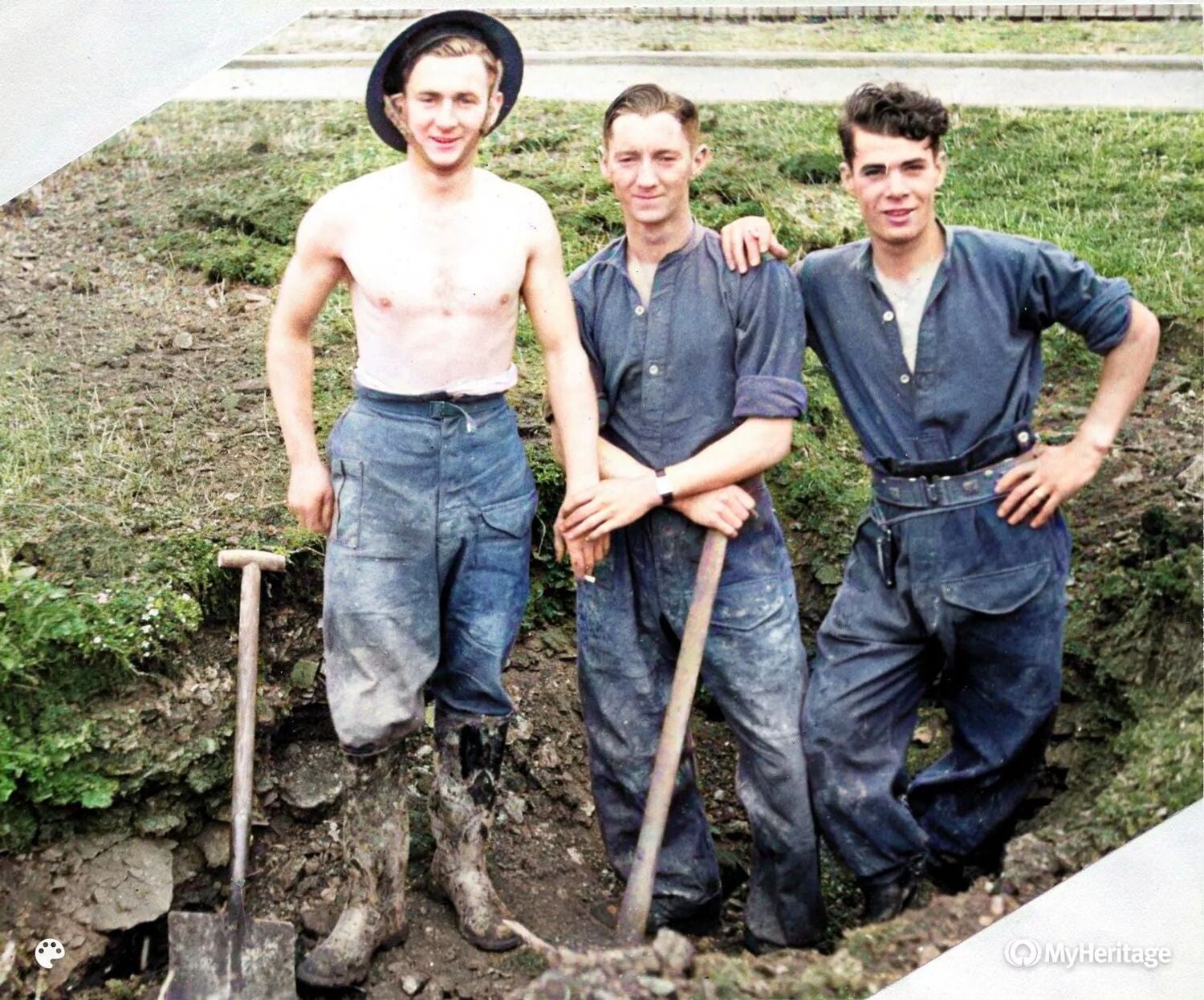
Unexploded bomb, Cookworthy Road, Plymouth, 12th July 1940.
Life in Plymouth during the 1940s in 44 incredible photographs - Plymouth Live


Heinkel 111P G1+FA of Stab./Kampgesschwader 55. Coming in over the Isle of Wight and Southampton Water it was attacked by six Hurricanes of Nº 43 squadron and promptly dropped the bomb load of sixteen 50 kg and crash landed near the 'Horse and Jockey Inn', Hipley, NW of Portsmouth, Hampshire, on the 12th July 1940. The aircraft pictured shortly after landing and disguised from the air, to prevent the Luftwaffe sighting it and damaging it beyond repair. The five crew were taken prisoner but the observer died of his wounds in hospital.