
Overview
The Volcano and Ryukyu Islands Campaign was a major Allied offensive conducted during the final stages of the Pacific War between January and June 1945. Its objective was to capture a series of strategically important Japanese-held islands that would provide airfields, naval bases, and staging areas for future operations against the Japanese mainland.
The campaign began with the invasion of Iwo Jima, part of the Volcano Islands, on 19 February 1945. American planners recognised the island's importance because it lay roughly halfway between the Mariana Islands and Japan. Its airfields enabled Japanese fighters to intercept American B-29 bombers conducting raids against Japanese cities.
After a fierce five-week battle, United States forces secured the island. The capture of Iwo Jima allowed damaged bombers to make emergency landings and provided a base for fighter escorts supporting attacks on Japan.
The second and largest phase of the campaign focused on the Ryukyu Islands, particularly Okinawa.
Located approximately 340 miles from Kyushu, Japan's southernmost main island, Okinawa was considered essential for any future invasion of Japan. Allied forces launched Operation Iceberg on 1 April 1945, landing more than 180,000 troops on the island.
The Battle of Okinawa quickly developed into one of the bloodiest engagements of the Pacific War. Japanese forces employed a determined defensive strategy, using fortified cave systems, underground bunkers, and strong defensive positions to slow the American advance.
The campaign also saw the largest use of kamikaze attacks during the war, inflicting significant damage on Allied naval forces.
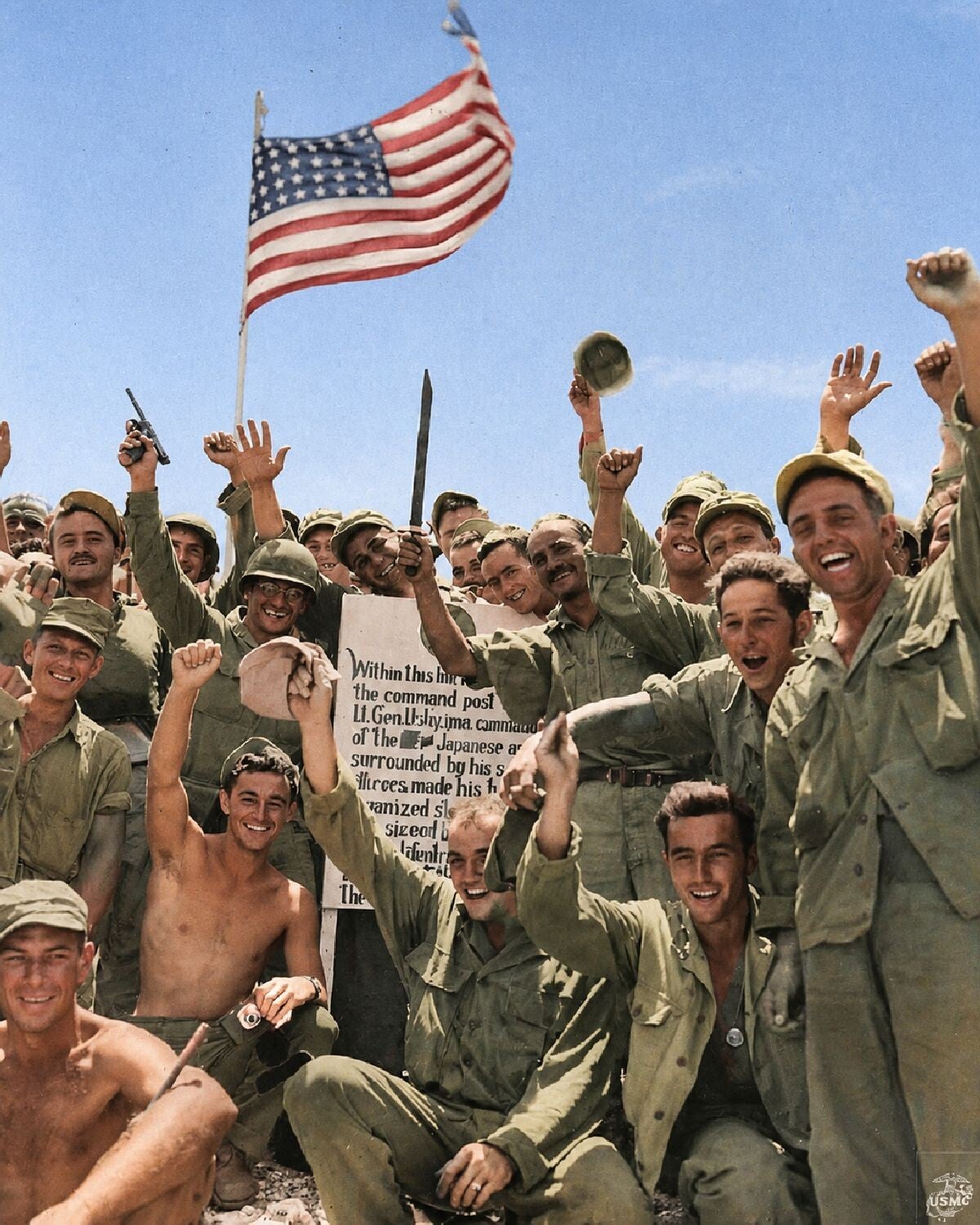
Celebration on Hill 89, Okinawa: First Division Marines and Seventh Division Soldiers cheer the victory after the official flag raising ceremonies. The sign reads "Within this hill is sealed the command post where Lieutenant General Ushijima commander of the Japanese Army surrounded by his senior officers made his final stand. This hill was seized by troops of the Seventh Infantry Division on June 21, 1945, thus ending the battle of Okinawa"
After nearly three months of intense fighting, organised Japanese resistance collapsed in June 1945. The campaign resulted in enormous military and civilian casualties and left much of Okinawa devastated. However, the Allied victory provided a crucial base for operations close to Japan and demonstrated the potentially catastrophic cost of invading the Japanese home islands.
These lessons influenced Allied leaders as they considered the final steps necessary to end the war.
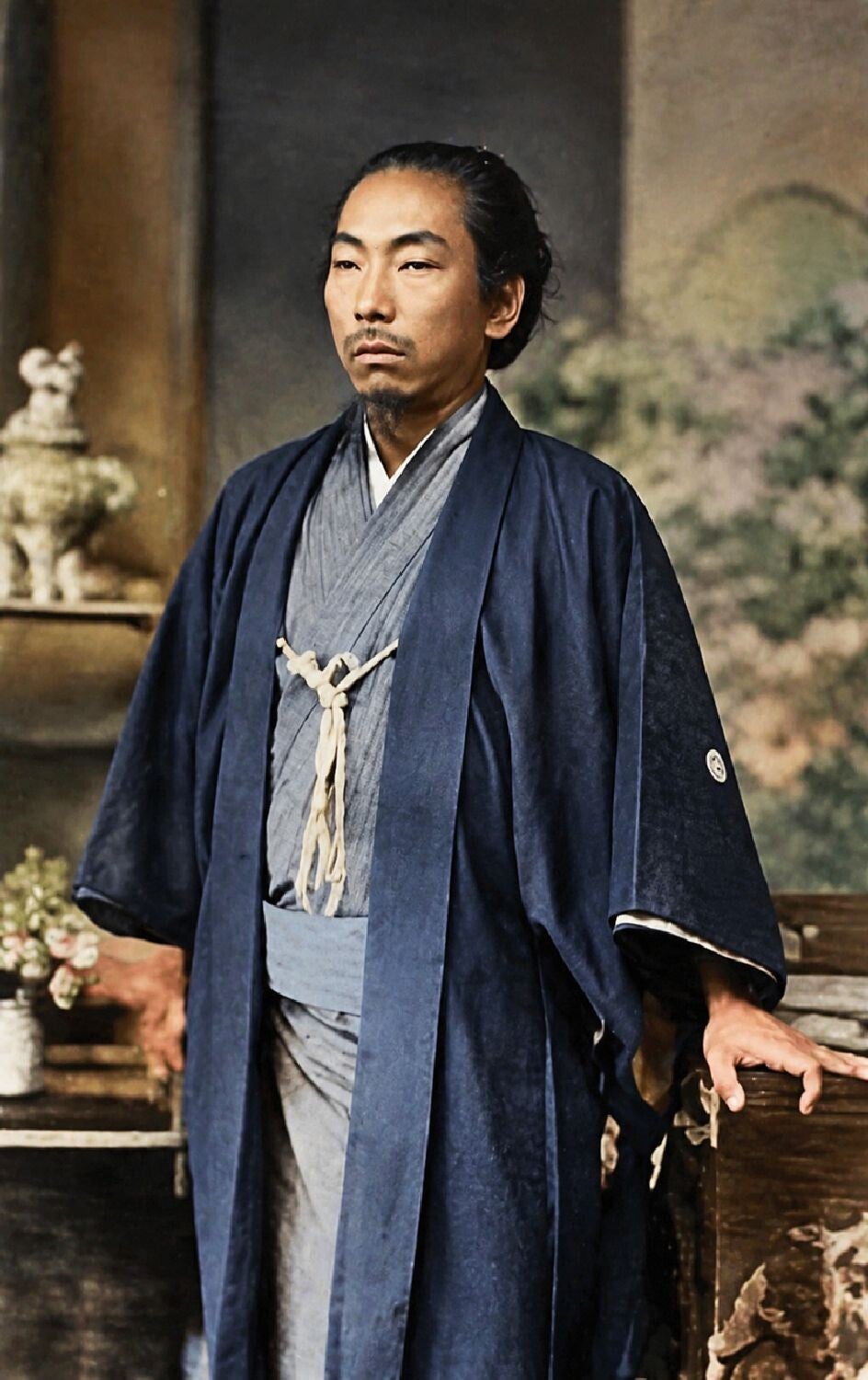
Shō Tai (1843-1901) was the final monarch of the Ryukyu Kingdom, ruling from 1848 until Japan transformed the kingdom into the Ryukyu Domain in 1872. He remained as domain king until 1879, when the Meiji government abolished the domain, annexed Okinawa, and relocated him to Tokyo, marking the end of independent Ryukyuan rule and the full incorporation of Okinawa into Japan.