
Overview
The political history of Danzig during the interwar years was marked by uncertainty, competing national claims, and growing international tensions. Created as the Free City of Danzig by the Treaty of Versailles in 1920, the city occupied a unique position in Europe, existing as a semi-independent state under the protection of the League of Nations while maintaining close economic ties with Poland.
The settlement sought to balance two conflicting realities. Danzig's population was overwhelmingly German-speaking and many inhabitants wished to remain part of Germany. However, the newly re-established Polish state required access to the Baltic Sea to ensure its economic independence. As a compromise, Danzig was separated from Germany but not incorporated into Poland. Instead, Poland was granted important rights relating to customs, foreign affairs, railways, postal services, and the use of the city's port facilities.
From the beginning, the arrangement proved controversial. Many Germans in Danzig regarded the city's separation from Germany as an injustice imposed by the Treaty of Versailles.
Polish leaders, meanwhile, feared that their vital access to the sea could be threatened by the city's German majority. Relations between the Free City and Poland were frequently strained, with disputes arising over trade, administration, and political influence.
During the 1920s, political life in Danzig was dominated by parties representing the German population. The rise of Adolf Hitler and the Nazi Party in Germany had a profound impact on the city. Throughout the early 1930s, the local Nazi Party steadily gained support, capitalising on economic difficulties and nationalist sentiment. In 1933, the Nazis became the largest political force in the Free City's parliament and gradually tightened their control over public life.
As German power increased, Danzig became a focal point of Hitler's foreign policy. Germany demanded the city's return to the Reich and sought transport links across the Polish Corridor. Poland refused these demands, fearing they would undermine its independence. By 1939, Danzig had become one of the most contentious issues in Europe, and the dispute played a significant role in the diplomatic crisis that culminated in the outbreak of the Second World War.
History of Danzig
Danzig, known today as Gdańsk, was one of the most important cities on the Baltic Sea long before the outbreak of the First World War.
Located at the mouth of the Vistula River, it occupied a strategic position between Central Europe and the Baltic trade routes, making it a centre of commerce, culture, and political rivalry for centuries.
The origins of Danzig can be traced to early Slavic settlements established along the Baltic coast during the early Middle Ages.
By the tenth century, the area formed part of the expanding Polish state under the Piast dynasty. Its position on key trade routes encouraged economic growth, and the settlement gradually developed into a prosperous port.
...transformed Danzig into one of the Baltic's leading ports...
In 1308, Danzig was seized by the Teutonic Knights, a German military and religious order that dominated much of the Baltic region.
Under their rule, the city expanded considerably and became an important member of the Hanseatic League, a powerful network of trading cities that controlled much of northern Europe's commerce.
Wealth generated through trade transformed Danzig into one of the Baltic's leading ports.
Following a revolt against Teutonic rule, Danzig returned to Polish sovereignty in 1454.
The Thirteen Years' War ended with the city becoming part of Royal Prussia, a region linked to the Kingdom of Poland while retaining extensive local privileges and self-government.
During the sixteenth and seventeenth centuries, Danzig enjoyed a golden age as a major export centre for Polish grain, timber, and other commodities bound for Western Europe.
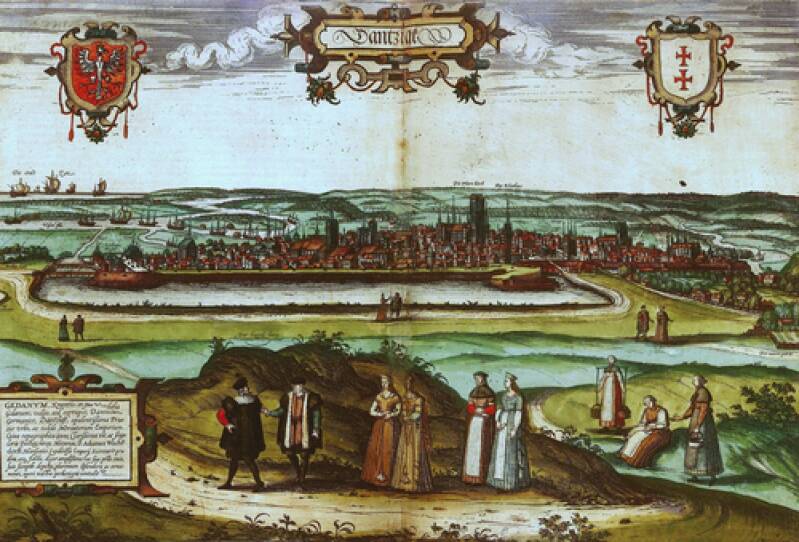
Danzig in the 16th century, published by Georg Braun and Frans Hogenberg. In the 16th century, Danzig was one of the richest and most important ports in the Baltic region. As part of Royal Prussia under the Polish Crown, it enjoyed extensive autonomy and prospered through the export of grain, timber, and other goods. Its bustling harbour attracted merchants from across Europe, while its wealth funded impressive Renaissance architecture that transformed the city's appearance.
...its future would become a major issue...
The city's fortunes changed during the late eighteenth century with the partitions of Poland. In 1793, Danzig was annexed by Prussia.
Napoleon briefly restored it as a Free City between 1807 and 1814, but after his defeat it returned to Prussian control.
Following the creation of the German Empire in 1871, Danzig became one of Germany's principal Baltic ports.
By 1914, Danzig was a thriving industrial and commercial city with a predominantly German-speaking population.
However, its complex history and strategic importance ensured that its future would become a major issue when the First World War came to an end.
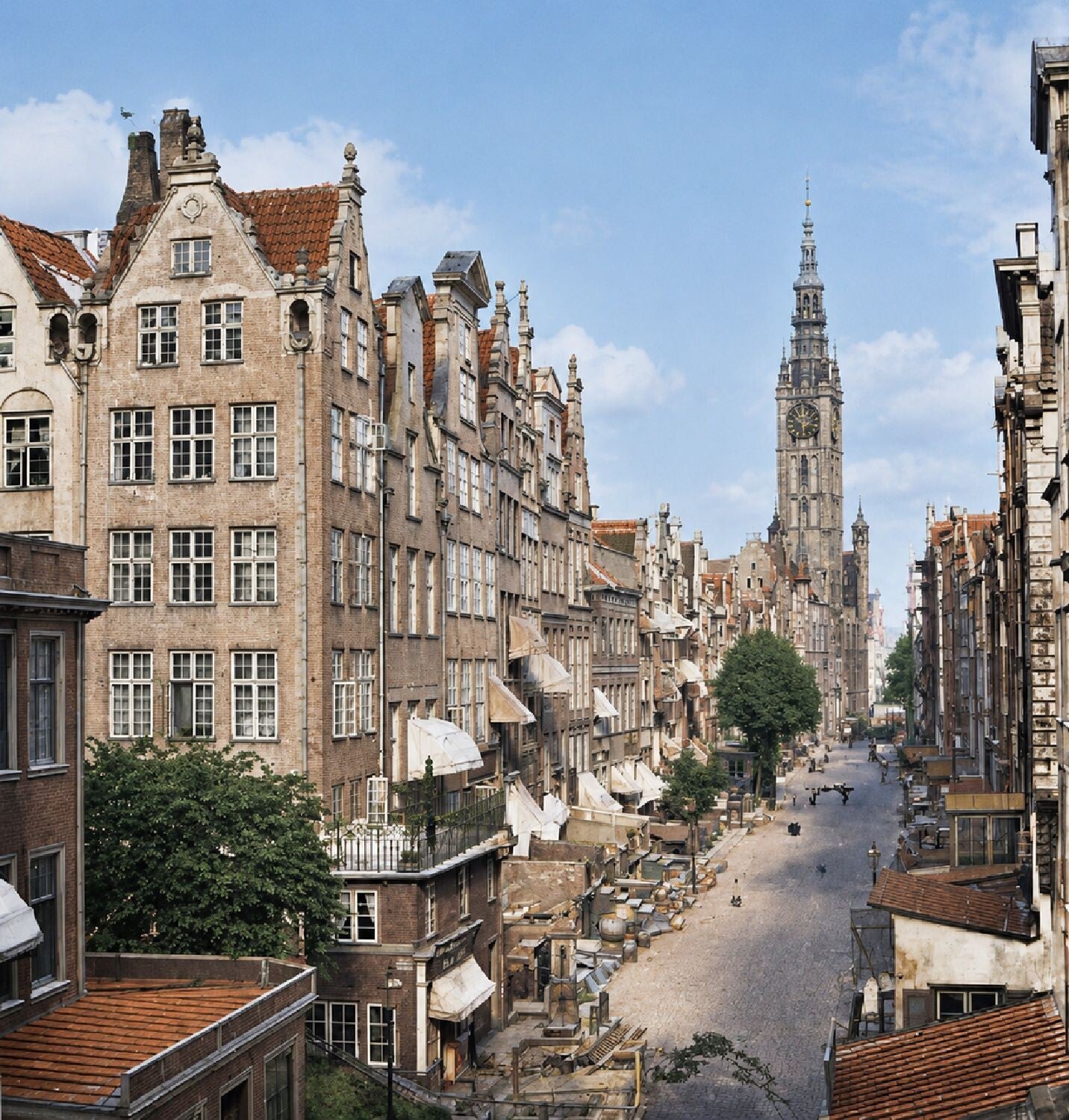
Langgasse, present-day Długa Street, in Danzig, 1855. During the nineteenth century, Danzig occupied a complex political position within the Kingdom of Prussia and later the German Empire. Following the Second Partition of Poland in 1793, the city was annexed by Prussia, ending centuries of association with the Polish-Lithuanian Commonwealth. Although Napoleon briefly established the Free City of Danzig between 1807 and 1814, the Congress of Vienna returned it to Prussian control. Throughout the century, Danzig became increasingly integrated into the German state, reflecting both Prussian authority and the rise of German nationalism.
Versailles
The Treaty of Versailles played a central role in shaping the future of Danzig after the First World War.
Signed on 28 June 1919, the treaty sought to establish a lasting peace in Europe while addressing the territorial disputes that had contributed to the conflict.
One of the most challenging issues faced by the Allied powers was determining the fate of Danzig, an important Baltic port with a predominantly German-speaking population.
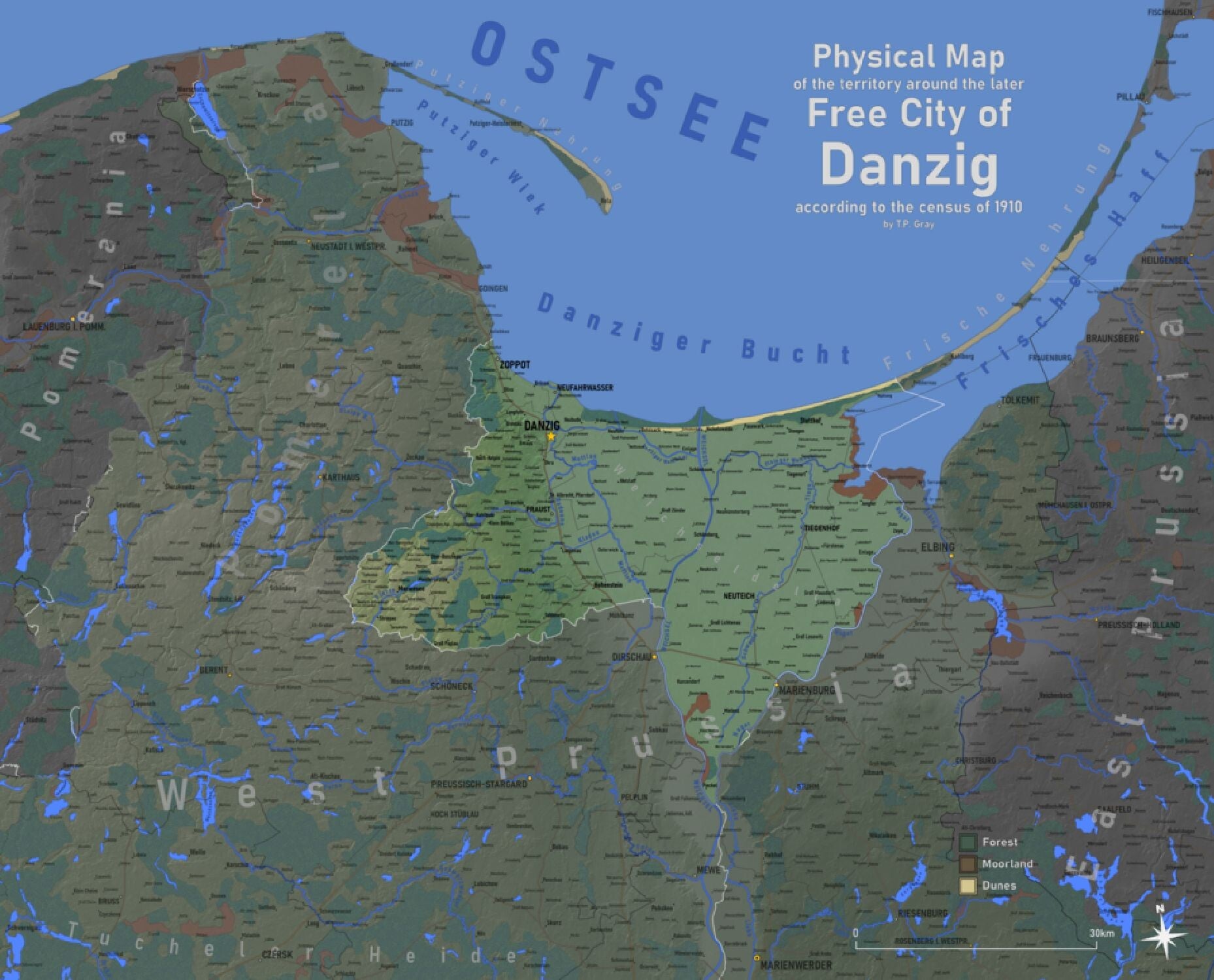
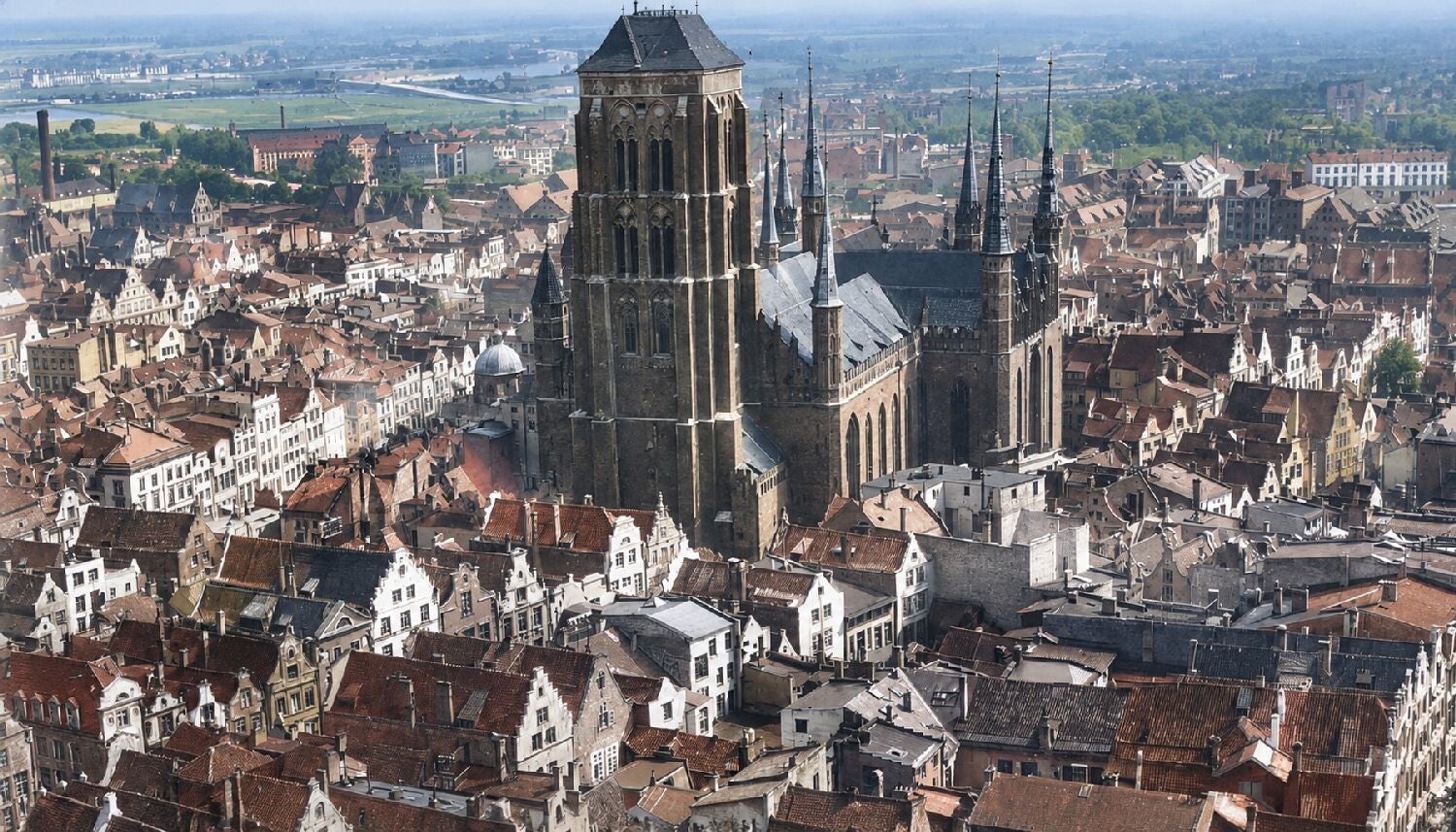
In the years leading up to the First World War, Danzig was an important port city within the German Empire and the capital of the province of West Prussia. Politically, it reflected the tensions of a region inhabited by both Germans and Poles. German authorities pursued policies of centralization and Germanization, while Polish organizations worked to preserve their language, culture, and national identity. These competing loyalties made Danzig a focal point of ethnic and political rivalry on Germany's eastern frontier.
...insisted upon secure access to the sea...
Before the war, Danzig had been part of the German Empire and served as a major centre of trade at the mouth of the Vistula River.
However, the Treaty of Versailles also restored an independent Polish state, and Polish leaders insisted upon secure access to the sea.
Without a major port, Poland's economic and political independence would be severely limited.
At the same time, the Allies were reluctant to place a largely German city directly under Polish rule, fearing unrest among its inhabitants.
Danzig in 1920, when the Free City of Danzig came into existence. In 1920, the Treaty of Versailles transformed Danzig into the Free City of Danzig, a semi-autonomous state placed under the protection of the League of Nations. Although its population was overwhelmingly German, the city was separated from Germany to provide the newly independent Polish Republic with access to the Baltic Sea. Poland received special rights over Danzig's foreign relations, customs, and port facilities. This arrangement satisfied neither Germany nor many of Danzig's inhabitants, creating lasting political tensions.
https://www.inyourpocket.com/poland/gdansk/articles/what-was-the-free-city-of-danzig
...largely self-governing while remaining independent...
The solution was a compromise. Rather than assigning Danzig to either Germany or Poland, the treaty established the city as the Free City of Danzig under the protection of the League of Nations.
This arrangement came into effect on 15 November 1920.
The Free City possessed its own constitution, parliament, senate, and judicial system, making it largely self-governing while remaining independent of both neighbouring states.
Although Danzig was politically separate from Poland, the treaty granted Poland extensive rights within the city.
...a humiliation imposed by Versailles...
Poland was responsible for Danzig's foreign relations, enjoyed access to the port, controlled customs arrangements jointly with the city, and maintained postal, railway, and military facilities.
These provisions were designed to ensure Poland's access to the Baltic Sea while preserving Danzig's distinct political status.
The settlement satisfied neither side completely. Many Germans regarded Danzig's separation from Germany as a humiliation imposed by Versailles, while many Poles considered the city's autonomy a threat to their access to the sea.
Throughout the interwar period, disputes over Danzig remained a source of tension, and the city's status eventually became one of the key issues leading to the outbreak of the Second World War in 1939.
What is a Free City?
A free city is a city or territory that enjoys a special political status, allowing it to govern itself independently of the surrounding states.
Throughout history, free cities have usually been created when competing powers could not agree on who should control a strategically important region.
Rather than placing the territory under the authority of one nation, it was granted varying degrees of autonomy, often with guarantees provided by larger powers or international agreements.
Information
The concept emerged during the Middle Ages, when certain cities gained privileges that allowed them to manage their own affairs, collect taxes, administer justice, and conduct trade without direct interference from local rulers.
This autonomy often encouraged economic growth, helping free cities become major centres of commerce, finance, and culture.
One of the best-known examples was the Free Imperial Cities of the Holy Roman Empire. Cities such as Frankfurt, Nuremberg, Hamburg, and Lübeck answered directly to the Emperor rather than to regional princes.
Their independence allowed them to prosper through trade and self-government, and many became among the wealthiest cities in Europe.
Information
Another notable example was the Free City of Kraków, established in 1815 by the Congress of Vienna.
Positioned between the territories of Austria, Prussia, and Russia, it served as an independent republic intended to prevent disputes between the three powers.
The arrangement lasted until 1846, when Austria annexed the city. Following the Second World War, the Free Territory of Trieste was created as a neutral zone between Italy and Yugoslavia.
Administered under international supervision, it was intended to prevent conflict over a region claimed by both countries.
The arrangement proved temporary, and the territory was eventually divided between its neighbours.
Information
Free cities were often established as diplomatic compromises designed to reduce tensions and prevent conflict.
While some became prosperous commercial hubs and centres of culture, others struggled to maintain their independence in the face of pressure from larger and more powerful states.
Their history reflects the challenges of balancing local autonomy with regional and international political interests.
A Polish Gateway
For many Poles, Danzig represented far more than a disputed city on the Baltic coast.
It was seen as a vital gateway to the sea and an essential component of Poland's economic independence following the restoration of the Polish state in 1918.
After more than a century of partition and foreign rule, Polish leaders believed that access to maritime trade was crucial if the country was to prosper and maintain its sovereignty.
...naturally belonged within Poland's economic sphere...
During the negotiations that followed the First World War, Poland argued that Danzig had strong historical ties to the Polish state.
Although the city had a predominantly German-speaking population by the early twentieth century, it had spent centuries connected to the Kingdom of Poland and had served as the principal outlet for trade along the Vistula River.
Polish representatives therefore believed that the port naturally belonged within Poland's economic sphere.
...essential safeguards...
The Treaty of Versailles attempted to accommodate these concerns by establishing the Free City of Danzig under the protection of the League of Nations.
While the city remained politically separate from Poland, Warsaw received extensive rights relating to customs, foreign affairs, railways, postal services, and access to the port.
From the Polish perspective, these provisions were essential safeguards designed to guarantee access to international markets and prevent economic dependence on Germany.
...relations between Germany and Poland deteriorated...
Despite these arrangements, many Poles remained dissatisfied.
The city's German majority frequently opposed Polish influence, leading to disputes over trade, administration, and political authority.
Concerns increased during the 1920s as relations between Germany and Poland deteriorated.
To reduce dependence on Danzig, Poland invested heavily in the construction and expansion of the nearby port of Gdynia, which rapidly developed into a major competitor.
...essential to preserving national sovereignty...
The rise of Adolf Hitler and the Nazi movement during the 1930s heightened Polish fears.
German demands for the return of Danzig were viewed not as limited territorial claims but as part of a broader challenge to Poland's independence.
Consequently, many Poles regarded the defence of their rights in Danzig as essential to preserving national sovereignty.
By 1939, the city's future had become inseparable from the growing threat of war in Europe.
A German Obsession
For Germans, Danzig was widely regarded as a German city that had been unjustly separated from Germany by the Treaty of Versailles.
Although the city possessed a complex history and had longstanding ties to Poland, by the early twentieth century its population was overwhelmingly German-speaking.
Many Germans therefore viewed Danzig's removal from the German Empire in 1920 as a violation of the principle of national self-determination that had been promoted after the First World War.
The creation of the Free City of Danzig was particularly controversial because it was established without a plebiscite.
Many German politicians argued that the inhabitants should have been allowed to vote on their future. Instead, the city was detached from Germany and placed under the protection of the League of Nations.
While Danzig remained politically independent, Poland received significant rights over its foreign affairs, customs arrangements, railways, and port facilities.
To many Germans, these provisions appeared to place a German city under indirect Polish influence.
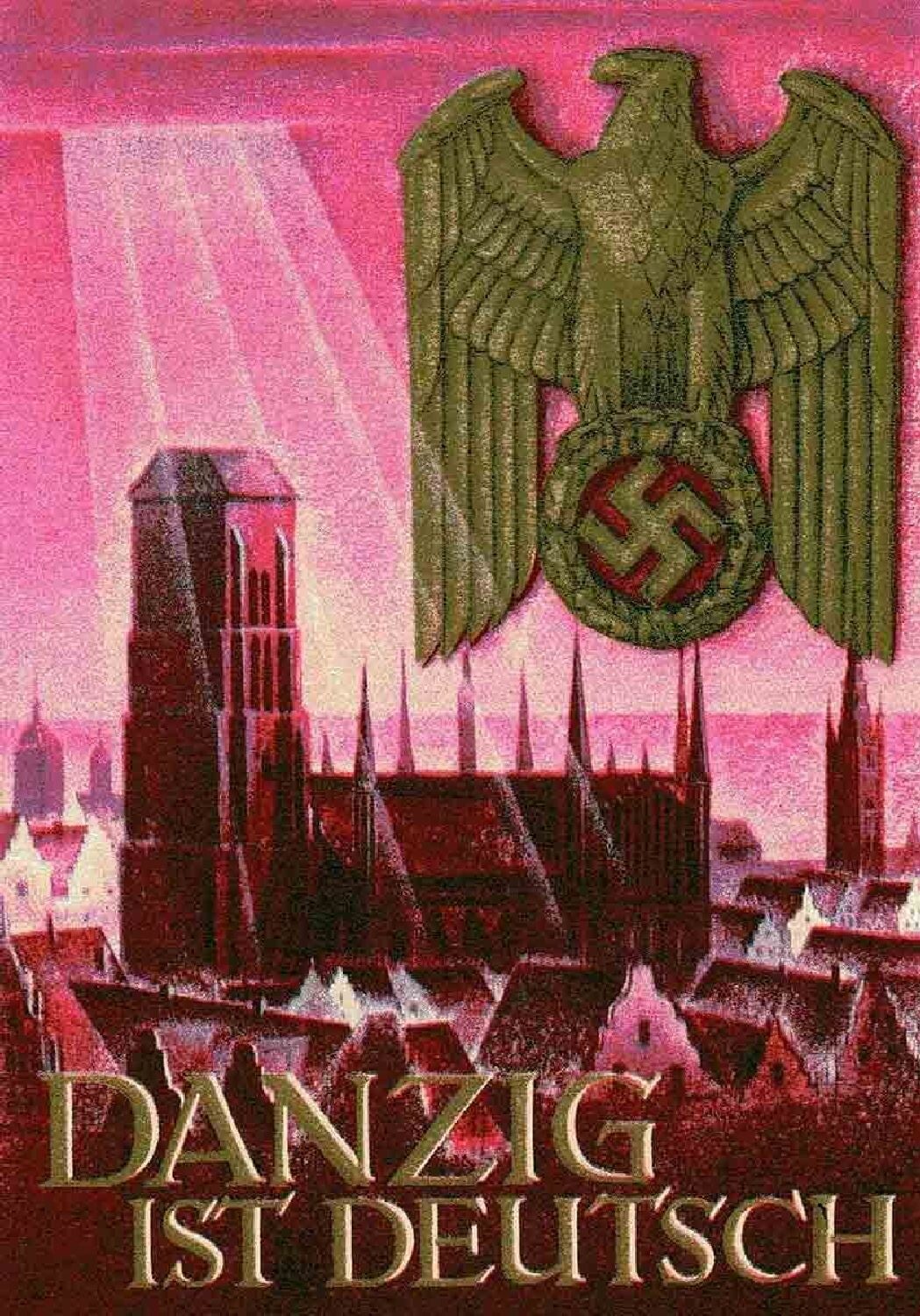
'Danzig is Deutsch'. This German propaganda uses the Nazi eagle and swastika dominating Danzig's skyline to suggest the city's natural place lies within Nazi Germany. Germany claimed that the Free City of Danzig, although separated from Germany under the Treaty of Versailles, remained overwhelmingly German in population, language, and culture. Hitler argued that Danzig should be reunited with the Reich and used the issue to justify increasing pressure on Poland before 1939.
https://www.thecollector.com/history-free-city-danzig-gdansk/
Information
Throughout the 1920s, German political parties in Danzig campaigned for closer ties with Germany and opposed what they saw as Polish interference in the city's affairs.
Economic disputes between Danzig and Poland further strengthened nationalist sentiment. Many residents believed the Versailles settlement had damaged both the city's prosperity and its connection to the German homeland.
The rise of Adolf Hitler and the Nazi Party transformed the issue into a major element of German foreign policy.
Nazi propaganda portrayed Danzig as one of the clearest examples of the alleged injustices imposed by Versailles.
Germany demanded the city's return to the Reich and sought the construction of extraterritorial road and rail links across the Polish Corridor to connect East Prussia with the rest of Germany.
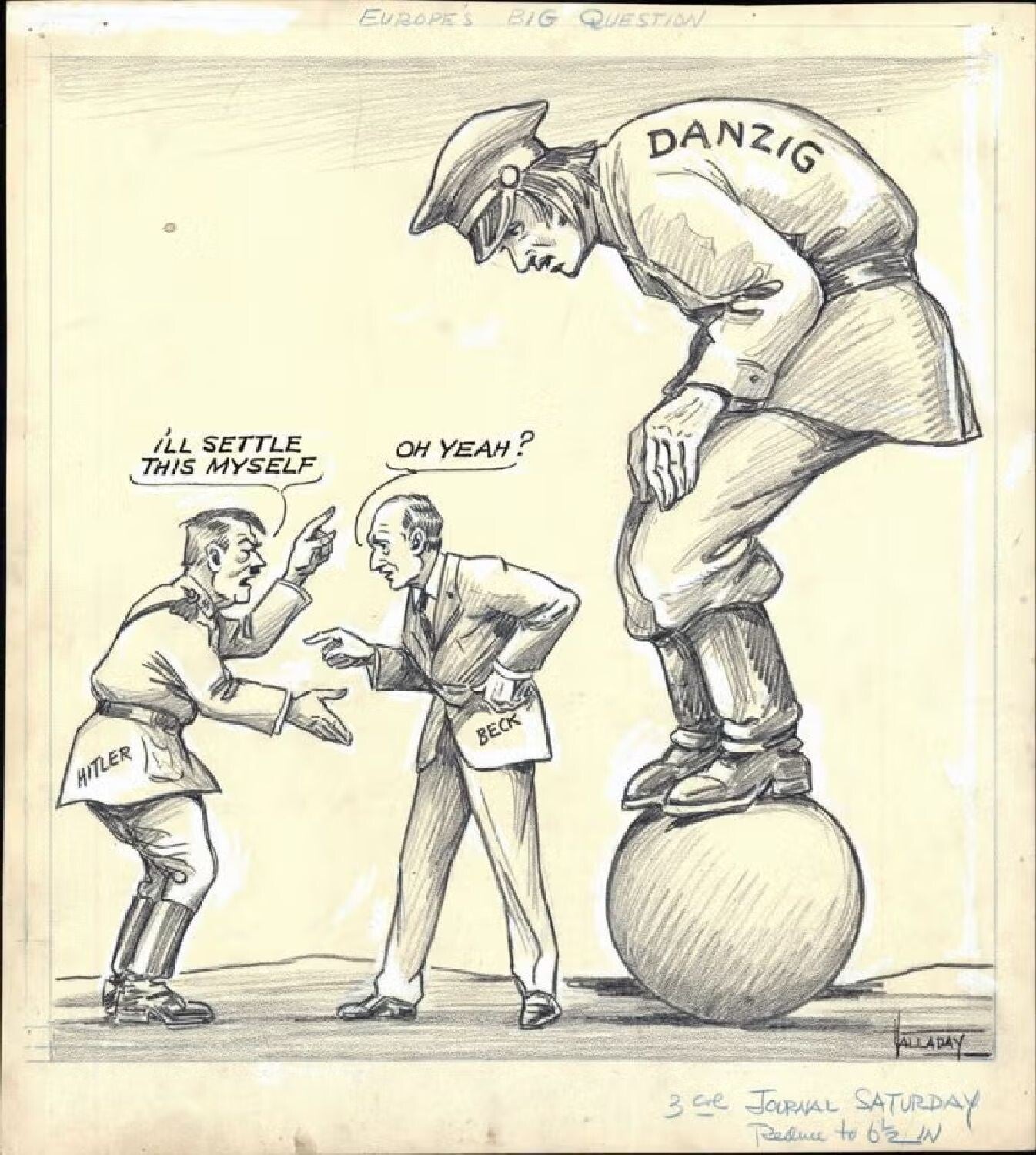
'Europe’s Big Question'
https://sites.lsa.umich.edu/ww2/1939/01/07/europes-big-question-january-7-1939/
Information
By the late 1930s, many Germans viewed the return of Danzig as a legitimate national objective.
However, Polish leaders feared that conceding the city would weaken Poland's independence and encourage further German demands.
As tensions increased, Danzig became one of the most prominent disputes in Europe, helping to bring Germany and Poland into direct confrontation on the eve of the Second World War.
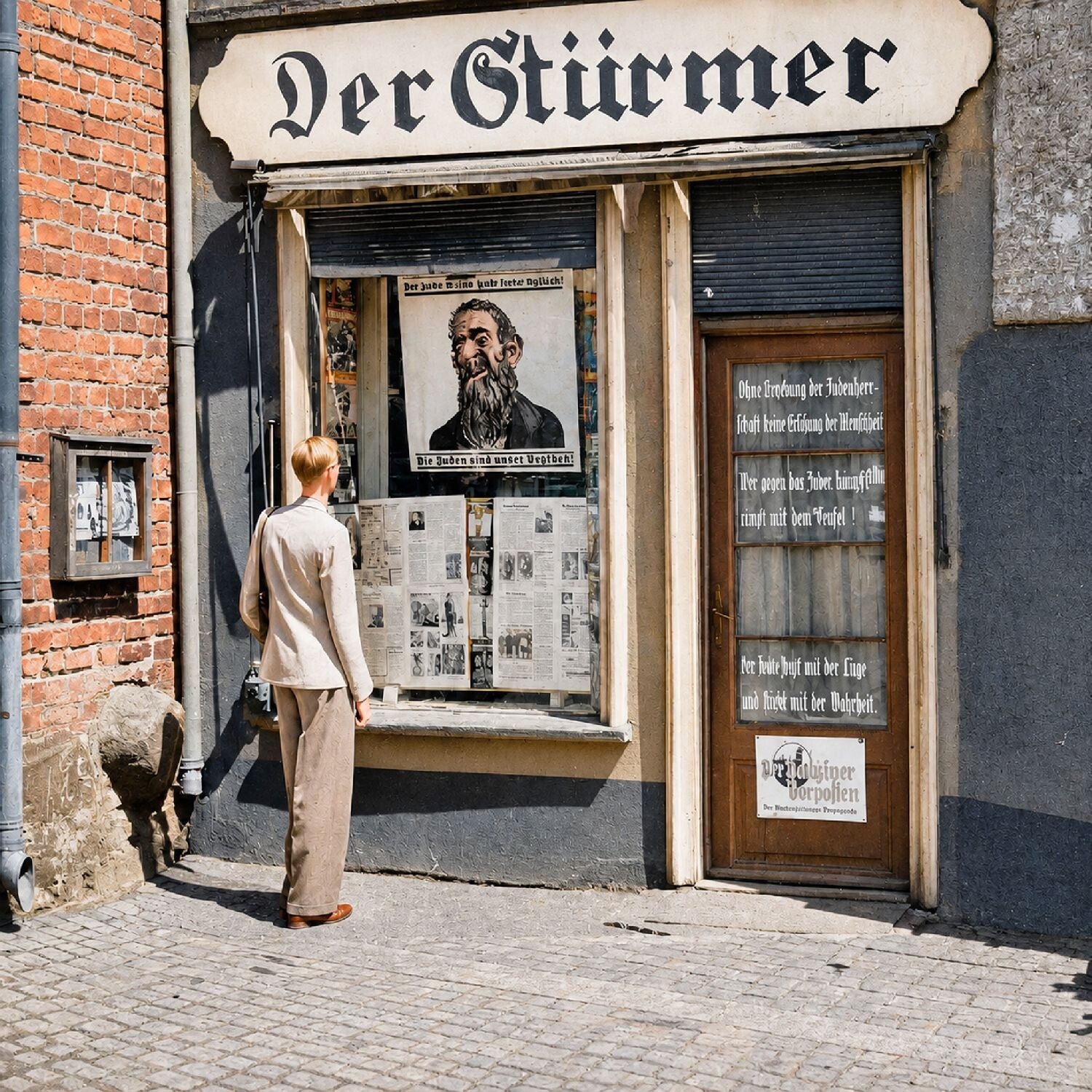
A young man looks at the antisemitic caricature in the display window of the Danzig office of "Der Stürmer." The poster reads: "The Jews are our misfortune." Danzig, 1939. Nazi antisemitism was woven into Germany's claims over Danzig. Propaganda portrayed Poland and international diplomacy as part of a supposed Jewish conspiracy to weaken Germany after the Treaty of Versailles. Hitler's regime exploited grievances over Danzig and the Polish Corridor, linking territorial demands with racist ideology. By presenting German reunification as both a national and racial struggle, the Nazis used antisemitism to justify expansionist policies and mobilize public support for their aggressive foreign policy.
https://encyclopedia.ushmm.org/content/en/gallery/danzig-photographs
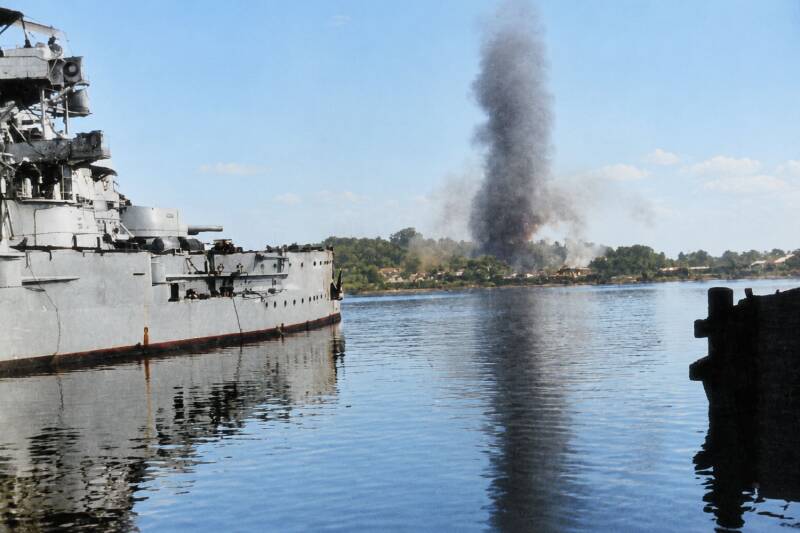
The political status of Danzig was central to the outbreak of war in 1939. Hitler demanded the city's return to Germany, exploiting tensions over its separation after Versailles. When negotiations failed, the German battleship Schleswig-Holstein, ostensibly on a goodwill visit to Danzig, opened fire on the Polish garrison at Westerplatte on 1 September 1939. The bombardment marked the beginning of the German invasion of Poland and the Second World War.
Further Reading


