
Overview
The Aleutian Islands fighting constitutes a discrete, self‑contained campaign within the Pacific War, though its origins lay inside Japan’s broader Midway operation. In Japanese planning, the seizure of Attu and Kiska formed the northern diversion of Operation MI, intended to draw U.S. naval forces away from Midway and to secure a buffer against possible American air approaches to the Kuriles. Once the Midway attack failed, the Aleutian occupation lost strategic coherence for Japan but remained a live theatre that required American resolution.
For the United States, the situation was different. The occupation of Attu and Kiska in June 1942 represented the only capture of U.S. territory by an Axis power. This fact alone elevated the Aleutians from a diversionary action into a defined campaign requiring dedicated forces, logistics, and command arrangements. The terrain and climate imposed severe constraints: fog, wind, cold, and isolation shaped operations more than enemy activity. Airfields had to be built under extreme conditions, supply lines stretched over vast distances, and combat units operated in an environment closer to the Arctic than the Central Pacific.
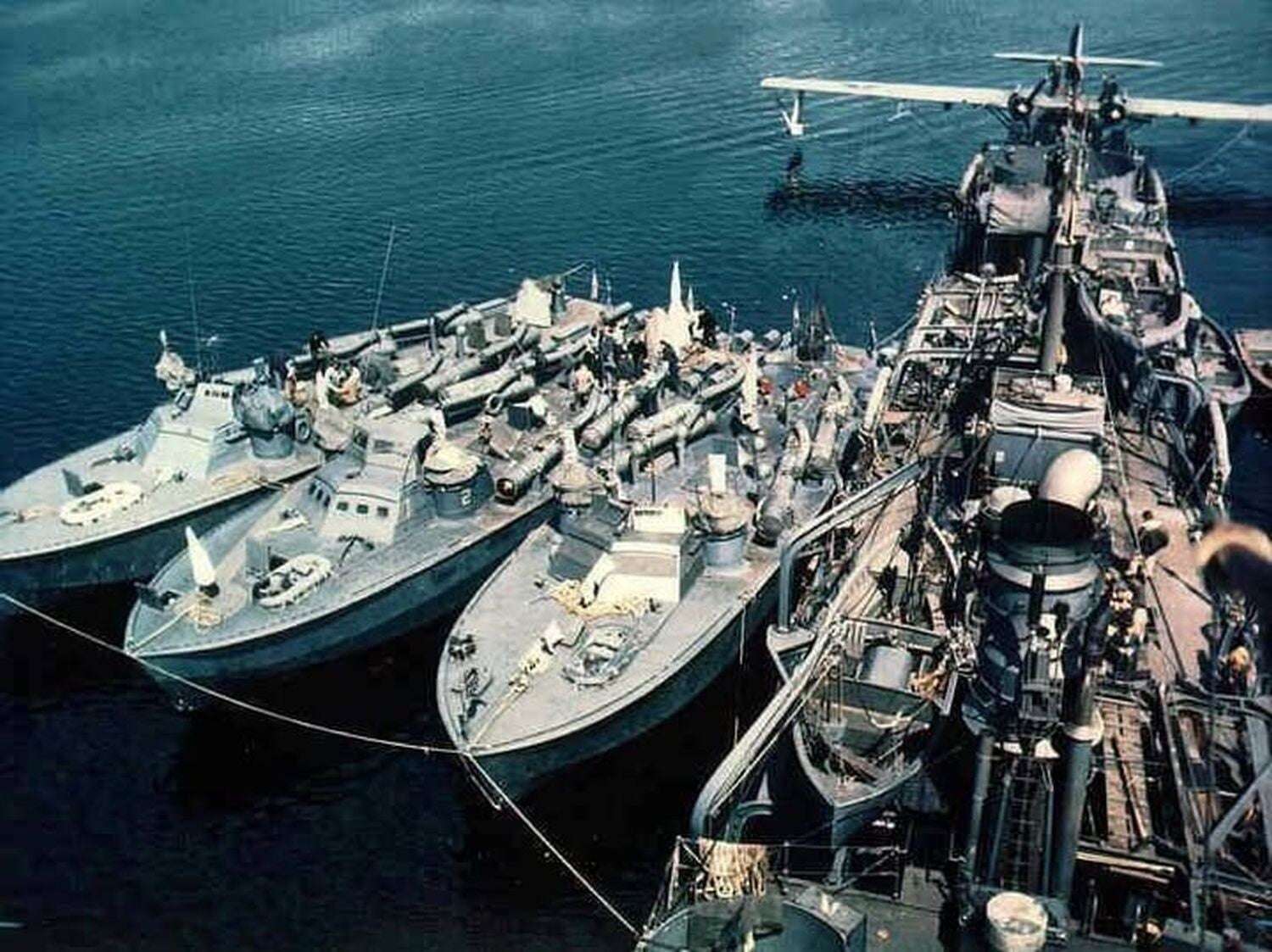
Three U.S. Navy Higgins-type patrol torpedo (PT) boats from Motor Torpedo Squadron 13 are moored alongside the seaplane tender USS Gillis (AVD-12) at Attu Island in the Aleutian Islands. June 21, 1943.
The campaign unfolded in three phases. First came Japanese occupation and consolidation. Second was the American buildup, marked by air and naval interdiction from bases at Adak and Amchitka. Third was the ground assault. The landing on Attu in May 1943 produced intense close‑quarters fighting and high casualties relative to the size of the battlefield. Kiska, by contrast, was found abandoned in August 1943 after Japan executed a successful evacuation under cover of weather and darkness.
Once both islands were secured, the Aleutians became a northern flank anchor for the United States and a base for air raids against the Kuriles, forcing Japan to divert resources to defend its northern approaches. In American historical treatment, this sequence is recognised as the Aleutian Islands Campaign.