
Overview
Saipan, captured in June–July 1944, marked a decisive shift in the Pacific War. Its loss severed Japan’s outer defensive ring and exposed the home islands to sustained strategic bombing. The island’s geography shaped the battle: a mountainous northern spine, dense vegetation, and a heavily fortified coastal plain that enabled the Japanese 43rd Division and supporting units to construct interlocking defensive positions. For U.S. planners, Saipan’s airfields—particularly Aslito—were the primary objective, intended for B‑29 operations against Japan.
The landing on 15 June brought the 2nd and 4th Marine Divisions ashore under intense fire. Japanese artillery, pre‑registered on the beaches, inflicted heavy casualties in the first hours, and several landing zones became congested as units fought to secure footholds. Despite this, the Marines pushed inland, isolating pockets of resistance and capturing key terrain that allowed armour to move forward. The arrival of the 27th Infantry Division expanded the perimeter and enabled a coordinated drive toward the central plateau.
Japanese counterattacks were determined and often costly. The largest, on the night of 6–7 July, involved several thousand troops attempting to break through American lines near Tanapag. It was repelled only after close‑quarters fighting involving infantry, tanks, and artillery. By this stage, organised resistance had collapsed, though isolated groups continued fighting in the northern caves and cliffs.
Civilian suffering was severe. Japanese propaganda had convinced many inhabitants that capture meant torture or execution, leading to mass suicides along the Marpi cliffs as the battle reached its final phase. U.S. forces attempted to halt these acts, but the combination of fear, coercion, and chaos made intervention difficult. Saipan’s capture enabled the subsequent invasions of Tinian and Guam and provided a forward base for the strategic air campaign. It also triggered political upheaval in Tokyo, contributing to the fall of the Tōjō government. The battle demonstrated the escalating intensity of island warfare and foreshadowed the scale of resistance expected in the final approach to Japan.
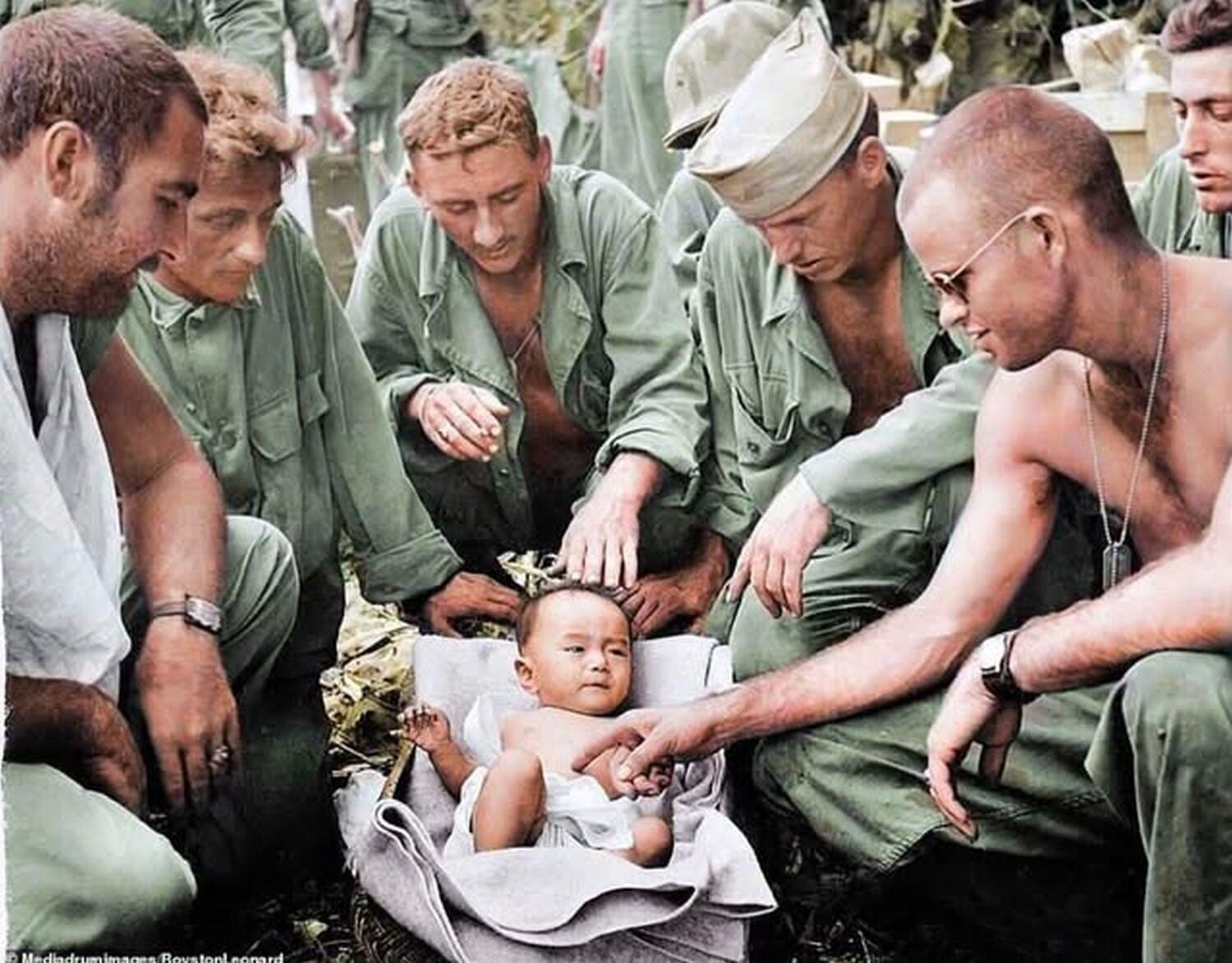
In July 1944, during the Battle of Saipan, a tank crew from the U.S. Army’s 27th Infantry Division heard a baby crying at the foot of Mount Tapotchau after the fighting. In the middle of the war, they found the baby in the arms of its dead mother. The baby had a shrapnel wound to its head. They immediately took it by tank to a front-line medical unit and treated its wounds. The soldiers quickly grew attached to this little Japanese baby, and as you can see in the photo, they gathered around and cared for it tenderly. This act of humanity during one of the war’s most brutal days went down in history as “The 27th Division’s Adopted Baby.