Overview
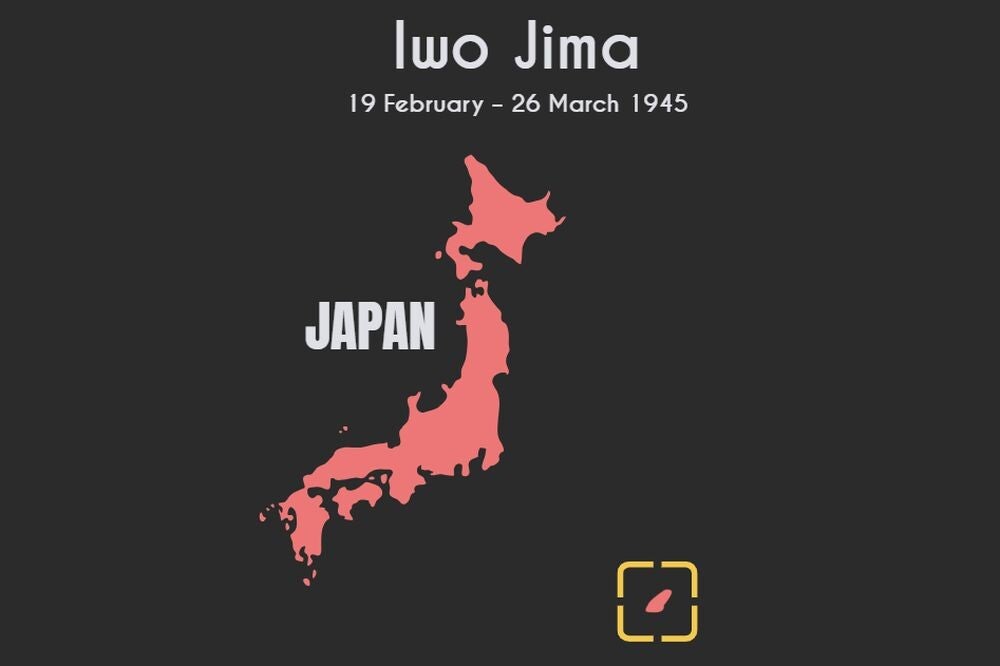
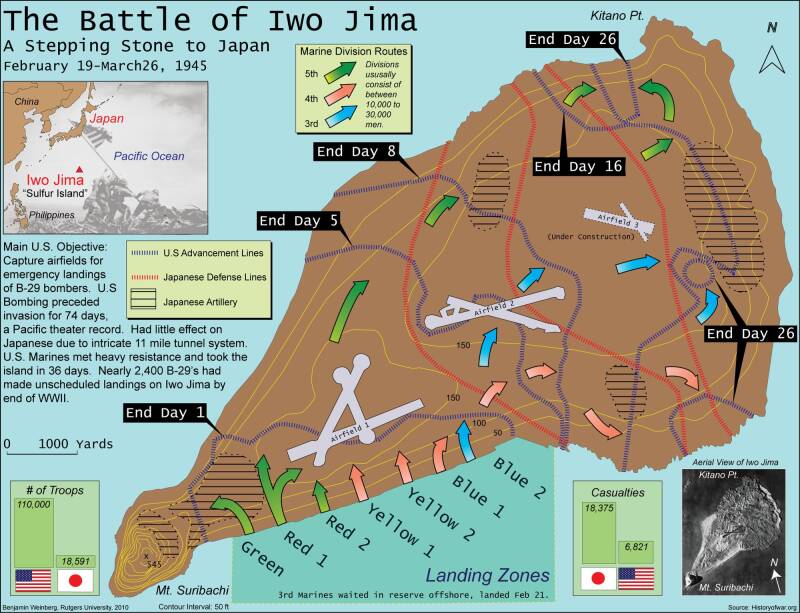
The Battle of Iwo Jima, fought between 19 February and 26 March 1945, was one of the most intense and costly engagements of the Pacific War. The island, a small volcanic outcrop roughly halfway between the Marianas and Japan, held strategic value because its airfields could support Japanese interceptors and provide emergency landing grounds for American B‑29 bombers. Capturing it became a priority for U.S. planners preparing for the final stages of the war.
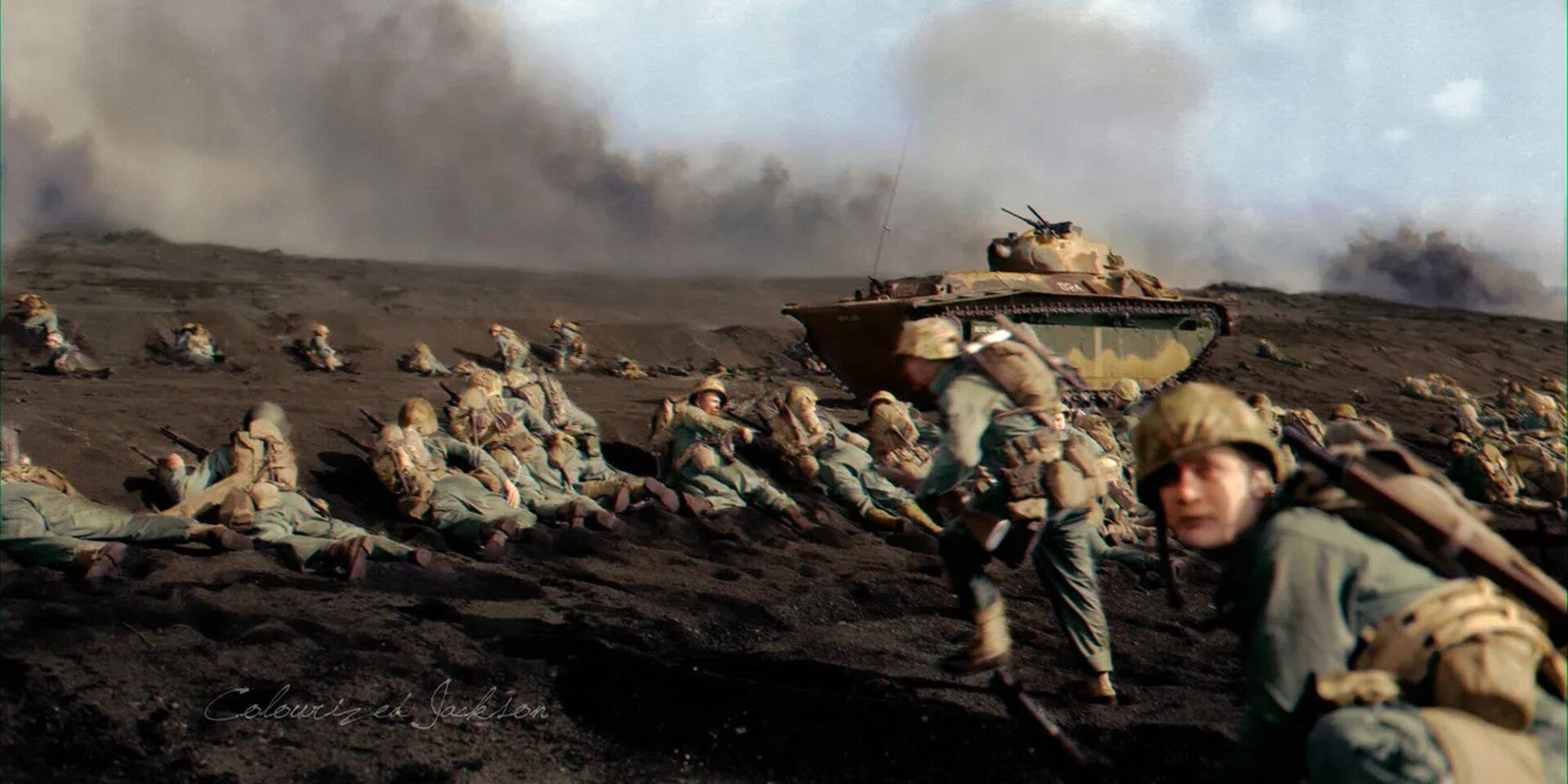
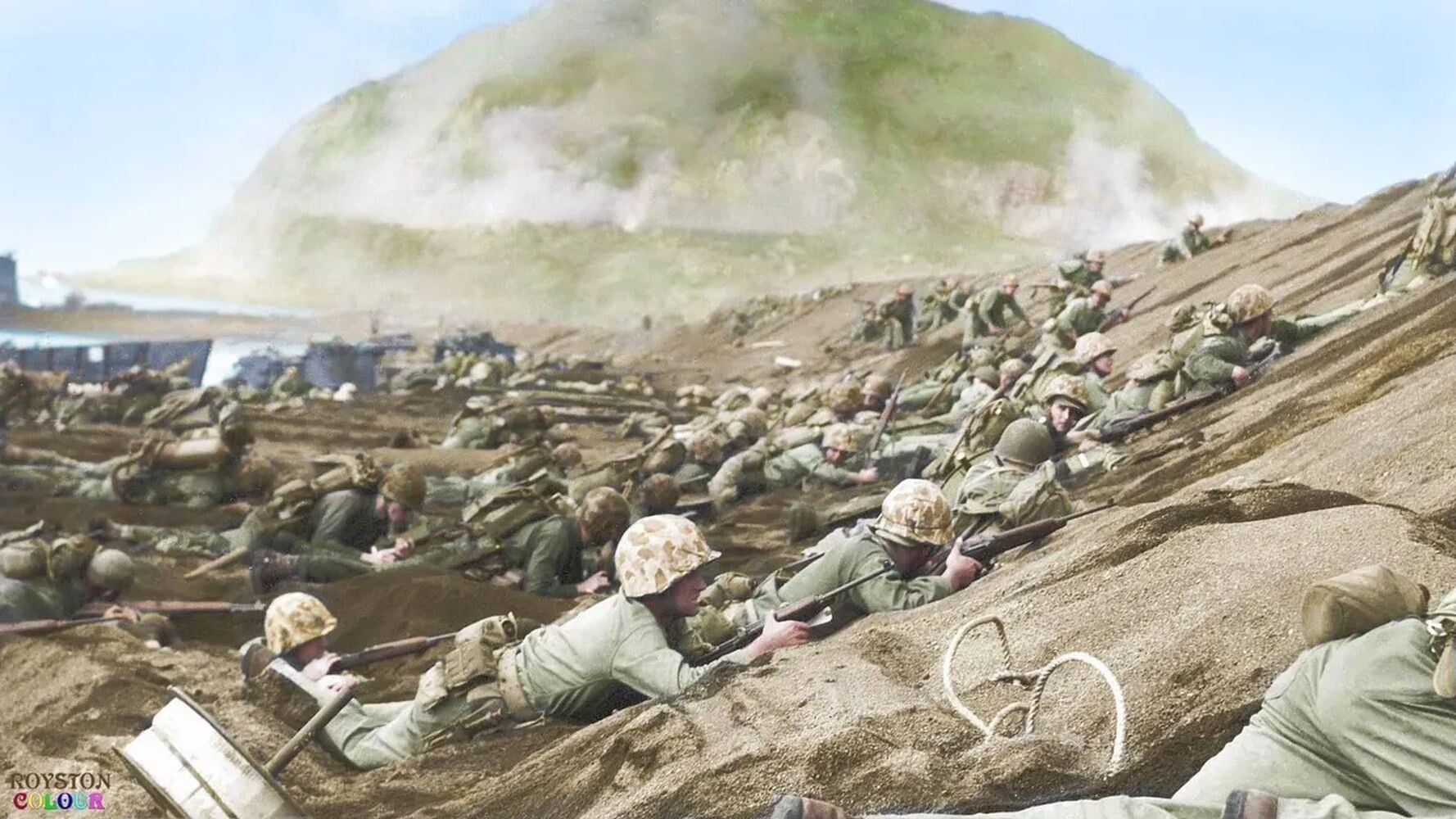
The assault began on 19 February when the 4th and 5th Marine Divisions, later reinforced by the 3rd Marine Division, landed on the island’s southeastern beaches. The terrain immediately hindered movement: loose volcanic ash slowed vehicles and men, while Japanese forces under General Tadamichi Kuribayashi fought from a vast network of tunnels, bunkers, and concealed firing positions. Kuribayashi’s defensive strategy avoided wasteful banzai charges and instead relied on coordinated, lethal fire designed to inflict maximum casualties.
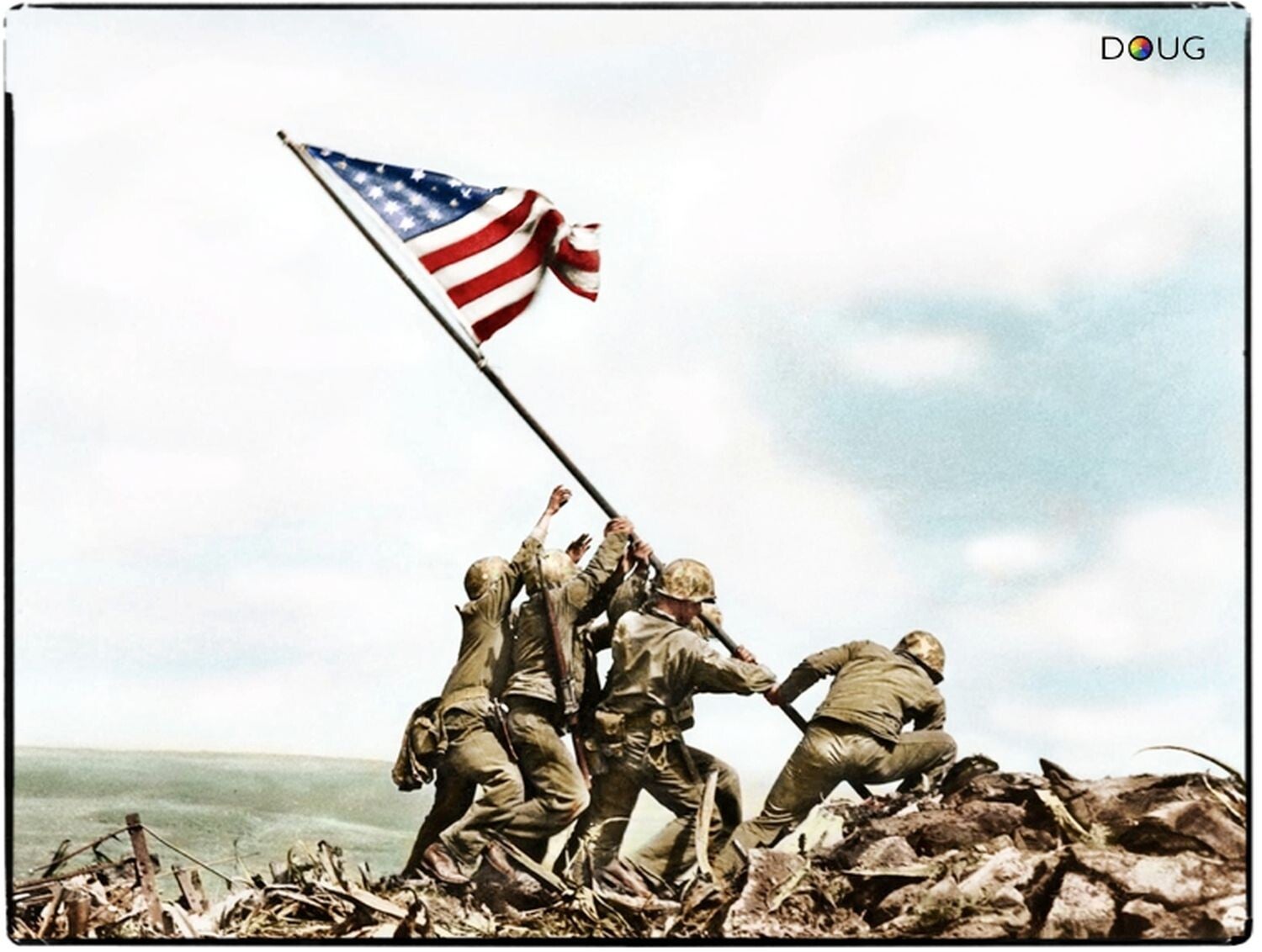
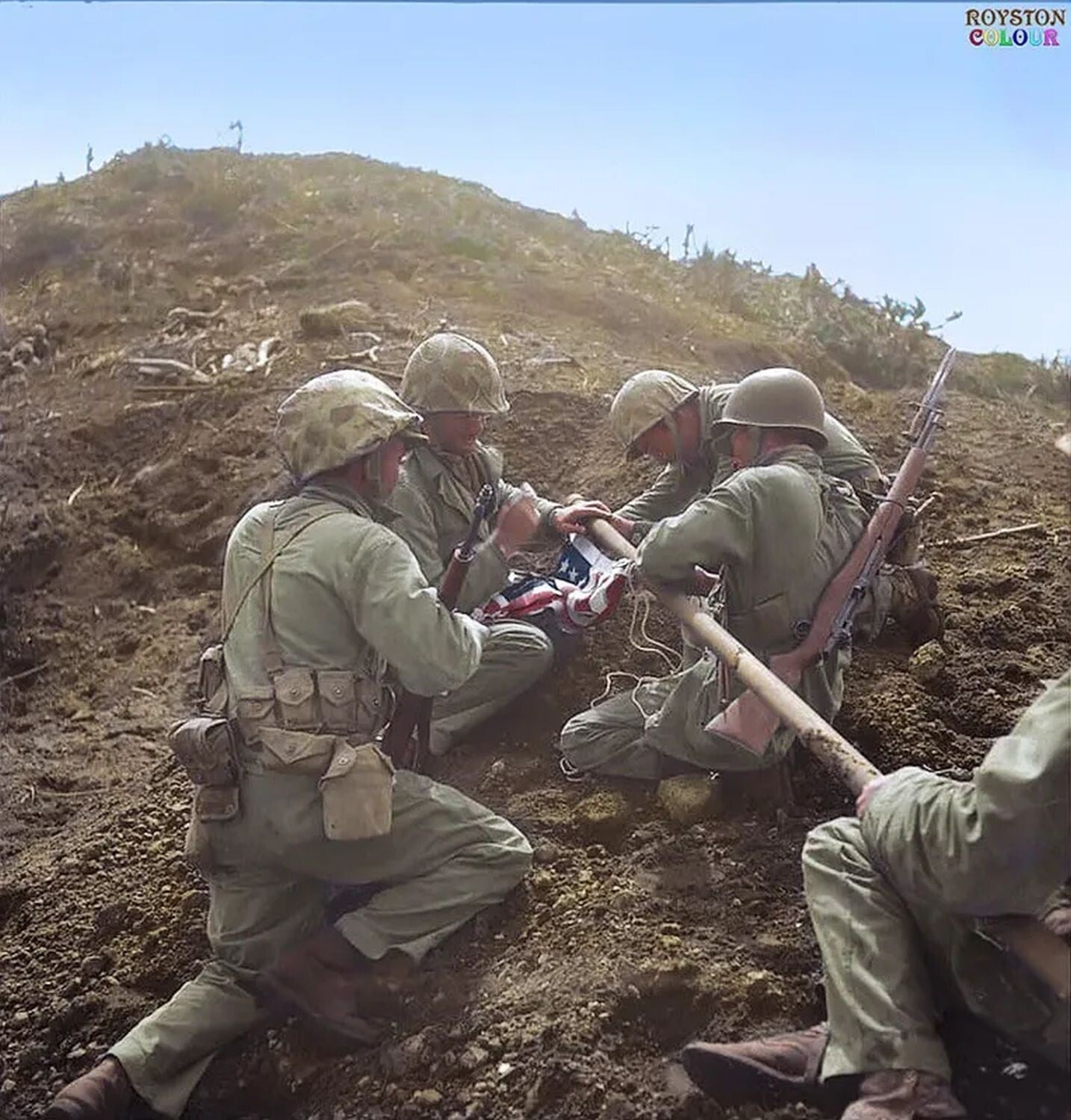
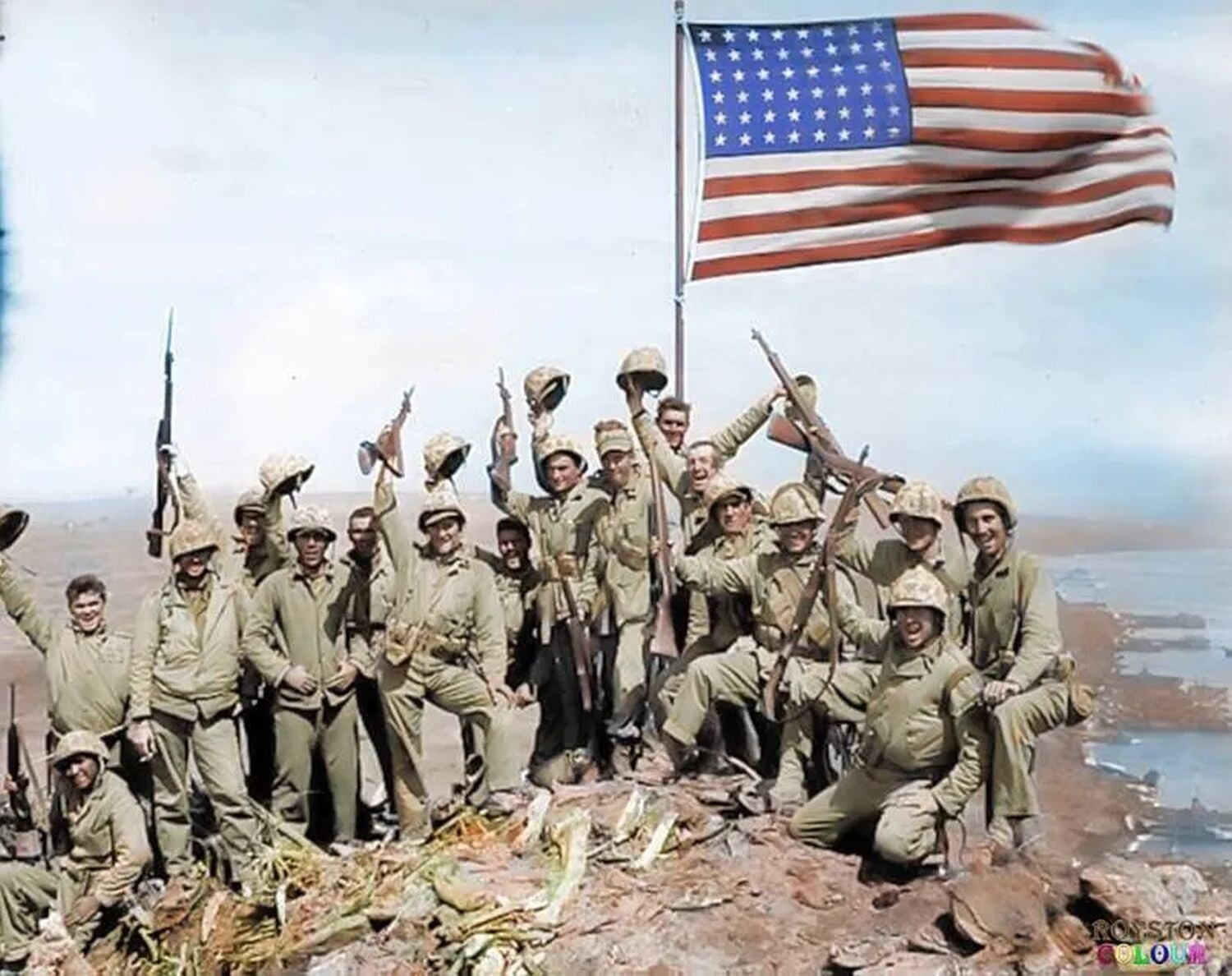
The iconic raising of the flag on Iwo Jima on 23 February 1945 symbolised the hard‑fought Marine advance on Mount Suribachi. Captured during brutal close‑quarters fighting, the moment reflected determination, sacrifice, and the turning of the battle’s southern front, becoming one of the most enduring images of the Pacific War.
Colourised by DOUG
The struggle for Mount Suribachi, dominating the southern end of the island, became one of the battle’s defining episodes. After days of brutal fighting, Marines secured the summit on 23 February, raising the U.S. flag in an image that became iconic. Yet Suribachi represented only a fraction of the island; the main Japanese defensive zone lay further north, where resistance intensified.
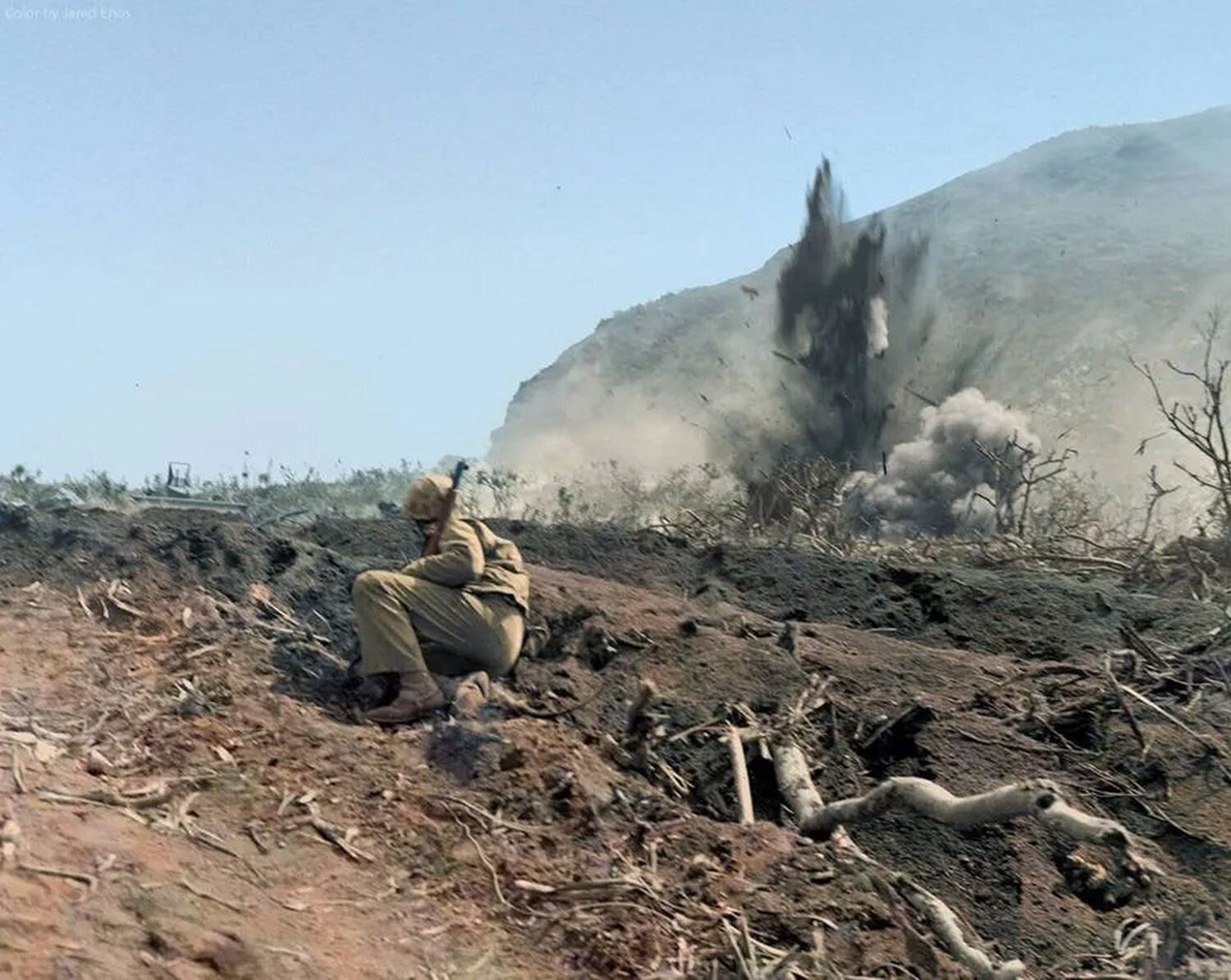
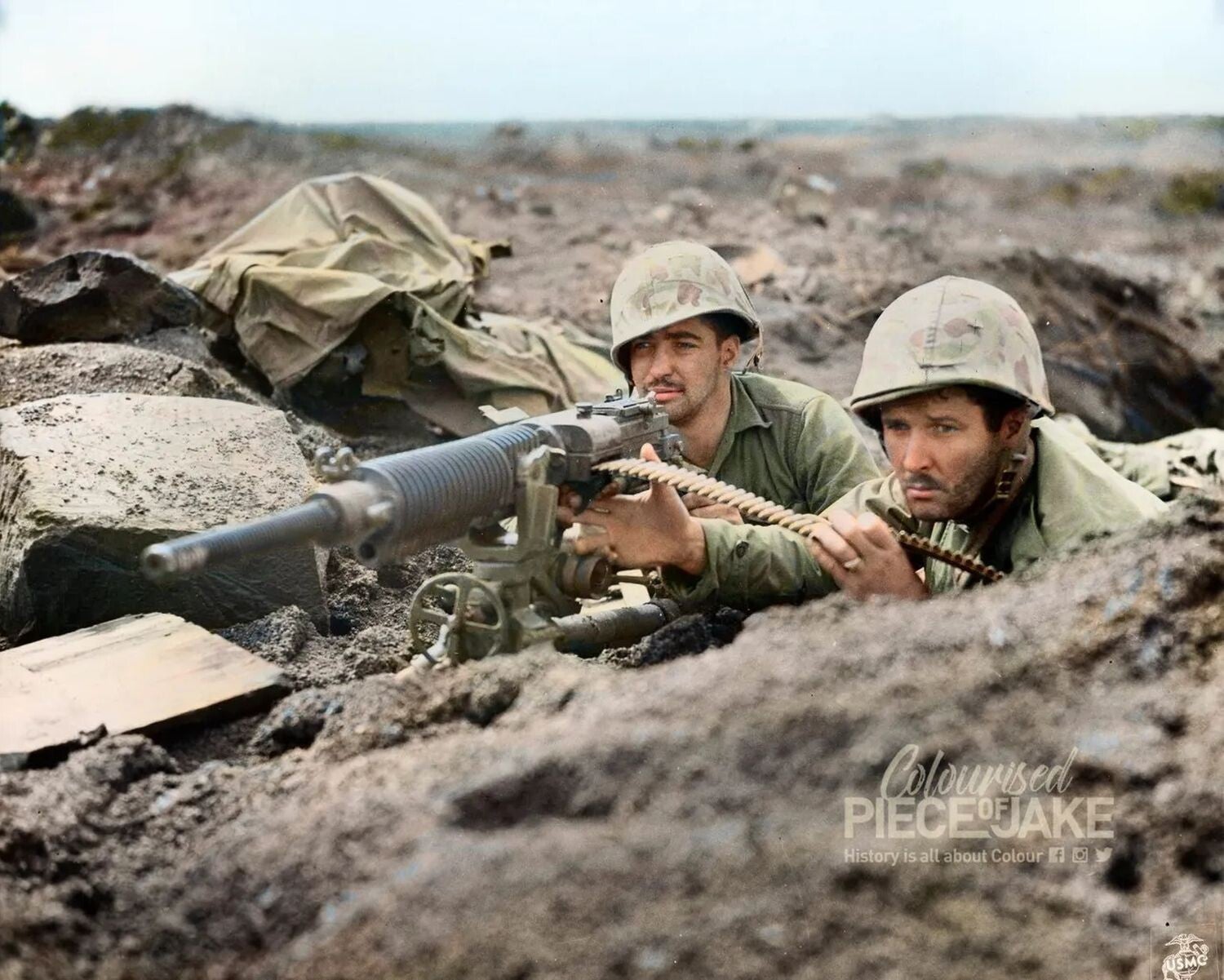
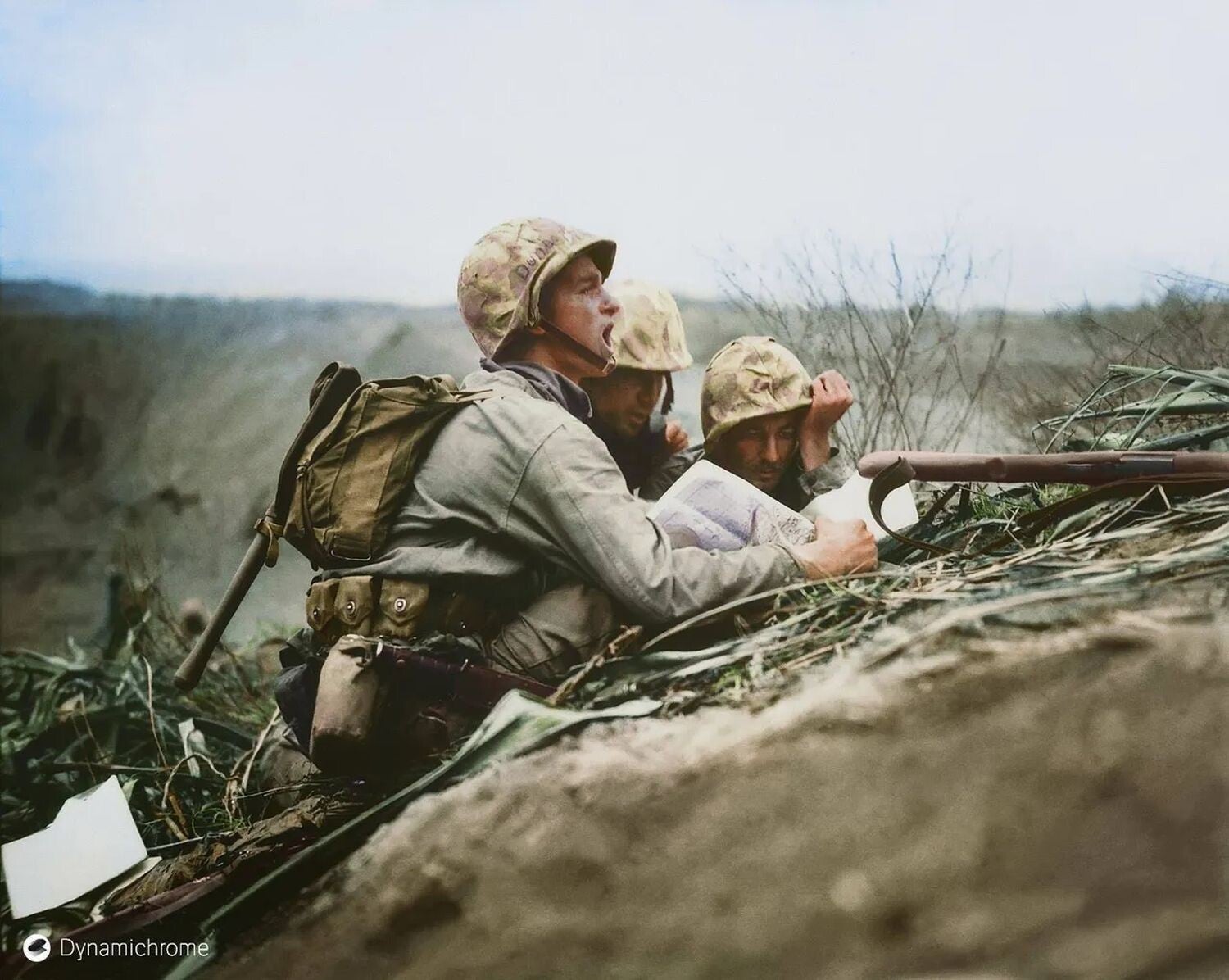
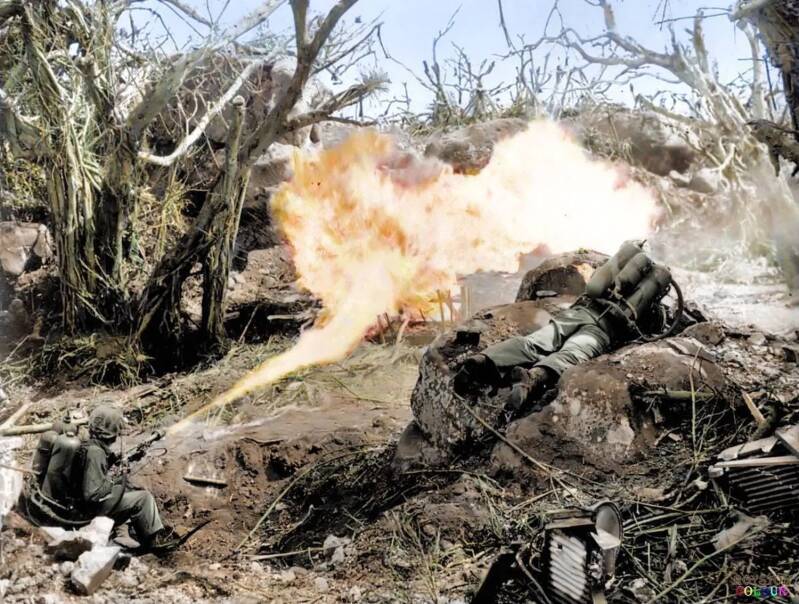
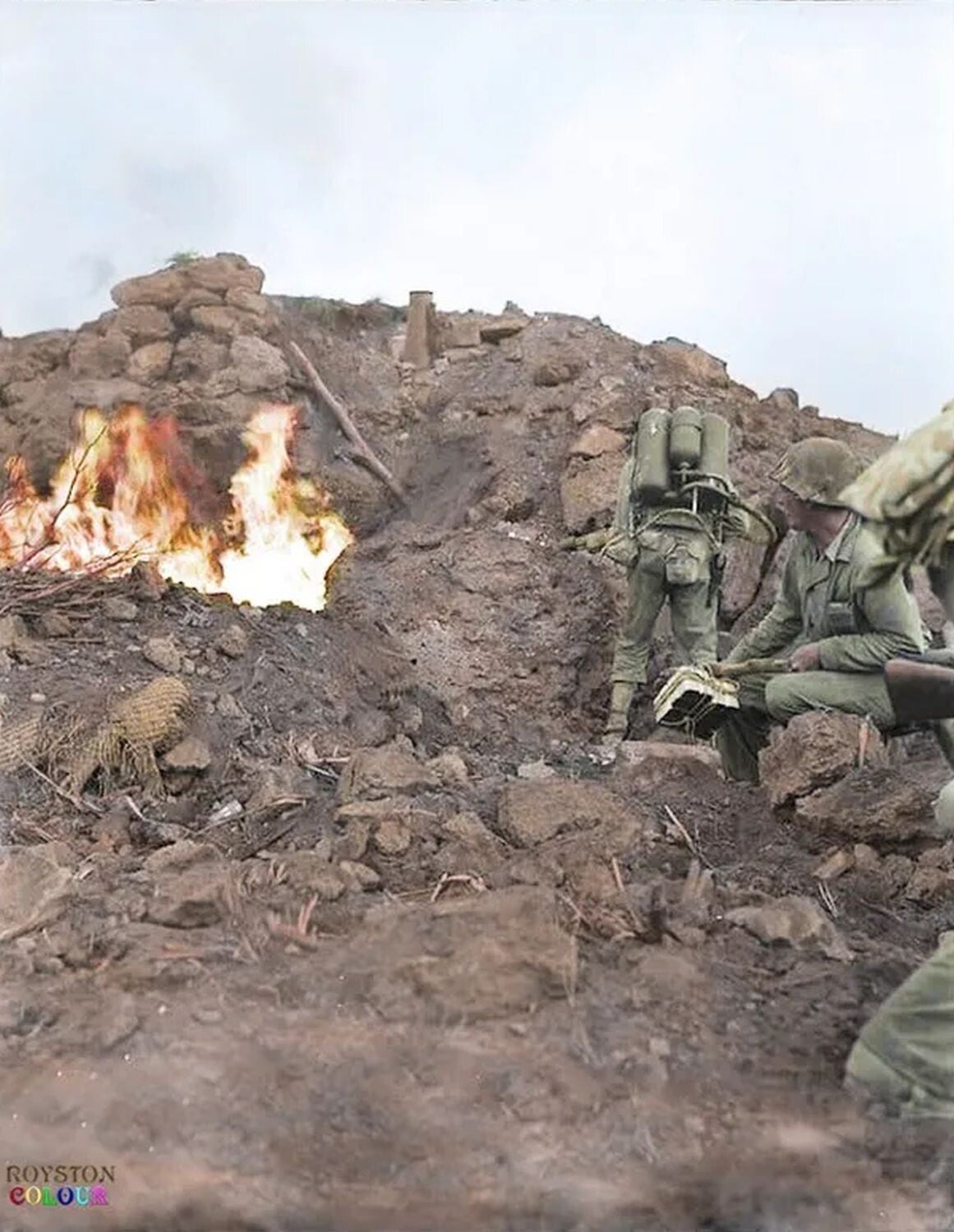
Combat across the central and northern sectors—such as the Meat Grinder, Hill 362, and the Amphitheatre—was characterised by close‑quarters fighting, flamethrowers, grenades, and relentless artillery. Japanese defenders fought to the last, and only a few hundred were taken alive out of an estimated 21,000.
The United States suffered nearly 7,000 killed and over 19,000 wounded. Despite the cost, Iwo Jima proved vital: thousands of damaged B‑29s later used its airfields for emergency landings, saving many aircrews during the final months of the war.
Battle for the Black Sands
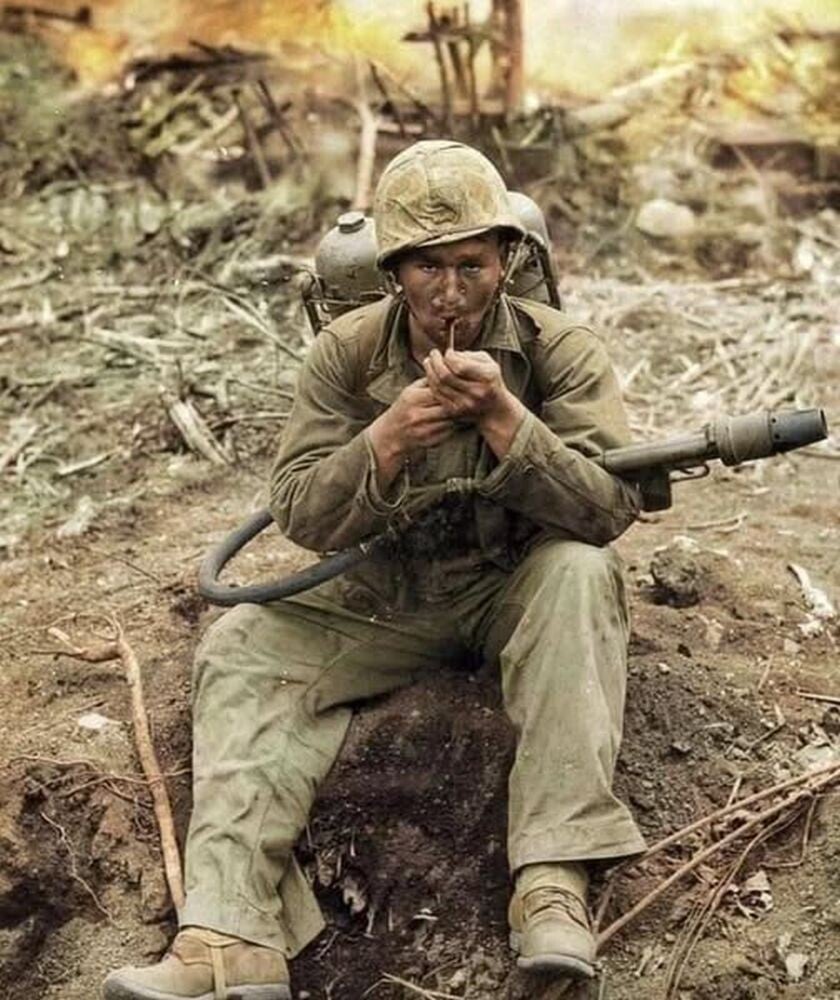
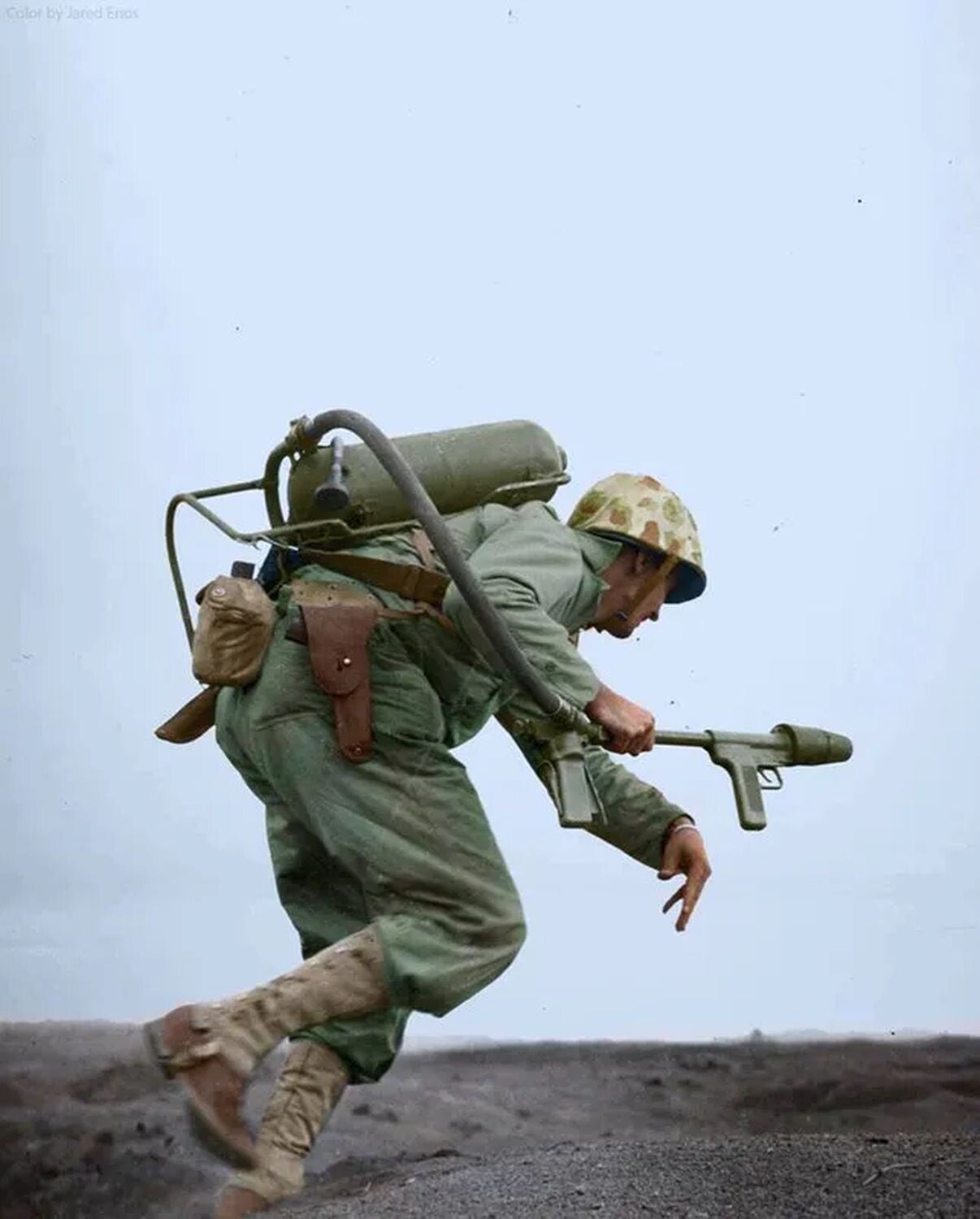
A U.S. Marine with an M2-2 flamethrower on Iwo Jima. He is lighting a pipe while gallons of propane and napalm are strapped to his back.
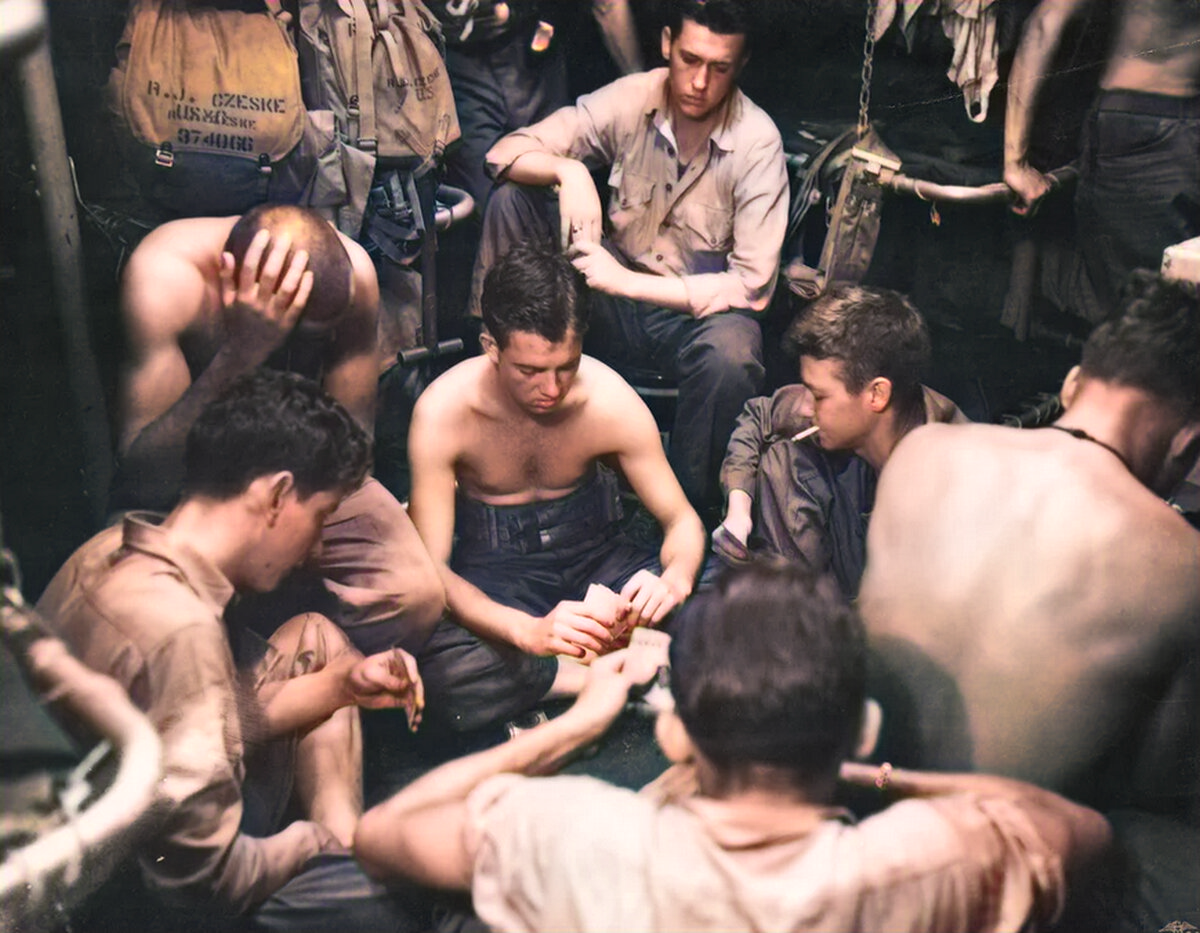
Men of the 28th Marine Regiment, 5th Marine Division, play cards below deck of their transport bound for Iwo Jima. February 1945.
US Invasion Force
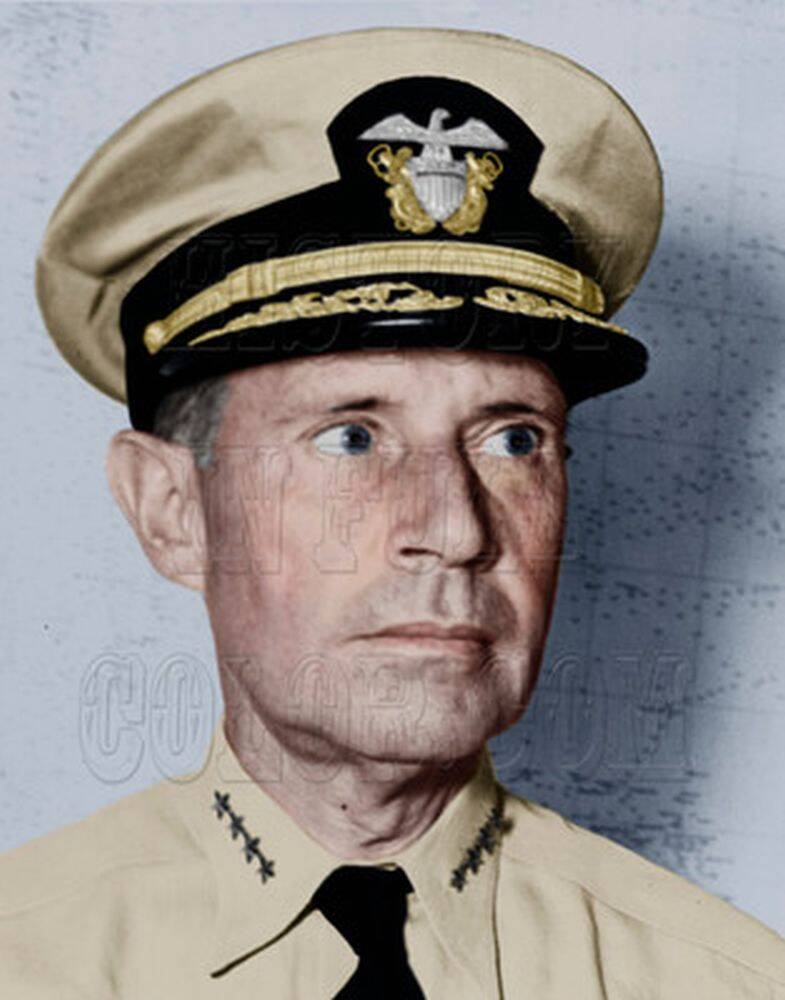
Admiral Raymond A. Spruance, Commander of the Fifth Fleet during the Battle of Iwo Jima.
Japanese Garrison
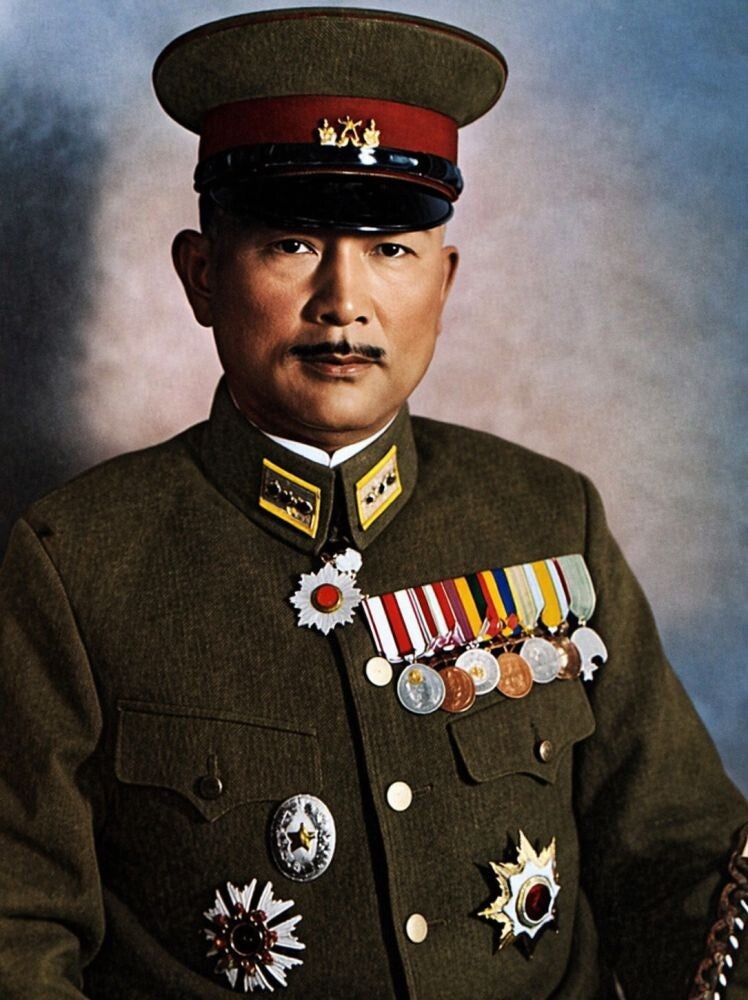
Tadamichi Kuribayashi, Commander of the Japanese garrison on Iwo Jima.
The Landings
The landings at Iwo Jima on 19 February 1945 constituted one of the most concentrated amphibious assaults executed by the United States Marine Corps during the Pacific campaign.
The operation, designated D‑Day, began at 08:59 after three days of naval bombardment that had failed to neutralise the island’s deeply entrenched Japanese defences.
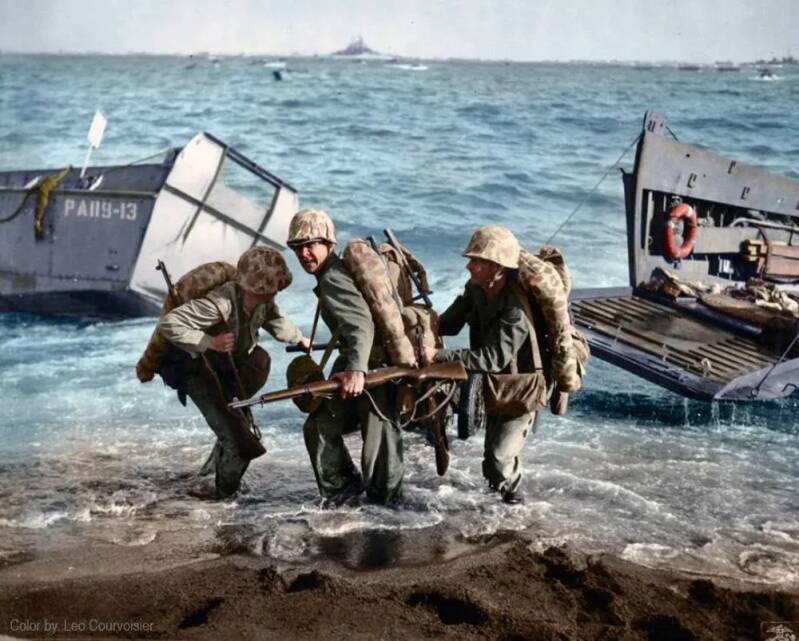
The 4th and 5th Marine Divisions advanced toward the southeastern beaches in dense formations of LCVPs, LCMs, LCTs, and amphibious tractors.
The LVT‑2 and LVT‑4, with their tracked propulsion and ability to traverse volcanic terrain, formed the essential spearhead of the initial assault waves.
These vehicles carried infantry, engineers, demolition teams, and flamethrower units, providing the only reliable means of crossing the unstable ash that would later immobilise tanks and wheeled vehicles.
The beaches—Green, Red, Yellow, and Blue—offered no natural cover and were composed of fine, powdery volcanic sand that swallowed vehicles and slowed troop movement.
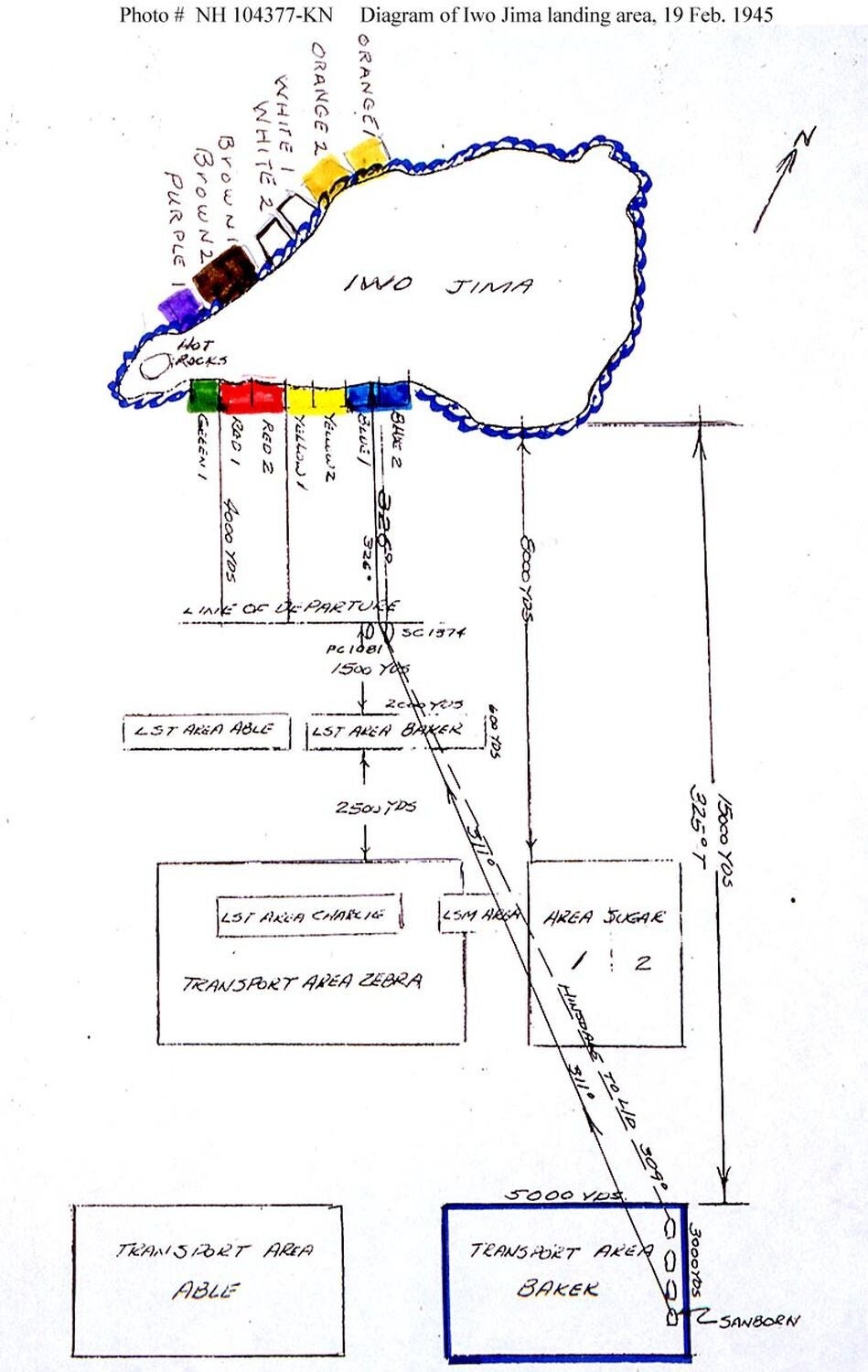
Diagram of the island's invasion beaches, identified by colors green, red, yellow and blue; the alternate beaches on the other side of Iwo Jima, identified by colors purple, brown, white and orange; the landing ship and transport areas offshore; and the lines of approach used by boats from USS Sanborn (APA-93) to Beaches Blue One and Two. Original 35mm color transparency of a dragram probably prepared by Howard W. Whalen after World War II. Note that the arrow pointing "North" actually points about fifteen degrees west of north.
https://www.ibiblio.org/hyperwar/OnlineLibrary/photos/events/wwii-pac/iwojima/iwo-0.htm
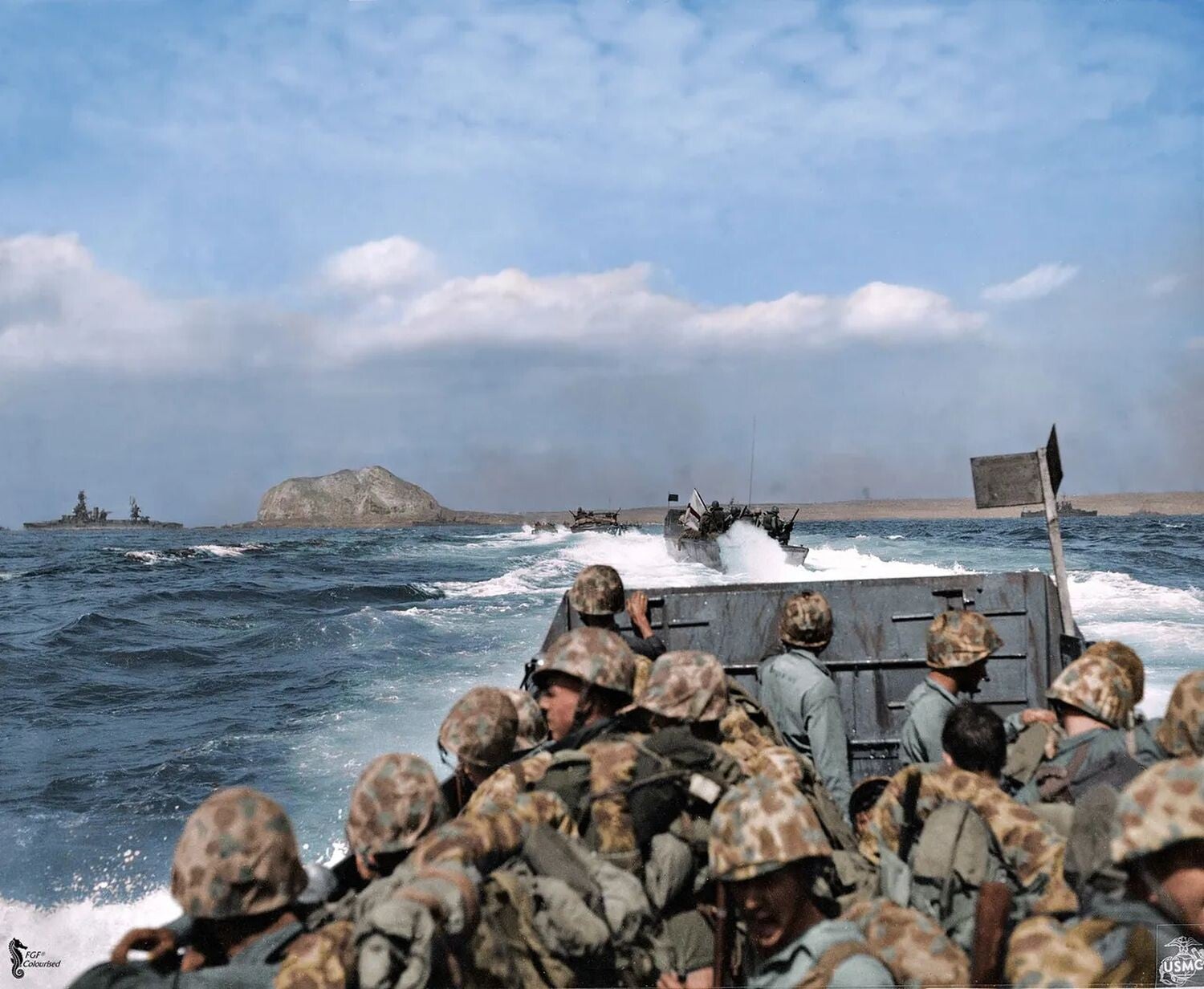
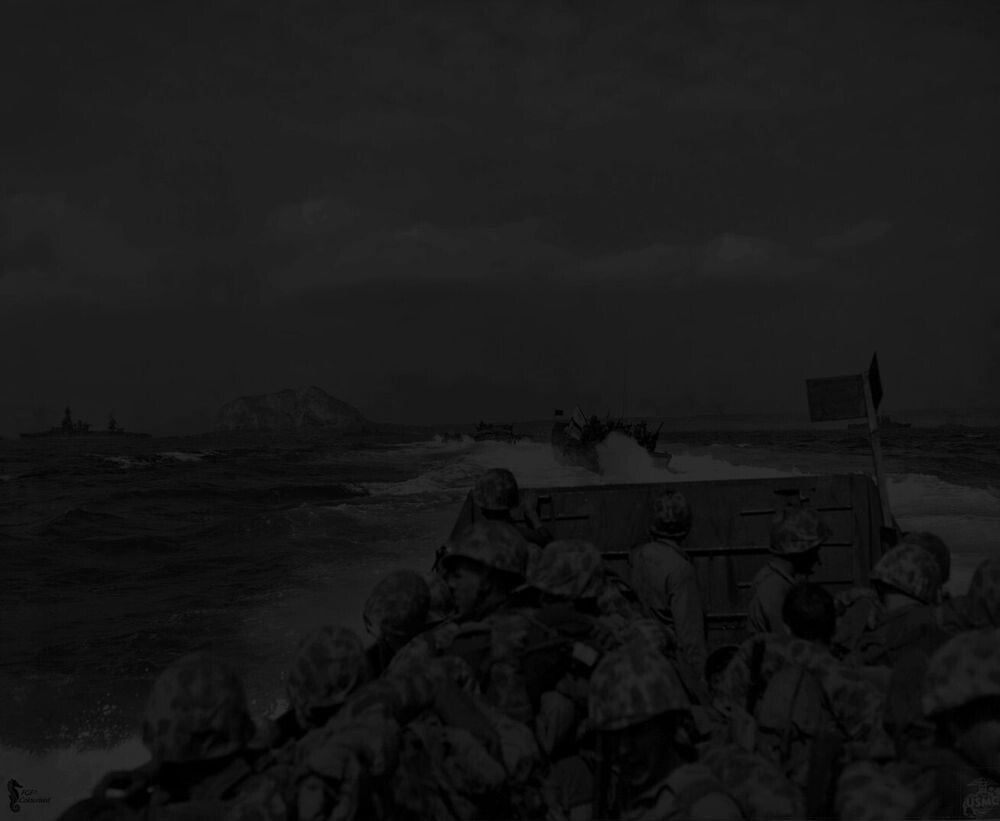
Landing craft carrying US Marines to Iwo Jima, February 19th, 1945
Information
Japanese forces, commanded by Lieutenant General Tadamichi Kuribayashi, withheld fire until the beaches were crowded.
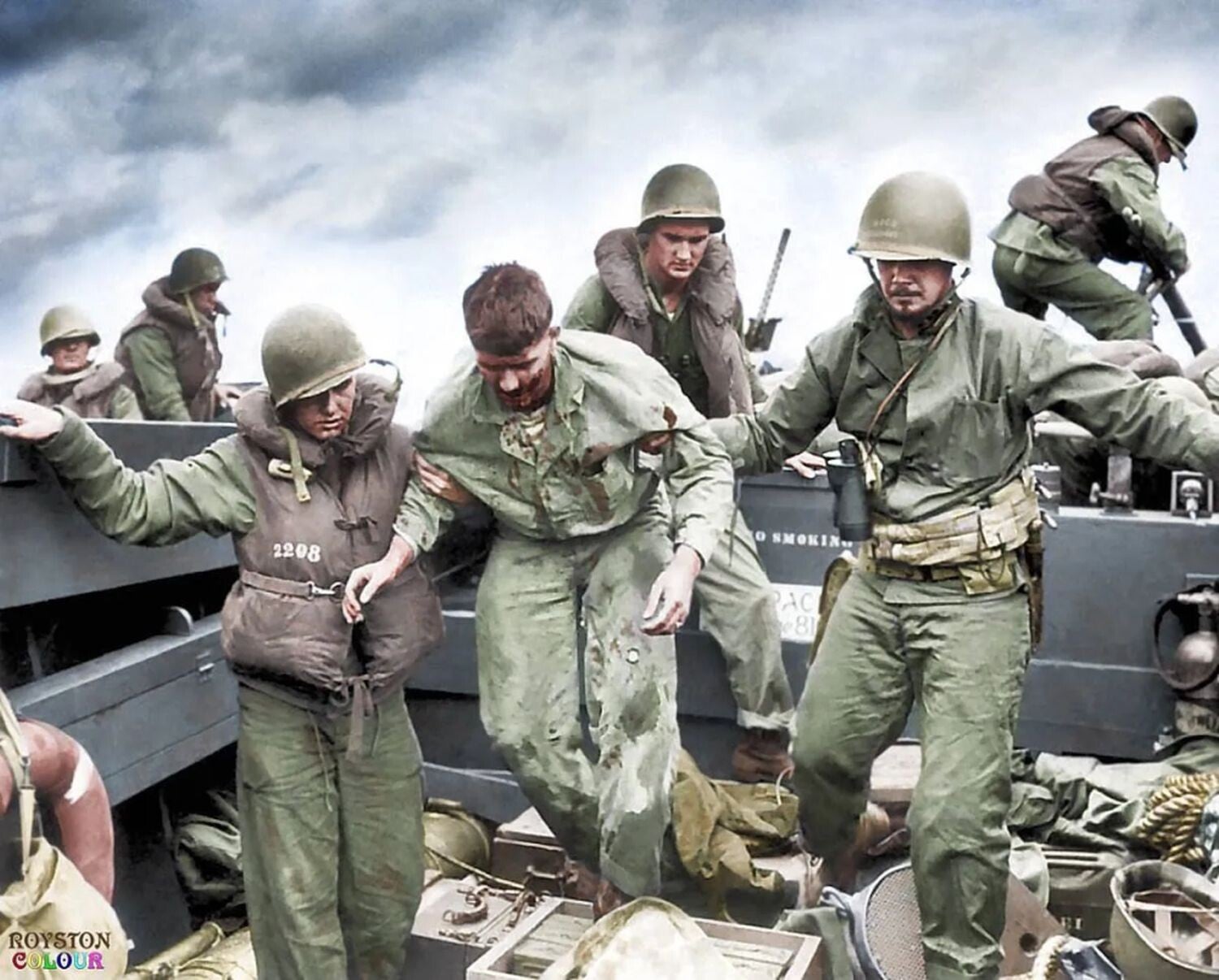
When they opened up, machine guns, mortars, and artillery swept the landing lanes with devastating accuracy.
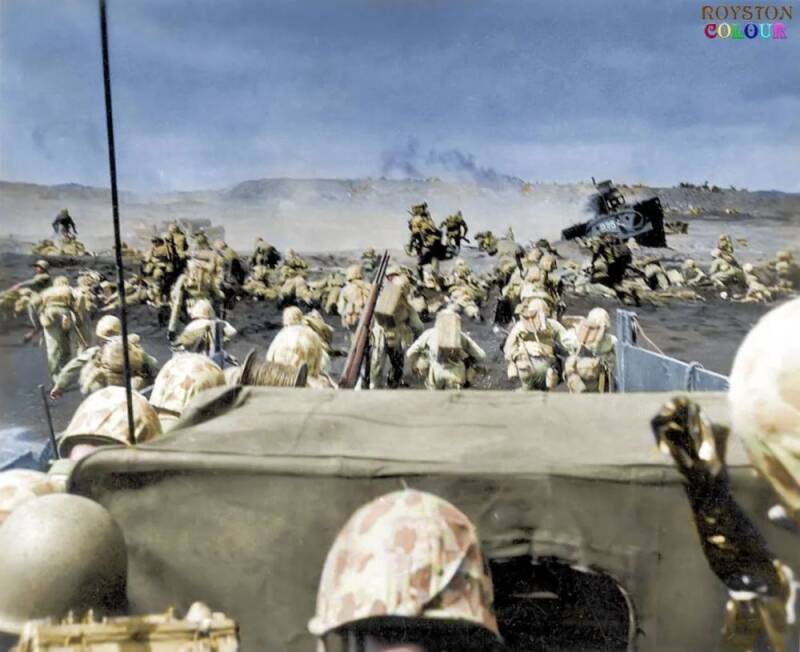
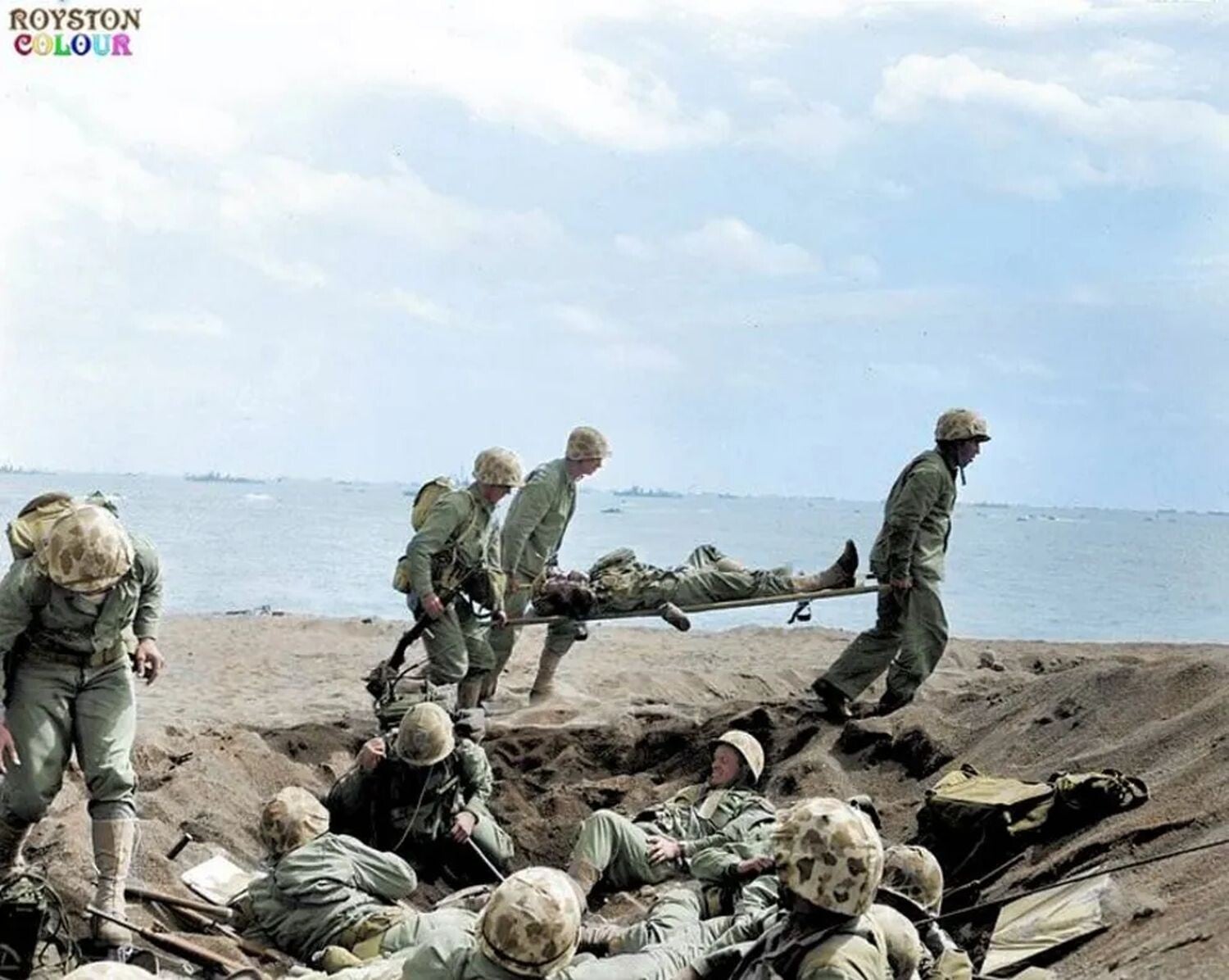
Many landing craft were struck while still unloading, and Marines found themselves pinned along the waterline under intersecting fields of fire from positions concealed within a vast tunnel network beneath Mount Suribachi and the Motoyama Plateau.
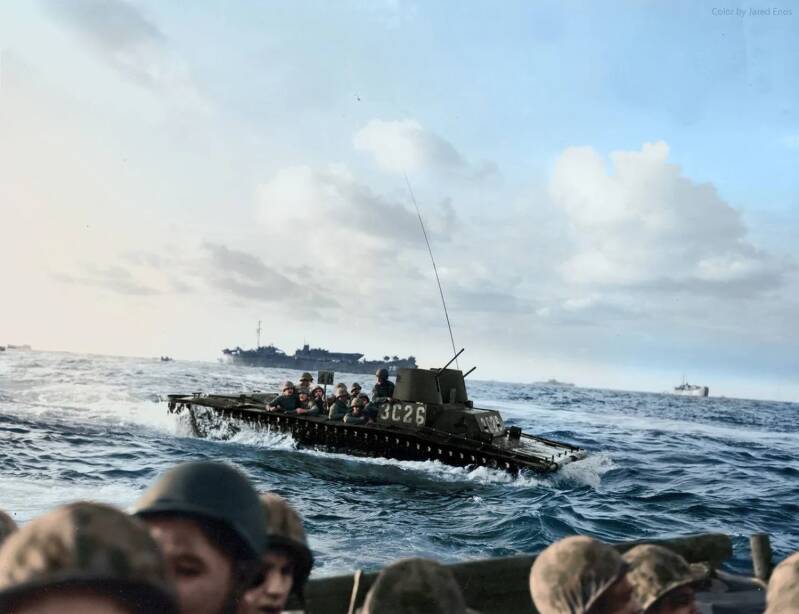
Amphibious armor and landing craft push through heavy surf off Iwo Jima as Marines crowd the gunwales, heading toward the volcanic shore. The tracked vehicle—an LVT—carries troops and equipment toward the beach while additional landing craft approach in formation, part of the sustained assault supporting operations around Mount Suribachi in February 1945.
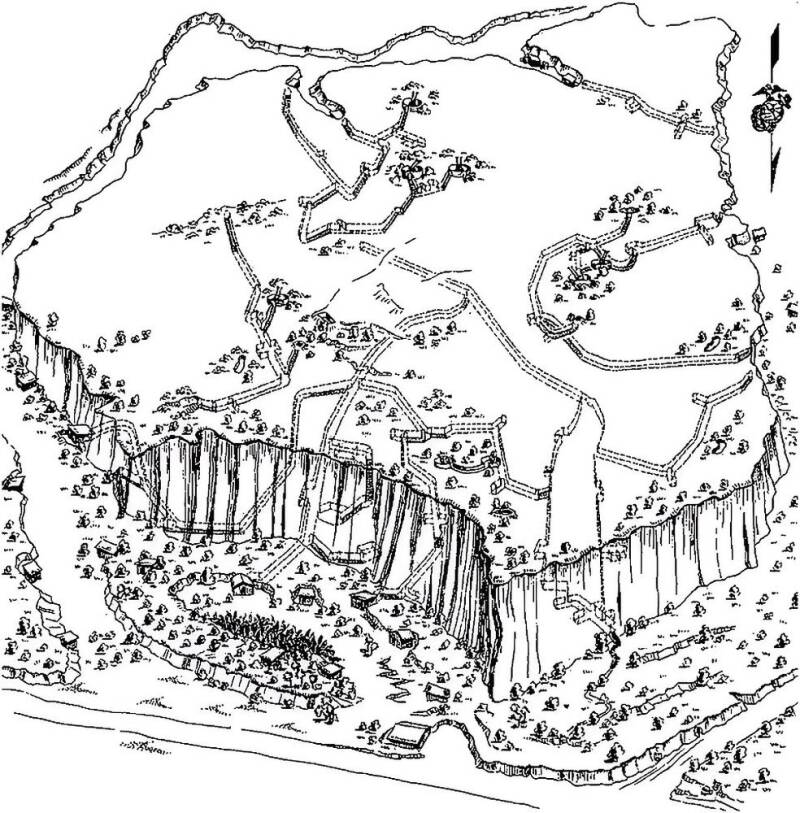
Sketch of Hill 362A, made by the 31st U.S. Naval Construction Battalion. Dotted lines show the Japanese tunnel system.
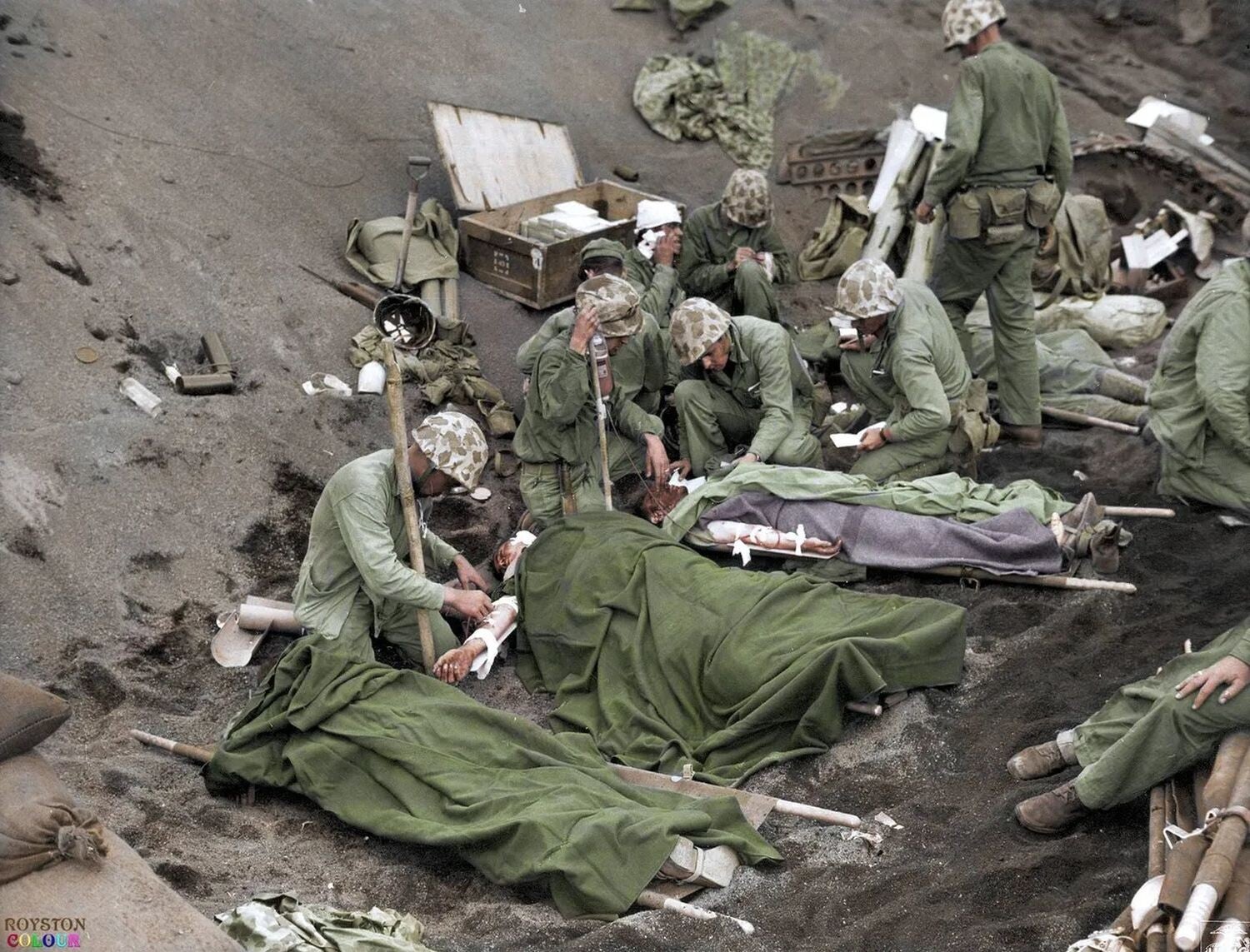
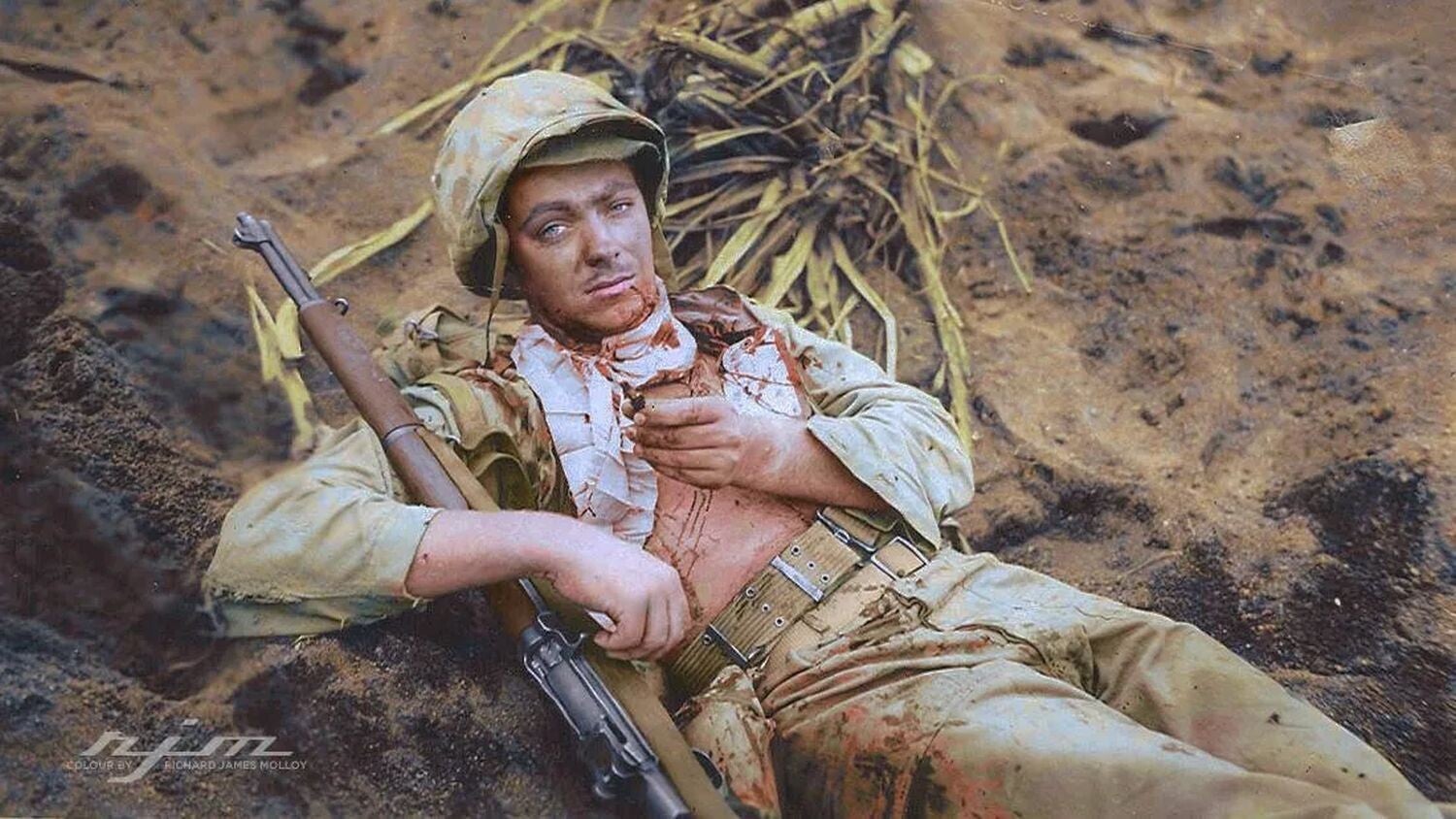

Marines T/5 L. C. Carter, Jr., Private John Bonner, Jr., Staff Sergeant Charles R. Johnson, T/5 A. B. Randle, T/5 Homer H. Gaines, and Private Willie Tellie pose for a photo on Iwo Jima. They are credited with saving a fellow Marine who was drowning. 11 March 1945.
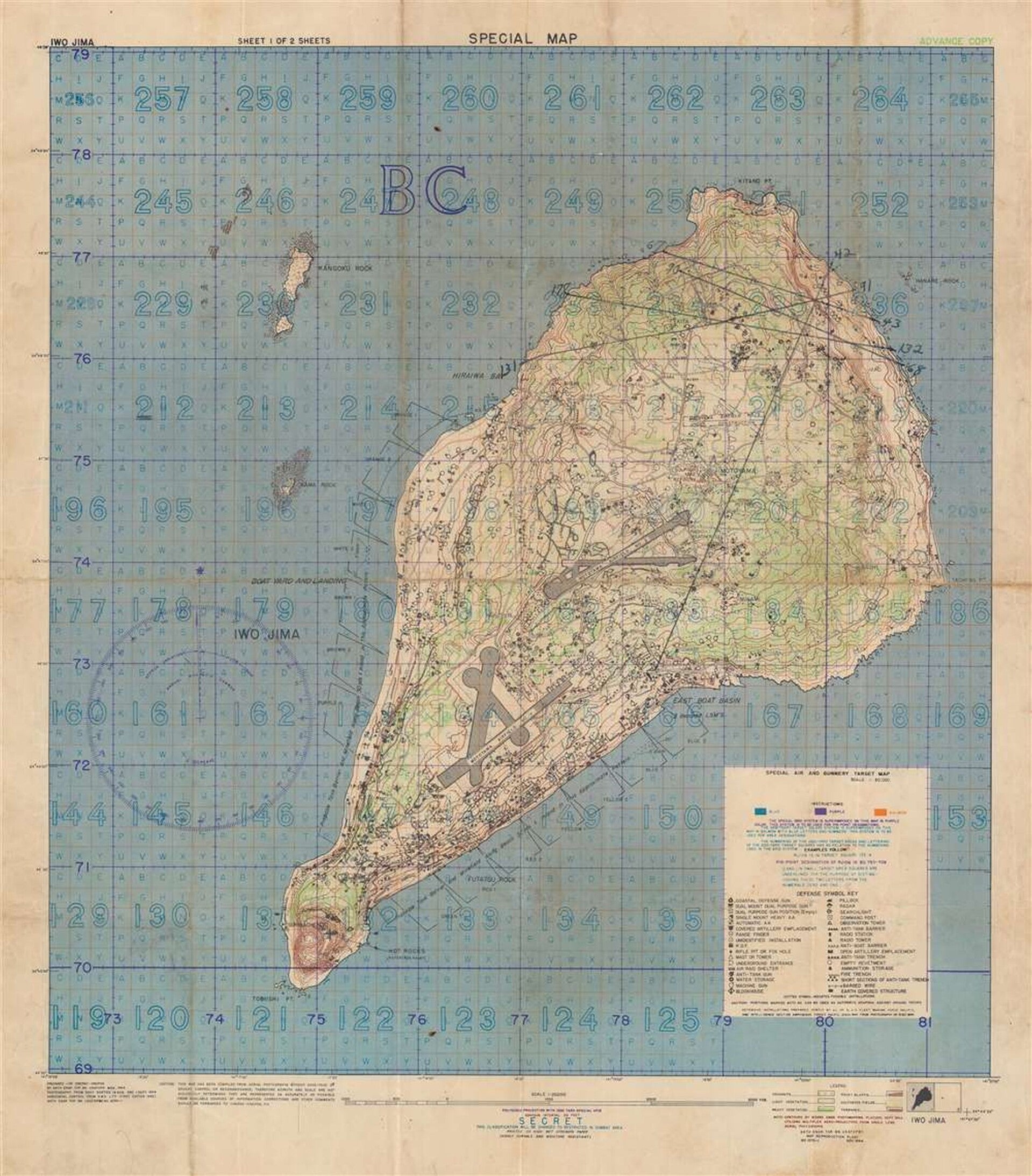
Late-1944 map created for the bombardment of Iwo Jima. It detailed every feature needed for pre‑invasion targeting. Contours, ravines, and the slopes of Suribachi were plotted alongside airfields, radar sites, gun positions, and command posts. Prepared by the Army Map Service, it provided naval and air units with precise aiming data, ensuring coordinated strikes against fortified underground networks before the February 1945 landings.
Raising the Flag
Aftermath
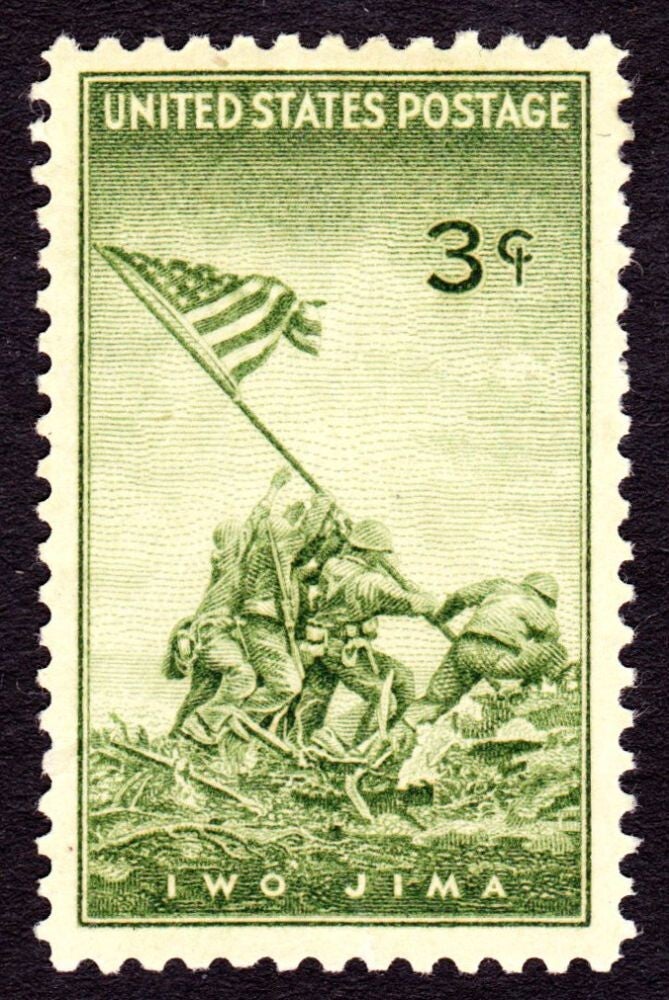
U.S. postage stamp, 1945 issue, commemorating the Battle of Iwo Jima
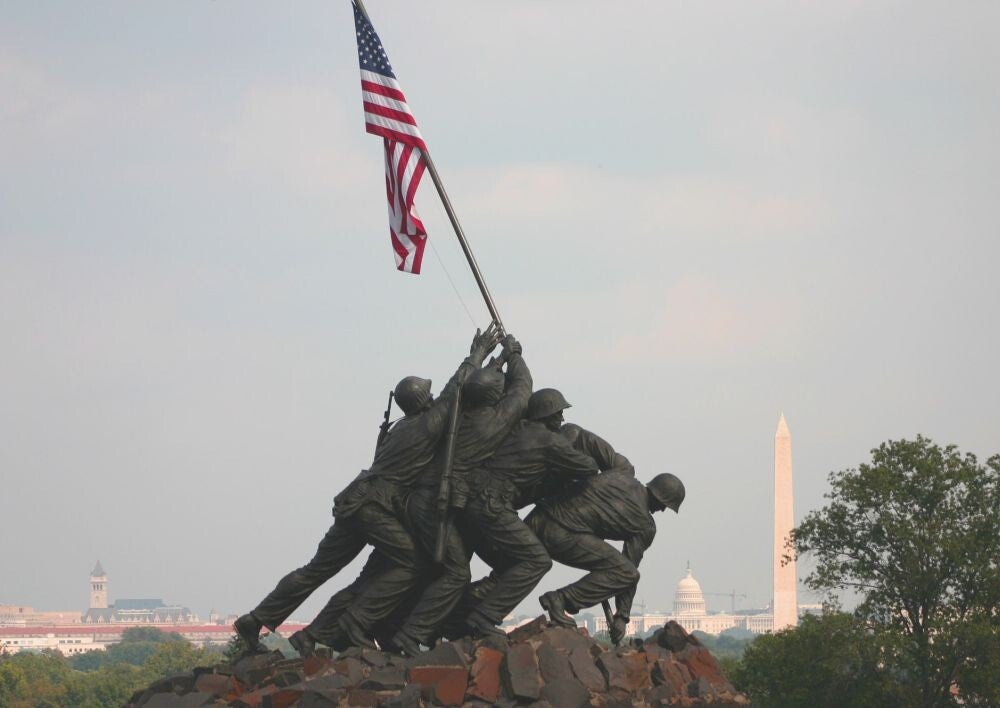
The U.S. Marine Corps War Memorial in Arlington with the Washington Monument and the United States Capitol in the distance.