
Overview
The Battle of Surigao Strait, fought in the early hours of 25 October 1944, was the final battleship‑against‑battleship engagement in naval history and formed a key component of the wider Battle of Leyte Gulf. Vice Admiral Shoji Nishimura’s Southern Force attempted to force a passage through the narrow strait to strike the Allied landing operations at Leyte, hoping to disrupt the American invasion of the Philippines.
The geography of the strait channelled his ships into a predictable northward approach, allowing the U.S. Seventh Fleet under Vice Admiral Thomas Kinkaid to construct a layered defensive system.
Nishimura’s formation—battleships Yamashiro and Fusō, heavy cruiser Mogami, and several destroyers—advanced in column. American PT boats made the first contact, launching torpedo attacks that forced the Japanese to manoeuvre and revealed their position. Further torpedo strikes from U.S. destroyers inflicted heavy damage, crippling Fusō and disrupting the Japanese line before it reached the main American battle formation.
Awaiting Nishimura was a powerful U.S. battle line composed of six battleships—West Virginia, California, Tennessee, Maryland, Mississippi, and Pennsylvania—supported by cruisers and destroyers. Many of these battleships had been sunk or damaged at Pearl Harbor and rebuilt with modern radar‑directed fire control. At 03:52, West Virginia opened fire at long range, initiating a concentrated barrage that quickly overwhelmed Yamashiro. Torpedo attacks from American destroyers completed the destruction. Mogami was left burning and later scuttled, and only a single Japanese destroyer escaped.
The battle demonstrated the decisive advantages of radar, coordinated night‑fighting doctrine, and multi‑layered defence. It also marked the end of the traditional battleship era; never again would opposing battle lines meet in a formal gunnery duel. The destruction of Nishimura’s force ensured the security of the Leyte landings and contributed significantly to the American reconquest of the Philippines.
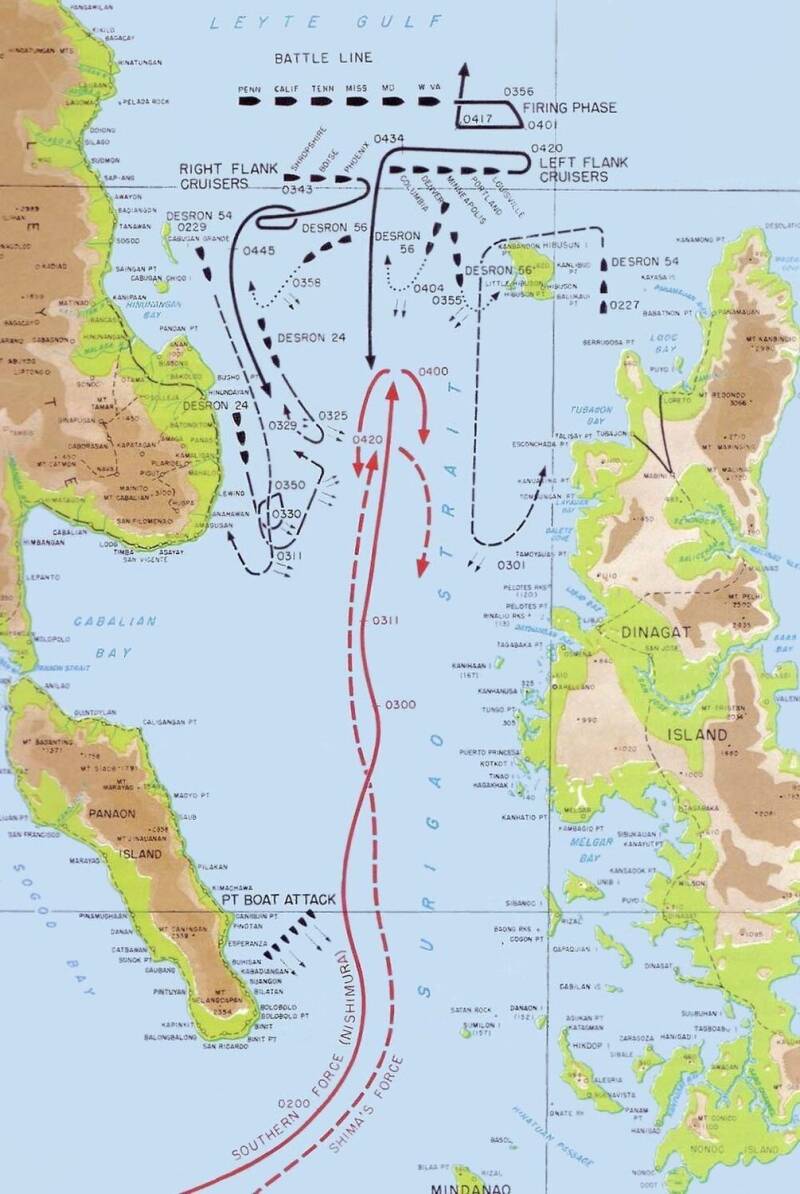
Japanese movements into Surigao Strait followed a strict northbound column under Vice Admiral Nishimura, with Yamashiro, Fusō, Mogami, and destroyers advancing through the confined channel. The U.S. Navy deployed a layered defence: PT‑boats at the mouth, destroyer squadrons along the strait, and a radar‑equipped battleship line blocking the northern exit. As the Japanese advanced, each American layer struck in sequence, breaking the formation before it reached the battle line.
https://en.wikipedia.org/wiki/Battle_of_Leyte_Gulf#/media/File:Surigao_Strait.jpg
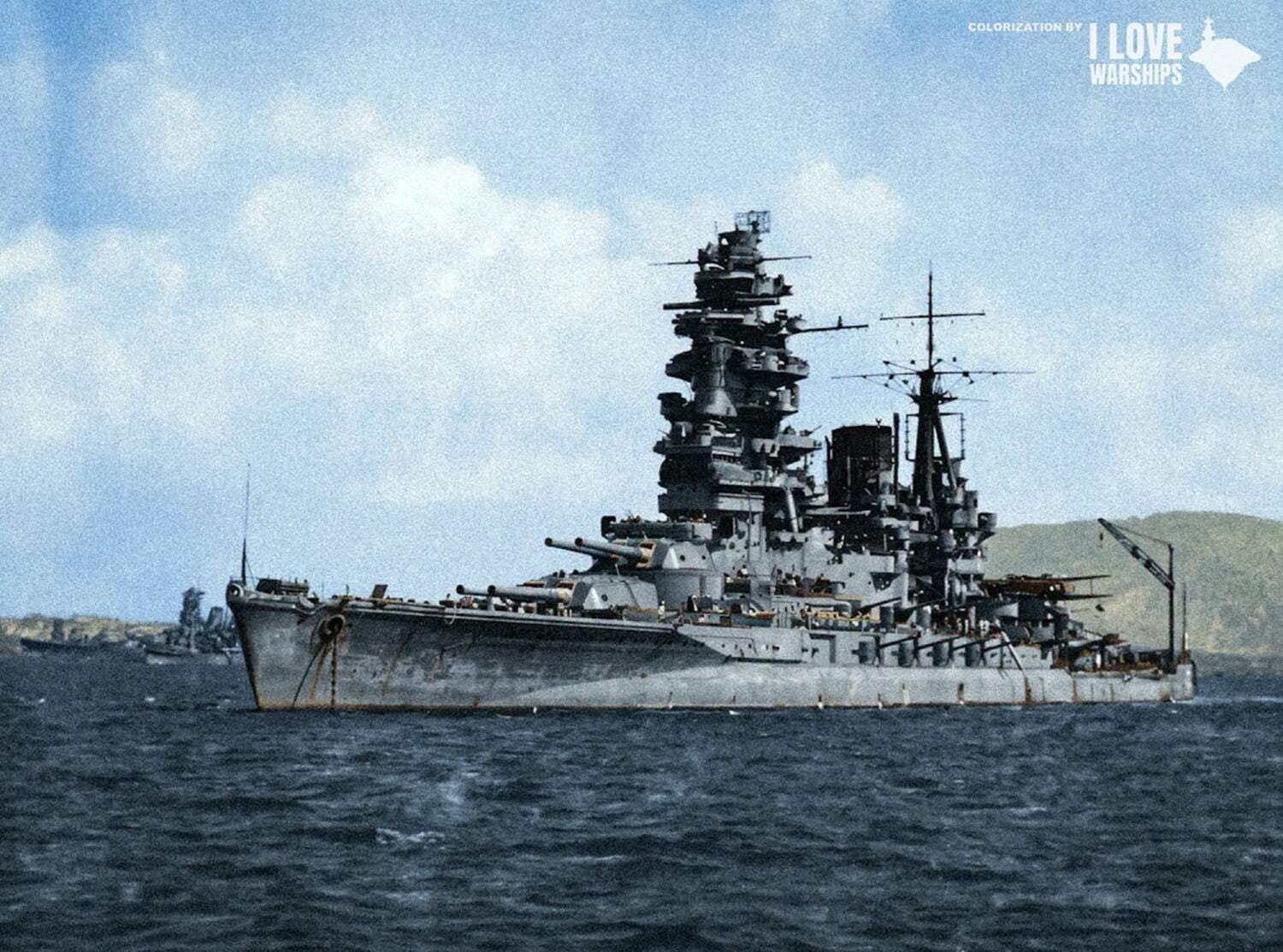
The battleship Nagato, once the pride of the Imperial Japanese Navy, served in Vice Admiral Kurita’s Centre Force during the Battle of Surigao Strait. Although present in the broader Leyte Gulf operations, Nagato did not engage directly in the strait’s final battleship duel. Radar‑directed American fire destroyed Nishimura’s Southern Force before Nagato could intervene, leaving her largely a spectator to the last battleship engagement in history.
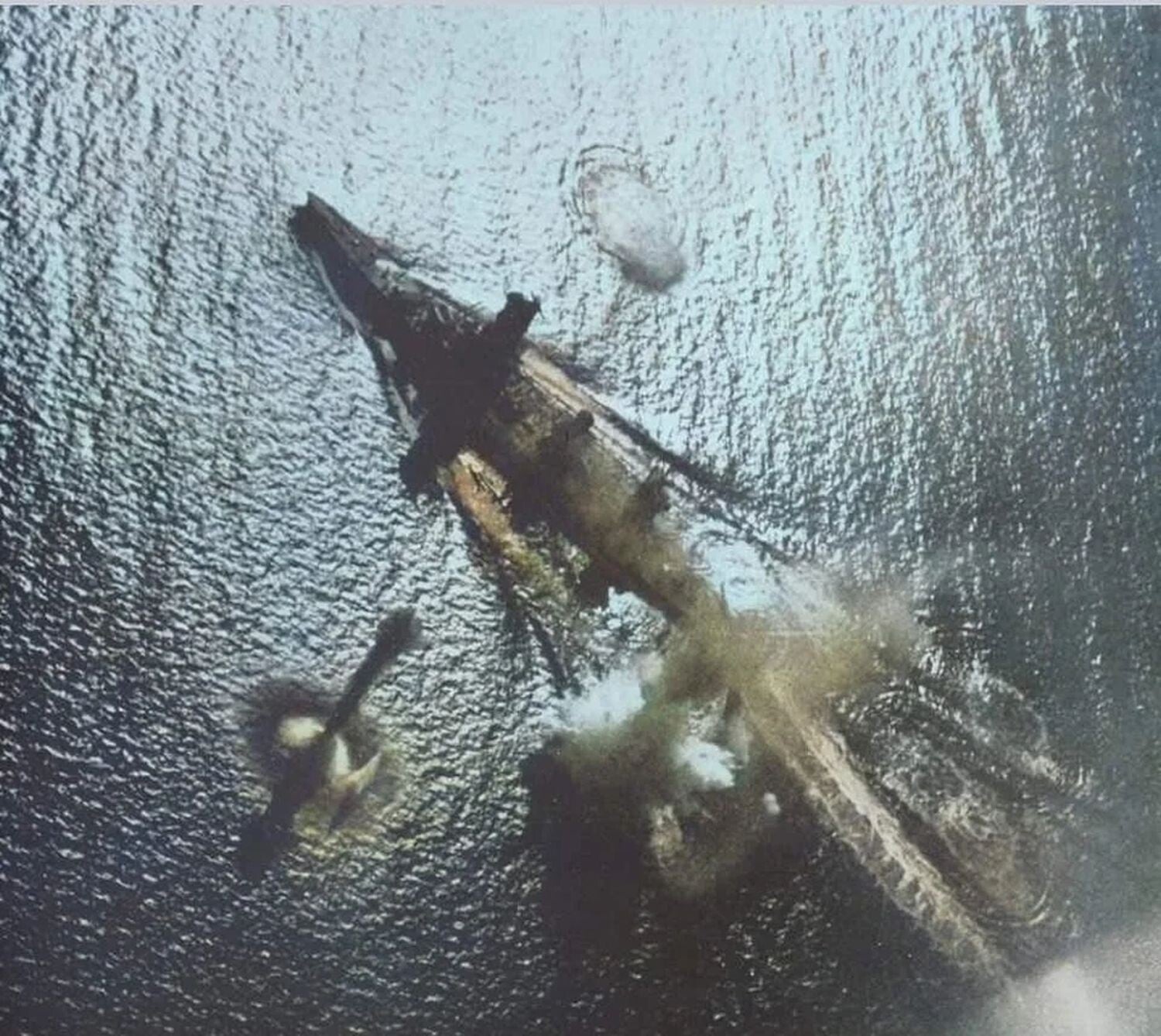
The last known photograph of Fusō shows the battleship shortly before her destruction at Surigao Strait on 25 October 1944. Once a symbol of early Japanese naval power, she entered the battle as part of Nishimura’s Southern Force. Hours later, torpedoes and concentrated American fire broke her apart in the strait. The image captures Fusō in her final moments, moments before the ship and most of her crew were lost.