
Overview
The Solomon Islands became one of the most strategically significant locations in the Pacific War, its geography shaping the course of the 1942–1943 campaigns. A scattered chain of jungle‑covered islands, reefs, and narrow channels, the Solomons formed a natural barrier between Japanese bases in the central Pacific and Allied lines of communication to Australia. Control of the region meant control of sea routes, airfields, and staging points essential for both offensive and defensive operations.
The campaign began in earnest with the Allied landings on Guadalcanal in August 1942. The construction and seizure of Henderson Field transformed the island into a forward air base, enabling continuous air operations against Japanese shipping and reinforcing the broader strategy of attrition. The Solomons’ dense terrain, oppressive humidity, and disease—malaria, dengue, dysentery—proved as dangerous as enemy action. Infantry units fought through thick jungle, steep ridges, and river systems that limited movement and complicated logistics. Supply lines were often maintained by small craft, improvised depots, and hazardous night operations.
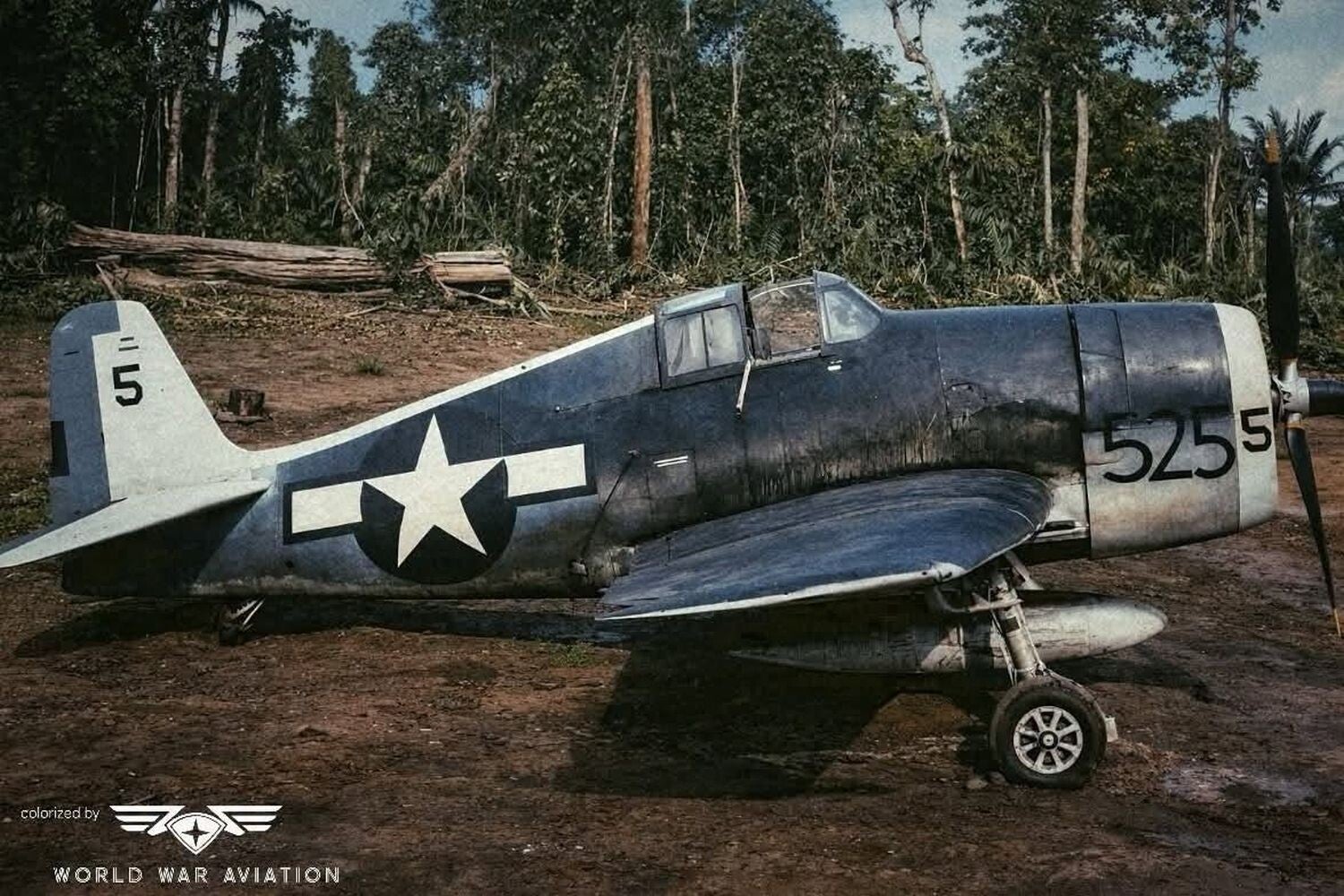
Grumman F6F-3 Hellcat Solomon Islands in late 1943. The air battles over the Solomon Islands were defined by relentless daily combat between Allied and Japanese forces from 1942 to 1943. Henderson Field on Guadalcanal served as the critical Allied base, launching fighters to intercept Japanese raids from Rabaul and Bougainville. F4F Wildcats, P‑400s, and later F4U Corsairs faced Zero fighters in fierce engagements marked by tight manoeuvring, attrition, and hazardous weather. Air superiority in the Solomons proved decisive for the wider campaign.
Naval battles in the surrounding waters were among the most intense of the war. The confined channels—later known collectively as “Ironbottom Sound”—became the site of repeated night engagements between cruisers, destroyers, and battleships. Japanese forces relied heavily on fast destroyer runs, the “Tokyo Express,” to reinforce their garrisons, while Allied naval units attempted to intercept and disrupt these movements. Air combat was equally fierce, with land‑based aircraft from Henderson Field and carrier groups contesting Japanese bombers and fighters operating from Rabaul and Bougainville.
By early 1943, sustained pressure gradually pushed Japanese forces northward through New Georgia, Vella Lavella, and the Treasury Islands. The campaign demonstrated the effectiveness of coordinated air, land, and naval operations and marked a turning point in the Pacific. Control of the Solomons secured Allied supply routes and opened the path toward the eventual advance on Rabaul and the Philippines.