
Overview
The Battle of Tarawa, fought from 20–23 November 1943, marked the first major U.S. amphibious assault in the Central Pacific and revealed the extreme difficulty of attacking a fortified island under modern conditions. Betio, the main island of the Tarawa atoll, was defended by roughly 4,500 Japanese troops who had constructed a dense network of bunkers, trenches, coastal guns, and interlocking machine‑gun positions. Every likely landing point was covered by prepared fire.
The assault began after a heavy naval and air bombardment, but many Japanese positions remained intact. A misjudged tide left landing craft stranded on offshore reefs, forcing Marines of the 2nd Marine Division to wade several hundred yards under direct fire. At Red Beach, the most heavily contested landing sector, casualties mounted immediately. Units became scattered in the shallow water, and those who reached the seawall found themselves pinned down by fire from pillboxes only metres away.
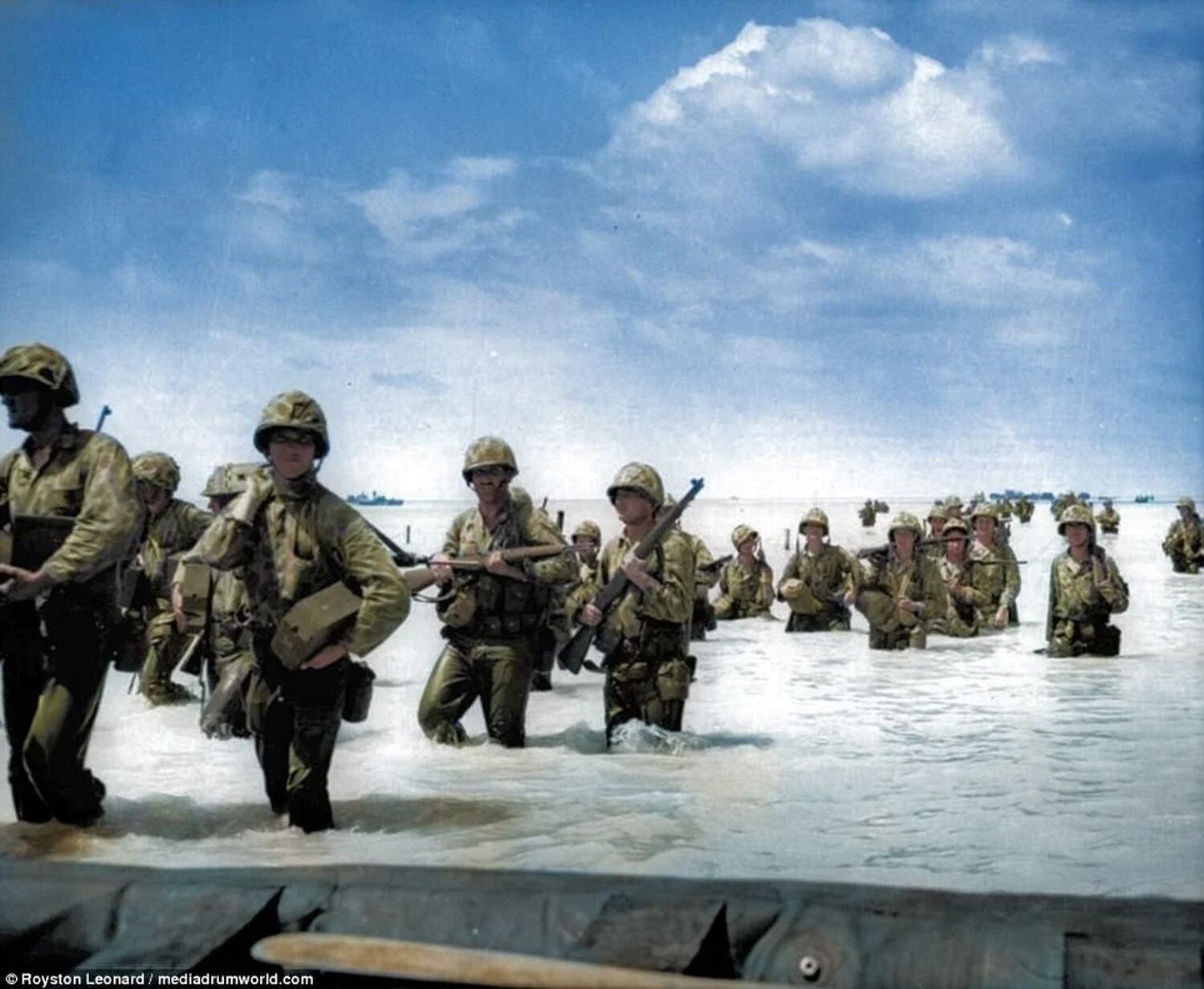
US Marines wading through surf from landing boats and barges to the beach during the invasion of Tarawa. The US laid siege to the Tarawa Atoll between November 20 and November 23, and was America's first offensive in the Pacific region.
Colourised by Royston Leonard
Throughout 20 November, progress was measured in yards. Small groups of Marines fought their way forward using grenades, flamethrowers, and demolition charges to clear individual bunkers. Armour support was limited; several tanks were lost in the surf, but those that reached land provided essential firepower. By nightfall, the Marines held fragmented footholds, and Japanese defenders launched determined counterattacks that were repelled with difficulty.
On 21–22 November, coordinated advances gradually reduced the remaining strongpoints. The Japanese garrison fought almost to extinction; fewer than twenty defenders were captured alive. Betio was declared secure on 23 November. Tarawa demonstrated the cost of assaulting a well‑prepared island and led to major improvements in amphibious doctrine, equipment, and fire support. Red Beach became emblematic of the battle’s intensity—an exposed, lethal approach where terrain, fortification, and determined resistance produced one of the most severe fights of the Pacific war.
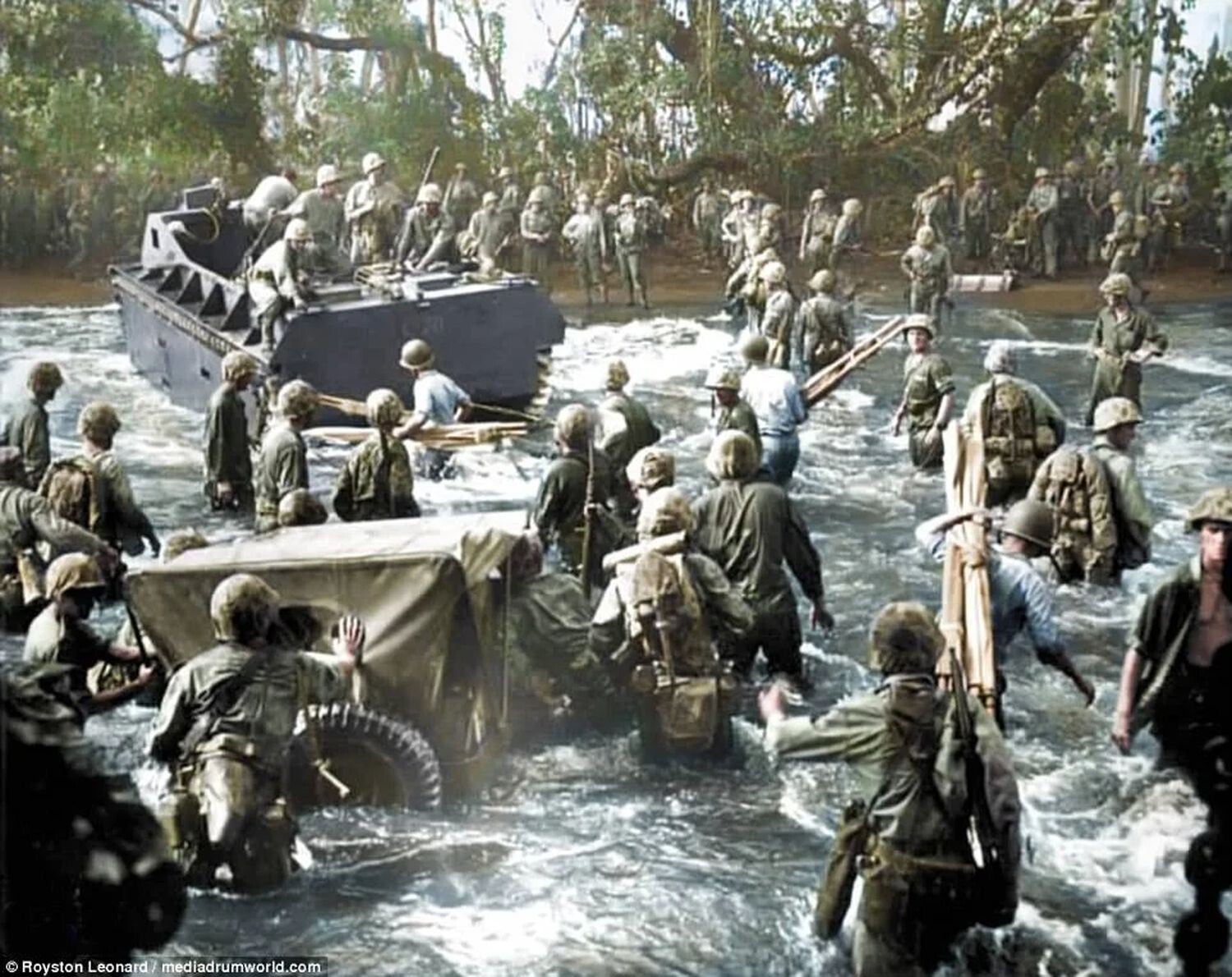
Moving off the ramp of a Coast Guard-manned landing craft, Marines move ashore onto Tarawa.
Colourised by Royston Leonard
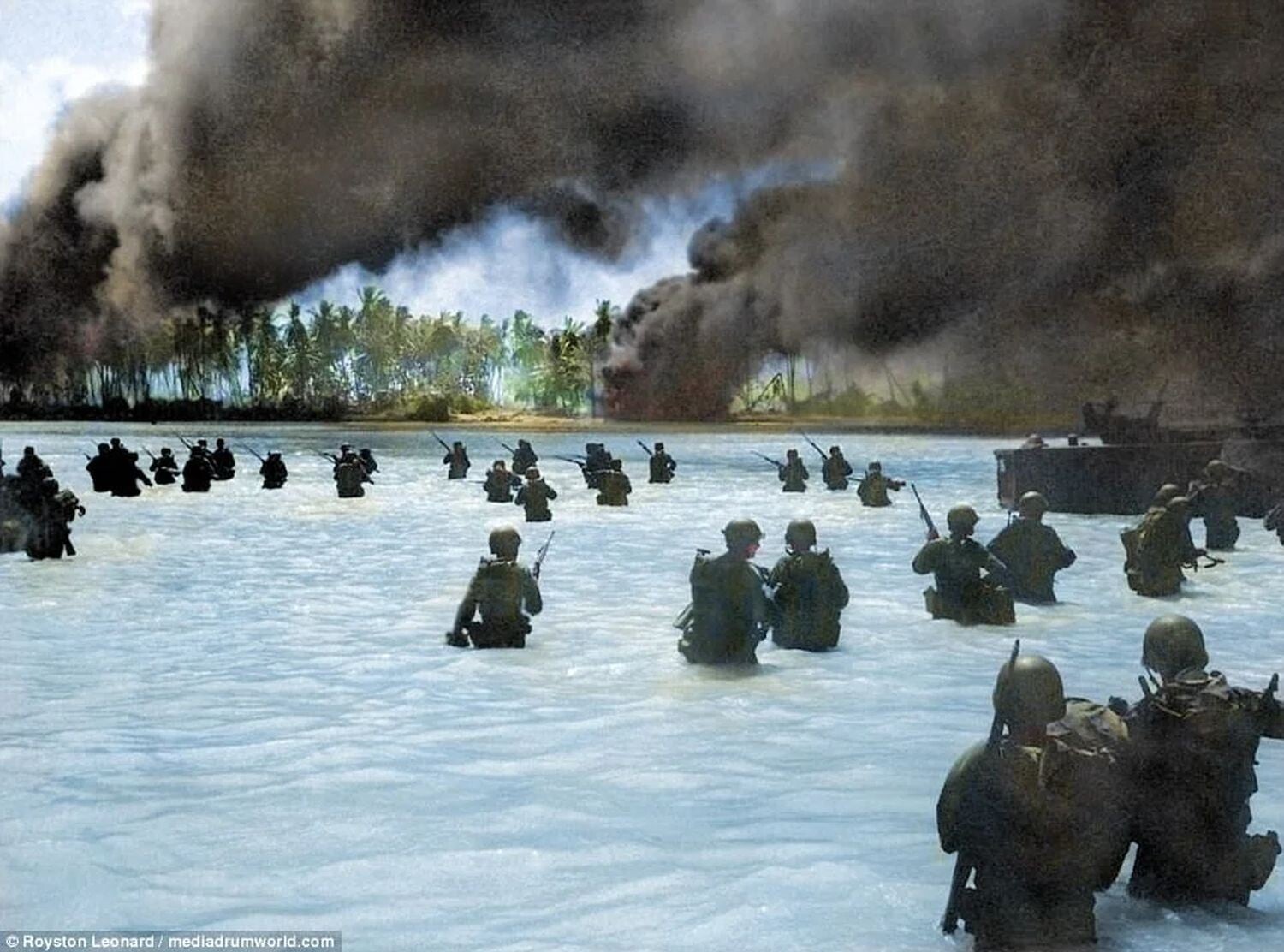
165th Infantry assault wave attacking Butaritari, Yellow Beach Two, find it slow going in the coral bottom waters. Japanese machine gun fire from the right flank makes it more difficult for them. The US paid a heavy price for their victory in Tarawa, with more than 1,000 killed and a further 2,000 wounded.
Colourised by Royston Leonard
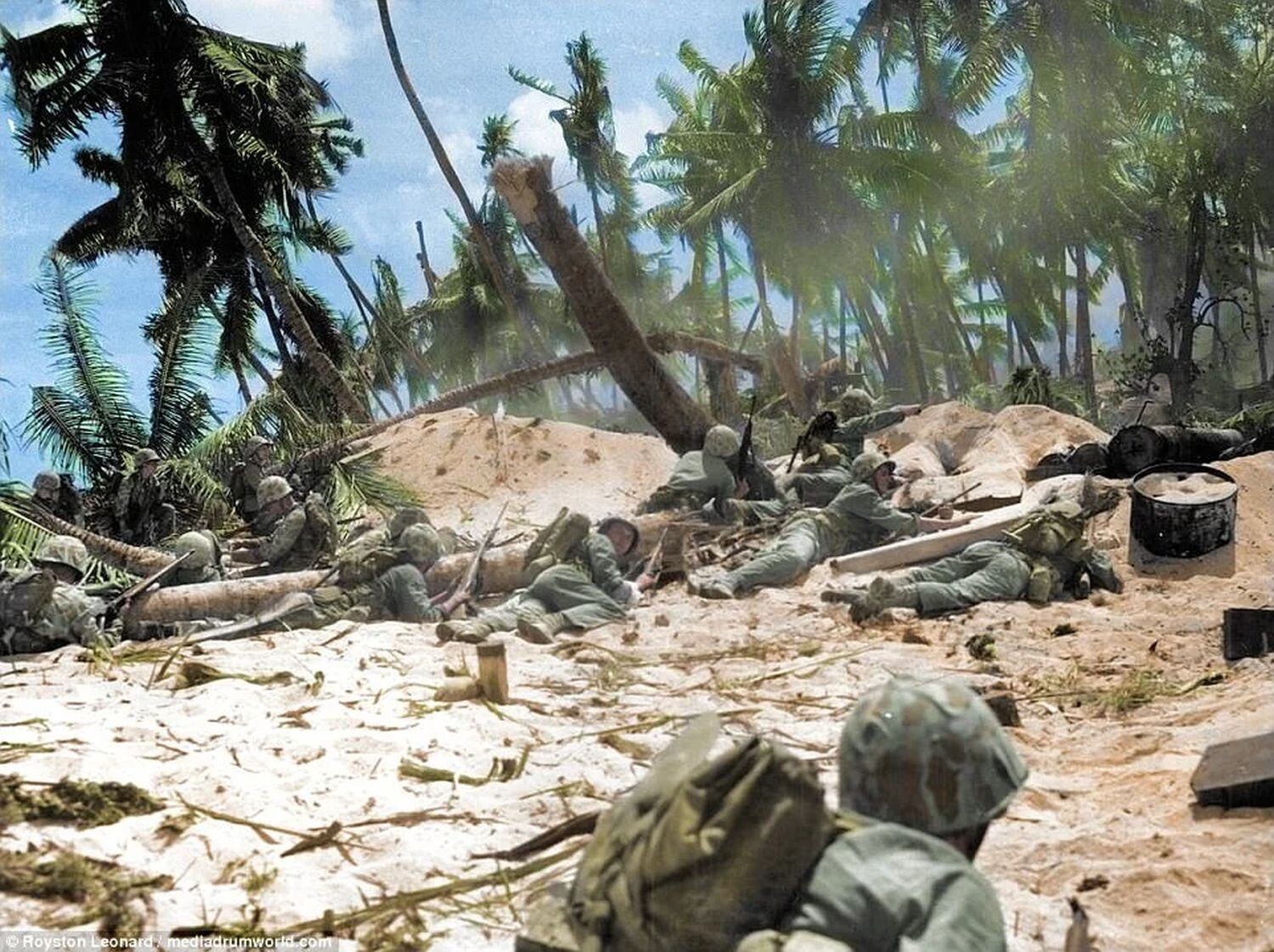
US Marines try to advance against Japanese positions during the invasion of Tarawa in late November 1943.
Colourised by Royston Leonard
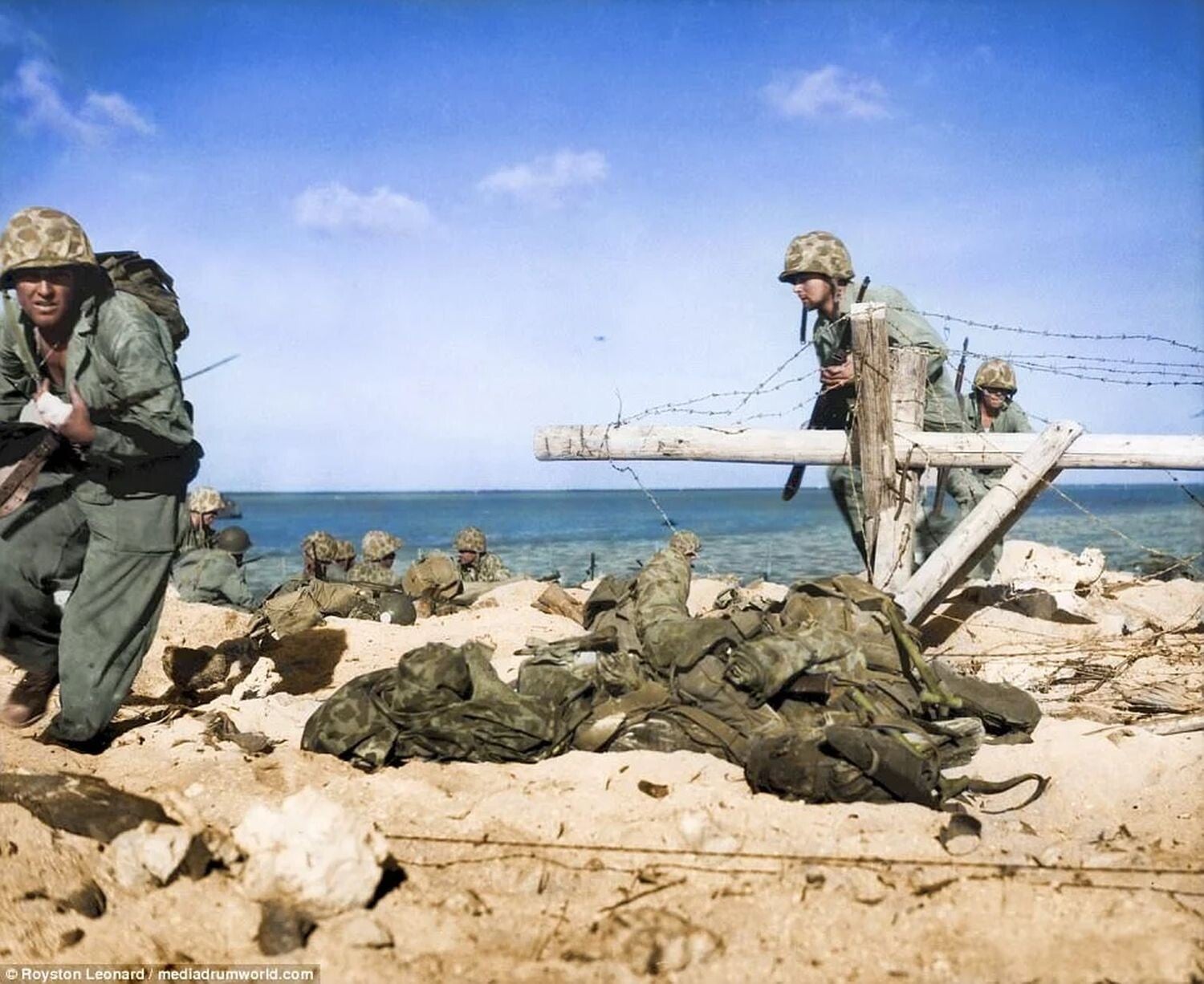
A group of fighters, led by a Marine with a wounded hand, charging from the shore around opened barbed-wire entanglement to battle firmly entrenched Japanese in pillboxes on Tarawa.
Colourised by Royston Leonard
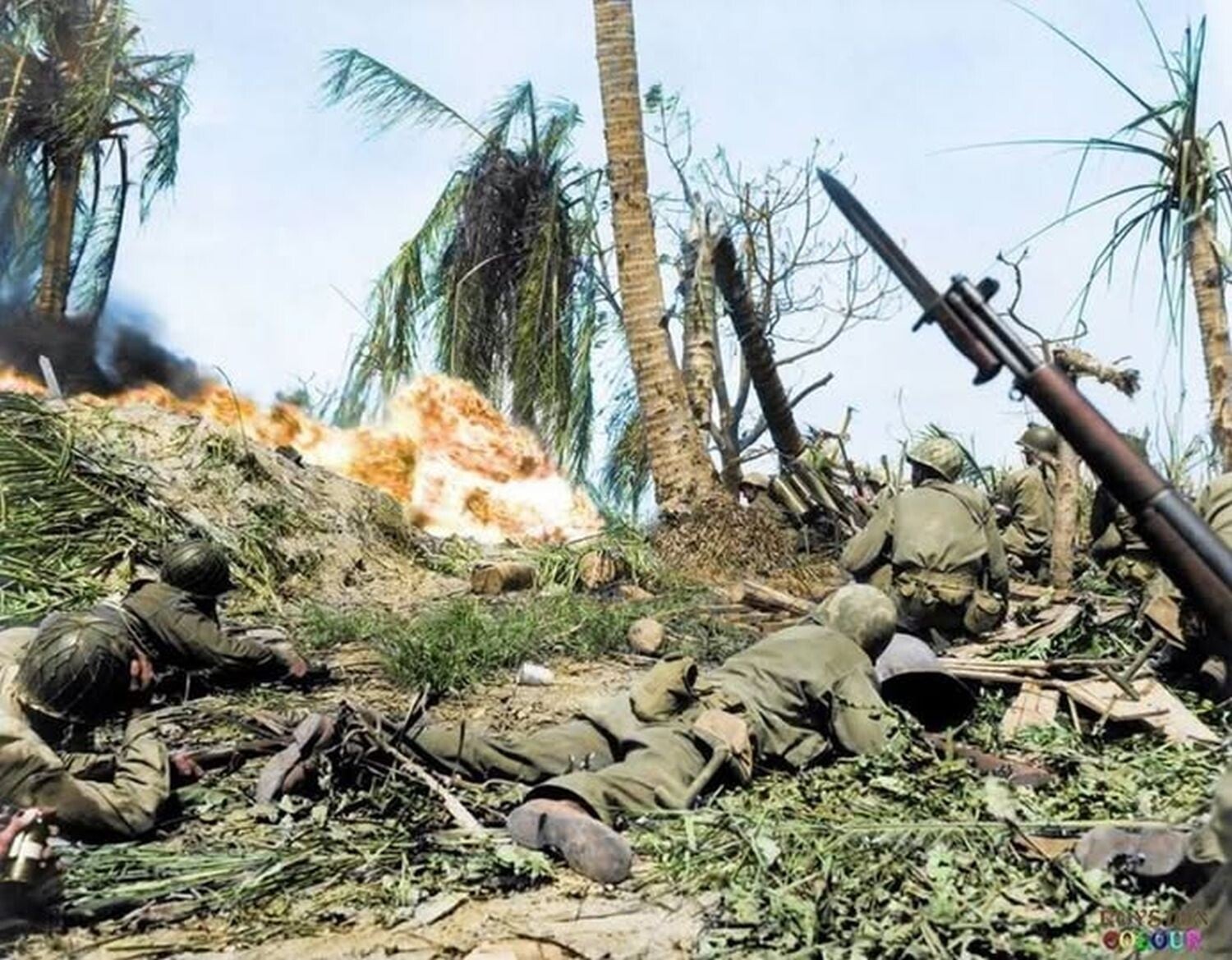
Cpl Robert E Voorhees standing while carrying supplies during the Battle of Tarawa at Red Beach, Bieto, Tarawa. A number of other US troops lay on the beach as others sit and chat.
Colourised by Royston Leonard
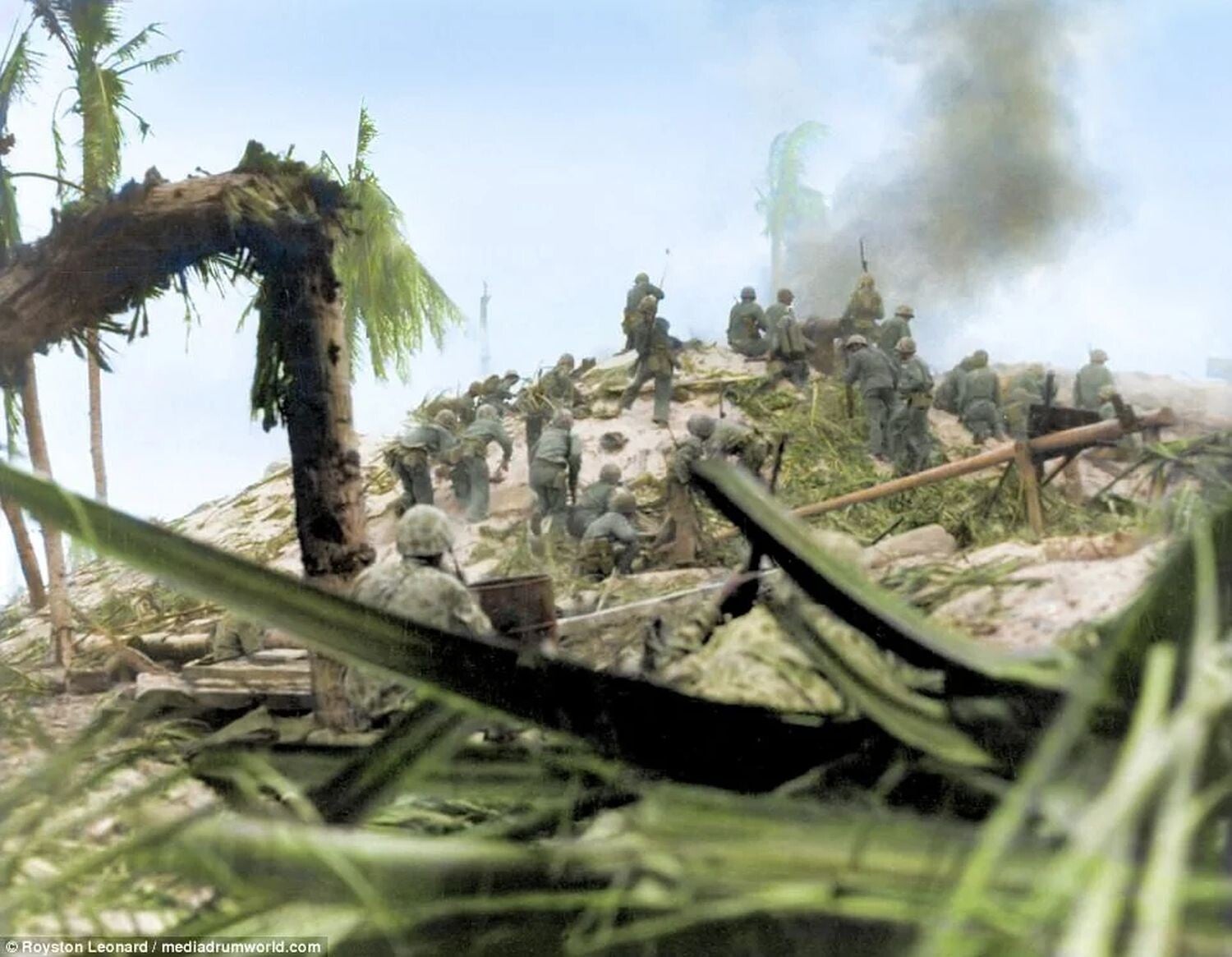
US Marine Corps assault party storm a Japanese stronghold on top of a mound. Japanese forces fought until the last man, with just one officer and 16 troops of the 3,500 plus enlisted men surrendering.
Colourised by Royston Leonard
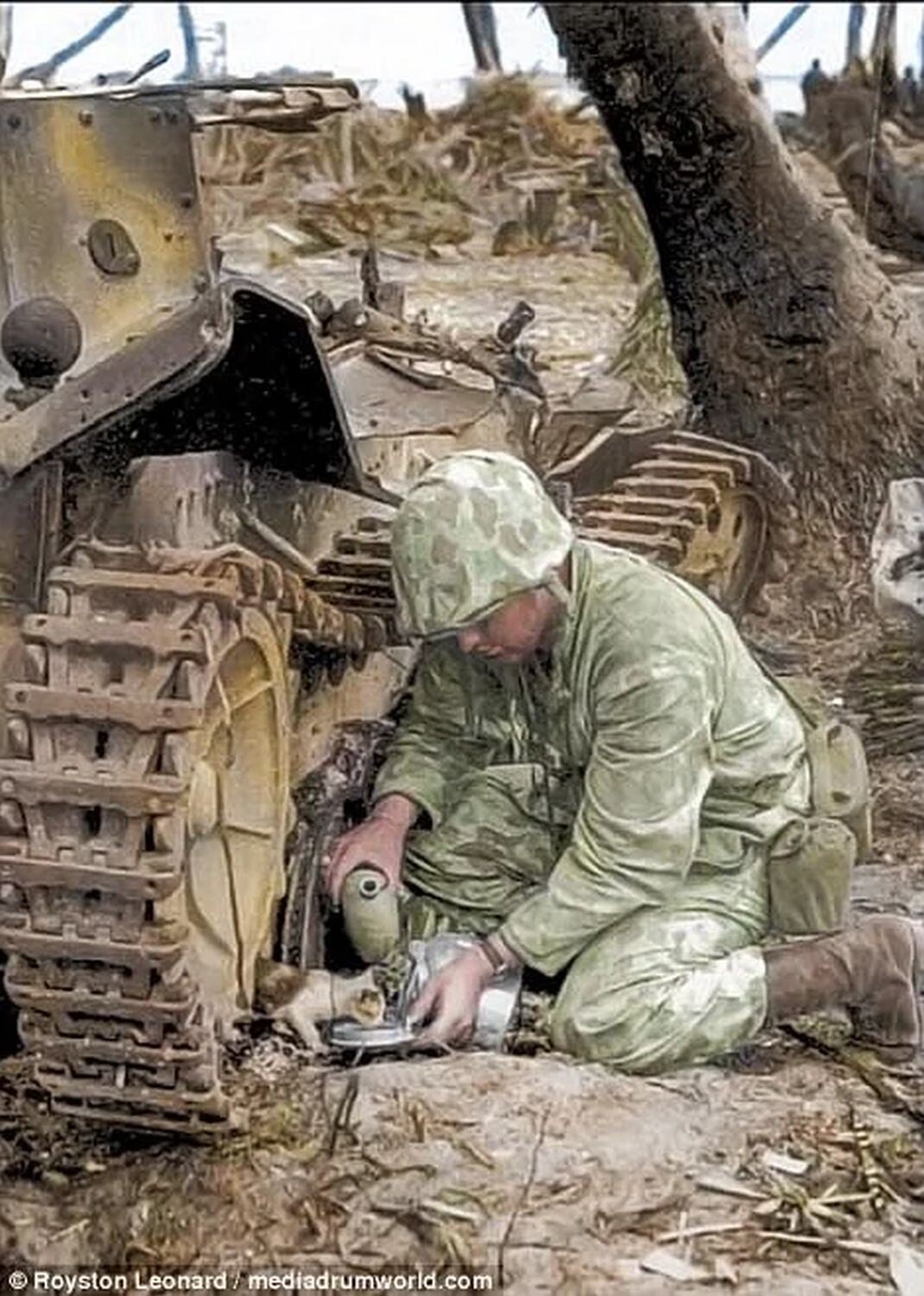
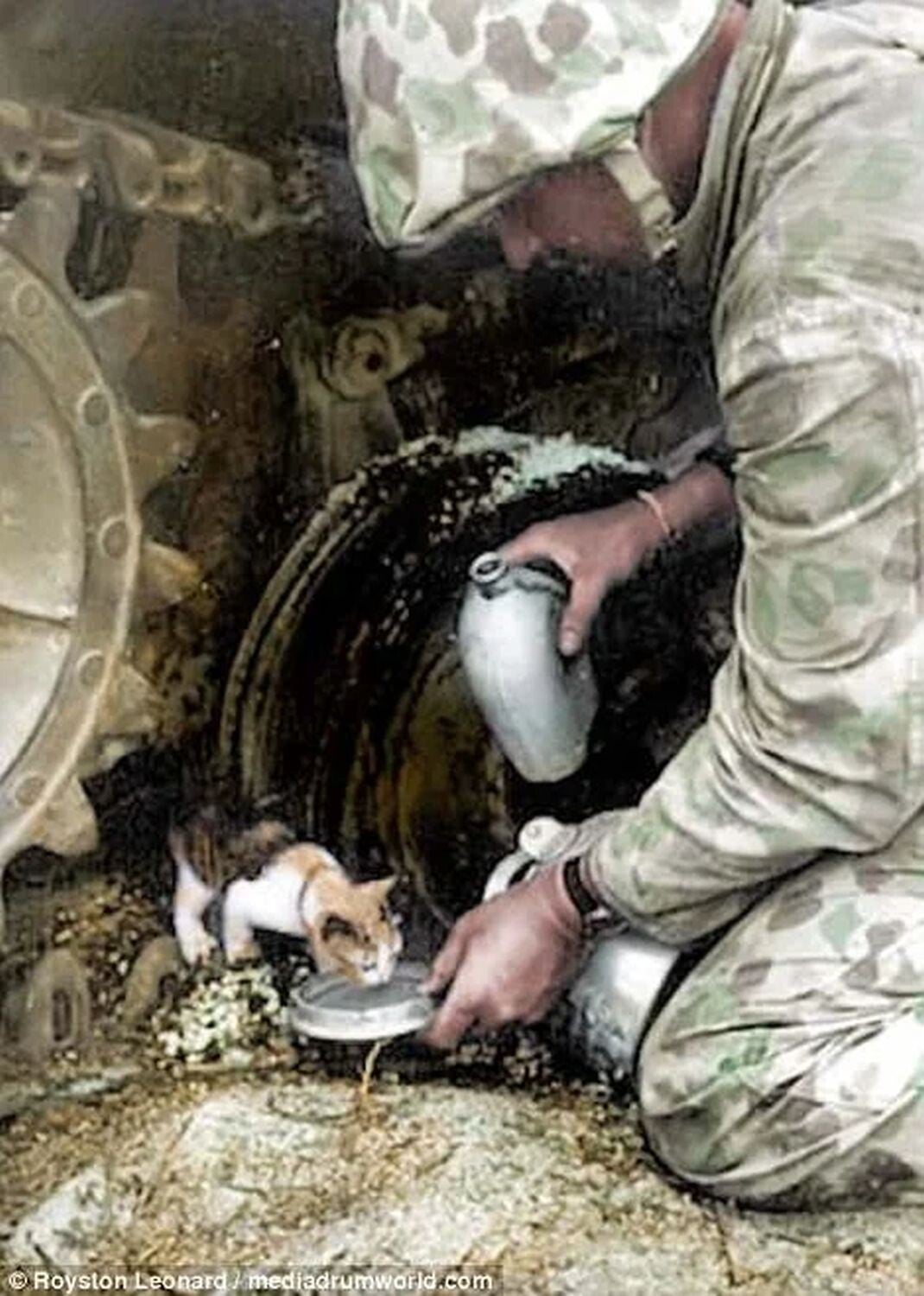
A rare break in the action and a US Marine takes the opportunity to feed a stray kitten.
Colourised by Royston Leonard
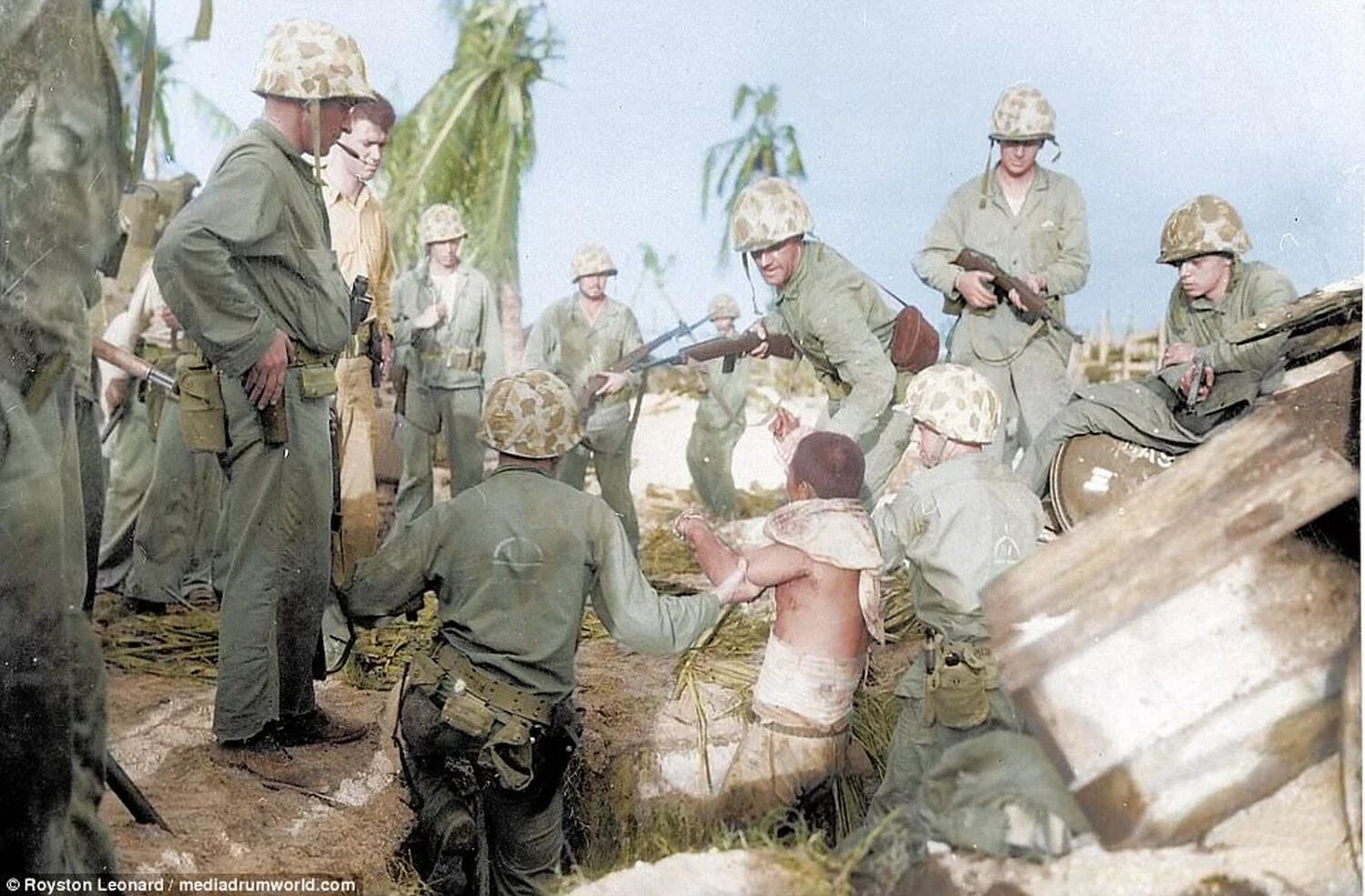
A captured Japanese soldier is surrounded by American troops.
Colourised by Royston Leonard
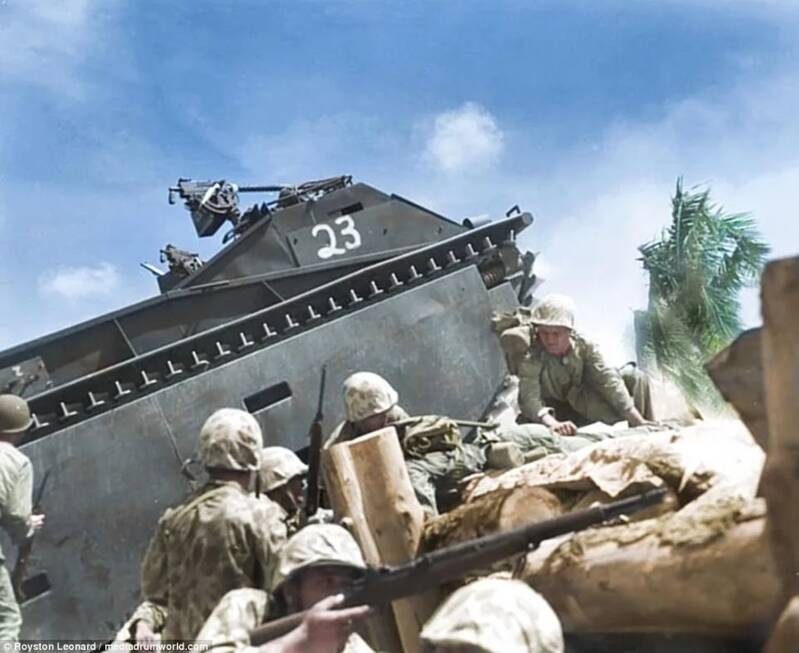
Marines alongside an LVT-1 Alligator on Tarawa.
Colourised by Royston Leonard