
Overview
The Battle of Leyte Gulf, fought from 23 to 26 October 1944, was the largest naval engagement of the Second World War and the action that eliminated Japan’s remaining ability to conduct major fleet operations. It began as U.S. forces landed on Leyte to sever Japan’s access to vital resources in Southeast Asia. In response, the Imperial Japanese Navy launched a complex, multi‑pronged plan intended to strike the invasion force and reverse the American advance.
Japan divided its surviving capital ships into several groups. The Northern Force, built around carriers with almost no aircraft, acted as a decoy to draw Admiral William F. Halsey’s fast carriers north. The Center Force under Vice Admiral Takeo Kurita carried the main striking power—battleships, cruisers, and destroyers intended to pass through the San Bernardino Strait. The Southern Force attempted a similar thrust through Surigao Strait.
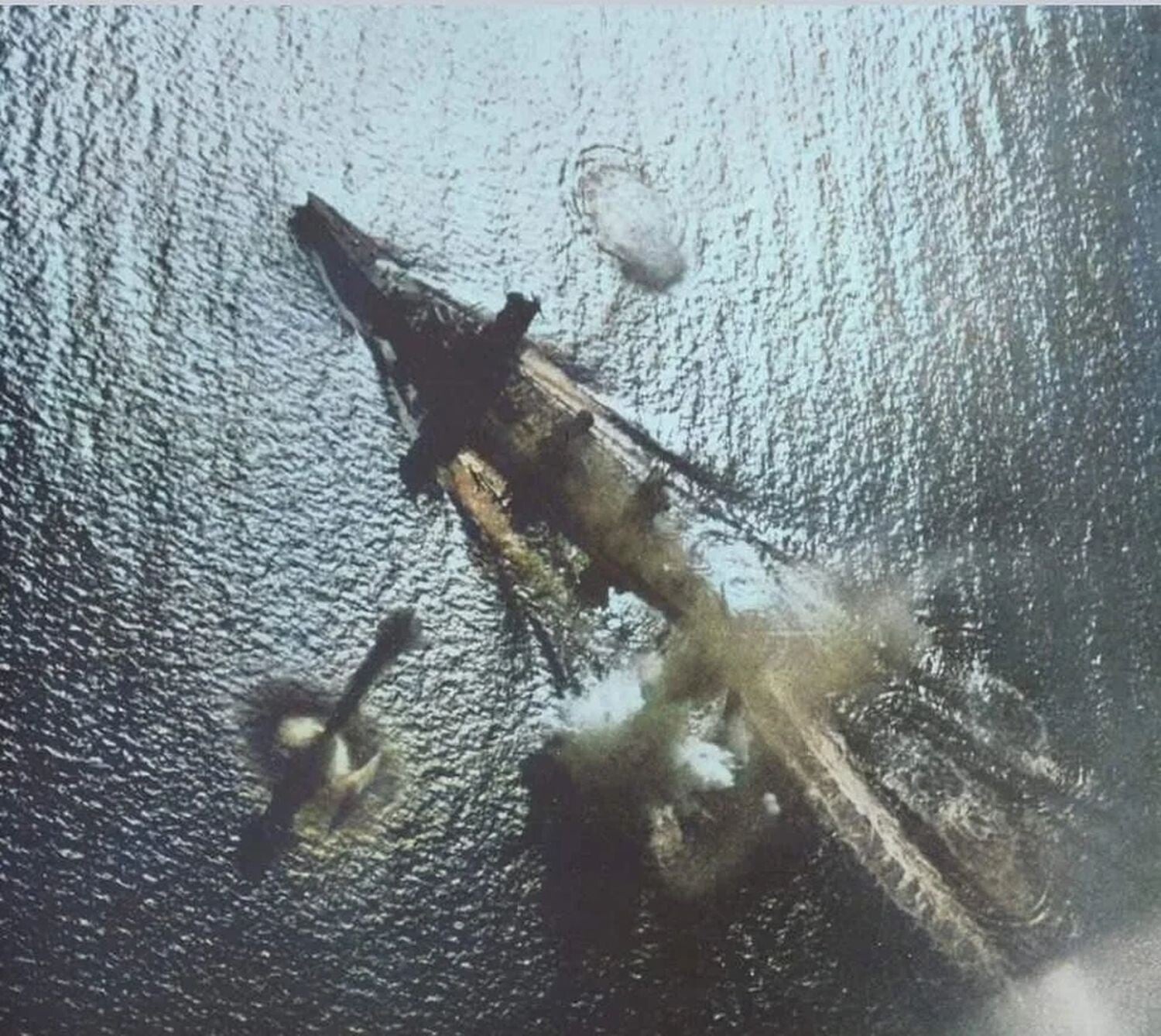
The Battle of Leyte Gulf in October 1944 ended Japan’s ability to wage major naval war. Within this wider action, the battleship Fusō met its destruction in Surigao Strait as part of Vice Admiral Shōji Nishimura’s Southern Force. Advancing at night through a confined channel, Fusō was struck by torpedoes from U.S. destroyers, broke apart, and sank before reaching the main American battle line. Her loss removed half of Nishimura’s heavy strength and foreshadowed the annihilation of the Southern Force. Fusō’s end reflected the collapse of Japan’s battleship era against superior American coordination and firepower. This was the last photograph taken of the Fusō.
The battle unfolded as four distinct engagements. In the Sibuyan Sea, American carrier aircraft repeatedly attacked Kurita’s ships, sinking the battleship Musashi and forcing a temporary withdrawal. In Surigao Strait, Admiral Jesse Oldendorf’s Seventh Fleet executed a textbook crossing‑the‑T manoeuvre, destroying the Southern Force and ending Japan’s ability to challenge the southern approaches. Off Cape Engaño, Halsey’s carriers overwhelmed the Northern Force, sinking four Japanese carriers.
The most critical action occurred off Samar. Kurita’s Center Force unexpectedly encountered the lightly armed escort carriers and destroyers of “Taffy 3.” Despite being outgunned, the American ships launched determined torpedo attacks and continuous air strikes, creating enough confusion to compel Kurita to withdraw. Leyte Gulf shattered Japan’s naval strength. With its battleships and carriers lost or crippled, the Imperial Navy could no longer contest Allied operations, accelerating the collapse of Japan’s defensive strategy in the Pacific.
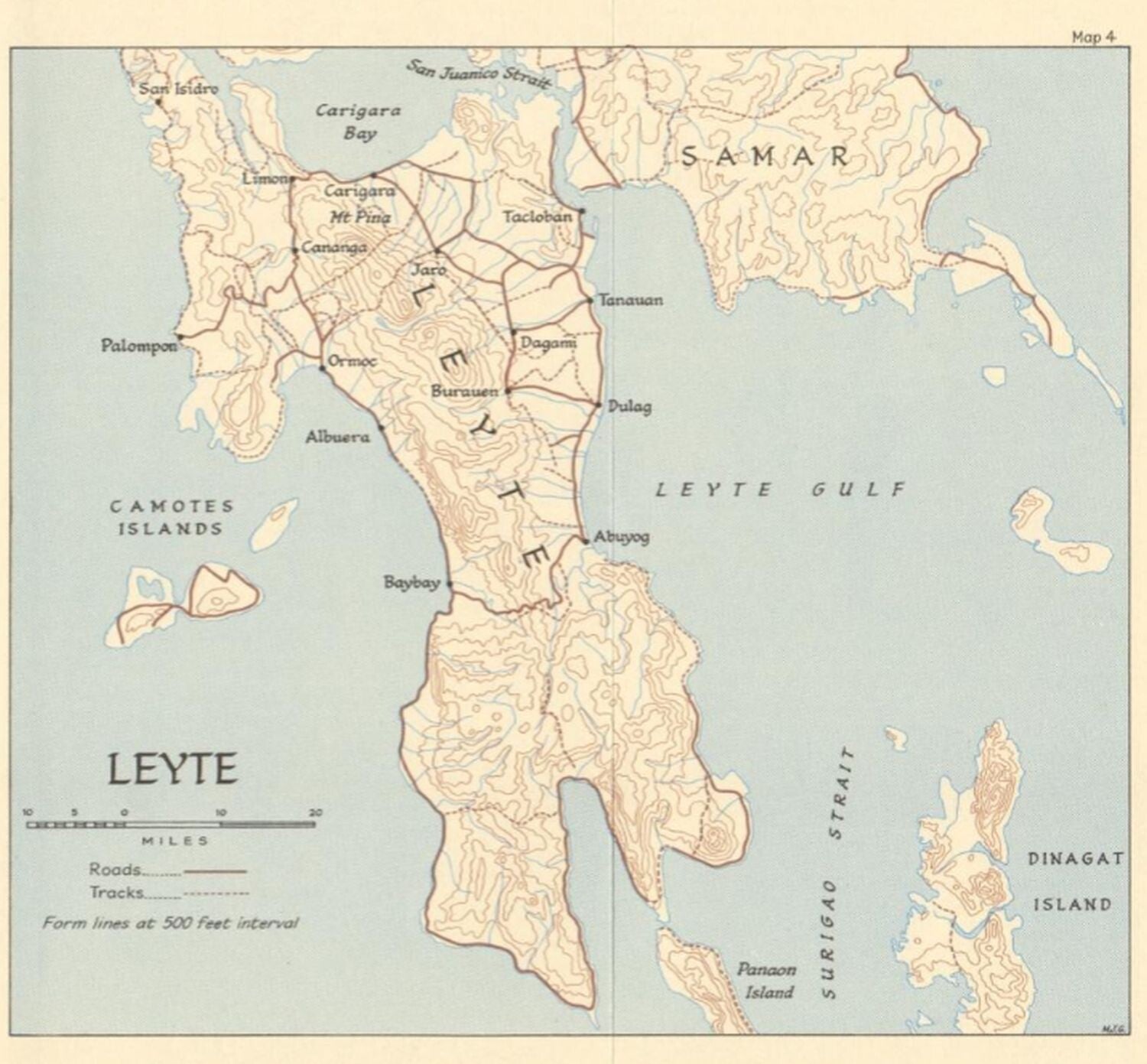
The Battle of Leyte Gulf, fought from 23 to 26 October 1944, was the largest naval engagement of the Second World War and the action that broke Japan’s remaining fleet strength. It unfolded as U.S. forces landed on Leyte to sever Japan’s access to vital resources in Southeast Asia. In response, the Imperial Japanese Navy launched a multi‑axis plan involving its surviving battleships, cruisers, and carriers. The fighting developed into four major actions: the Sibuyan Sea, Surigao Strait, Cape Engaño, and Samar. American carrier strikes sank Musashi; Oldendorf’s forces destroyed the Southern Force in Surigao Strait; Halsey’s carriers eliminated Japan’s decoy carriers off Cape Engaño; and “Taffy 3” repelled Kurita’s Center Force off Samar. Leyte Gulf ended Japan’s ability to conduct major naval operations.
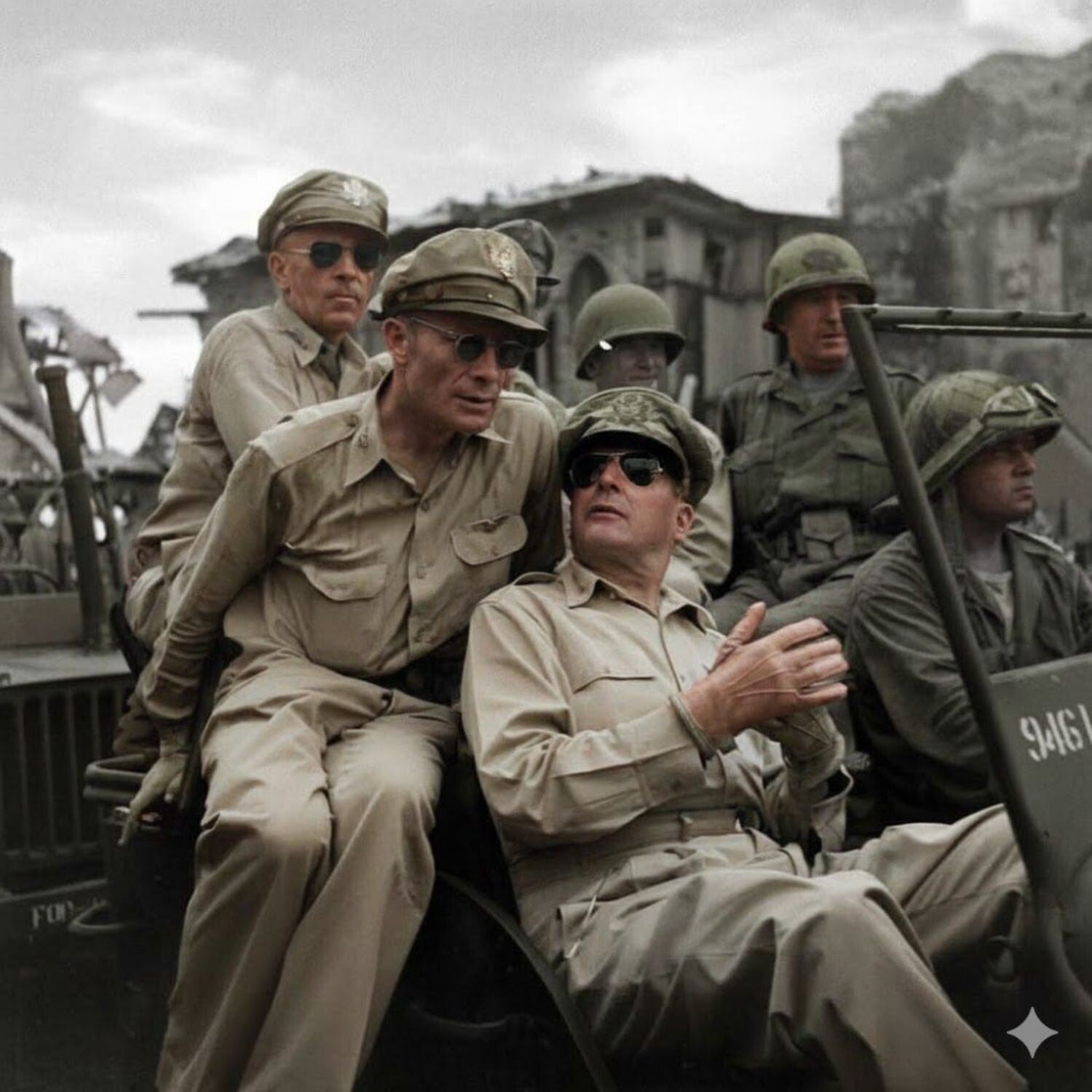
General Douglas MacArthur seated in a military vehicle with his staff during the Battle of Leyte Gulf. General Douglas MacArthur’s role in the Leyte Gulf campaign was central to the Allied strategy in October 1944. His return to the Philippines, promised earlier in the war, was symbolically and strategically significant. MacArthur oversaw the Leyte landings, aiming to cut Japan off from its vital Southeast Asian resources. As the naval battles unfolded—Samar, Surigao Strait, and Cape Engaño—MacArthur’s ground campaign advanced inland. The destruction of Japan’s fleet ensured the success of his operations and secured the liberation of the Philippines.
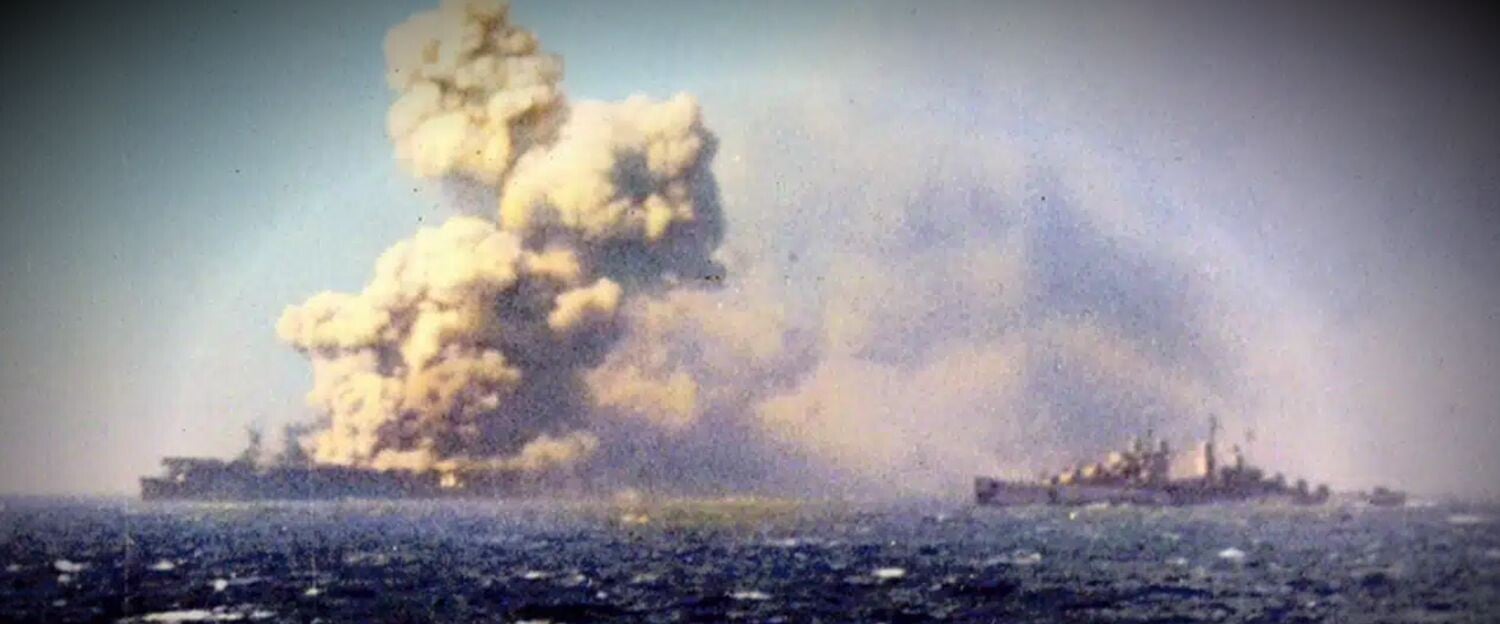
The light carrier USS Princeton was lost on 24 October 1944 during the opening phase of the Battle of Leyte Gulf. Operating with Task Force 38, she was struck by a single bomb from a Japanese dive‑bomber, which ignited aviation fuel and triggered escalating internal explosions. Fires spread uncontrollably, and a massive blast later destroyed much of the ship. Despite rescue efforts, Princeton was abandoned and scuttled, becoming one of the battle’s major American losses.
Colorized by historycrunch.com
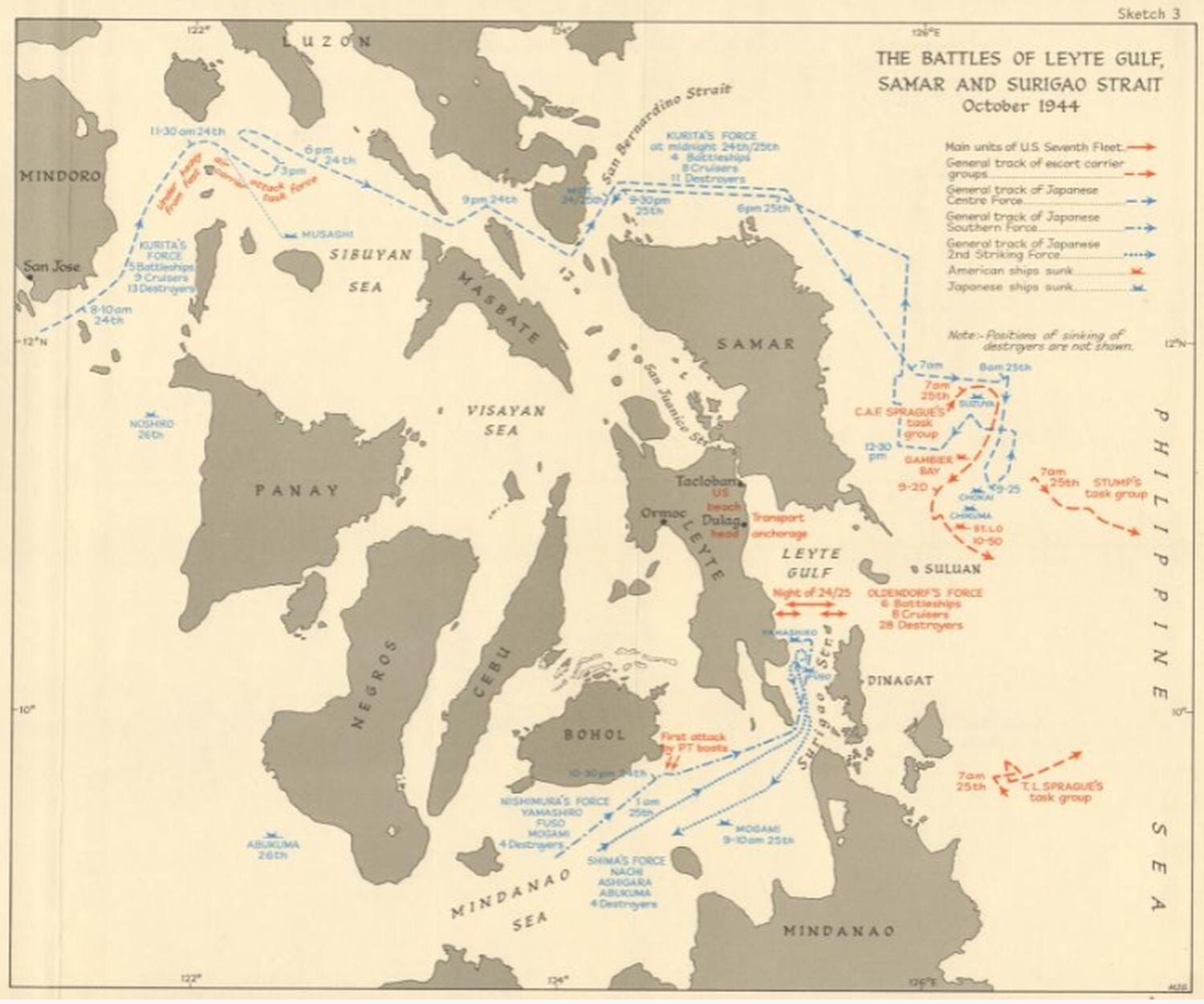
The Battles of Leyte Gulf, Samar, and Surigao Strait in October 1944 marked the destruction of Japan’s remaining fleet strength. As U.S. forces landed on Leyte, Japan launched a final multi‑axis naval operation. Surigao Strait saw the last battleship‑against‑battleship action, ending the Southern Force. Off Samar, “Taffy 3” repelled Kurita’s Center Force through determined attacks. Off Cape Engaño, American carriers sank Japan’s decoy carriers. Together, these actions ended Japan’s ability to wage major naval war.
Fleet movements during the October 1944 Battles of Leyte Gulf and Cape Engaño followed Japan’s final attempt to strike the U.S. invasion of Leyte from multiple directions. The Imperial Navy split its remaining strength into three forces: Kurita’s Center Force advancing through the San Bernardino Strait, Nishimura and Shima’s Southern Force moving toward Surigao Strait, and Ozawa’s Northern Force acting as a carrier decoy to draw Halsey north. U.S. fleets intercepted each thrust, destroying Japan’s carriers off Cape Engaño and breaking its surface fleet across Leyte Gulf.
Further Reading
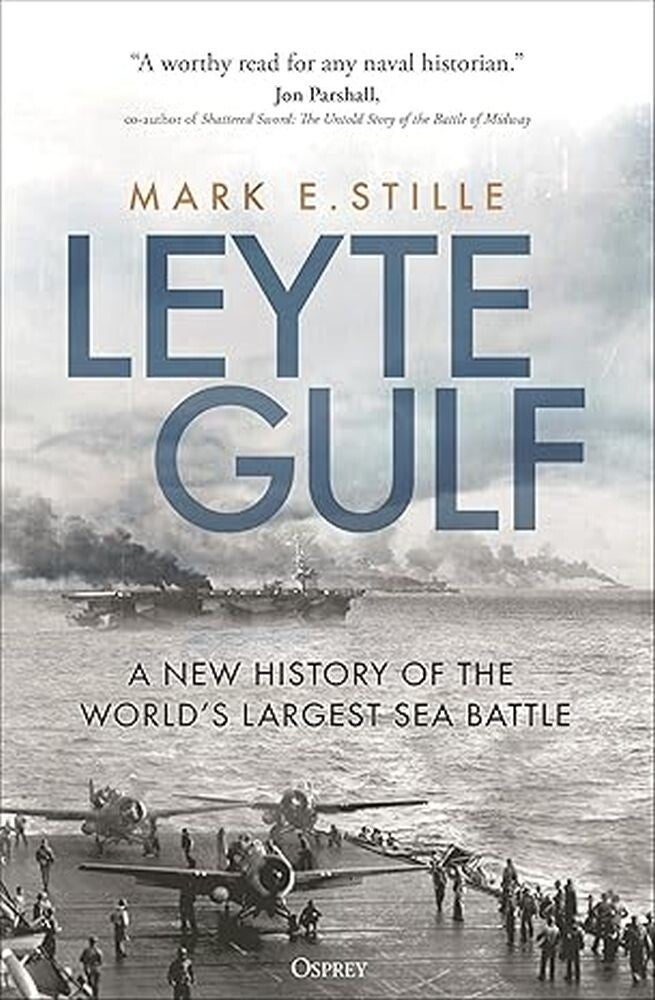
This study re‑examines the Battle of Leyte Gulf, the largest and most decisive naval engagement of the Pacific War. Using original sources, it breaks down the four major actions and critically assesses the plans that shaped them. Mark Stille challenges long‑standing myths, reassessing the performance of the key commanders and the supposed “lost victory” of Japan’s advance into Leyte Gulf. His analysis offers a clearer understanding of this complex and often misinterpreted battle.