Overview
The assault on Peleliu in September 1944 was conceived as a short, sharp operation to secure an airfield for the wider push toward the Philippines. What unfolded instead was one of the most punishing battles faced by American forces in the Pacific. The 1st Marine Division landed on the island expecting the familiar pattern of Japanese resistance: a fierce defence at the beaches followed by a rapid collapse inland. Instead, they encountered a transformed strategy. Colonel Kunio Nakagawa had abandoned the idea of banzai charges and beach‑line annihilation. He turned Peleliu’s coral ridges into a self‑contained fortress, a honeycomb of interlocking caves, firing points, and concealed tunnels designed to bleed the attackers slowly.
The first hours were brutal enough. Mortar and artillery fire raked the beaches, and the heat—well above 40°C—began to take its toll almost immediately. But the true ordeal began as the Marines pushed inland toward the Umurbrogol Mountains, soon known simply as “Bloody Nose Ridge.” Every advance was met by fire from positions that seemed to vanish into the rock. Flamethrowers, satchel charges, and point‑blank fighting became the daily routine. Progress was measured in yards, and casualties mounted at a rate that shocked even veteran units.
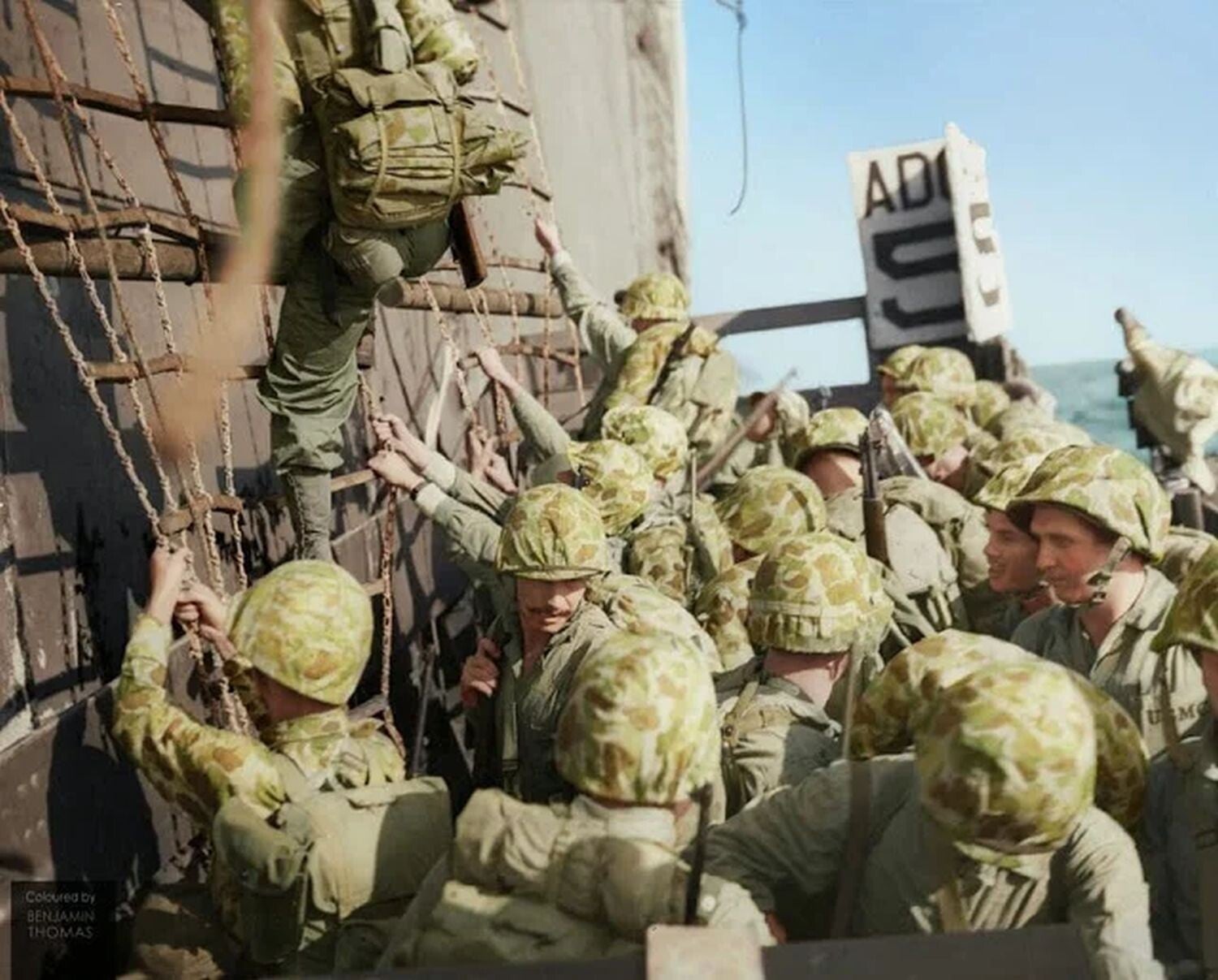
United States Marines climbing down the nets into landing craft during the Battle of Peleliu, September-November 1944.
Photographer: Griffin Image courtesy of the United States Marine Corps History Division, Peleliu 117058. Colourised by Benjamin Thomas
By early October, the Marines were exhausted, and the Army’s 81st Infantry Division took over much of the fighting. They faced the same grinding attrition. The Japanese garrison fought to the last, not in suicidal rushes but in a disciplined, methodical defence that stretched the battle to more than two months. When organised resistance finally ended in late November, the island was a shattered landscape of coral dust, burned vegetation, and bodies. The airfield had been captured early, but the cost—over 10,000 American casualties—raised enduring questions about the necessity of the operation and the intelligence that had justified it.
Information
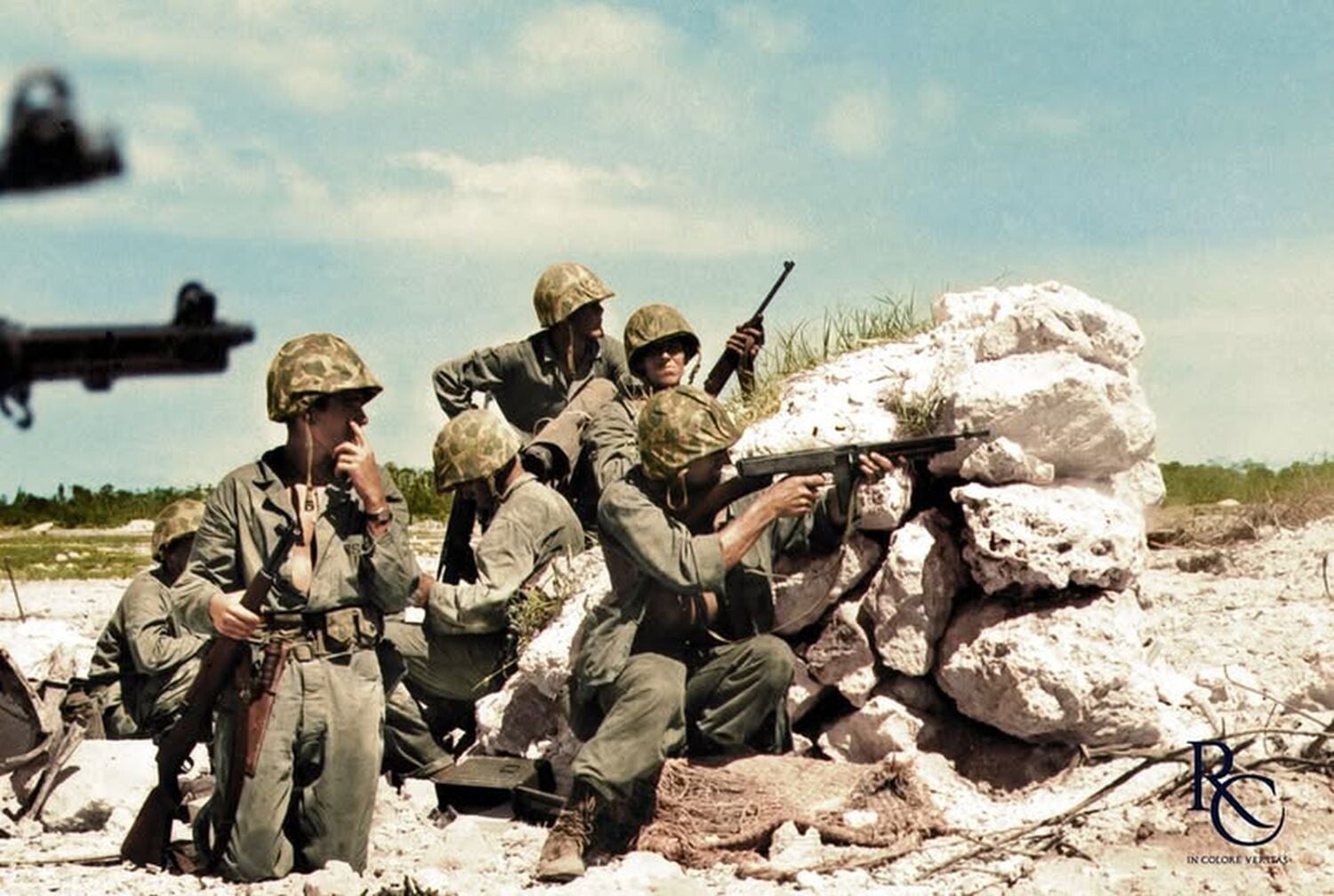
Men from the US 1st Marine Division fire at Japanese targets in the distance, Peleliu, September 1944. Notice the spent cartridges flying mid-air from the Thompson M1928A1.
Original: USMC Colour by: In Colore Veritas
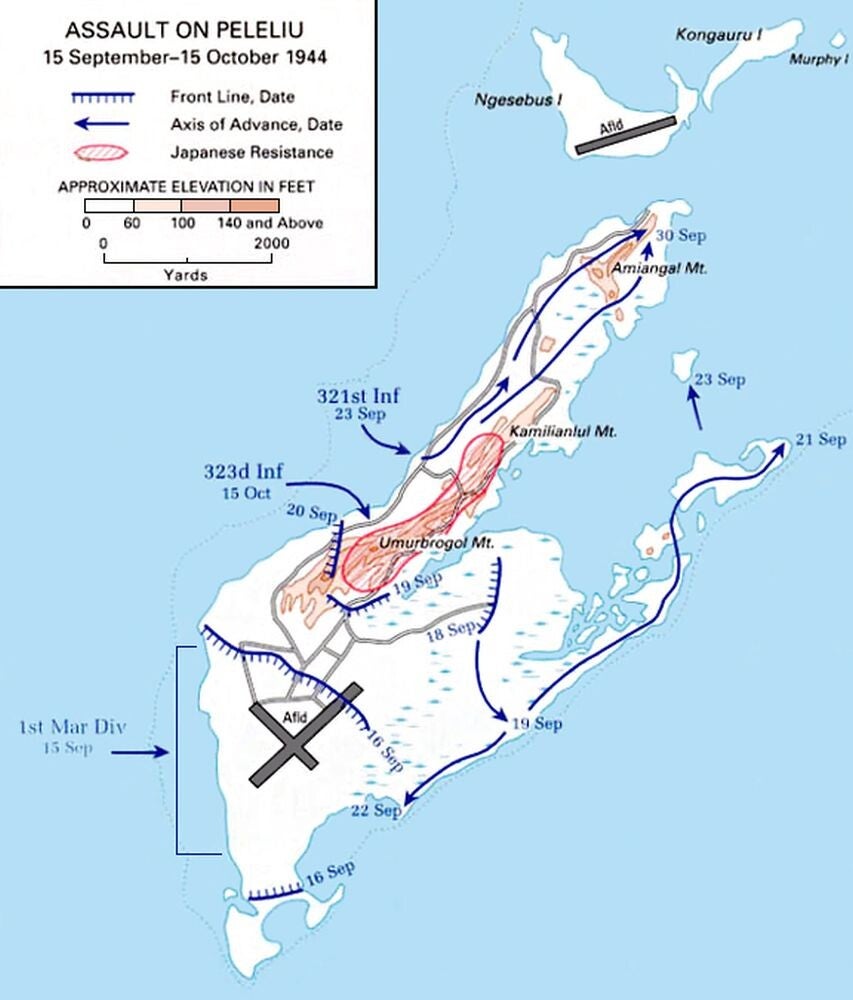
Routes of Allied landings on Peleliu, 15 September 1944.
https://commons.wikimedia.org/wiki/File:Battle_of_Peleliu_map.jpg
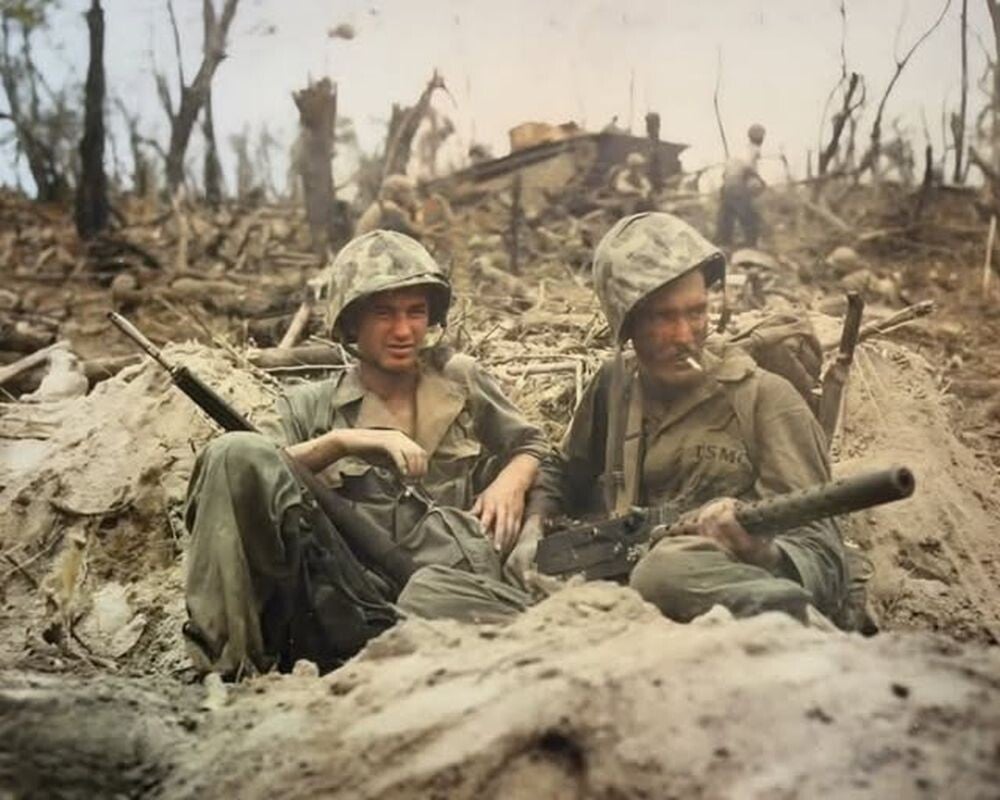
This iconic photo captures a moment of respite for the soldiers of the 1st Marine Division during the bloody Battle of Peleliu. On the right sits Pfc. Douglas Lightheart, holding a .30-caliber Browning M1919A4 machine gun in his lap. On the left is his comrade-in-arms, Pfc. Gerald Paul Thursby, Sr.
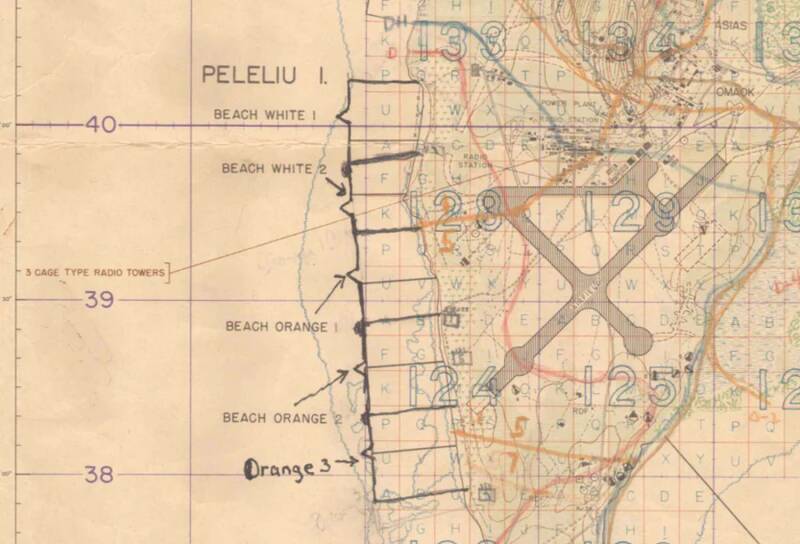
Map Of Peleliu Island with the beach landing zones clearly marked.