
Overview
The Battle of Leyte Gulf, fought from 23 to 26 October 1944, was the largest naval engagement of the Second World War and the action that eliminated Japan’s remaining ability to conduct major fleet operations. It began as U.S. forces landed on Leyte to sever Japan’s access to vital resources in Southeast Asia. In response, the Imperial Japanese Navy launched a complex, multi‑pronged plan intended to strike the invasion force and reverse the American advance.
Japan divided its surviving capital ships into several groups. The Northern Force, built around carriers with almost no aircraft, acted as a decoy to draw Admiral William F. Halsey’s fast carriers north. The Center Force under Vice Admiral Takeo Kurita carried the main striking power—battleships, cruisers, and destroyers intended to pass through the San Bernardino Strait. The Southern Force attempted a similar thrust through Surigao Strait.
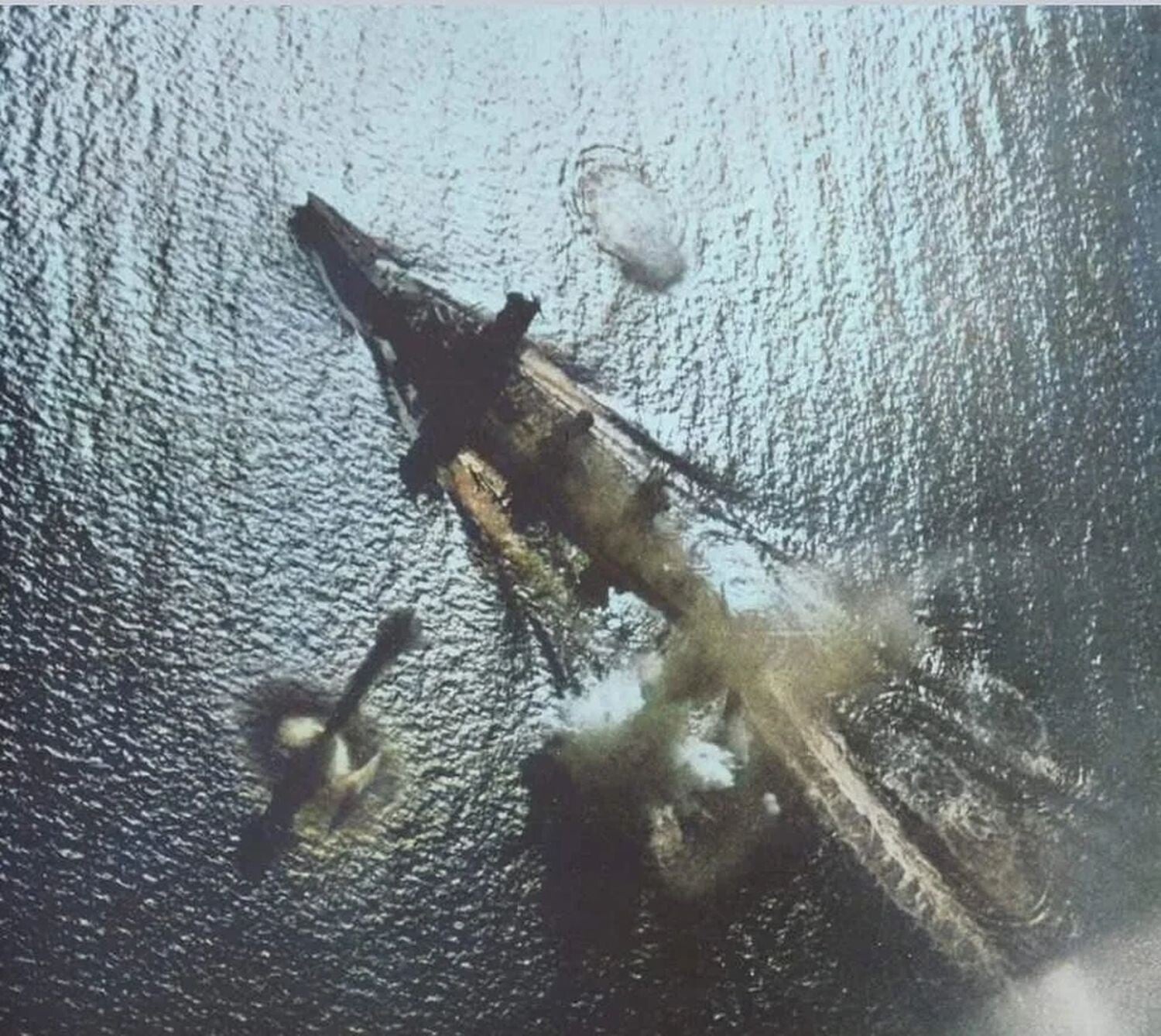
The Battle of Leyte Gulf in October 1944 ended Japan’s ability to wage major naval war. Within this wider action, the battleship Fusō met its destruction in Surigao Strait as part of Vice Admiral Shōji Nishimura’s Southern Force. Advancing at night through a confined channel, Fusō was struck by torpedoes from U.S. destroyers, broke apart, and sank before reaching the main American battle line. Her loss removed half of Nishimura’s heavy strength and foreshadowed the annihilation of the Southern Force. Fusō’s end reflected the collapse of Japan’s battleship era against superior American coordination and firepower. This was the last photograph taken of the Fusō.
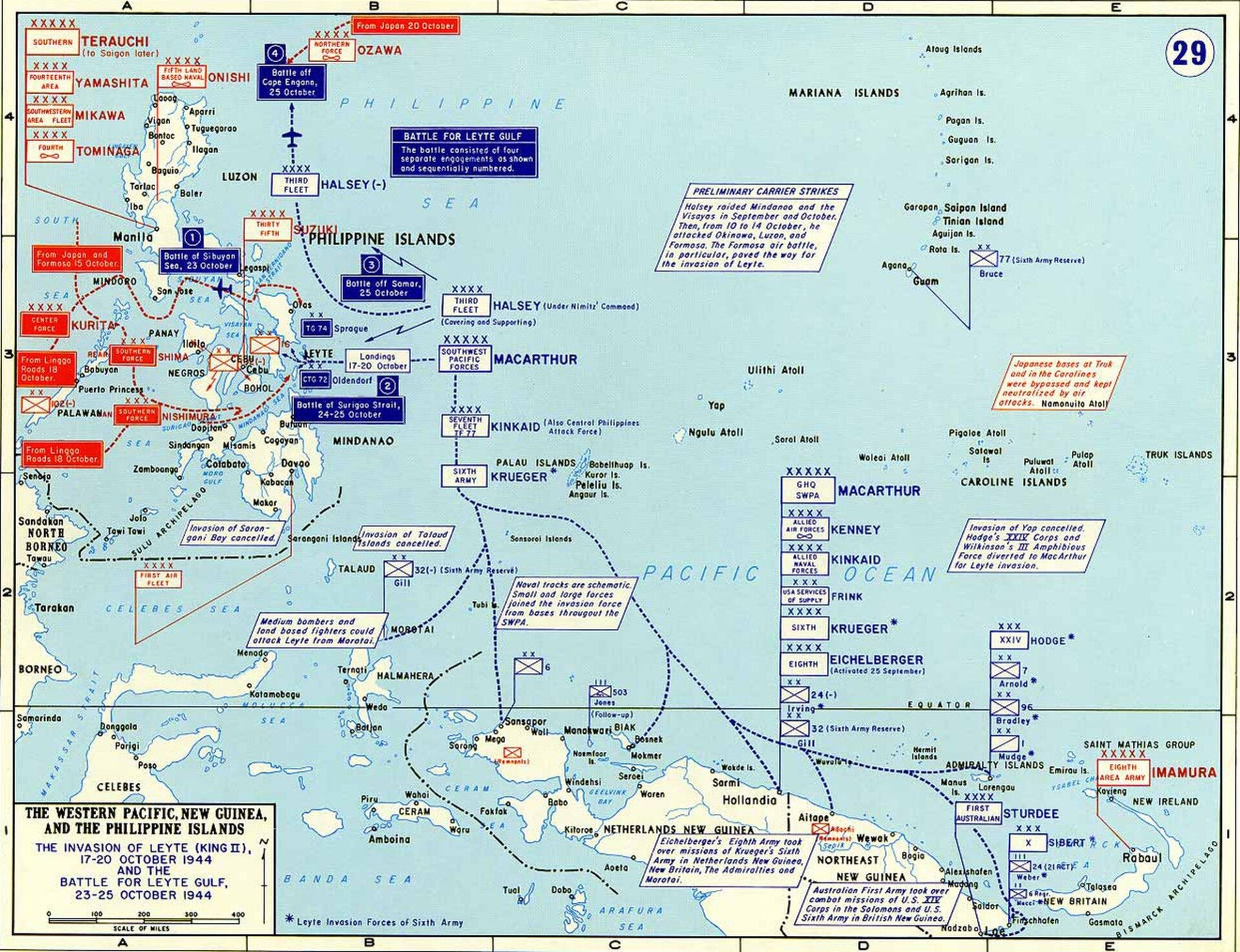
The battle unfolded as four distinct engagements. In the Sibuyan Sea, American carrier aircraft repeatedly attacked Kurita’s ships, sinking the battleship Musashi and forcing a temporary withdrawal. In Surigao Strait, Admiral Jesse Oldendorf’s Seventh Fleet executed a textbook crossing‑the‑T manoeuvre, destroying the Southern Force and ending Japan’s ability to challenge the southern approaches. Off Cape Engaño, Halsey’s carriers overwhelmed the Northern Force, sinking four Japanese carriers.
The most critical action occurred off Samar. Kurita’s Center Force unexpectedly encountered the lightly armed escort carriers and destroyers of “Taffy 3.” Despite being outgunned, the American ships launched determined torpedo attacks and continuous air strikes, creating enough confusion to compel Kurita to withdraw. Leyte Gulf shattered Japan’s naval strength. With its battleships and carriers lost or crippled, the Imperial Navy could no longer contest Allied operations, accelerating the collapse of Japan’s defensive strategy in the Pacific.
By August 1942, sustained Allied offensives across the south and central Pacific had forced Japanese forces from a chain of island bases and left many others isolated.
Operations in the Solomon Islands, the Bismarck Archipelago, the Admiralty Islands, New Guinea, the Marshall Islands, and Wake Island steadily eroded Japan’s forward positions and disrupted its ability to reinforce or supply garrisons.
This tightening pressure set the conditions for the next major strategic step: an assault on the Mariana Islands.
In June 1944, American amphibious forces, supported by the U.S. Fifth Fleet’s Fast Carrier Task Force, captured Saipan, Tinian, and Guam, bypassing only Rota.
Securing the Marianas breached Japan’s inner defensive perimeter and provided the United States with bases from which long‑range B‑29 Superfortress bombers could strike the Japanese home islands directly.
...proved disastrous for the Imperial Japanese Navy...
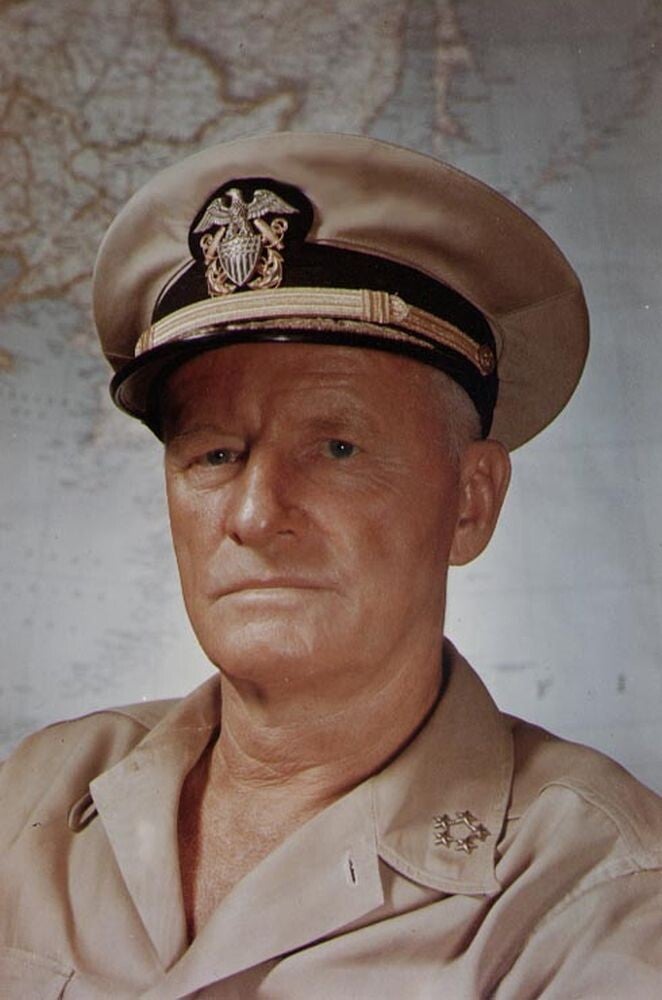
Admiral Chester Nimitz, who was concerned about the threat from the air.
Japan attempted to counter this advance during the Battle of the Philippine Sea in July 1944. The resulting engagement proved disastrous for the Imperial Japanese Navy.
Three carriers were sunk, several other ships damaged, and roughly 600 aircraft destroyed. The loss of trained aviators was particularly severe, leaving Japan with minimal carrier‑borne air power and few experienced pilots.
Despite this, Japan still possessed substantial land‑based air strength in the Philippines, which many senior American officers - outside the Joint Chiefs of Staff - considered too dangerous to bypass.
Admiral Chester Nimitz shared this concern, recognising that any major operation in the western Pacific would have to account for the Philippines’ air threat.
...pledge to return to the Philippines...
The strategic question then centred on how best to sever Japan’s supply lines to Southeast Asia. Admiral Ernest J. King, the Joint Chiefs, and Nimitz favoured blockading Japanese forces in the Philippines while launching an invasion of Formosa (Taiwan).
General Douglas MacArthur, committed to fulfilling his 1942 pledge to return to the Philippines, argued that the islands themselves should be the next target.
Formosa offered potential as a base for operations against mainland China, but MacArthur considered such a campaign unnecessary.
Moreover, estimates suggested that invading Formosa would require approximately 12 Army and Marine divisions - forces not yet available in the Pacific.
The Australian Army, heavily engaged across the Solomon Islands, New Guinea, the Dutch East Indies, and other theatres, could not contribute additional manpower.
As a result, any operation demanding large ground forces would have to wait until Germany’s defeat freed American divisions for redeployment.
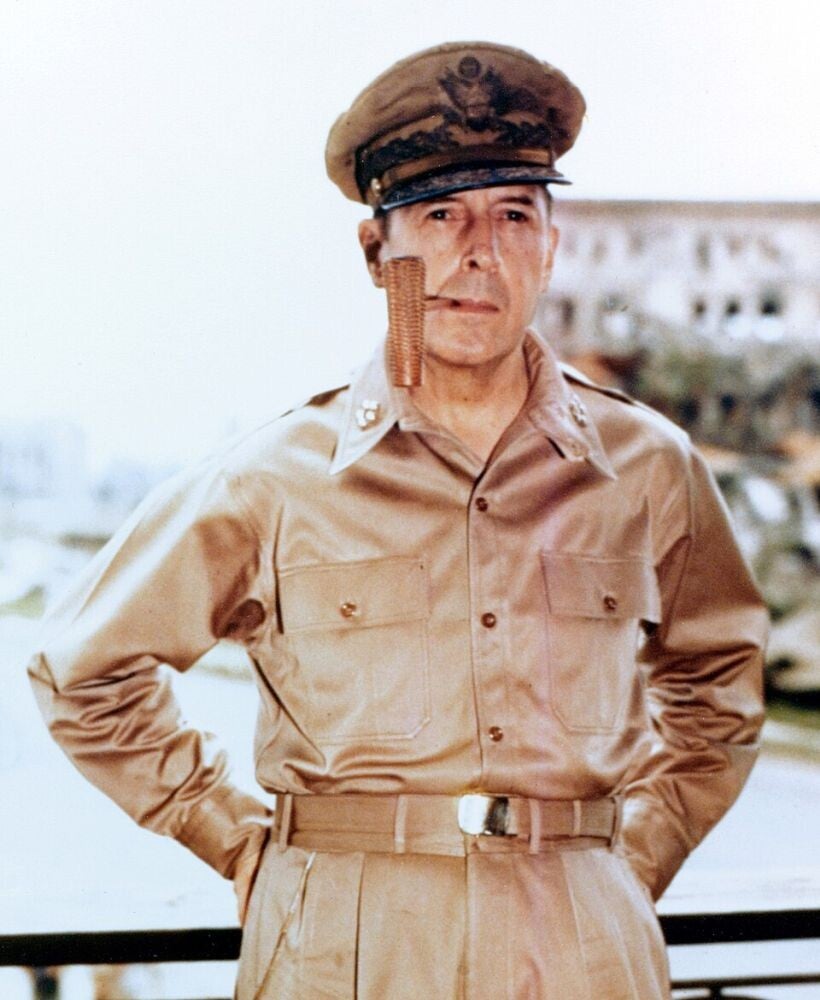
General Douglas MacArthur had committed to returning to the Philippines.
...did not immediately resolve the debate...
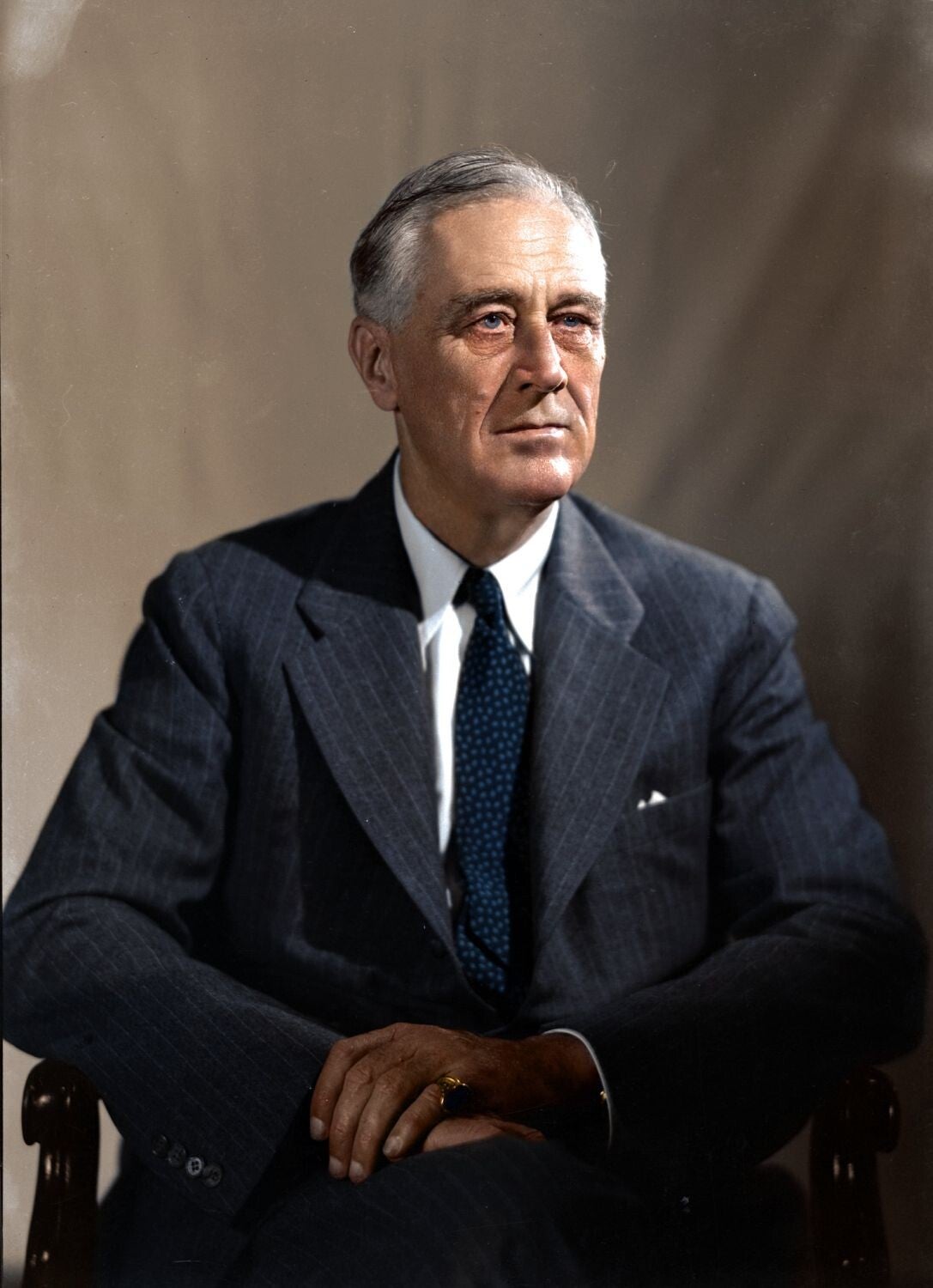
President Roosevelt, who along with Nimitz and MacArthur, clarified US Pacific strategy.
A meeting between MacArthur, Nimitz, and President Roosevelt helped clarify the strategic stakes but did not immediately resolve the debate.
For two months, the question of Formosa versus the Philippines remained unsettled.
Eventually, Nimitz shifted his position and endorsed MacArthur’s plan.
The final decision designated Leyte, in the central Philippines, as the invasion target.
Amphibious forces and close naval support would be provided by the U.S. Seventh Fleet under Vice Admiral Thomas C. Kinkaid.
...suffered heavy damage...
By late 1944, the Seventh Fleet comprised units from both the U.S. Navy and the Royal Australian Navy.
Before the major naval actions around Leyte Gulf began, HMAS Australia and USS Honolulu suffered heavy damage from Japanese air attacks.
During the battle itself, both cruisers were already en route to the Allied base at Manus Island - 1,700 miles away - for repairs, escorted by HMAS Warramunga.
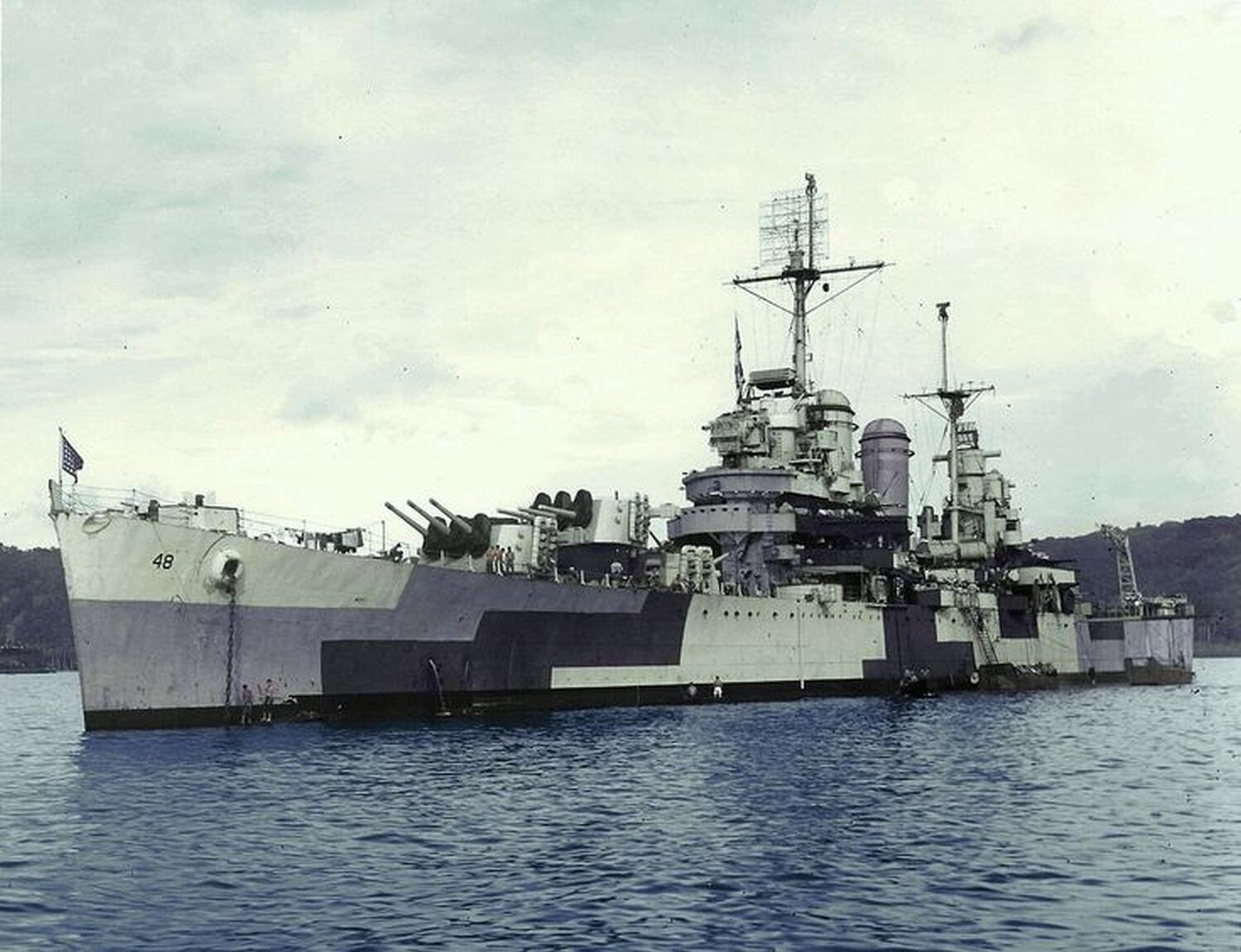
USS Honolulu (CL‑48), a Brooklyn‑class light cruiser, entered 1944 after heavy service in the Solomons. In July, during pre‑Leyte operations, she was severely damaged by a Japanese air attack that struck her bow, forcing withdrawal for repairs. Despite this, the ship’s earlier actions—including Kula Gulf and Kolombangara—had established her as a reliable, hard‑fighting cruiser whose gunnery and endurance contributed significantly to Allied naval operations in the Pacific.
...the command structure contained a critical flaw...
American planners assigned the U.S. Third Fleet, commanded by Admiral William F. Halsey Jr., to provide distant air cover for the Leyte landings.
Task Force 38, the Fast Carrier Task Force under Vice Admiral Marc Mitscher, formed the fleet’s striking arm.
However, the command structure contained a critical flaw: no single admiral held overall authority.
Kinkaid’s Seventh Fleet reported to MacArthur as Supreme Allied Commander, Southwest Pacific Area, while Halsey’s Third Fleet answered to Nimitz as Commander‑in‑Chief, Pacific Ocean Areas.
...nearly produced a strategic disaster...
This division, combined with communication failures, created conditions that nearly produced a strategic disaster during the battle.
The Japanese plan suffered from similar fragmentation, with their forces divided into three separate fleets and lacking unified command.
This complex strategic background shaped the events that unfolded at Leyte Gulf, where competing plans, divided commands, and the shifting balance of naval power converged in one of the largest naval battles in history.
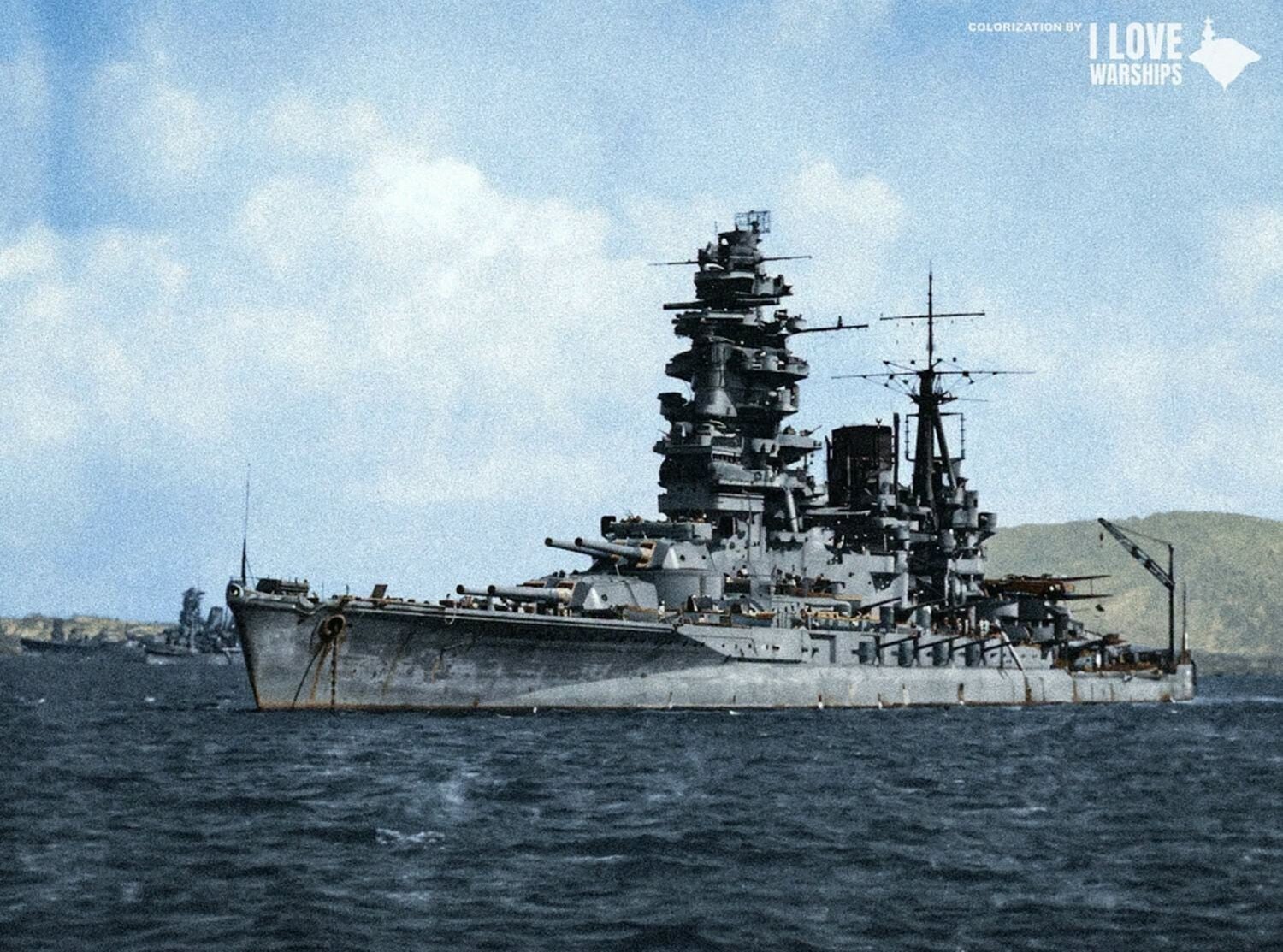
Nagato entered the Battle of Leyte Gulf as part of Vice Admiral Nishimura’s Southern Force, tasked with forcing the Surigao Strait on 25 October 1944. She came under heavy American naval gunfire and air attack during the approach, suffering damage but managing to withdraw after the destruction of much of the Japanese battle line. Fuel shortages and worsening conditions limited her further participation, and she retreated to Japan following the failed operation.
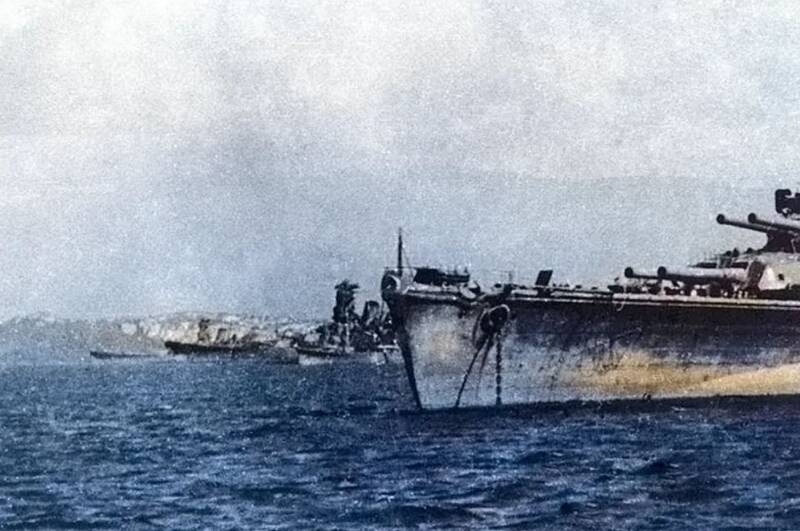
Japanese battleships at Brunei, Borneo, October 1944, photographed just prior to the Battle of Leyte Gulf. Ships are, from left to right: Musashi, Yamato, a cruiser, and Nagato. At Leyte, the three battleships were components of Vice Admiral Takeo Kurita's Center Force.
I Shall Return
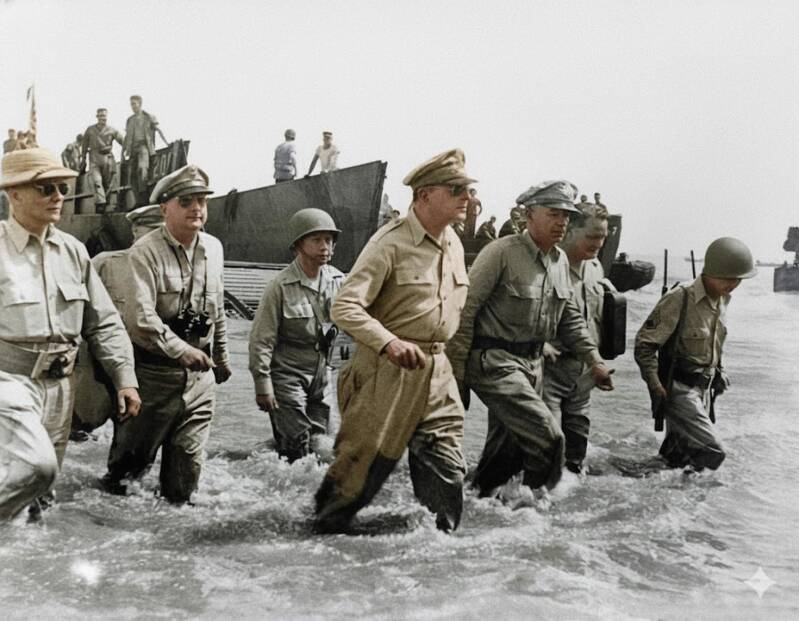
General Douglas MacArthur wading ashore alongside U.S. Army and Marine officers during the initial landings on Leyte Island in October 1944. American forces landed on Leyte on 20 October 1944, establishing secure beachheads at Red and White Beaches near Tacloban. MacArthur directed the ground assault while naval and air units suppressed Japanese positions. Rapid consolidation ashore enabled expansion inland before Japanese counterattacks developed.
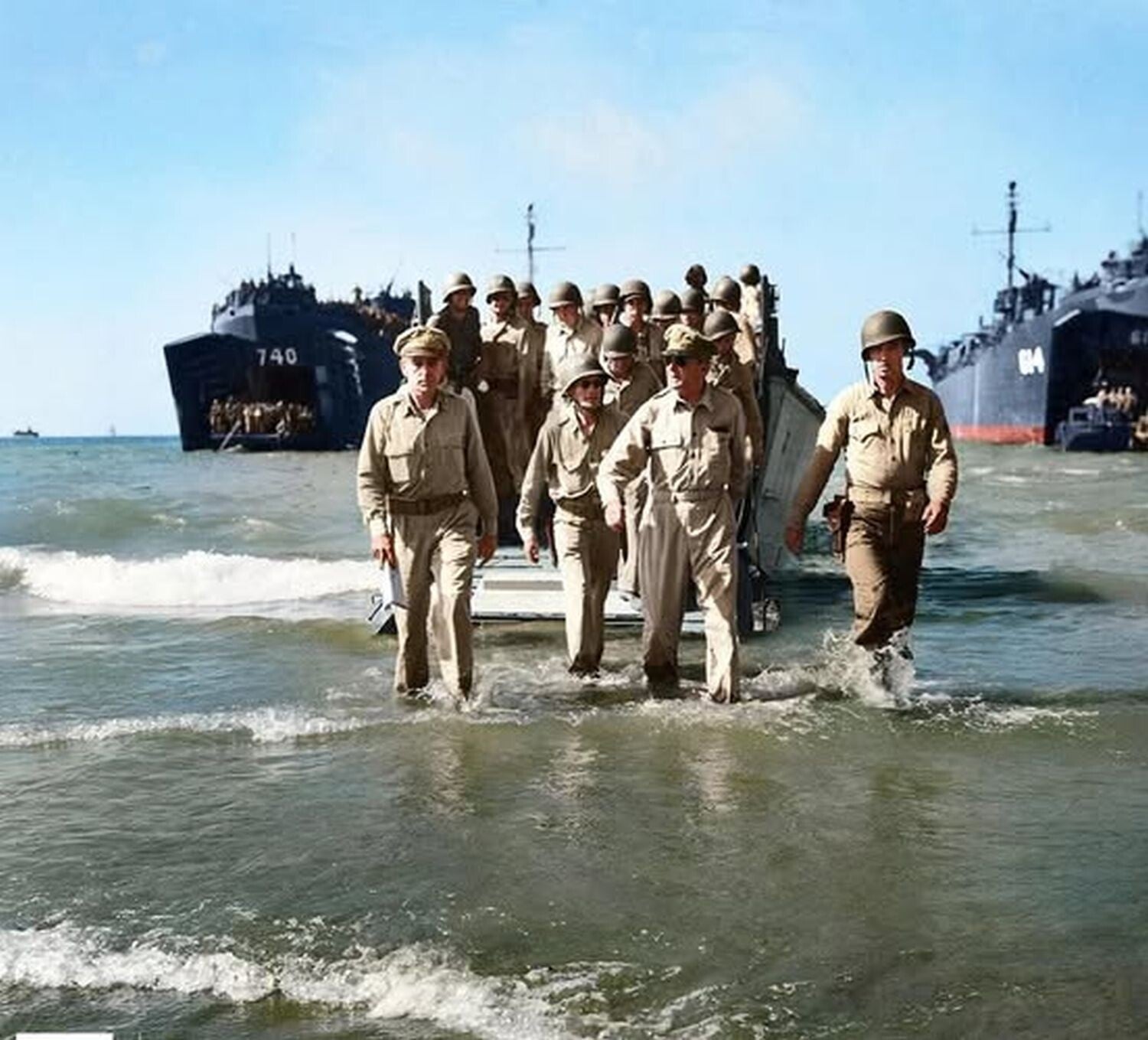
These famous photographs of General Douglas MacArthur wading into the water off Leyte Island in the Philippines was taken by Life magazine photographer Carl Mydans on October 20, 1944. The photograph became one of the most iconic images of the Pacific War, symbolizing the fulfillment of MacArthur's famous promise: "I shall return."
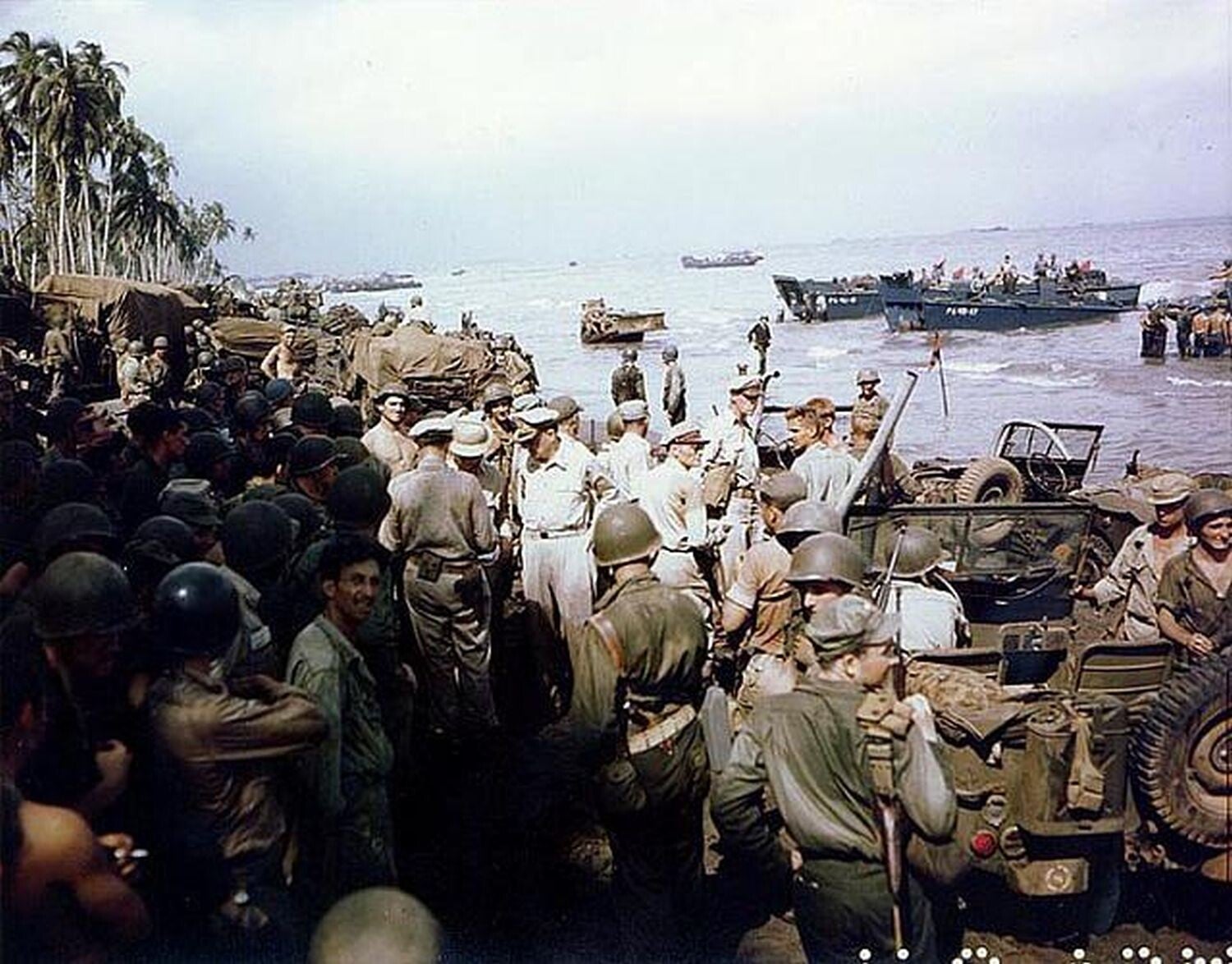
MacArthur inspecting the beachhead on Leyte Island on Oct. 20, 1944, the day that marked the re-establishment of the Commonwealth government on Philippine soil. This led to the largest naval battle in the Pacific, known as the Battle of Leyte Gulf.
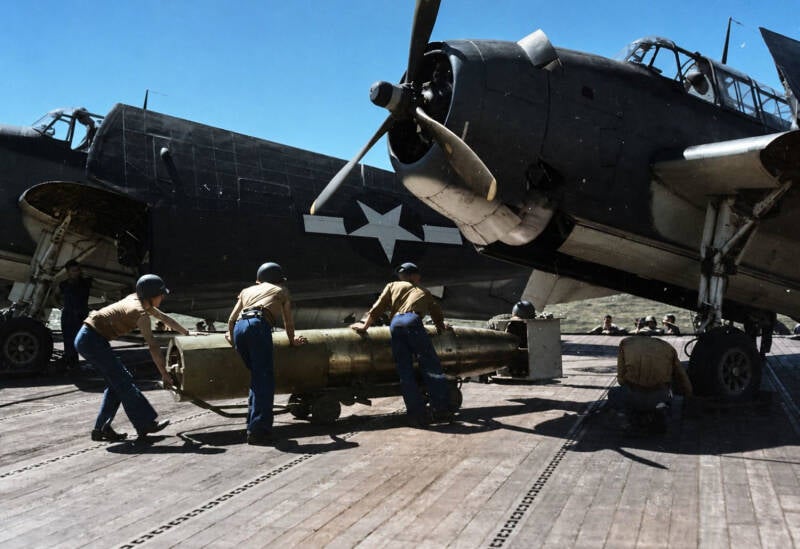
Arming a Torpedo Squadron 51 (VT-51) TBM torpedo bomber on USS San Jacinto (CVL-30), 25 October 1944 during the Battle of Leyte Gulf. Probably taken before the squadron's planes attacked the Japanese carrier force off Cape Engaño. The torpedo is a Mark XIII, fitted with a wooden stabilizer around its tail and drag ring around its nose.
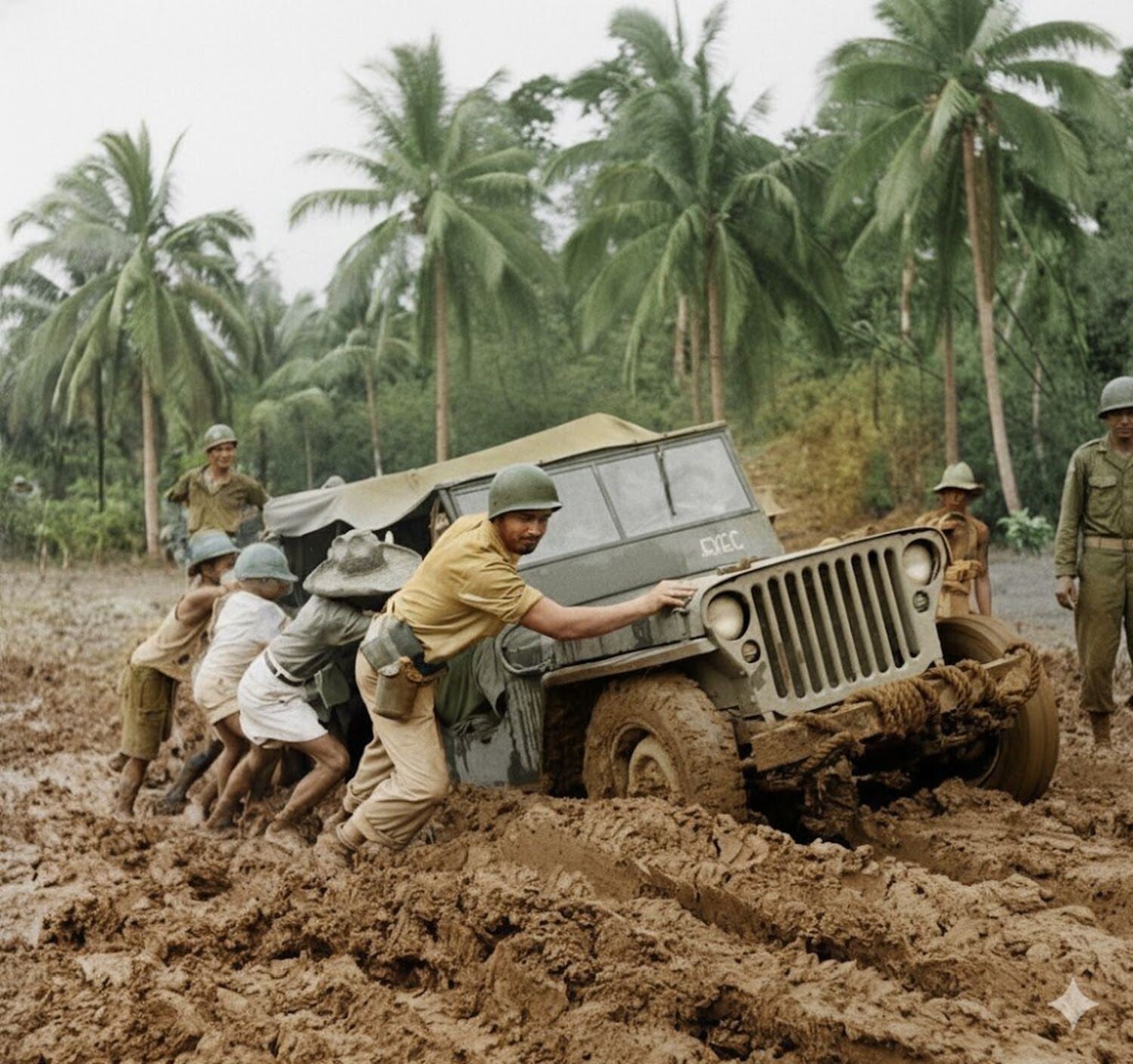
U.S. soldiers using a Willys MB Jeep to navigate through deep mud during the Leyte Gulf Landing in 1944.
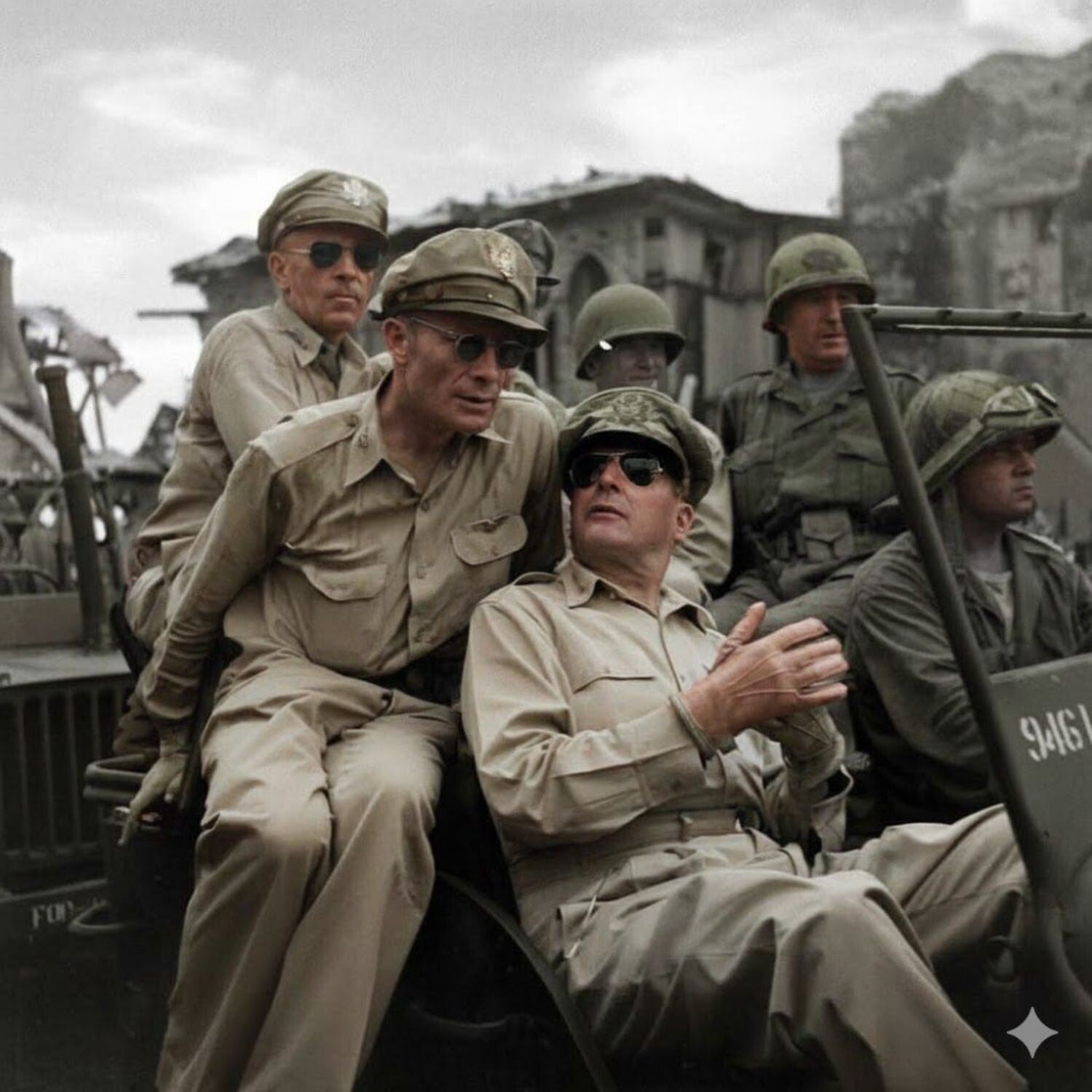
General Douglas MacArthur seated in a military vehicle with his staff during the Battle of Leyte Gulf. General Douglas MacArthur’s role in the Leyte Gulf campaign was central to the Allied strategy in October 1944. His return to the Philippines, promised earlier in the war, was symbolically and strategically significant. MacArthur oversaw the Leyte landings, aiming to cut Japan off from its vital Southeast Asian resources. As the naval battles unfolded—Samar, Surigao Strait, and Cape Engaño—MacArthur’s ground campaign advanced inland. The destruction of Japan’s fleet ensured the success of his operations and secured the liberation of the Philippines.
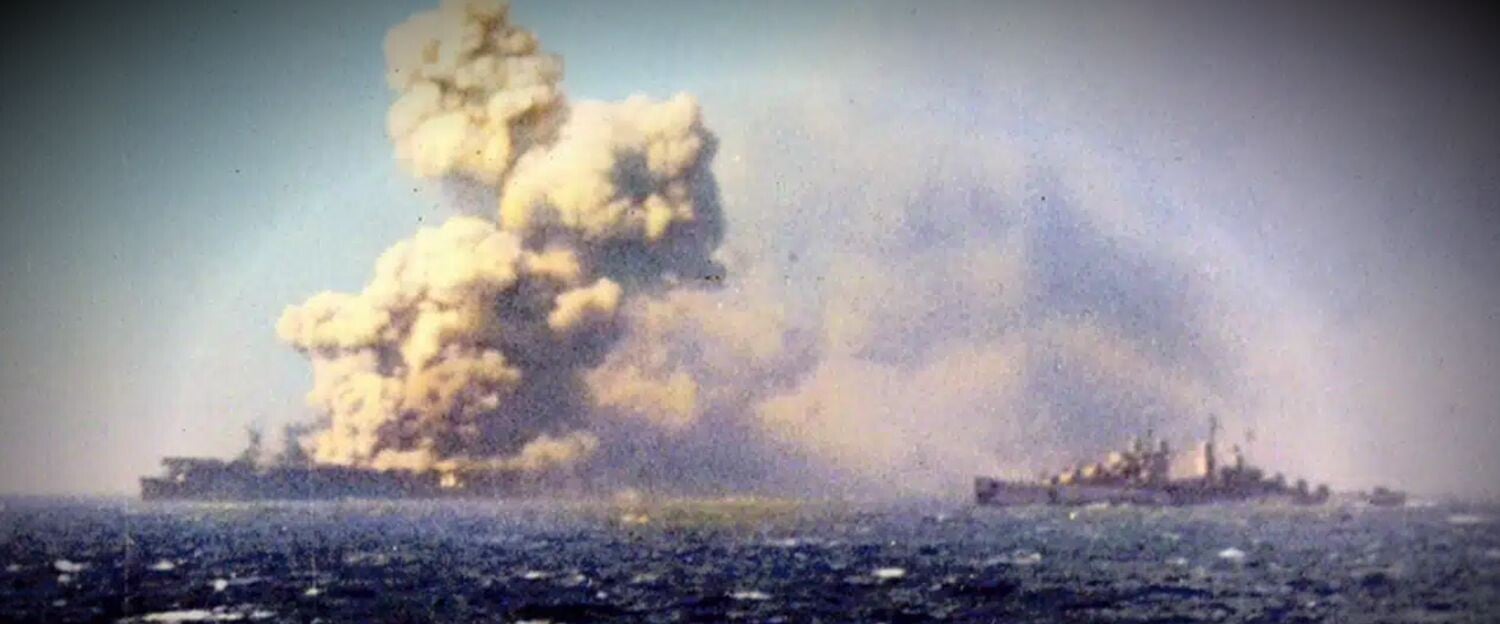
The light carrier USS Princeton was lost on 24 October 1944 during the opening phase of the Battle of Leyte Gulf. Operating with Task Force 38, she was struck by a single bomb from a Japanese dive‑bomber, which ignited aviation fuel and triggered escalating internal explosions. Fires spread uncontrollably, and a massive blast later destroyed much of the ship. Despite rescue efforts, Princeton was abandoned and scuttled, becoming one of the battle’s major American losses.
Colorized by historycrunch.com
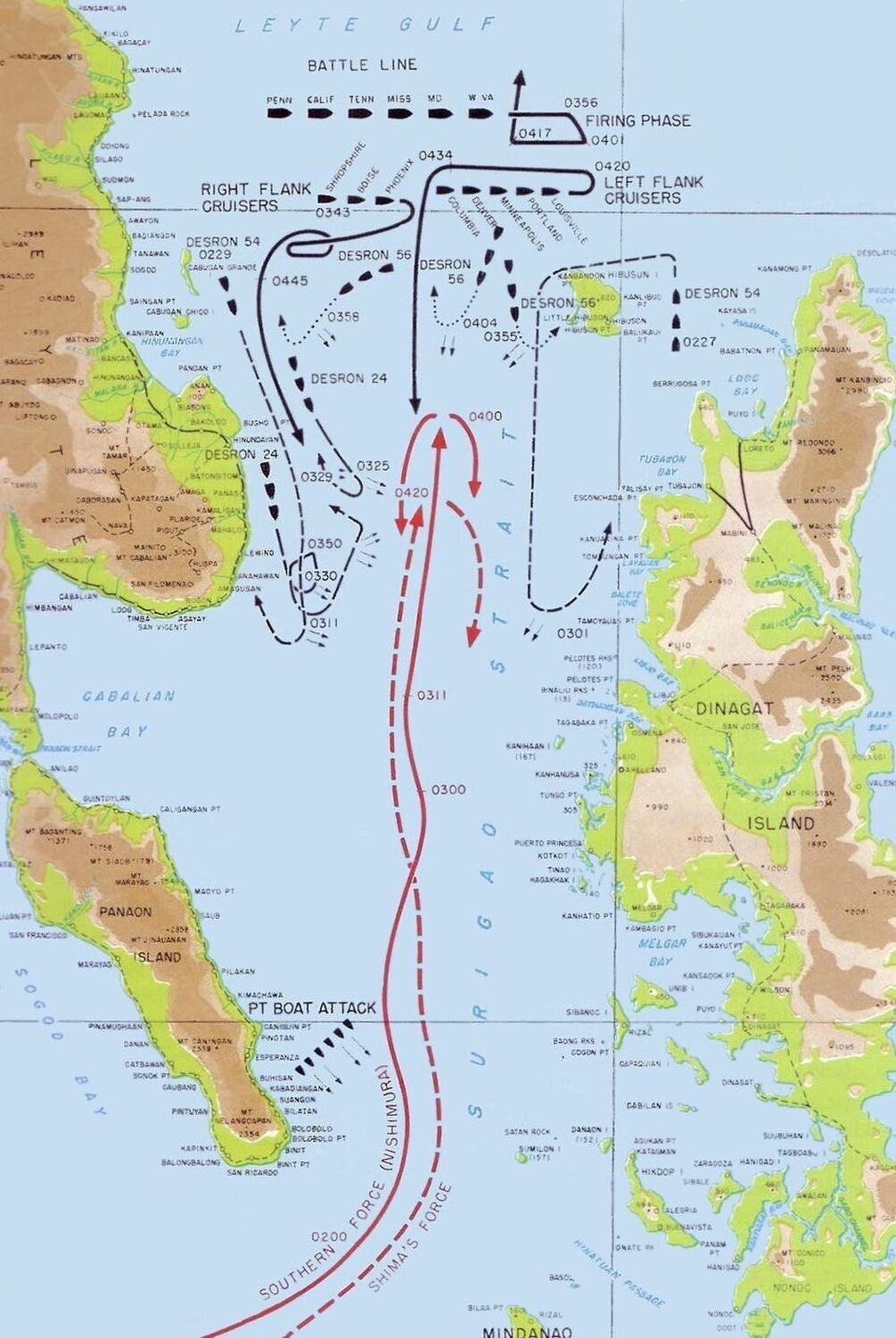
Battle of Surigao Strait. The Battle of Surigao Strait on 25 October 1944 was the final battleship‑to‑battleship engagement in naval history. Nishimura’s Japanese force attempted to break through the strait but was intercepted by layered American PT‑boat, destroyer, and battleship attacks. Radar‑directed fire from rebuilt U.S. battleships overwhelmed Yamashiro and destroyed the Japanese column. The victory secured the Leyte landings and marked the end of traditional battle‑line warfare.
https://en.wikipedia.org/wiki/Battle_of_Leyte_Gulf#/media/File:Surigao_Strait.jpg
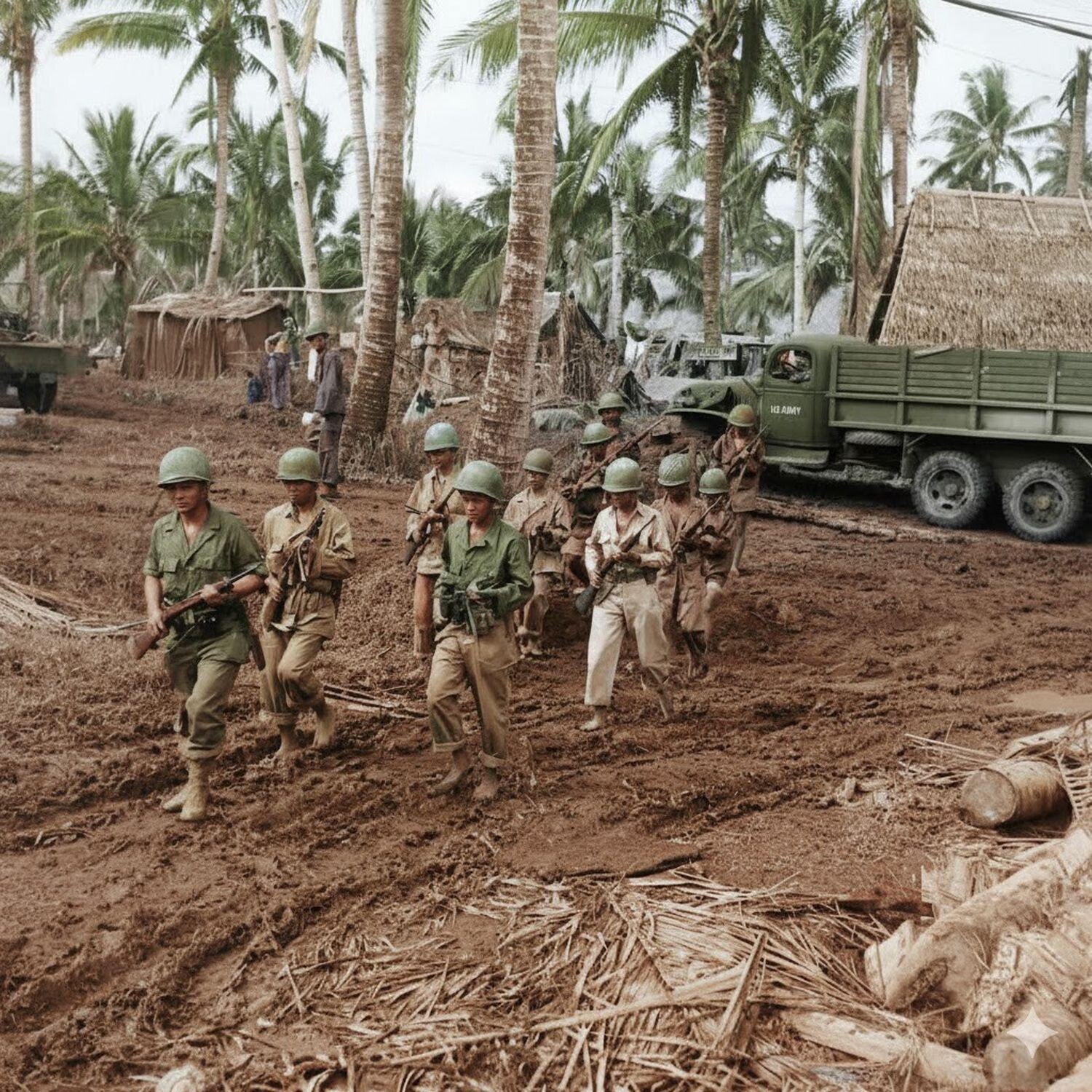
U.S. Marines advancing through mud and palm trees during the Leyte Gulf landing in October 1944. Marine aviation and shore parties supported the Leyte landings through air strikes, reconnaissance, beach management, and logistics coordination. Although the campaign was primarily an Army operation, Marine detachments contributed specialised capabilities that strengthened amphibious control, ensured effective naval‑ground integration, and aided early consolidation of the landing areas.
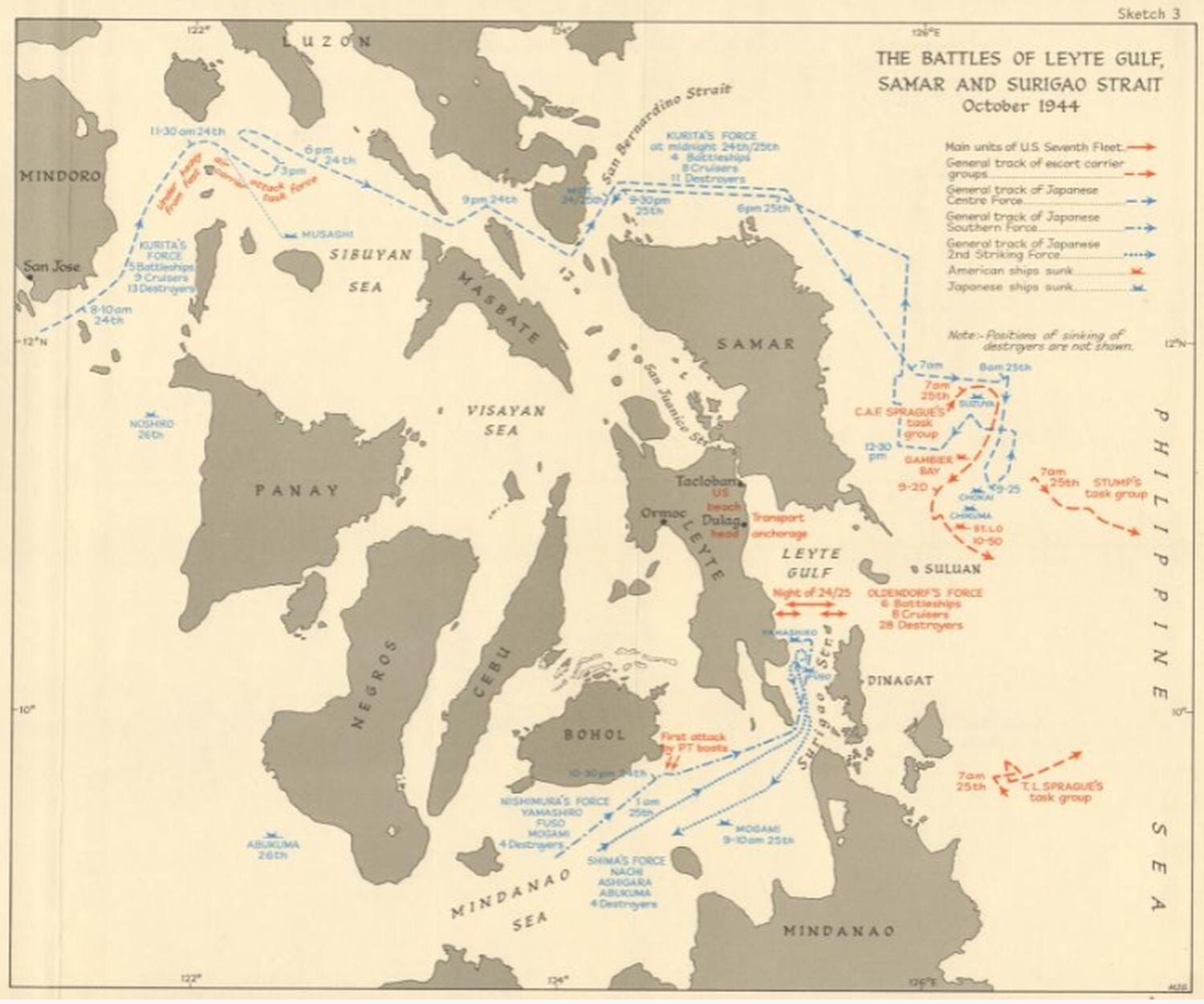
The Battles of Leyte Gulf, Samar, and Surigao Strait in October 1944 marked the destruction of Japan’s remaining fleet strength. As U.S. forces landed on Leyte, Japan launched a final multi‑axis naval operation. Surigao Strait saw the last battleship‑against‑battleship action, ending the Southern Force. Off Samar, “Taffy 3” repelled Kurita’s Center Force through determined attacks. Off Cape Engaño, American carriers sank Japan’s decoy carriers. Together, these actions ended Japan’s ability to wage major naval war.
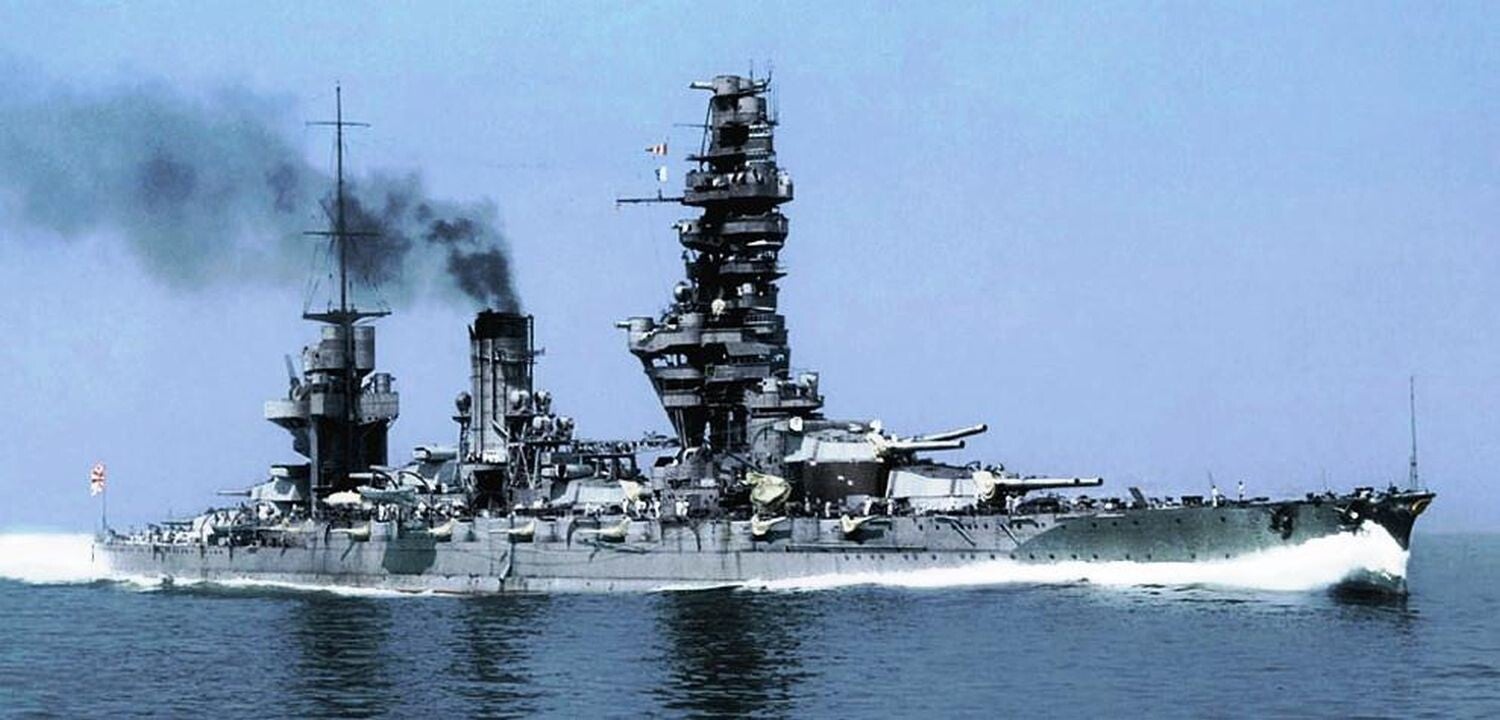
The battleship Fusō, commissioned in 1915, was one of Japan’s earliest dreadnoughts and later modernised with improved armour and machinery. By 1944 she served in Vice Admiral Nishimura’s Southern Force during the Battle of Surigao Strait. Advancing in column through the confined strait, Fusō was struck by multiple American torpedoes, broke apart, and sank with heavy loss of life. Her destruction marked the end of her long service.
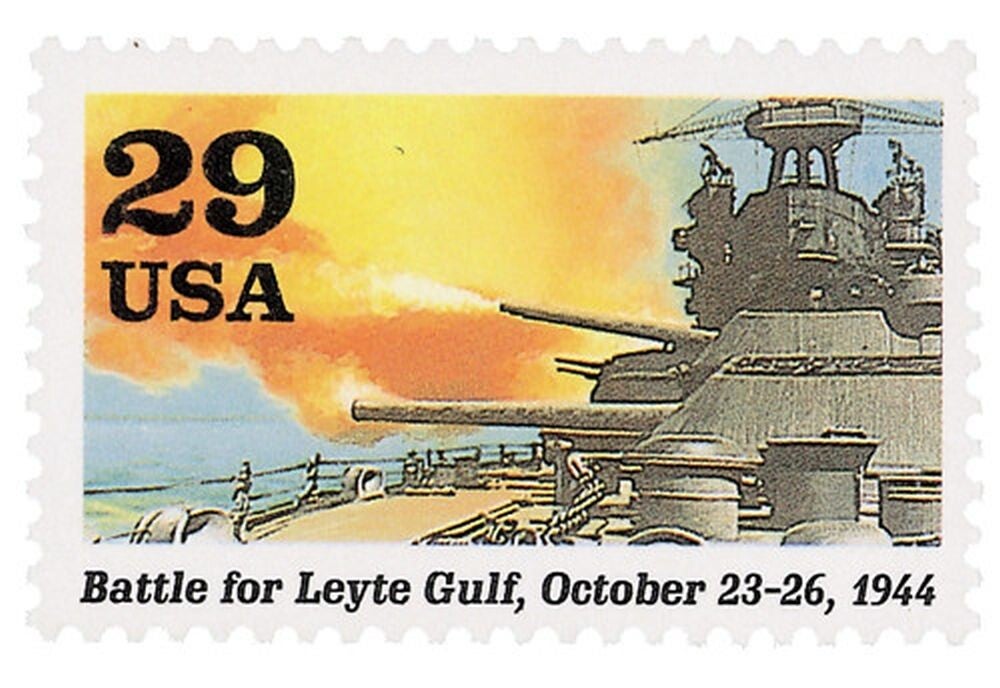
A US Stamp commemorating the battle.
Further Reading
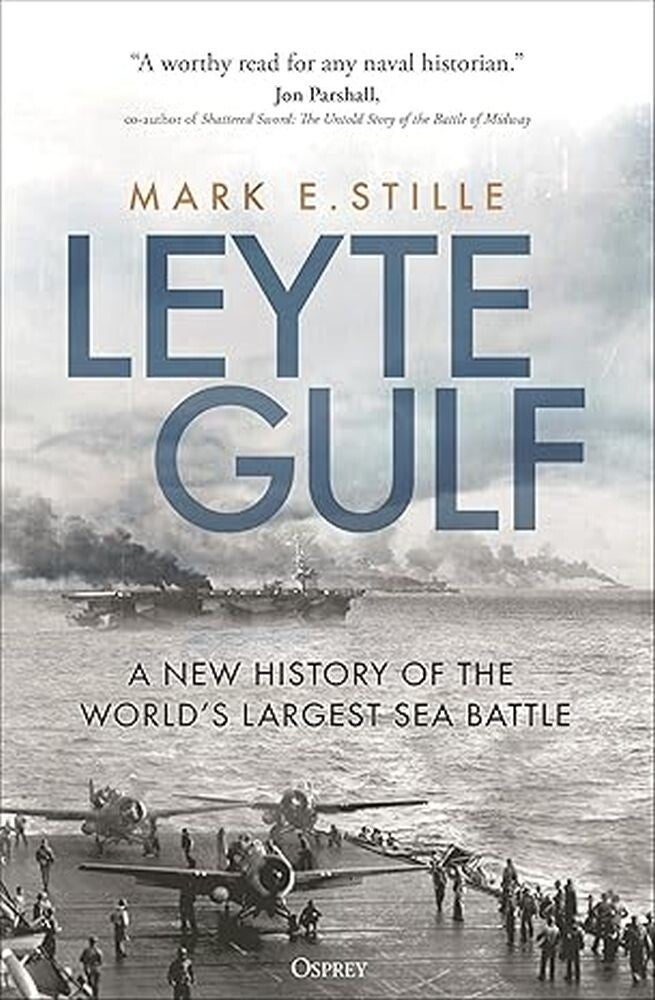
This study re‑examines the Battle of Leyte Gulf, the largest and most decisive naval engagement of the Pacific War. Using original sources, it breaks down the four major actions and critically assesses the plans that shaped them. Mark Stille challenges long‑standing myths, reassessing the performance of the key commanders and the supposed “lost victory” of Japan’s advance into Leyte Gulf. His analysis offers a clearer understanding of this complex and often misinterpreted battle.